
Neo traditional butterfly hand tattoos look like tiny paintings, but the hand is a tough canvas. I've spent weekends at conventions and popped into five shops across Brooklyn where the same problem came up. Placement and needle choices decide whether the wings stay sharp or blur into a smudge after a couple of years. Below are 21 hand-focused neo traditional butterfly ideas, what to tell your artist in consults, and how to style or prep them so they age better.
1. Bold Back-of-Hand Butterfly with Thick Outlines
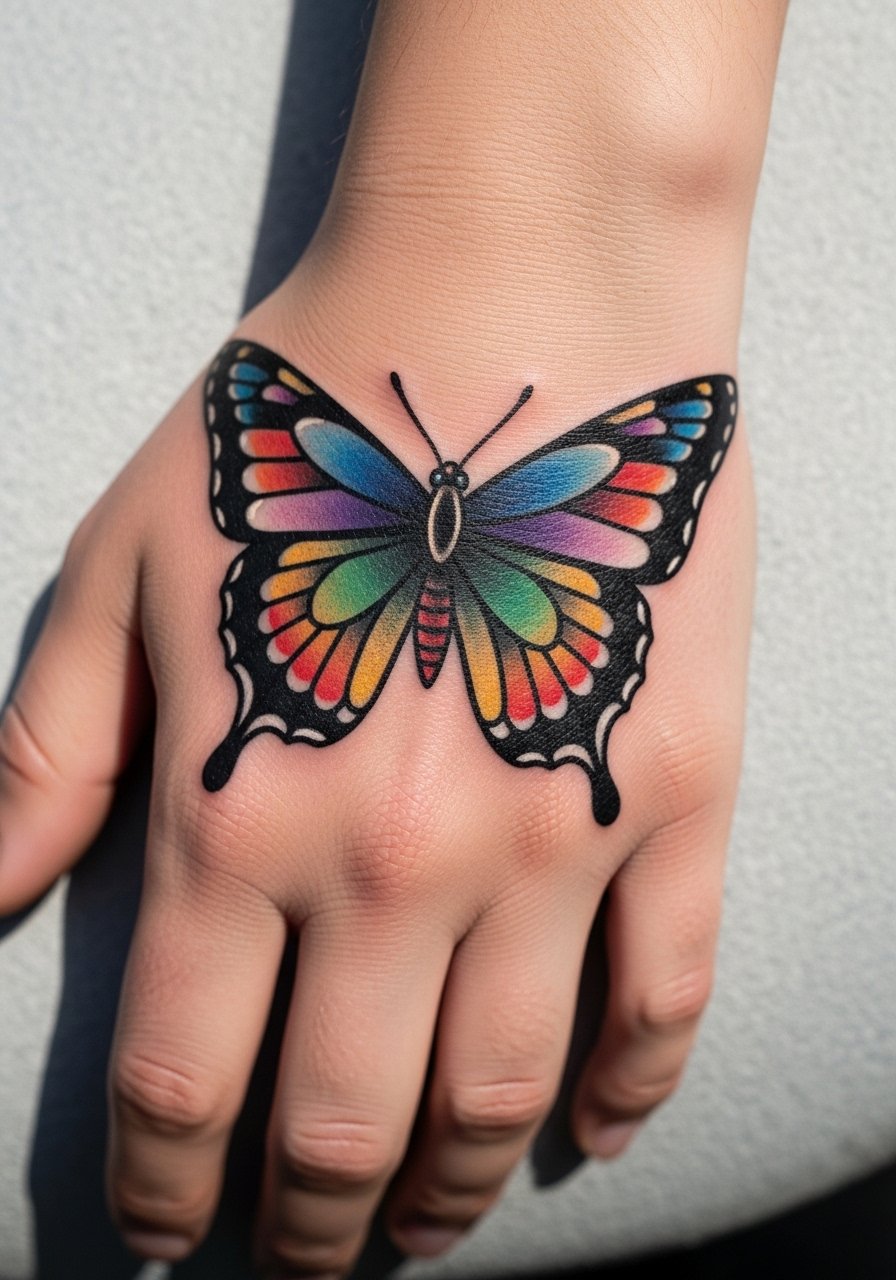
This is the neo traditional classic for people who want the piece to read from across the room. Ask your artist for slightly heavier linework than you might on a forearm, and for full saturation in the color fills so the wings keep shape as the skin moves. Expect moderate pain during the session because bone is close to the surface, and plan for a 60 to 90 minute appointment depending on color complexity. Common mistakes are going too small or using thin hairlines that blow out over knuckles. For show-off outfits, pair the piece with stacked dainty bracelets that sit above the wrist to frame the artwork.
2. Knuckle-Edge Butterfly, Wings Folding Toward Fingers

This layout uses the knuckle ridge to suggest motion in the wings. During the consult, tell the artist you want the wing tips to follow the knuckle contour so movement reads as flight. Pain spikes at the knuckles are common and sessions are often broken into short passes. Expect more touch-ups than a palm-side piece because constant hand use causes faster wear. One camp argues knuckle work is a poor long-term choice because of constant abrasion. The other camp says heavy saturation and frequent touch-ups keep it fresh. If you want to show it off, a minimalist watch sits just below the design and draws the eye without crowding the knuckle lines.
3. Side-Hand Wing, Color Gradient with Whip Shading
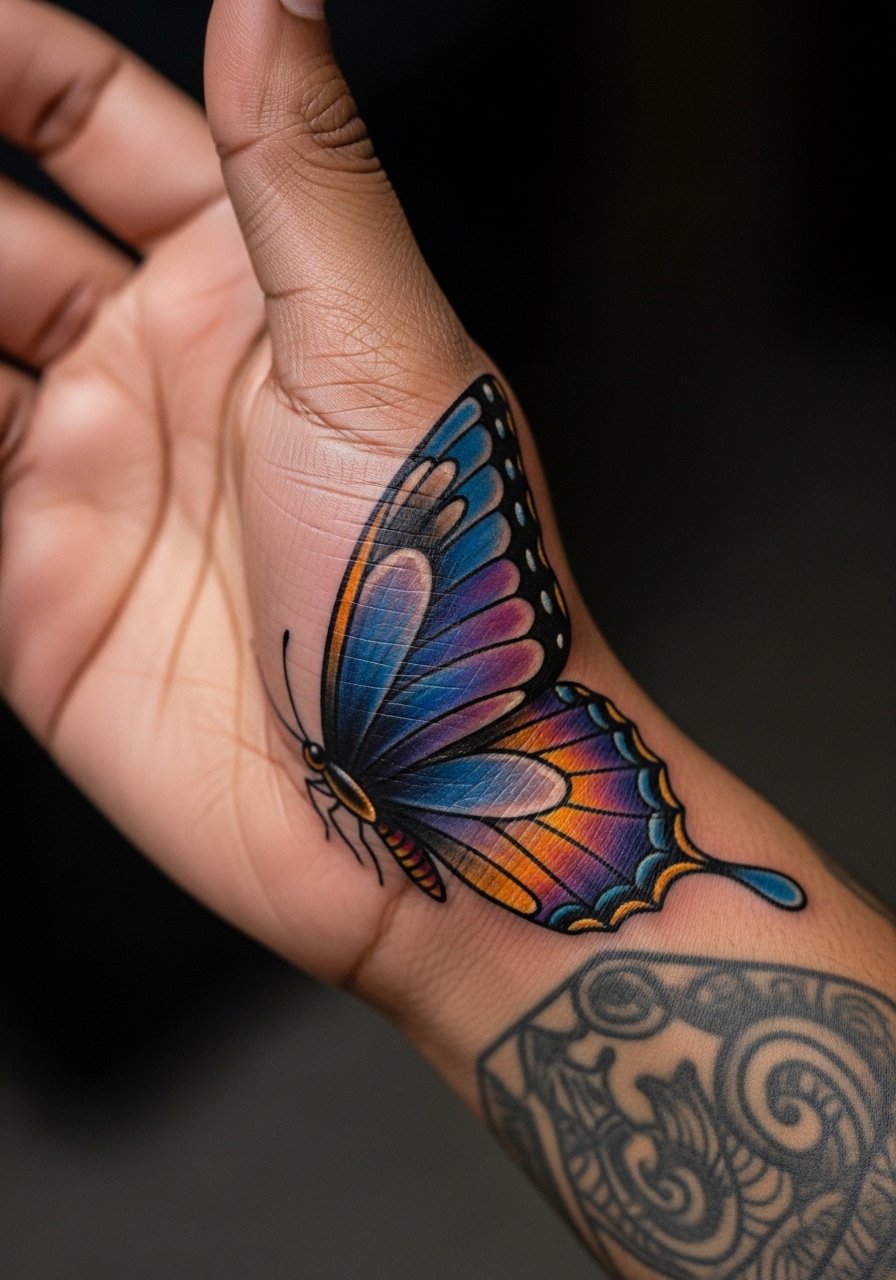
Placing the butterfly on the hand's side gives a discrete profile that peeks when you gesture. Ask for whip shading in the color transitions and stipple highlights to keep texture without overworking the skin. This placement sees less direct rubbing than the thumb base or knuckles, but friction from pockets can still fade color. The session feels like short buzzing passes with periodic stinging on the fleshy parts. A common mistake is trusting pastel washes without enough saturation. For session wear, throw on a loose button-down shirt you can slide your sleeve up and down easily.
4. Finger Butterfly Spine with Tiny Dot Work Accents
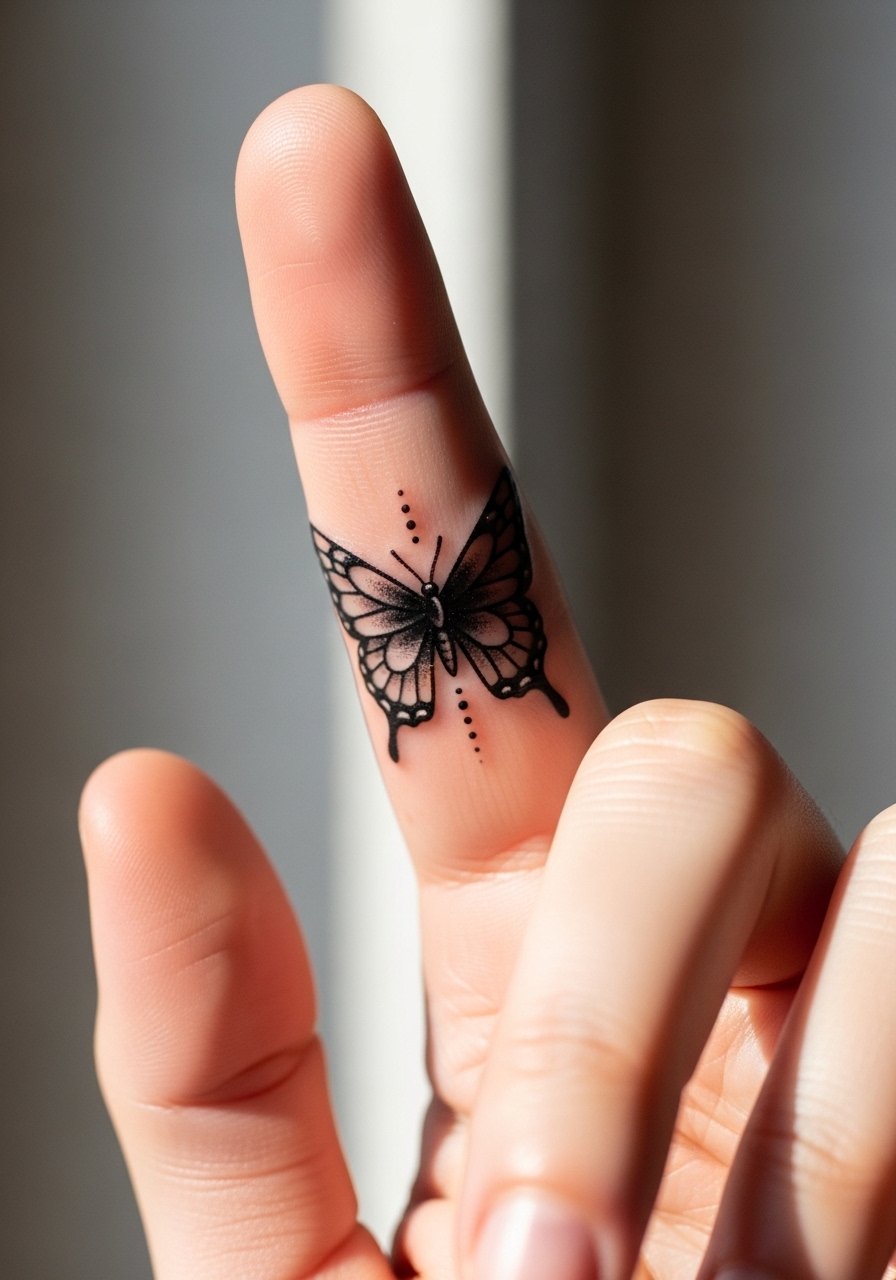
Tiny butterflies on fingers are charming but high maintenance. Tell your artist you want slightly bolder mini outlines than usual and dense color blocking where possible. Expect the session to be quick but sharp because fingers register vibration more intensely. Blowout risk is high on finger sides, so avoid hairline details that will merge. Two practical angles matter here. One camp says finger miniatures are a style risk and will fade into blurs within a couple of years. The opposing camp uses denser coverage and plans touch-ups on a predictable schedule. For showing it off, delicate stacked rings can complement the motif but keep them thin to avoid extra friction.
5. Thumb-Base Butterfly with Negative Space Patterning
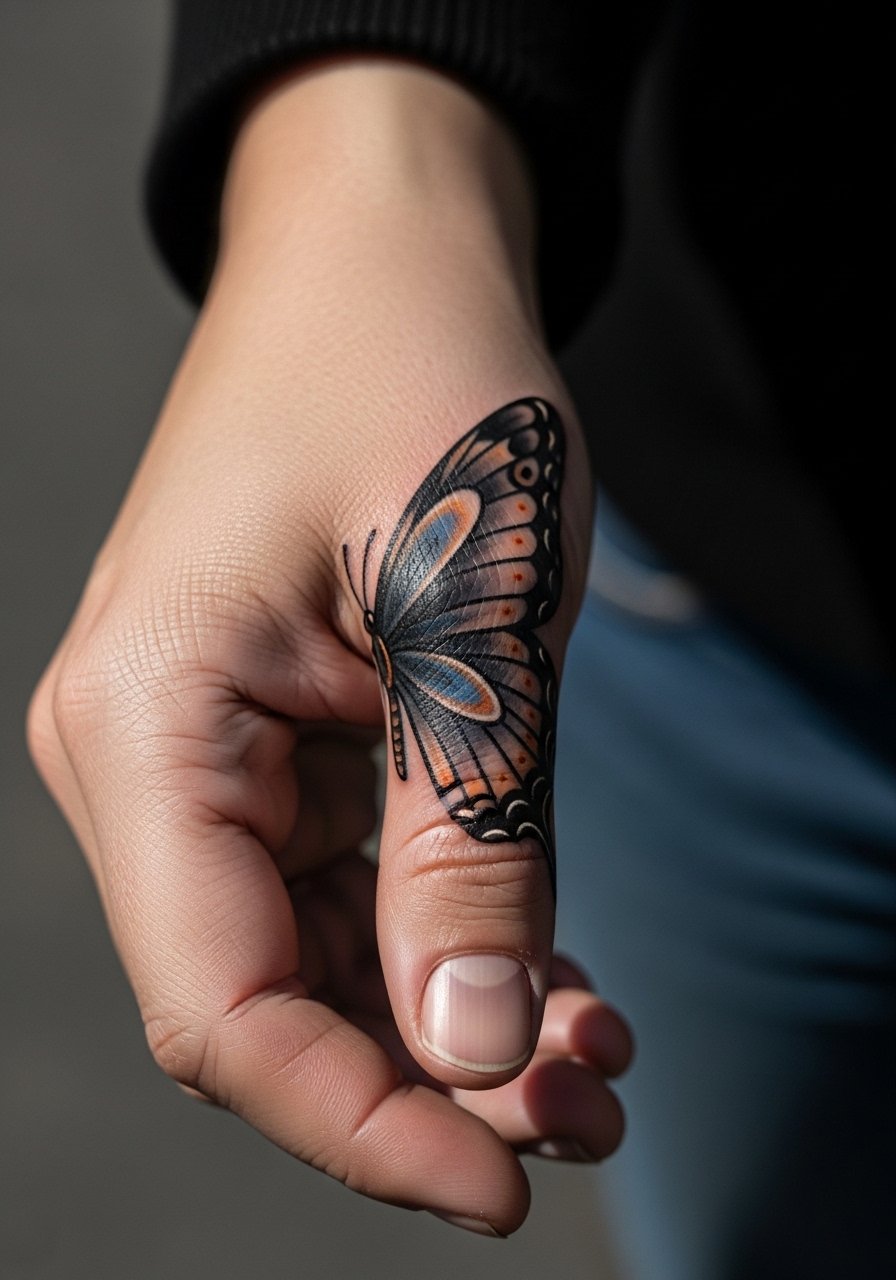
The thumb base is a strong small canvas because it moves differently than finger pads. Ask your artist to use negative space in the wing veins rather than tiny colored lines, that helps the pattern hold as the skin creases. The session can be slightly uncomfortable around the fleshy pad, but it often fits into a 30 to 45 minute slot. A real mistake is requesting ultra-fine veins that the skin will soon swallow. This placement pairs well with short-sleeve shirts on show days. Slide on a racerback tank top for summer outings so the hand stands out in photos and at coffee shops.
6. Palm-Edge Butterfly That Peeks When You Open Your Hand

Palm-side pieces see a lot of wear from washing and grip. Be upfront in the consult that you understand touch-ups will be needed. Artists often advise a bolder outline and less tiny interior detail for palm work so the imagery survives regular use. Sessions can sting more on the palm because the skin is sensitive and thin. One common mistake is expecting the palm piece to age like a forearm tattoo. For the session, wear a loose tank top that lets the artist position your hand comfortably and keeps shoulders relaxed during longer hand work.
Studio Day Picks
Those first six hand placements vary in friction and visibility. A few targeted items smooth the session and the first week so your neo traditional butterfly has the best chance to settle.
-
Stencil transfer paper kit. Lets you preview placement on the hand and adjust sizing before the needle starts, crucial for knuckle and thumb-base layouts.
-
Topical numbing cream. Apply 30 to 45 minutes before a sensitive hand session to ease the sting without spreading too thin for the artist.
-
Thin protective film roll. Keeps friction from daily tasks down in the first 48 hours, especially useful for palm-edge and finger work.
-
Fragrance-free body wash. Gentle cleansing during showers avoids irritating fresh ink on the hand where the skin is continually exposed.
-
Aquaphor healing ointment. A thin layer for the first couple of days locks in moisture on the hand without suffocating the needle channels.
7. Miniature Monarch-Style Butterfly Across Two Fingers
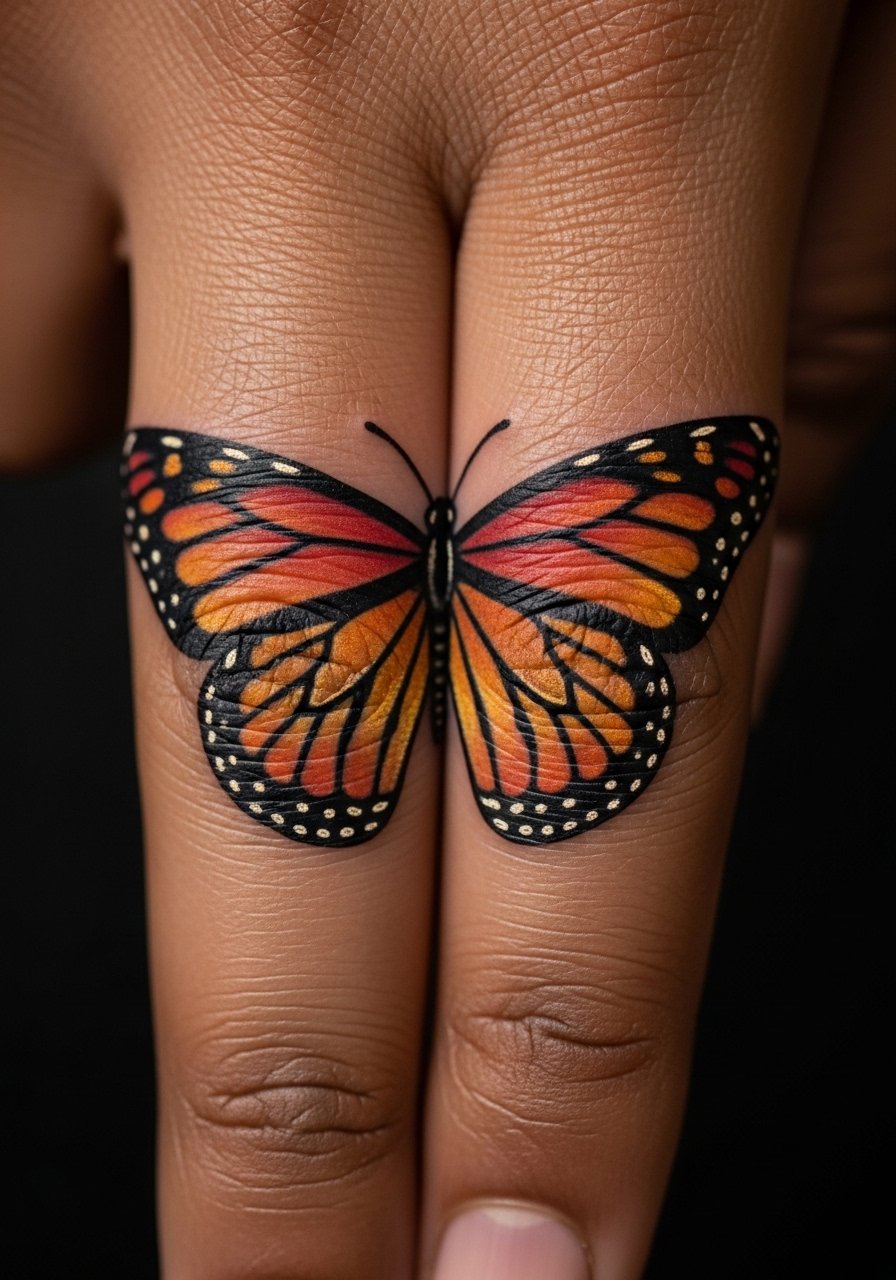
This split placement creates a visual bridge when you hold your fingers together. Tell the artist you want continuity across the digits so the butterfly reads correctly when fingers align. Pain is concentrated near the webbing and the artist may do each finger in separate passes. The biggest mistake is mismatched scale that looks disconnected when fingers move. Plan for a touch-up at the one-year mark because seams between fingers wear faster. For showing it off, thin rings on the adjacent fingers make the split composition feel intentional. Link a delicate stacked ring set that sits above the design without rubbing it.
8. Bold Outline Butterfly on the Dorsal Joins, High Saturation
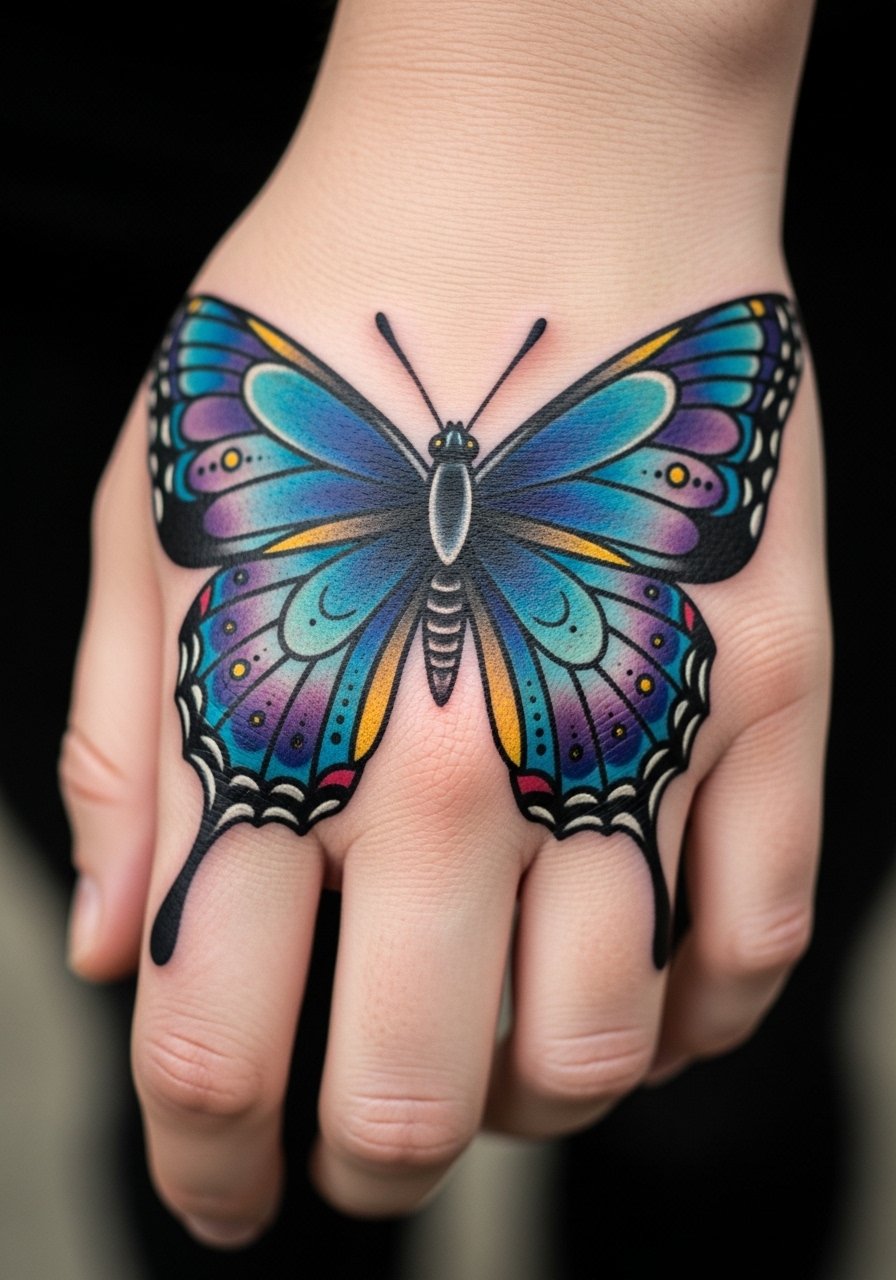
Putting saturation over joints helps the artwork survive motion. During consults, request closed color fields and bold outlines to counteract the stretching that happens when you open your hand. Expect the session to feel choppy because the artist will work in small areas to control swelling. A common error is asking for ultra-fine internal shading in a high-motion zone. Over time, expect the shading to fade faster than the outline. For the appointment, wear a loose drawstring linen pant if you plan to sit for a while, the comfort makes longer hand sessions more tolerable.
9. Collarbone-Aligned Tiny Butterfly That Wraps the Side of the Hand

This is a subtle placement that reads best in motion when you gesture with the arm. In consults, be clear you want the wing tip to continue visually toward the thumb base without overcrowding the area. The session is usually short and the pain sits in the soft attachment zones. A common mistake is asking for too many colors in a small footprint. For showing it off, a thin chain pendant necklace sits above the collarbone and creates a cross-body photo composition that draws attention down to your hands and wrists.
10. Neo Traditional Butterfly with Scripted Antennae Across the Thumb Web
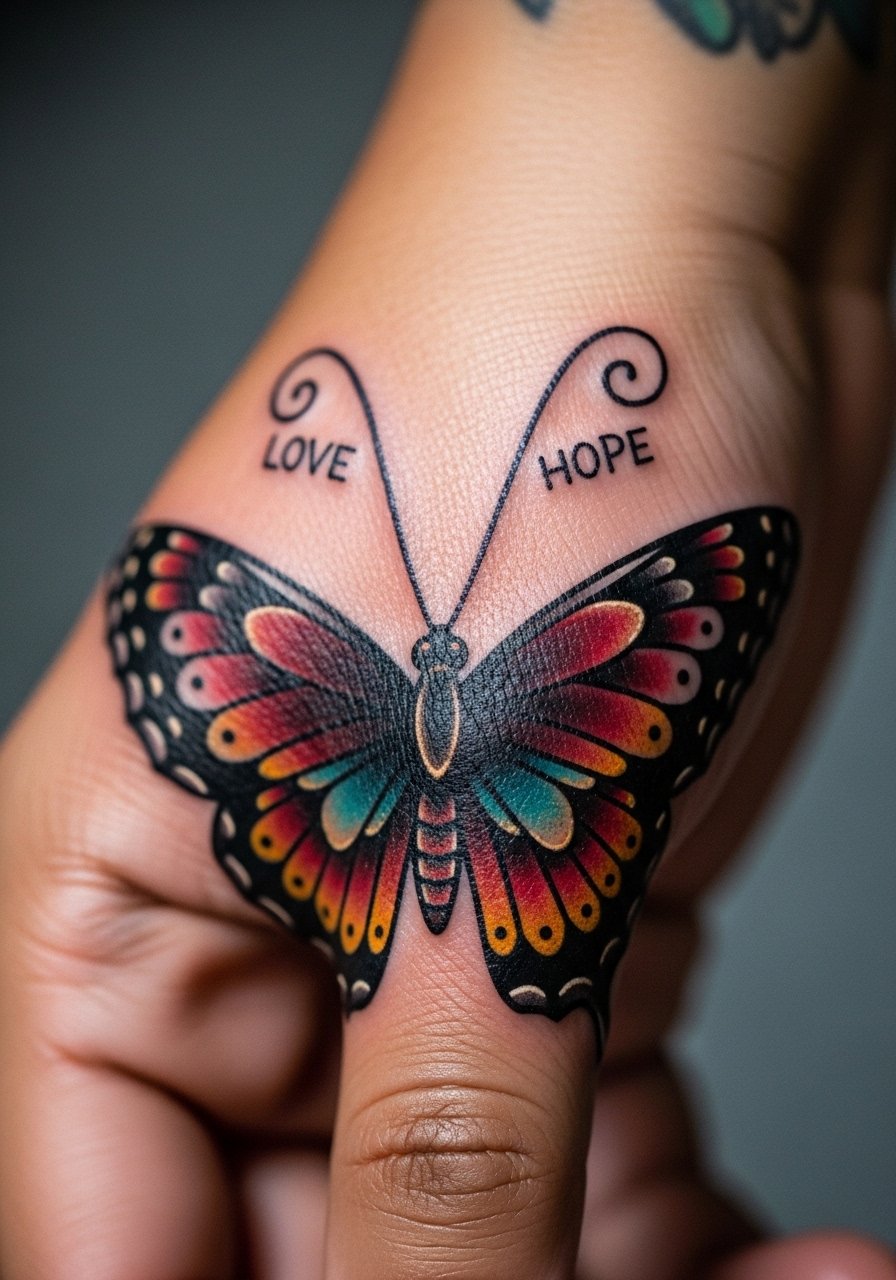
Combining small script with a butterfly on the thumb web raises two technical flags. Text requires exact spacing so ask for the lettering layout previewed on skin beforehand. The area moves with every thumb motion so dense lettering can break apart. Expect concentrated sensitivity and short bursts of discomfort. One common mistake is choosing slanted or ornate script that cannot settle cleanly in that tight zone. Career considerations also come up here. Hand tattoos still affect hiring in some fields so think about long-term visibility before committing to texted additions.
11. Patchwork Butterfly Over the Metacarpal Area with Stipple Shading

This layout sits across the broad part of the hand and gives room for stipple shading to add texture without tiny hairlines. Tell the artist you want stipple and dot work for shadow areas, not continuous gray washes. The session tends to be a steady buzz with intermittent sharper passes over bony ridges. A mistake people make is packing too much detail into the metacarpal span and then being surprised at early softening. For outfit pairing, rolled-up sleeves or short-sleeve shirts let the patchwork breathe. Try a rolled up linen shirt that frames the hand without covering it.
12. Thumb-Side Mini Butterfly with Saturated Color Halo

A halo of pale color around the butterfly helps it read against varied skin tones. Ask for a subtle wash around the wings rather than a full background block, that keeps the piece light while improving contrast. The session is brief but can sting as the artist works close to joint creases. The usual mistake is requesting a wide background that accelerates fading where skin folds. For longevity, expect a touch-up at year two if you use your hands a lot for outdoor work. For session wear, a racerback tank keeps you cool while the artist works on your hand.
13. Geometric-Backed Butterfly with Bold Blackwork Frame

Pairing a neo traditional butterfly with a geometric blackwork frame gives structural contrast that holds as the color fades. During the consult, ask the artist to use negative space strategically so the black frame does not overwhelm the wings. Sessions here lean toward longer lines and careful stops to avoid overworking. A frequent error is allowing the blackwork to crowd the butterfly and steal visual weight. For showing it off, a minimalist cuff bracelet that sits just above the wrist complements the architecture without rubbing the ink.
14. Watercolor-Infused Neo Traditional Butterfly on the Side Knuckle

Watercolor infill gives a painterly quality but it ages differently on hands than on larger canvases. Ask for a restrained wash inside bold outlines so the watercolor does not rely on microdots in a high motion zone. The session feel can be patchy because the artist balances washes with firm outlines. The controversy here is visible. One camp warns watercolor on hands blurs quickly because the washes spread and fade. The other camp keeps washes minimal and uses saturation under the wash so it reads longer. If you go this way, budget for touch-ups in year one and year three.
15. Mirror-Image Butterflies Across Both Hands
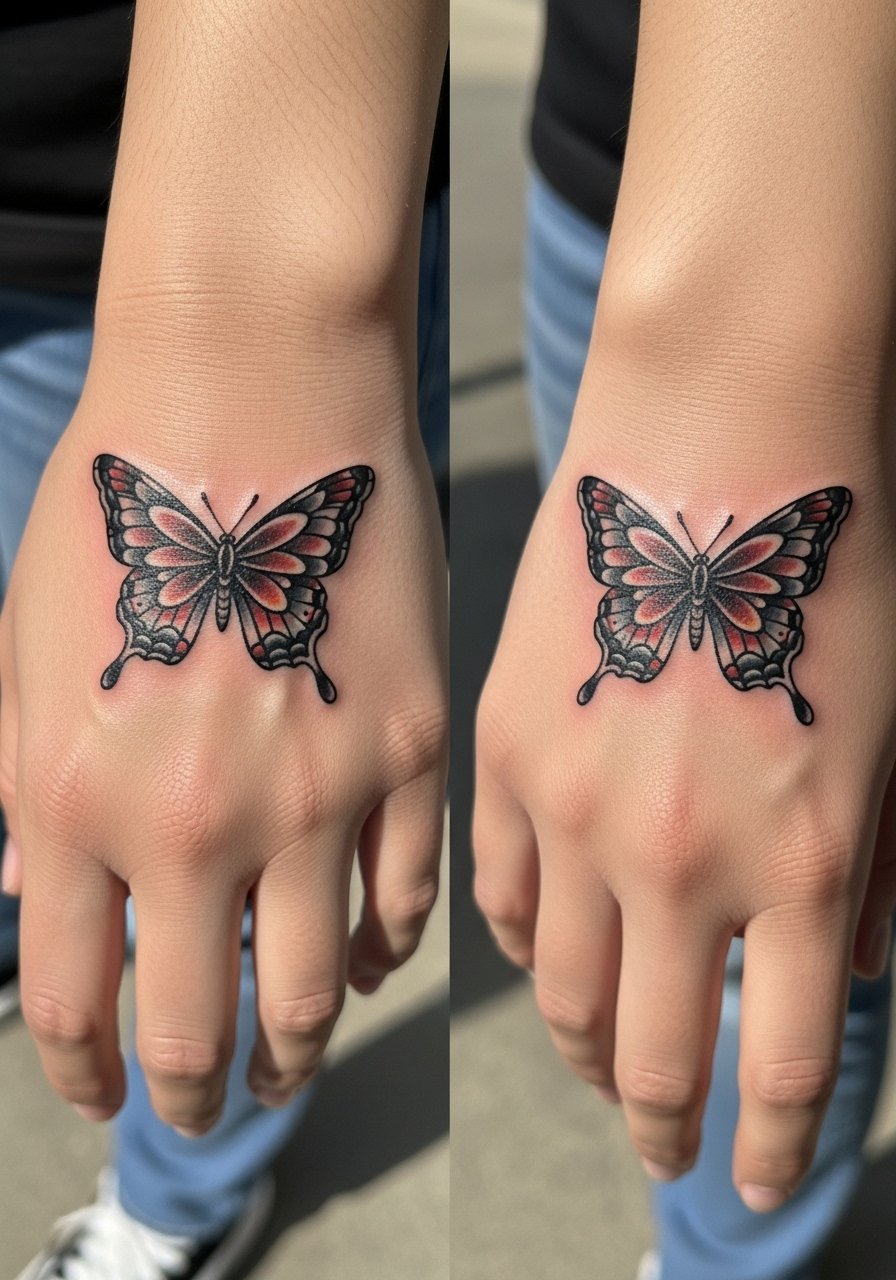
Getting mirrored pieces demands symmetry in placement and scale. Bring photos of your hands relaxed and open so the artist can map placement to your natural posture. Sessions will likely be scheduled on separate days so swelling does not complicate matching. The usual mistake is expecting exact mirror symmetry without accounting for subtle differences in bone structure and skin tone. For show days, open-back dresses and short sleeves are good staging. Pair with an open-back midi dress that lets both hands show in pictures.
16. Botanical-Accented Butterfly Near the Wrist Crease

Adding small leaves or floral motifs around a butterfly gives the piece context and helps transitions into sleeve work if you plan to expand. Tell the artist you want the botanical elements to be sparse so they do not clutter the wrist crease. The session is comfortable for many because the wrist has some flesh, but be prepared for slight soreness for a day. A common error is overpopulating the area with tiny petals that age into a blot. For the appointment, wear a loose button-down shirt you can slide up to expose the wrist cleanly.
17. Micro-Realism Butterfly with Dot Work Shading on Finger Pad

Micro-realism on finger pads is ambitious. Ask your artist for a single focal color and dense dot shading rather than thin lines. Sessions are very quick and the pain is sharp because the fingertip is highly innervated. Expect frequent touch-ups because oils and use wear through pigment faster. One practical mistake is choosing complex multi-color micro realism for this tiny surface. For comfortable session wear, keep hands moisturized in the days leading up to the appointment and plan low-activity aftercare so the skin can settle.
18. Gothic Neo Traditional Butterfly with Bold Shading Across the Metacarpal Arch

A darker, gothic palette relies on heavy saturation and deep contrast. Tell the artist you want a heavier black backbone with saturated deep hues in the wings. The session feels longer because black packing demands multiple passes. A common error is expecting deep black to heal like a single pass. For the session, bring a friend and wear comfortable clothing because long blackwork sessions tax your patience and posture. Consider a loose drawstring linen pant if you will be sitting for longer.
19. Single-Color Line Butterfly with Negative Space Veining

Single-color treatments can age gracefully when planned correctly. Request negative space for wing veins and a single saturated color that contrasts with your skin. Sessions are quicker because the artist focuses on clean linework and color packing rather than multiple hues. A mistake is choosing a pale tint that will wash out on lighter skin or be absorbed quickly on darker skin. For showing it off, a thin chain pendant necklace helps draw attention to photos that include your hands without overshadowing the hand piece.
20. Ornamental Butterfly with Lace-Like Wing Edges Across the Backhand
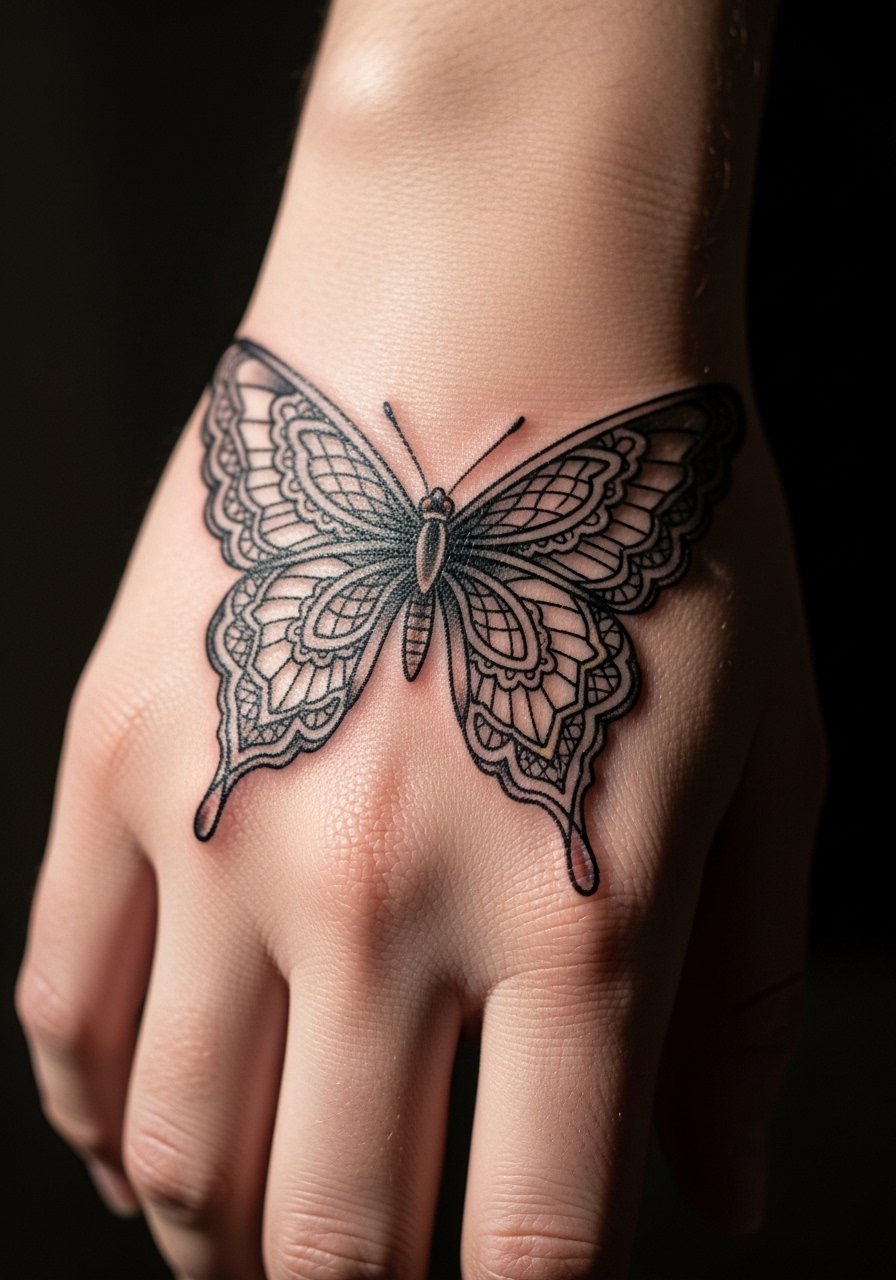
Lace-like wing edges look delicate but need spacing to avoid merging with time. Specify to your artist that the lace should be implied with small negative space islands rather than ultra-fine filigree. The session can be meticulous and steady handwork is necessary to avoid overworking the thin skin. A frequent mistake is insisting on micro lace that the skin will eventually blur. For wardrobe pairing, rolled sleeves or short-sleeve tops let the piece breathe and photograph well. Try a rolled up linen shirt that keeps the hand visible.
21. Statement Centerpiece Butterfly Framed by Tiny Stars on the Back of Hand

A central butterfly with star accents creates a focal point that photographs cleanly. Ask the artist to space stars widely so they act as punctuation rather than texture that fills in. Expect a steady session with detailed stops for the tiny stars. Common mistakes include crowding the field with too many small motifs that age into a haze. For show-off styling on nights out, a minimalist cuff bracelet worn above the wrist frames the centerpiece without rubbing the design.
Frequently Asked Questions
Q: Will neo traditional color on the hand fade faster than on the forearm?
A: In my experience, yes, hand color generally fades faster than forearm work because of constant washing and friction. Expect touch-ups sooner and ask your artist to prioritize saturation and bold outlines in the initial session so the design has structure as pigments soften.
Q: Are finger and knuckle butterflies worth it if I want them to last?
A: That depends on your tolerance for maintenance. One camp believes finger and knuckle work is impractical because of heavy wear. The other camp says dense saturation and planned touch-ups keep them looking intentional. If you choose fingers, budget for a touch-up at every 12 to 24 months and keep expectations realistic.
Q: How should I find an artist who understands neo traditional hand work?
A: Look for portfolios that specifically show healed hand pieces not just fresh photos. Use hashtags, local shop directories, convention tables, and community forums to narrow candidates. During consults, ask about their touch-up policy and how they handle saturation on high-friction areas.
Q: What should I wear to the session for a hand tattoo appointment?
A: Wear something comfortable with sleeves you can push up easily and fabrics that do not cling. A loose button-down shirt is a solid choice because it gives the artist access without forcing you into awkward positions.
Q: Do hand butterflies affect job prospects?
A: They can in certain industries because hands are highly visible. One camp argues that visible hand tattoos are widely accepted now. The other camp notes that formal workplaces still factor visibility into hiring. Think about long-term visibility and where you work or hope to work before committing.
Q: How often will a hand butterfly need a touch-up?
A: It varies based on placement, skin type, and day-to-day wear. From what I have seen, many people plan for a touch-up around year one and then again around year three to five depending on fading. Artists differ on exact timing, so ask about their maintenance recommendations during the consult.