Fine line and saturated color both have a place in neo traditional Flower of Life work, but they age very differently. I've seen brightly saturated petals hold boldness for years while ultra-fine connecting geometry softens into blur faster. Pick scale and spacing with an eye on how you want the piece to read at year three, not just day one, and the first idea below shows how to do that on the forearm.
1. Compact Forearm Flower of Life with Bold Petals
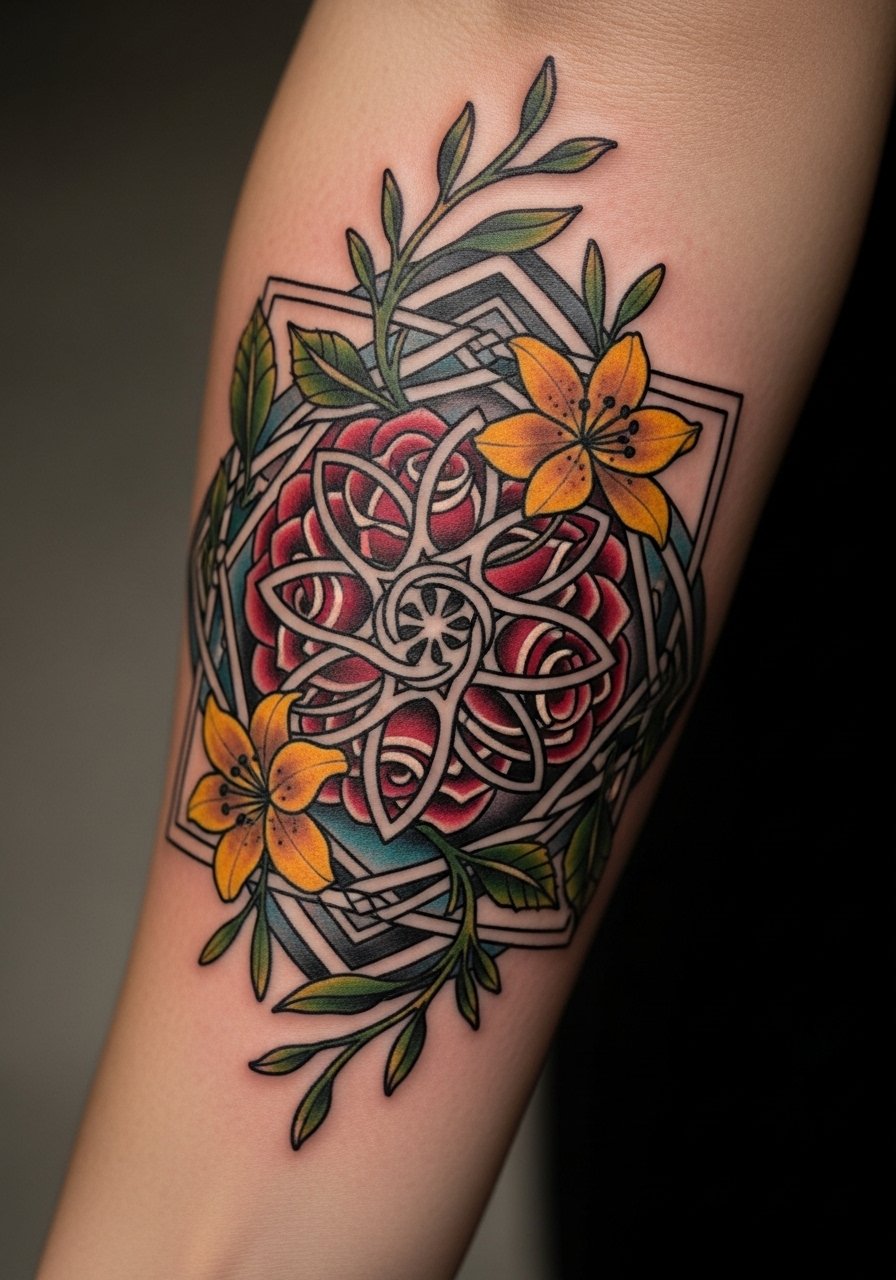
This compact forearm piece favors slightly heavier linework around the petals and lighter geometry inside. I recommend it for someone who wants the floral motifs to stay readable at arm distance. Tell your artist you want increased spacing between the geometric intersections and slightly bolder outer outlines so the inner dot work can soften without losing form. Fair warning, small tight geometry on the forearm can blur if placed too close to the wrist. Expect a three to five year touch-up window for the fine interior elements and a longer gap for the bold petals. For showing it off wear a rolled-sleeve linen shirt that keeps the forearm visible and light.
2. Stacked Wrist Medallion with Negative Space
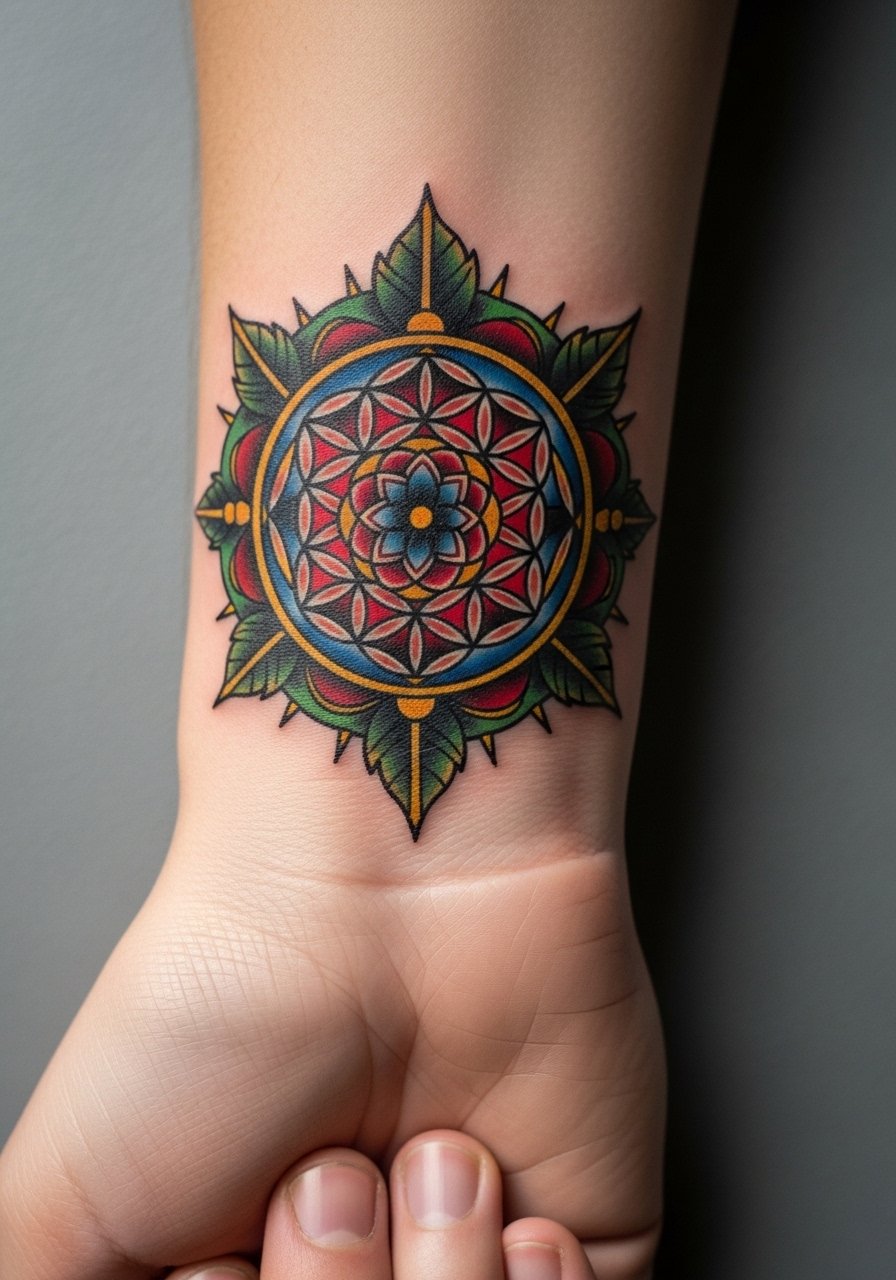
A centered wrist medallion reads like jewelry when executed with decisive outer linework and deliberate negative space in the center. Pain on the wrist is real, but sessions are short. Ask for a scale that sits comfortably on the bony top of the wrist without wrapping too far down the sides to reduce blowout risk. The most common mistake is asking for the whole mandala too small. If it is too dense it will fade into a muddle within two years. This placement pairs well with a thin bracelet or minimalist watch. Try a minimalist watch band if you want the tattoo and accessory to read as a single composition.
3. Collarbones and Petals: Upper Chest Bloom
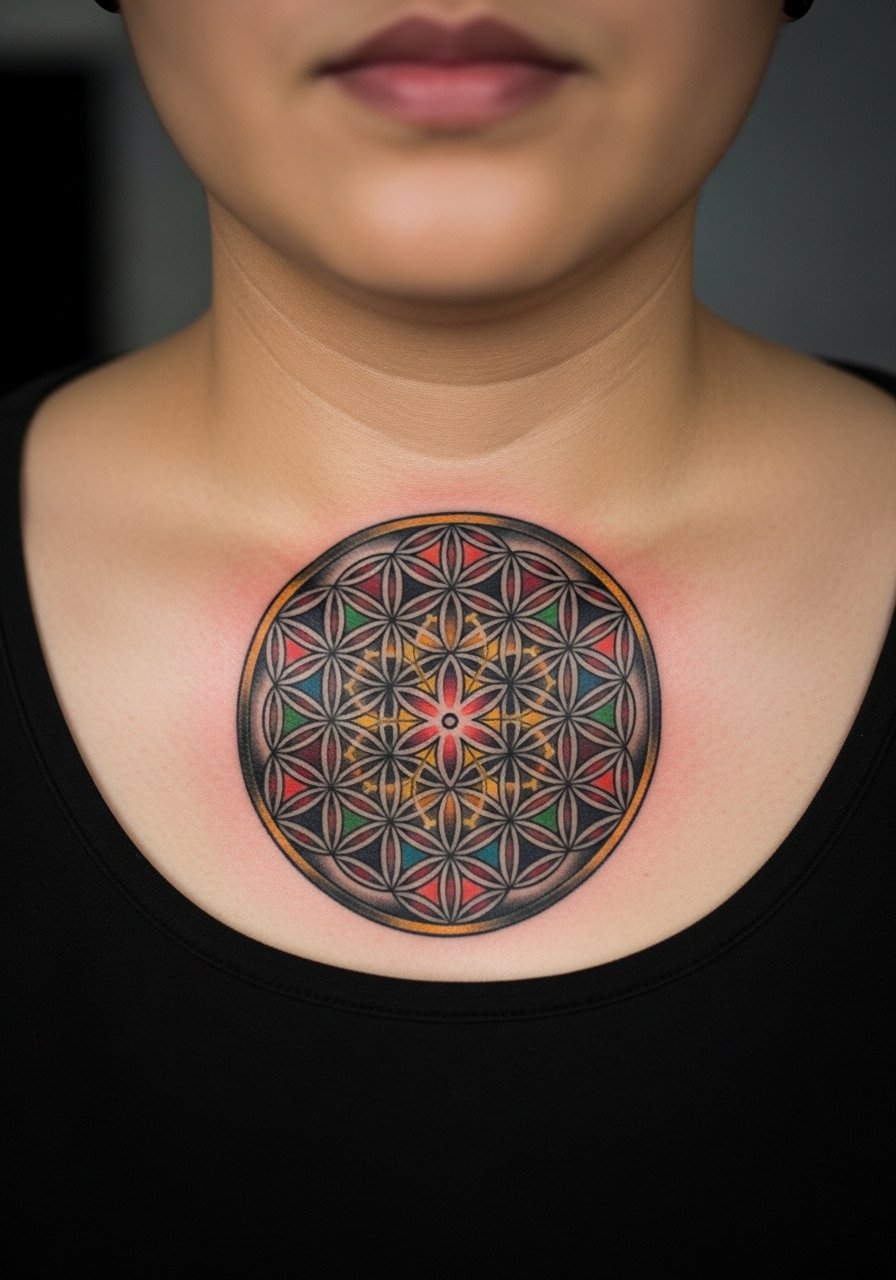
Placed near the collarbone, a Flower of Life design reads like a focal jewelry piece when petals echo the collarbone line. Session-wise this area is less painful than ribs but sensitive enough that short rests help. During consultation ask the artist to draft the geometry so the top petals align with the collarbone for natural flow. A common aging issue is sun exposure, which can wash out the subtler interior lines faster. For the session wear a wide-neck shirt you can pull aside without getting sticky product on fabric. If you want to show it off, open-neck sweaters or scoop tops frame the design without cutting across it.
4. Sleeve Accent Piece That Anchors a Larger Neo Traditional Sleeve
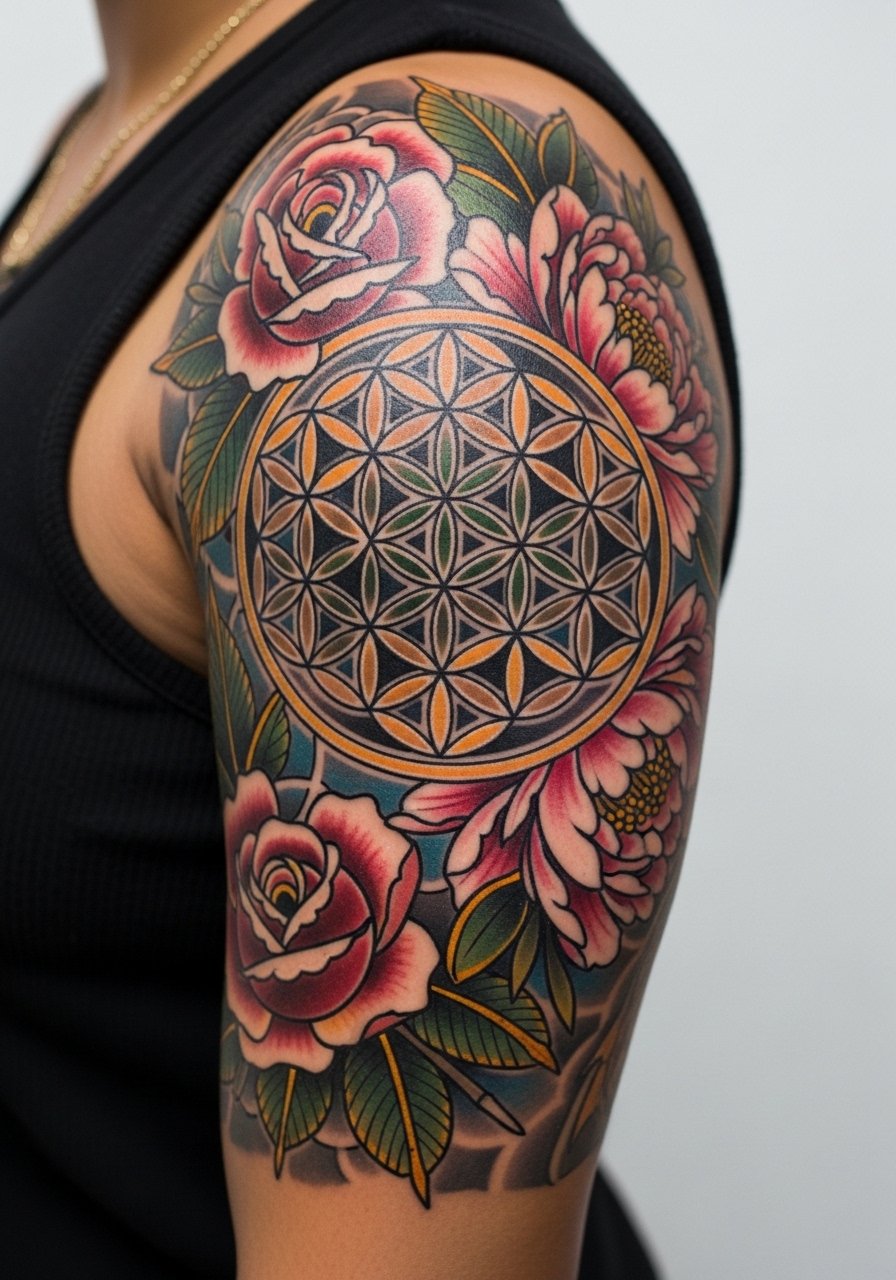
Use this flower as the anchor knot in a larger sleeve where neo traditional blooms and geometric elements meet. I recommend this for someone building a sleeve over multiple sessions. Specify which motifs you want to dominate and where the Flower of Life should act as a negative space anchor. Artists differ on how much geometry to pack into a sleeve. One camp favors saturated, simplified petals that age solidly. The other camp pushes for intricate internal geometry that photographs well but can blur over time. Name the camp you prefer and ask to see similar healed pieces in the artist's portfolio. Expect heavier sessions for the saturated areas and lighter touch-ups for the geometry.
5. Micro Chest Piece Framed by Leaves
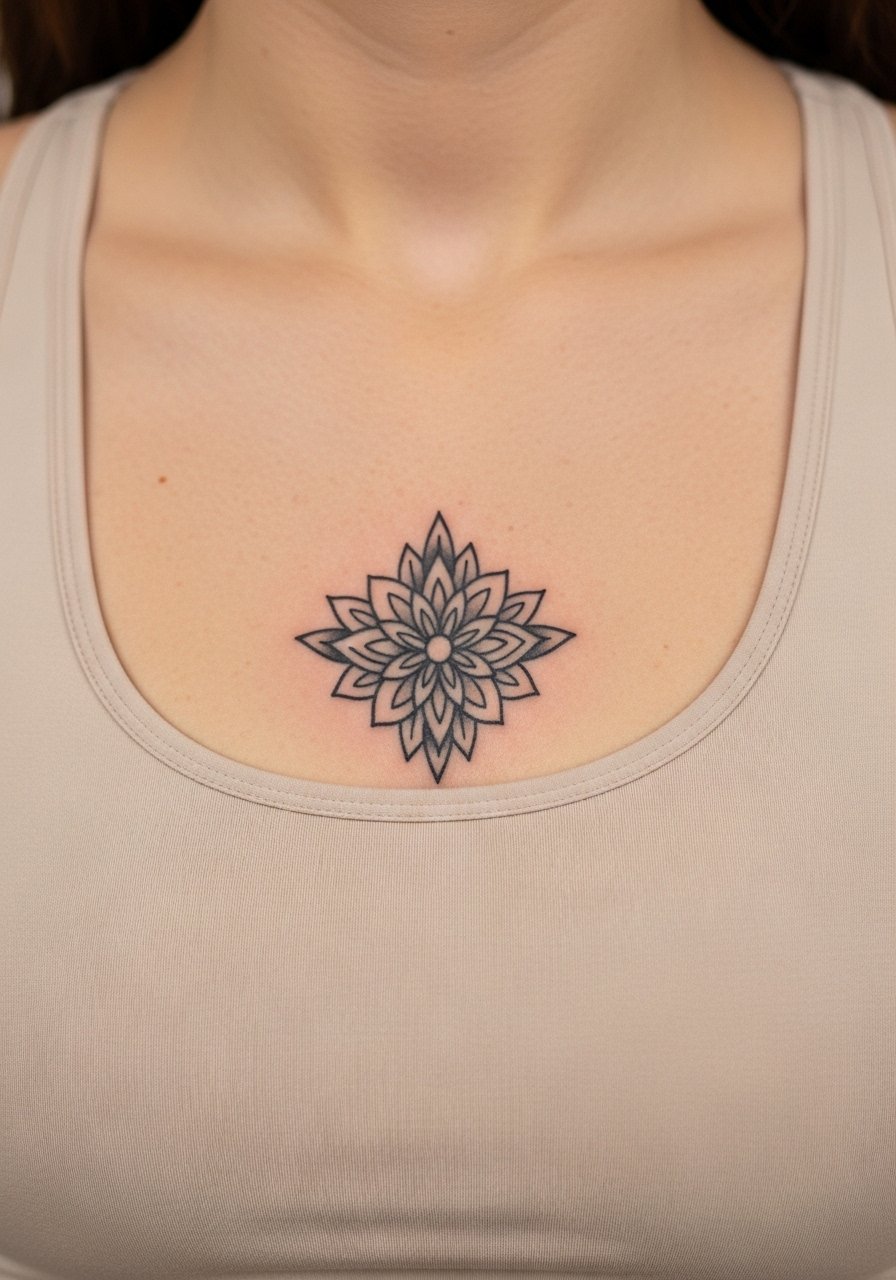
A micro chest piece feels intimate and reads quiet under clothing. Tell the artist you want the geometry scaled up slightly from micro flash so the inner lines breathe. Sternum and upper chest work can stretch with movement, so the usual mistake is compressing too many fine dots into a tiny space. For the appointment, wear a fitted sports bra to give the artist access without exposing unnecessary skin. This placement needs sun care once healed, because upper chest sees intermittent UV and the fine interior geometry tends to soften faster than the bolder floral outlines.
6. Ankle Flower of Life with Shadowed Petals
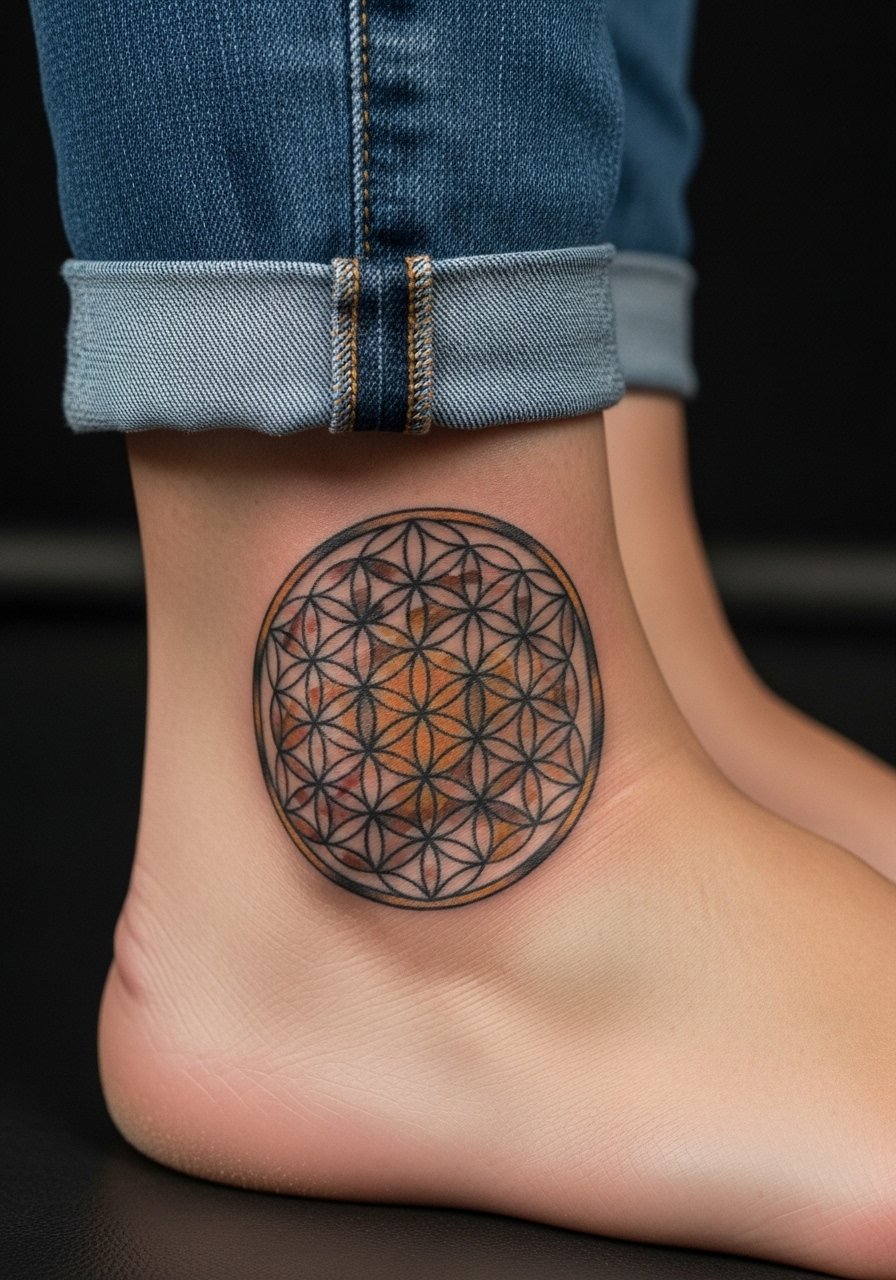
An ankle placement needs design choices that account for friction and footwear. Ask the artist to use slightly stronger outer linework and modest shading to avoid early fading from shoes and socks. A common mistake is asking for high saturation in such a low canvas area without thicker outlines. Session time is short but expect touch-ups sooner than arm work. For showing off the design, pair it with low-top sneakers or sandals and a linen ankle-length pant that can be rolled to reveal the tattoo when you want it visible. Keep in mind ankles bounce between sun and cover, which affects how the geometry ages.
Pack Smart
The forearm, wrist, and chest pieces above all demand slightly different prep, so a few targeted items make the session and first week smoother.
-
Stencil transfer paper kit. Helps you preview placement for medallions and chest-centered flowers before the needle hits skin.
-
Topical numbing cream. Useful for ankle and wrist sessions when bony areas make short sittings sting more than expected.
-
Thin protective film roll. Keeps small wrist and finger pieces safe from constant hand washing and friction during the initial healing window.
-
Fragrance free body wash. Gentle cleansing for chest and collarbone pieces that avoids irritating delicate linework.
-
Aquaphor healing ointment. Thin layers in the first days lock in moisture for fine geometric work without suffocating the skin.
7. Ribcage Bloom with Stipple Shading
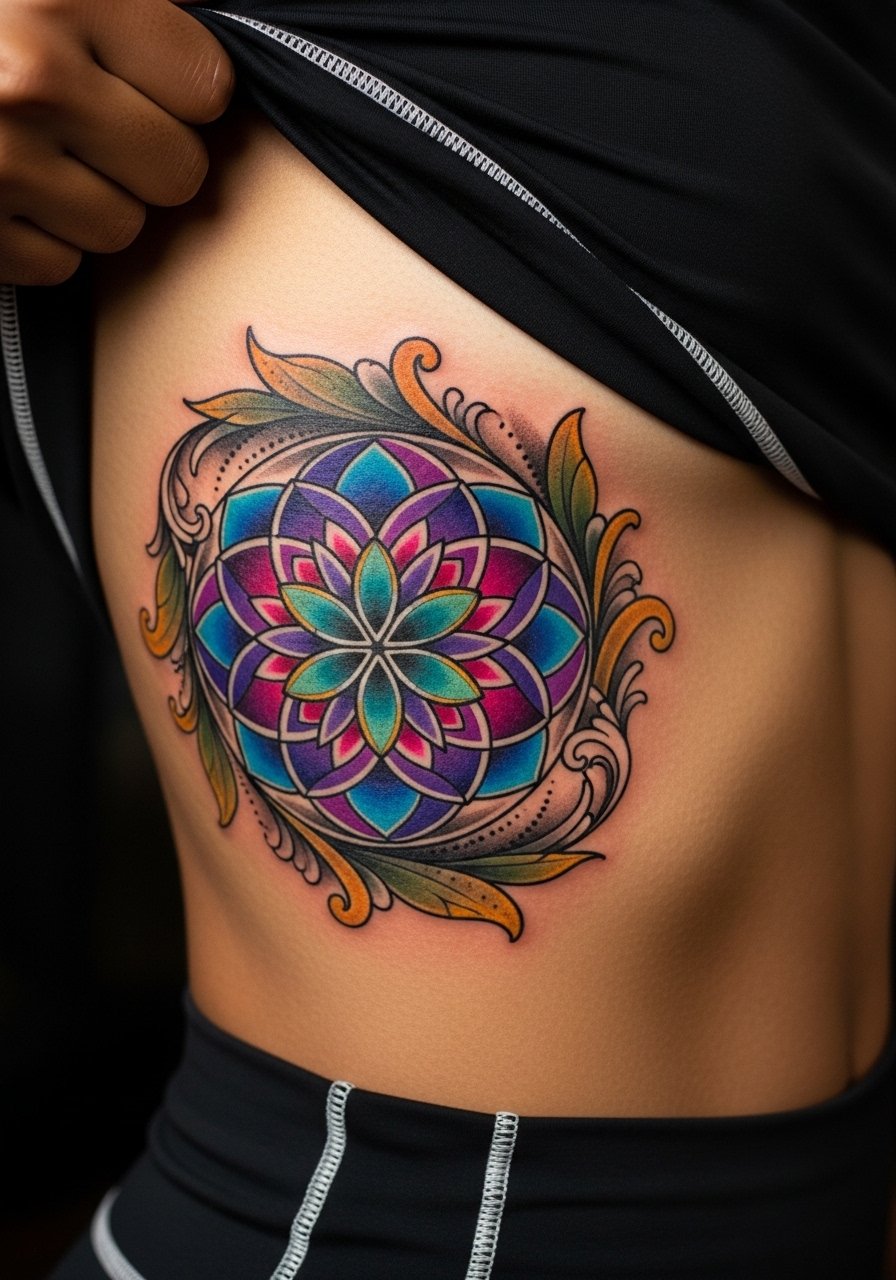
Ribcage sessions are widely known for being painful, but they allow for dramatic scale. Choose this if you want a piece that can breathe and still keep geometric integrity. When consulting, ask for stipple shading instead of heavy saturation in the dense inner geometry so the negative spaces remain readable as skin moves. There is a controversy about fine line on the ribs. One camp argues the skin stretch will blur lines within two years. The other camp says proper depth and spacing make fine line settle fine on ribs. Ask your artist where they stand and ask to see healed ribs in their portfolio. Expect longer single sessions and a realistic touch-up at year three for the most delicate areas.
8. Finger and Knuckle Miniatures with Bold Outlines

Finger tattoos demand design sacrifices for longevity. For the Flower of Life on fingers, go bold and simplify the geometry to a single petal ring or a half-mandala. The biggest mistake is keeping too many tiny intersections that blur under constant use. Tell the artist you prefer bold outlines and simplified centers for durability. Expect touch-ups far sooner than forearm pieces. For showing it off, pair with stacked thin rings that do not press across the tattooed area. A thin stacking ring set can frame the design without causing excess wear.
9. Thigh Panel That Curves with Muscle

The thigh is forgiving for scale and detail, which lets you keep more of the complex Flower of Life geometry intact. Position the main medallion to follow the muscle curve so it looks cohesive when moving. A common session mistake is wearing tight bottoms to the appointment. Instead, wear loose shorts so the artist can work without fabric obstruction. For showing it off, high-cut shorts or a skirt with a slit lets the piece peek through. Thigh pieces usually need fewer touch-ups because they avoid constant sun and friction, but dense dot work still softens over several years.
10. Back-Center Mandala with Layered Petals
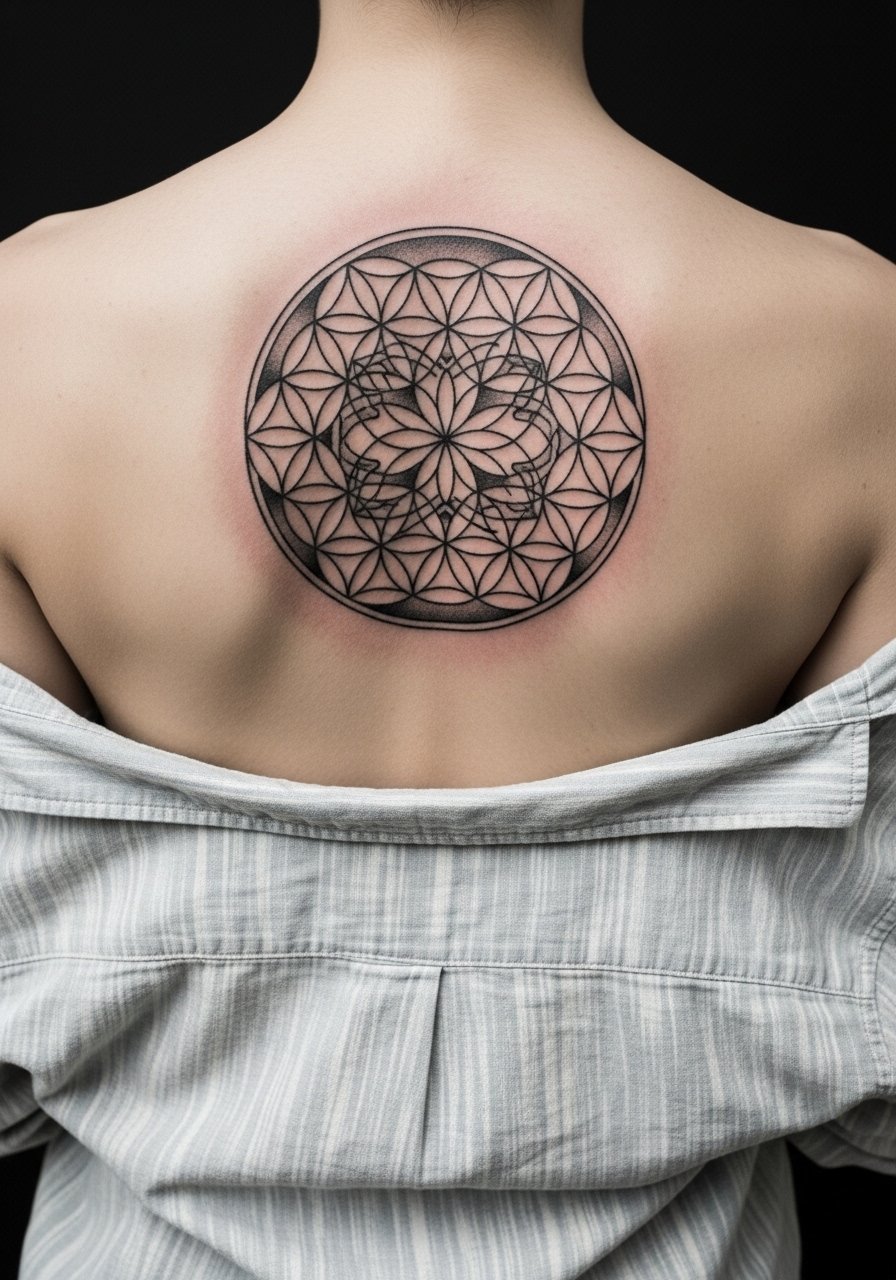
A back-center mandala gives the most room to layer petals and let the geometry keep air between intersections. This one is best for a multi-session custom project. In consultation ask the artist to mock the full scale and show how the petal layers read from six feet away. The mistake I see is compressing too many micro-details near the spine where movement can blur the finest dots. For the session wear a loose button-down you can pull aside without getting ointment on fabric. After healing, open-back dresses or tank tops reveal the design cleanly and let the symmetry hold visually.
11. Calf-High Bloom with Bold Shading
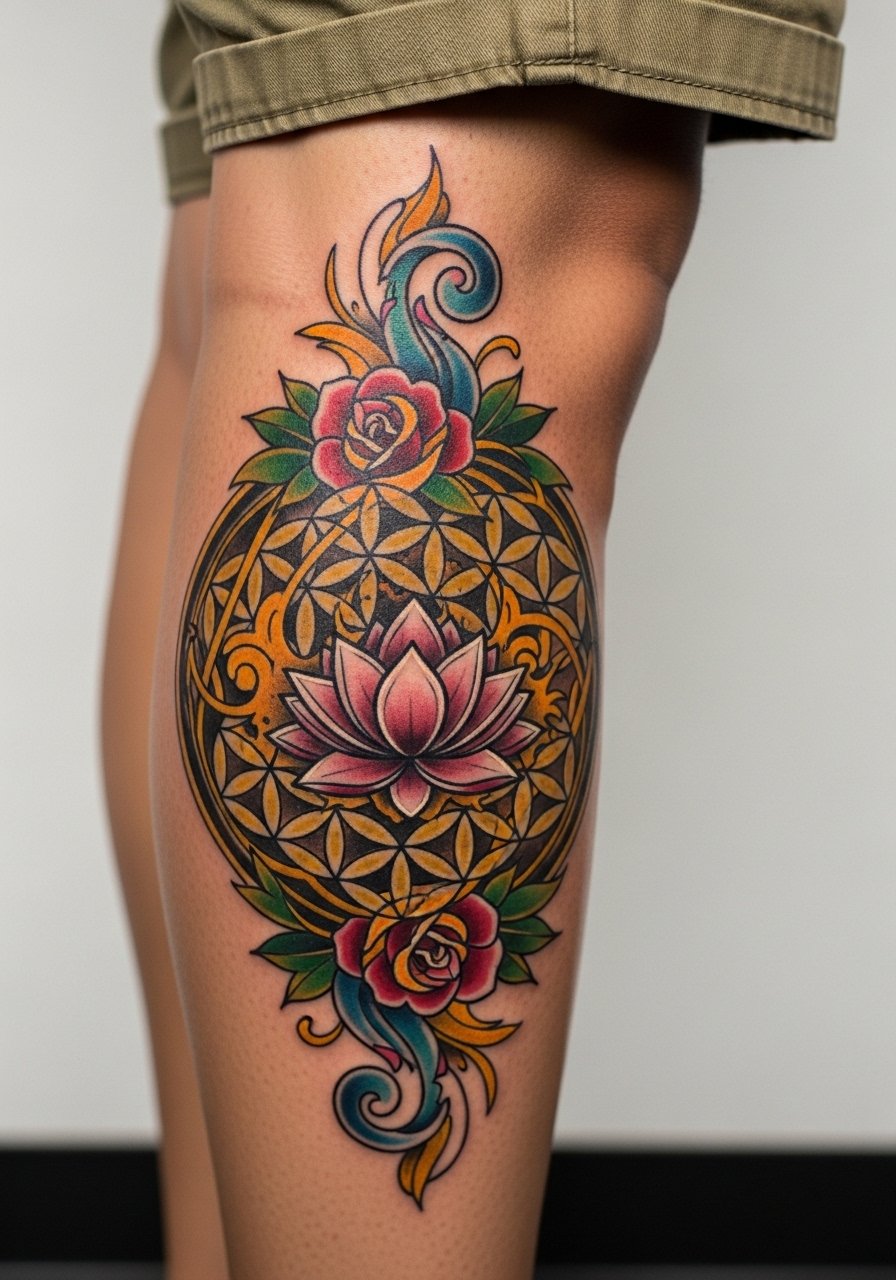
Calf placements allow for vertical compositions that play with petal length. I suggest stronger shading contrast in the petals rather than ultra-fine internal geometry. That choice keeps the piece readable from a distance and reduces early softening in the central intersections. Tell your artist where the visual focus should sit when you walk or stand. Expect a moderate session with some soreness when walking the first few days. For show-off outfits, pair it with shorts or a mid-length skirt and a pair of casual shorts that complement the vertical flow of the tattoo.
12. Shoulder Cap Highlight with Gold Accents
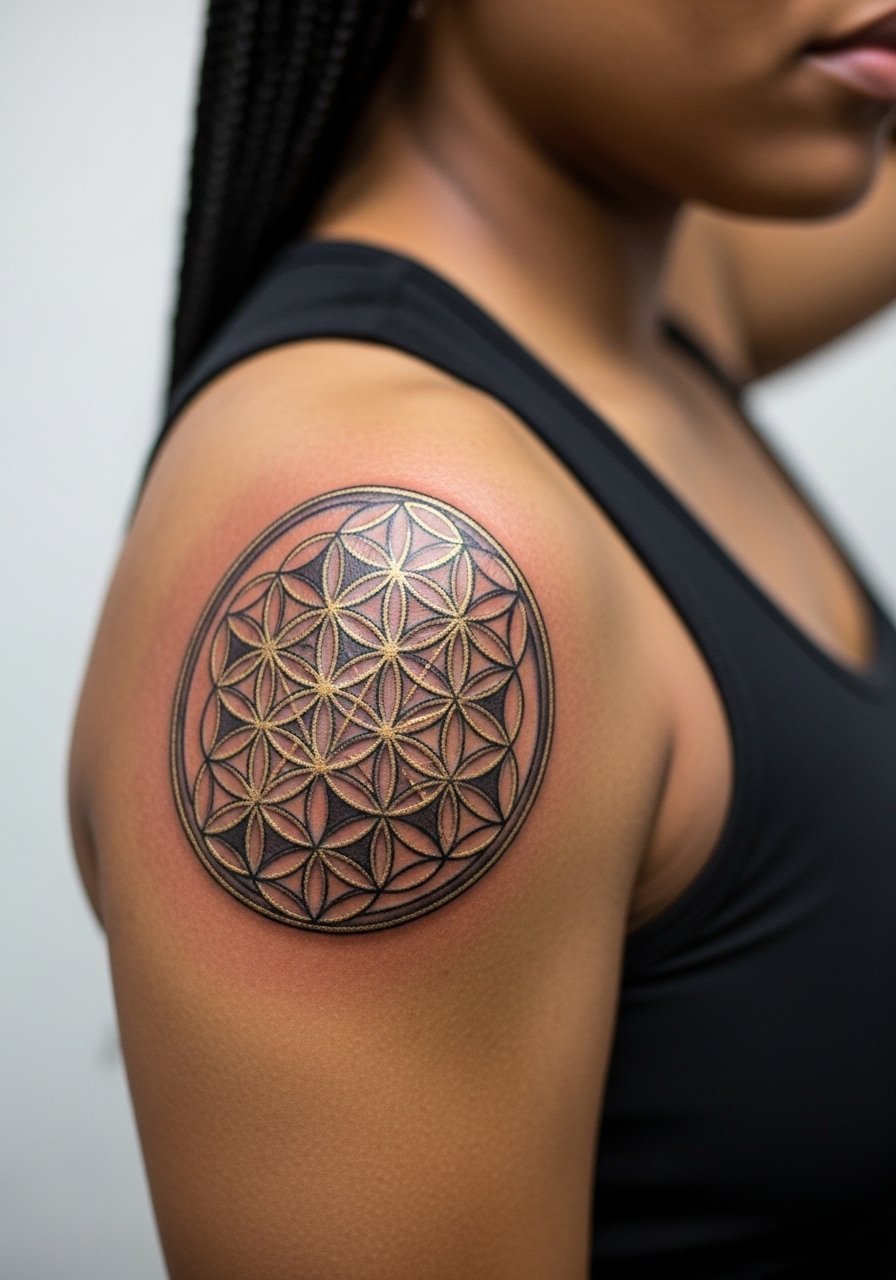
The shoulder cap is perfect for adding small metallic accents and saturated petal fills that catch light. Discuss with your artist whether they use metallic inks and how those age on your skin tone. A common mistake is asking for tiny metallic lines that can dull or scatter with UV exposure. This placement is low pain and photographs well. For the session wear a loose tank top so the artist can move around the shoulder freely. If you want subtle evening shimmer, choose accents that sit inside larger bold outlines rather than as replaces for structural linework.
13. Behind-the-Ear Mini Mandala with Hairline Framing

Tiny mandalas behind the ear read like hidden jewels when placed just under the hairline. They require a delicate hand and precise stencil positioning. Because this is a sensitive area, ask for a single pass with minimal shading and bold perimeter to protect the interior geometry. The common error is over-detailing at a scale too small for the pocket of skin, which leads to early blotching. Note that hair and clothing can rub the area while healing. For session prep, bring a zip-up hoodie you can pull aside without pulling a tee over your head. This placement also benefits from picking an artist experienced with small head-and-neck work.
14. Lower Back Floral Geometry
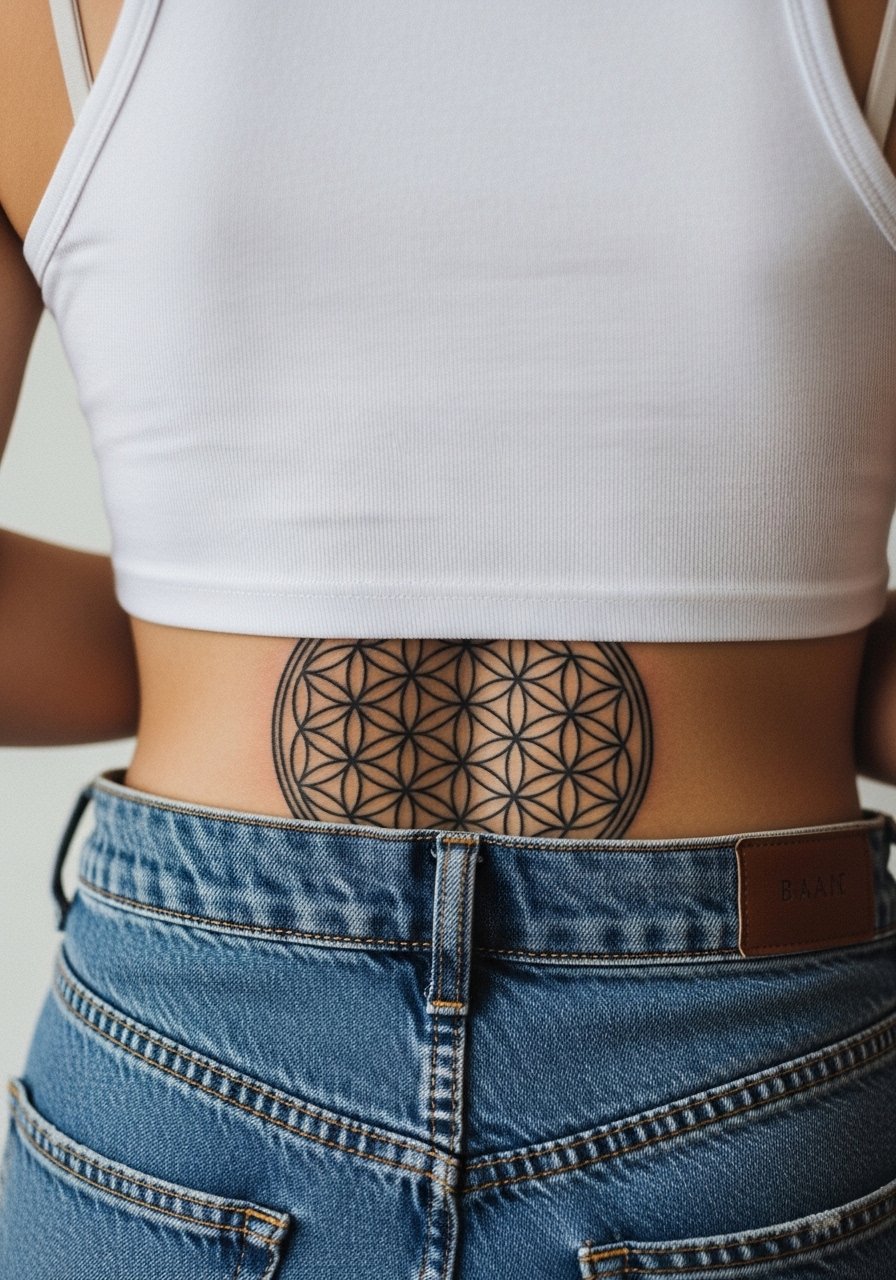
Lower back pieces let you combine wide petal spreads with dense central geometry while staying out of daily sun. A common mistake is centering the geometry too low where pants or waistbands rub during healing. During consultation, mark the waistline and adjust the design upward so it avoids constant friction. The session usually has moderate discomfort and quick recovery. Show it off with low-rise jeans or an open-back top when you want the piece visible. Because the area is often covered, these pieces can retain crispness longer than wrists or fingers.
15. Full Mandala Sternum Expansion
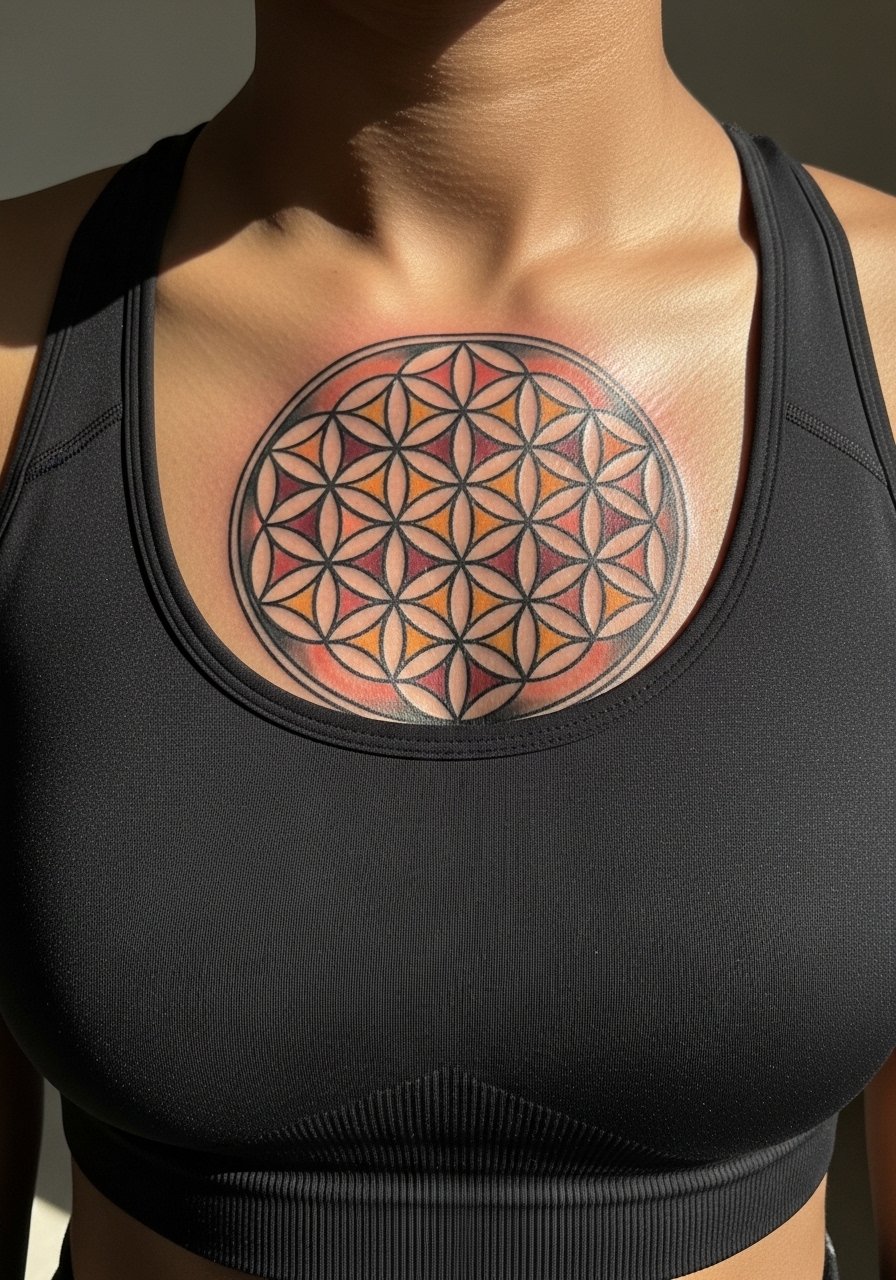
A sternum-focused mandala works when you want symmetry that reads under low necklines. This placement is sensitive and breathy during the session, so short breaks help. Tell your artist you want negative space preserved in the central geometry so the petal layers remain distinct over time. The most frequent error is squeezing too many intersecting dots in the sternum center where skin moves with breath. For the appointment, a fitted sports bra is easiest to wear and keeps the area tidy. Post-healing, strapless tops or bandeaus make the piece read like a natural garment accent.
16. Neo Traditional Sleeve Connector with Geometric Bands

Use the Flower of Life as a band to tie disparate neo traditional motifs across a sleeve. This helps unify color palettes and shapes. In consultation, request a template showing how the band sits when the arm is extended versus bent. A common mistake is making the band too narrow which leads to distortion when the arm moves. Expect multiple short sessions rather than one marathon. For showing it off, roll a sleeve or wear a short-sleeve button shirt that lets the connector peek through without revealing the whole sleeve.
17. Minimal Collarbone Bar with Micro Geometry

A minimal collarbone bar with micro geometry sits flat with clothing and reads like a crafted accent. This is for someone who wants the Flower of Life idea without a full mandala. Ask for slightly heavier outer lines and a cleaner interior so the micro geometry keeps shape under shirts and necklaces. The usual mistake is shrinking the geometry too far into the bone-rich collar area which increases blowout risk. For session wear a wide-neck shirt you can shift aside. Pair it with a thin chain pendant necklace that sits above the work without competing for attention.
Frequently Asked Questions
Q: Will the fine geometric lines of a Flower of Life blur faster on the ribs than on the forearm?
A: In my experience ribs and forearms behave differently. Ribs move and stretch more with breath, which can soften ultra-fine dots faster. If you want crisp long-term geometry on the ribs, ask for slightly larger spacing and stipple or dot work that reads even as it softens.
Q: Can neo traditional color be combined with sacred geometry without causing offense?
A: People are split on this. One group says sacred geometry like the Flower of Life is a universal motif open to reinterpretation. The other group prefers a respectful approach and discourages stripping symbols of their context. If this matters to you, discuss symbolism with your artist and consider subtle variations that honor the form rather than copying spiritual diagrams exactly.
Q: How should I dress for a sternum or upper chest session to make the appointment easier?
A: Wear a fitted sports bra or a wide-neck shirt you can pull aside without removing. That keeps the area accessible and prevents fabric from dragging over fresh ink. A zip-up hoodie is also handy for leaving the torso covered while getting on and off the chair.
Q: Do finger and wrist Flower of Life pieces need touch-ups more often than larger pieces?
A: Yes. Fingers and wrists face constant washing and friction which shortens how long tight geometry stays crisp. Plan on touch-ups earlier and accept that simplification at the time of tattooing increases staying power.
Q: Is there a risk of blowout with detailed neo traditional geometry on darker skin tones?
A: Blowout risk depends more on needle depth and spacing than skin tone alone. On any skin tone, tight geometry placed over thin or mobile skin increases blowout potential. Ask to see healed work on a range of skin tones in the artist's portfolio and request slightly bolder outlines if you want more longevity.