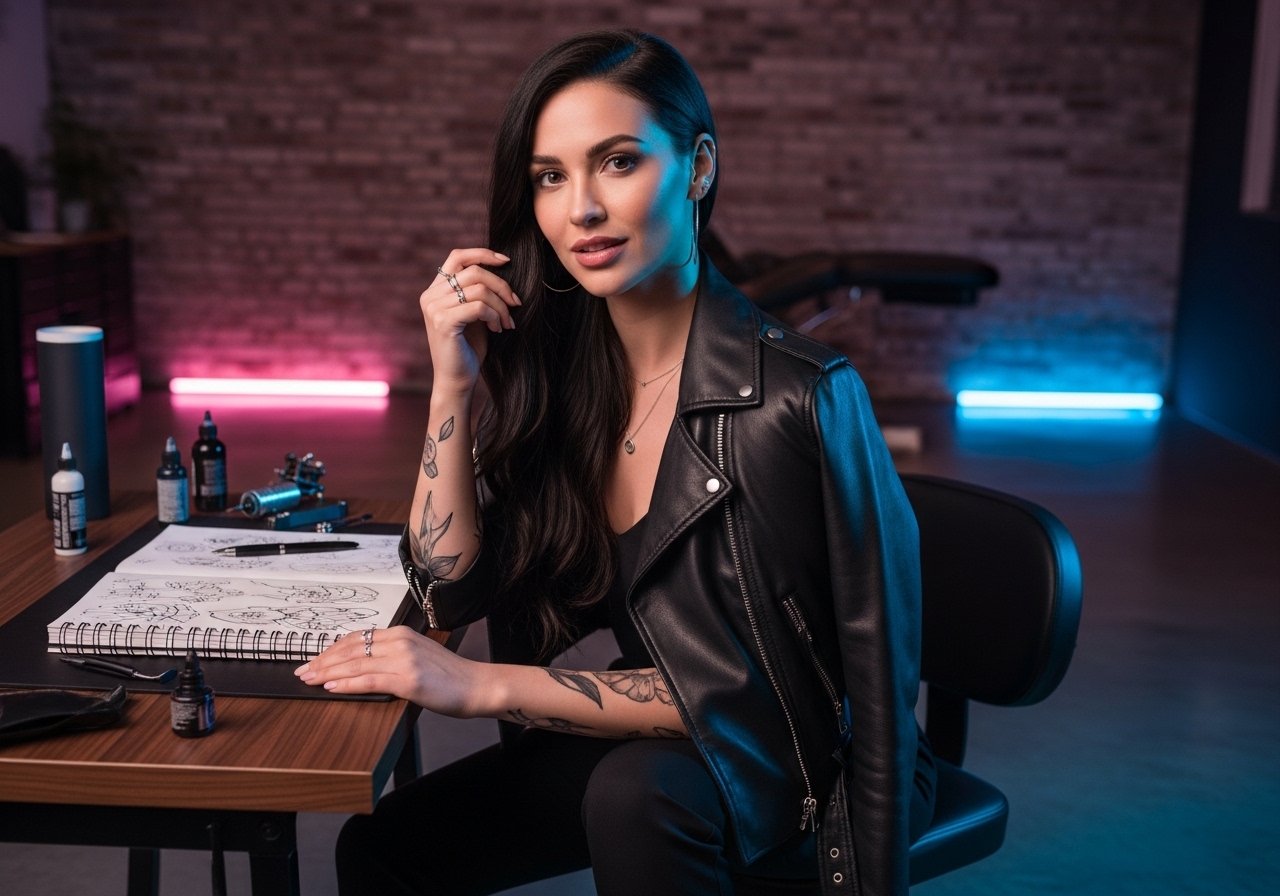
Fine line and bold color both look incredible on a half sleeve, but what holds up longer is rarely the flashiest choice. Neo traditional half sleeves sit between heavy saturation and illustrative detail, so the successful pieces are the ones that plan for movement, friction, and sun exposure from day one. Below are 17 half sleeve directions that balance color, linework, and real-world wear so you can pick a route that still looks intentional years from now.
1. Oversized Botanical Half Sleeve on Upper Arm
There is something about oversized blooms and curled leaves that makes neo traditional read like a modern heirloom piece. I recommend this when you want a statement that still breathes, because larger petals let the artist space the linework and avoid crowded details that blur. Tell your artist to treat the petals as shapes with thicker outer linework and feathered inner lines for depth. Expect the session to be a steady five to six hours depending on coverage. Fair warning: small dot shading packed densely is a common mistake that turns into muddy shading by year three. For showing it off, roll sleeves or wear a linen short sleeve shirt in neutral tones so the colors sit against calm fabric and the arm reads like an accessory.

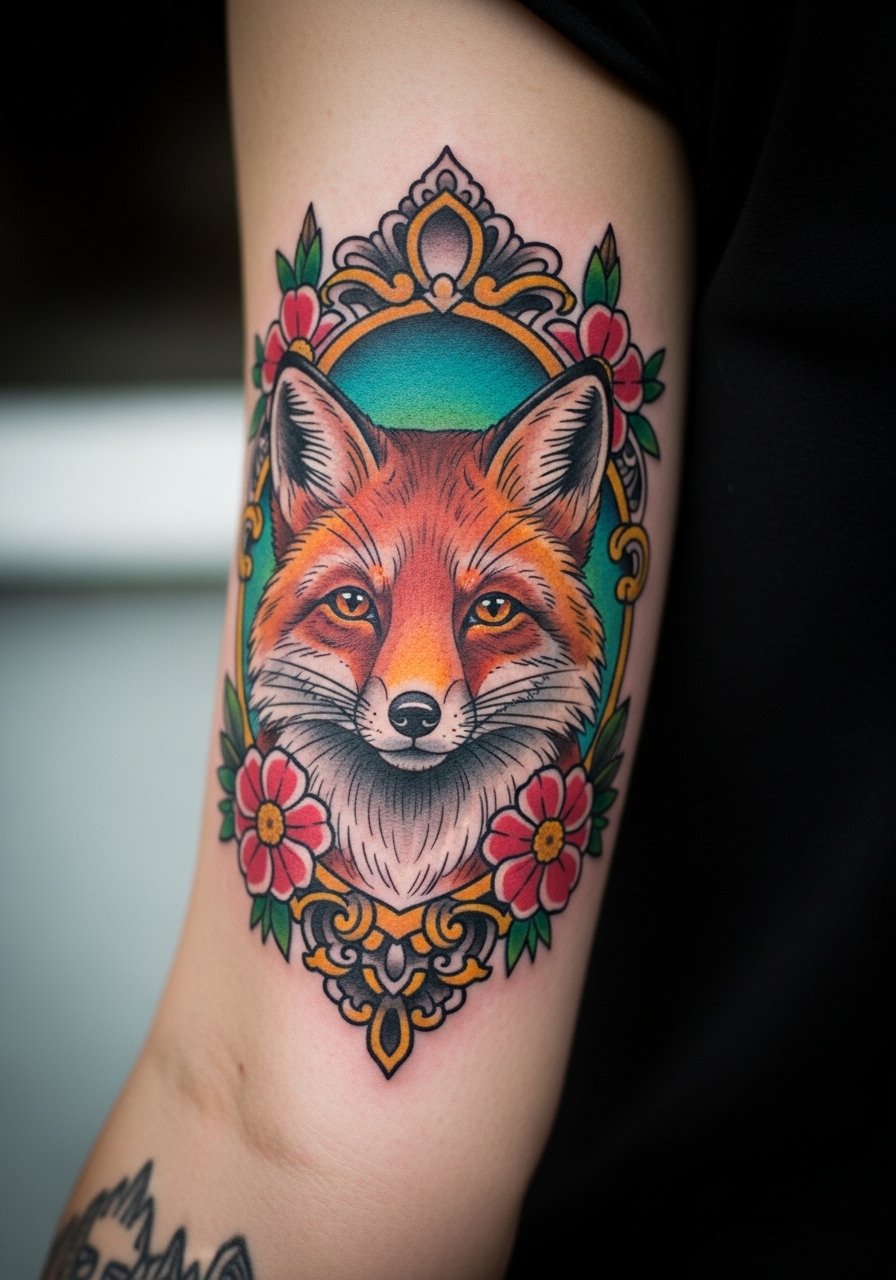
2. Animal Portrait Half Sleeve with Decorative Frames
This direction pairs a central animal portrait with decorative neo traditional frames and foliage. Use it when you want personality and narrative without leaning into photorealism. In consultation, bring three references: one for the animal pose, one for the frame motif, and one for color palette. The biggest aging risk is placing tiny whisker lines too close to saturated color, which causes early softening. Expect two sessions if you want saturated color and crisp linework. Pain sits at a moderate level on the outer bicep. If you plan for a tighter office dress code, discuss how high the frame sits so the piece can be covered by a short sleeve.
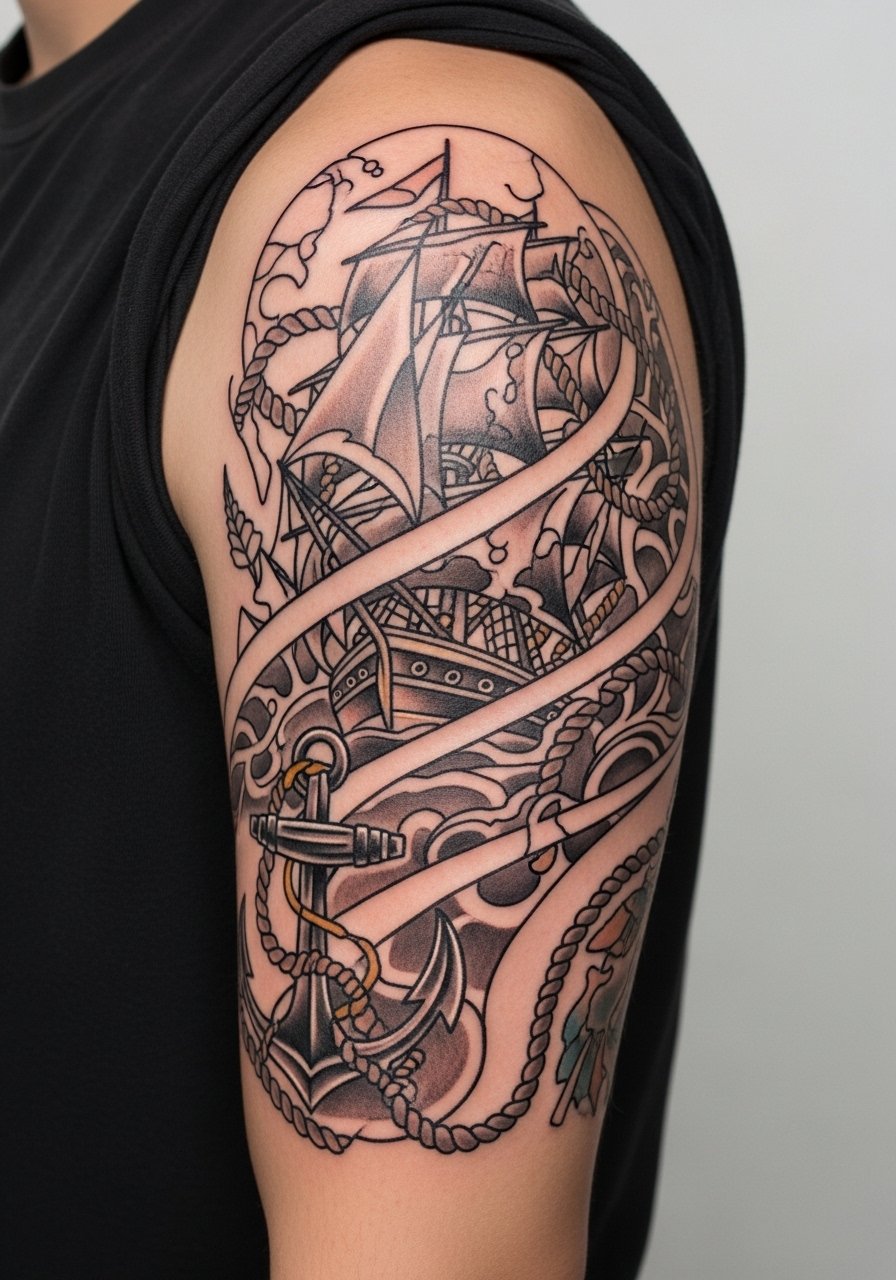
3. Nautical Neo Traditional Sleeve That Wraps the Arm
This idea leans into anchors, ships, and rope borders rendered in neo traditional color and heavy outlines. When the design wraps the arm it reads balanced from any angle, so I recommend it for people who want a visible piece that still looks coherent under a shirt sleeve. During the consult ask for tied composition points every three inches so the flow reads continuous. The common mistake is over-detailing the ship’s rigging at small scale, which fades first. Expect moderate discomfort near the inner arm where the skin is softer. For post-session outfits, a loose button-down shirt you can pull aside keeps access clean during touch-ups and looks great when you roll the sleeves to reveal the wrap.
4. Mythical Creature and Wave Composition across Bicep and Shoulder
A dragon or stylized creature riding waves reads well when you want motion and bold silhouettes. The visual trick is to give the creature broad, readable flats of color and avoid tiny scales that turn into texture blobs over time. The biggest mistake customers make is asking for excessive micro-detail in the creature’s face at small scale. If you want longevity, ask for heavier outer linework and layered color blocking for saturation. Sessions will feel firmer near the shoulder cap and lighter over muscle. For evenings out, pair this piece with an open-back midi dress or a tank to frame the shoulder when you want it on display without distracting from the silhouette.

5. Antique Mirror Frame with Floral Fill on Upper Arm
This option frames a central negative space inside an ornate neo traditional border for a subtle statement that can hold scripture, a portrait, or remain blank as negative space. When you want that heirloom feel, ask the artist to leave breathing room inside the frame so ink does not encroach on the central area. Aging looks different here because the frame is the feature; heavy stipple inside the border will fade into a gray wash before full color backgrounds do. The session can fragment into two shorter visits to let saturation rest between passes. If the framing motif references a cultural ornamental style, be explicit about respectful adaptation and origin. One camp sees direct replication as cultural borrowing, while the other accepts thoughtful reinterpretation. Ask where the artist stands.

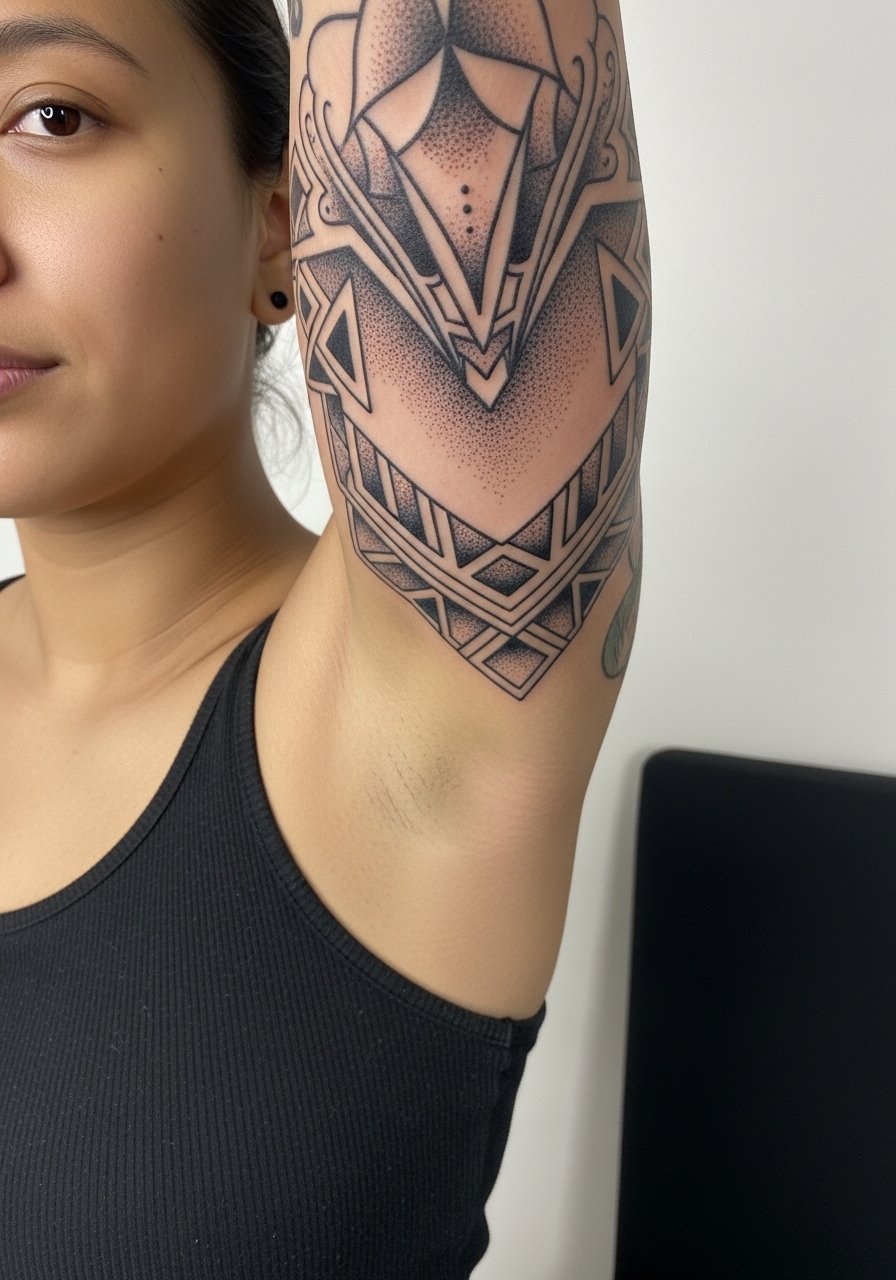
6. Geometric Anchor Points with Stipple Shading on Inner Bicep
Fair warning: the inner bicep is softer and more likely to show movement as the arm flexes. That matters for geometric elements. One common route is to anchor strong shapes with bold outlines and use stipple shading inside to keep texture crisp at six months and two years. During consultation, ask for intentional spacing between lines to reduce blowout risk. The session feels more sensitive on the inner arm near the armpit. For the appointment wear a tank top so the artist has clear access and you stay comfortable while the arm is worked on.
Pre-Session Essentials
The upper-arm and inner-bicep pieces above benefit from a few practical items that smooth the session and the first week of healing.
-
Stencil transfer paper kit. Lets you confirm placement on curved arms before the needles touch skin, which is helpful for wrap and frame designs.
-
Topical numbing cream. Applied per instructions it reduces edge pain on inner arm and shoulder areas without affecting saturation work.
-
Thin protective film roll. Useful for covering parts of a half sleeve that brush clothing in the first 48 hours.
-
Fragrance-free body wash. Cleans the tattooed region gently during showers so delicate linework and stipple shading are not irritated.
-
Aquaphor healing ointment. A thin layer in the first few days keeps saturated areas from drying out while still allowing the skin to breathe.
7. Bold Color Block Neo Traditional with Negative Space
This section leans into bold color fills and deliberate negative space for contrast. I recommend it for people who like a graphic look that reads well from a distance. Tell the artist to plan the negative areas as deliberate shapes rather than leftover gaps. The common error is overworking small gradients inside negative zones, which age into muddy patches. Expect longer single sessions to lay down even saturation. Pain is moderate across the outer arm and increases toward the triceps. For showing off the piece, short-sleeve tees in muted patterns help the colors pop without competing.

8. Animal Skull and Bloom Composition That Ages Well
Use an animal skull motif when you want contrast between hard linework and soft florals. When the skull is rendered with thicker outlines and the florals use softer saturation, the two elements age at similar rates. A frequent misstep is adding micro-detail inside the skull that looks great fresh but softens into a gray patch. Ask for a touch-up plan at year two for dense black work. Sessions can feel sharp on the bone contours and softer on surrounding muscle. For session comfort, wear a loose drawstring linen pant if the design dips near the tricep so fabric doesn't press against the area afterward.

9. Scripted Banner with Illustrative Motifs Around the Arm
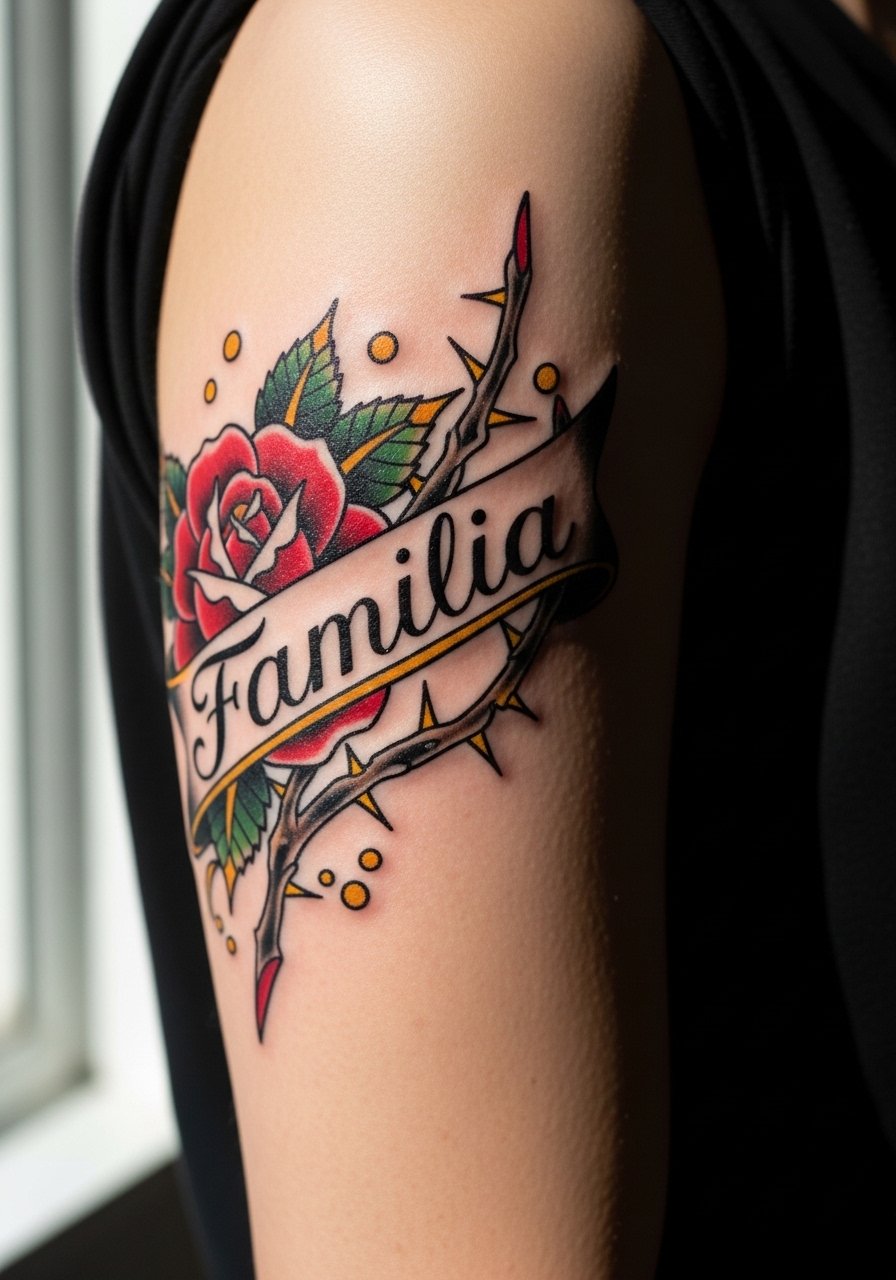
A banner with script framed by neo traditional motifs is a classic move that can remain legible if scaled properly. When words are involved, ask the artist to use slightly heavier linework for each letter than you might expect. Small script inside filigree loses counters and becomes hard to read after a few years. Session feel is gentle on the outer arm but can sting more where the skin meets muscle. For showing the script at formal events, a thin chain pendant necklace sits above the banner and creates a composed frame that draws the eye upward.
10. Neo Traditional Merge with Dot Work and Whip Shading
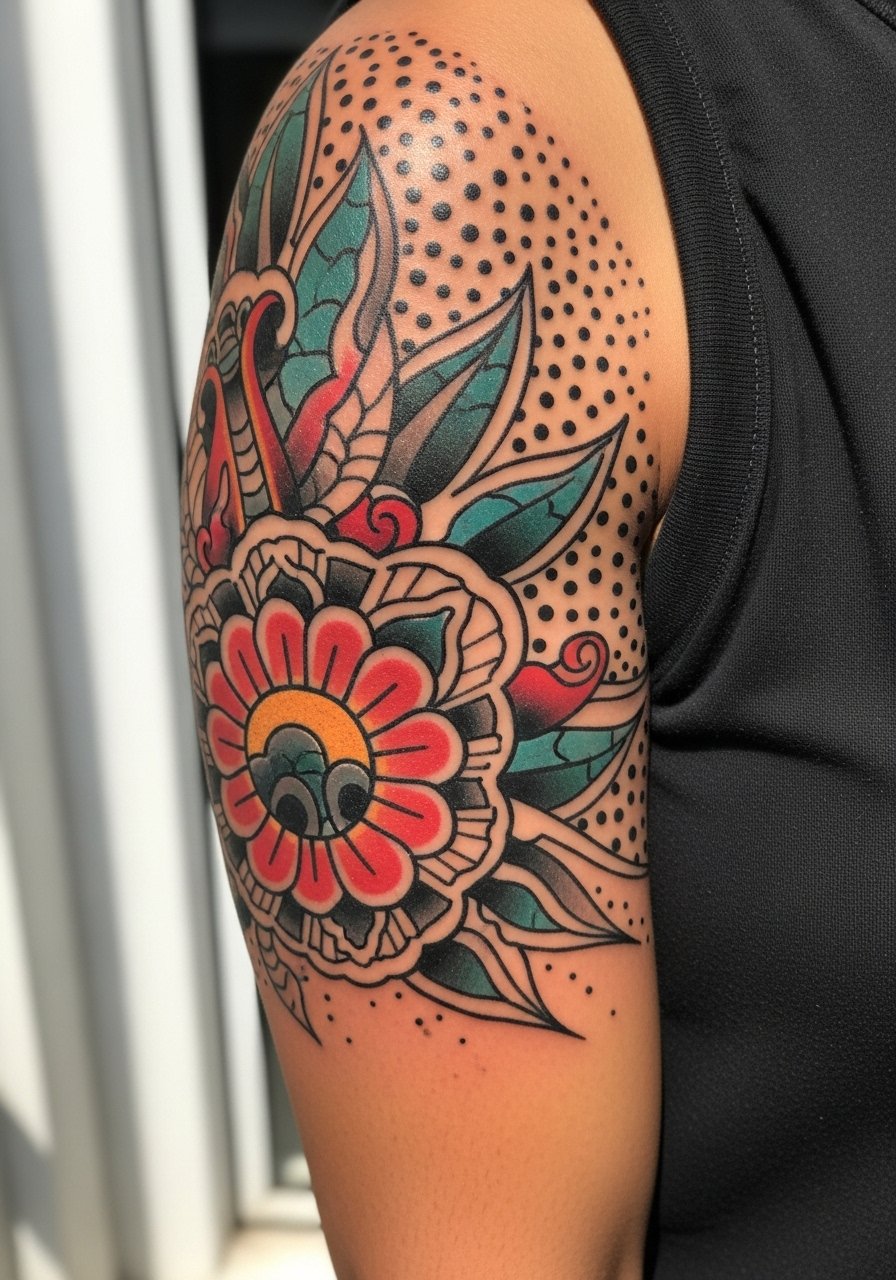
This hybrid combines neo traditional color blocks with dot work backgrounds and whip shading for texture. Choose this when you want color but also atmospheric depth. In consultation ask for the dot work to sit at a larger scale near high-motion areas so it does not morph into a gray wash. Artists split over the best dot density near the inner arm. One camp argues denser dots read richer and survive longer. The other camp prefers lighter dot density to avoid early merging. The right choice depends on your skin elasticity and the artist's technique. Expect touch-ups at year three for texture-heavy areas.
11. Portrait-Like Neo Traditional with Floral Halo
This direction softens a figurative portrait into neo traditional language with a floral halo. It reads like a modern cameo rather than a photo. The key is clear separation between facial linework and surrounding ornament. A mistake I see is squeezing too many facial micro-details into a compact area, which fades into blur. Sessions can require breaks because facial contours take concentration. If your portrait idea references cultural or religious iconography, be clear about respectful rendering. For show-off outfits, a thin chain pendant necklace keeps neck area minimal so attention stays on the upper-arm portrait.

12. Insect Motif with Metallic-Looking Color and Bold Outlines
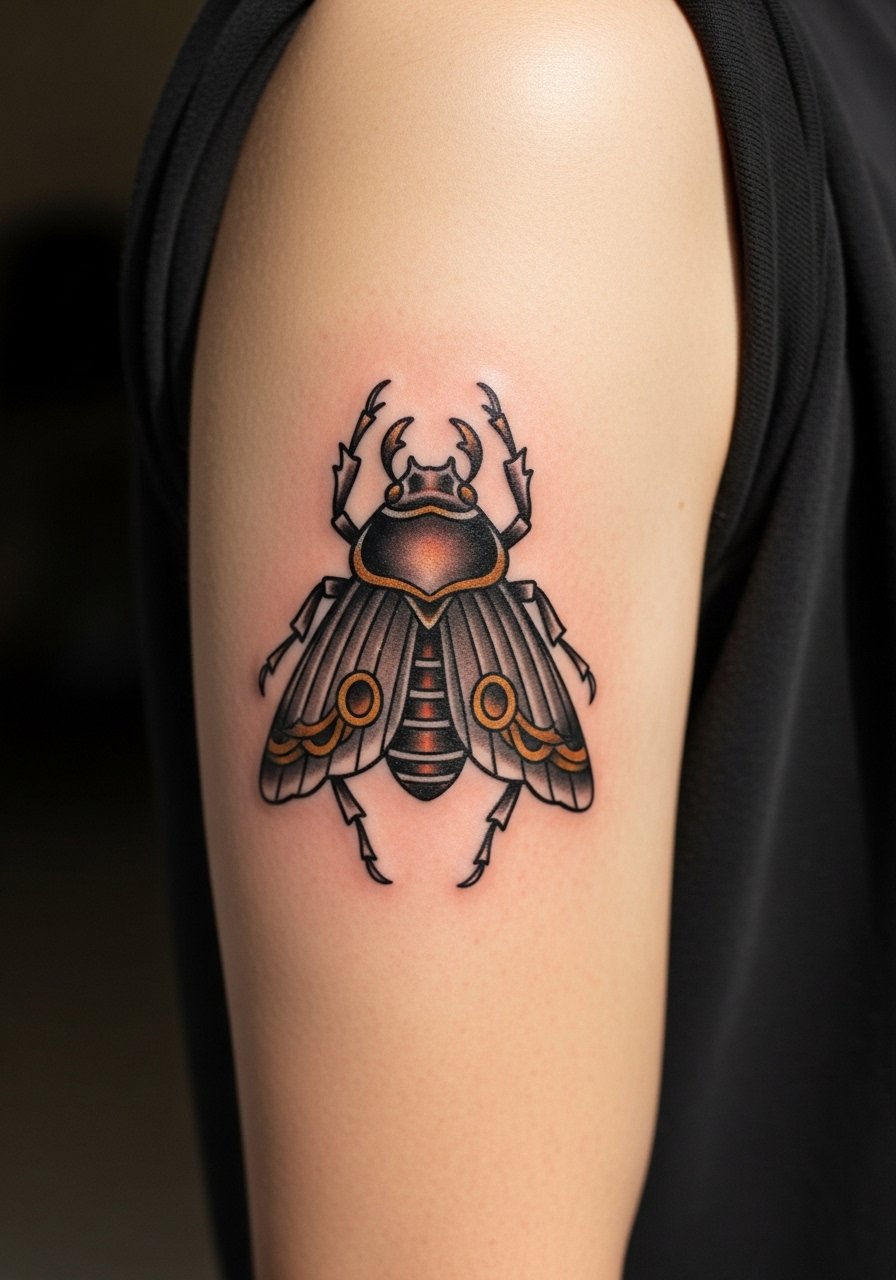
A beetle or moth with metallic color gradients reads dramatic without needing photo realism. Request layered color glazing during the session to build the metallic look gradually. The common error is relying on single-session saturation for iridescence, which often looks patchy later. The piece ages differently where color meets thick black outlines, so plan touching up the edges at two to three years. The session over the outer arm is tolerable for most. Pair the design with rolled-up sleeves or a short sleeve linen shirt to let the wing detail catch light without distraction.
13. Architectural Neo Traditional with Rope Borders
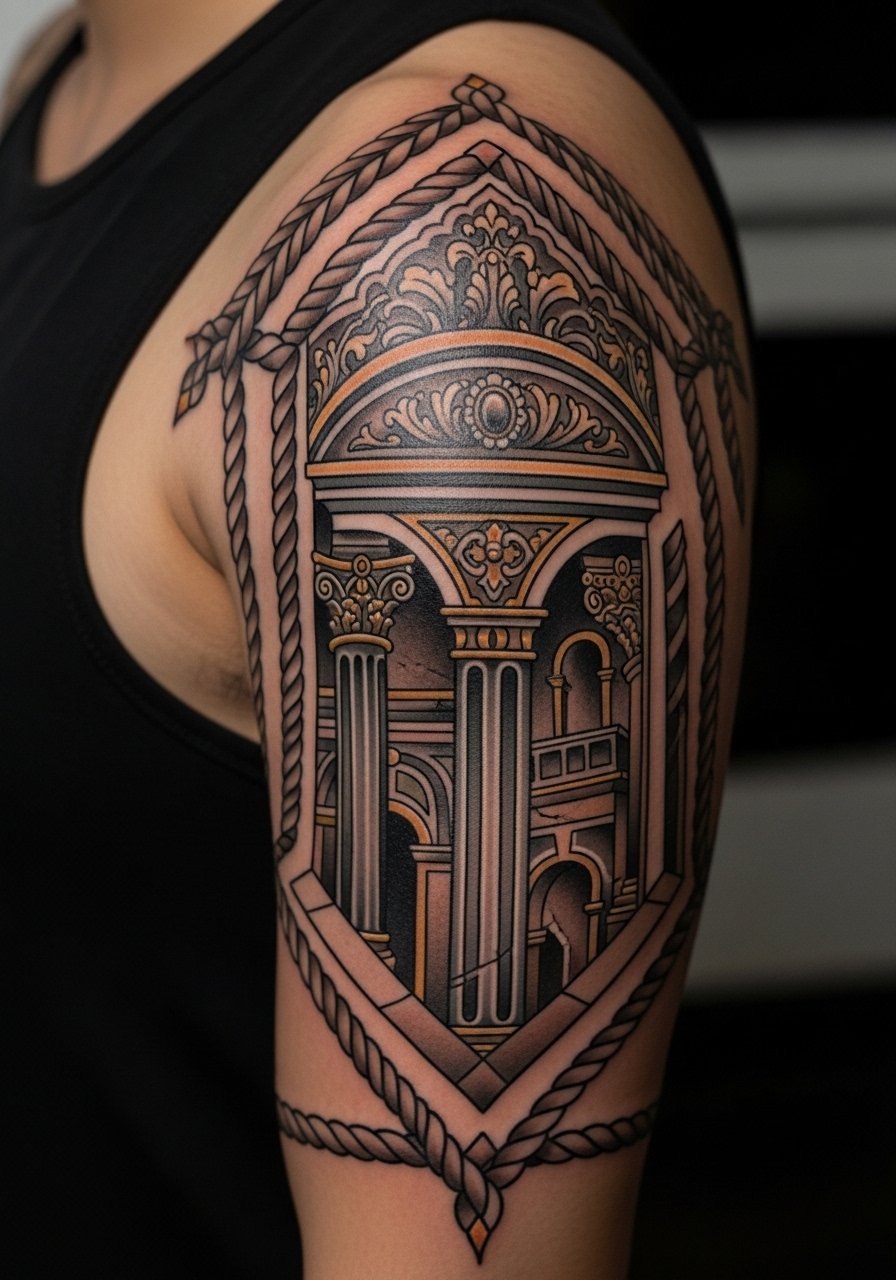
This idea uses arches, columns, and rope borders rendered in neo traditional shading for a structured sleeve that still feels organic. Tell the artist to design the architectural elements as landmarks placed every few inches so the eye can follow the arm. A real mistake is making columns too thin and close, which leads to loss of definition with skin movement. Expect longer lines to need touch-ups sooner than solid color fields. For work-friendly reveal, wear a loose button-down shirt that you can roll to show the upper half only.
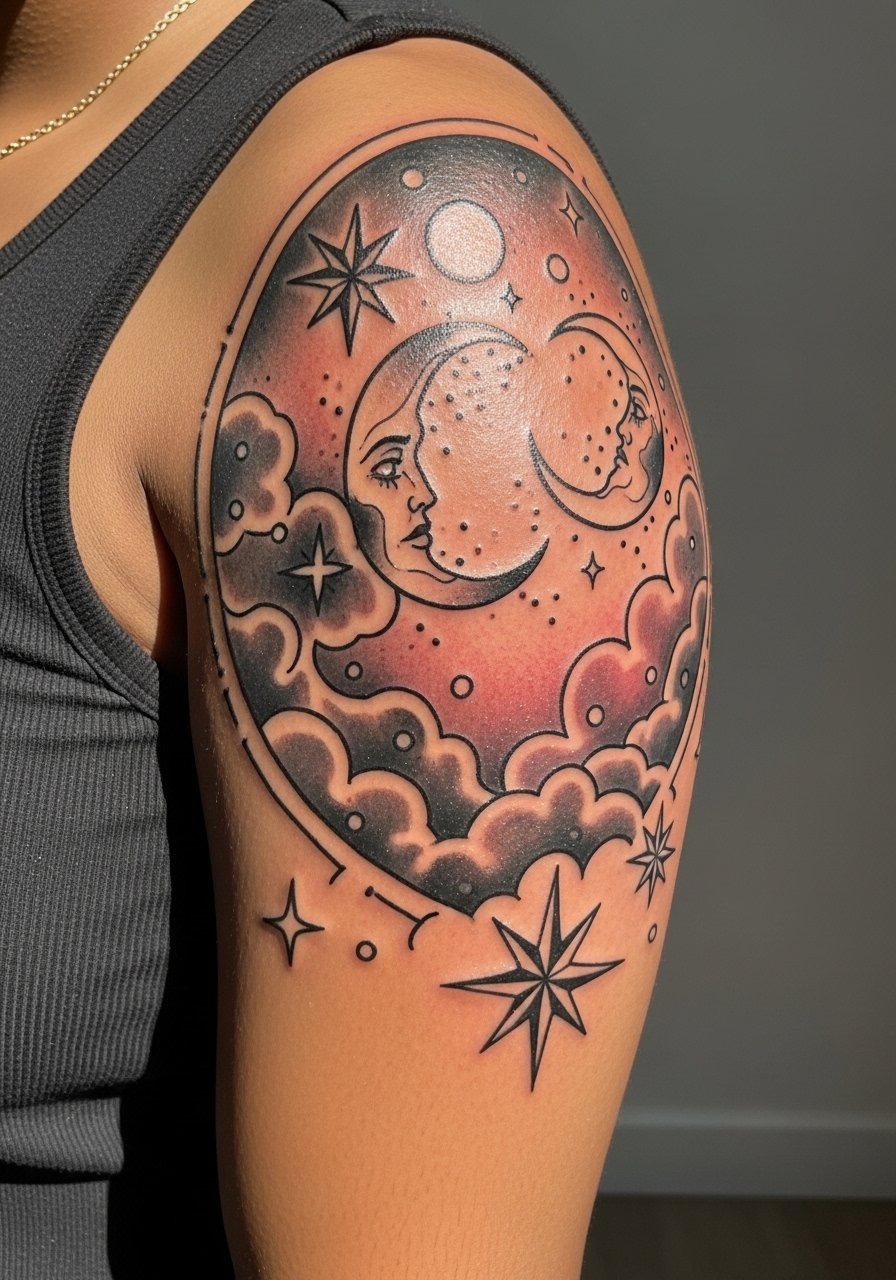
14. Celestial Motifs with Bold Outlines and Soft Gradients
Stars, moons, and planetary motifs framed in neo traditional colors give a timeless yet modern feel. The trick is to use bolder outlines on stars and softer gradients in the sky so the elements contrast over time. Small dotted halos around stars are a common aging problem unless spaced widely. Sessions are comfortable on the outer arm but can sting near inner creases. For evening looks, an open-back midi dress or sleeveless top showcases the shoulder sweep without competing with necklaces.
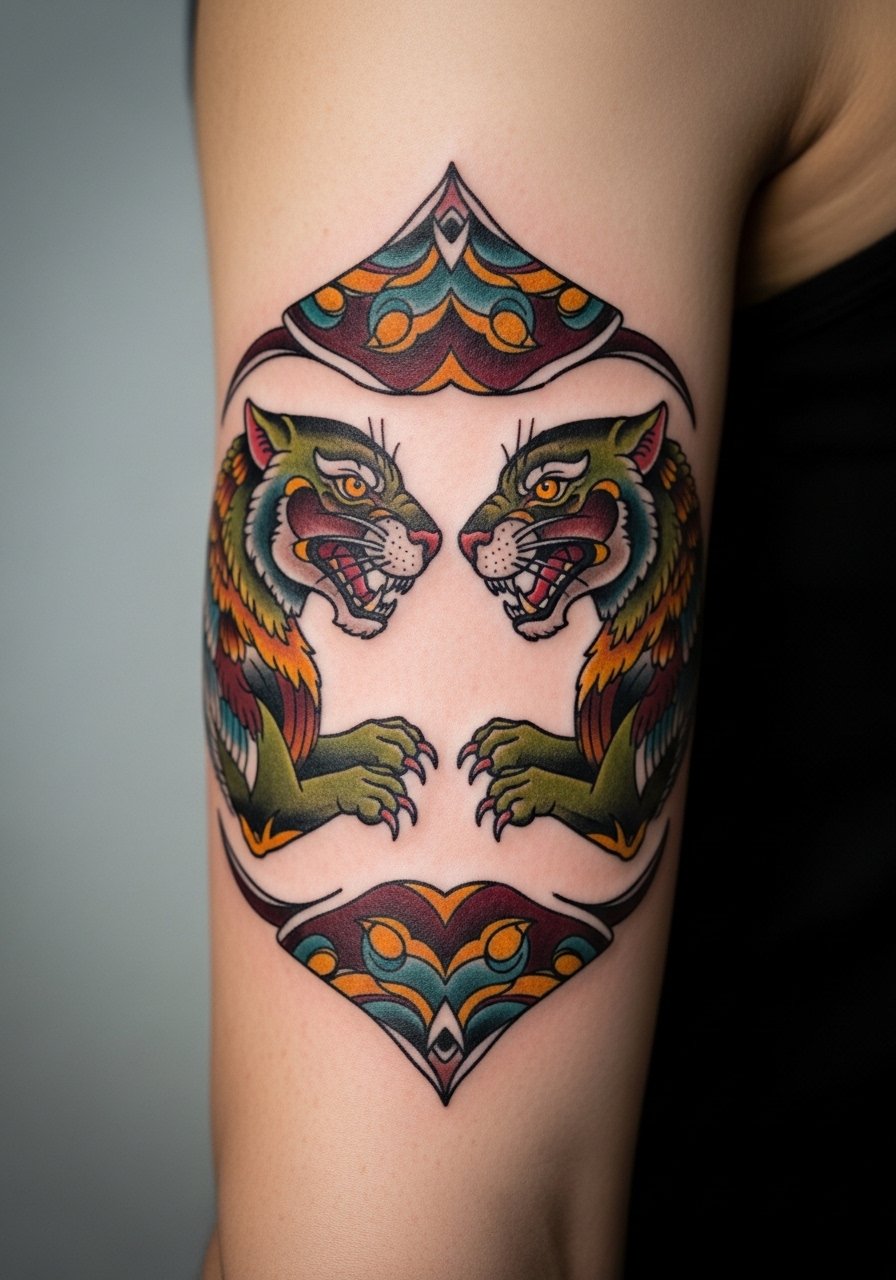
15. Stylized Animal Pairing That Wraps Toward the Elbow
Pair two animals in mirrored poses so the design reads balanced when the arm moves. Ask the artist to build clear negative space between the figures so motion does not turn them into a single mass. A frequent mistake is overlapping too many small motifs between the animals, which creates early blurring. Expect two sessions for saturation and linework. For the appointment wear a loose tank top so the artist can access the upper arm and roll sleeves without pulling at fabric.
16. Mandala-Inspired Neo Traditional with Floral Layers
A mandala translated into neo traditional language uses petals and ornamental bands rather than micro geometric fills. One camp sees modern mandalas as a respectful design evolution. The other camp cautions against direct cultural replication without context. If you choose this path, ask for stylized references and subtle changes rather than an exact cultural copy. Space the mandala larger rather than smaller to keep the radial linework readable at year two and beyond. For show-off outfits, pair with an open-back dress or sleeveless top to let the circular composition breathe.

17. Storyboard Half Sleeve That Reads as Panels
This idea treats the half sleeve like a vertical storyboard with panels that tell a short narrative. When you want storytelling, map three to five scenes up the arm so each panel has breathing room. The common mistake is squeezing too many micro-elements into each panel. In practice, larger panels with fewer focal points age far better. Touch-ups depend on how dense the black borders are. For session comfort pick a day when you can rest afterward because longer sessions that cover multiple panels build fatigue and swelling.

Frequently Asked Questions
Q: Will neo traditional color hold up better on the outer arm than the inner arm?
A: In my experience outer arm pieces generally hold color and linework longer because the skin is less compressible and gets less friction from clothing. Inner arm work needs more spacing and heavier lines to avoid early merging, and you should plan a realistic touch-up window around year two to three depending on sun exposure.
Q: How do I explain to an artist that I want neo traditional scale, not micro-detail?
A: Bring photos showing the scale you like and point out one area to be simplified, such as petals or facial details. Ask the artist to sketch the piece at full size on skin as a stencil so you can see spacing, and mention you prefer heavier outline anchors to preserve readability.
Q: Are there design types within neo traditional that I should avoid if I have darker skin?
A: No designs are off limits, but contrast planning matters more. I advise stronger linework and saturated flats for darker skin tones so the piece reads well from a distance. Discuss contrast and color choices with the artist and request healed-photo examples on similar skin tones.
Q: Do mandala-inspired neo traditional designs cross a cultural line?
A: Opinions split. One camp says direct replication of sacred motifs feels inappropriate without cultural context. The other camp accepts stylized reinterpretations when credit and respectful adaptation are acknowledged. If this concerns you, ask the artist how they adapt cultural motifs and whether they prefer creating an original pattern inspired by the source rather than copying it.
Q: How should I dress the day of a half sleeve session on the upper arm?
A: Wear something that gives your artist easy access, like a loose tank top or a button-down you can pull aside. Comfort is key because long sessions can make shoulders and triceps sore, and easy-to-remove layers keep swelling and cleaning simple.