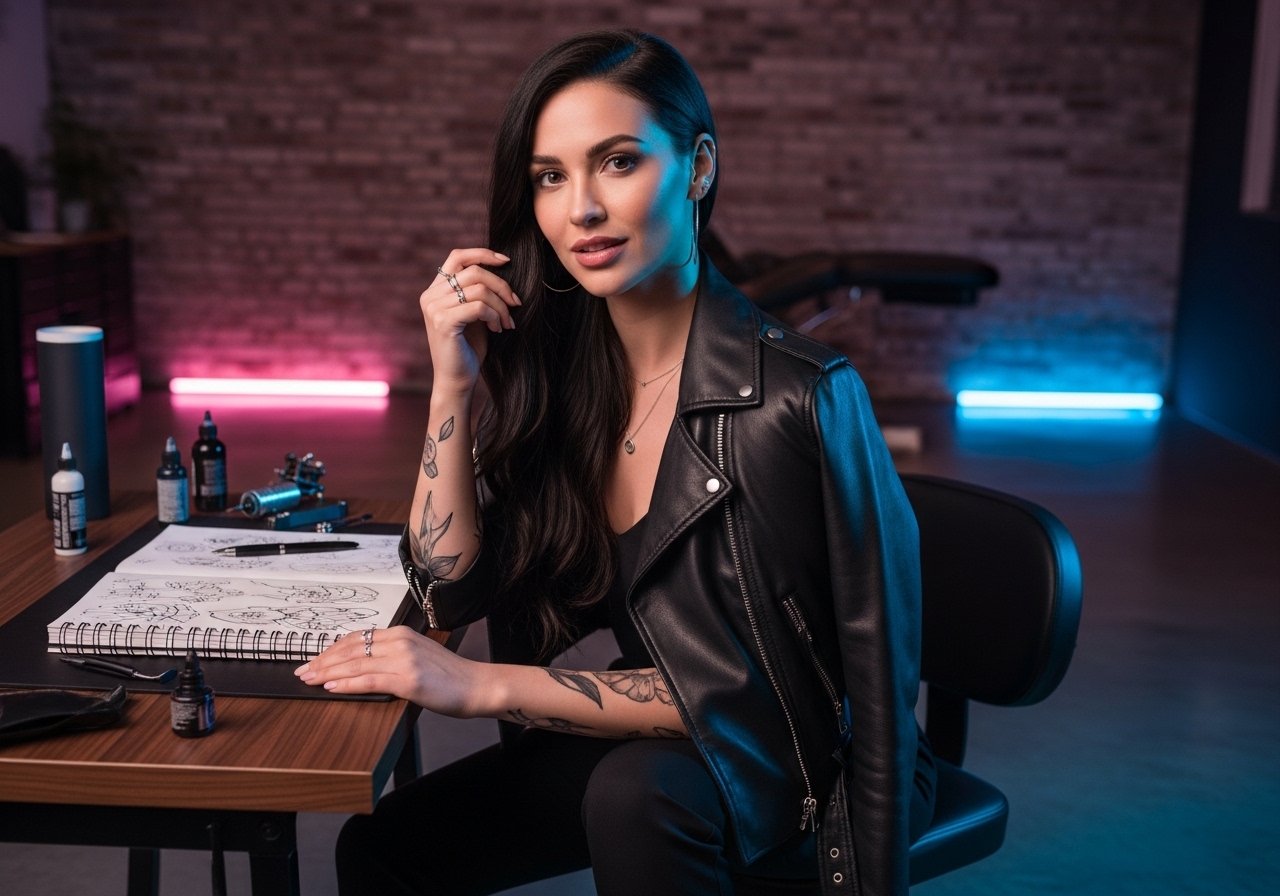
Fine line trends and viral color bursts grab attention, but what lasts on skin is often the opposite of what racks up likes. I see guys book neon watercolor pieces and end up scheduling touch-ups two years later, while black silhouettes age into something that still reads from across the bar. If you worry about muscle changes, dark skin contrast, or flaky booking across guest spots, these 21 phoenix concepts balance show-off looks with real-life durability and session advice.
1. Micro-Realism Phoenix on Outer Forearm
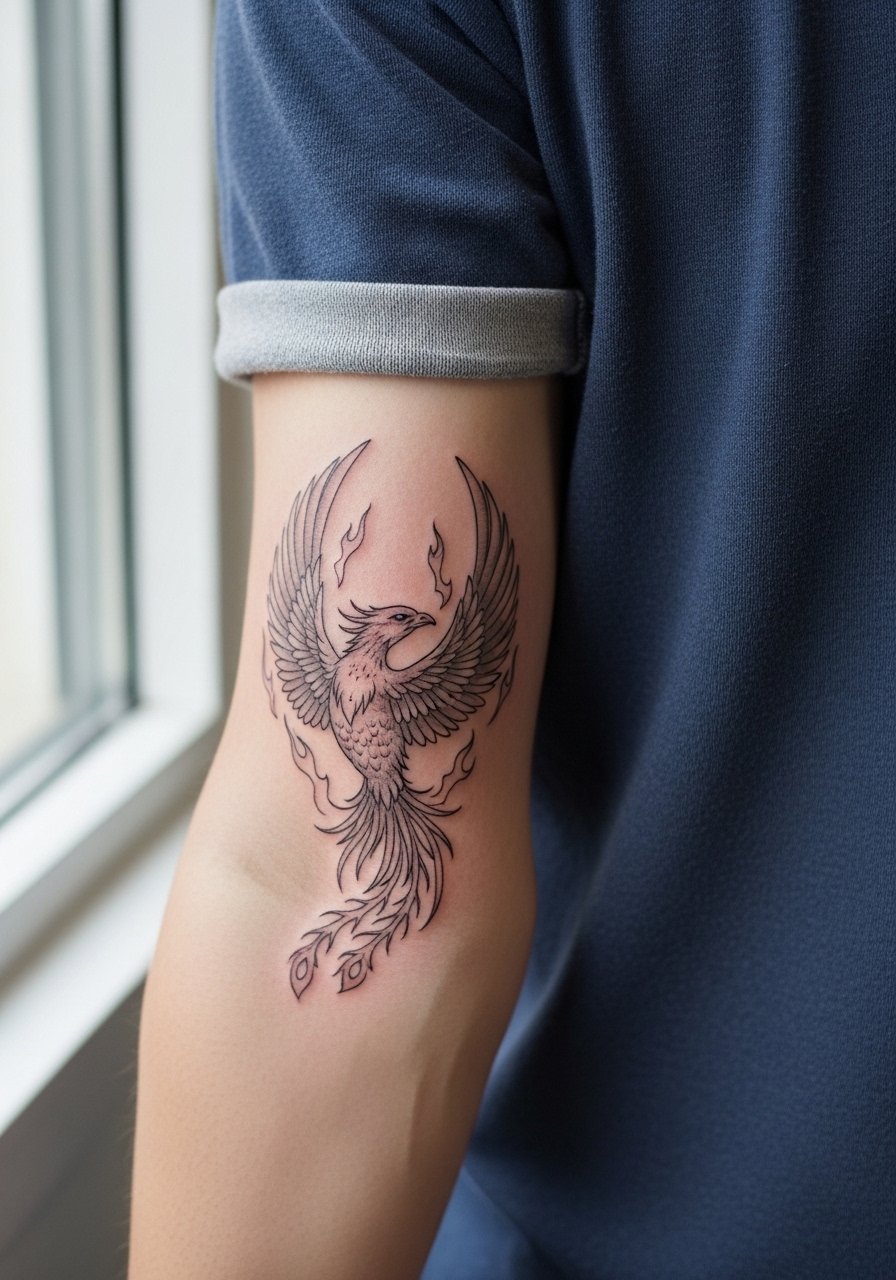
I’ve seen forearm micro-realism last best when artists scale the feathers slightly larger than the iPad mockup. Tell your artist you want the feather detail simplified enough to keep texture after a couple years and to avoid tiny hairline strokes that blur. Pain is moderate for most men and sessions usually run two to three hours. Common mistake is asking for extreme tiny detail in a 4-inch piece. That bites back at year two when saturation softens and touch-ups climb. For appointments, wear a fitted henley shirt you can roll up without fabric brushing the fresh ink. Expect a touch-up at year two for crisp micro shading.
2. Neo-Traditional Phoenix Across Upper Chest
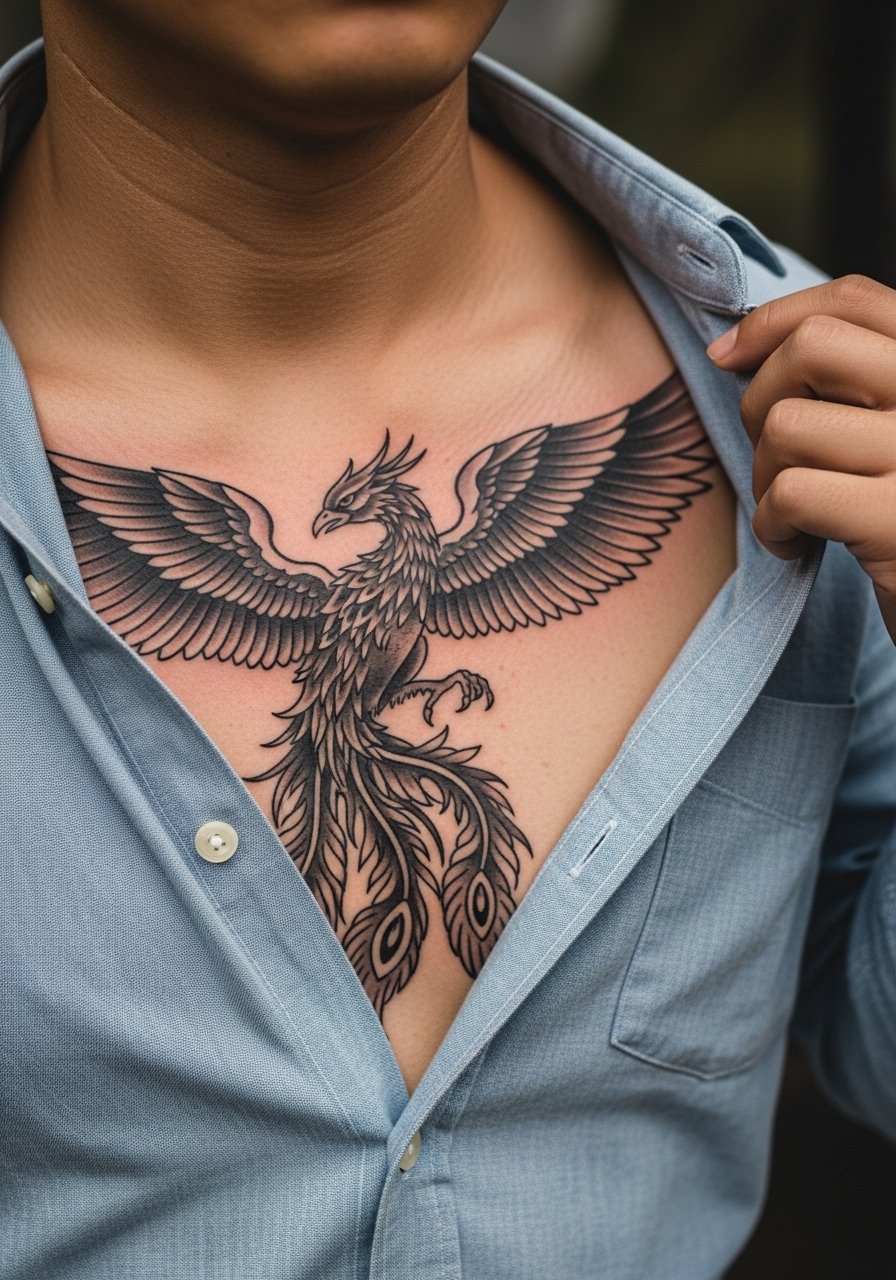
There is real payoff to full-color neo-trad on the chest because the area flexes less than the forearm, so saturation stays vibrant longer. During consultation, ask for thicker primary outlines and layered color saturation to prevent early washout on darker skin. Session time is about three hours per sitting and expect multiple passes for layering. A common aging issue is using watercolor fills in the chest and skipping saturation passes. That choice looks great fresh but fades fast with sweating. To show it off, pair with an open button down shirt that frames the upper chest. If you plan heavy gym bulking, tell your artist so they can advise on placement that avoids peak muscle stretch.
3. Geometric Phoenix Wrap on Outer Thigh
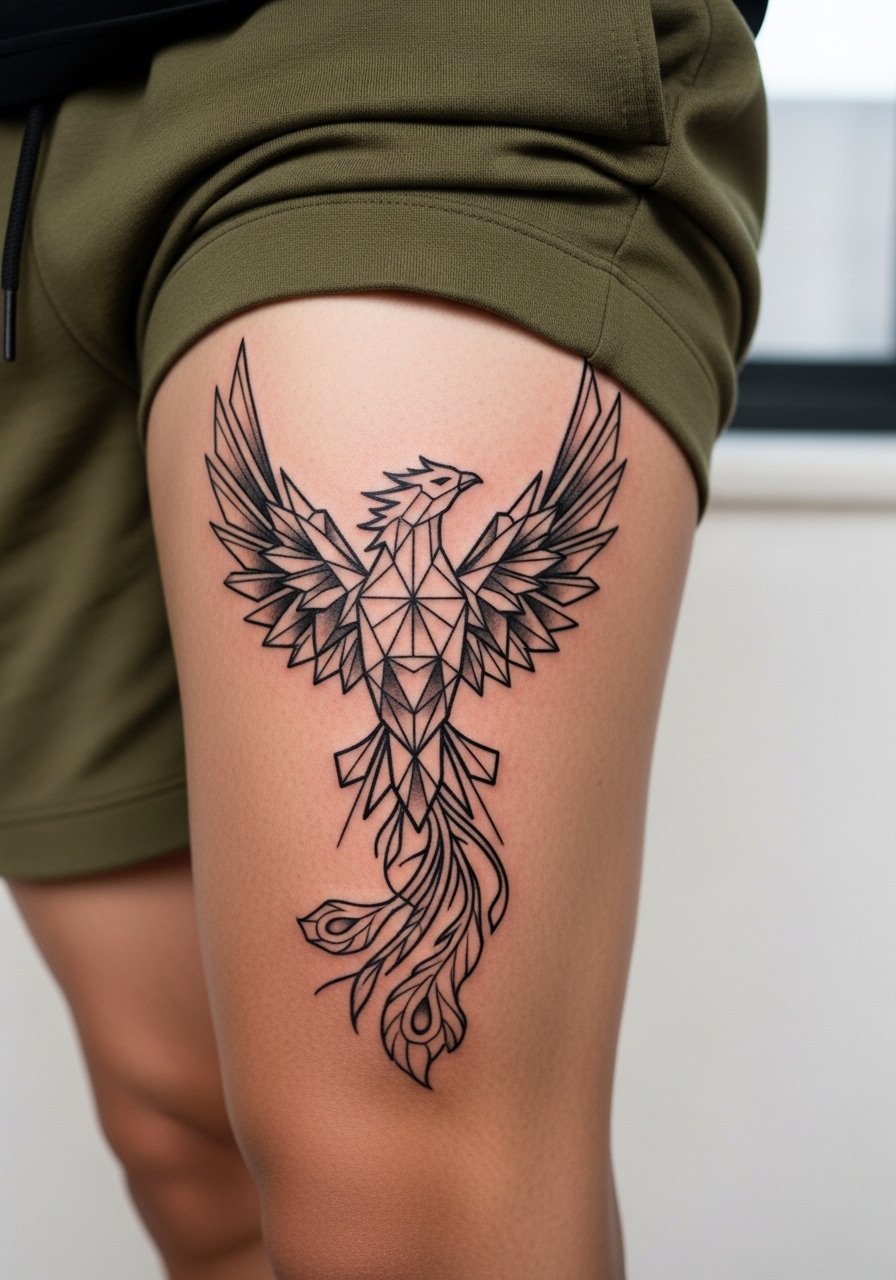
Fair warning, thigh tattoos survive gym life well when scale matches muscle contours. The geometric approach benefits from straight runs and negative space so the design breathes when quads flex. Tell your artist to map the wing flow with your gait so the wrap reads when you walk. Sessions are usually two short appointments. The mistake I see is going too small and dense on the thigh. That causes merging in dense areas after a year. For the appointment wear men's athletic shorts slim you can roll up to let the artist work without tugging. If you run a lot, expect slower healing from sweat and plan schedule windows around training cycles.
4. Traditional American Shoulder Cap Phoenix
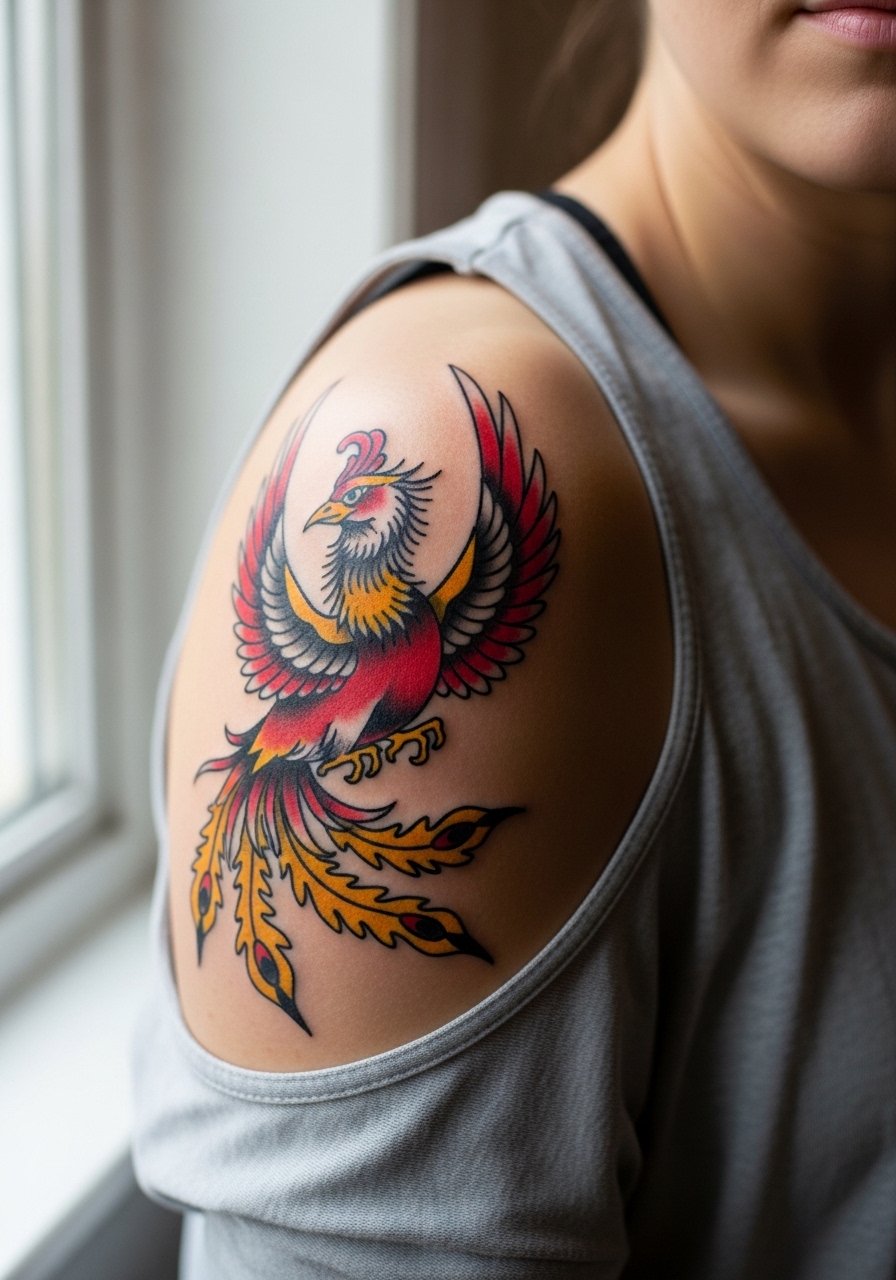
There's something about strong color blocks on the deltoid that keeps a traditional phoenix readable for years. In consults I tell guys to request thicker outlines and full saturation passes, not micro shading on the shoulder. Pain is low to moderate and most pieces finish in one or two sessions. A typical error is shrinking a traditional flash motif down too small. Tiny traditional work loses its intended punch and requires touch-ups sooner. For session comfort, wear a loose tank top or button-down you can pull aside so the artist has clean access. Shoulders handle sun exposure poorly, so plan sun protection after healing.
5. Blackwork Phoenix Silhouette on Upper Back
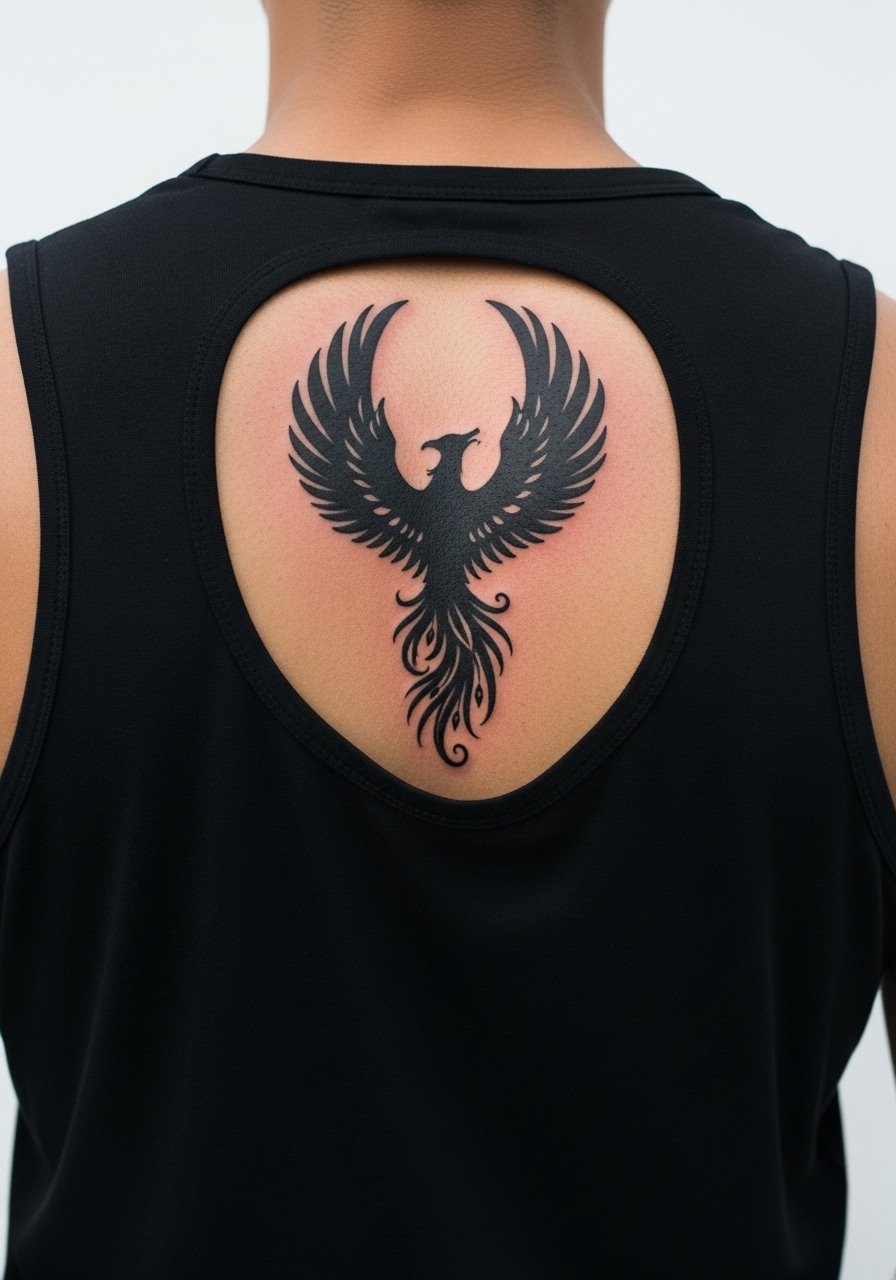
For men who want scale, a blackwork silhouette reads clean on back pieces for years. When you sit down with an artist ask how they plan saturation and how many passes they allot to avoid patchiness on big fills. Sessions are long and multi-day for large upper-back work. Common mistakes include uneven fill and thin passes that leave patchy blocks. Pair the healed look with a men's muscle tank black for flex shots. Big black fills also mean touch-up windows are less frequent than color, but expect maintenance if you live in a sunny climate.
6. Watercolor Phoenix Burst on Outer Bicep
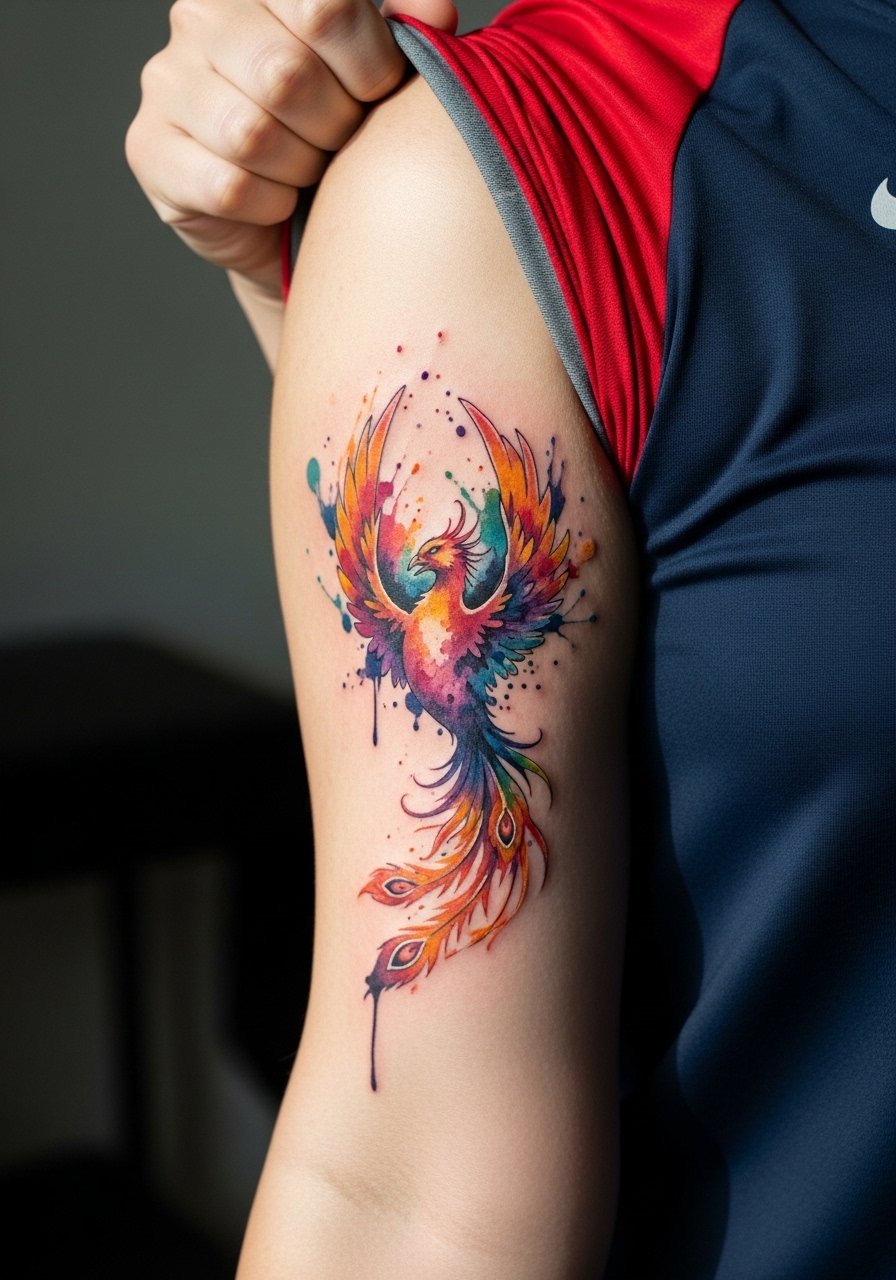
Most watercolor phoenix pieces look incredible fresh but they also have durability tradeoffs. The main thing to say in consultation is you want layered saturation with a slightly stronger anchor outline to protect washes from blurring. Pain is moderate and sessions usually take two sittings. The mistake is asking for pure watercolor without anchor points. That choice makes color migrate and lose contrast after two years, especially with sun exposure. For the session wear a loose short-sleeve athletic tee so the artist can access the arm without fabric dragging. If you work outdoors, plan UV protection to preserve the washes.
Pre-Session Essentials
These picks smooth the session and early healing for the forearm, chest, and back pieces above.
-
Tea tree balm from indie sellers. A non-greasy alternative that users in humid climates prefer for thigh and calf work that needs breathability.
-
H2Ocean spray. Spray application avoids rubbing on large back pieces during the first week and keeps the area clean.
-
Japanese aftercare oil. Gentle oil formulations can help preserve vibrancy in heavy-color irezumi-style sections.
-
Fragrance-free body wash. Use during showers on chest and rib work to avoid irritation without stripping ink.
-
Hustle Butter pre/post. Thinner than heavier ointments so it avoids greasy buildup on chest phoenix pieces while keeping skin supple.
7. Tribal Outline Phoenix on Calf
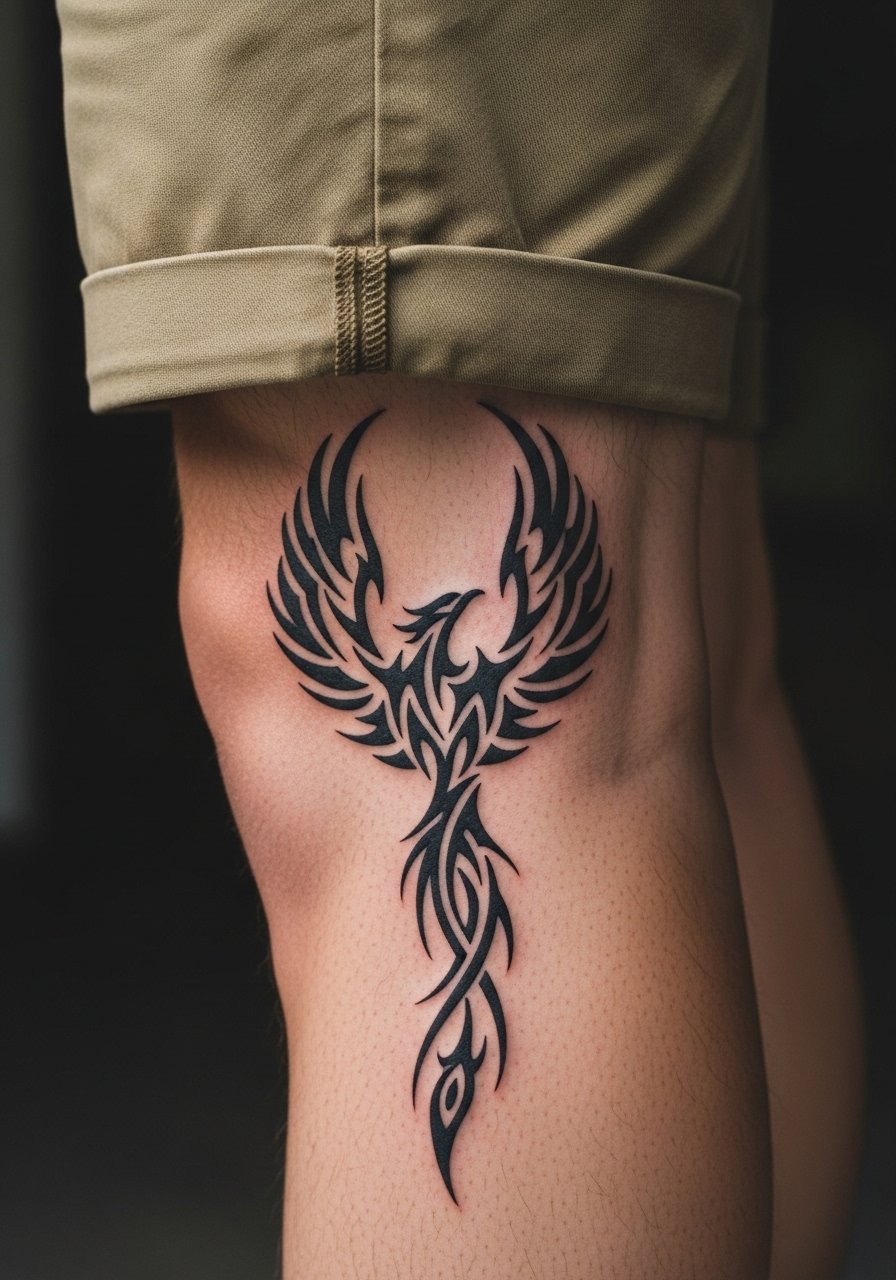
Calf placements suit elongated tribal silhouettes and they hide well under pants when needed. Tell your artist you want bold single-pass linework with wide spacing to avoid merging on the rounded calf surface. Sessions are typically one to two hours. A common slip is crowding tribal elements into too small an area. That results in early blurring as the calf stretches during runs. For summer showing off, cuffed chino shorts highlight the vertical flow. Runners should expect slower early healing due to sweat and friction from shorts.
8. Japanese Irezumi Phoenix Full Sleeve
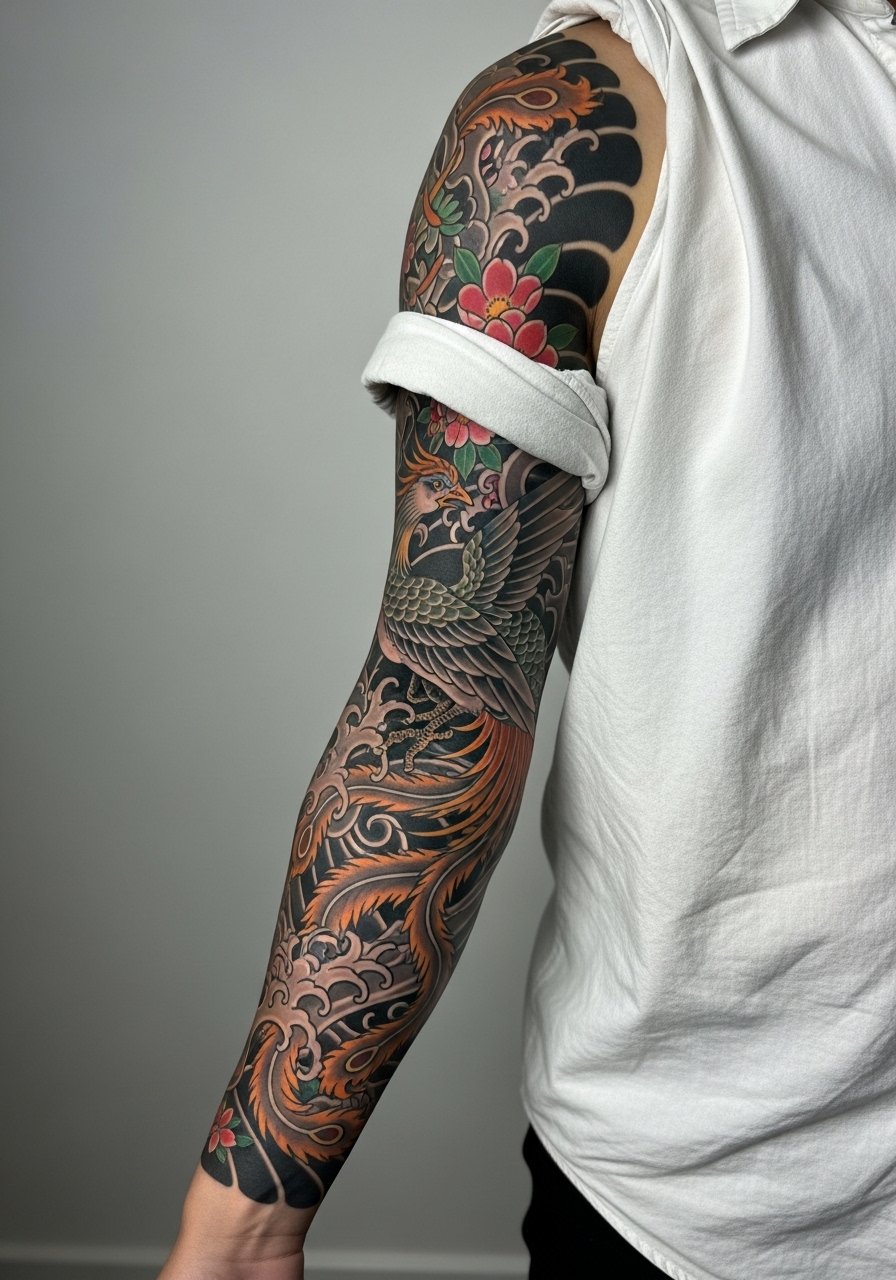
This is a commitment piece that benefits from traditional composition rules and multiple coloring sessions. When you consult, ask about how the artist will balance heavy black anchors with color layers to protect longevity. Sessions span many appointments and pain varies by inner arm and elbow spots. There's a cultural origin to respect here. These motifs trace to Japanese tattoo tradition and many clients opt for variations rather than direct historical replicas. The mistake is trying to mash Western neo-trad elements into strict irezumi layout without a unifying plan. Expect a long-term touch-up schedule to keep color saturation dense.
9. Minimalist Phoenix Head on Inner Wrist
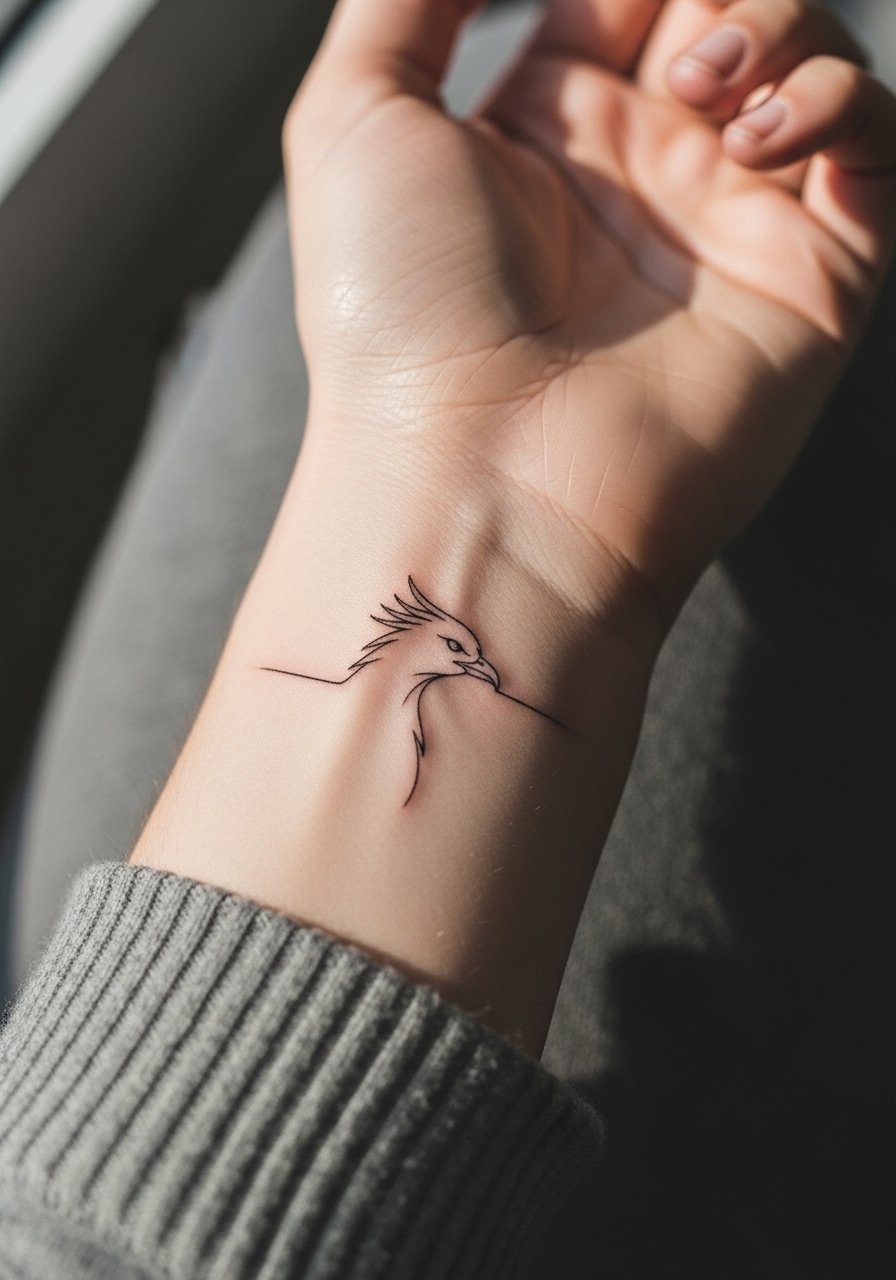
Wrist placements read intimate and delicate but they also suffer from rapid fading. Ask your artist to slightly thicken anchor strokes and to place the design where the skin creases least. This one-session tattoo is quick, but the common mistake is making the linework too thin. Fine line here often needs touch-ups by year one. For showing it off pair with a thin chain pendant necklace nearby to draw the eye without overcrowding the wrist. Expect frequent exposure to washing and friction, so plan for maintenance.
10. Ornamental Mandala Phoenix on Pectoral
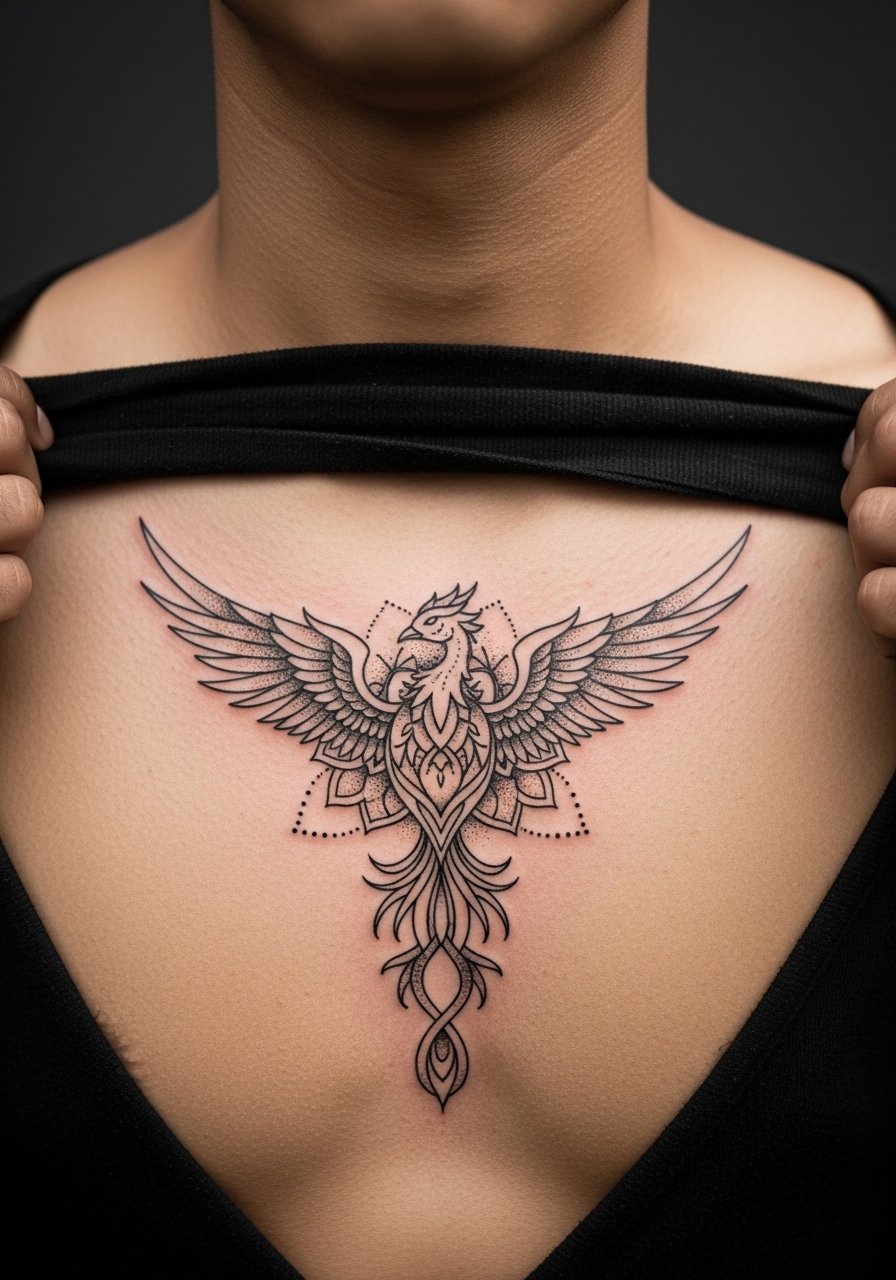
Ornamental work on the chest reads structured and masculine when done with dense dot work and controlled negative space. In the consult ask for spacing that keeps dot clusters from merging and for higher-contrast anchors if you have darker skin. Sessions take two to three sittings. A mistake is packing dots too tightly to mimic a print; those areas tend to blend into a gray patch after a couple of years. Pair the healed look with a men's v-neck tee pack to frame the piece without covering it. Touch-ups for dot work are commonly scheduled around year three.
11. Ignorant-Style Phoenix Skull Hybrid on Inner Forearm
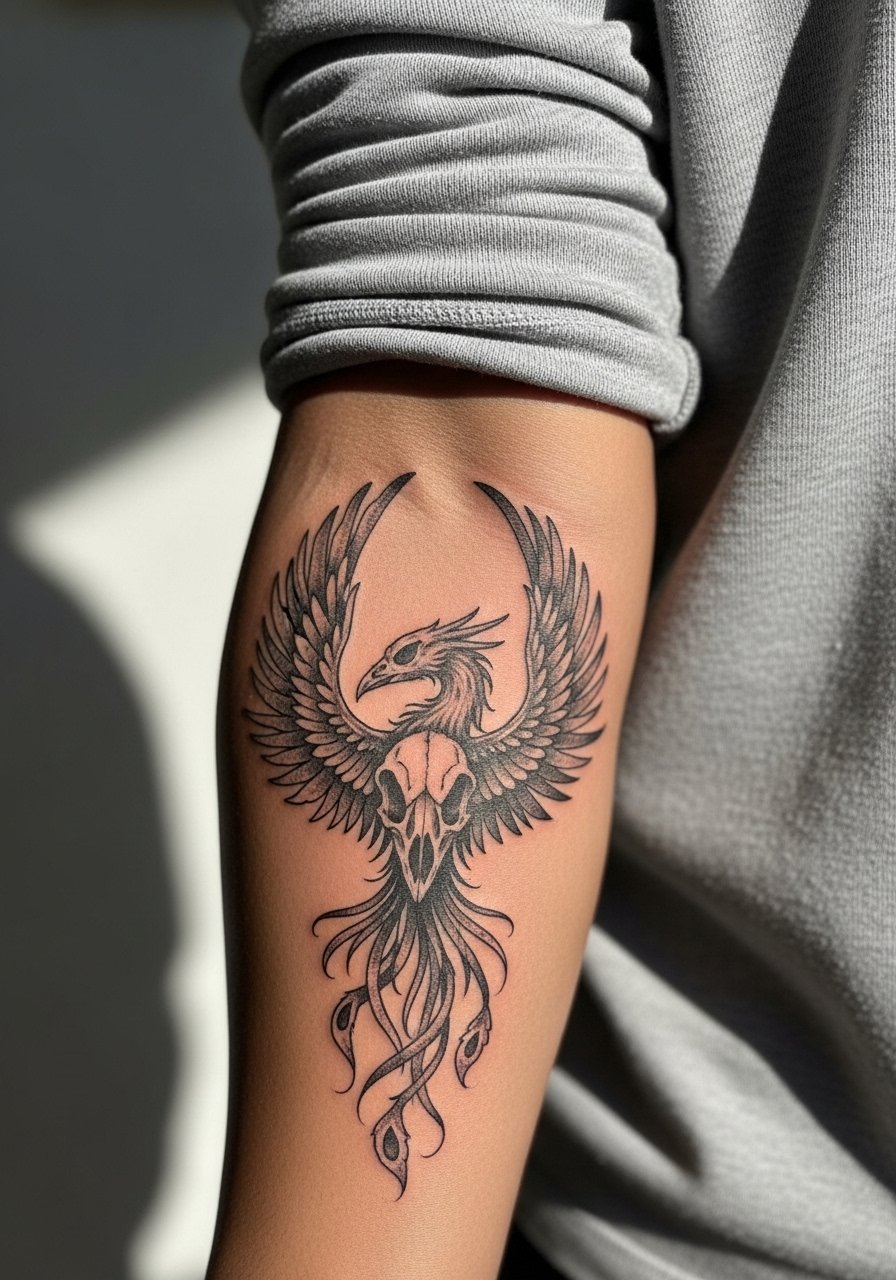
This gritty, hand-drawn look works for men who want raw energy with minimal fuss. Tell your artist you want intentional roughness and to avoid accidental micro detail that reads like a bad patch when healed. Sessions are short and often done in single sittings. The common mistake is asking for extremely thin scribbles that end up patchy. For session comfort, wear a rolled sleeve henley so the artist can reach the inner arm. Expect the character to mature into a textured silhouette, not a crisp engraving.
12. Fine Line Phoenix Wings on Ribcage
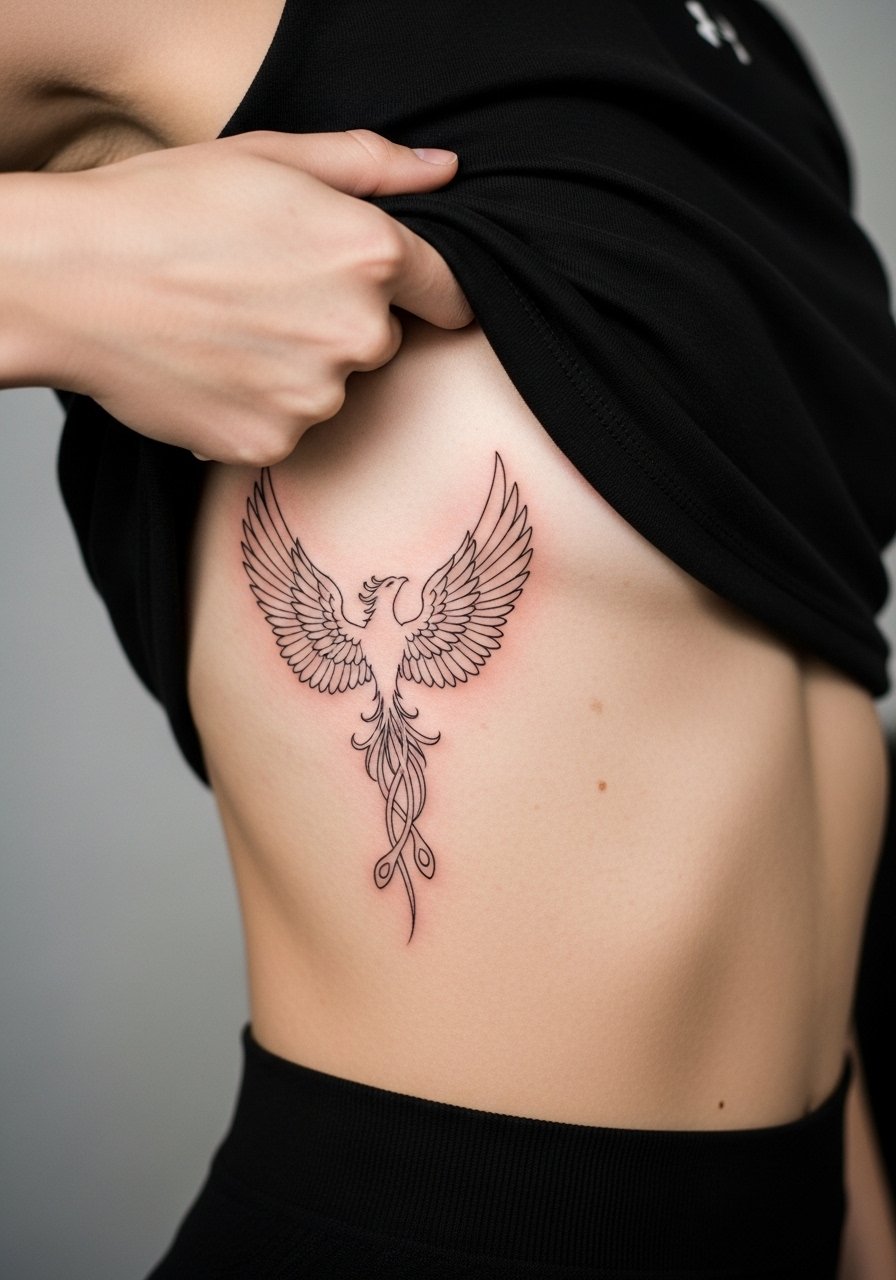
Artists are split on ribs and fine line. One camp says the skin stretch and movement blur thin lines in two years. The other camp says careful needle depth and spacing keep fine line readable. Be explicit in consults about your tolerance for touch-ups and ask the artist which camp they follow. Pain here rates high for most men and sessions are short but intense. A common mistake is cramming dense feather detail into a narrow rib area. If you plan to show it, choose timing around your training so swelling is minimal. Expect to schedule touch-ups by year two to three if you prefer tacked-together fine lines.
13. Calf Phoenix Designed for Runners
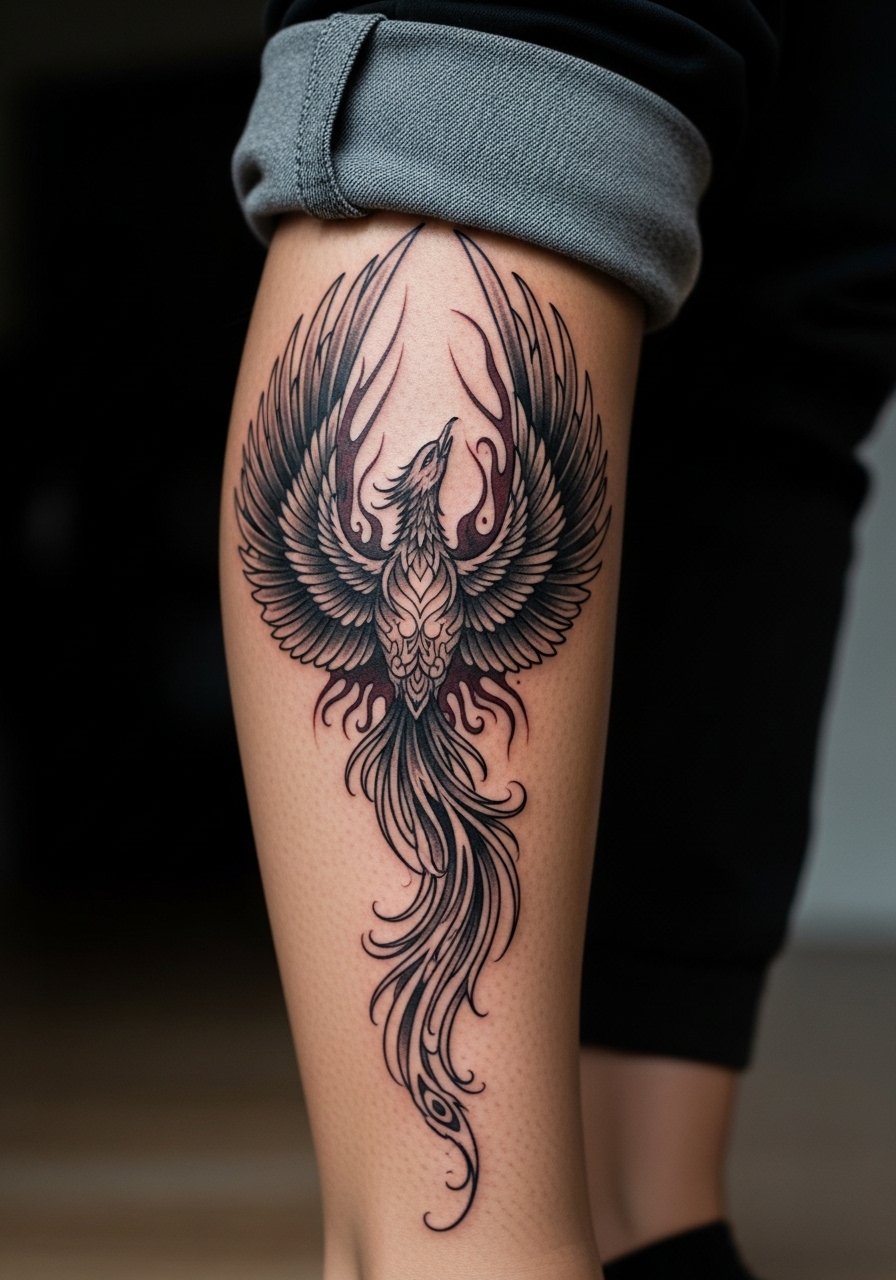
This runner-focused placement takes leg motion into account. Ask your artist to map the wing so it stretches along muscle lines and to avoid dense fill on areas that crease during running. Sessions are quick and the calf handles saturation well. A common error is making the phoenix too short, which interrupts the vertical flow when you flex. For the session wear rolled joggers so the artist can prop your leg without constricting blood flow. Healing may be slower after long-distance training, so plan rest days.
14. Knuckle Micro-Text Phoenix Hybrid
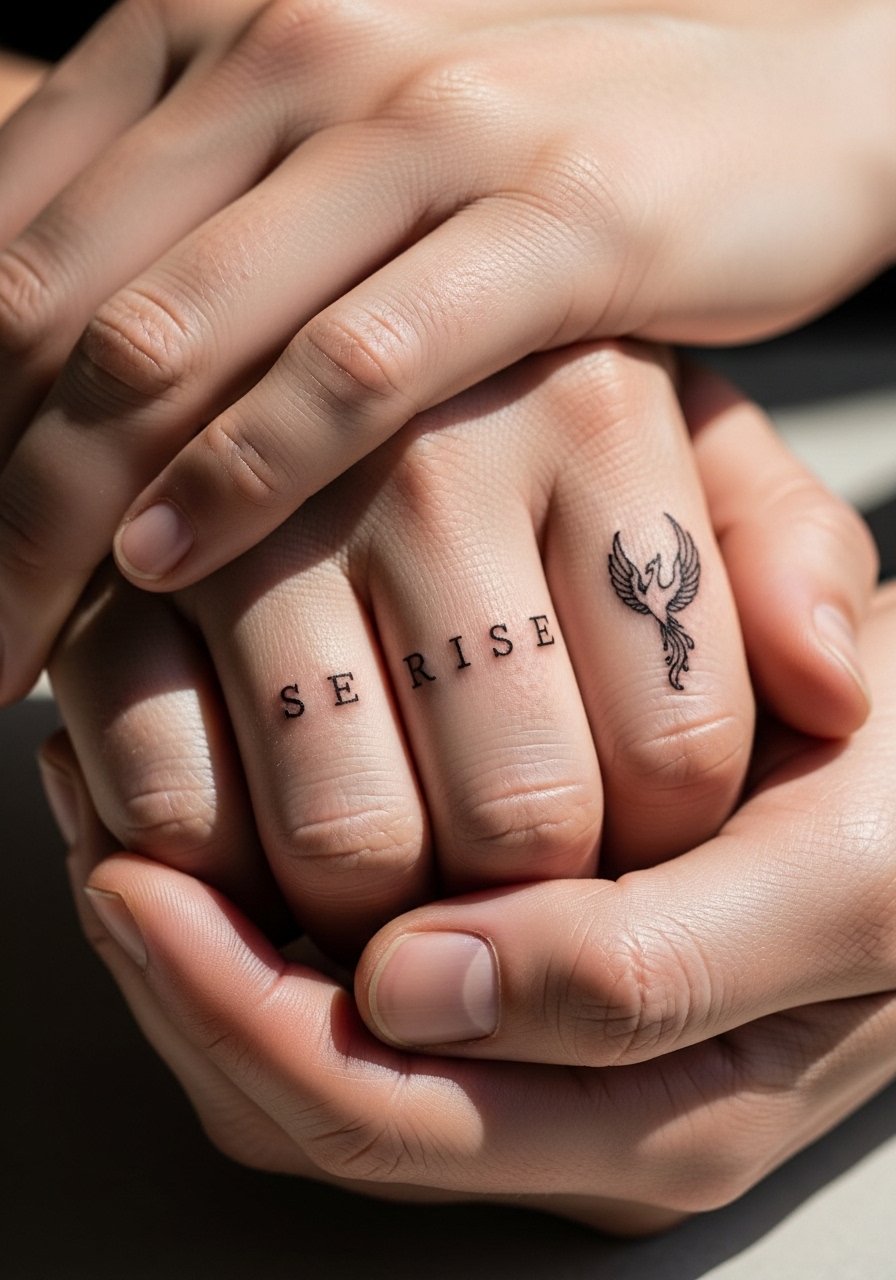
Knuckle work is rare and risky. Tiny text and initials on knuckles fade quickly because of constant hand washing and friction. If you want micro-text, ask for larger, spaced lettering and slightly bolder strokes than your initial vision. Pain is sharp and sessions are segmented per finger. The mistake is expecting fine script to last; plan for yearly touch-ups. Consider hand placement alternatives for longevity. Hand tattoos can affect some job prospects, so weigh the trade-offs before booking.
15. Thigh Wrap- Around Phoenix for Gym Visibility
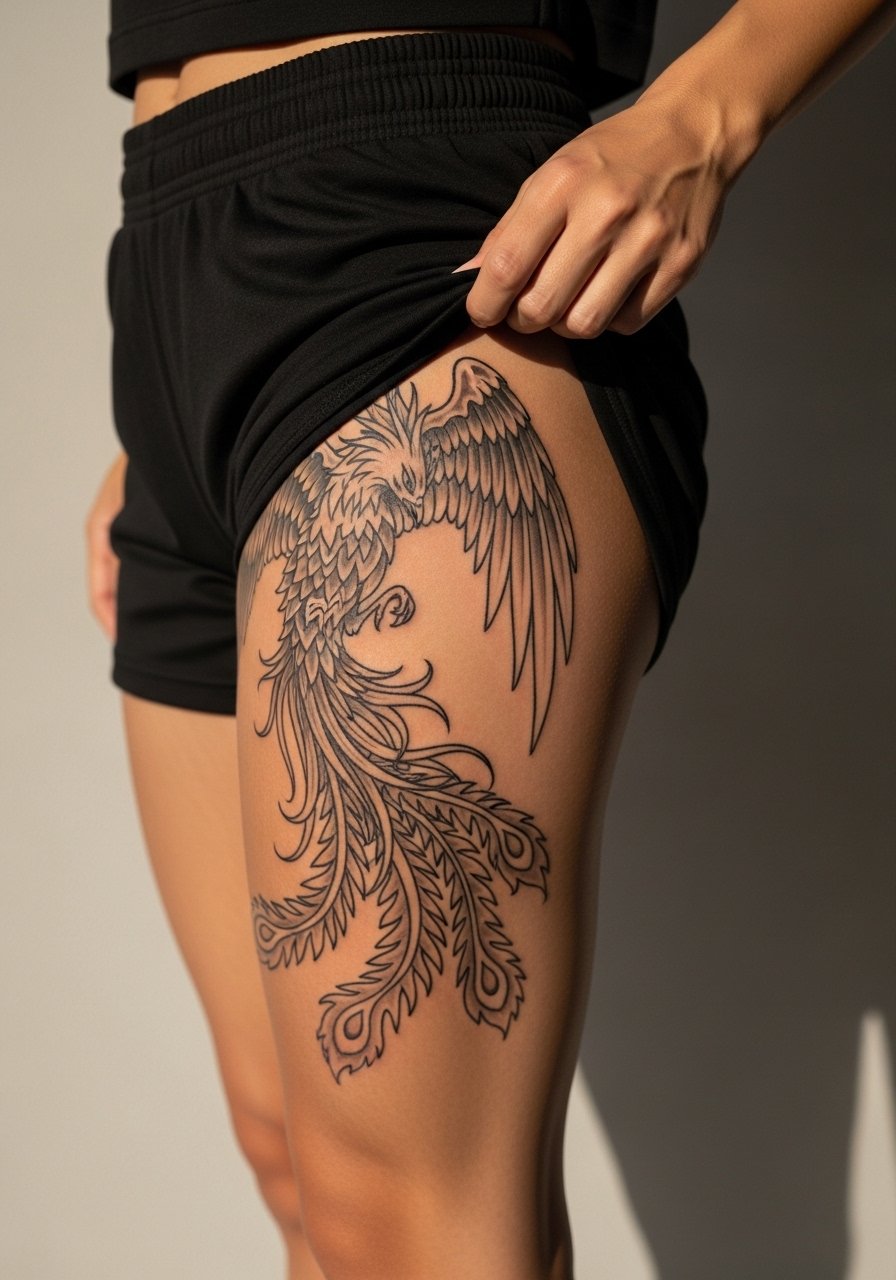
For gym-focused visibility, a wrap-around thigh piece works well with flexed quads. During consultation show your regular workout movement so the design contours to your musculature. Sessions are usually two and healing is straightforward if you avoid tight gym gear for a week. A common oversight is ignoring how shorts seam sits over the wing tips. Wear olive gym shorts that sit below the design while healing. This placement hides under jeans and shows off at workouts, but plan timing around leg days to limit sweat.
16. Crest-Integrated Phoenix for Heritage Sleeves
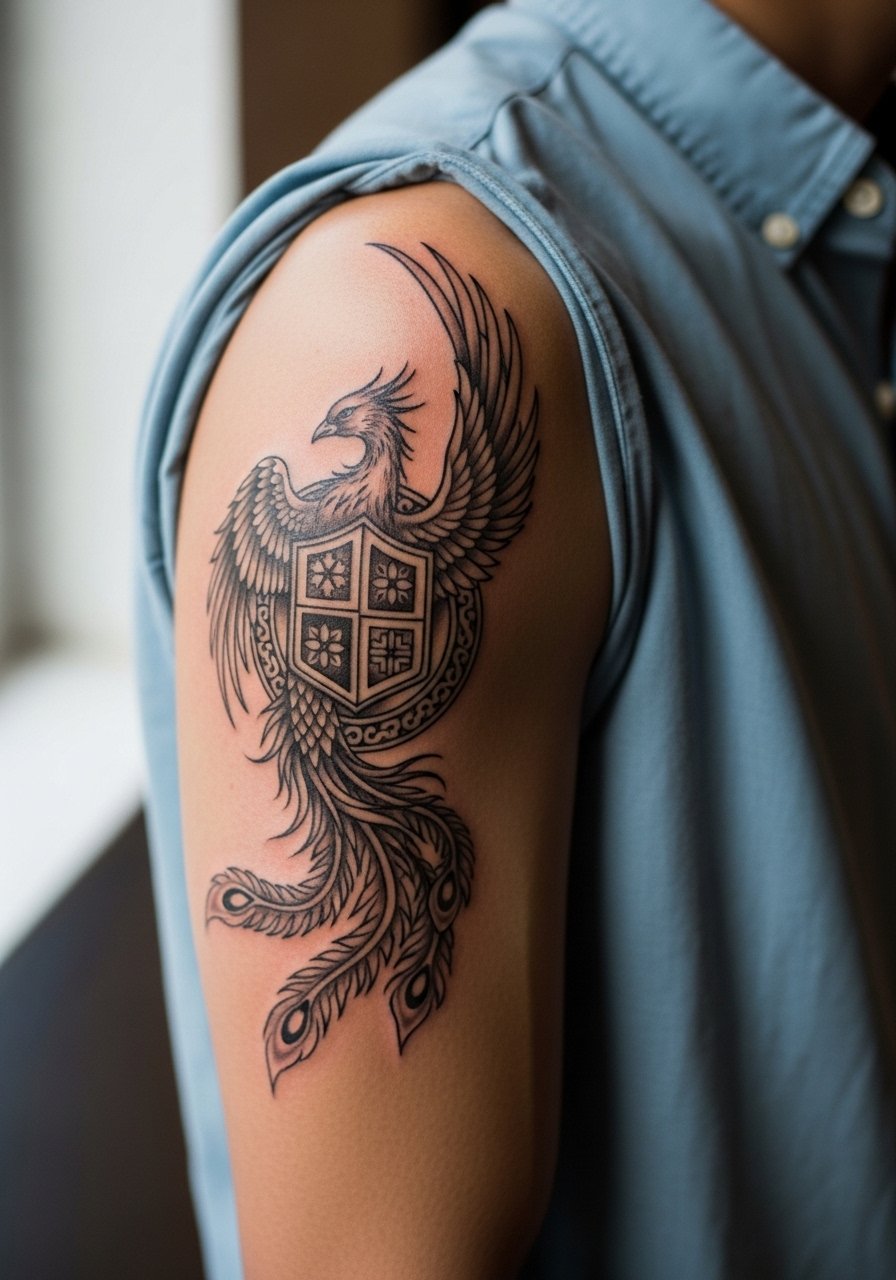
Combining a phoenix with crest elements personalizes a sleeve without drifting into overused motifs. In your consult explain which crest components matter and which are flexible so the artist can blend phoenix anatomy with heraldic lines. Sessions vary depending on complexity and may span several appointments. The mistake is loading a crest with tiny lettering or fine filigree that fades. For the session, a loose button-down shirt gives access without rubbing at fresh ink. If your crest touches cultural symbols, mention origins and agree on respectful variations.
17. Half-Sleeve Blackwork with Negative Space Wings
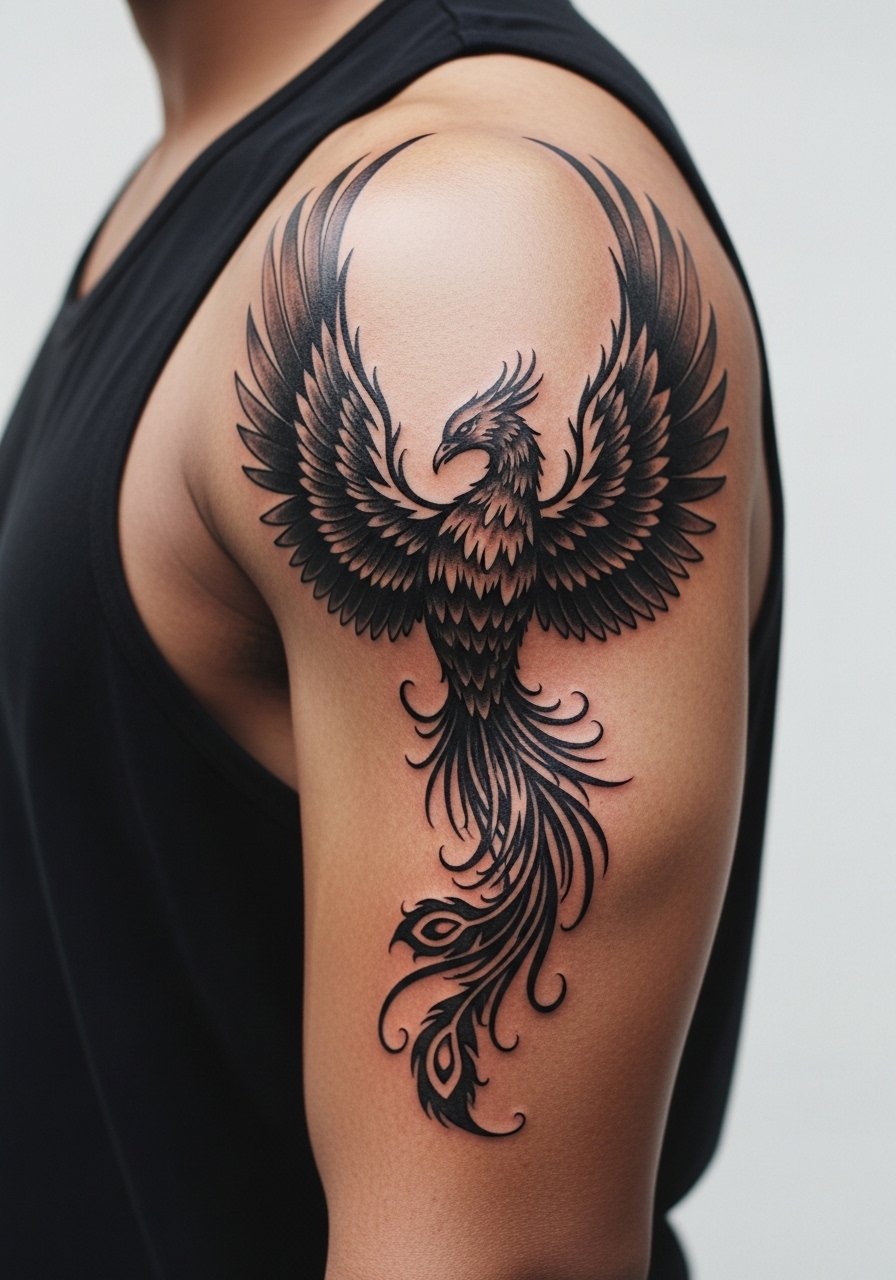
Negative space in blackwork is an intelligent longevity choice. The contrast keeps forms readable on darker skin tones. Tell your artist to block-in deep black and carve wings with uninked areas rather than rely on thin line separation. Sessions are long but predictable. A classic error is under-saturating large black blocks. That leads to patchiness after a year. Pair the healed piece with a sleeveless workout shirt to show the negative shapes. Touch-ups are rare unless sun damage occurs.
18. Sternum Phoenix Mandala
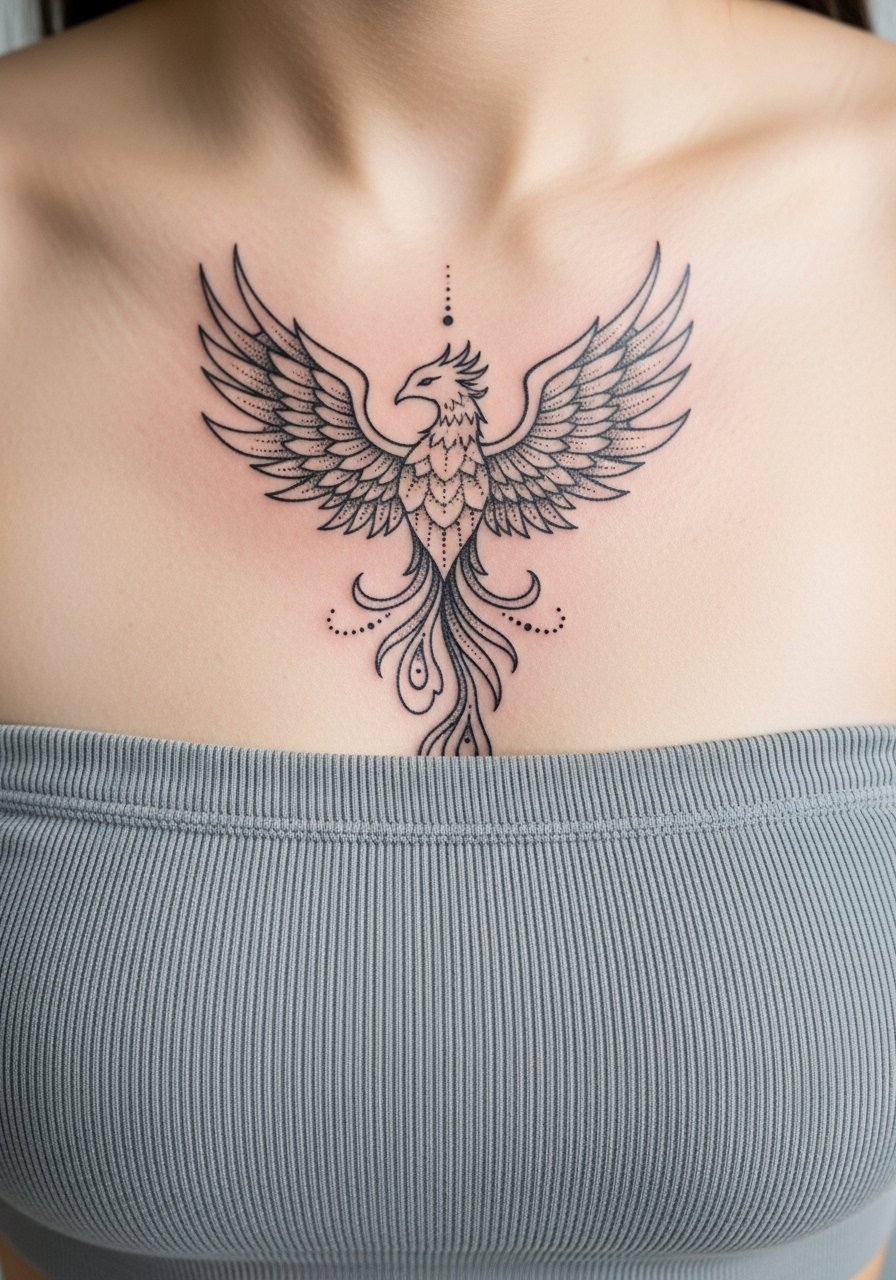
Sternum placements demand careful clothing choices during the session and caution around healing. Ask your artist about contouring the mandala to the chest curve and request less dense stippling near the sternum center. Pain is high and sessions are slow. A mistake is packing too much dense dotwork over the sternum where the skin moves most. For the appointment wear a fitted sports bra or bandeau so the artist can access only the needed area. Expect longer scabbing time and be conservative with movement in the first week.
19. Ankle Minimalist Phoenix Accent
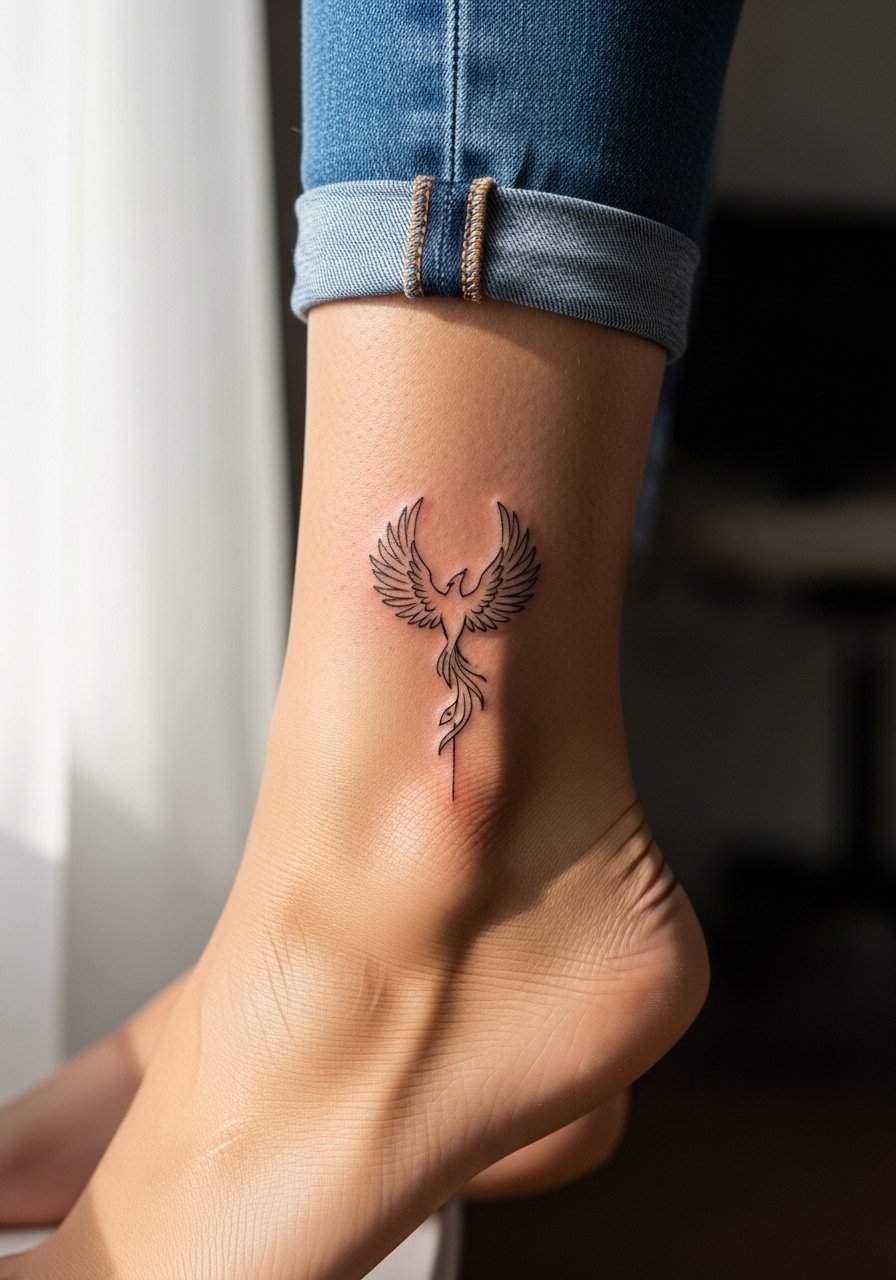
Ankle work ages unpredictably because of shoe friction and socks. Keep shapes simple and request slightly bolder anchors than you might at first like to avoid early loss of definition. Sessions are quick. The mistake is tiny loops and curls that vanish under constant rubbing. Show-off pairings include low-cut sandals or rolled jeans. Wear pants you can roll up for the session. Plan touch-ups earlier than you would on upper-arm work.
20. Full Back Mirror-Symmetry Phoenix Composition
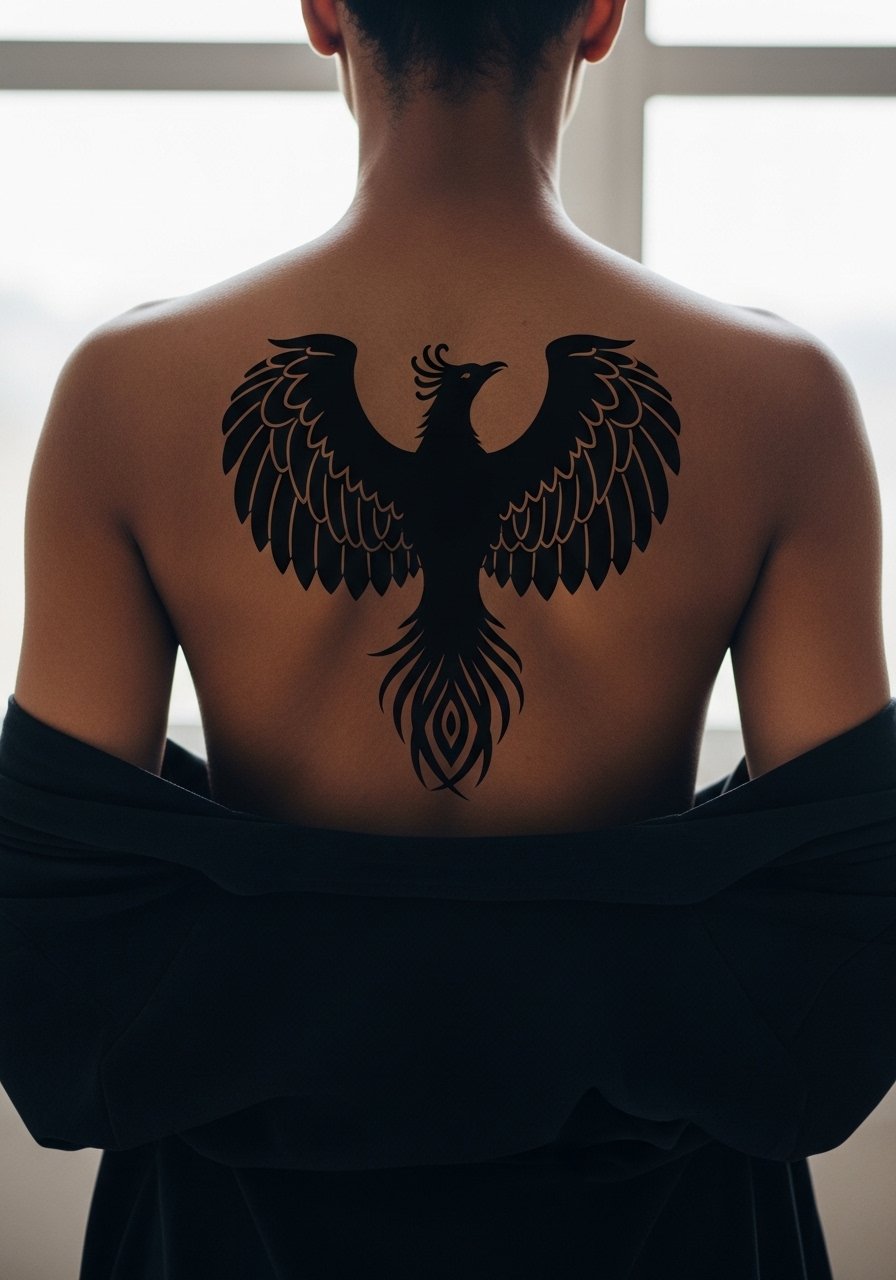
Full-back compositions let artists play with symmetry and scale. During consults insist on composition studies and a staged photo mockup so you visualize how the wings fall with shoulder movement. Sessions are extensive and require multiple days. A common error is agreeing to a design that crowds the spine with tiny detail; that area moves and blurs fast. For the session wear a front-open robe so the artist can access without dragging fabric over the back. Expect several color passes and a long-term touch-up plan for saturation maintenance.
21. Chest-to-Shoulder Transition Phoenix Pair
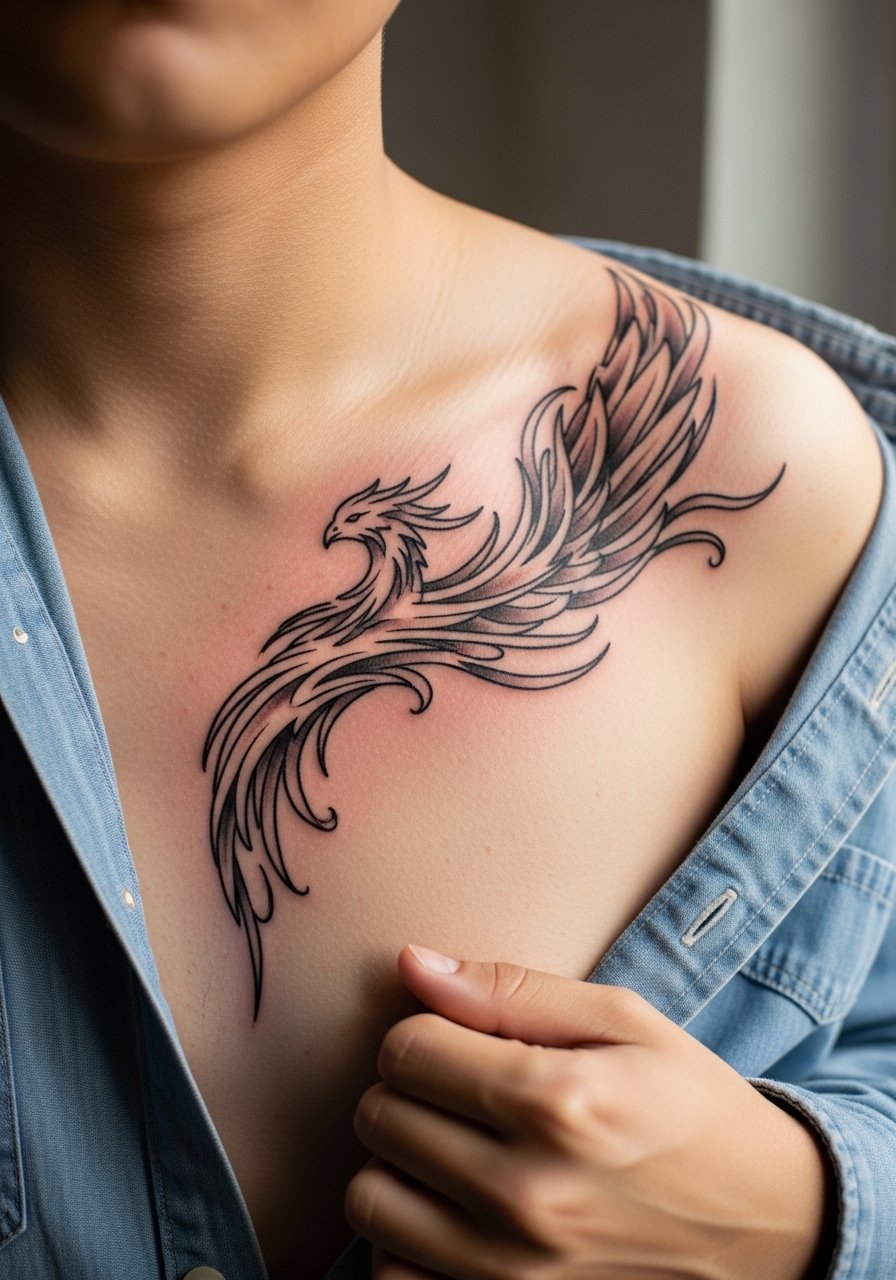
This hybrid placement is great when you want a show piece that also tucks under shirts. Tell your artist you want continuity across the pectoral curve and thicker anchor lines at the shoulder to prevent feathering. Sessions run in multiple passes. A mistake is misaligning the wing axis with the shoulder slope, which makes the composition look off when you move. For showing off wear an open collar shirt that frames the transition. Expect touch-ups focused on the shoulder edge where movement causes the most wear.
Frequently Asked Questions
Q: Will fine line phoenix work on darker skin tones without disappearing?
A: From what I’ve seen, fine line can wash out faster on darker skin if the strokes are ultra-thin. Ask for slightly thicker linework, higher contrast anchors, and more saturation in shaded areas. Blackwork or negative-space strategies usually read better long-term on melanated skin.
Q: How do I avoid a forearm phoenix warping when I bulk at the gym?
A: Place the design on parts of the arm that flex less, like the outer forearm closer to the elbow or upper chest. Tell your artist you plan to gain mass so they can map the piece along stable contours. Making the phoenix a bit larger with room for muscle expansion reduces distortion.
Q: Is Saniderm or dry healing better for large sleeves?
A: Artists and tatted people split into two camps. One side says a protective film speeds healing and reduces scabbing on long sessions. The other side worries about trapped moisture and ink loss. The safest move is to ask the artist what they use on multi-session sleeves and follow their aftercare protocol, since they know their technique and your skin.
Q: How often will watercolor phoenix pieces need touch-ups compared with blackwork?
A: Watercolor-style fills tend to need touch-ups sooner, especially with sun exposure and frequent outdoor activity. Blackwork silhouettes age more steadily, so you might touch up watercolor work by year two or three while black patches often wait longer.
Q: What should I wear to a chest or ribcage session to make the day easier?
A: Wear a loose button-down or a wide-neck shirt you can pull aside. For sternum work a fitted sports bra or bandeau allows access without exposing the rest of your torso. These simple choices keep the artist’s workflow clean and minimize fabric rubbing on fresh ink.