
Fine line Jesus portraits dominate feeds, but what holds up and what falls flat over time are two different things. Some of the prettiest Christ images are small and subtle now, and then they blur or lose contrast after a couple of years. Read these carefully chosen designs with placement notes, what to ask your artist, and wardrobe tips so the piece you love at hour one still reads clean at year five.
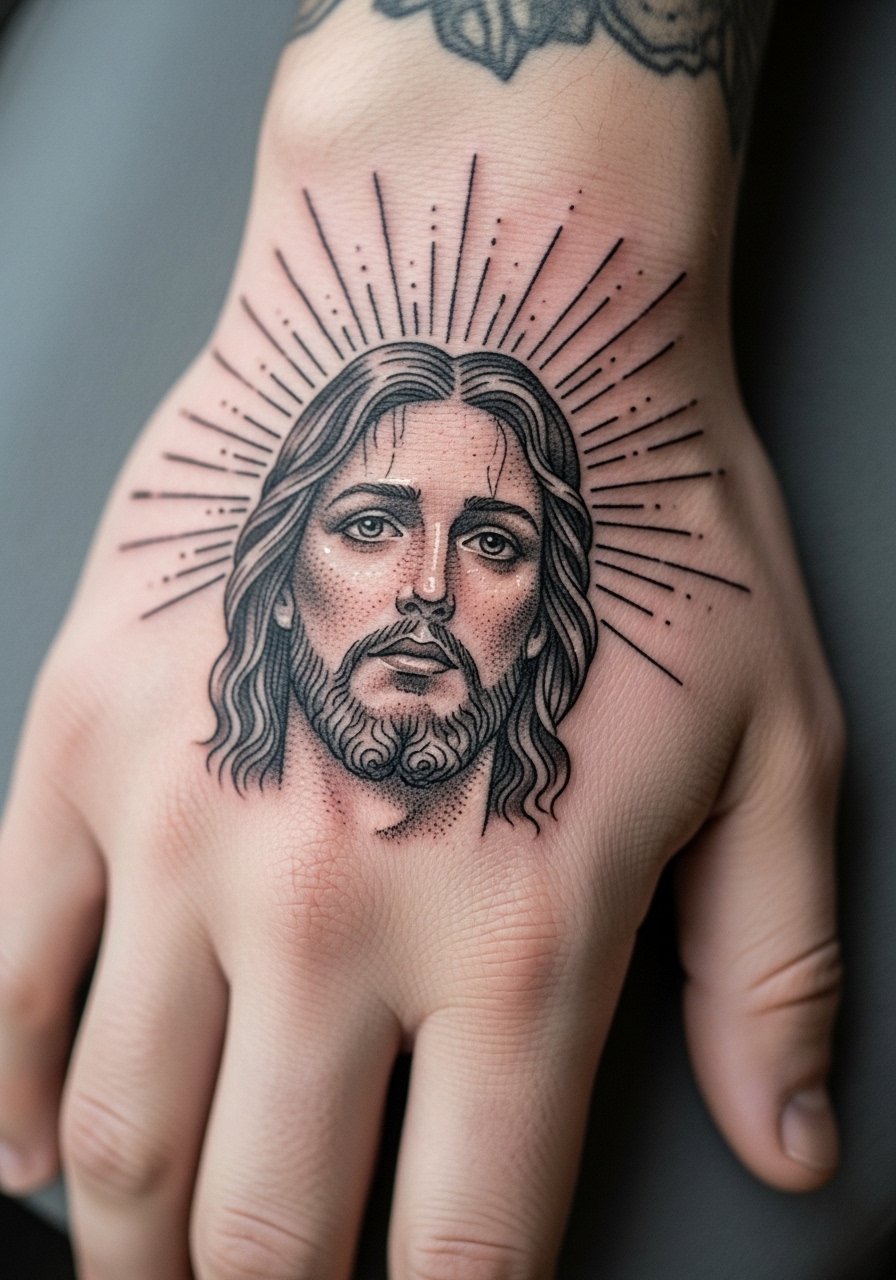
1. Jesus Face with Radiating Rays on the Hand
I've seen this micro-realism hand piece catch attention because the gaze and ray work pull the eye. Tell your artist you want slightly thicker ray spacing so the light lines do not merge under hand friction, and ask for conservative depth on the knuckle-adjacent skin to avoid early blowout. Fair warning, hand tattoos take more touch-ups than arm work because washing and sunlight fade the rays. For the session wear, go sleeveless so the artist can work unimpeded. To show it off, keep the hand bare or wear a single slim ring like a thin gold signet ring that does not sit on the tattooed fingers. One common mistake is requesting ultra-fine rays on the palm side where the skin wears fastest.
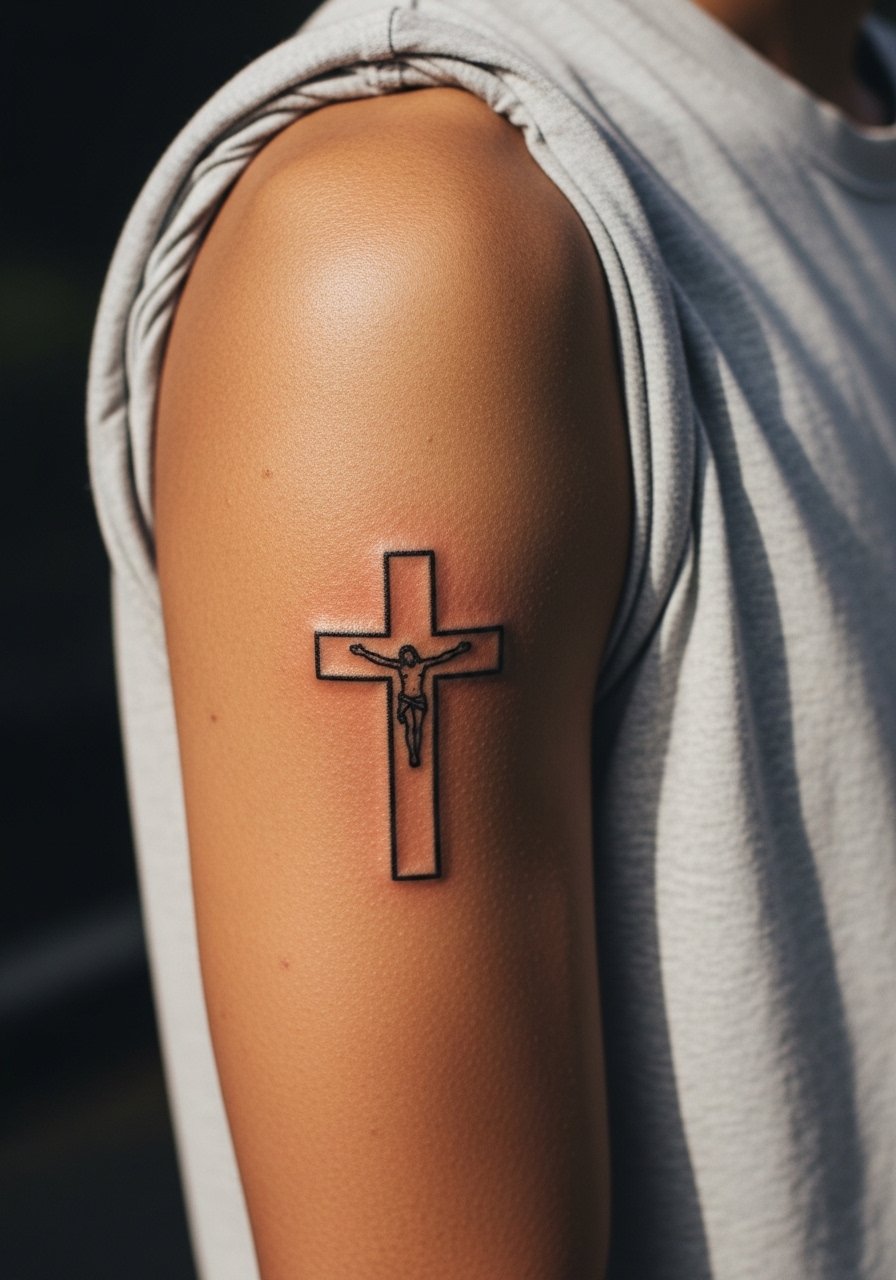
2. Minimalist Cross Outline with Jesus Silhouette on Upper Arm
When someone wants subtle faith imagery, this upper arm silhouette reads quiet and wearable. In consultation, bring a reference showing exact line weight and silhouette scale so the artist can position the negative space within the cross cleanly. Expect mild discomfort during the inner arm pass and a one-session layout for small sizes. This design holds better if the cross has breathing room around the silhouette instead of tight fills that age into soft gray. For showing it off, a white fitted tank top frames the upper arm and keeps attention on the silhouette. Avoid asking for hairline black fills that will merge within a few years.
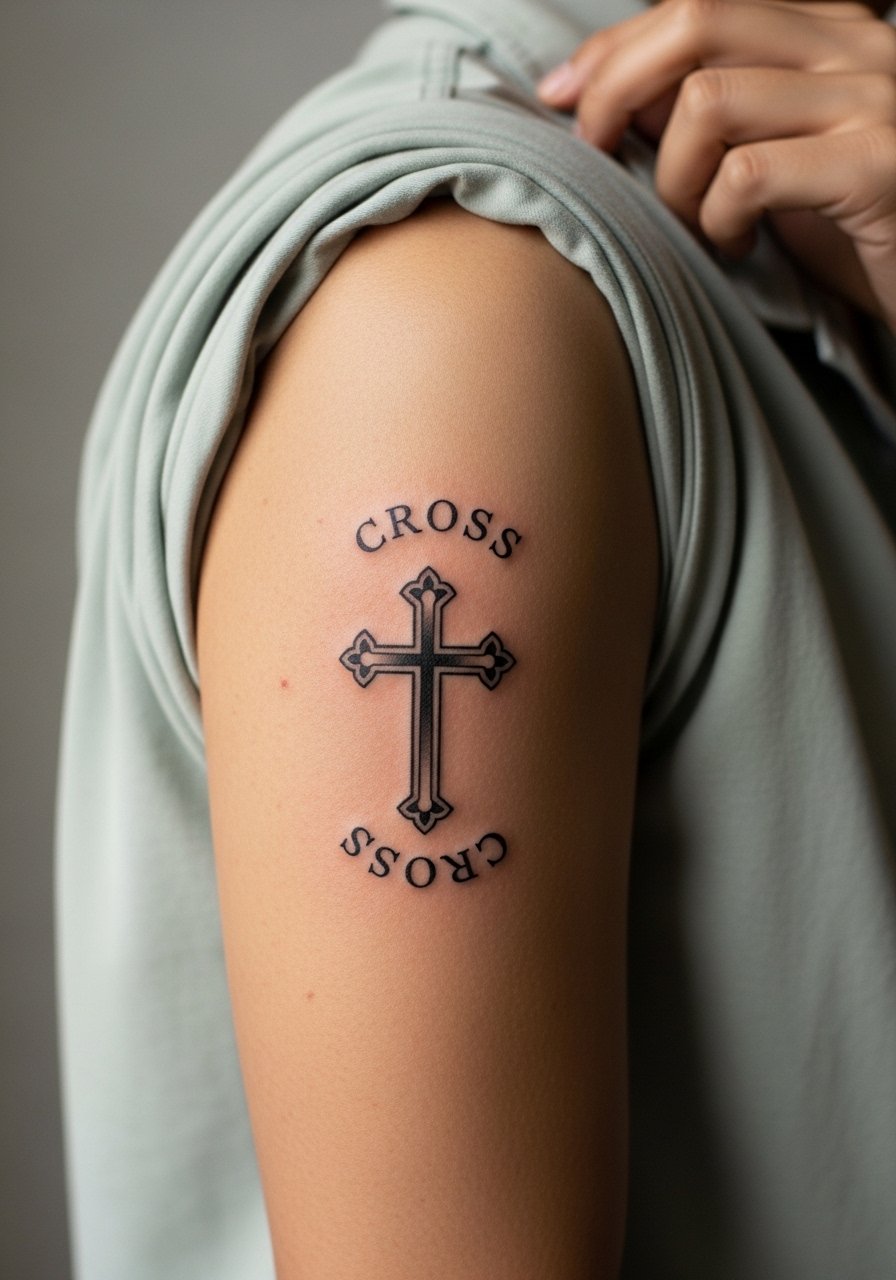
3. Vintage Negative-Space Cross with Script on Upper Arm
This neo-traditional take uses negative space and block shading to make lettering read longer as it ages. The trick is to ask for slightly heavier surrounding saturation so the cut-out script stays crisp once the ink settles. A common version that ages poorly uses thin script inside dense shading which blurs within two years. Tell the artist you want the text set in simple serif, spaced wider than it appears on screen to compensate for future softening. For session comfort, wear a loose button-down shirt you can pull aside. The upper arm placement keeps the work visible without the same friction issues as hands or wrists.
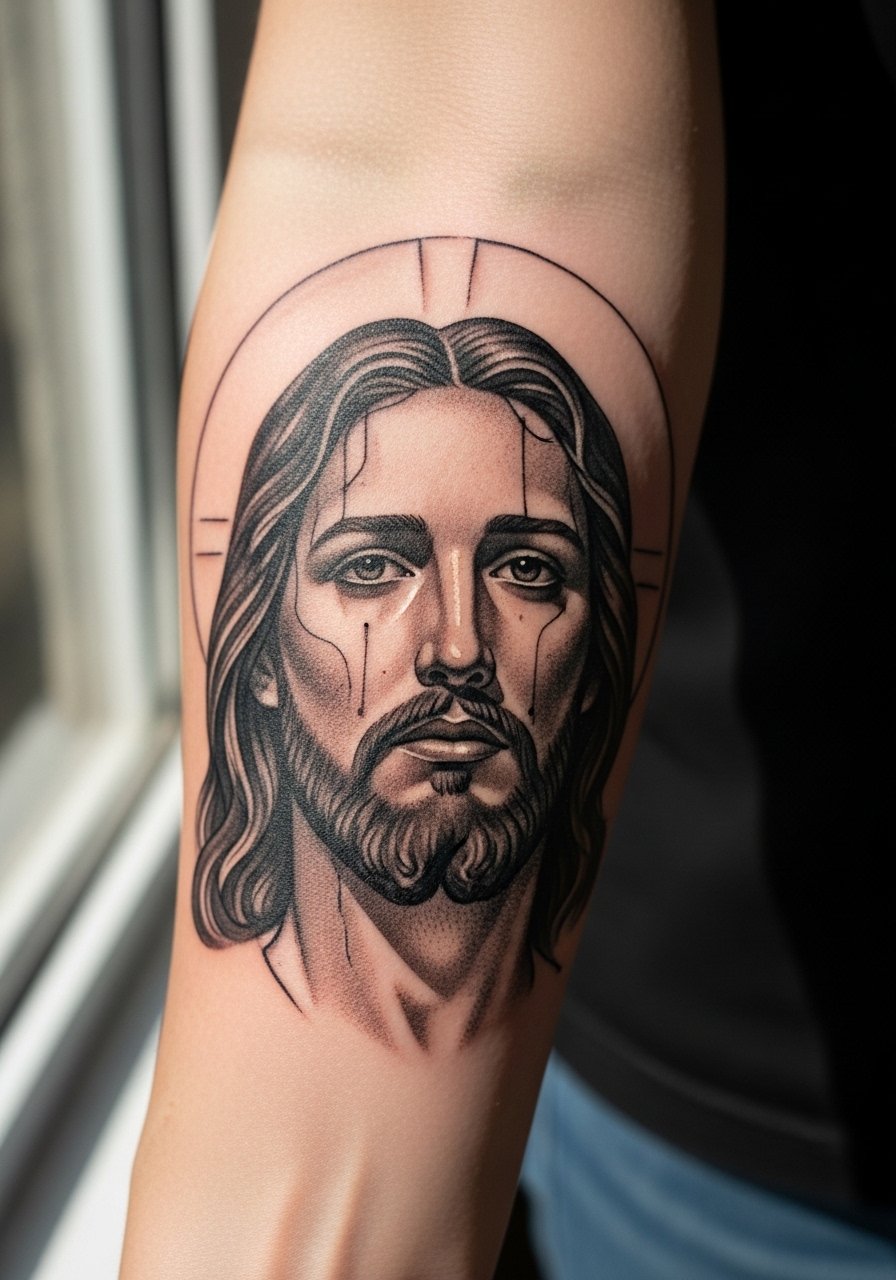
4. Realistic Shaded Jesus Face with Halo Lines on the Forearm
Personal observation leads here. I have seen forearm portraits that hold tonal depth for years when the shading uses broad stipple and controlled saturation rather than razor-thin contrast. In consultation, ask for stipple shading around cheeks and soft halo lines so highlights remain readable at six months and at five years. The forearm feels less painful than the hand and heals with minimal scabbing if you avoid excess movement. For casual looks, roll sleeves or wear a black hoodie rolled sleeves to let the portrait peek out. A common mistake is over-detailing small facial areas which then soften into muddy spots over time.
5. Graffiti-Style Jesus Portrait for Urban Faith Expressions
Artists split on this one. One camp says mixing religious iconography with street art is irreverent, and the other argues it reframes faith for a modern audience. Both perspectives are worth hearing before you book. If you want the graffiti edge, request bold backdrops and selective color splashes over a black base so the portrait reads from a distance. Forearm or calf placements work well because the larger canvas lets the paint-like strokes breathe, and touch-ups for color accents are normal at year two. For a show-off look, stack a slim beaded bracelet stack opposite the piece. Plan for more color maintenance than with black and gray realism.
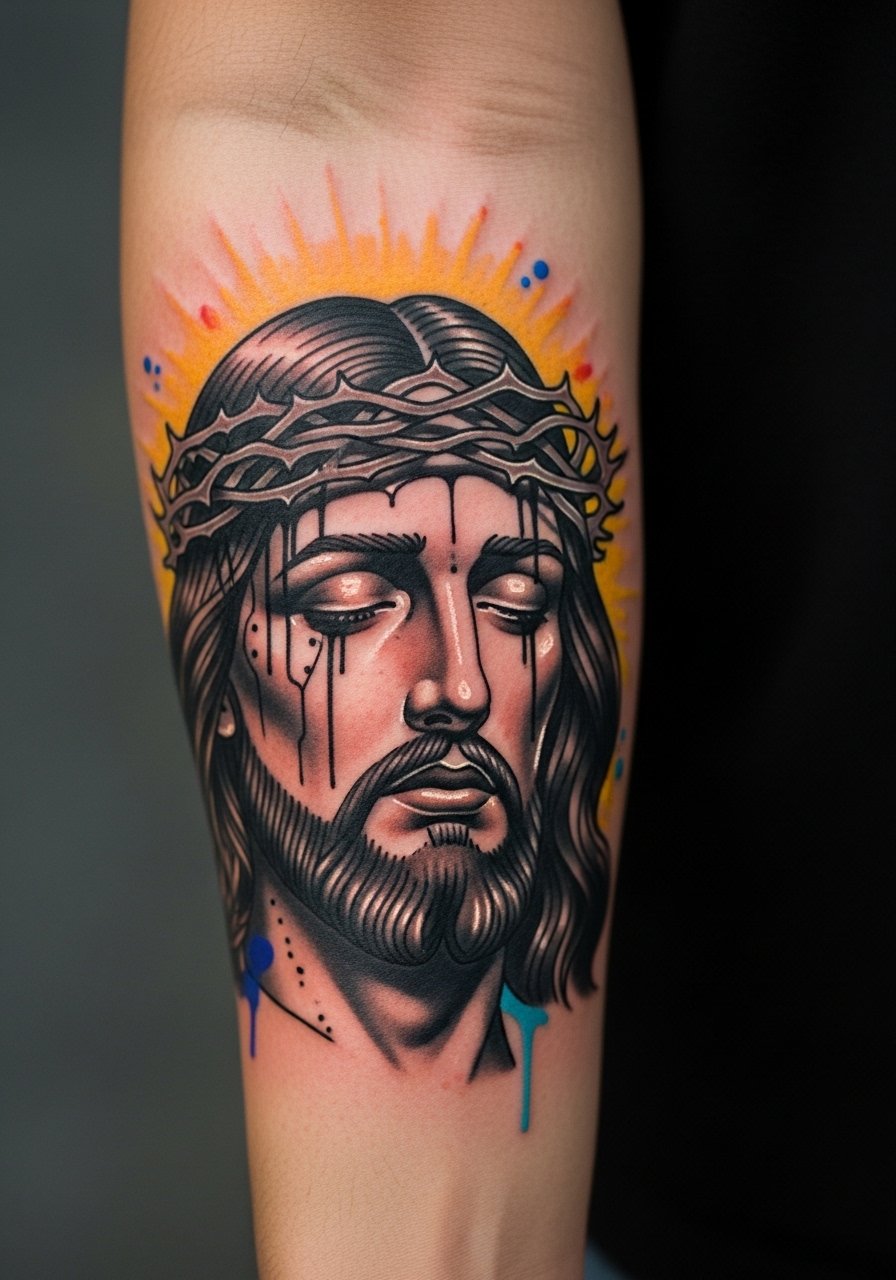
6. Intense Gaze Jesus with Concentric Rays on the Wrist
Visual impact lead works here. A small fine-line portrait with short concentric rays around the head reads intimate on the wrist, but expect a higher fade risk. Tell your artist you prefer slightly bolder central contours and softer peripheral rays so the gaze remains the focal point as the skin ages. The wrist is a high-friction zone and often needs a light touch-up at year two. For the session wear, remove all wrist jewelry and try a sleeveless work shirt so the artist has clean access. Keep in mind some employers still scrutinize visible wrist ink.
Studio Day Picks
Those hand, wrist, and forearm pieces above need different prep than upper arm work, and a few items smooth the session and the first week.
- Stencil transfer paper kit. Lets you preview exact placement on skin before the needle hits, which matters for small wrist and hand compositions.
- Topical numbing cream. Applied per instructions it takes the edge off sensitive wrist and hand spots without hiding linework for the artist.
- Thin protective film roll. Keeps finger and wrist pieces cleaner during the first days of constant washing and friction.
- Fragrance free gentle body wash. Gentle cleansing prevents irritation on fresh fine-line work while you shower.
- Aquaphor healing ointment. A thin layer helps retain moisture in delicate linework areas during the initial healing window.
7. Bold Brown Cross with Hanging Jesus Outline on Outer Bicep
Mistake lead here. The biggest error with inked outlines inside a colored cross is using too light a brown that reads patchy over time. Ask for a rich brown mixed with black anchors so the outline keeps contrast. The outer bicep tolerates saturation well and usually heals flatter than hand pieces, with mild soreness during the session. Pair this with a thin leather cuff bracelet on the opposite arm for a balanced, vintage aesthetic. Expect the brown to lose some warmth by year three and plan a color refresh if you want the original hue.
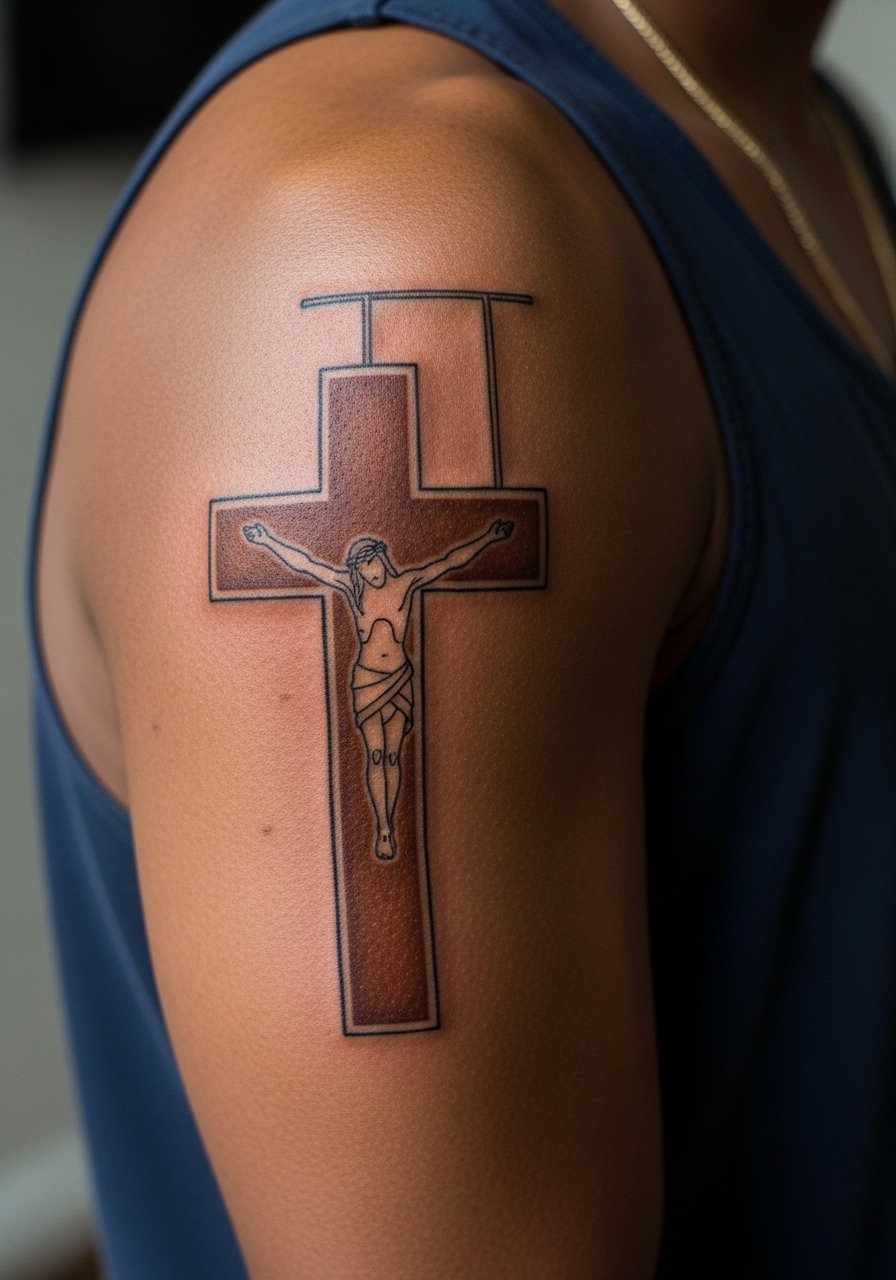
8. Stipple-Shaded Jesus Head on Sternum
Aging lead is useful for sternum pieces. Fine stipple shading creates soft transitions that look natural against the chest as it settles. For this placement, always wear a fitted sports bra or bandeau to your consult and appointment so the artist can gauge chest curvature accurately. Ask for a slightly wider upper chest margin to prevent the center detail from compressing as the body moves. Session pain is higher here than on the arm but the visual payoff is centered and intimate. Keep in mind the sternum area requires an artist comfortable with chest anatomy for even saturation.
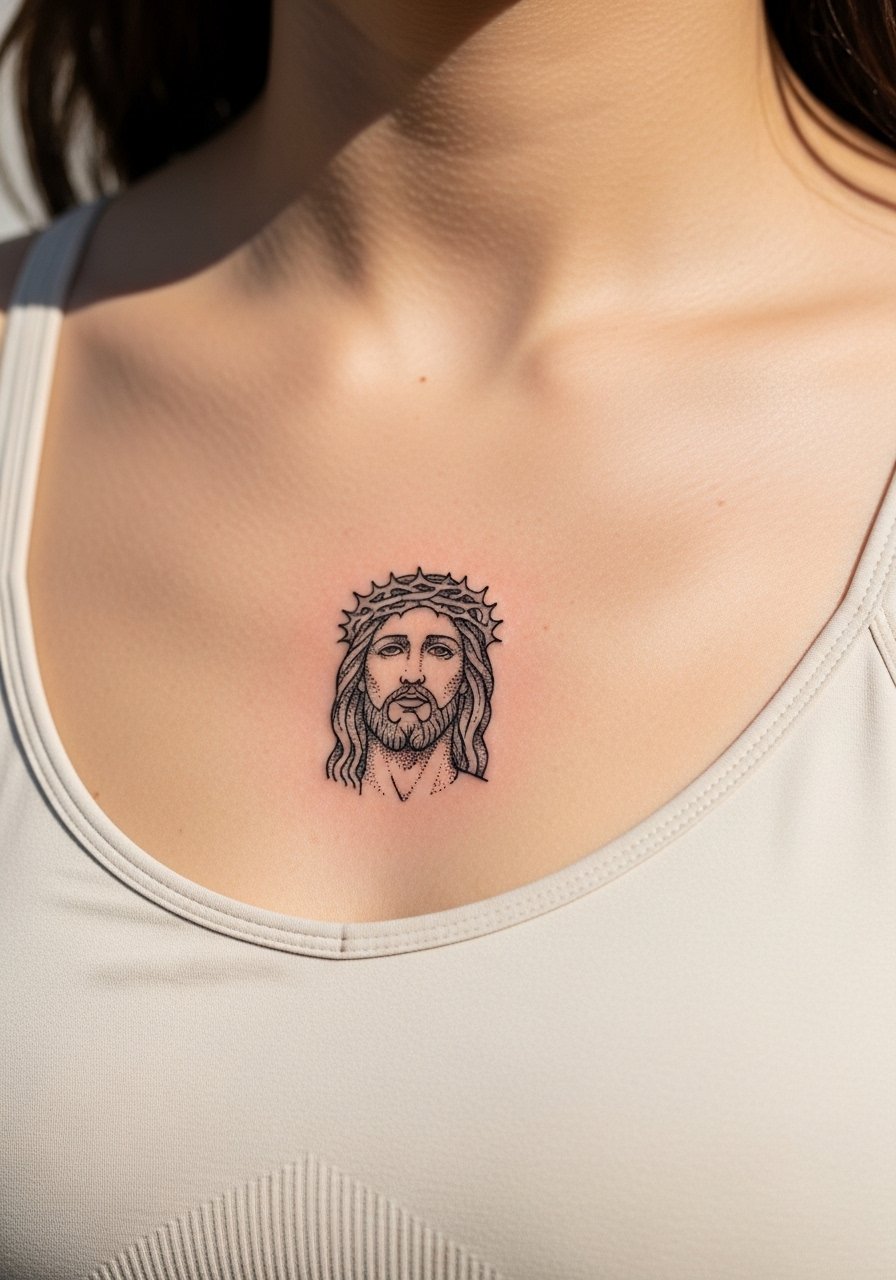
9. Tiny Line Jesus Outline on the Wrist
Consultation lead for tiny wrist outlines: bring exact size references so the artist can recommend minimum line weights. A hairline outline from poor references often dissolves into an indistinct gray. Expect faster fade on the inner wrist and plan for a touch-up at year two. For showing it off with light blouses, a flowy blouse short sleeve keeps the wrist framed without hiding the linework. The wrist is easy to expose, but remember constant movement and washing mean thinner lines need maintenance.
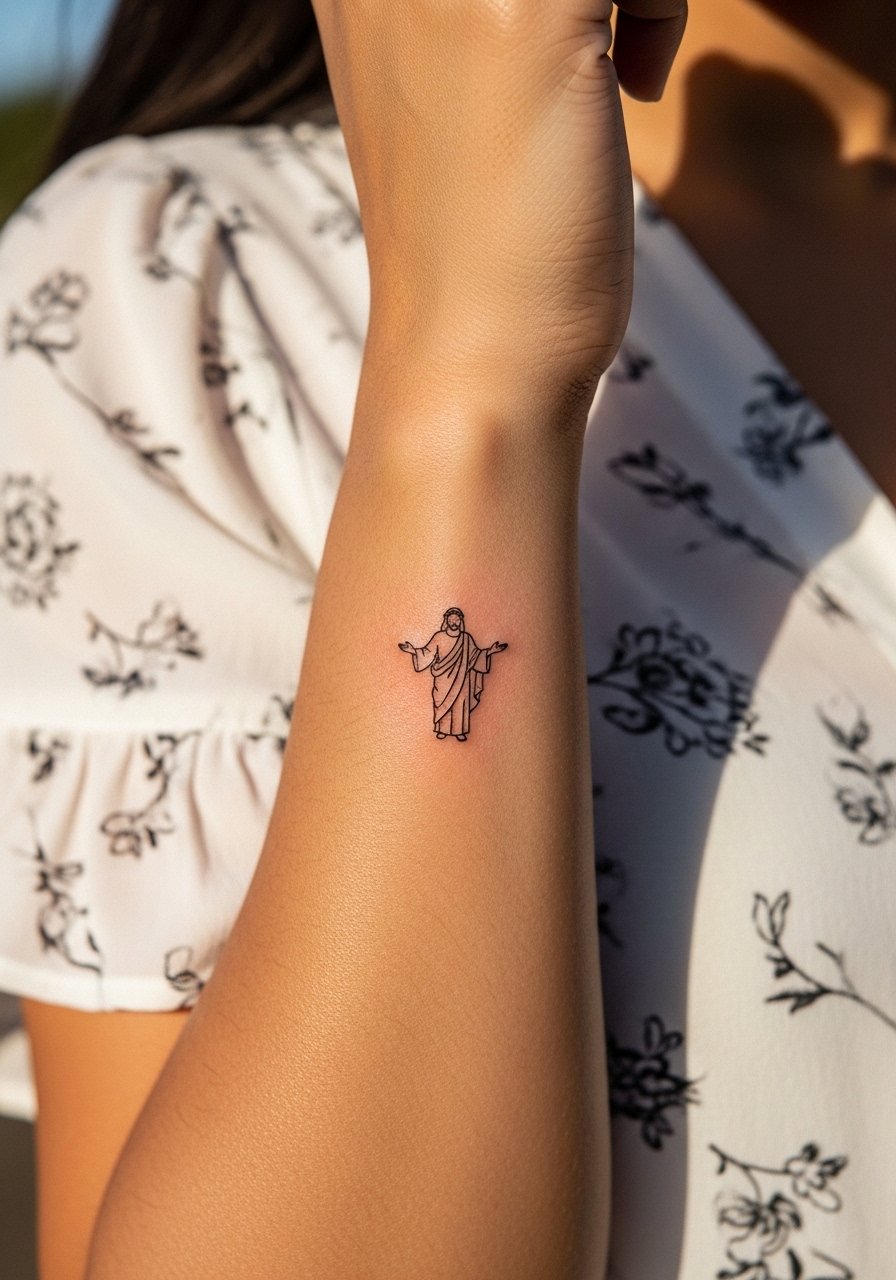
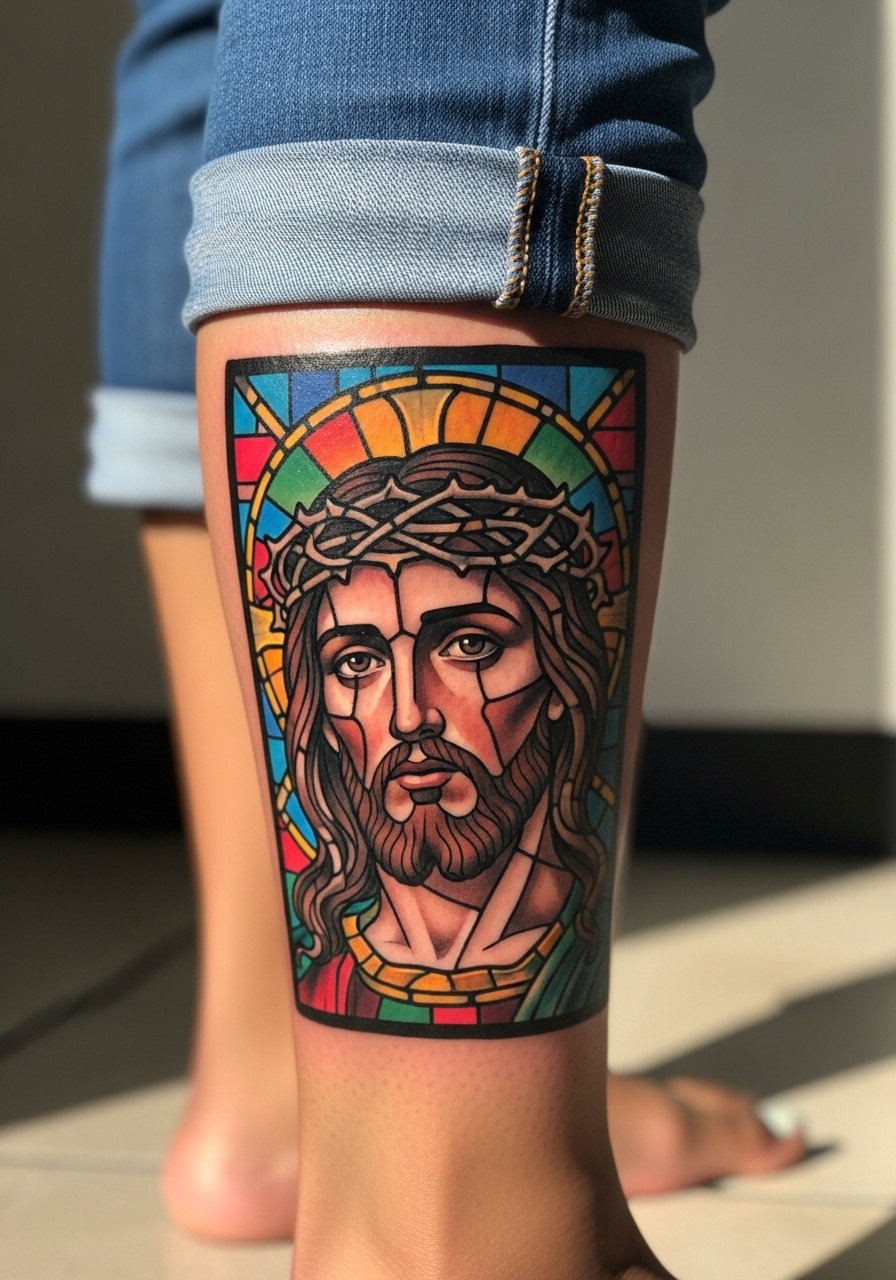
10. Stained-Glass Inspired Jesus Portrait on the Calf
Visual impact lead again. Stained-glass approaches use segmented color panels and black lead lines so the piece reads as a cohesive portrait from a distance. Calf placement gives room for scale which helps color hold longer than on small limbs. Tell your artist you want bold lead lines around each color cell to protect definition as pigments mellow. Session feels moderate because muscle sits under the skin. Pair with rolled pants or a long skirt lifted slightly when you want the piece visible. Plan for color refreshes at year three if you wear shorts often in sun.
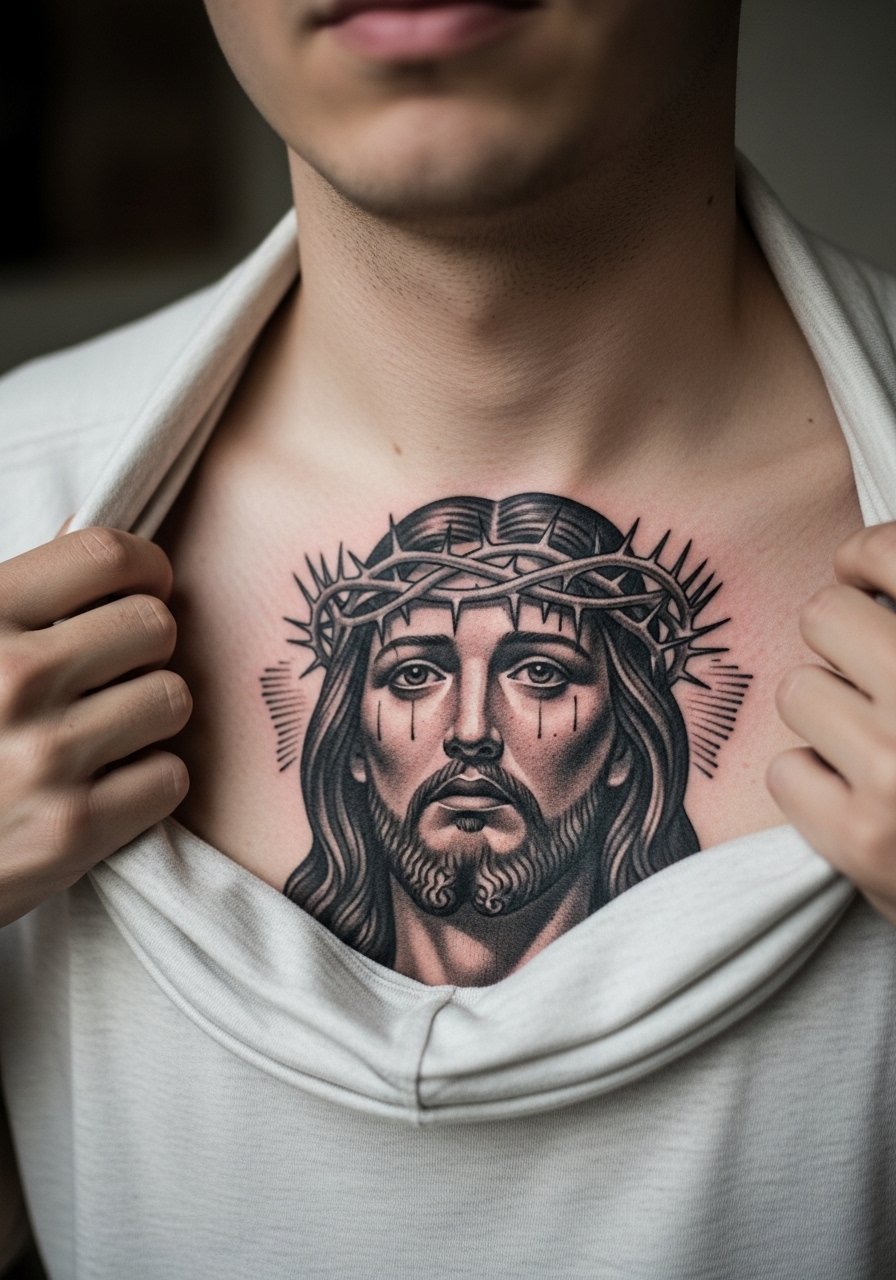
11. Crown of Thorns Portrait on the Upper Chest
Styling lead fits here. This placement reads strong with collarbone framing and is best shown with a wide-neck shirt pulled slightly aside or an open-button shirt. For the artist, ask for graduated shading below the thorn band so the crown remains dimensional after healing. The upper chest takes shading well but moves with breathing so expect longer session breaks. A common mistake is overworking the central hairline details which then need touch-up as the area settles.
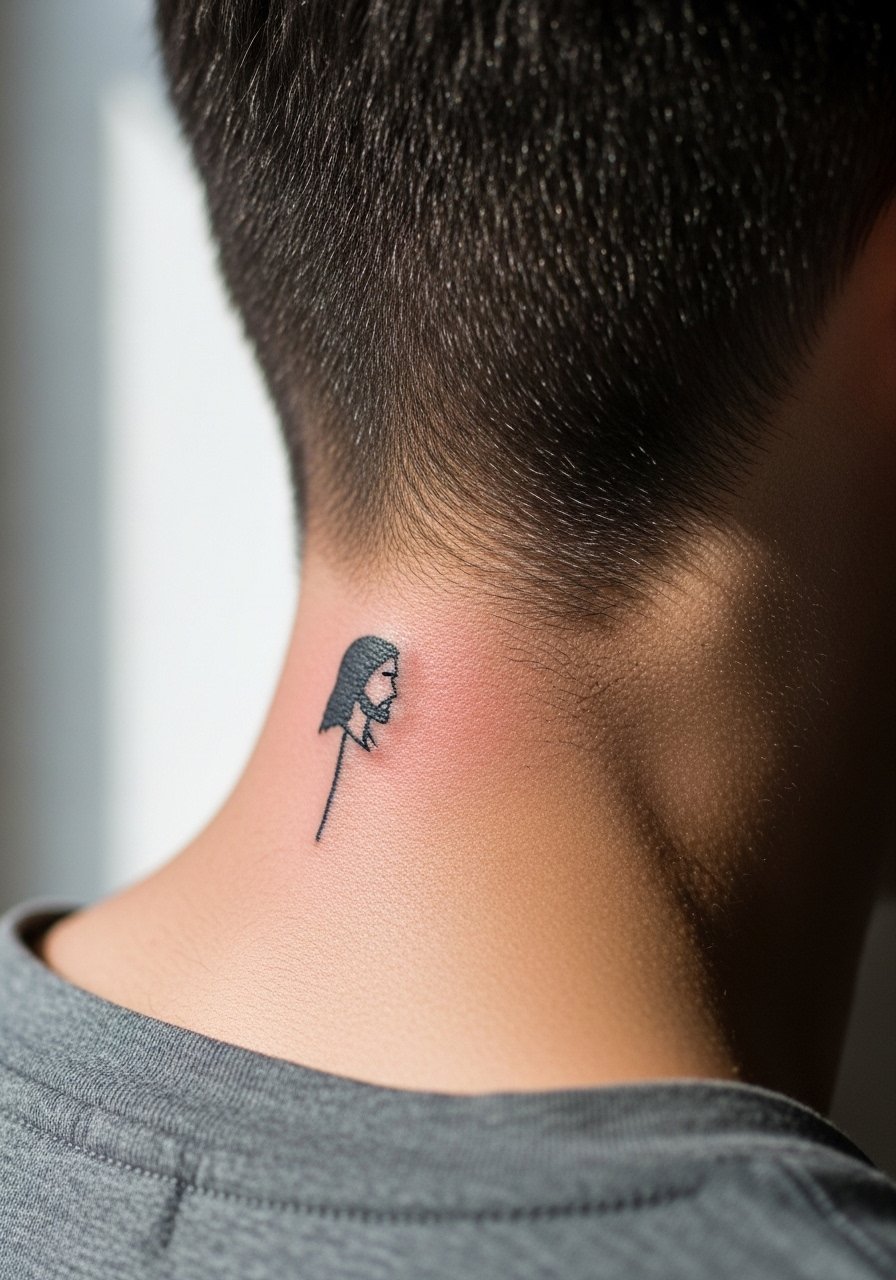
12. Minimalist Jesus Silhouette Behind the Ear
Decision-pressure lead. Behind-the-ear pieces are subtle and invite close viewing, but placement demands precise stencil placement because you cannot reposition easily. Describe the exact silhouette height and tilt you want during consultation so the artist can test the transfer below the hairline. Healing is quick but the area is small and touch-ups may be needed for fine edges. Wear your hair up to the appointment and expect minimal pain. Consider a thin chain pendant necklace to draw balance without crowding the spot.
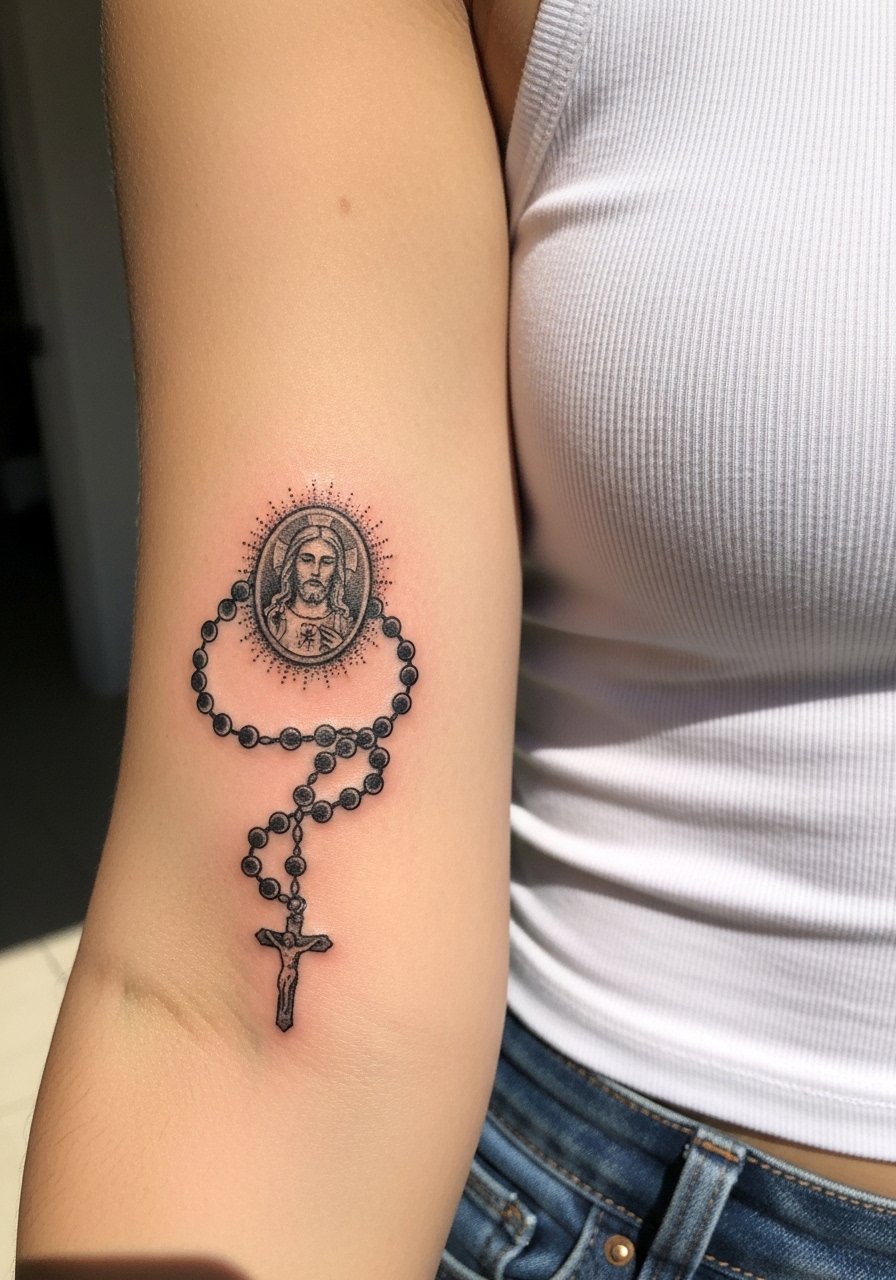
13. Rosary-Wrapped Jesus Cameo on the Inner Forearm
Personal observation: rosary elements that curve with forearm anatomy age better than rigid straight lines. Tell your artist to map the beads along the muscle when the arm is relaxed so the chain reads natural in motion. The inner forearm is forgiving for detail, but dense bead work can blur if the spacing is too tight, so ask for spacing that allows dot work between beads. For session comfort, a white fitted tank top lets the artist access the inner arm with ease. Expect a light touch-up at year two for bead highlights.
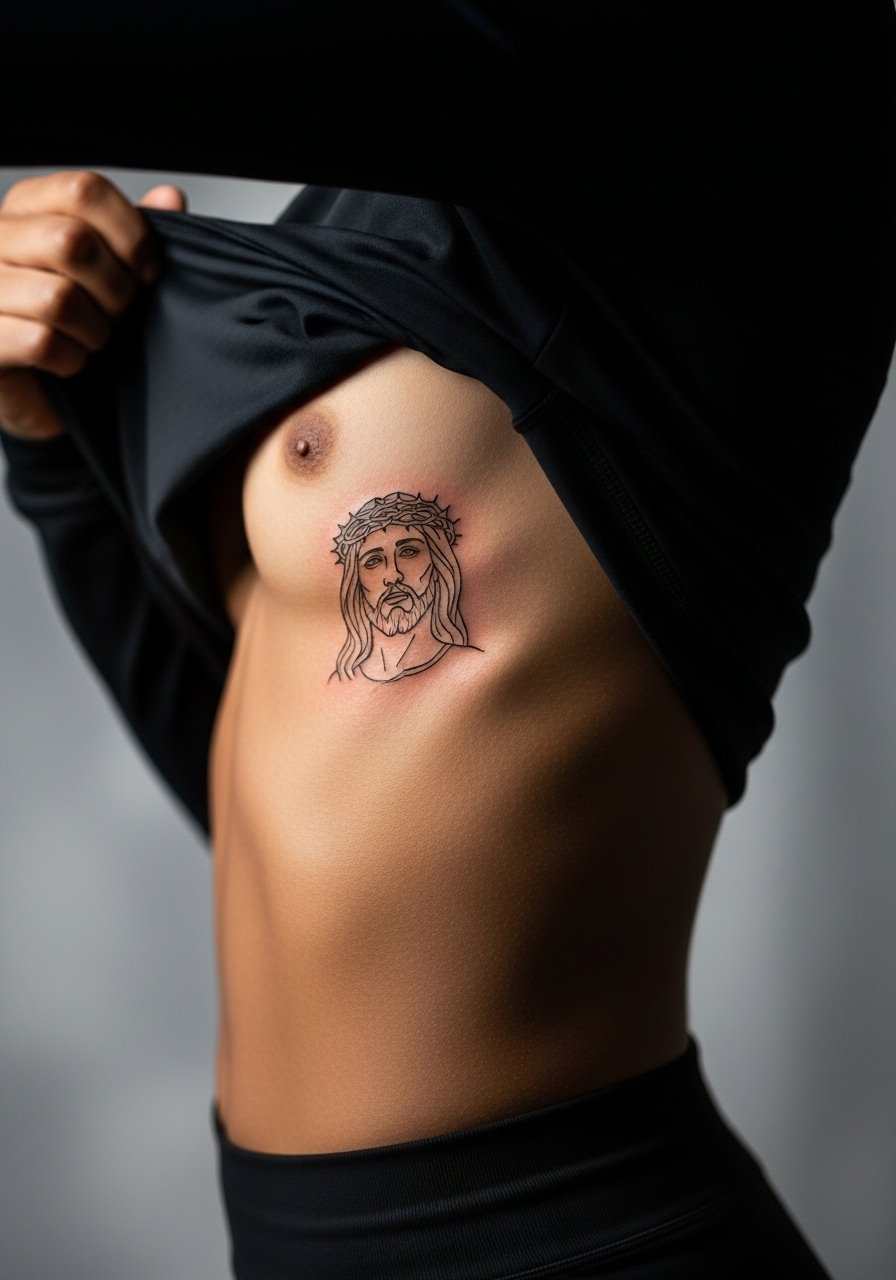
14. Fine Line Jesus Script on the Ribcage
Controversy lead here. Fine-line work on ribs divides artists into two camps. One group says the constant stretch during breathing blurs thin lines within a couple of years. The other group argues that with careful needle depth and slightly wider spacing the result settles beautifully. Ask your artist where they stand and request a spaced script if longevity is important. Pain is higher on the ribs so plan short sessions and bring a loose cropped top that can be lifted to expose only the work area. Expect touch-ups at year three if you plan small, hairline letters.
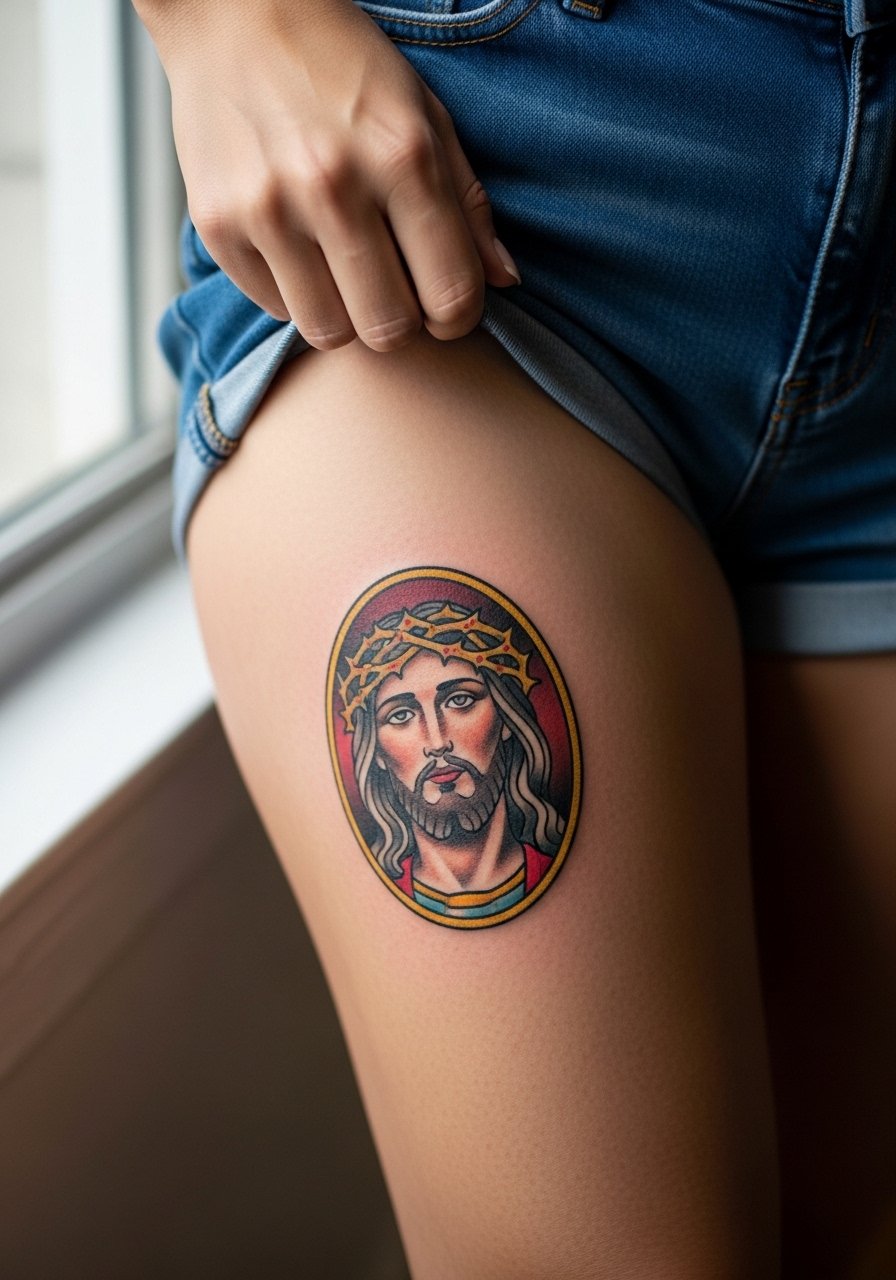
15. Neo-Traditional Jesus Cameo on the Thigh
Aging lead for thigh work. The upper thigh holds saturation well and often keeps clean contrast longer than forearms because it avoids daily abrasion. Neo-traditional shading with controlled saturation here looks good at six months and still reads rich at five years with minimal touch-up. For the session wear, put on loose shorts or a wrap skirt so the artist can expose the zone without pressure. This placement is forgiving for scale changes and allows larger compositions if you want surrounding motifs later.
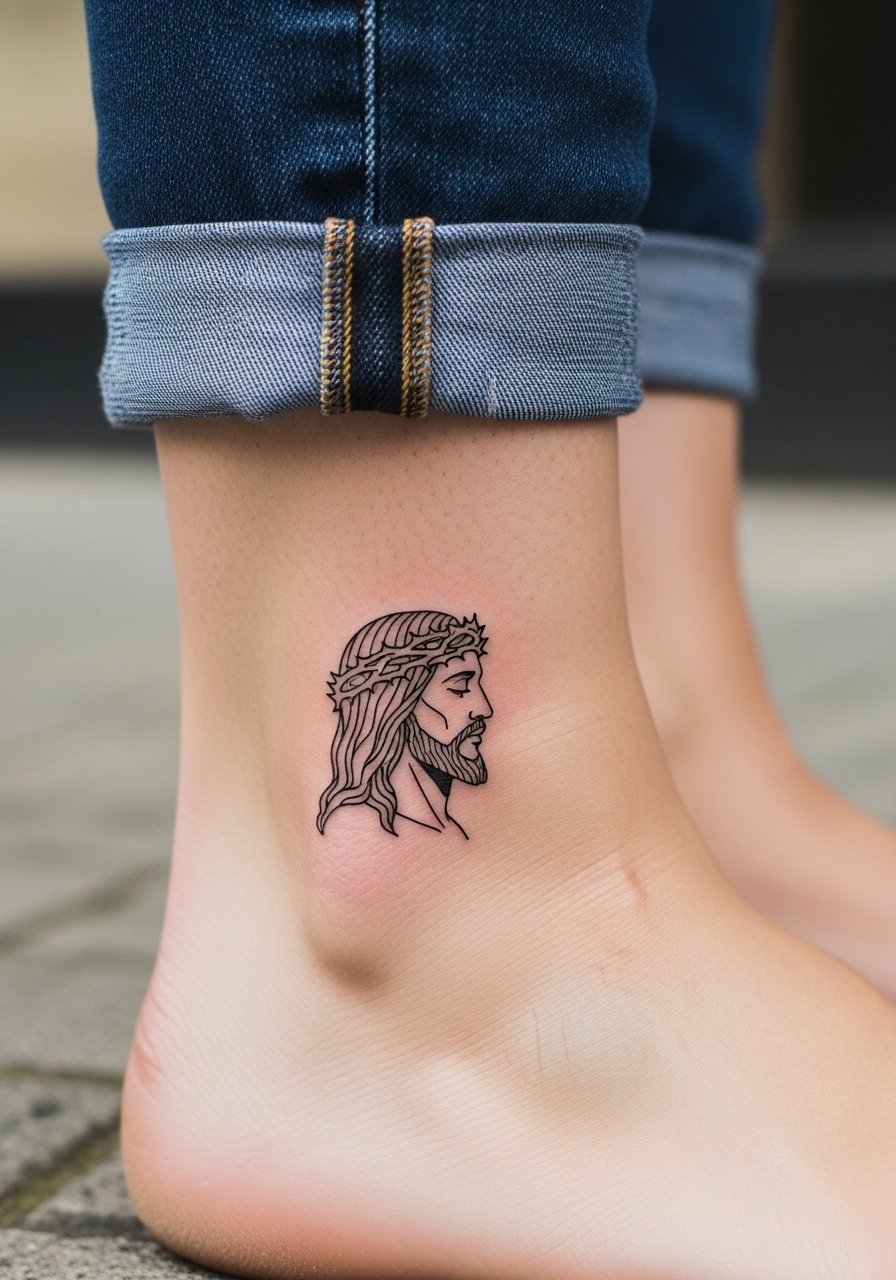
16. Small Jesus Profile on the Ankle
Mistake lead: the ankle's thin skin likes bold strokes more than micro detail. If you want a small profile here, request slightly heavier linework and modest negative space so the shape does not soften into an indistinct blob. Ankle tattoos deal with shoes and socks friction, so expect color and contrast to fade faster than on the bicep. For showing it off, roll jeans or wear sandals. A sleeveless blouse does not relate directly but when coordinating outfits, keep ankle jewelry minimal so the tiny profile stays visible.
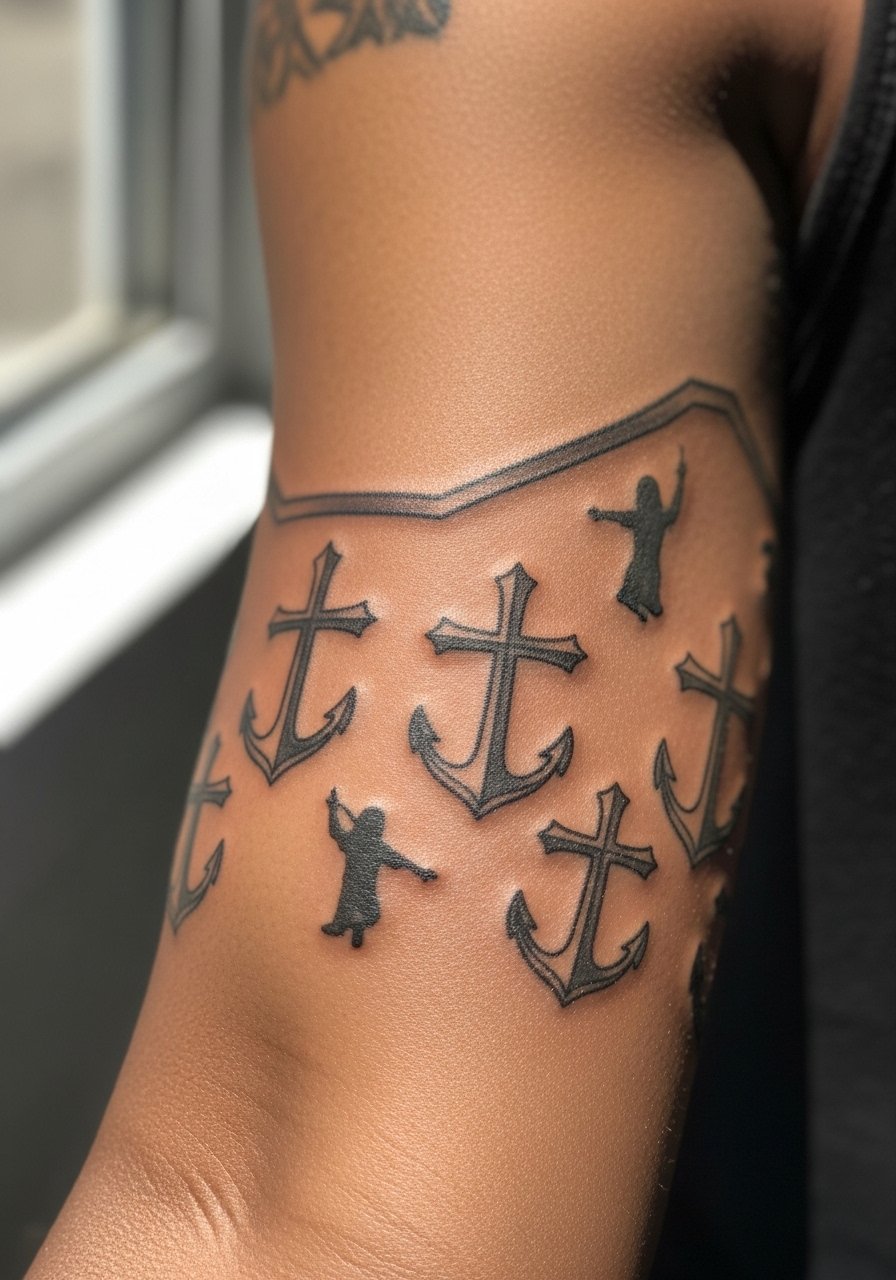
17. Cross and Jesus Silhouette Sleeve Accent
Consultation lead to finish. If you plan a partial sleeve with cross and silhouette accents, bring examples that show spacing across curved muscles. The worst outcome is crowding too many micro portraits in a small band, which leads to merging after a few years. For durability, space key elements and use negative areas as visual breaks. The forearm and upper arm combo gives you contrast between bold cross anchors and softer portraits. During the session, alternate position and rest to manage fatigue across the sleeve. A loose button-down shirt makes access simple and comfortable.
Frequently Asked Questions
Q: Will the fine-line Jesus portraits on the wrist or hand need touch-ups sooner than upper arm pieces?
A: Yes. From what I have seen, hands and wrists are high-friction and high-wash zones so expect at least one light touch-up by year two or three. Ask your artist about line weight and reserve a follow-up slot during booking.
Q: Is graffiti-style religious imagery ever considered disrespectful and how should I approach it?
A: Artists and wearers split into two camps. One camp prefers more traditional portrayals and feels street styles can feel irreverent. The other camp sees graffiti as a modern reinterpretation that connects faith to urban identity. Before you book, discuss intent and reference imagery with your artist so the approach matches your goals.
Q: What should I wear to a sternum or ribcage session for a Jesus portrait?
A: Wear a fitted sports bra or a cropped top that you can lift or pull aside to expose only the work area. That keeps the canvas stable and the artist able to work cleanly. If you need a quick wardrobe option, a loose button-down shirt you can open works too.
Q: How does skin tone affect the way a Jesus face portrait is shaded?
A: Shade choices change with skin tone. Artists often adjust saturation and contrast so highlights read on darker skin and midtones pop on lighter skin. Bring reference photos of healed tattoos on a range of tones to help your artist visualize the final result.
Q: Are there placements where tiny Jesus silhouettes should be avoided entirely?
A: Avoid ultra-fine silhouettes on areas with constant stretch or friction like the palm, fingers, or very thin ankle spots. Those locations blur faster. If you want small work there, ask for slightly bolder line weight and accept a likely touch-up timeline.
Q: How long does a realistic shaded Jesus portrait on the forearm usually take and how will it feel?
A: Expect one to two sessions depending on size, with each session lasting one to three hours. The forearm is moderate on most pain charts. You will feel steady pressure and vibration but breaks are typical. Plan comfortable clothing that lets you rest the arm and stay hydrated.