Fine line snakes are everywhere on feeds right now, and the sketch approach gives them motion without the polish of photorealism. The style reads raw and drawn, like a page from a sketchbook that kept moving after the artist put down the needle. Below are designs that use looseness, hinting, and purposeful imperfection to keep a snake feeling alive on skin, plus what to ask for at consult and how each idea ages.
1. Loose Coil on the Inner Forearm
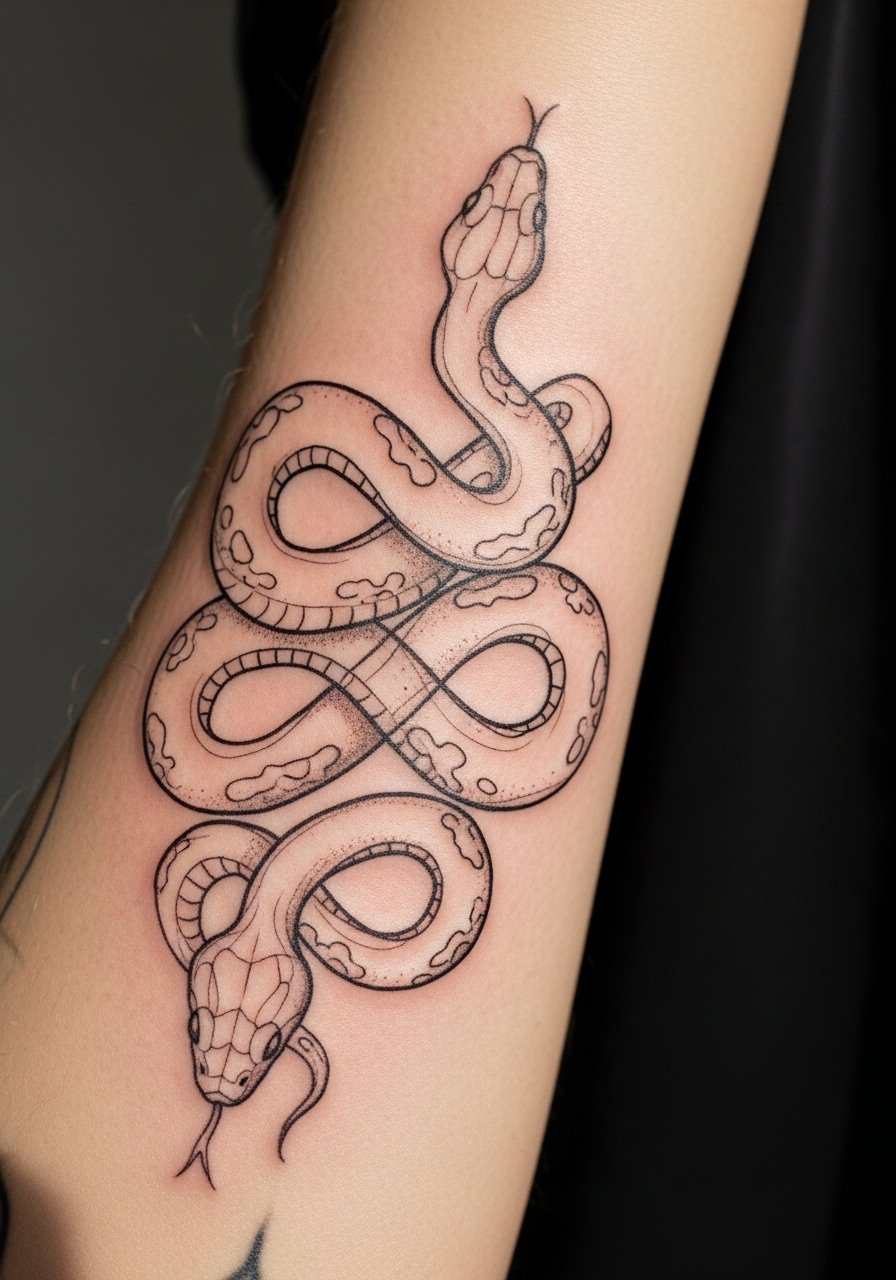
I recommend this when you want motion without heavy saturation. Tell your artist to keep sketch lines layered and avoid tight fills so the piece breathes as it heals. Fair warning, the inner forearm catches sun and fine sketchy lines can soften faster there, so expect a touch-up window around year two to three for crisp contour. Pain is moderate, session time usually 60 to 90 minutes. A common mistake is asking for every stray sketch stroke to be permanent, which creates visual clutter over time. For casual show-off wear, rolled sleeves or a loose linen button-down frames the forearm without hiding the motion.
2. Tiny Single-Line Snake Around the Ankle
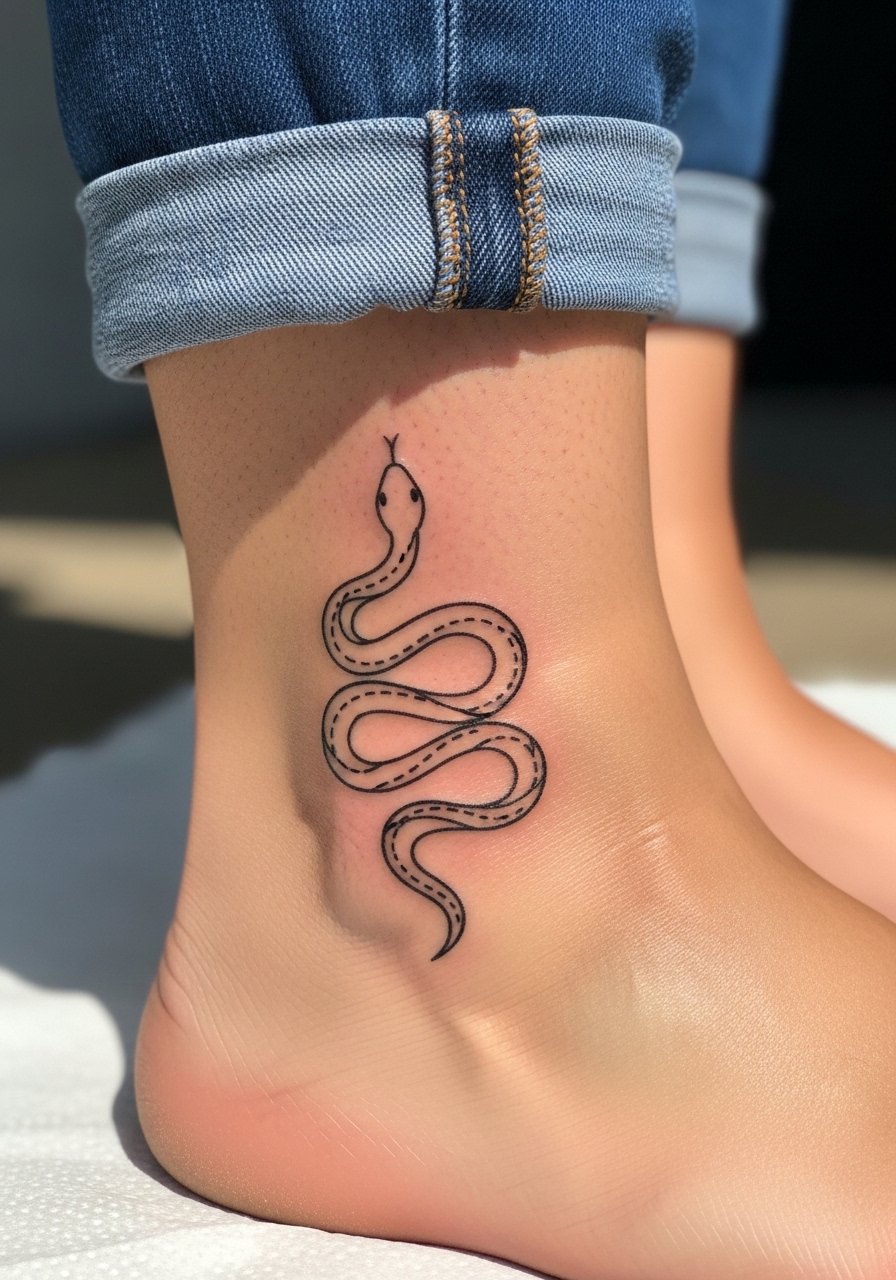
This is for someone who wants subtle edge and fast sessions. Expect a quick 30 to 45 minute appointment and a pain level that varies with ankle bone proximity. The biggest mistake is making the line too thin for the placement. Thin single strokes near the bone can blur into a soft band within a couple of years. Ask for slightly heavier linework where the snake crosses the ankle bone and lighter sketch marks elsewhere. For the appointment, wear pants you can roll up easily, or slip into low-rise shoes so the artist can see and work the entire ankle without pulling on fabric.
3. Ribcage Sketch Snake with Floral Infill
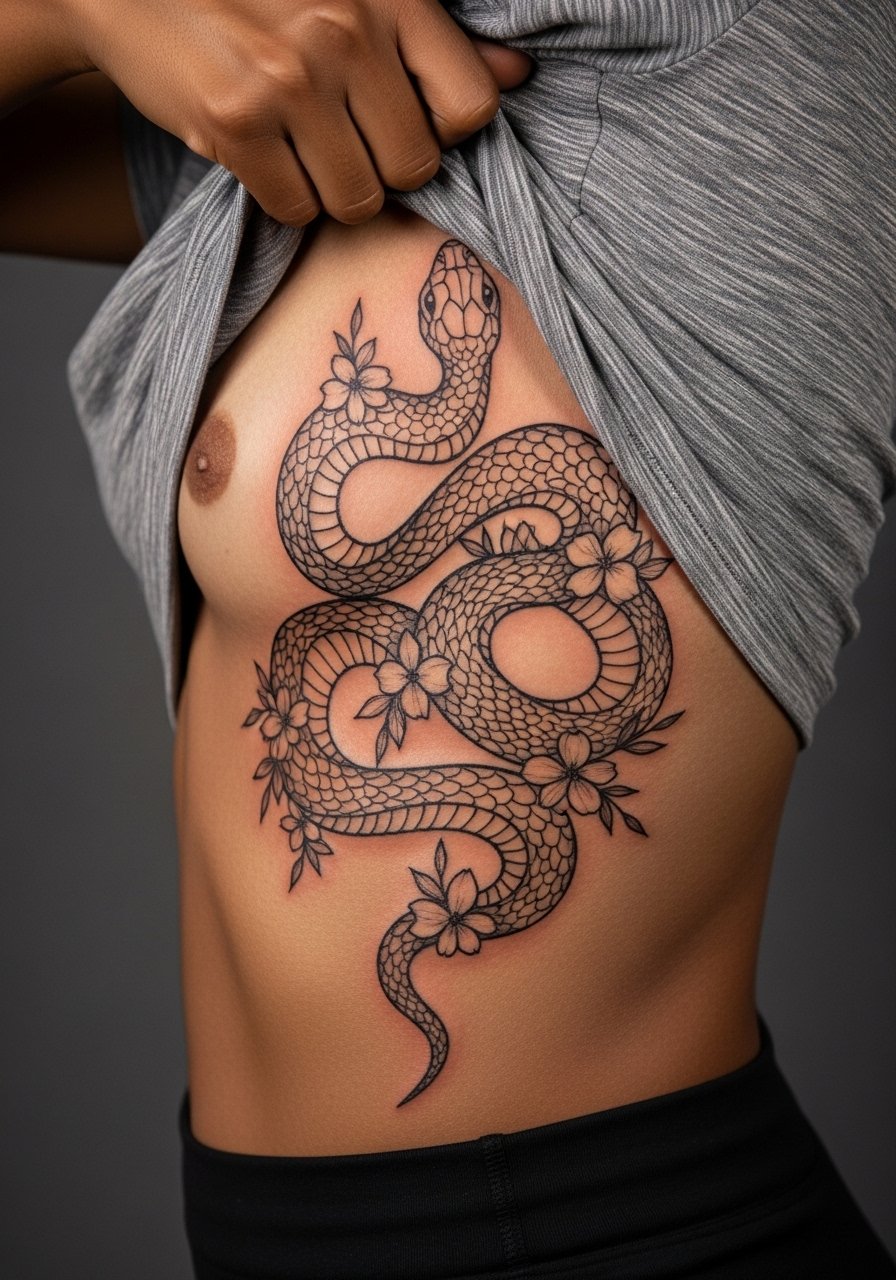
Ribcage work reads cinematic but has a reputation for being high pain and high maintenance. Artists split into two camps on fine line there. One camp says the skin stretch blurs thin work within two years. The other camp argues that proper spacing and depth make sketch lines settle fine. Ask your artist which camp they follow and how they plan spacing. Expect 90 to 180 minutes depending on size, and touch-ups are common at year two. A common error is cramming dense detail into a narrow rib panel. For session comfort, choose a top you can lift like a cropped athletic tank so the artist has clear access without full exposure.
4. Collarbone Snake That Follows the Bone
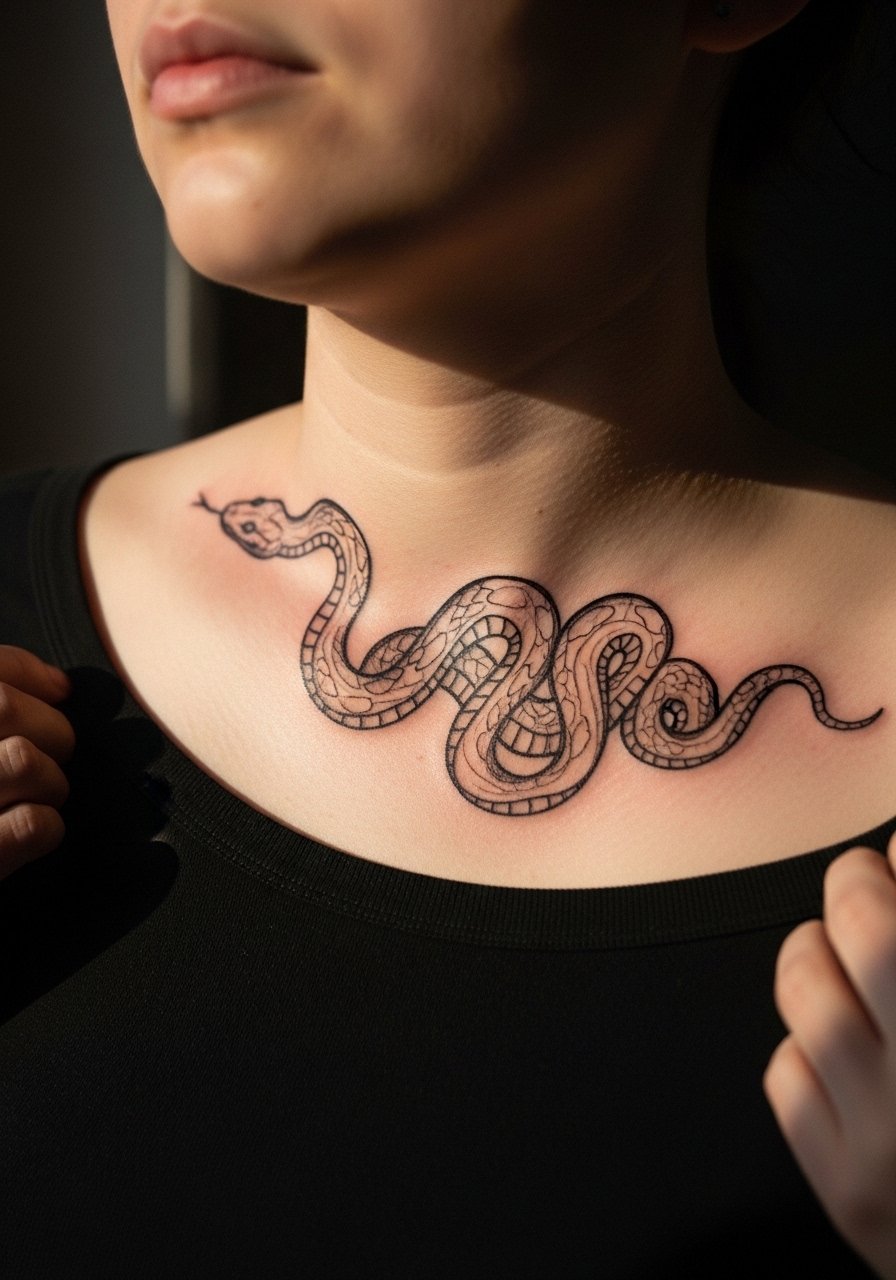
This placement syncs with jewelry and neckline choices. Tell the artist to anchor the head and tail at points where jewelry will not rub. Pain is mild to moderate and sessions are usually 45 to 75 minutes. Overly dense sketch shading near the bone tends to pool and lose definition, so request spacing in hatch marks rather than solid fills. For showing it off, a thin chain pendant necklace sits above without competing with the linework. The collarbone heals well if you avoid straps that rub the area for two weeks.
5. Double-Headed Sketch Snake on the Outer Bicep
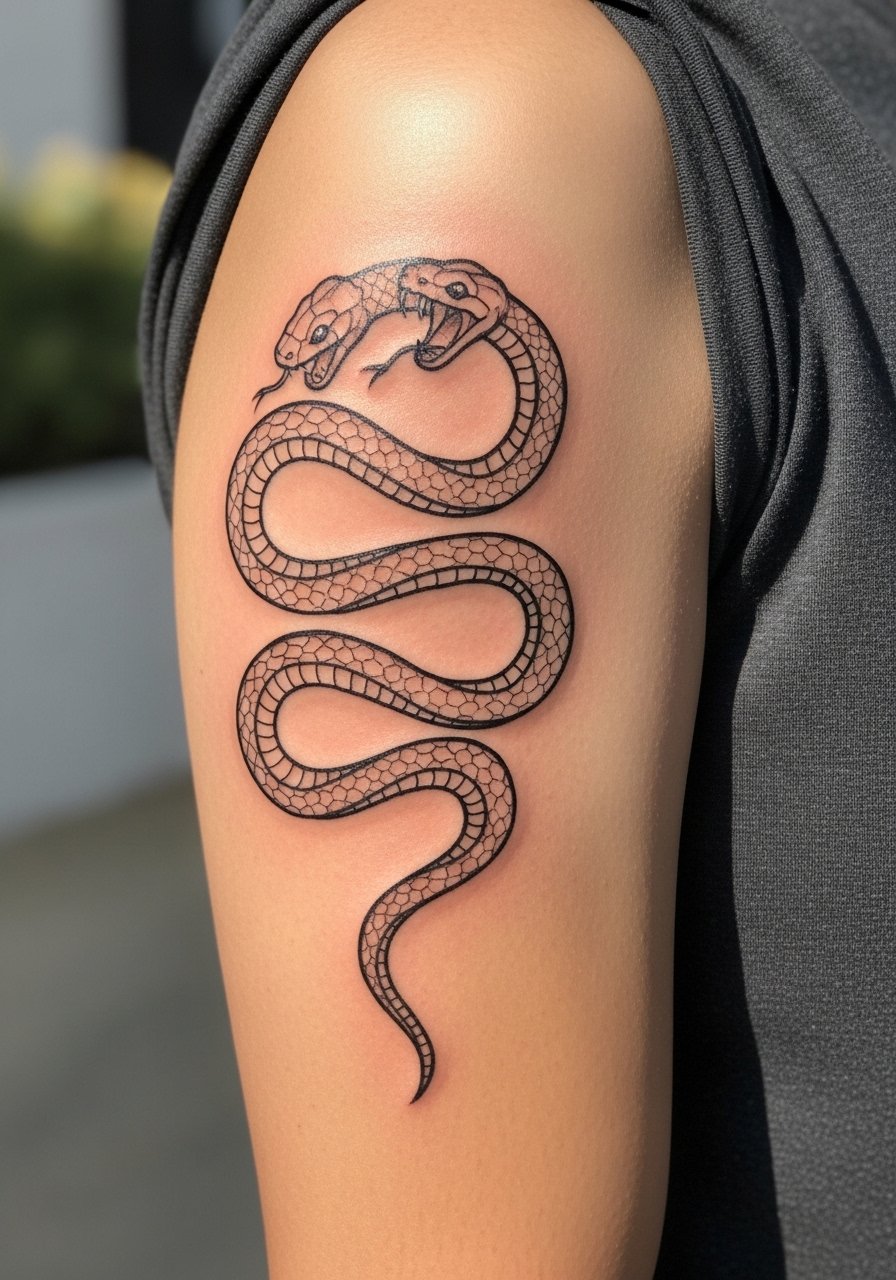
This design reads bold even without heavy black. It suits people who want arm visibility but not a full sleeve. Sessions often run 60 to 120 minutes and pain is low to moderate. A common mistake is insisting both heads be identical. Let the artist render each head with different sketch strokes for personality and longevity. For aging, outer bicep linework tends to hold better than inner surfaces because it gets less friction and less sun. Pair it with rolled sleeves or a structured short-sleeve linen shirt when you want the tattoo visible without crowding the shoulder.
6. Threaded Finger Snake, Sketchy Outline
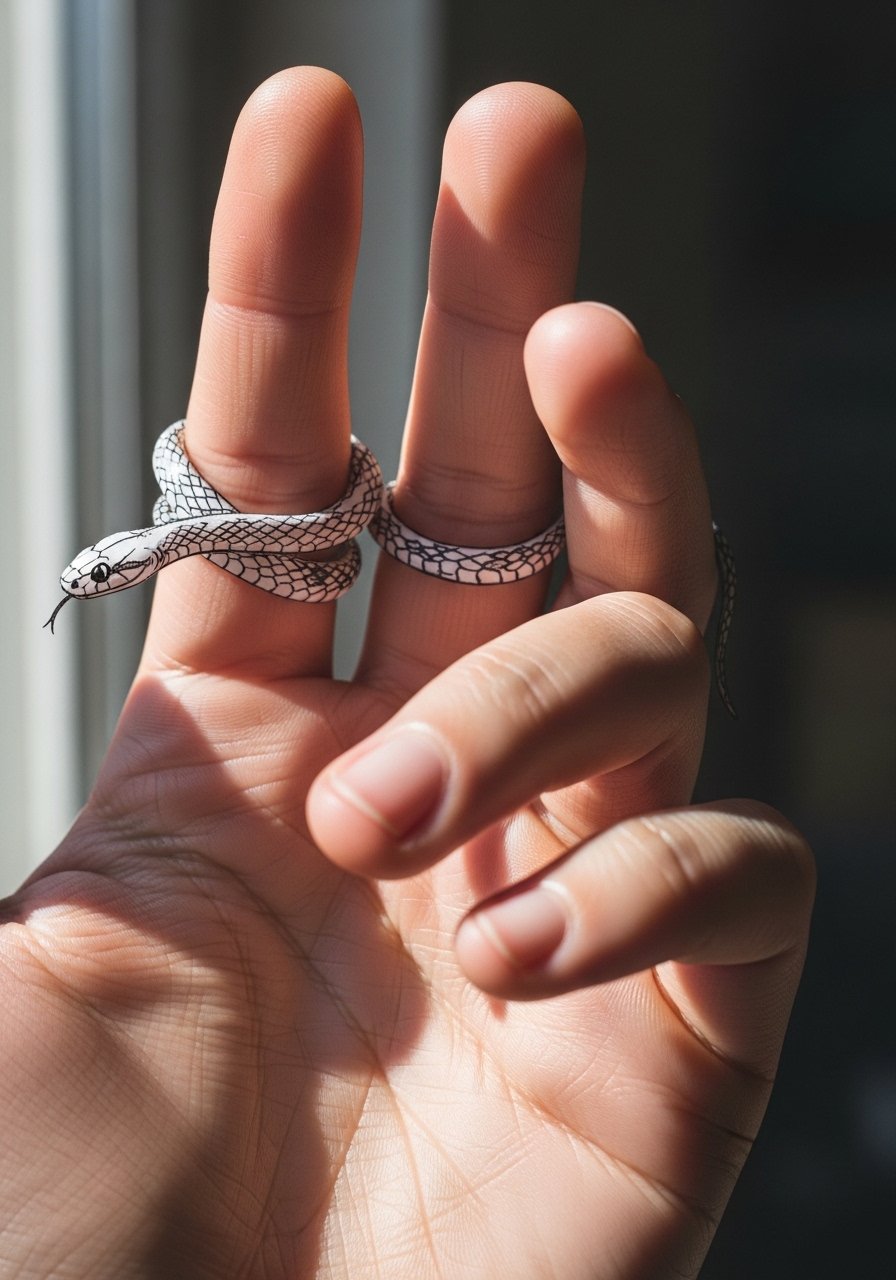
Finger tattoos carry unique risks because of constant washing and friction. This sketchy threaded snake looks delicate, but expect more touch-ups than other placements. Pain is sharp but brief and sessions are often under 30 minutes. The typical error is asking for super-fine loose strokes that vanish into skin movement. Ask for slightly denser outline stitches so the form survives daily wear. Finger care matters more than with other spots, so plan for a possible refresh in year one to two. Keep rings minimal during healing so metal does not press against the new lines.
Pre-Session Essentials
The forearm, collarbone, ribcage, and finger pieces above each present different prep needs, and a few targeted items make the session and first week easier.
-
Stencil transfer paper kit. Lets you and the artist preview sketch placement on skin before the needle starts, especially useful for collarbone and rib layouts.
-
Topical numbing cream. A thin layer applied per instructions eases ribcage and finger sensitivity for clients who need it.
-
Thin protective film roll. Keeps wrist and finger pieces cleaner during the first week of frequent hand washing.
-
Fragrance-free gentle body wash. Cleanses healing areas without stripping the delicate sketch linework on forearms and biceps.
-
Aquaphor healing ointment. Thin application for the first few days helps keep fine sketch channels moist while they close, especially on the collarbone and forearm.
7. Back-of-Neck Serpentine Sketch
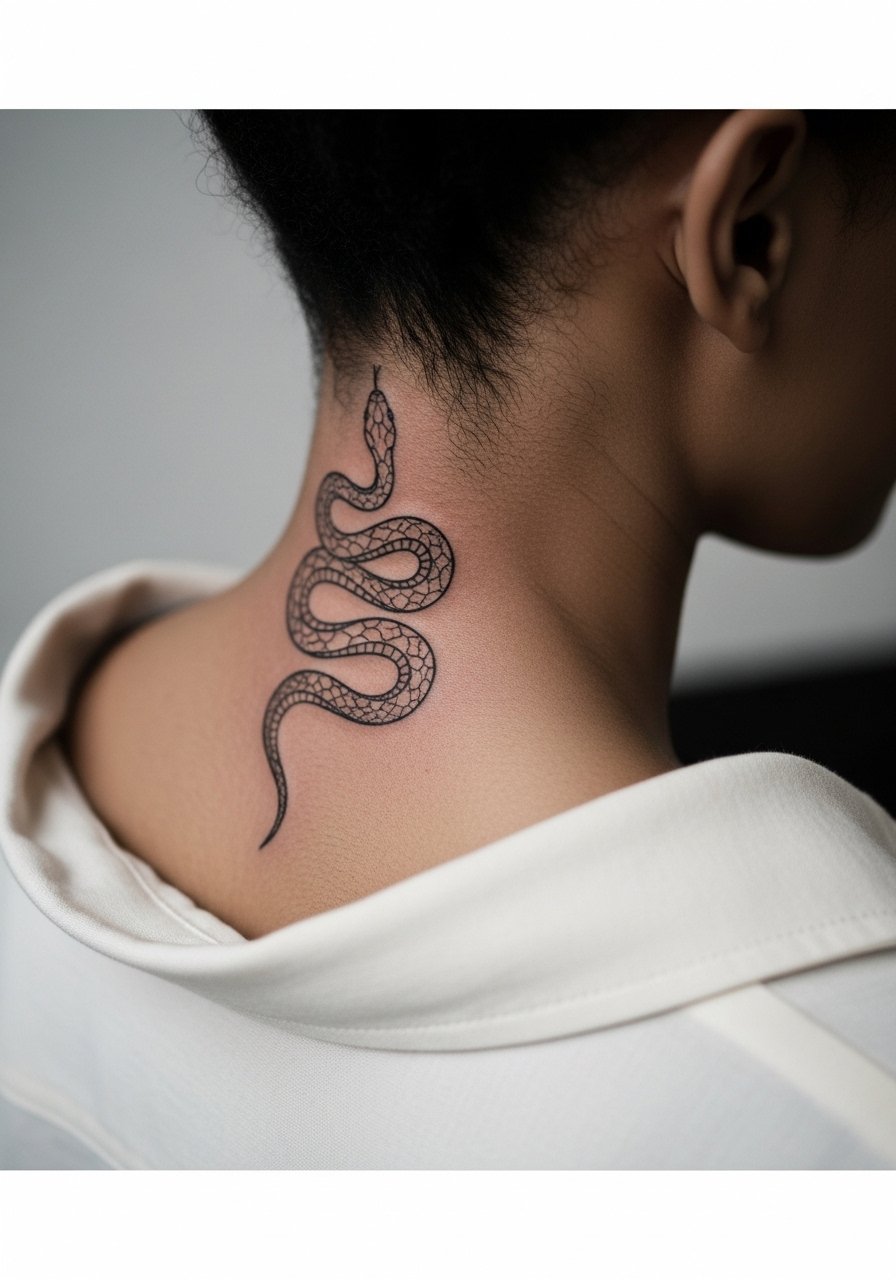
Neck placement reads secretive and edgy. Pain is moderate depending on how close the needle gets to the bone, and sessions can be short. A common mistake is wanting dense cross-hatching right at the nape. Ask for looser strokes that step away from the spine so the sketch remains readable as skin shifts. Healed, neck lines can soften due to clothing friction, so expect touch-ups by year three for finer lines. For showing it off, high-collar tops hide it when needed and low collars reveal it neatly.
8. Minimal Spine Snake in Sketch Strokes
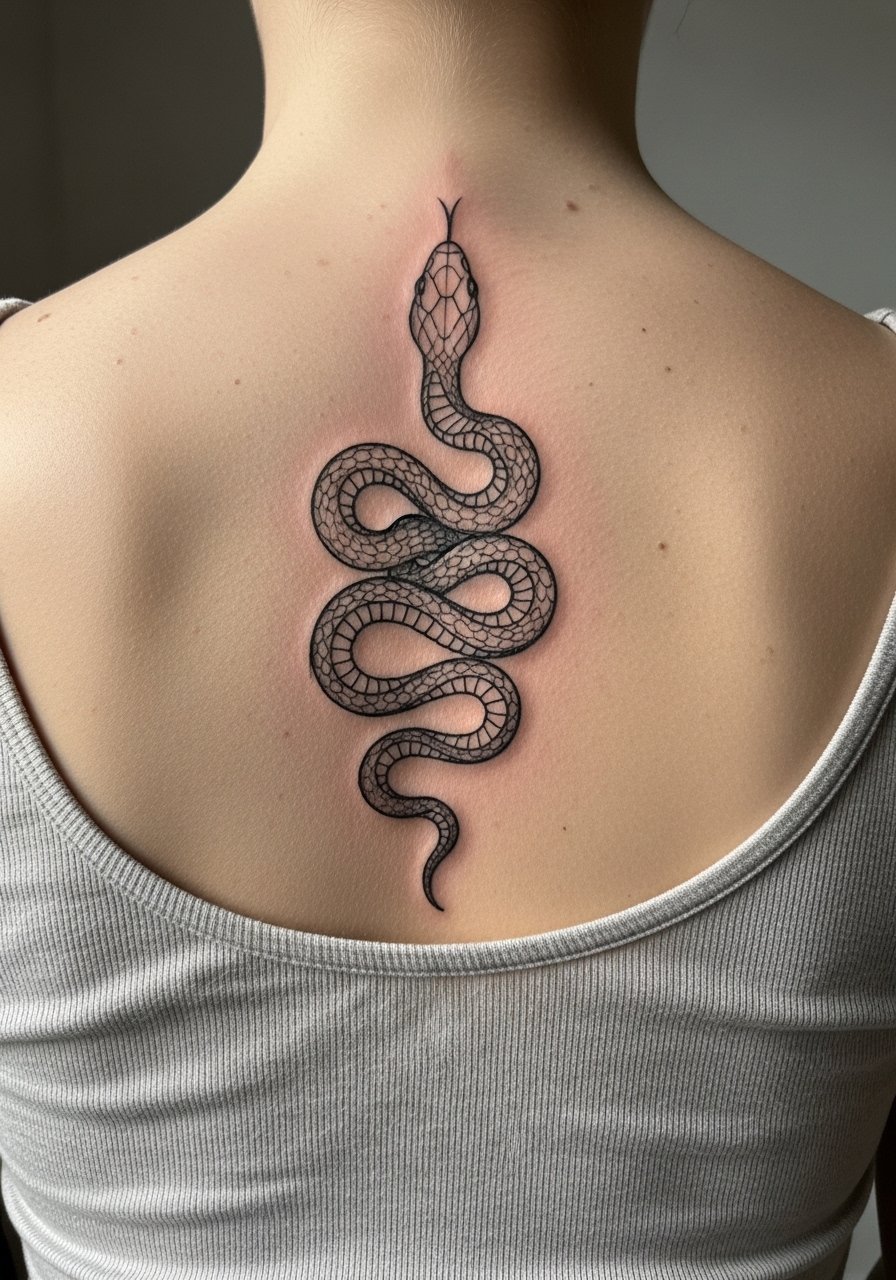
A spine snake looks dramatic in sketch form because each stroke reads as motion. Pain varies with proximity to the spine, and sessions usually last 60 to 120 minutes for a long design. The biggest mistake is crowding fine hatch shading directly over vertebrae. Ask for sparse stipple and separated strokes so lines do not merge over time. Healing differs from side torso work because the spine area is less exposed to sun but sees clothing friction. Choose clothing that avoids rubbing the center back for the first two weeks.
9. Sketch Ouroboros on the Sternum
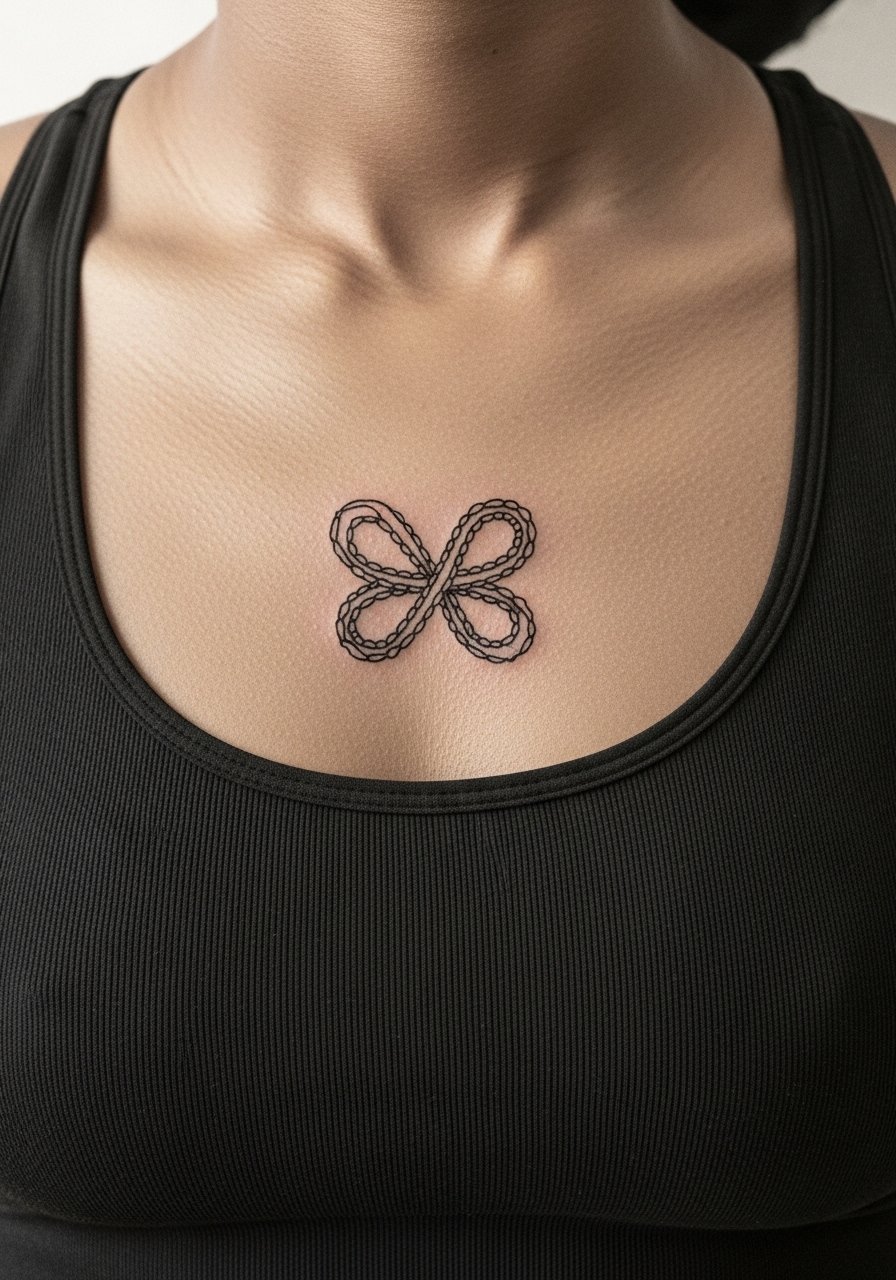
Sternum placements carry a reputation for sharp sessions and tricky healing. Expect strong sensitivity and a session that may take 60 to 120 minutes depending on size. Artists debate how dense sketch lines behave on the sternum because skin there moves with breathing. Name both camps in consultation so you know whether your artist favors spacing or denser anchors. A common mistake is squeezing too many tiny strokes into the central panel. For show-off wear, open necklines and strap-backed tops reveal the piece best. Consider scheduling the session when you can rest after, as the chest can feel tender for several days.
10. Calf-Wrapped Snake with Cross-Hatched Texture
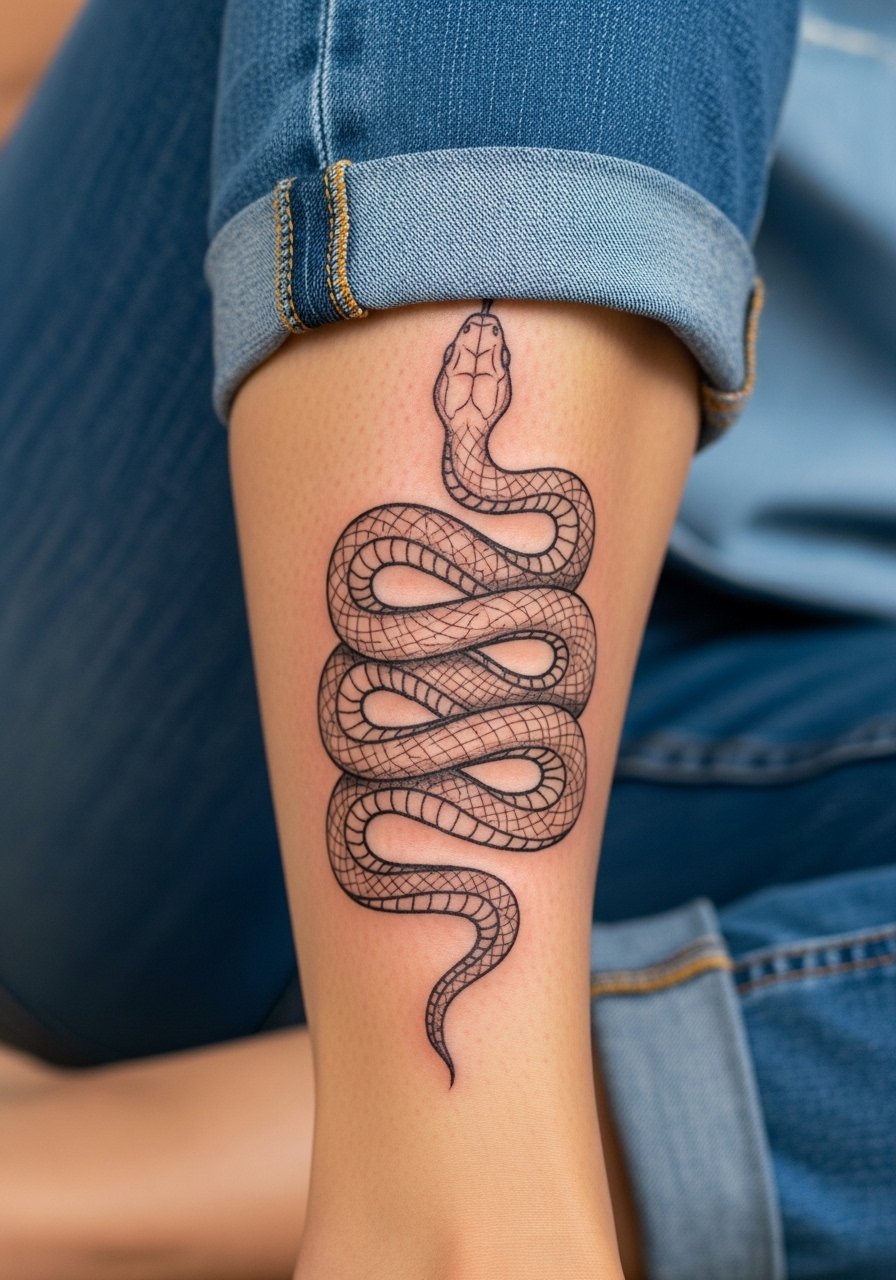
Calf work ages well because it sees less sun and less abrasion. This design benefits from slightly heavier sketch strokes on the outer wrap to read from a distance. Sessions for a medium calf wrap run 60 to 120 minutes and pain is usually mild. A typical error is wanting ultra-fine texture on a large curve, which vanishes after a few years. For the first week, wear pants that do not rub the new lines and opt for sandals or sneakers that do not press against the outer wrap. The calf also pairs with shorts for summer showing.
11. Thigh Hidden Snake with Loose Hatch
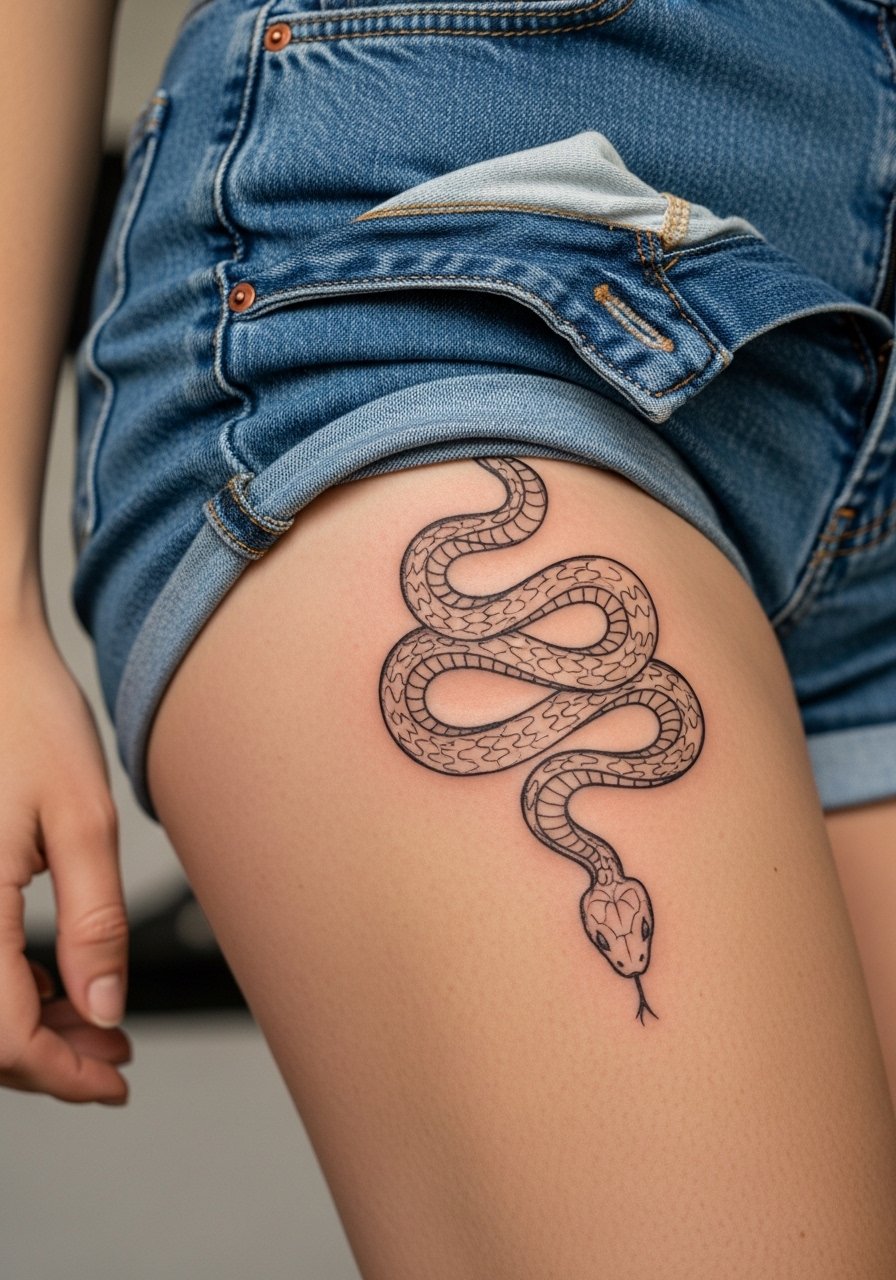
Upper thigh pieces let you go larger without public visibility. Pain is often lower than ribs or sternum and sessions can extend over multiple sittings for larger compositions. The most common mistake is picking overly intricate hatchwork that looks great on paper but muddies after healing. Ask your artist to scale stipple and hatch spacing for the larger canvas of the thigh. For the session, wear loose bottoms like a wrap skirt or high-waisted shorts so the artist can access the area without pinching fabric. Thigh designs tend to retain contrast longer than hands or fingers.
12. Shoulder Blade Sketch Snake with Sparse Dot Work
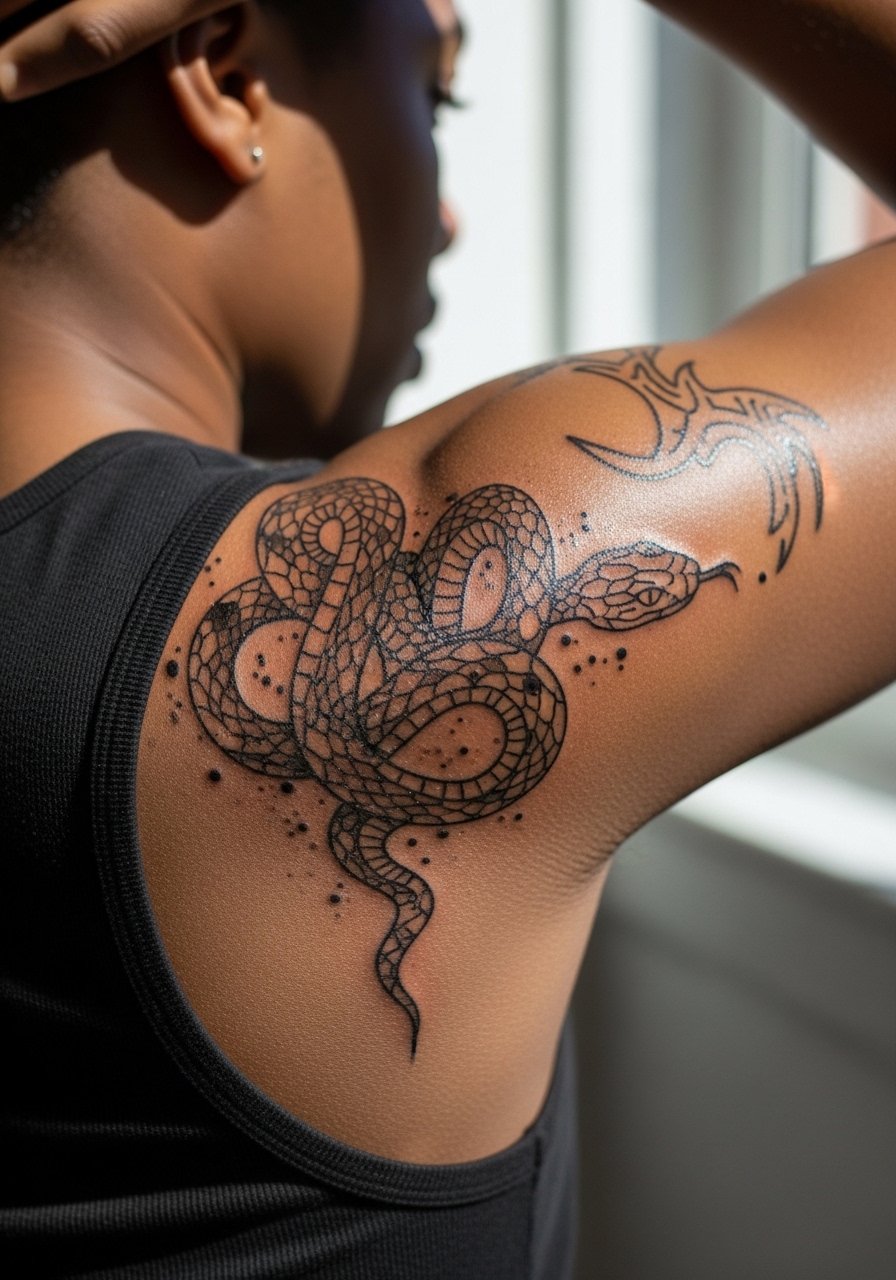
This placement gives the design room to breathe and survive years of wear. Pain is usually mild and sessions are 60 to 120 minutes depending on scale. A mistake people make is packing too many sketch strokes into the blade where movement will blur them over time. Ask for more negative space and defined anchor lines where you want the shape to persist. The shoulder blade is great for partially covered looks when you wear casual tops. Expect strong longevity from this spot because it gets less daily friction.
13. Sketch Snake Around the Wrist with Bracelet Negative Space
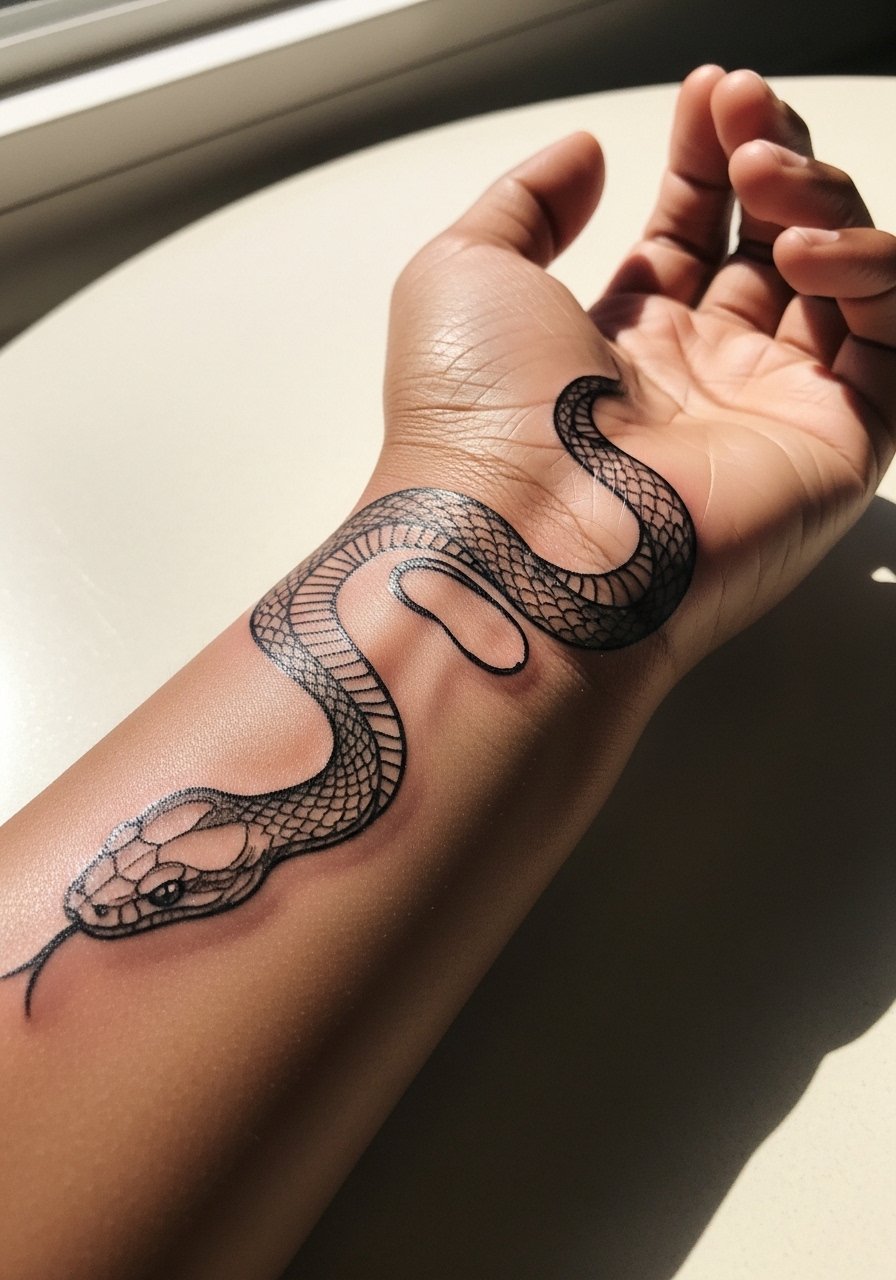
Wrist work is visible and vulnerable. Tell your artist to plan negative space where you normally wear bracelets so neither the jewelry nor the tattoo fights for attention. Pain is moderate and sessions are short. The usual error is too many tiny hatch marks near the wrist crease. Those lines can turn into a soft gray wash within a couple of years. For style, a minimalist cuff or stacked bracelets complement the sketch without crowding the lines, and a thin minimalist bracelet keeps the area balanced during show-off moments.
14. Geometric Sketch Snake Interlocking with a Mandala
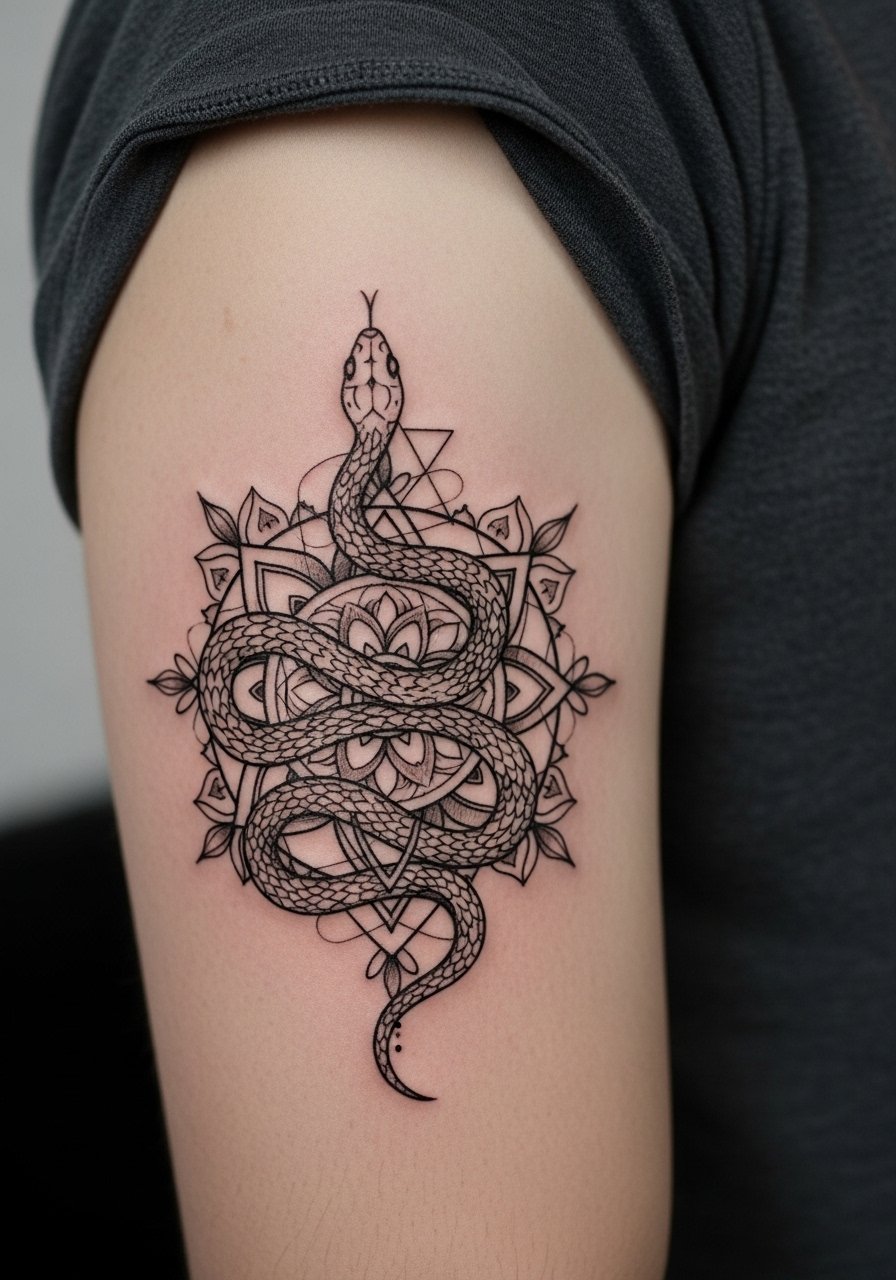
Combining sketch snakes with geometric elements adds structure to the loose strokes. Sessions depend on detail and usually run 90 to 180 minutes. The most common mistake is forcing tight mandala density into the sketch areas which causes early merging of lines. Ask for clear separations between geometry and sketch strokes and consider slightly bolder anchors for the mandala. On upper arm placements, the piece sees moderate sun exposure, so plan sparing touch-ups in high-exposure years.
15. Tiny Behind-the-Ear Snake Flick
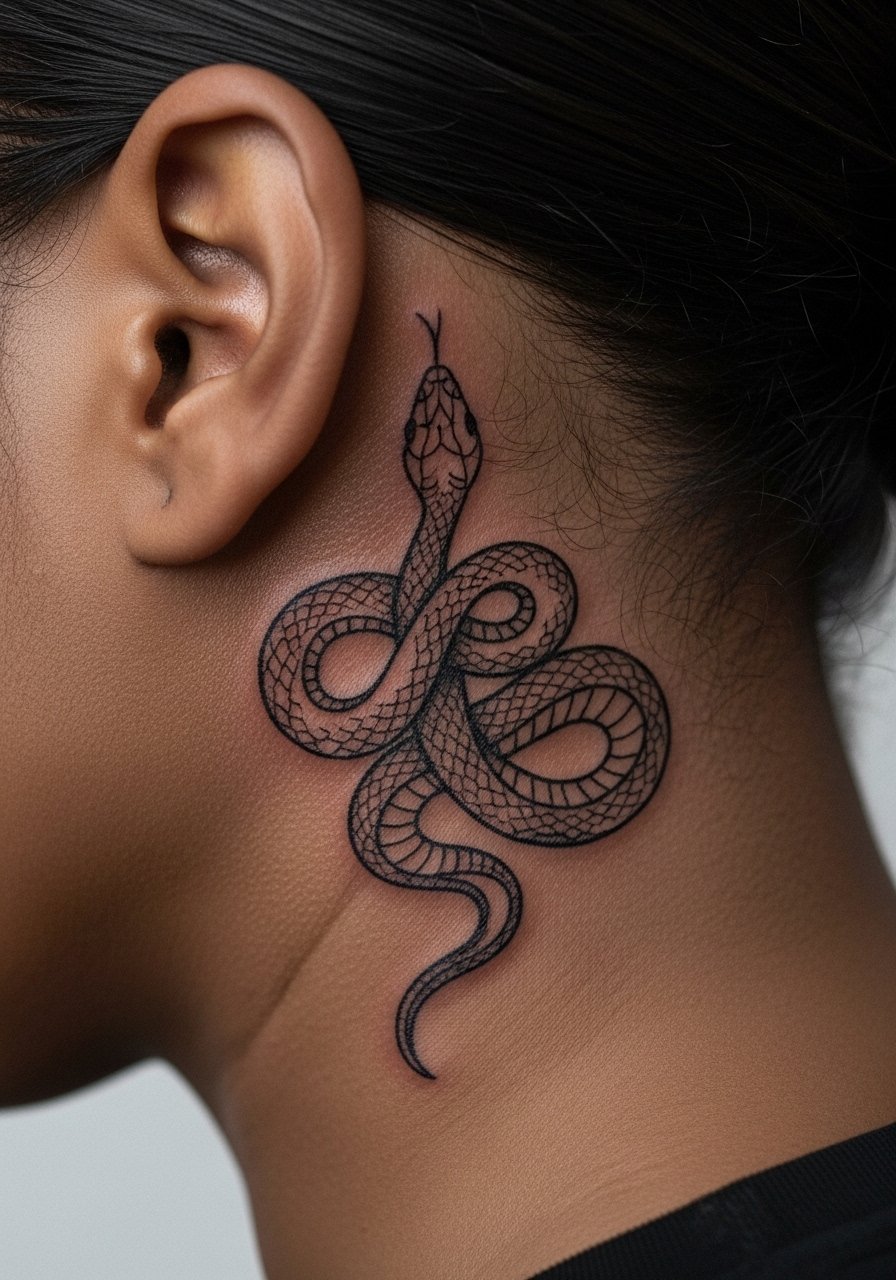
Behind-the-ear designs read intimate and playful but require exact placement. Describe the area as the skin behind the ear below the hairline so the artist frames the piece correctly. Sessions are short, pain is mild, and the usual mistake is seeking text or dense detail in a tiny zone. Sketch lines survive better with airy spacing here. Consider front-facing hairstyles or updos to show it off. For appointment comfort, bring layers so you can cover the neck after the session.
16. Sketch Snake Sleeve Accent, Minimal Fill
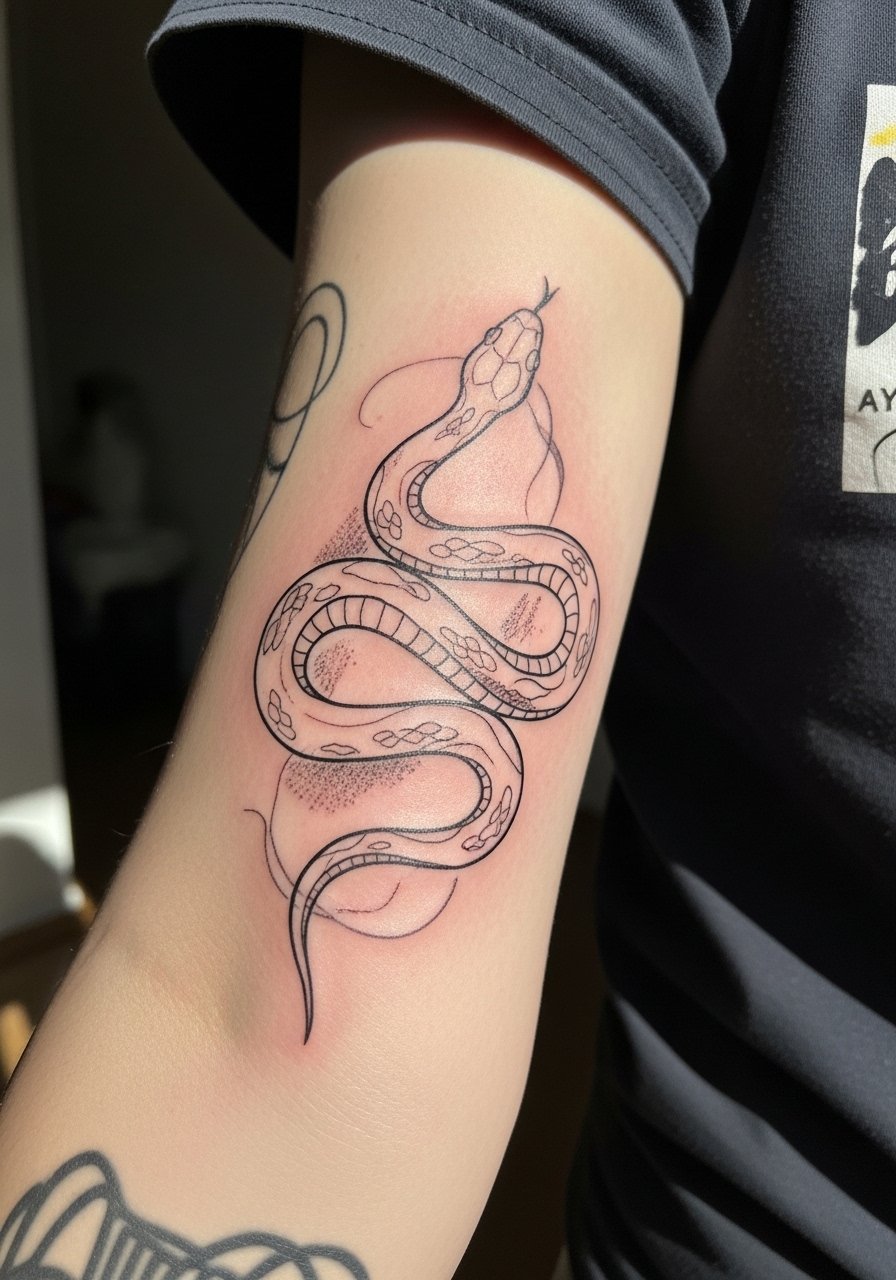
An accent snake in a sleeve keeps the sketch language while the rest of the sleeve supports longevity. Sessions are modular, with the snake portion often taking 60 to 120 minutes depending on integration. A mistake is treating the sketch snake as an isolated element without discussing how adjacent heavy blackwork will age and overshadow it. Ask your artist how they plan saturation transitions and spacing to preserve the sketch feel. Sleeve accents are visible with rolled sleeves and pair well with casual watches or bands.
17. Micro-Real Sketch Snake on the Side of the Hand
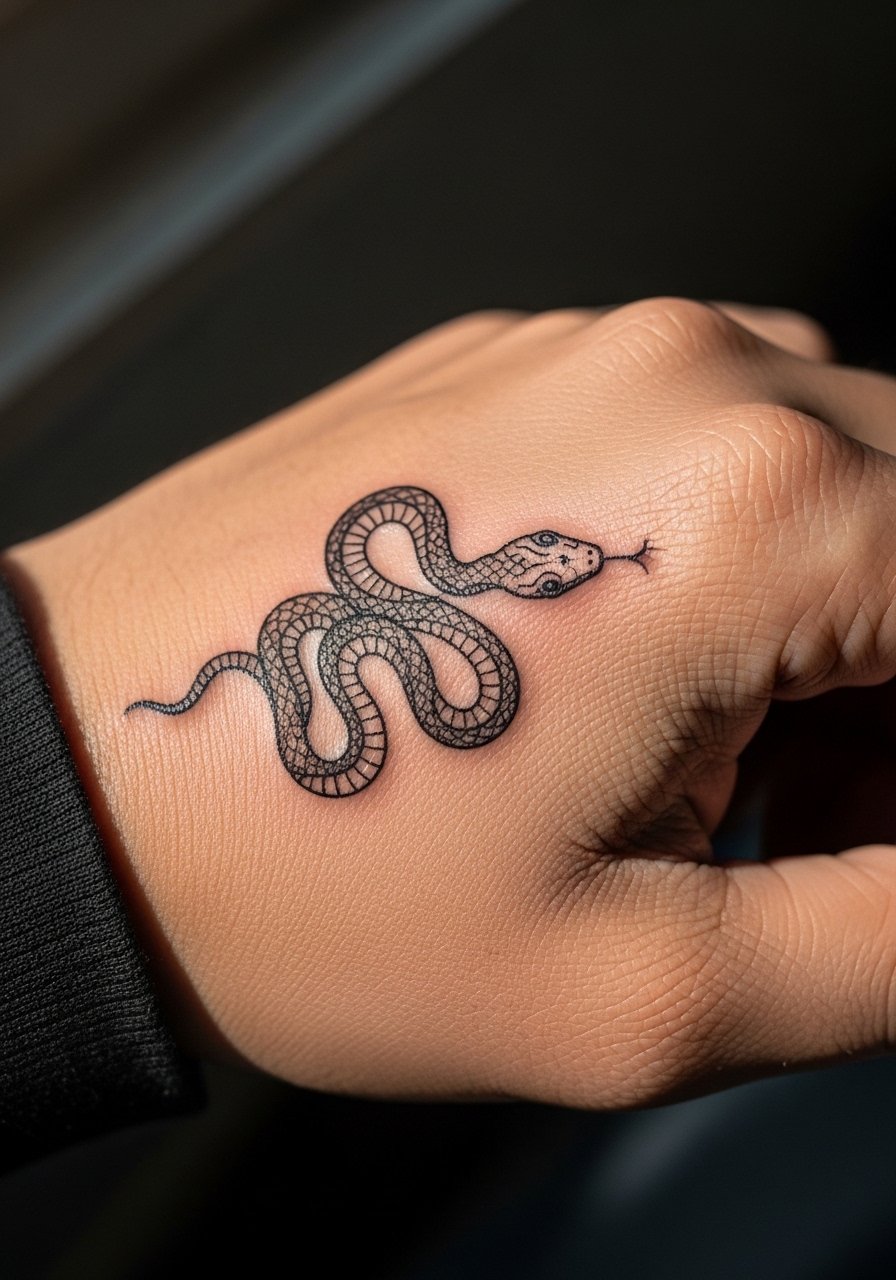
Side-of-hand pieces are bold choices because the skin there moves constantly. Expect fast but sharp sessions and a higher chance of early fade. The biggest mistake is wanting ultra-fine random strokes that disappear after heavy hand use. Ask for slightly denser anchor lines that keep the shape readable. Touch-ups will likely be needed within two years. For showing it off, short-sleeve shirts and a simple ring on the opposite hand keep attention on the design without competing elements.
Frequently Asked Questions
Q: Will sketch-style fine lines blur faster than solid blackwork on places like the forearm and wrist?
A: Yes, in my experience fine sketch lines blur sooner than saturated blackwork. The wrist and fingers see more friction and washing, so plan for touch-ups in the first two to three years for the finest strokes.
Q: Is a ribcage sketch snake worth it if I hate long healing discomfort?
A: It depends on your pain tolerance and schedule. Ribcage sessions are often sharper and can require multiple breaks. If you want the look without extended soreness, consider a smaller panel or a placement with less skeletal contact.
Q: How should I describe the sketch look to an artist during a consultation?
A: Bring reference images that show the stroke density and ask for "loose layered strokes," "sparse stipple," or "anchor lines with sketchy motion." Also ask how they plan spacing so lines do not merge over time.
Q: Can I wear jewelry that overlaps a collarbone snake right after healing?
A: Wait until the area is fully healed and the scabs are gone; that usually takes a few weeks. When you do reintroduce jewelry, choose delicate pieces like a thin chain pendant necklace that rest above the tattoo rather than rubbing it.
Q: Are finger and hand sketch tattoos appropriate for professional settings?
A: Hand and finger tattoos are still noticeable in many workplaces, so weigh your career environment before committing. If you need discretion, pick placements that can be covered by sleeves or wear rings and subtle accessories while the piece heals.