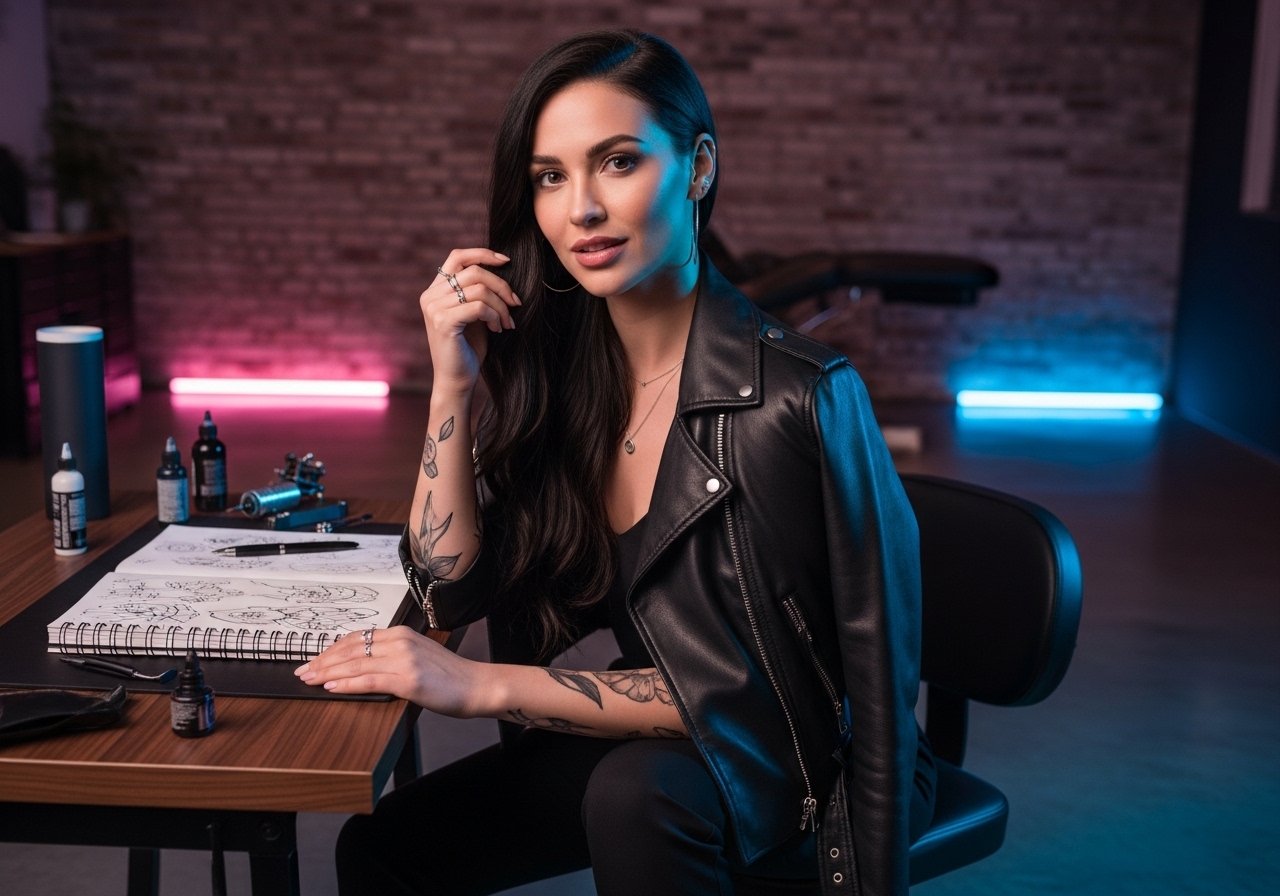
Fine line snake looks delicate online and then snaps into reality under studio lights. I often hear three worries in consultations: snakes read too aggressive for daily wear, wraps distort with movement, and small pieces can cost more than expected. Pick a style that softens symbolism, follows natural curves, and fits your budget. The first idea below shows how a coiled bracelet-style snake keeps the look gentle and wearable.
1. Fine line coiled snake on the wrist

I've seen this one become a daily accessory because it reads like jewelry rather than threat. Tell your artist you want 1 to 2 millimeter linework with open negative space between coils so the lines have breathing room as they age. Common mistakes include compressing too many coils into a small area, which causes merging by year three. For the session wear, go with a sleeveless tank so the artist has full wrist access. Expect low pain and a single quick session, with a likely light touch-up after two years for crispness.
2. Minimalist ring snake on a finger

Finger snakes feel like permanent jewelry, but fingers are high-friction zones that rub and wash constantly. Ask for a slightly thicker line than your initial instinct so the piece keeps its shape through everyday wear. A common error is asking for ultra-thin detail under one centimeter, which blurs faster. The session is short but stings more than the forearm. For showing it off, pair the piece with a dainty ring set on adjacent fingers. Touch-ups are typical around year one to two, because fingertips see the most fade.
3. Micro-realism snake wrapping the outer forearm
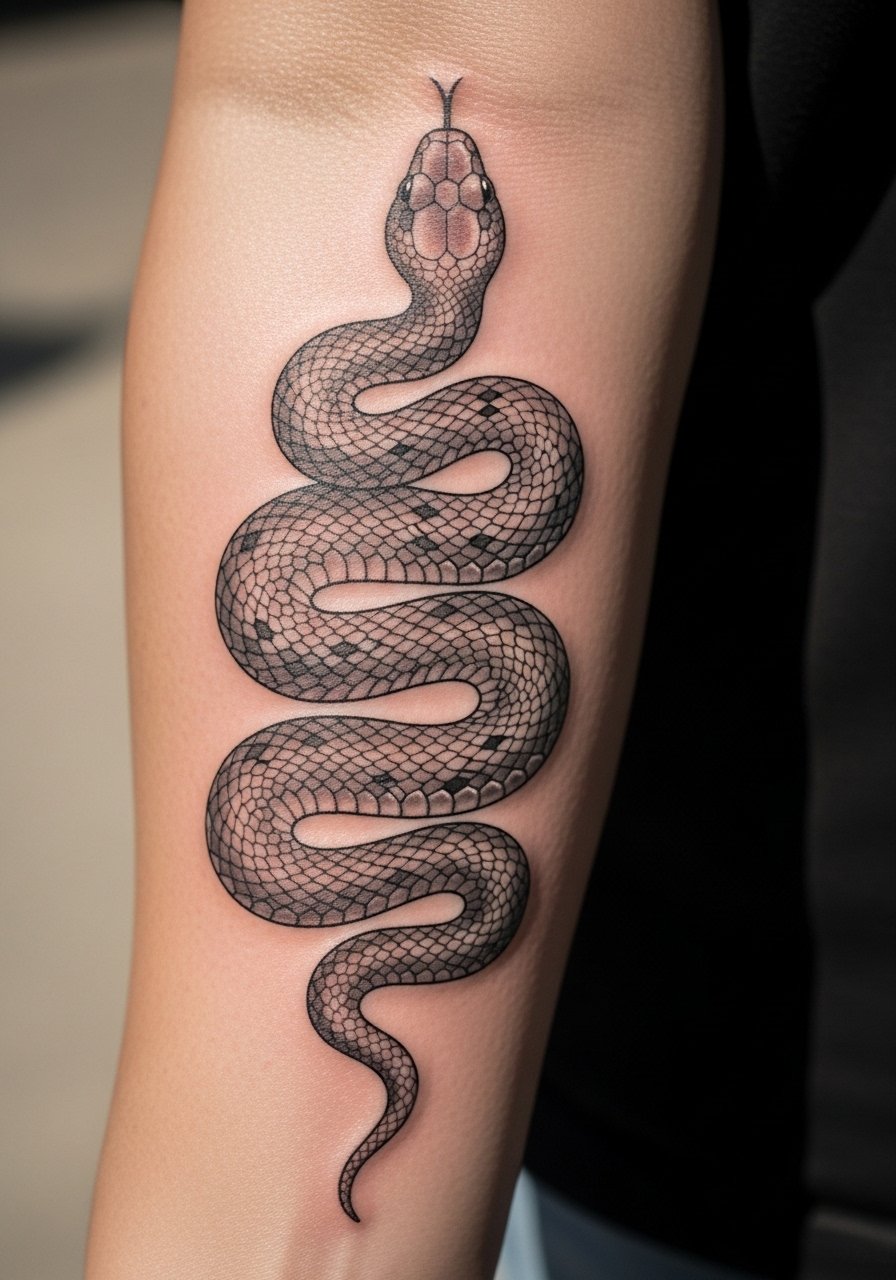
This style follows muscle contours and gives a slinking, soft motion without aggressive fangs. In consultation, show photos of forearm wraps that follow the curve of the radius and ask the artist to map the head orientation so it complements your wrist or elbow movement. The biggest mistake is forcing a straight-on reference onto a curved limb, which leads to distortion when you bend the arm. For session comfort, wear a linen button down shirt you can roll up easily. Plan for two sessions with deeper gray saturation to keep the scales readable after two years.
4. Watercolor snake tail around the ankle
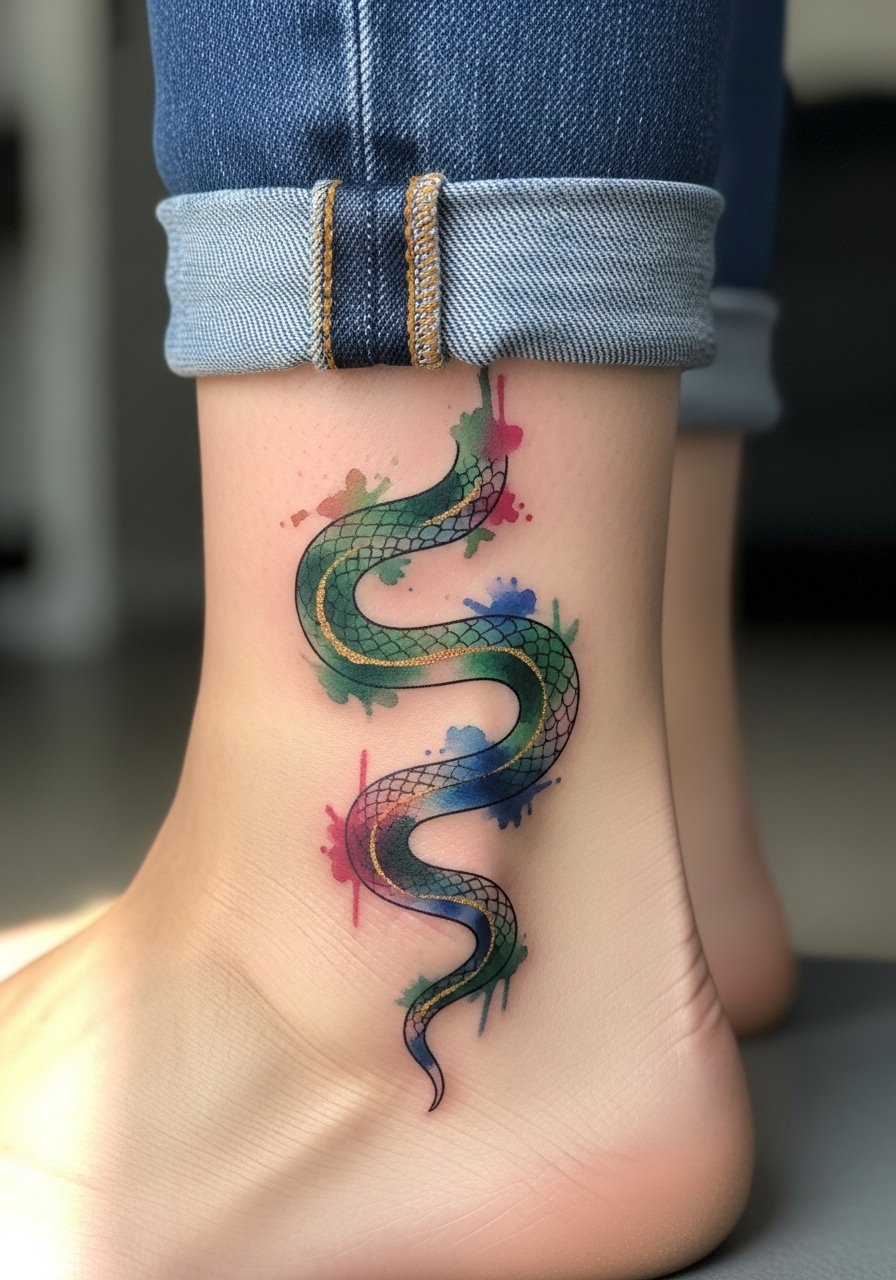
Watercolor washes soften the snake motif so it reads as artful rather than menacing. Ask your artist for soft color bleeds and a small negative-space tail tip so the color feels airy. A common long-term issue is placing heavy color too close to the ankle bones, which fades unevenly with shoe straps. Wear ankle strap sandals to highlight the wrap when healed. Expect a single session but budget a color top-up at year two, especially if you spend lots of time in sun and sandals.
5. Ornamental snake bracelet on the forearm
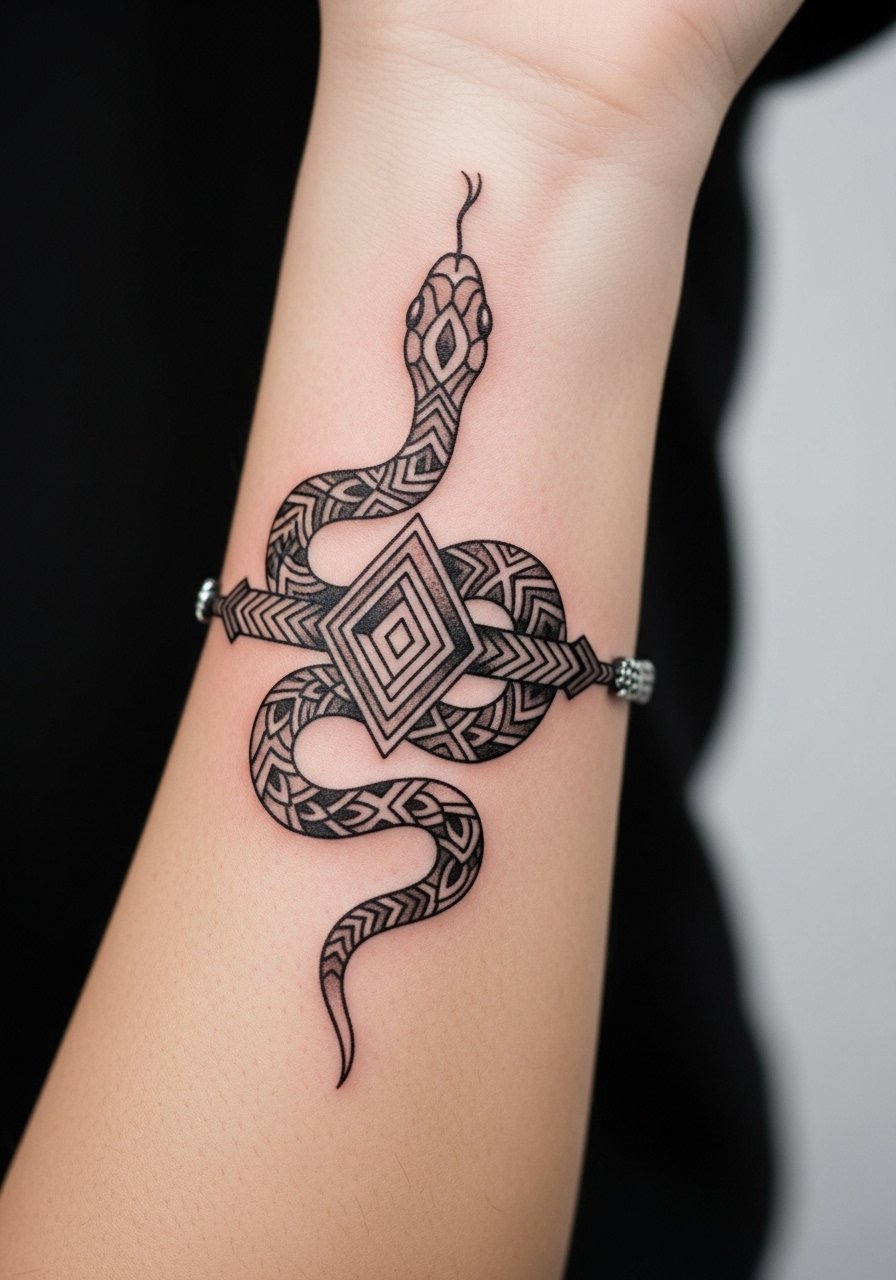
This ornamental take elevates the snake motif into pattern work that reads like a cuff. In consultation, request balanced negative space and repeat motifs so the piece reads crisp from both sides of the arm. People often ask for too-dense geometric fills in a small wrap, which turns into blurred texture after a few years. For the session, wear a loose long-sleeve shirt you can roll up. Expect two sessions if you want solid fills and fine details, with touch-ups at year three for saturation maintenance.
6. Tiny ignorant-style dotted snake on the collarbone
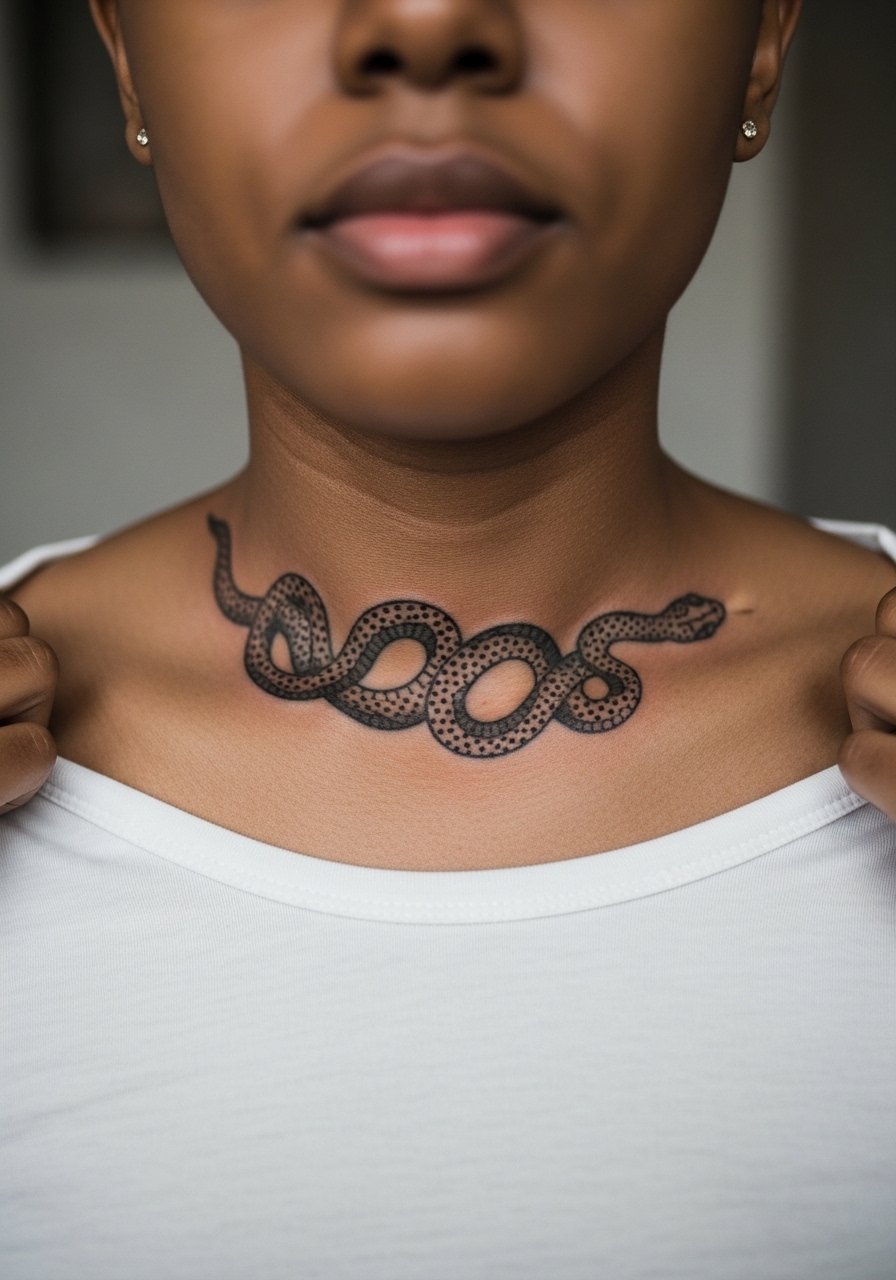
Dot work and textured stippling create a raw, tactile look that ages differently than crisp linework. Tell your artist you want spaced dot clusters rather than continuous shading so the texture stays intentional as the skin settles. The error I see most is over-filling the collarbone curve with tight dots, which compress into a muddy patch after a few years. For showing it off, layer a thin chain pendant necklace above the piece. Collarbone sessions are comfortable, quick, and usually heal with a clean touch-up window at year two.
Studio Day Picks
The wrist, ankle, and collarbone pieces above need different prep than larger forearm wraps, so a short kit that covers stencil transfers, session comfort, and friction protection helps keep those small linework pieces clean during the first week.
-
Stencil transfer paper kit. Lets you preview and reposition delicate bracelet and finger designs on skin before the needle touches, which matters for tiny wraps.
-
Topical numbing cream. Applied per instructions before chair time it eases sensitivity on ankles and wrists without compromising linework when used correctly.
-
Thin protective film roll. Useful for small high-friction zones like fingers and wrists to prevent early scabbing disruption during the first few days.
-
Fragrance-free gentle body wash. Cleans heals without stripping oils from fine line pieces that depend on subtle saturation.
-
Aquaphor healing ointment. Thin layers in the initial days lock in moisture for delicate linework without suffocating the skin.
7. Neo-traditional coiled serpent on the thigh

Thighs take color well and the curve lets a coiled serpent feel sculptural rather than threatening. During consultation, point to layered scale shapes and muted color palettes rather than high-contrast saturation if you want softness. A common mistake is packing intense color into a small thigh piece, which can look heavy when the body moves. For session comfort, wear high waisted shorts to keep the area accessible without tugging. Expect two to three sessions and touch-ups at year three depending on your sun exposure.
8. Neo-Japanese snake with koi on upper arm

This combination reframes the snake as resilience rather than menace by pairing it with koi symbolism. Tell your artist you want the snake's lines softened and the koi colors muted to prevent a harsh contrast. The mistake is asking for full saturation that competes with the snake lines, which can make the composition shout rather than breathe. You should wear a button-front shirt that you can pull aside for access during the session. Multiple sessions are typical and the piece develops depth as the colors settle over time.
9. Blackwork vertical snake along the spine

A spine placement lets a dense blackwork snake act like a central stripe, which reads dramatic without aggressive detail. In consults, I advise clear planning of negative space so the black blocks do not morph into a heavy patch as the skin moves. There is debate in the community about black saturation near vertebrae versus more open compositions. Name both camps to your artist: one group favors bold blocks for longevity, the other prefers spaced patterns to avoid pooling. Bring a loose tank top for the session so the artist can work without restriction. Expect multiple sessions and solid touch-ups at year three.
10. Subtle snake and floral combo for the shoulder
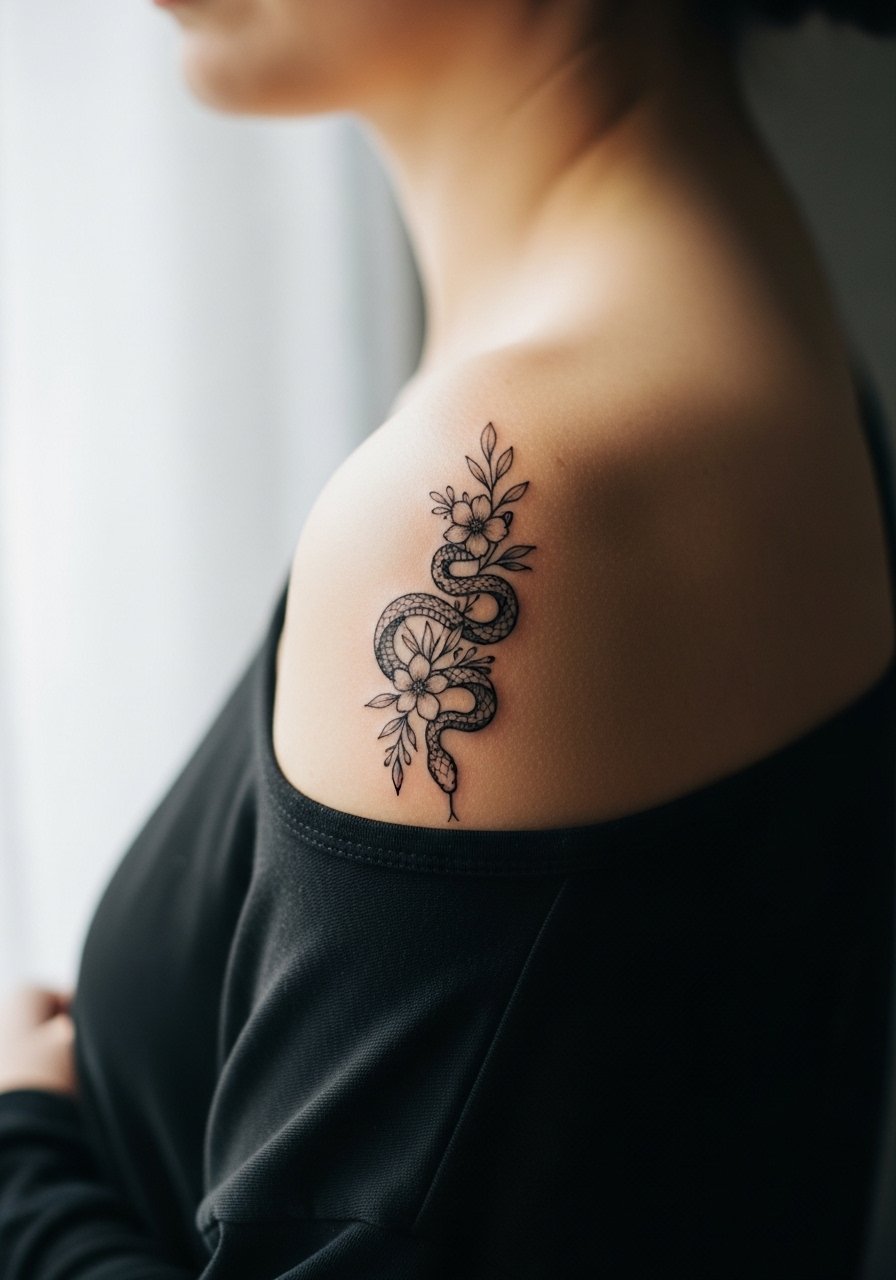
Pairing blooms with a soft snake reframes the motif toward rebirth and balance. Ask your artist to use thinner linework on the florals and a slightly bolder outline for the snake so the two elements separate visually as they age. A frequent mistake is matching line weight across motifs, which causes the details to compete as the piece settles. For the session, an off shoulder top lets the artist reach the shoulder cap without straps digging in. Expect one to two sessions and a touch-up depending on color work.
11. Watercolor tail accent on the ankle bone

Placing watercolor near the ankle bone softens the motif by breaking up linework with color washes. Tell the artist you want the color to sit as a soft halo rather than solid blocks so the look stays light. The mistake is placing heavy pigment directly on the bone where rubbing and shoes accelerate fading. For showing off the healed piece, wear cropped jeans rolled up. Sessions are short but expect to budget a color refresh at year two if you spend lots of time outdoors.
12. Ornamental black-and-gray forearm cuff
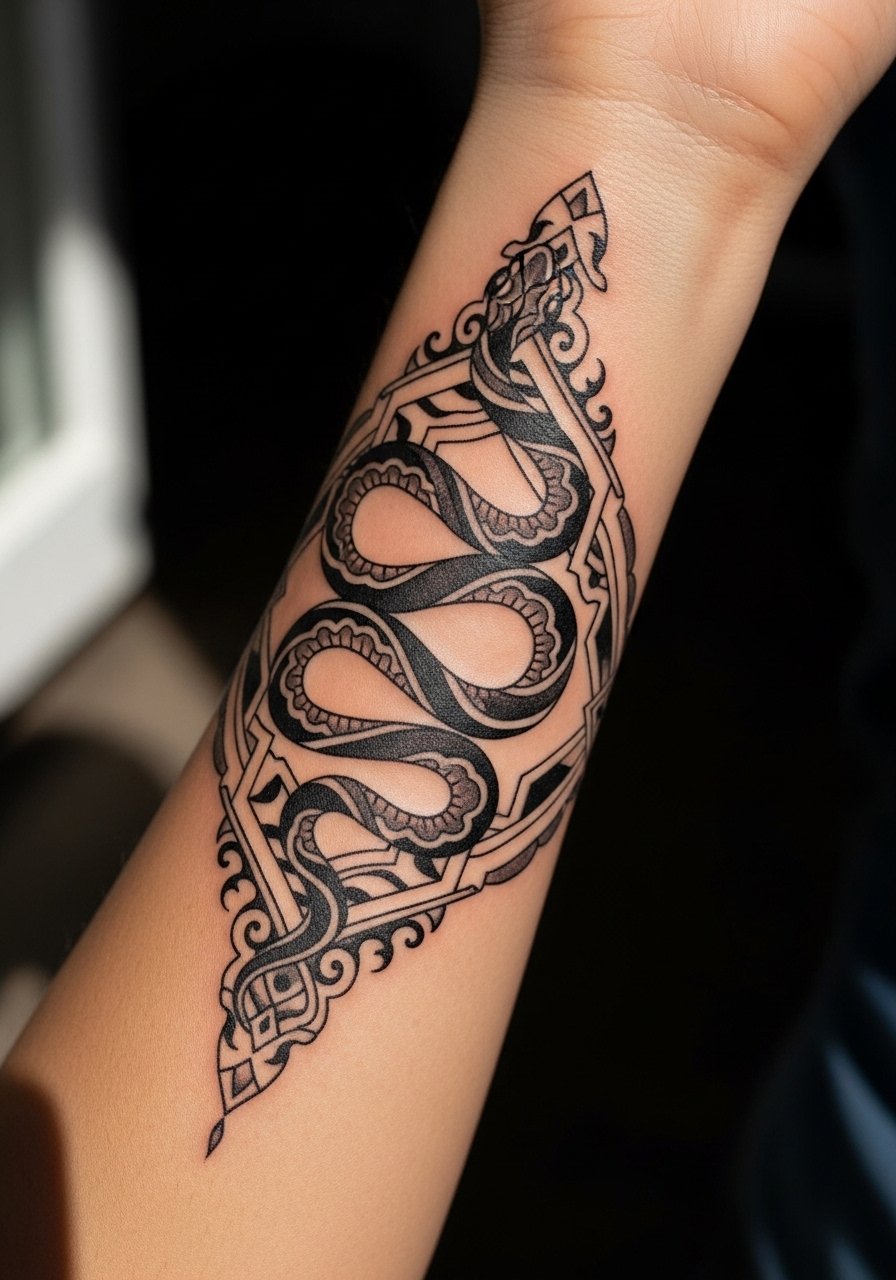
This ornamental cuff reads like structured jewelry and is forgiving on sightlines. In the consultation, ask for clear negative spacing around the geometric motifs so the cuff retains its crisp pattern as the skin moves. A typical error is compressing ornamental detail into a narrow band, which blurs over time. For session wear, choose a loose button-down shirt you can roll up easily. Expect two sessions and a touch-up at year three for saturation.
13. Minimalist S-curve on the ribcage

Ribcage placements show off graceful curves but carry a longevity debate. Artists split into two camps here. One argues the skin stretch and movement blur fine line on ribs within a couple years. The other says correct depth and spacing make fine line settle well. Ask your artist where they stand and request slightly wider spacing than you'd choose online. The session is more painful and requires steady breathing. For comfort, wear a fitted sports bra that gives access without fuss. Plan for a possible touch-up around year two.
14. Tiny snake behind the ear, below the hairline

Behind-the-ear placements are discreet and intimate but require careful mapping so the curve follows the lower neck. Always specify that the tattoo should sit just below the hairline on the neck rather than on the ear itself. A common error is requesting too much detail in a tiny space, which reads muddled after healing. The session is brief and sensitive. Because of the location, ask for a gentle stencil transfer and wear hair that can be tucked, like a low ponytail. Touch-ups are often needed sooner because of skin movement and hair friction.
15. Collarbone curve with dot shading
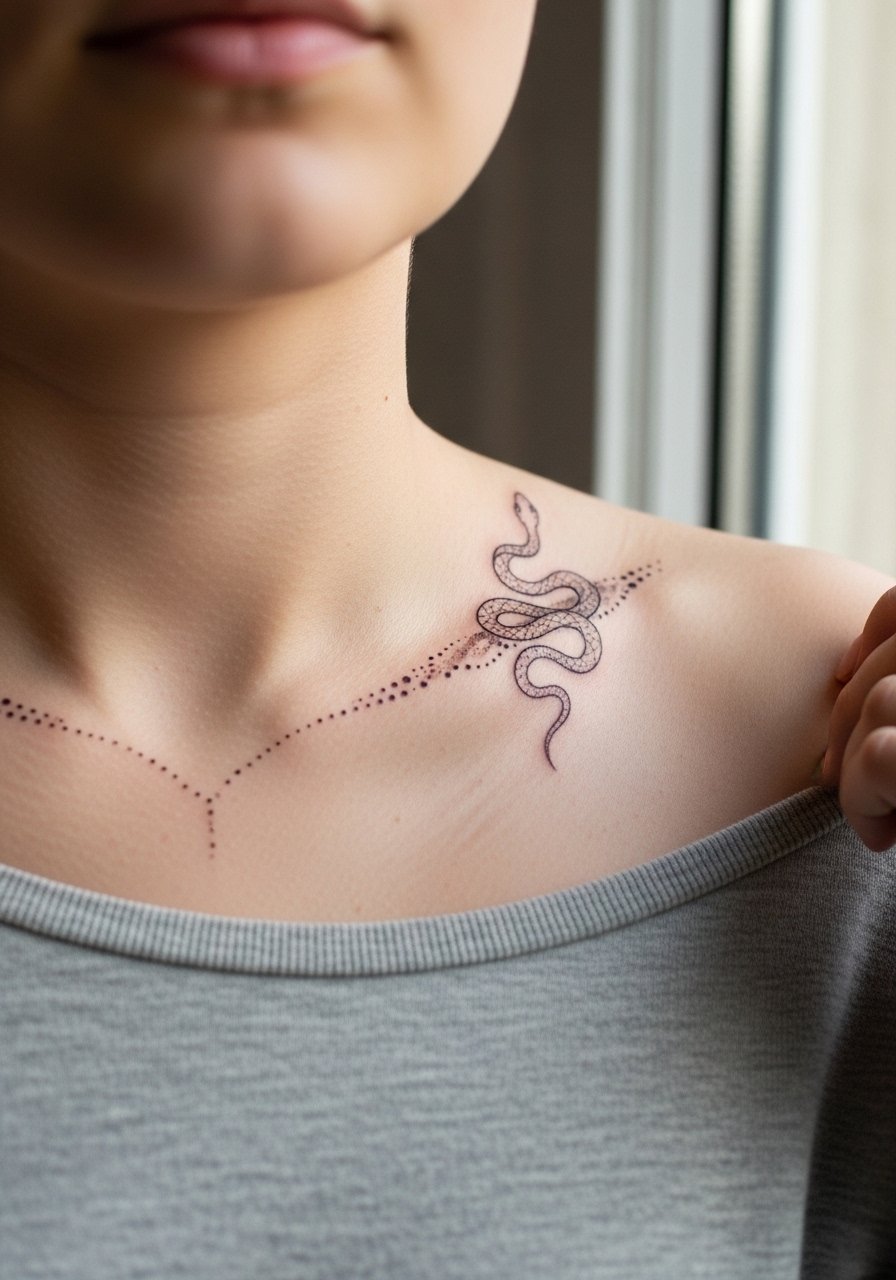
Collarbone work stands out with light dot shading that keeps the snake gentle rather than fanged. In consults, request dispersed dot clusters and a slender outline so the piece breathes as the skin ages. The mistake is dense stippling that compresses into a darker block within a couple years. For showing it off, a layered necklace look frames the area without obscuring the tattoo. Sessions are quick and touch-ups are common at year two for dot clarity.
16. Realistic snake head peeking from a sleeve

A realistic head peeking from clothing reads cinematic without full-body intensity when scaled down. Tell your artist you want the head orientation to work with sleeve length so only the suggested tip shows when you wear short sleeves. A frequent mistake is choosing an overly detailed reference that loses impact when reduced to a small area. For trying the look before committing, wear a roll-up sleeve shirt so you can preview how the tattoo peeks out. Expect two sessions with shading depth for longevity, and budget a touch-up at year three.
17. Thin snake script along the rib to hip line
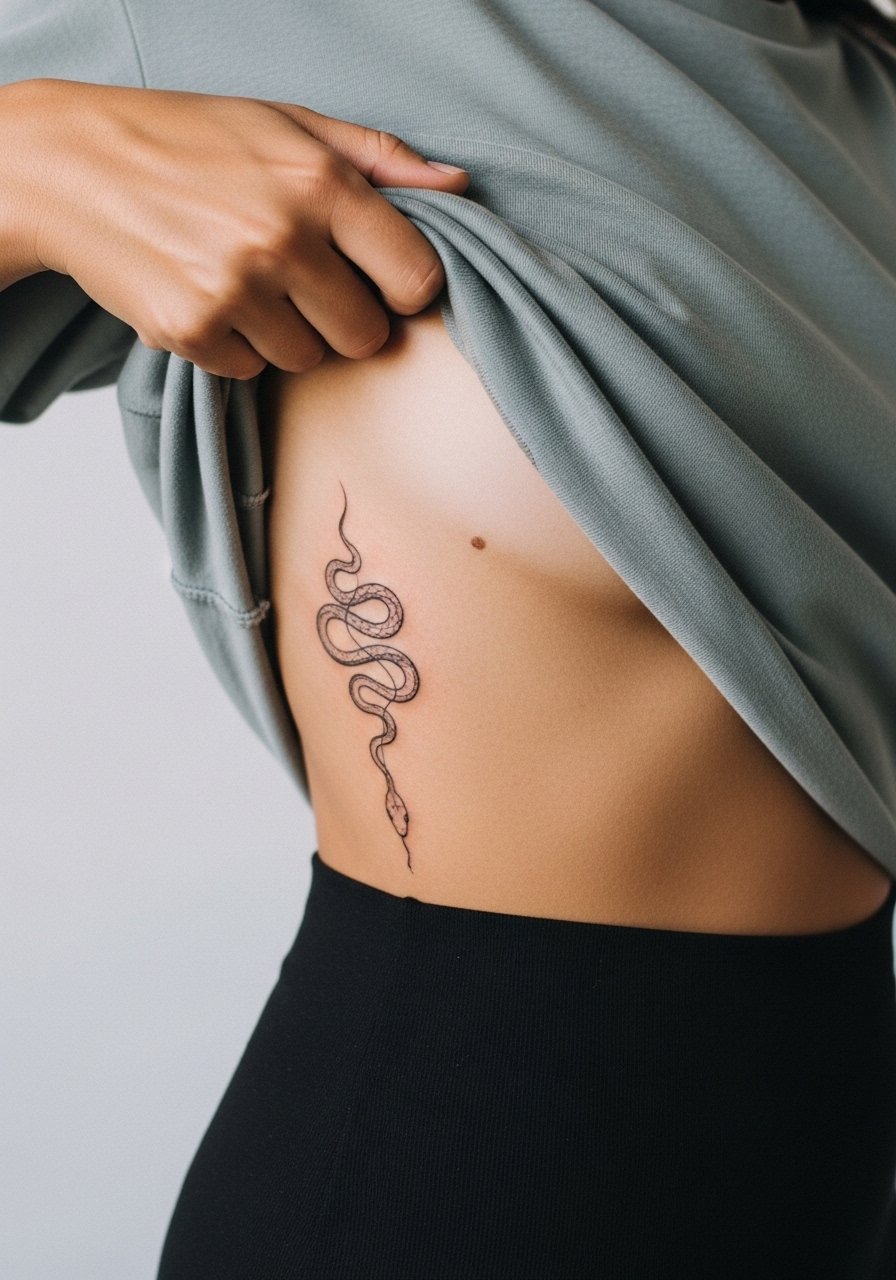
A single flowing line that mimics script uses minimal ink to create a soft presence across the side torso. Ask for a slightly bolder line than you might first prefer so the piece keeps its flow as skin shifts with movement. Mistakes include packing loops too close together, which causes line merging. The session touches sensitive areas and requires breaks. Wear high waisted bottoms so the artist can reach the hip without tugging. Plan on a touch-up in two to three years depending on activity and exposure.
18. Japanese-inspired snake with muted colors on the upper back

On the upper back, a stylized Japanese snake can be softened with muted pigments and flowing clouds. During consultation, request desaturated inks and softer outlines to prevent the piece from reading too bold across the shoulder blades. The common error is oversaturated palettes that dominate the composition. For the session, a loose tank top gives the artist access while keeping you comfortable. Multiple sessions are normal and touch-ups keep the subtle color balanced as the years go by.
19. Tiny serpent around the ankle bone as a bracelet

A thin bracelet-style snake on the ankle reads delicate and jewelry-like when placed properly around the bone. Tell the artist you want the head to sit off-center so it looks intentional with footwear. People often make the mistake of scaling the bracelet too thin for the ankle's movement, which loses definition after a year. For the session and show-off, pair with ankle strap sandals. Expect a one-session job with a likely color or line touch-up at year two.
20. Single-line continuous snake on the forearm
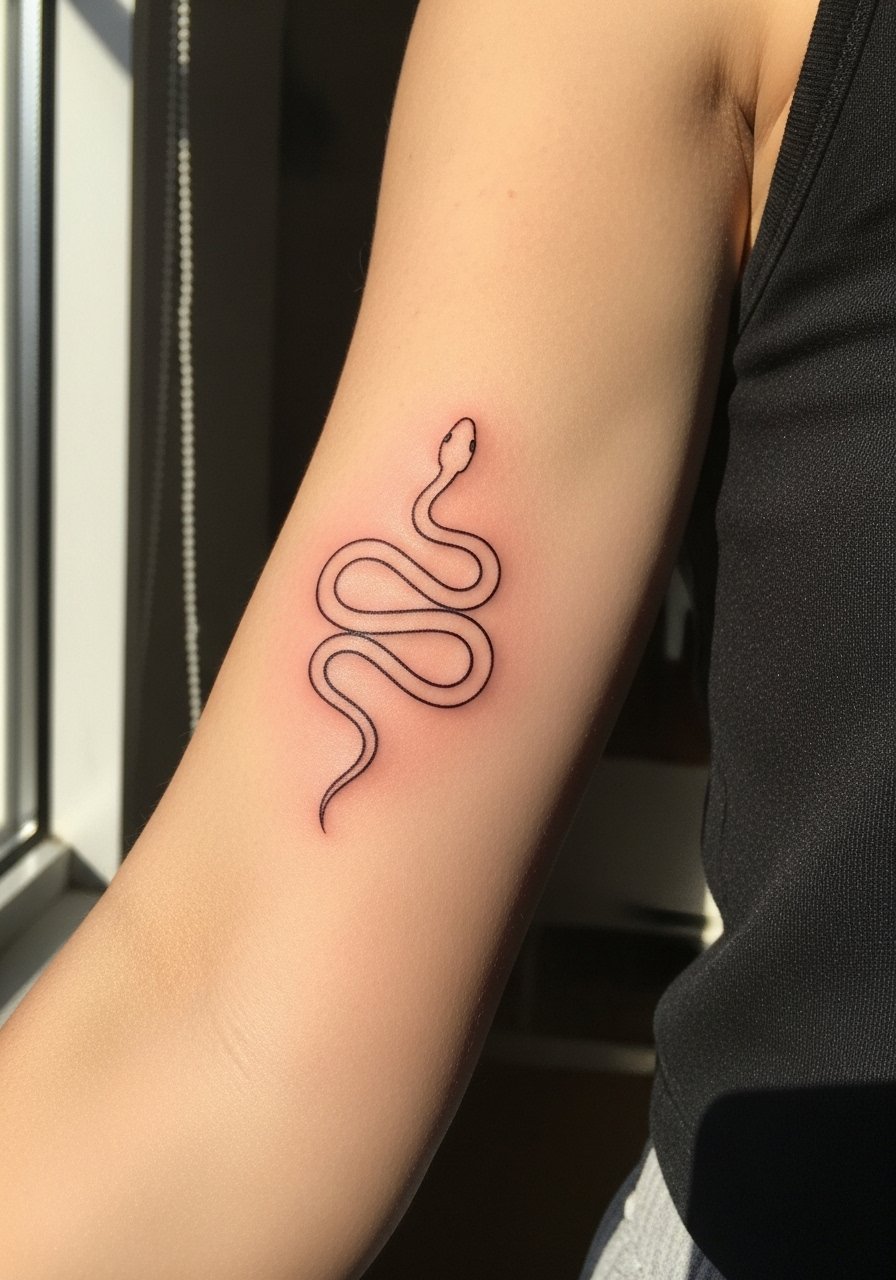
A continuous one-line snake looks modern and soft because it avoids sharp scale detail. Request a vector-like reference so the artist can translate the single stroke into steady linework that avoids shakiness. A mistake is asking for extremely thin curves without allowance for touch-up, which makes the piece vulnerable to blowout. For the session wear, bring a linen button down shirt you can roll up. Expect minimal sessions, but a touch-up at two years keeps the single stroke crisp.
21. Collar-tucking snake that follows the clavicle
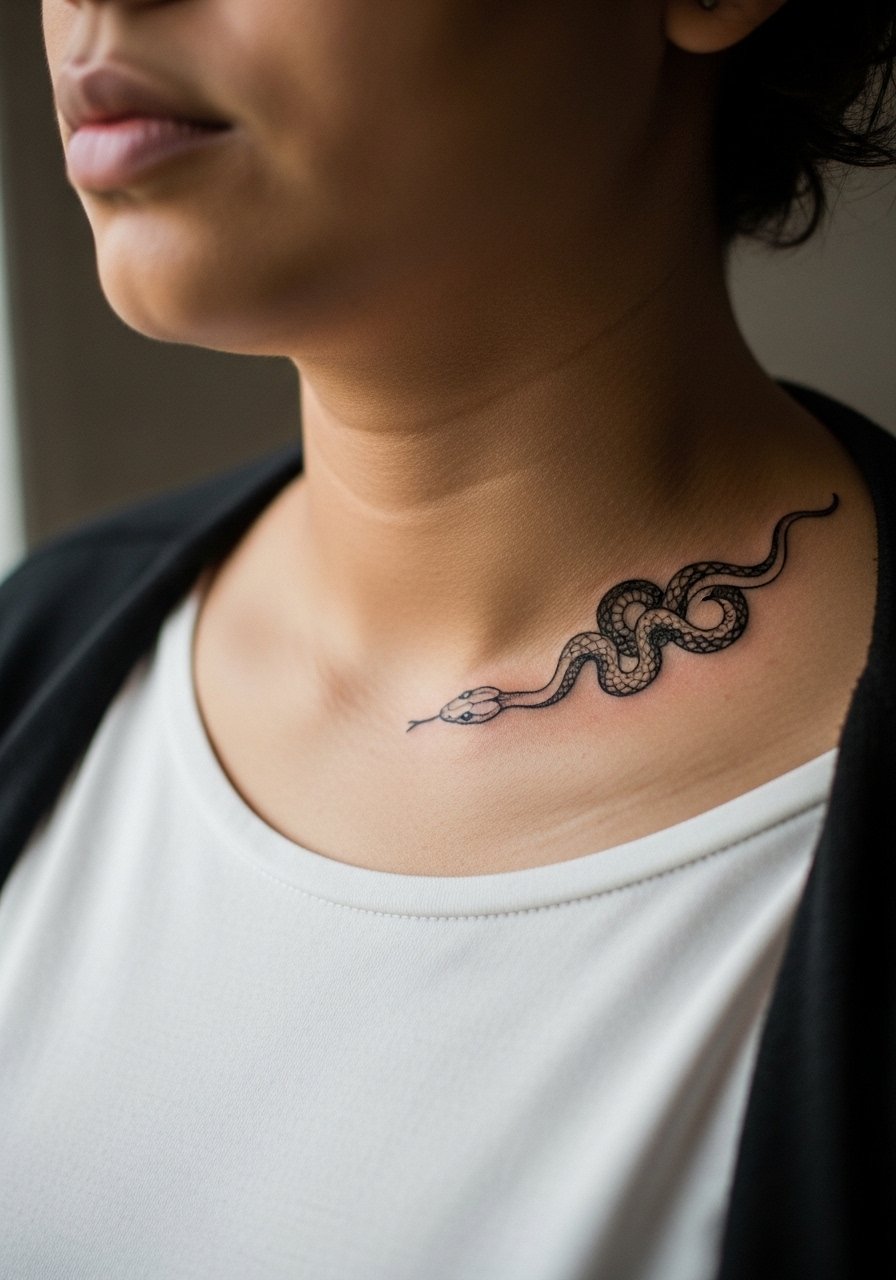
This placement frames the neck and chest without reading aggressive when done with soft curves and open spacing. Tell your artist to keep the line weight consistent and to avoid tiny interior scales that will vanish as the skin settles. A common long-term issue is adding heavy contrast near the clavicle, which looks harsh against skin movement. For showing it off, a wide-neck shirt frames the piece naturally. Sessions are generally quick and a light touch-up at year two keeps the contour clear.
Frequently Asked Questions
Q: Will fine line snake tattoos blur faster on ribs than on forearms?
A: Fine line can be more vulnerable on ribs because the skin stretches and moves with breathing. Some artists prefer to avoid ultra-fine work there, and others say correct needle depth and spacing handle it fine. Ask your artist which camp they belong to and request slightly wider spacing if you want longevity.
Q: How should I dress for a forearm or sleeve session to keep the area accessible?
A: Wear clothing you can roll up comfortably, like a linen button down shirt or a loose tank. The goal is clear access without fabric pressing on fresh ink. Bring a soft jacket to stay warm during long sessions.
Q: Do watercolor snake tattoos need different touch-ups than black-and-gray work?
A: Yes, watercolor tends to fade into soft washes and often needs color rebalancing sooner than saturated black-and-gray pieces. Expect a color refresh at year two for sun-exposed sites, whereas black-and-gray might only require a touch-up at year three.
Q: Are finger and ankle snake tattoos worth it if I want minimal maintenance?
A: Finger and ankle placements require more touch-ups than low-friction spots because of constant washing and shoe or ring contact. If low maintenance is the priority, choose inner forearm or thigh placements instead.
Q: How do I find an artist who specializes in soft, subtle snake work without naming names?
A: Use discovery paths like #finelinesnake and #snakesleeve on social platforms, search local studio directories filtered by "fine line" or "micro-realism," and scan convention guest lists for artists who post healed photos. Look for healed images over fresh work in portfolios so you can judge longevity.