Fine line tarot art is everywhere on feeds, but what holds up is not always what looks best fresh. Many of the small, delicate tarot cards people save on Pinterest fade into fuzz if placed on wrists and ankles without room for the lines to settle. This collection favors designs and placements that keep symbolism readable over time while still feeling mystical on day one.
1. The Fool, fine line on the inner forearm
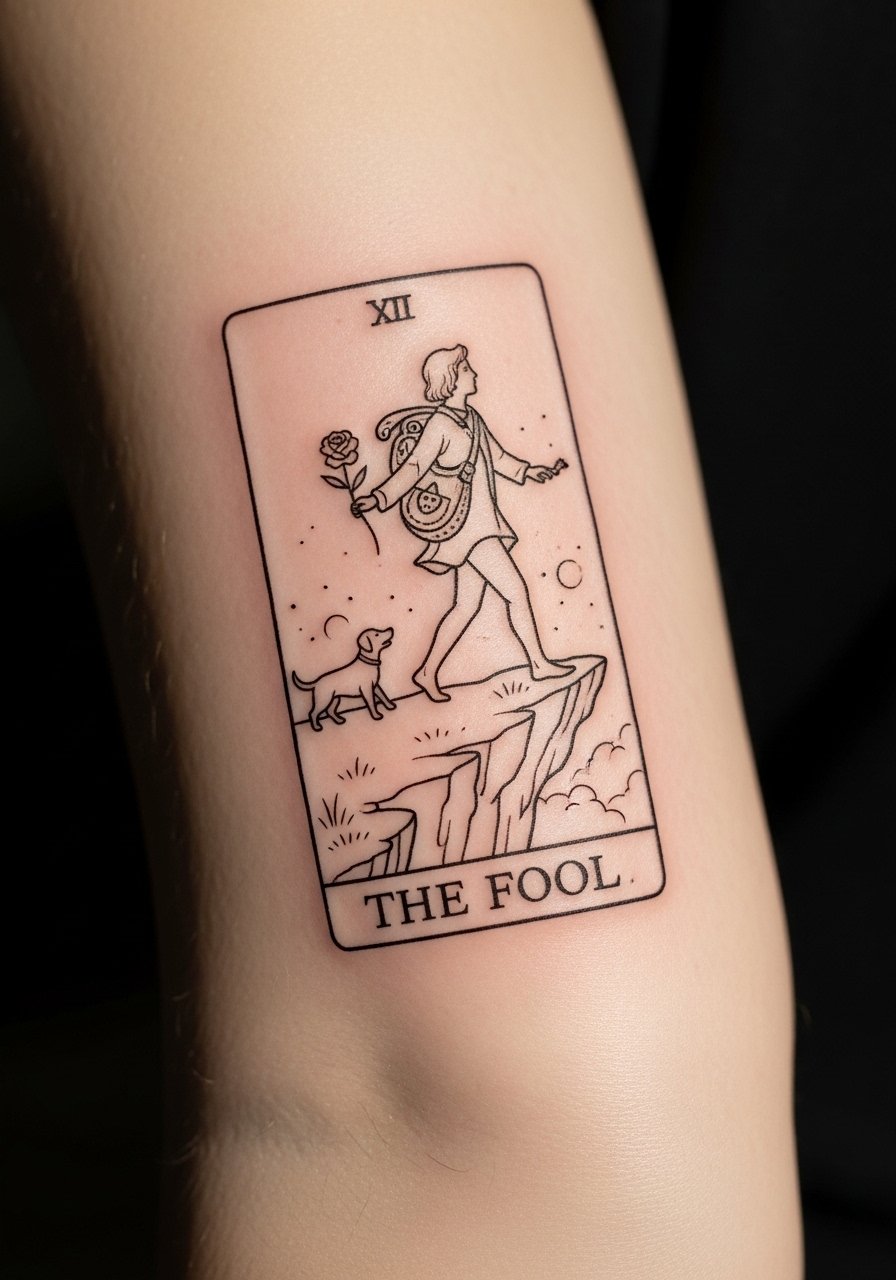
I recommend the inner forearm for The Fool when you want a readable talisman that ages well. Ask your artist for slightly heavier primary outlines and spare internal detail so the small elements do not merge over time. A common mistake is asking for micro filigree inside the card border that looks great the first three months and then softens into gray. Expect a calm session with low to moderate pain and one long session or two shorter ones for color washes. For showing it off try a rolled-sleeve linen shirt like a loose button-down shirt that frames the forearm without obscuring the card.
2. The Magician, neo-traditional on the upper arm
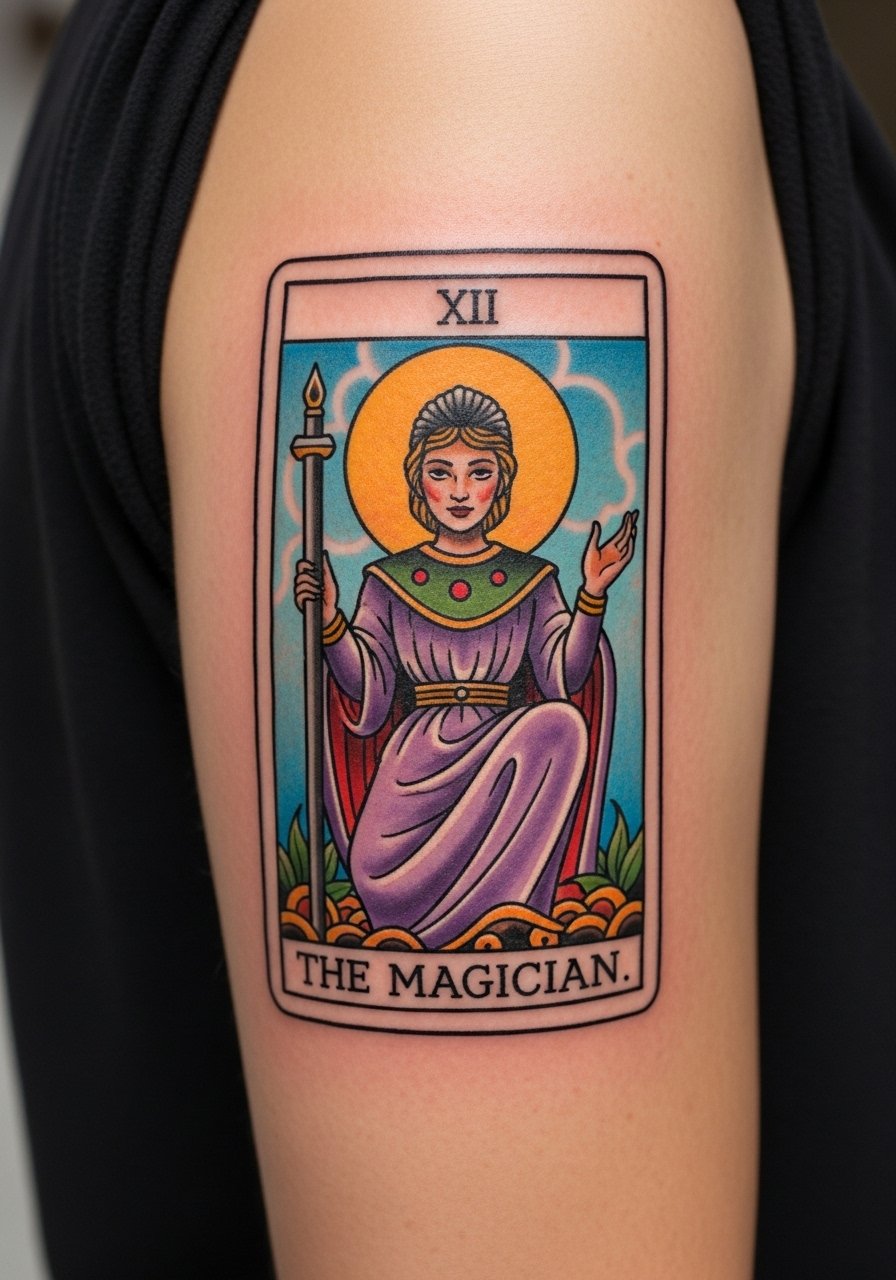
I see neo-traditional Magician pieces work best on the upper arm because the round canvas lets the composition breathe. Tell your artist you want bold primary outlines and rich saturation around the tools of the Magician so the symbolism reads from a distance. The most avoidable error is cramming tiny symbols into the corners. For aging, saturated color with good saturation will soften but remain legible at year five. Sessions feel moderate and steady. Pair this with short-sleeve tees or a racerback tank when you want the piece visible without overexposing the shoulder.
3. High Priestess, blackwork ornamental on the shoulder blade
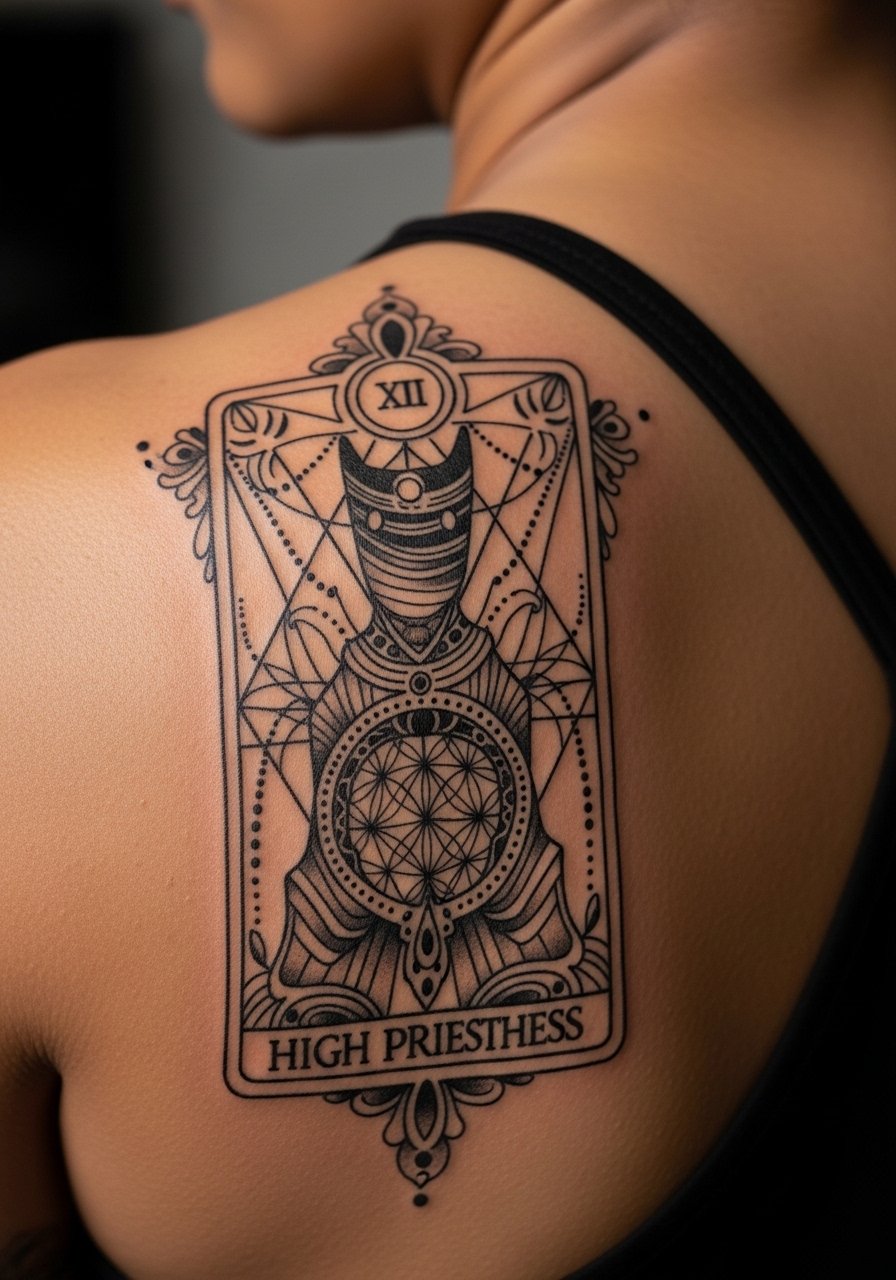
The shoulder blade is forgiving for larger blackwork High Priestess designs where contrasts matter more than tiny detail. Ask for ornamental negative-space frames rather than ultra-fine lace inside the card. Pain is moderate and the session usually takes one long sitting or two. A frequent mistake is placing dense dot work too tightly, which can lead to muddiness after healing. For career-conscious wearers the shoulder lets you show the design with a tank top or hide it under a blouse. For the session, bring a loose button-down shirt you can pull aside for access.
4. Empress, botanical watercolor on the outer thigh
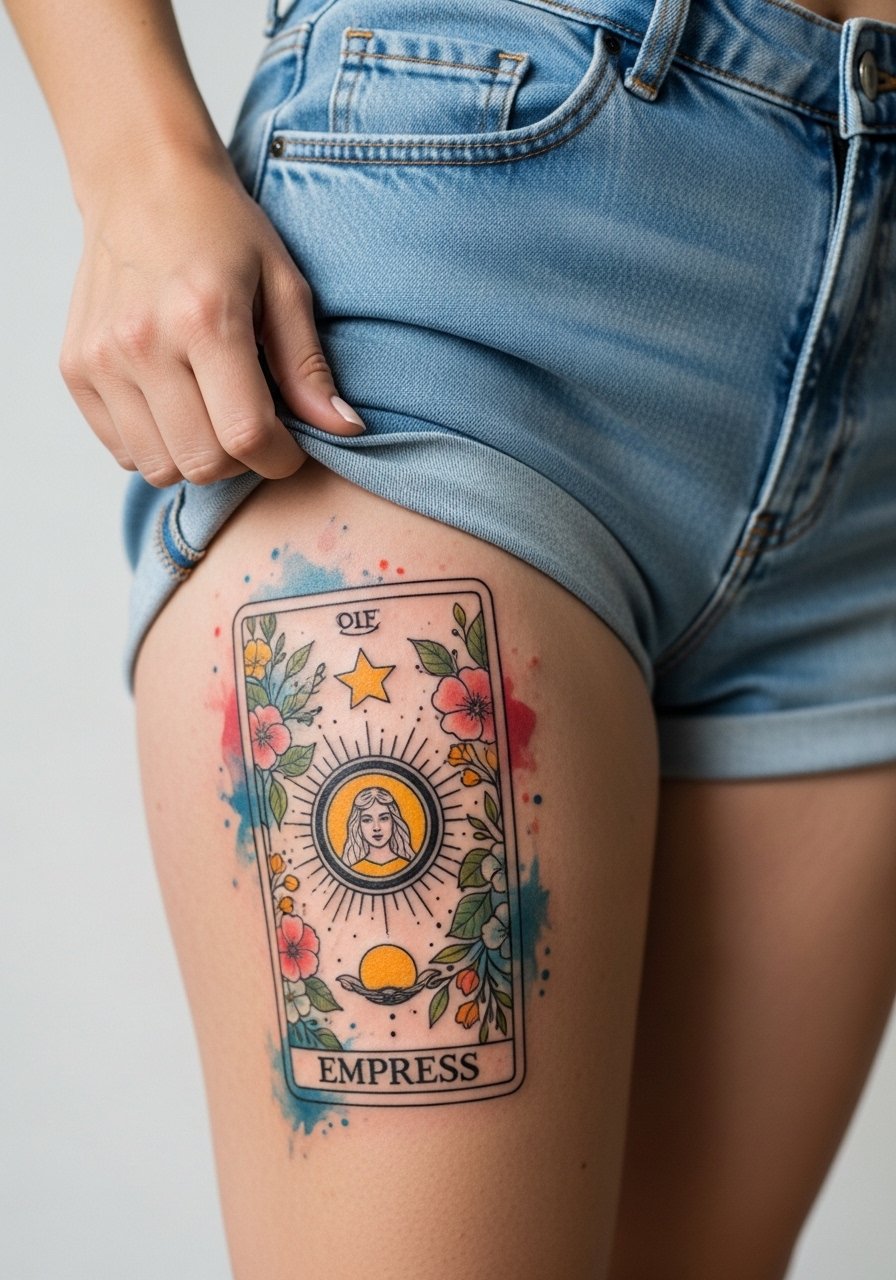
Outer thigh pieces allow larger botanical Empress compositions that read like miniature paintings. Ask the artist to anchor watercolor washes with thin black outlines so the petals do not bleed into skin tones. Watercolor on the thigh holds up better than on wrists because the skin is thicker and subject to less friction. Sessions are longer and can be split into two. For showing it off, outer thigh pieces pair well with open-back midi dresses in summer. During the appointment wear high-waisted shorts for easy access without discomfort.
5. Strength, neo-traditional lion and flora on the bicep
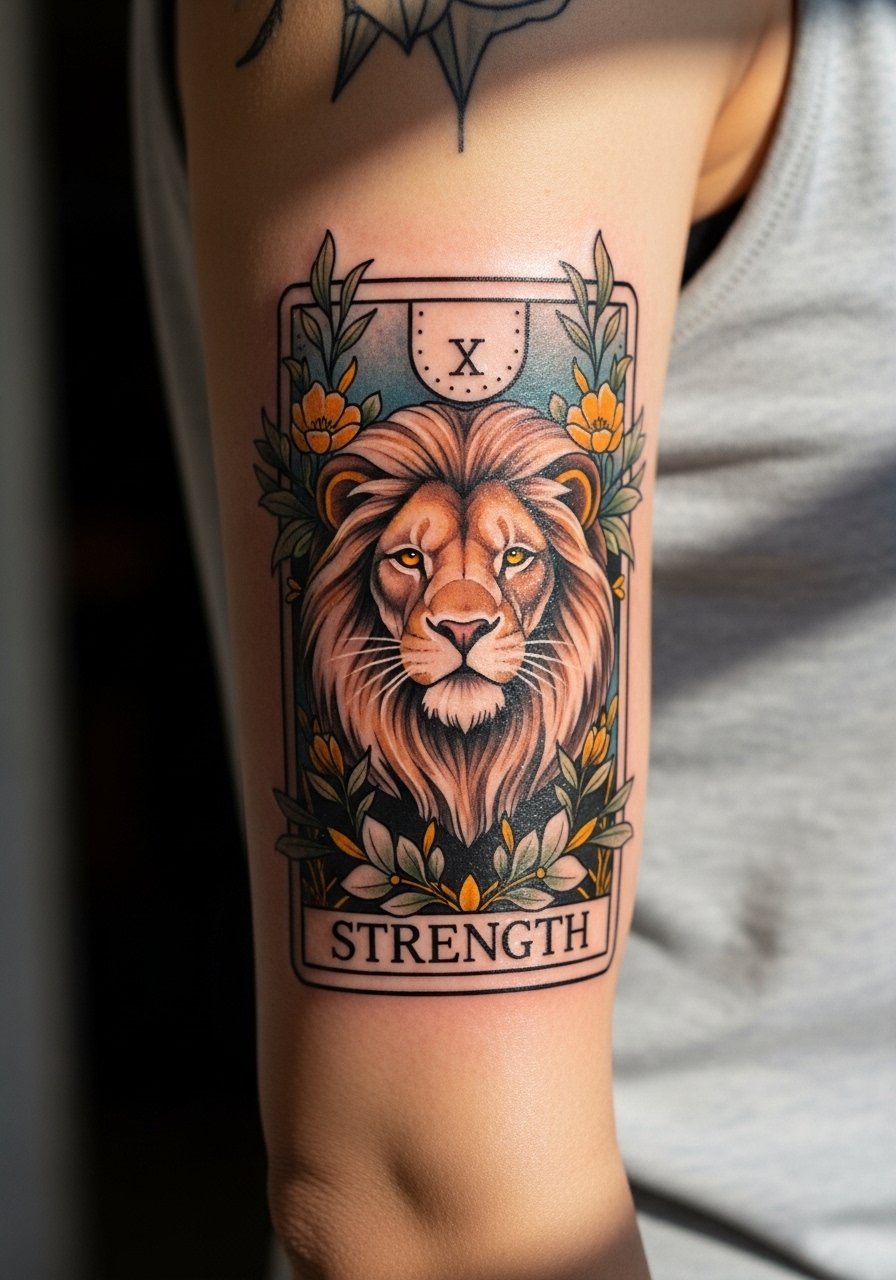
The bicep gives enough roundness for a Strength card that uses a lion motif. Tell your artist you want thick outlines for the lion and softer stipple shading in the florals so contrast survives years of wear. A common misstep is insisting on too many tiny color gradients that bleed into one another at year three. Pain is moderate and the session feels tolerable. For daily wear this tattoo shows well with sleeveless tops and a thin chain pendant necklace if you want vertical balance with upper-arm work.
6. The Lovers, minimalist black-and-gray on the sternum
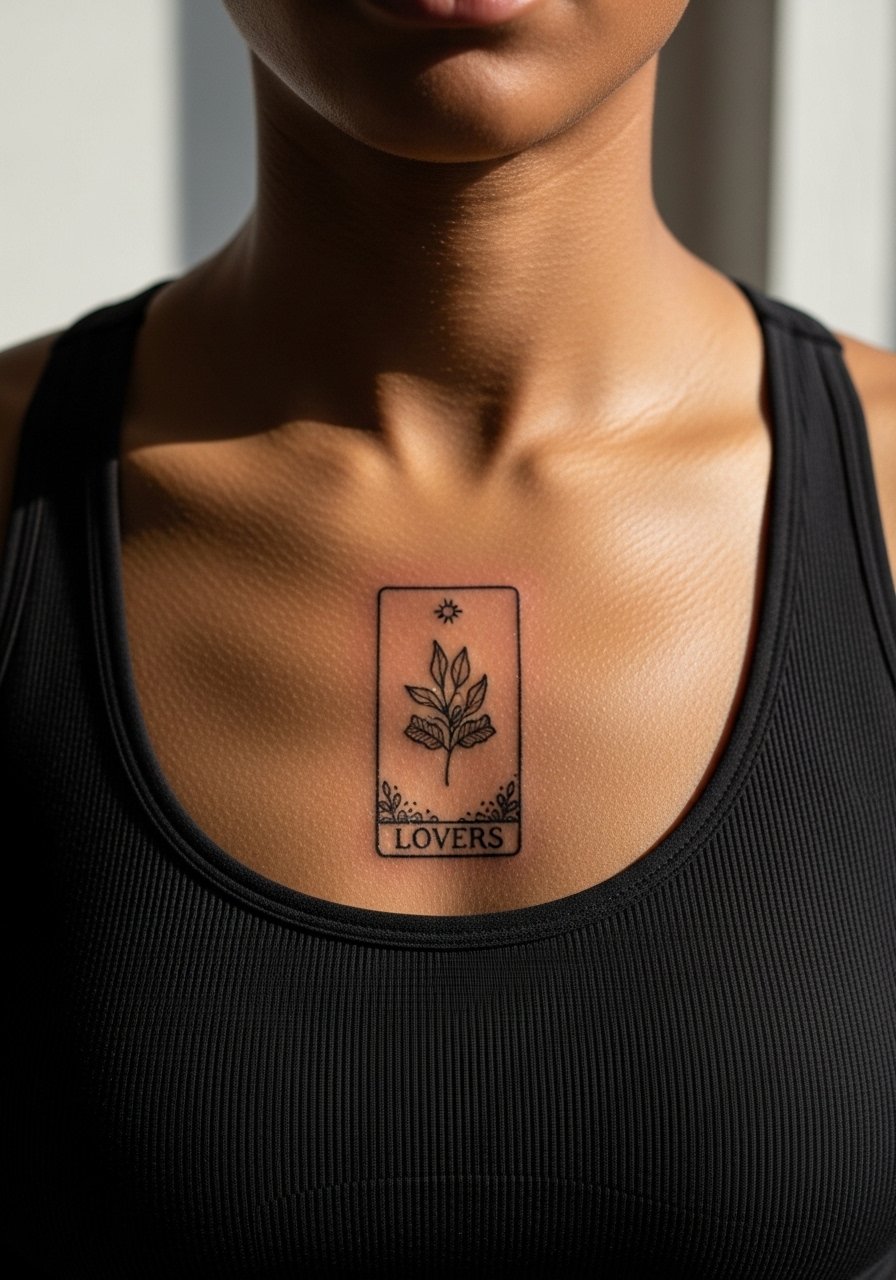
Sternum placements are intimate and require a careful consultation about scale and symmetry. For a minimalist Lovers card, ask for simplified figures and strong central anchors so the image does not warp with body changes. Pain on the sternum can be high and sessions are often shorter but intense. There is a debate in aftercare communities about occlusive dressings. One camp favors protective film to reduce scabbing and keep the area clean. The other camp prefers dry healing and minimal products to avoid trapped moisture. Tell your artist which approach you prefer and why so they can advise on the best immediate finish for your skin.
Studio Day Picks
These first six pieces vary from forearm talismans to sternum work, and the right prep and small supplies make sessions smoother and healing more reliable.
-
Stencil transfer paper kit. Lets you preview line placement on skin before the needle starts, which is helpful for symmetry on sternum and forearm cards.
-
Topical numbing cream. Applied per instructions before a sensitive sternum or rib session it can reduce discomfort and keep you calm during fine line work.
-
Thin protective film roll. Useful for short-term coverage on areas that rub against clothing like the thigh or bicep during the first day.
-
Fragrance-free gentle body wash. Cleanses healing skin without adding irritants, important when a tattoo crosses natural folds like the sternum or underarm.
-
Aquaphor healing ointment. Thin layers can preserve saturation during the earliest healing window for fine line and saturation-dependent pieces.
7. The Chariot, geometric mandala on the upper back
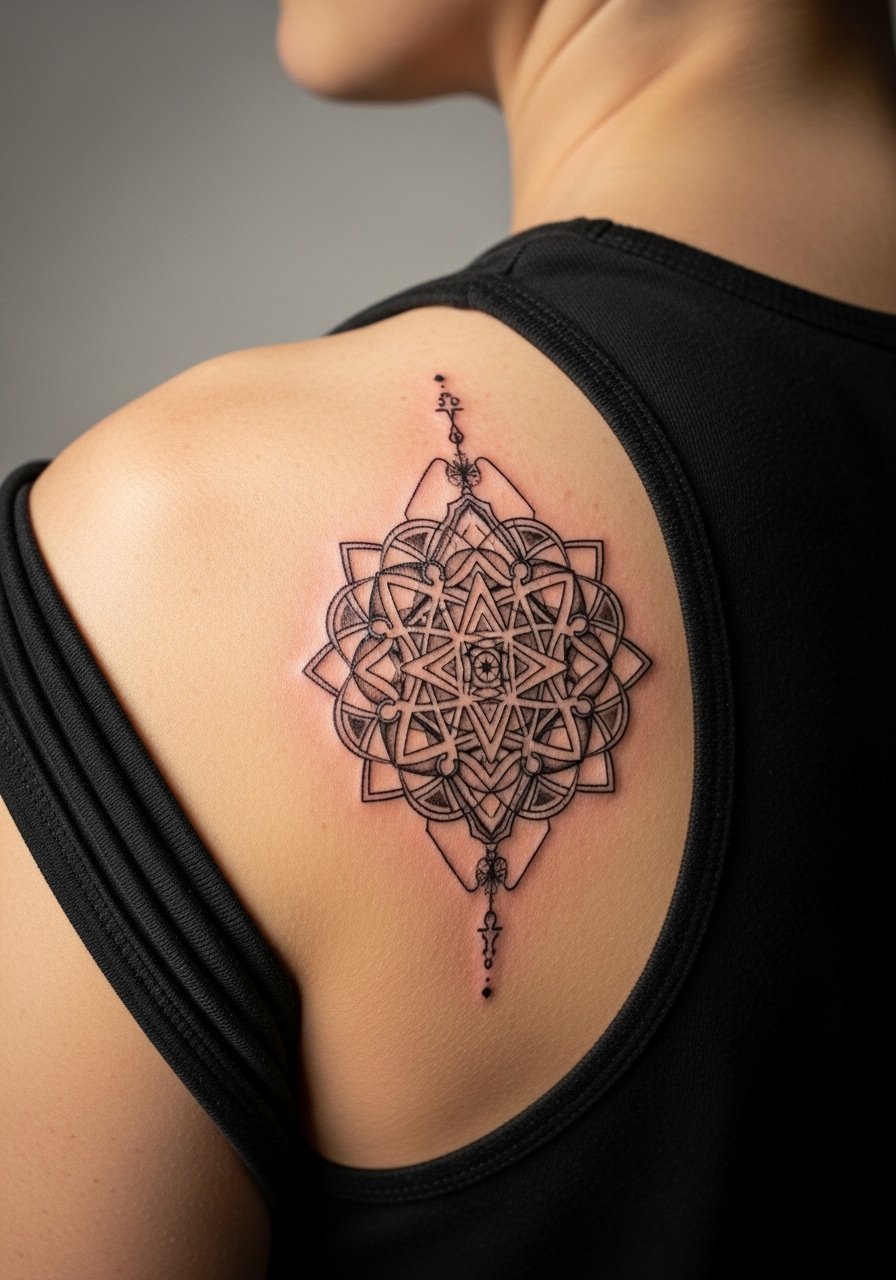
Upper back mandalas let you turn a Chariot motif into a circular composition with breathing room. Tell your artist you want clear spacing between radiating lines to prevent future merging. A usual mistake is compressing geometry so tight that the mandala fills in at year two. Expect moderate pain and multiple sessions if you add ornamental framing. For wardrobe, open-back dresses and halter tops work well as show-off pieces. During the appointment a button-down worn backward or a loose tank helps the artist access the upper back without you getting cold.
8. Hermit, micro-realism lantern on the ribcage
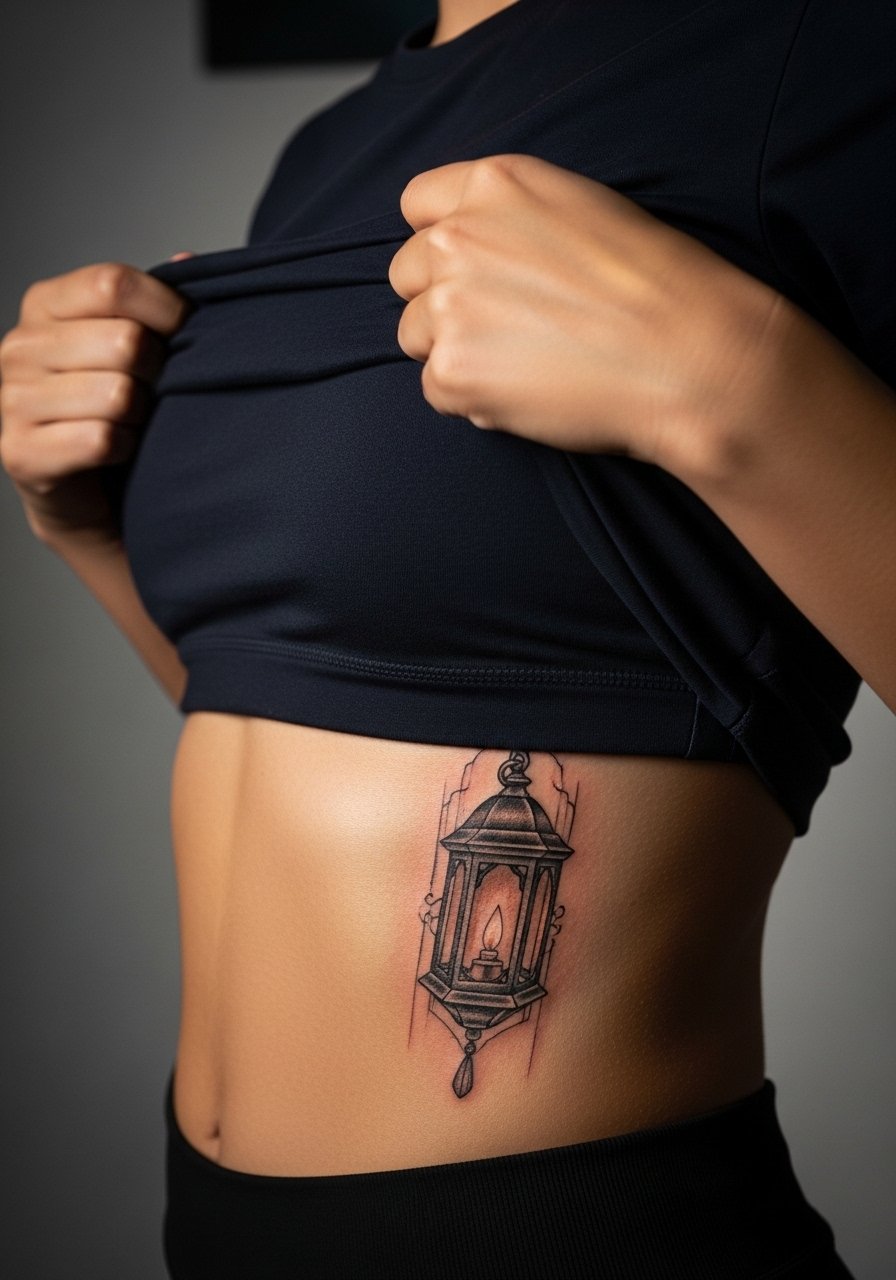
Ribcage micro-realism looks cinematic but demands realistic expectations. The ribs are a high-pain area and micro shading can settle differently as skin stretches. Ask for stronger focal contrast around the lantern and less tiny texture in shadowed areas. One common error is pushing ultra-dense shading into a thin rib panel which winds up looking muddy after healing. Expect one to two sessions and a careful touch-up plan. For the session wear a cropped top you can lift like a sports bra or cropped tee so the artist has clear access without you feeling exposed.
9. Wheel of Fortune, geometric half-sleeve on the inner arm
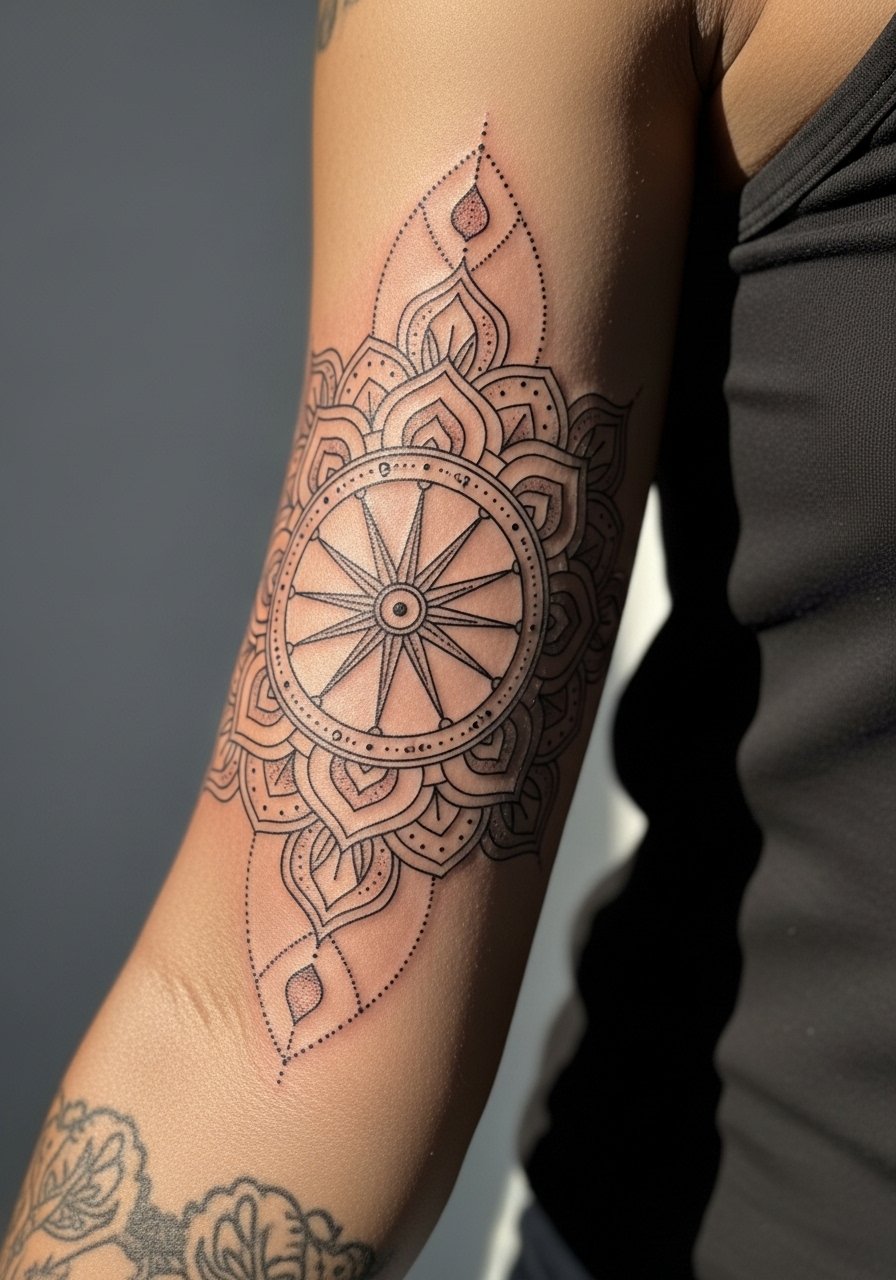
The inner arm offers a striking canvas for a Wheel of Fortune that radiates outward. For longevity, ask for deliberate negative space between concentric bands so dense linework does not become a gray patch. Common mistakes include compressing too many tiny glyphs into narrow bands. The inner arm can be prone to rubbing and mild blowout on thin skin so spacing matters. Sessions are moderate and may require touch-ups at year two depending on frequency of friction. Show it off with rolled-up sleeves or a lightweight jacket to keep attention on the inner forearm.
10. Justice, minimal scales on the collarbone
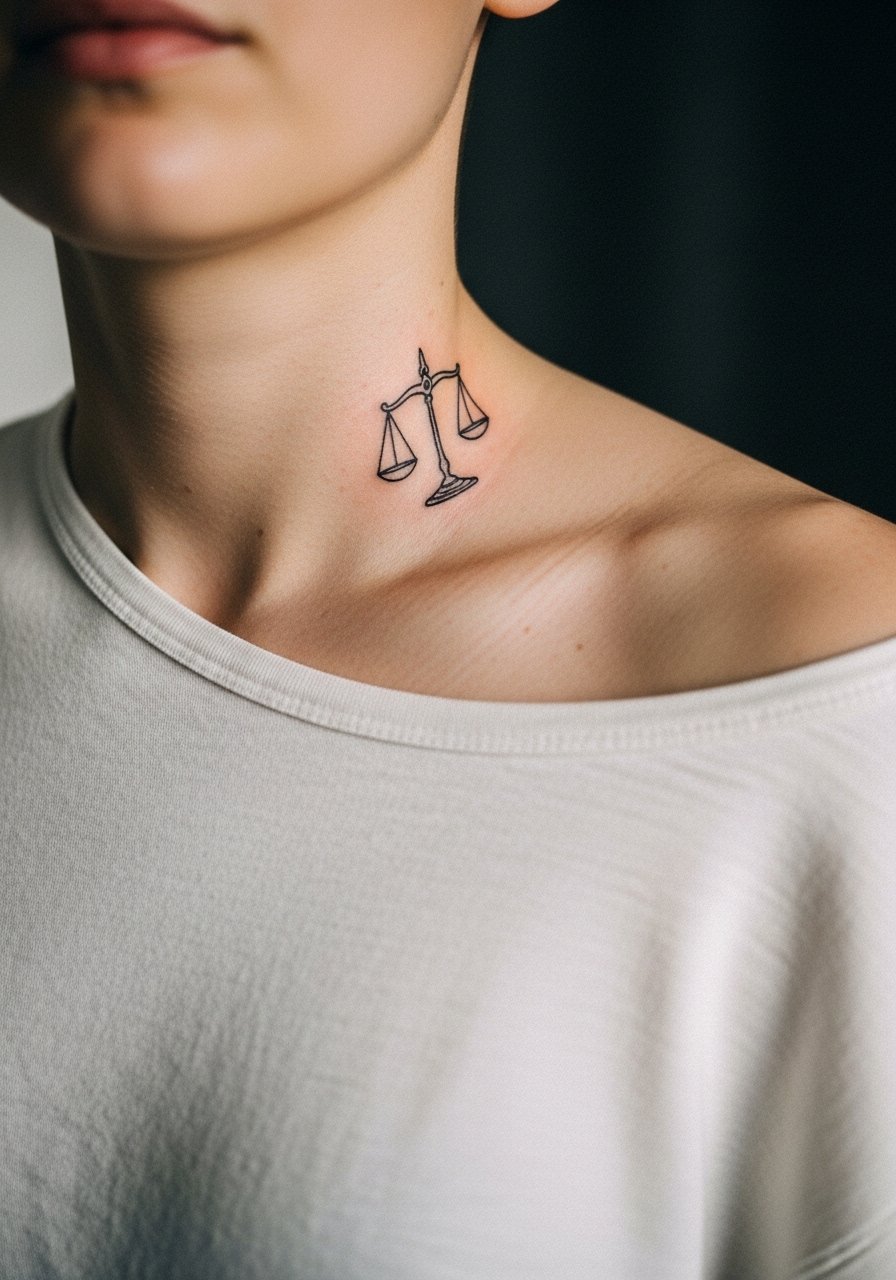
A collarbone Justice piece reads as delicate and symbolic. Ask for compact composition and slightly stronger pivot points so the scales stay readable as the skin moves. Mistakes include making the chains too thin which can fade into dots. Pain around the collarbone can be sharp but brief. Expect one short session. This placement shows beautifully with wide-neck shirts and layered delicate necklaces. If you want a simple accessory to frame it, use a thin chain pendant necklace that sits just above the script without crowding the art.
11. The Hanged Man, single-needle fine line on the ankle
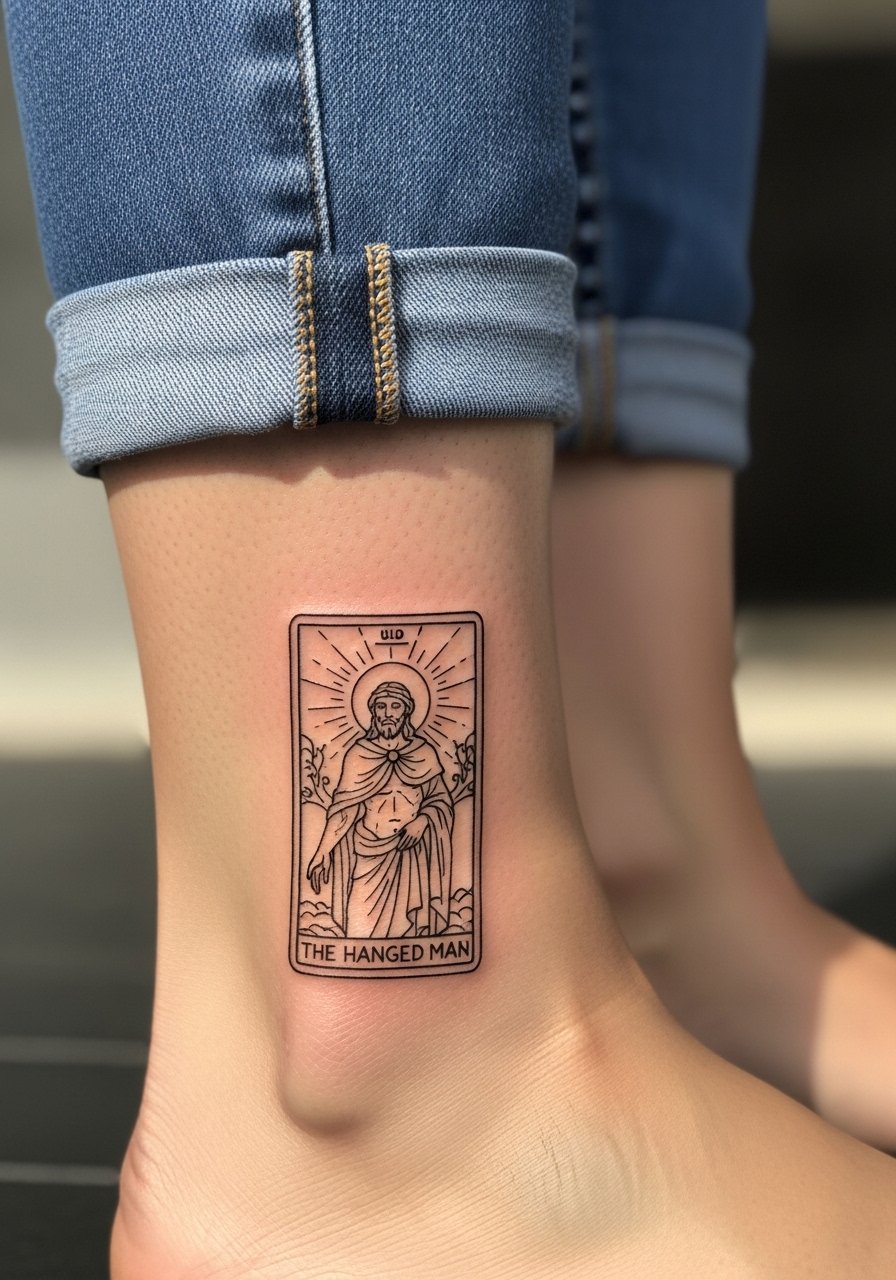
An ankle is a classic spot for a tiny Hanged Man card but it is high-friction. Single-needle detail should be balanced with protective spacing and minimal internal lines. A big mistake is pushing the design too small for the ankle surface. Expect low to moderate pain and possible fading due to shoes and socks rubbing the area. A long-term touch-up at year two is common for fine line ankle work. For the appointment wear pants you can roll up easily or slip into sandals to keep the area accessible.
12. Death, bold blackwork skull on the back of the hand
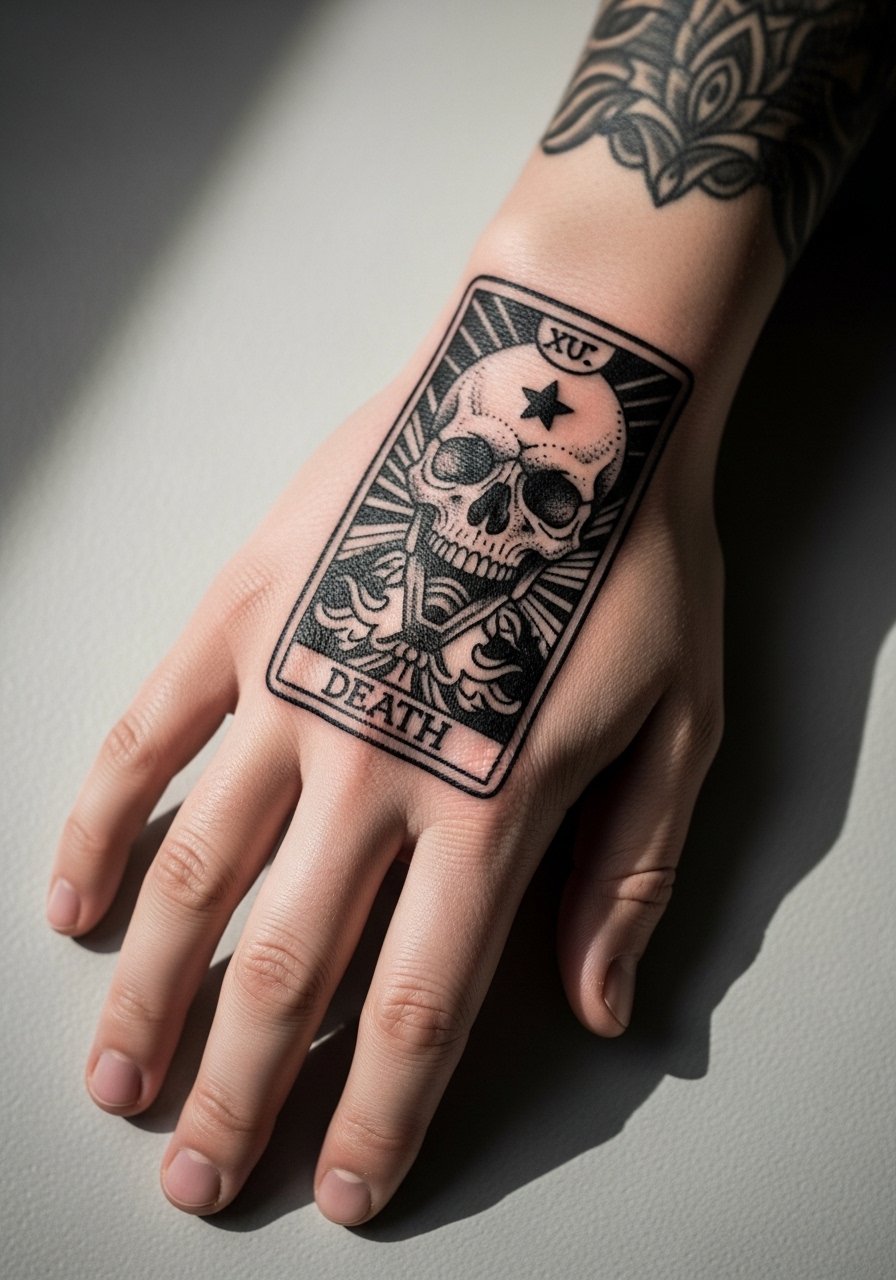
Hand tattoos demand honest expectations about longevity because hands see constant washing and friction. For Death, strong blackwork with larger shapes holds better than micro detail. There is a clear trade-off between boldness and nuance. Artists split on hand work and placement. One camp says heavy blackwork lasts because saturation stays intact despite washing. The other camp warns that hands never retain perfect edges and require regular touch-ups. If you choose the hand, plan on maintenance and ask about a touch-up timeline during consultation.
13. Temperance, watercolor wings on the shoulder cap
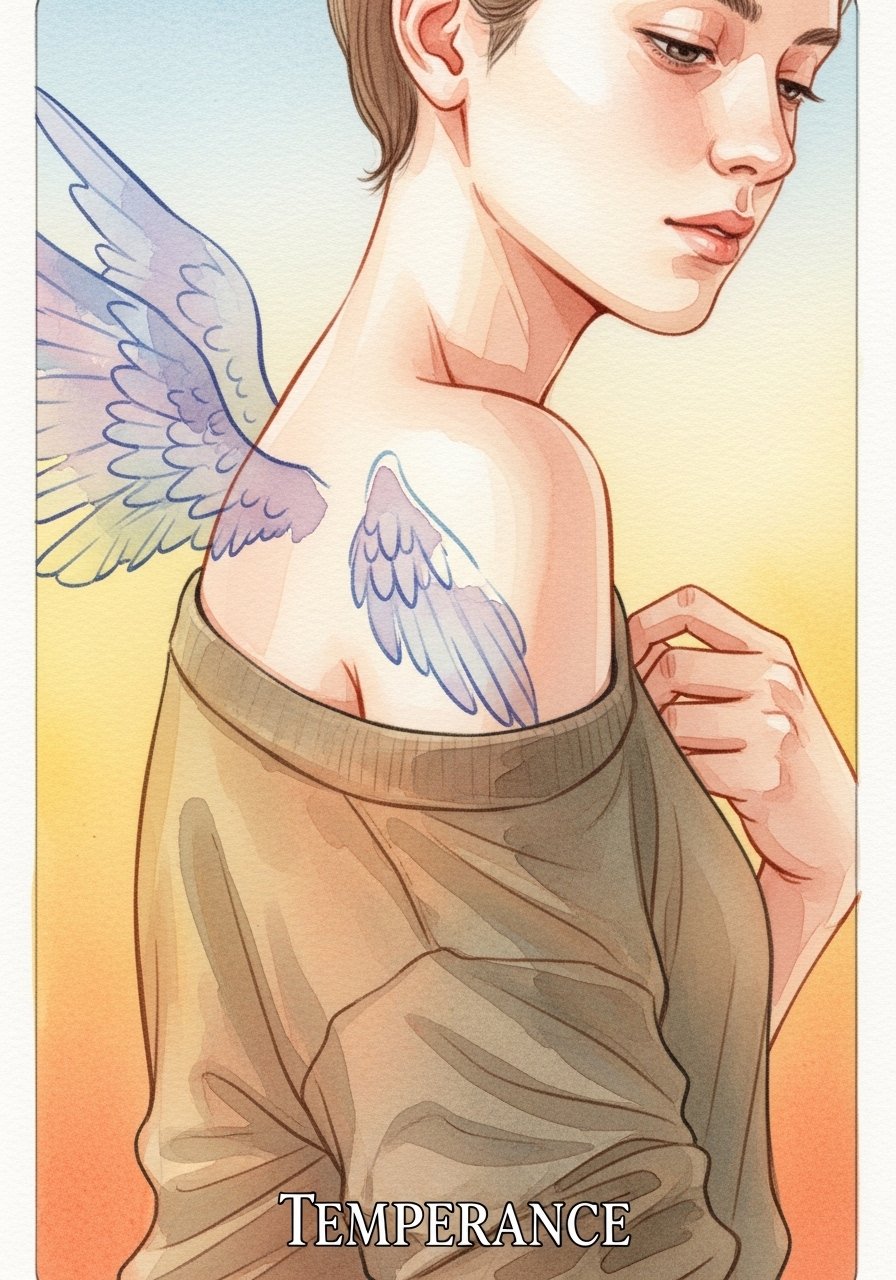
Shoulder cap watercolor is a good place for Temperance because the area tolerates broad, soft washes. To avoid color loss, ask your artist to frame washes with faint line anchors. The mistake is applying unbounded watercolor without defined edges on a high-movement zone. Sessions feel moderate and often split into two sittings for saturation control. For showing it off, open-shoulder tops or a racerback tank work well so the winged movement lines up with clothing.
14. Devil, ornamental black-and-red on the thigh
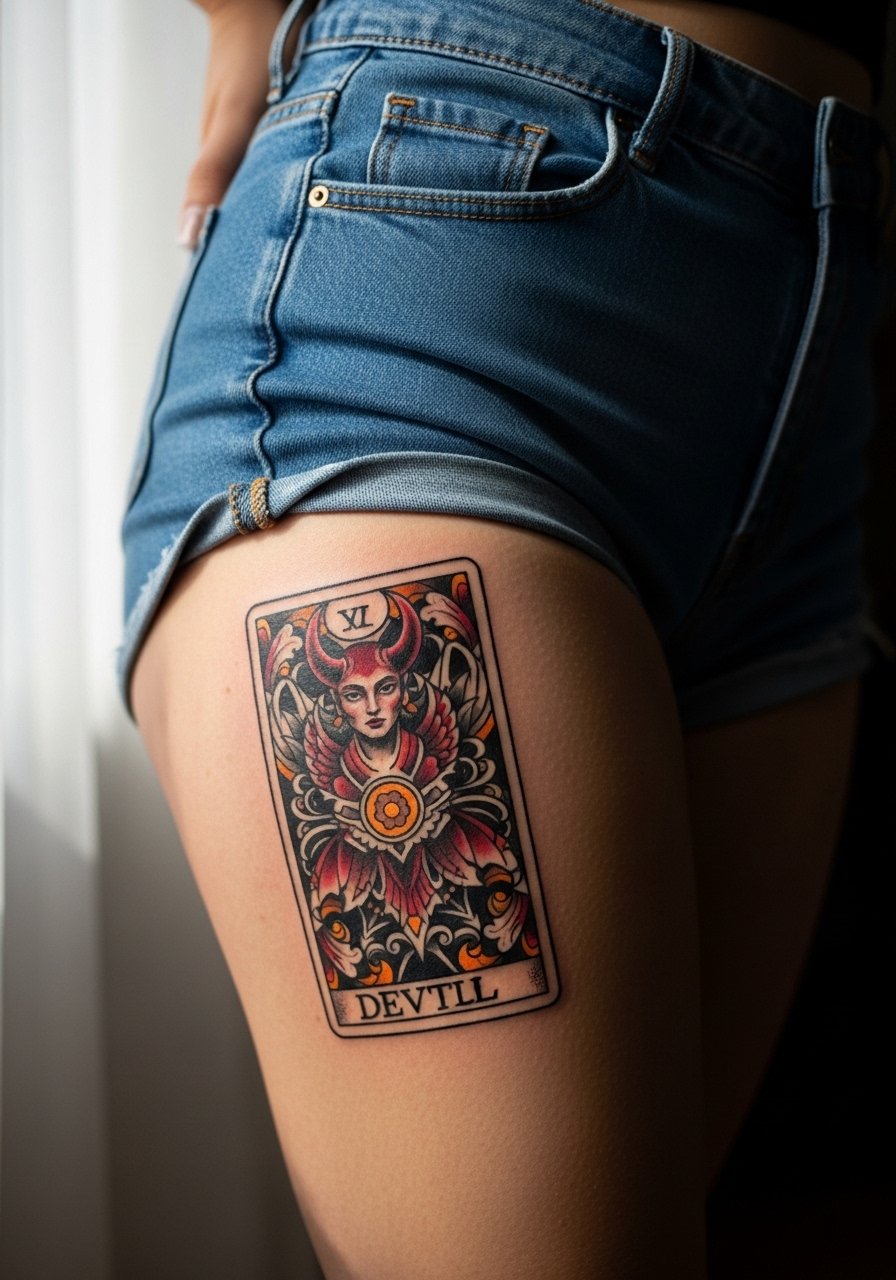
The outer thigh is forgiving for a Devil card that mixes heavy black linework with punchy red accents. Tell your artist to reserve bold outlines around focal features and use red sparingly in areas that will maintain saturation. A typical error is saturating the entire piece with multiple small red gradients that fade to pink. Thigh sessions tend to be comfortable but can require two sittings for larger color loads. For casual shows wear high-waisted shorts or a skirt that exposes the upper thigh and complements the palette.
15. Tower, fine line vertical on the ribcage
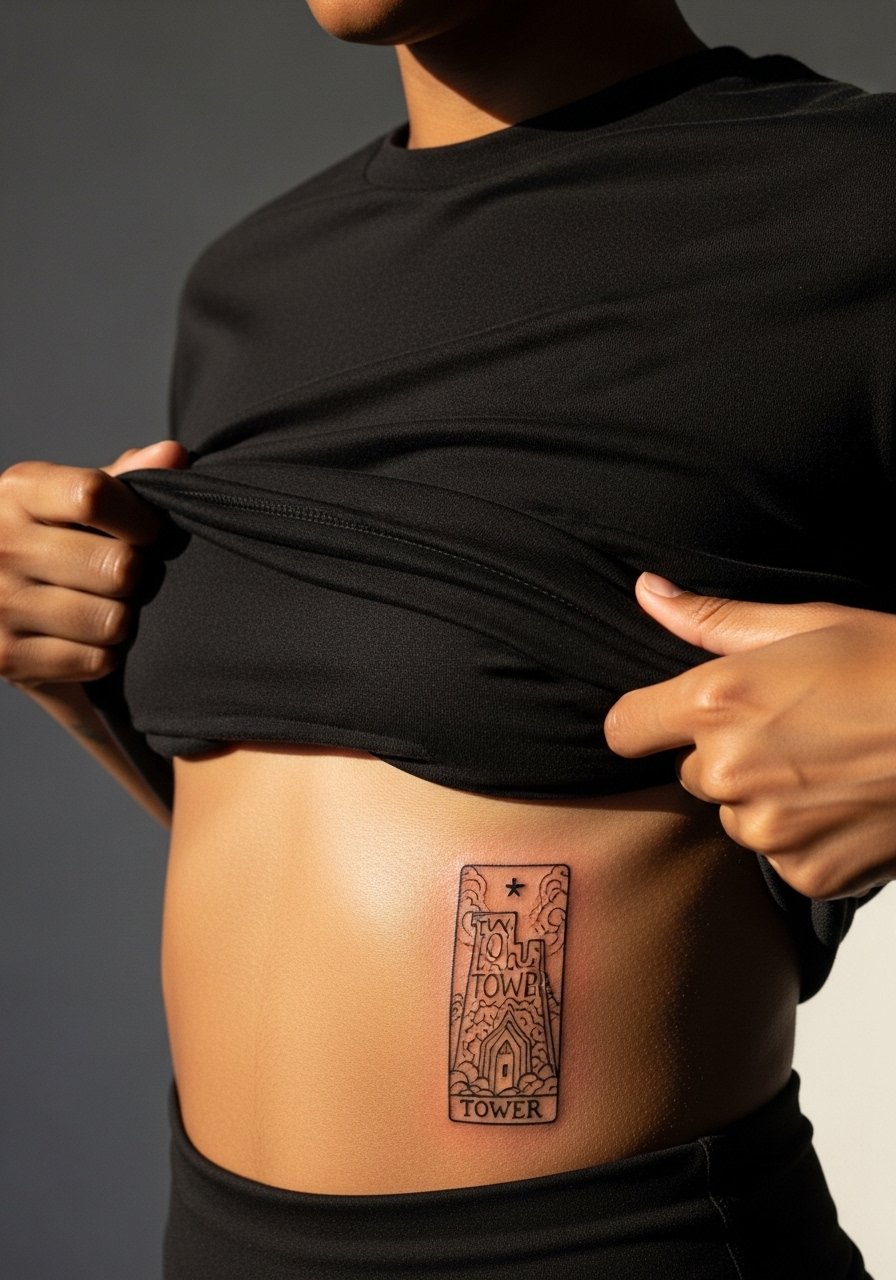
Vertical Tower designs suit the ribcage but you must consider movement and stretch. Fine line looks dramatic at first but risks blurring if lines are too close. Artists disagree on fine line longevity on ribs. One viewpoint is ribs stretch and blur lines quickly. The opposite view says careful needle depth and spacing allow fine work to settle. Ask your artist which approach they prefer and why. Expect higher pain and a patient session cadence. For the appointment bring a top you can lift without exposing more than necessary.
16. Star, tiny celestial line art behind the ear
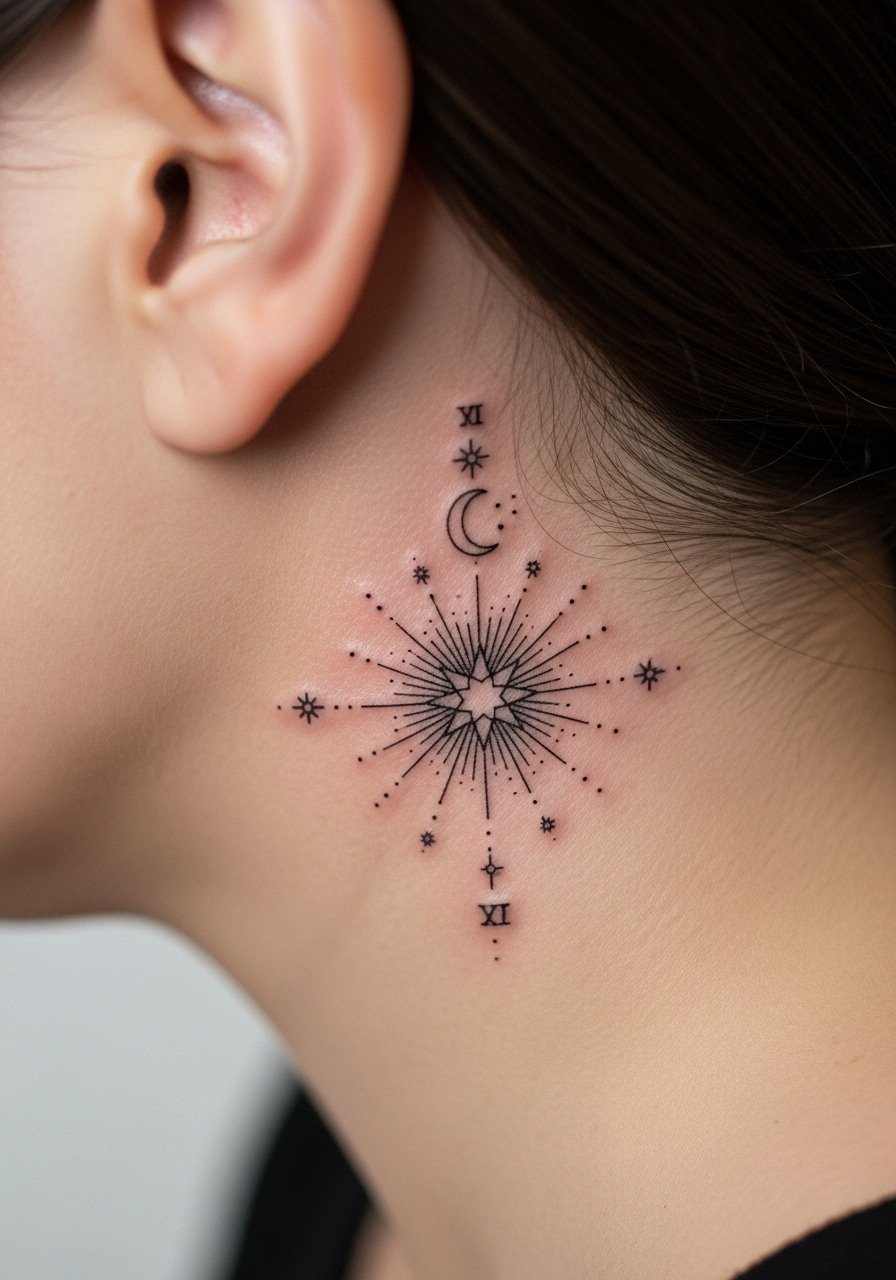
Behind-the-ear tattoos are small and intimate. The skin there accepts fine line well if the composition is simple. Ask your artist for clear negative space around any tiny stars or dots so they do not merge with hairline oils. Pain is low to moderate and healing is quick. A mistake is overcomplicating the piece with micro dots that disappear into the hairline. For the session consider a loose hairstyle and a shirt with a wide neck so the artist can work without tangling hair.
17. Moon, micro-realism on the collarbone
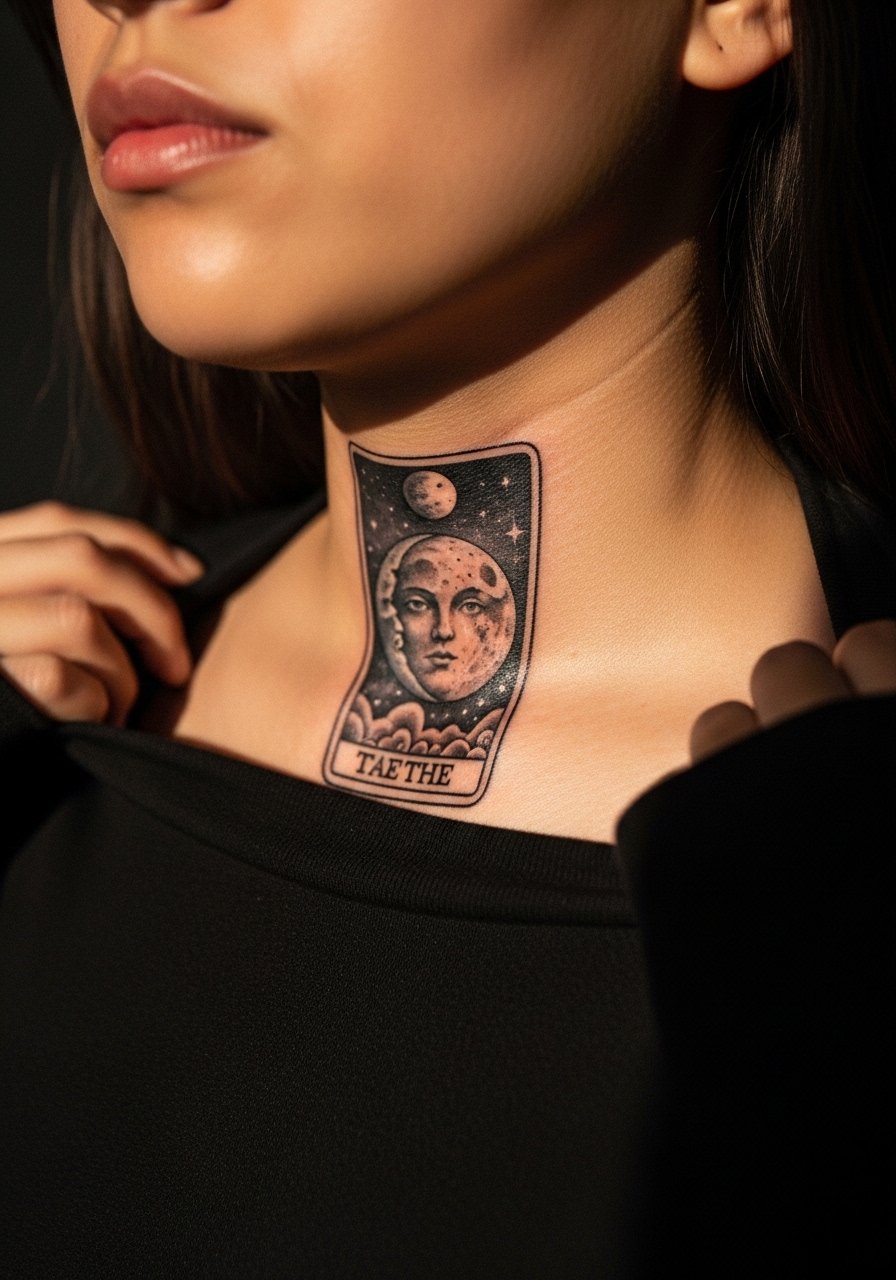
The collarbone is a fantastic spot for a micro-realism Moon when you want subtle depth and a touch of mystery. Ask for smooth gradients and a strong dark core so the lunar features remain readable over time. Errors include too much mid-tone detail that flattens with healing. Expect a sharp but short pain and a single focused session for small pieces. For showing it off, wear wide-neck shirts or layered delicate jewelry that do not crowd the collarbone. A simple thin chain pendant necklace can sit perfectly above the Moon.
18. Sun, neo-traditional radiant on the calf
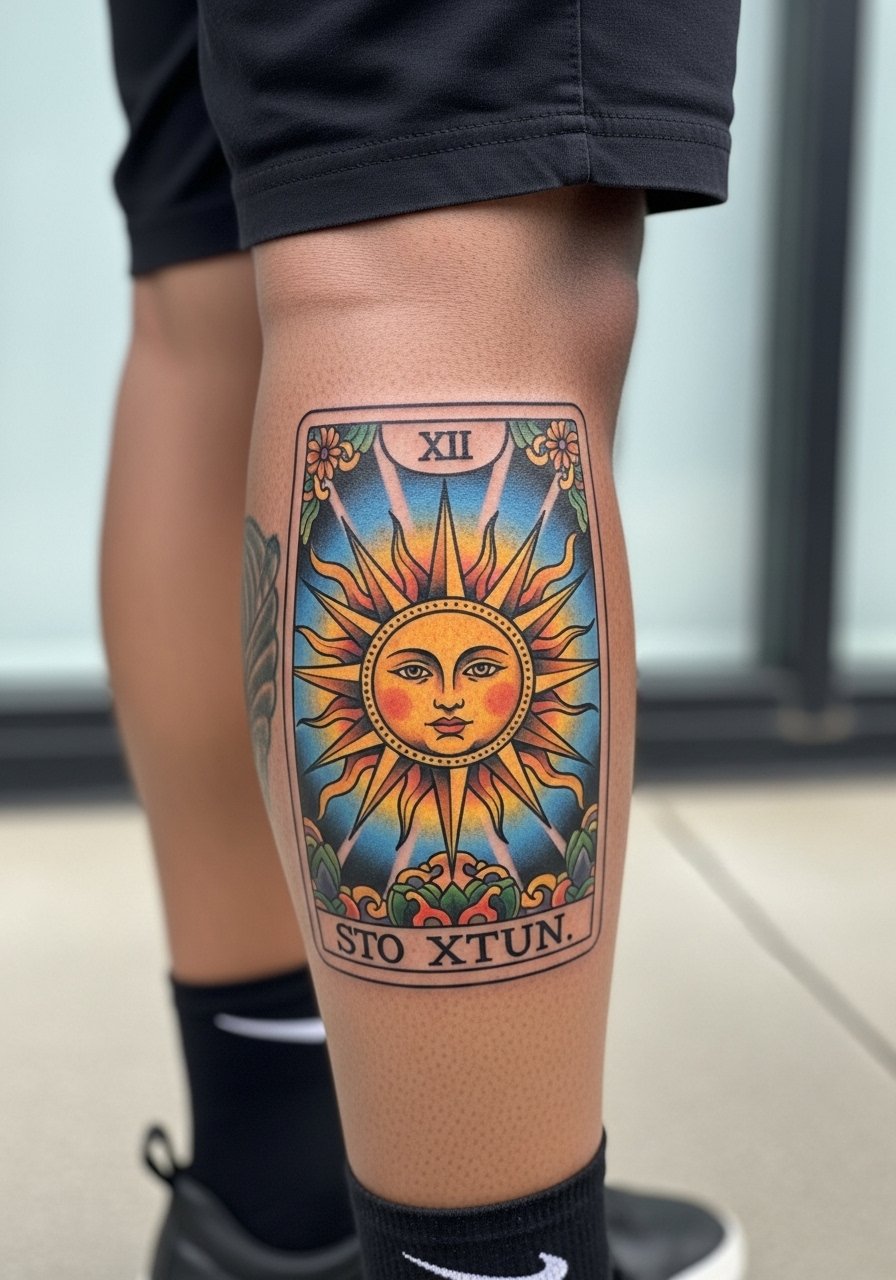
Calf placements handle saturated neo-traditional Suns well because motion and clothing rarely abrade the area. Ask for robust outlines and selective highlights so the face and rays keep structure when the piece softens. A common error is applying tiny gradients that require dense touch-up later. Sessions are comfortable and pacing is steady. For summer show-off wear shorts or dresses that let the calf display naturally. During the appointment choose shorts or pants you can easily roll up to avoid excess pressure on the new ink.
19. Judgement, illustrative back panel near the spine
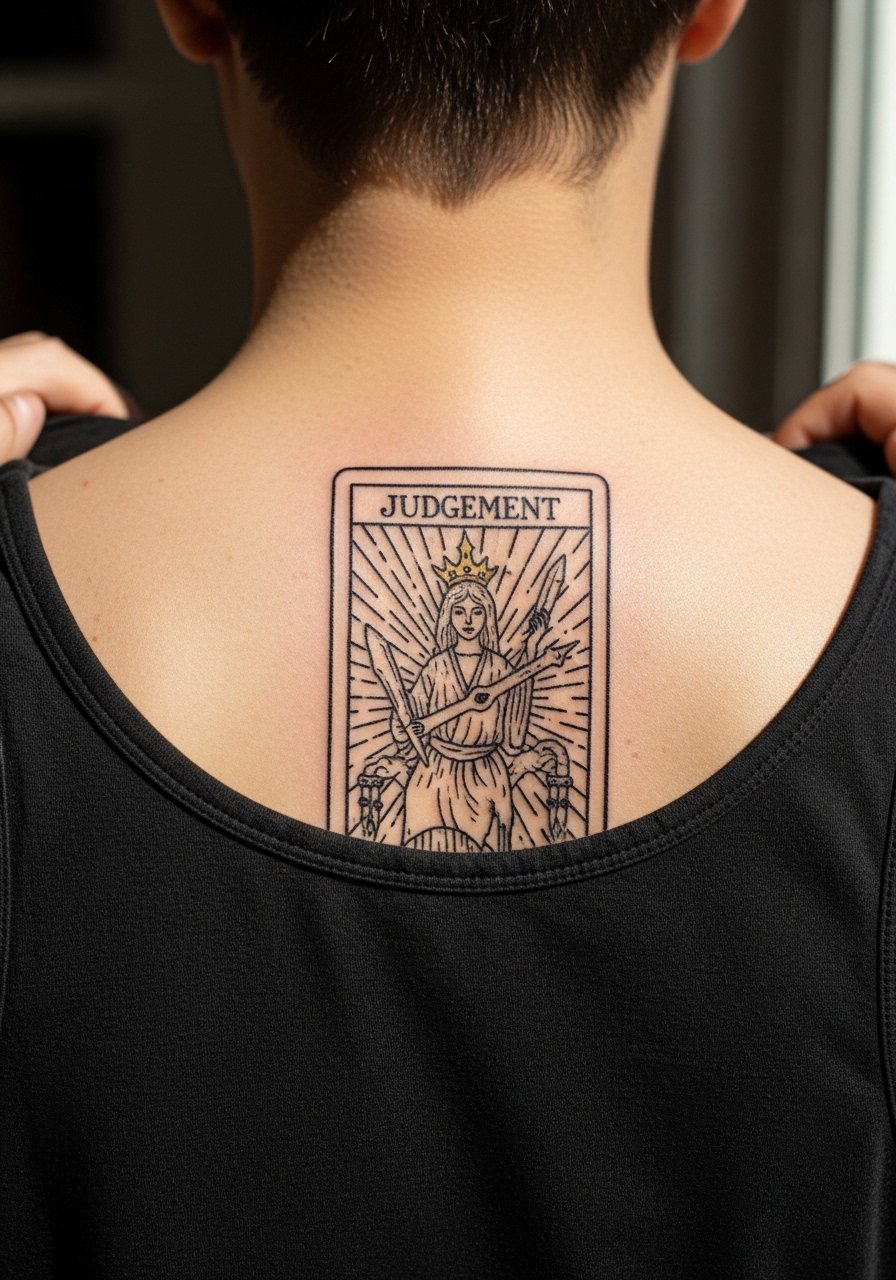
A Judgement panel near the spine can be dramatic if you keep the central figures clear and the background airy. Ask for vertical anchors and avoid tiny secondary figures that compete with the main image. The spine area is more sensitive and may require breaks. A typical error is trying to cram too much symbolism into a narrow vertical strip. Sessions will likely be multiple shorter sittings. For showing it off choose open-back garments or halter tops that frame the composition without pulling fabric across it.
20. World, circular full-card on the lower back
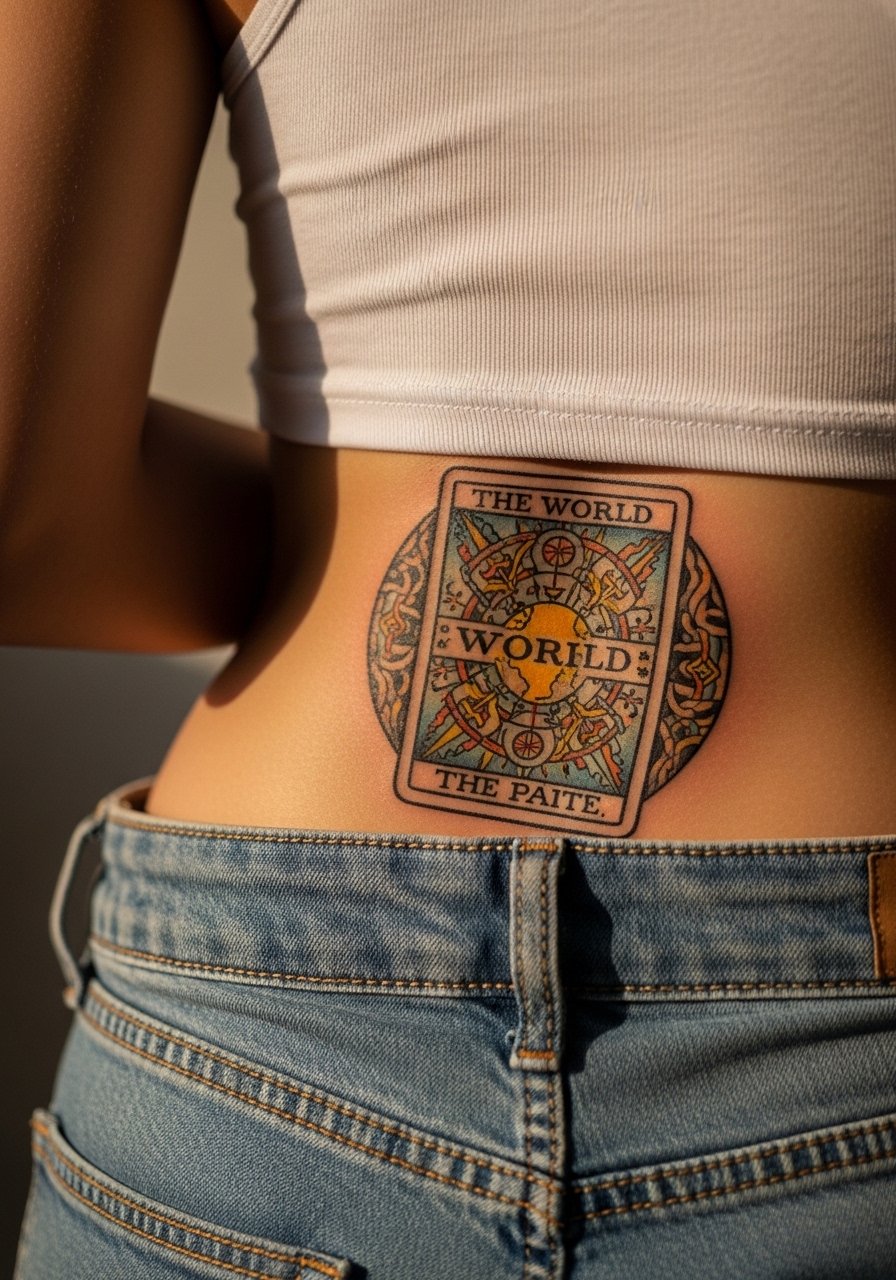
Lower back work is forgiving for a World card that needs a broad circular frame. Ask your artist to keep line spacing consistent to avoid central fill-in. Mistakes include too many micro lines toward the center which lose contrast with time. Sessions are moderate and can be completed in one longer appointment for an experienced artist. For showing it off, low-slung jeans and crop tops pair well. During the session wear a tank top you can lift rather than removing it entirely.
21. Sun reversed, minimal glyph on the wrist
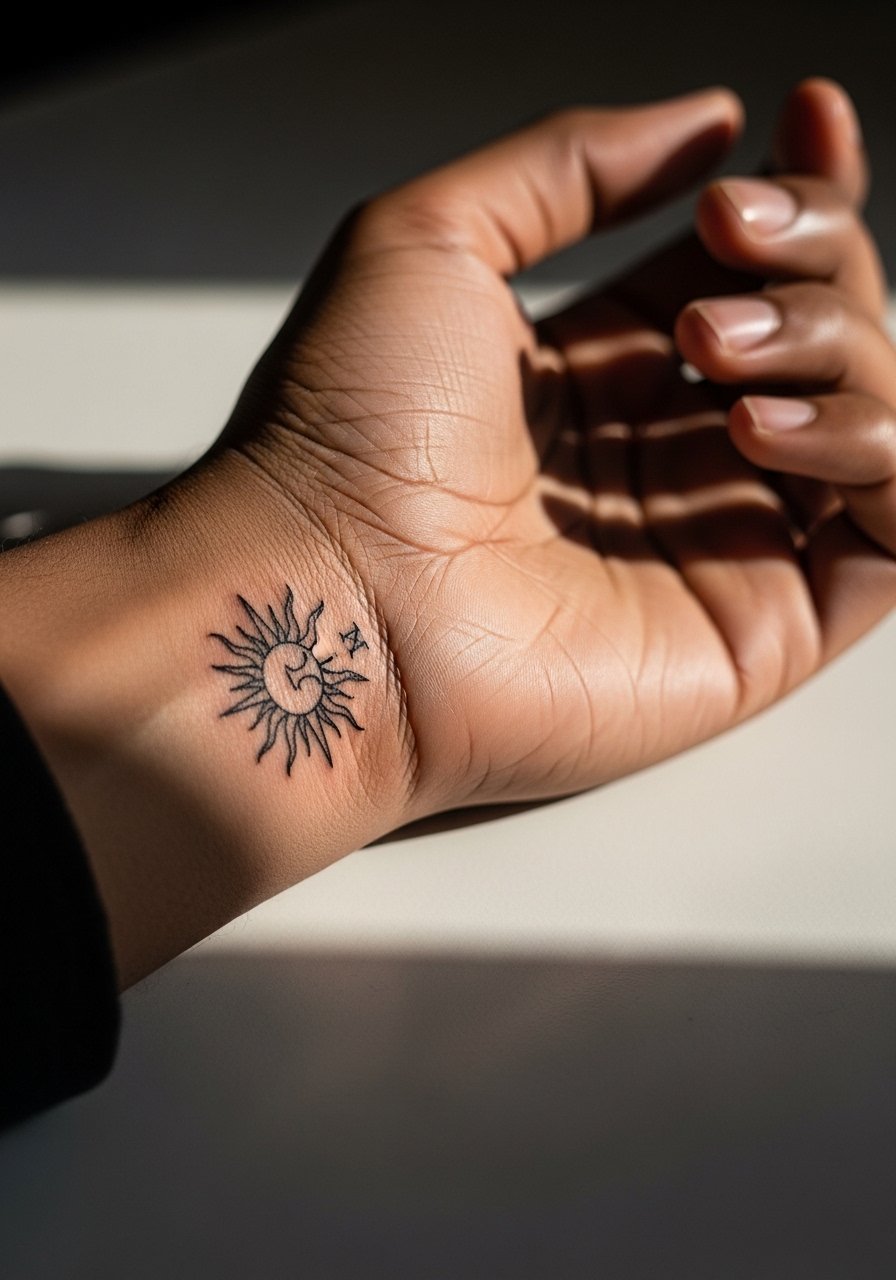
A small Sun glyph on the inner wrist is a subtle statement that still carries tarot meaning. Keep the glyph bold enough to avoid fine-line loss from constant wrist movement. The usual error is choosing a too-thin script for a highly used area. Pain is mild and healing is straightforward. For display, stacked dainty bracelets or a minimalist watch can frame the glyph without covering it. If you want one, pick accessories that can be shifted during healing to reduce pressure and friction.
22. Minor Arcana Court Card, portrait on the thigh
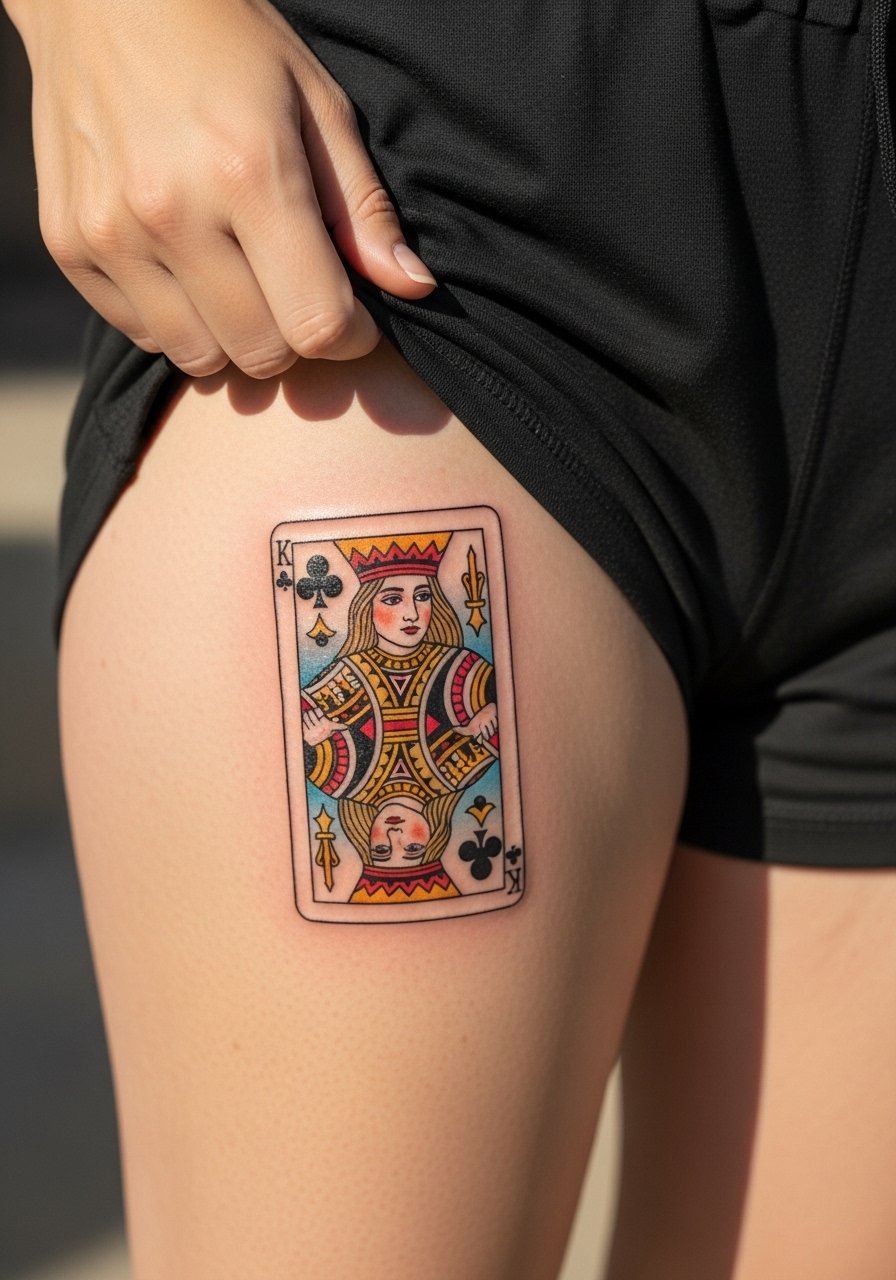
Thigh portraits give scope for nuanced faces and botanical framing. Tell your artist you want a clear focal face with simplified background elements so detail does not fight with skin texture. Overworking the background is a common mistake that reduces facial clarity after a year. Sessions are comfortable and often split into color and detail passes. For show-off outfits choose mid-length skirts or dresses with a side slit that reveal the portrait during evenings out.
23. Ace of Cups, delicate linework on the inner bicep
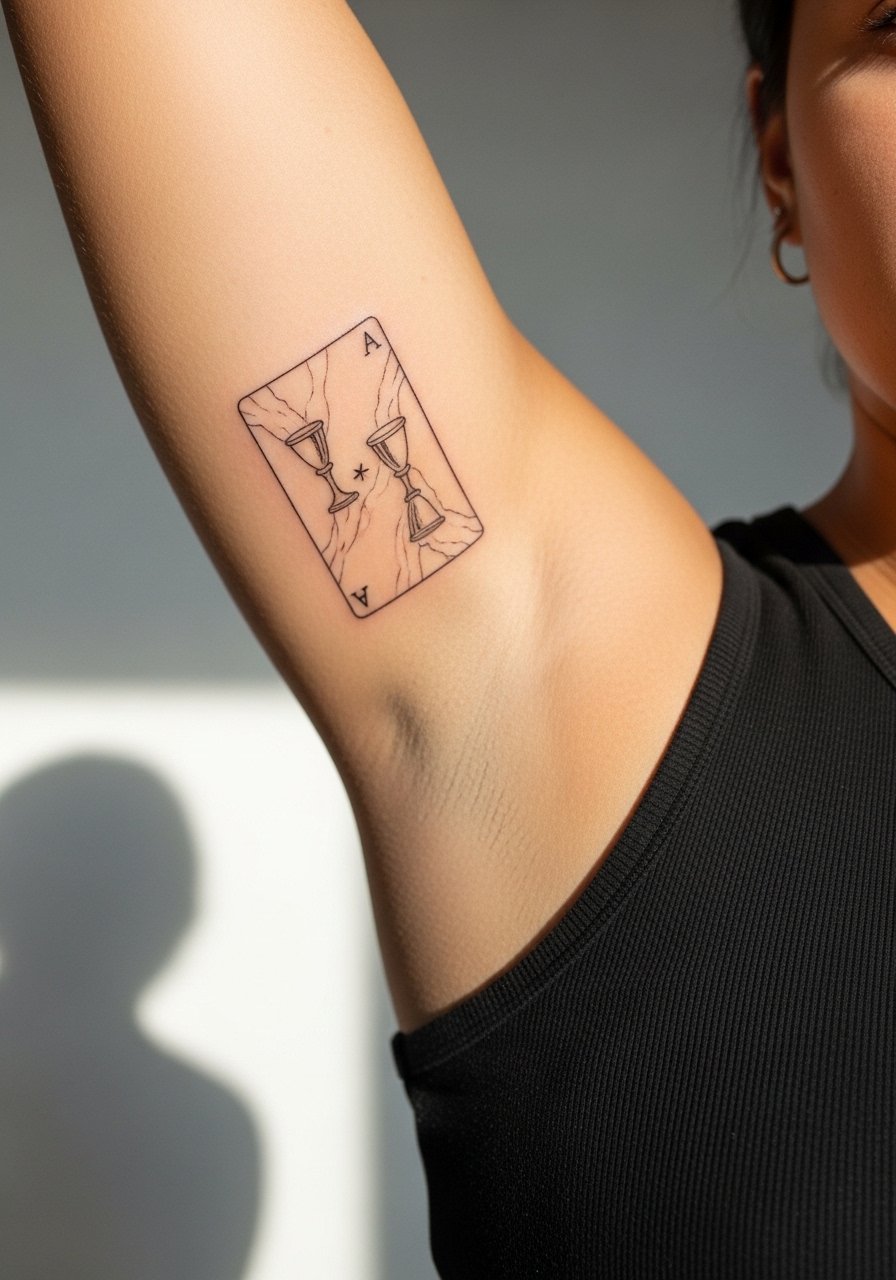
Inner bicep placements suit delicate cup motifs because the area is sheltered from daily abrasion. Ask for slightly bolder rim lines on the cup and lighter internal ornament so contrast holds. A frequent error is asking for extremely tight stipple shading which can fill in. Expect moderate pain during the session and plan for a touch-up if you sweat often. For the appointment wear a sleeveless top you can raise like a loose tank top so the artist can work easily.
24. Two of Swords, split composition on the forearm
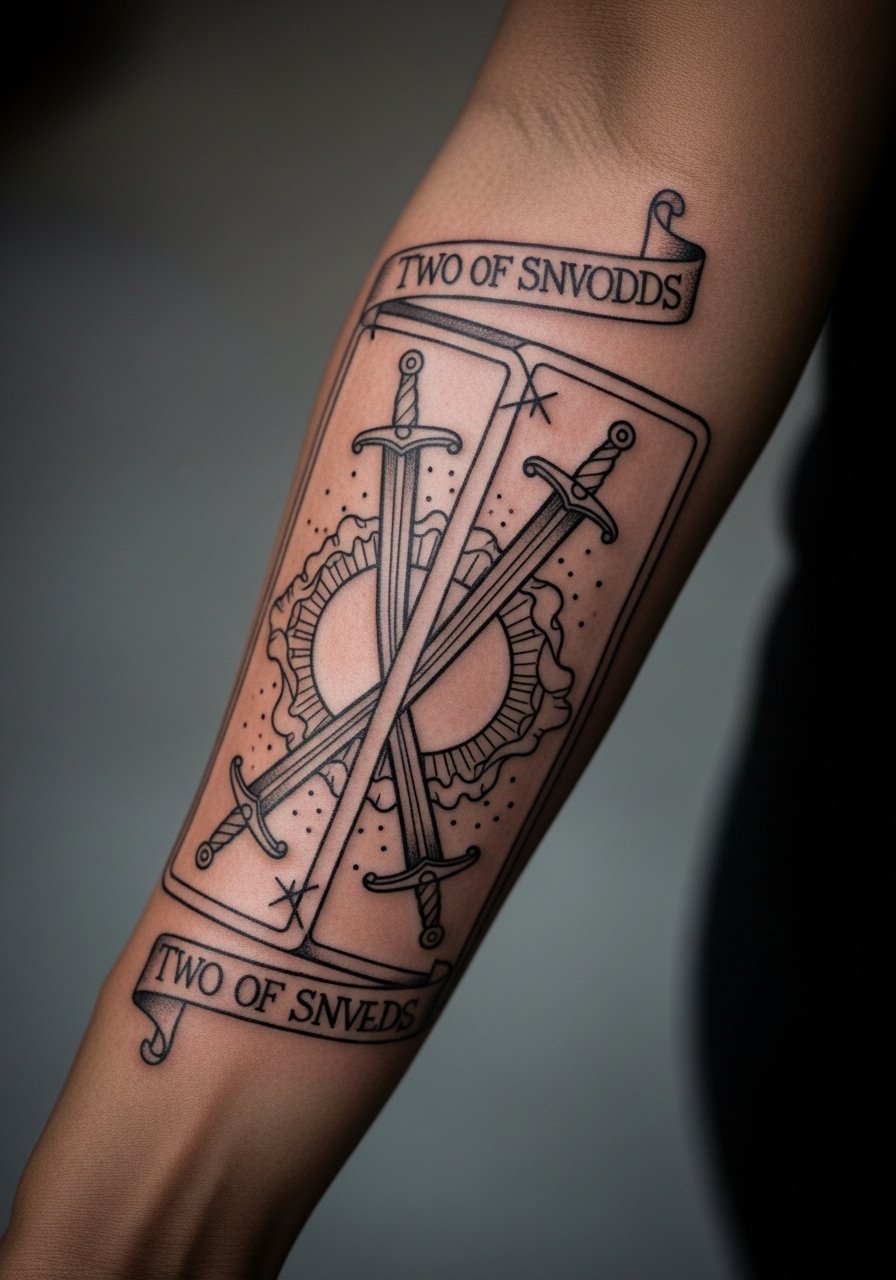
A wraparound Two of Swords can be striking if you plan composition for movement. Tell your artist to design so the split reads in both relaxed and flexed arm positions. A common mistake is ignoring how muscles change the look when you bend the elbow. Sessions are moderate and may need minor adjustments for symmetry. Forearm placements pair well with rolled sleeves and layered bracelets when you want a tempered look. For the session wear a short-sleeve top you can roll without compressing the stencil.
25. Page of Pentacles, tiny coin on the finger
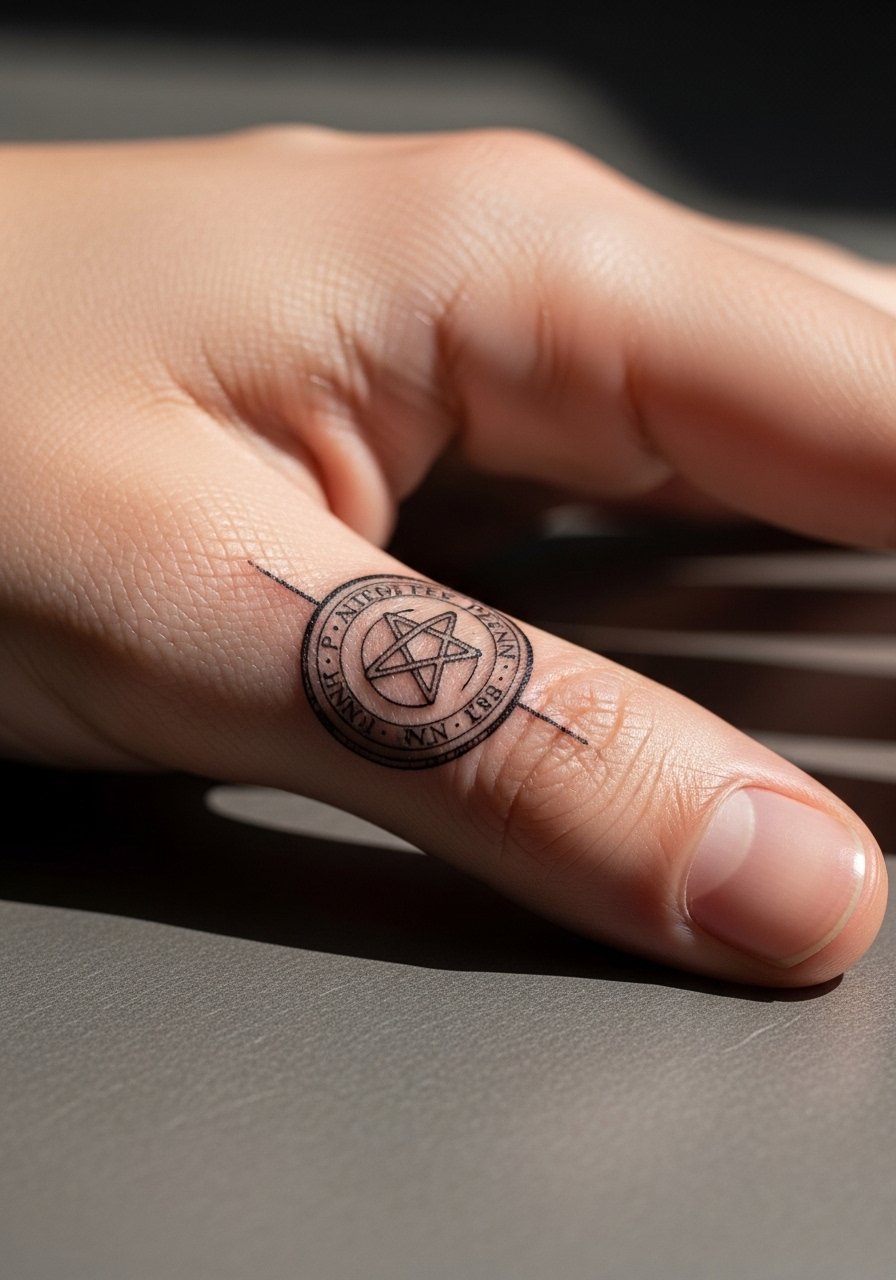
Finger tattoos read as personal and subtle but they fade faster than most placements due to frequent washing and abrasion. A single coin motif needs bold, simple shapes rather than myriad tiny details. People often regret intricate scripts on fingers because they blur quickly. Expect touch-ups sooner than for arm pieces. For short-term show-off, stack with thin rings that do not press directly on the tattoo. During the appointment keep in mind the artist may test different line weights to find what holds best on your skin.
26. Seven of Cups, dreamlike montage on the side torso
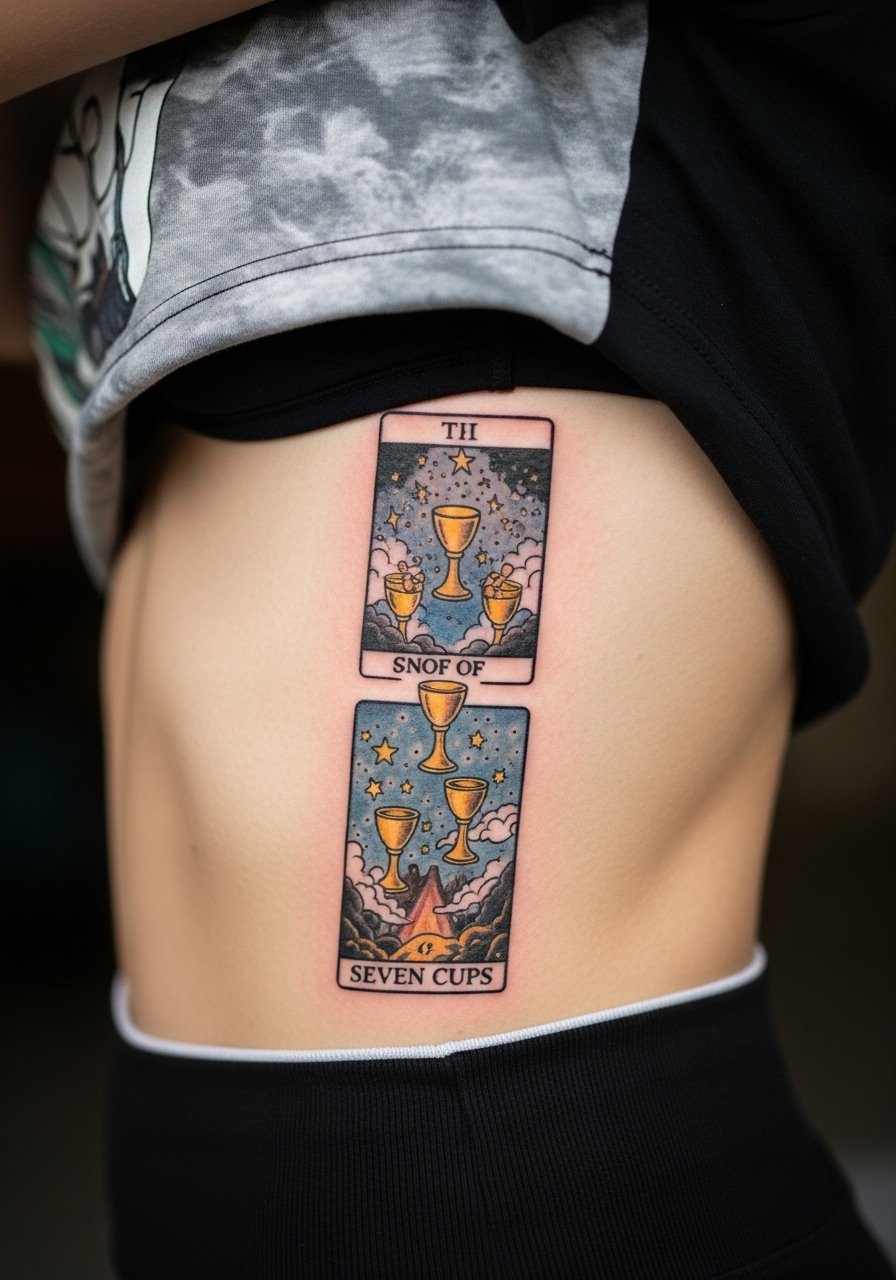
Side-torso montages benefit from leaving breathing room around each cup so elements do not collapse as skin moves. Ask for clear focal cups with simplified internal icons. A typical error is squeezing too many tiny symbols into that narrow strip which leads to muddiness when healed. Pain is higher on the side torso and sessions are often spread across visits. For the session choose a cropped top that can be lifted to reveal only the area being worked so you remain comfortable.
27. Back-of-Card script, small motto across the upper shoulder
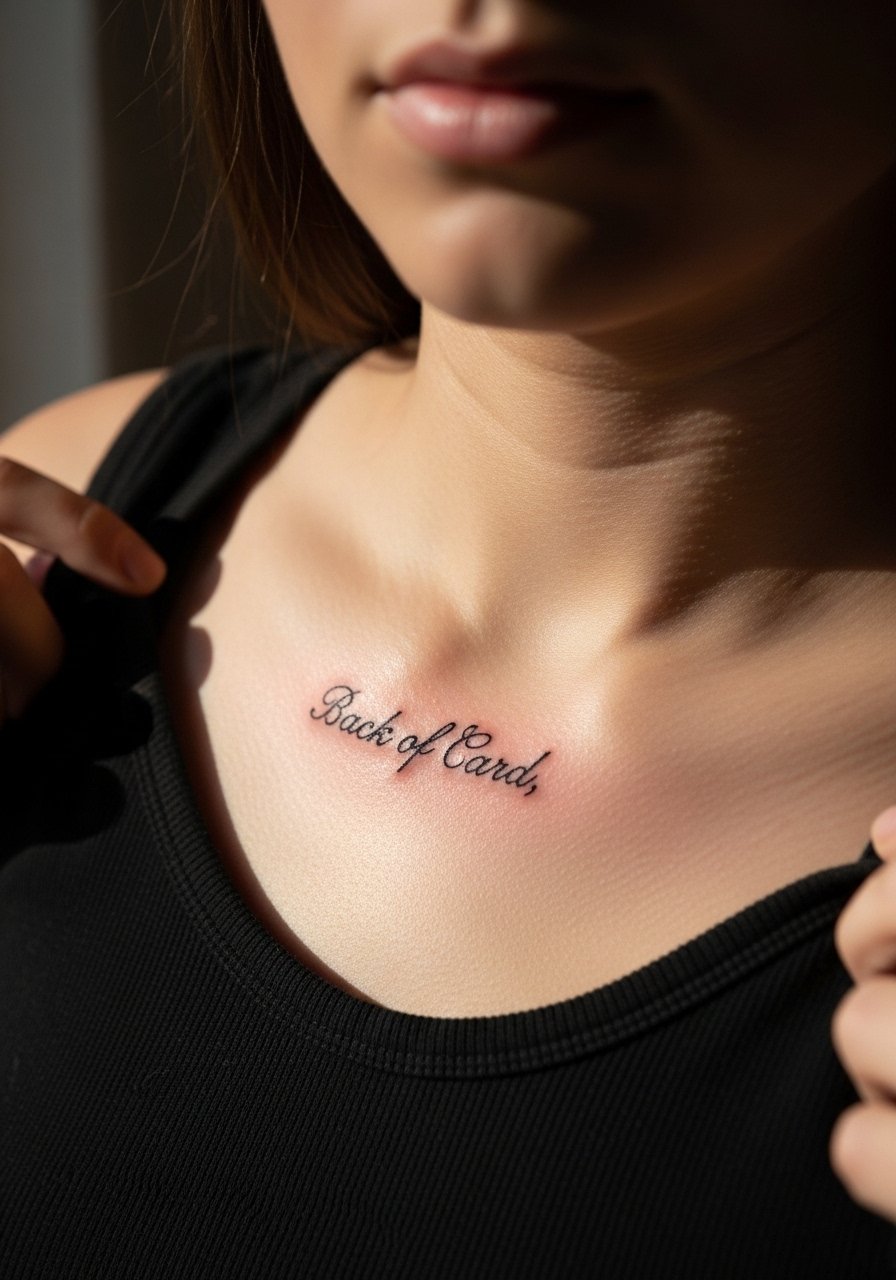
A short motto across the upper shoulder reads intimate and deliberate. Use a legible type and ask your artist to scale stroke width for long-term clarity rather than dainty script. The error is choosing a hairline script that fades into a squiggle after a few years. Expect brief pain and a single quick session. For showing it off choose tops with a wide neck or thin straps. If you like layered jewelry a short pendant can sit above the line and keep the shoulder area balanced.
Frequently Asked Questions
Q: Do fine line tarot tattoos fade faster than bold blackwork, and what should I expect for touch-ups?
A: Fine line pieces often need touch-ups sooner because the needle channels are narrower and lines can spread or lighten over time. Bold blackwork keeps contrast longer. The realistic plan is to expect lightening or slight merging on high-friction areas by year two to three and to schedule a touch-up then. Talk to your artist about line spacing and planned maintenance during the consultation.
Q: How should I choose placement if I want a tarot card that still reads at year five?
A: Look for thicker skin and lower-friction zones. Upper arm, thigh, and shoulder blade are forgiving. Bony, high-friction areas like fingers, hands, and ankles need simplified shapes and stronger outlines to remain legible. I recommend discussing placement with your artist and asking to see healed examples on skin tones similar to yours.
Q: Does aftercare favor Saniderm or dry healing for tarot pieces, and which camp should I follow?
A: Both camps have clear arguments. One group favors protective films like Saniderm because they reduce scabbing and keep contaminants out. The other group prefers dry healing with minimal ointment to avoid trapped moisture and adhesive irritation. The right choice depends on your skin, the placement, and whether you sweat a lot. Tell your artist about sensitivities so they can recommend the approach that fits your tattoo and your daily routine.
Q: How do I pick clothing for my appointment when getting a tarot tattoo on the ribcage or sternum?
A: Wear a fitted sports bra or a cropped top you can lift slightly to expose only the target area. For the sternum pick a strapless or thin-strapped sports bra. For ribs a cropped tee or tank that lifts easily is ideal. Comfort and modesty matter because the right garment keeps you warm and lets the artist work cleanly.
Q: Will a tarot card tattoo show differently on darker skin, and how can I make sure it reads well?
A: On darker skin, contrast and bolder anchors help the image hold. Ask for stronger primary outlines and selective negative-space highlights rather than faint gray shading. Many healed portfolios skew light-skinned, so ask an artist to show healed work on a range of tones or to explain how they adapt saturation and contrast for darker skin.
Q: Are small tarot glyphs good for first tattoos or should I start with something larger?
A: Small glyphs are great test-drive pieces if you pick the right placement and keep the design simple. Wrists, ankles, and fingers are tempting but wear fast. If you want a longevity test, start with a small forearm or upper arm piece that is easier to touch up and photograph over time.
Q: How do I discover artists who specialize in tarot styles without naming names?
A: Use discovery pathways like following hashtags such as #tarottattoo and #tarotcardtattoo, browse shop directories, and check guest lists for conventions. Spend time in community threads to see healed examples from different artists. This will give you a sense of technique and healed outcomes before booking.