
Fine line eagles are everywhere online, but what holds up is a different story. Fine line looks incredible when fresh and it does fade faster than packed blackwork. Small pieces can hurt more than you expect on ribs and cost more than they used to. Read the first section for a wrist-friendly option that resists early blur, then work through placements and styles that balance look with longevity.
1. Tiny fine line bald eagle outline on the wrist

I've seen this exact wrist outline last well when artists use slightly heavier line weight than a single-needle hairline. The wrist is forgiving for 1 to 2 inch outlines but it gets daily friction from watches and bracelets. Tell your artist you want crisp linework with modest spacing so the wing tips do not merge after a year. Expect a short session and a quick sting that is over fast. Pair it with a thin silver chain bracelet on the opposite wrist for evenings out, and wear a sleeveless tank to the appointment so the artist has clear access.
2. Micro-realism soaring eagle head on the inner forearm
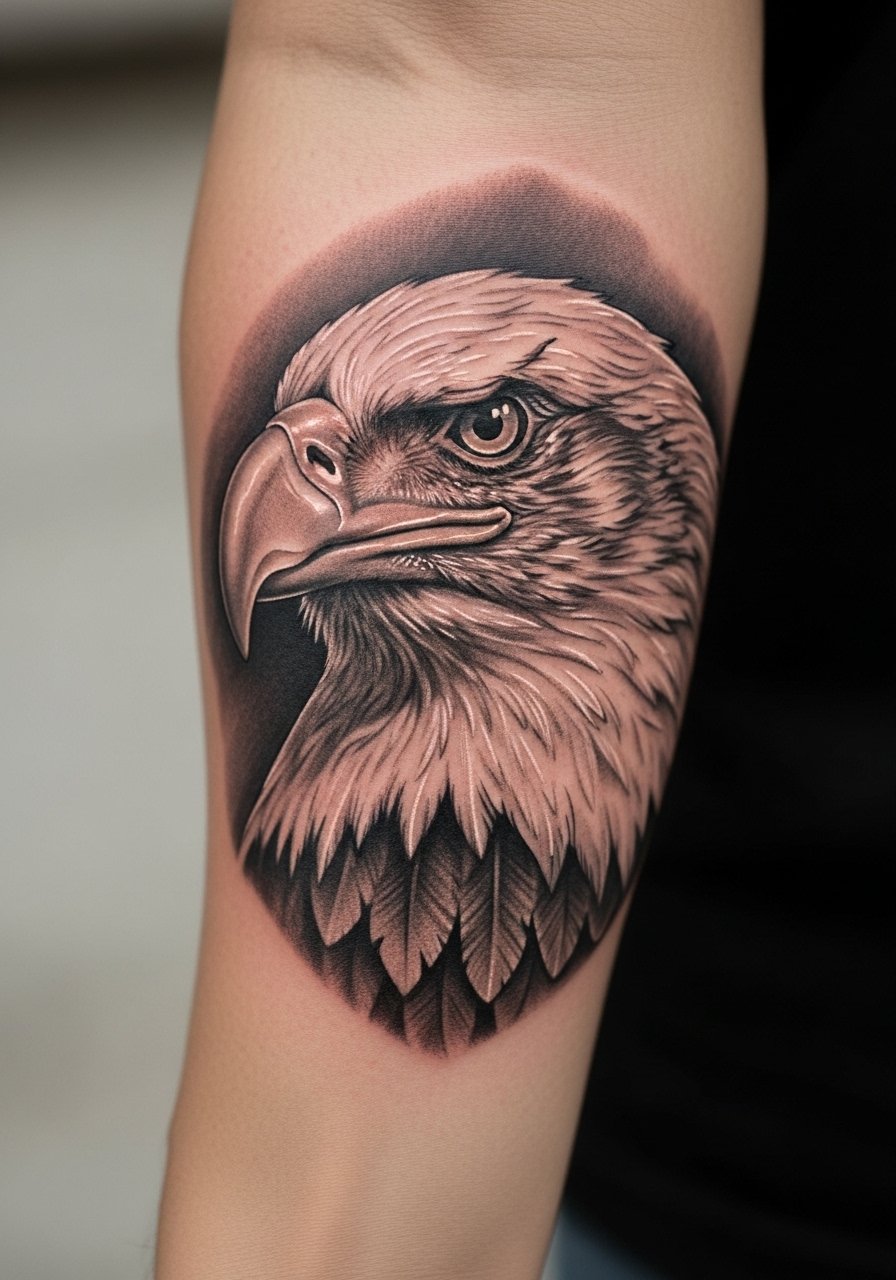
Micro-realism reads like a tiny portrait when done at 1.5 inches. I recommend this for forearm collectors who want detail that still reads from a short distance. During the consult, bring clear close-up references, and ask the artist to prioritize contrast between beak and plumage so the eye stays readable at six months. The inner forearm hurts less than ribs and sessions usually take one to two hours. Expect subtle softening at two years and plan a touch-up then. Show it off with rolled sleeves, and consider a cotton button up shirt you can roll for photos.
3. Minimalist geometric eagle silhouette at the collarbone

A collarbone silhouette reads modern and compact under one inch, but the area needs room for geometric facets to stay distinct. The biggest mistake is shrinking the geometry too small. Ask for bolder outer lines with internal spacing so triangles and angles do not merge as the skin settles. Pain is moderate because the collarbone is bony. For showing off, try an off shoulder blouse that frames the piece. For the session wear a strapless bralette so the artist can position the stencil with no fuss.
4. Neo-traditional tiny eagle with banner on the shoulder blade

Shoulder blade neo-traditional pieces let color pop without competing with clothing. The session is comfortable because you can lie face down. Request bold outlines and slightly looser banner lettering so the text holds for years. A common aging issue is overly tight script that blurs into color fields. For evening wear, pair with a halter top women or backless dress that puts the artwork on display. Plan a single session and a quick touch-up if colors fade at year two.
5. Blackwork tribal eagle wing on the upper arm
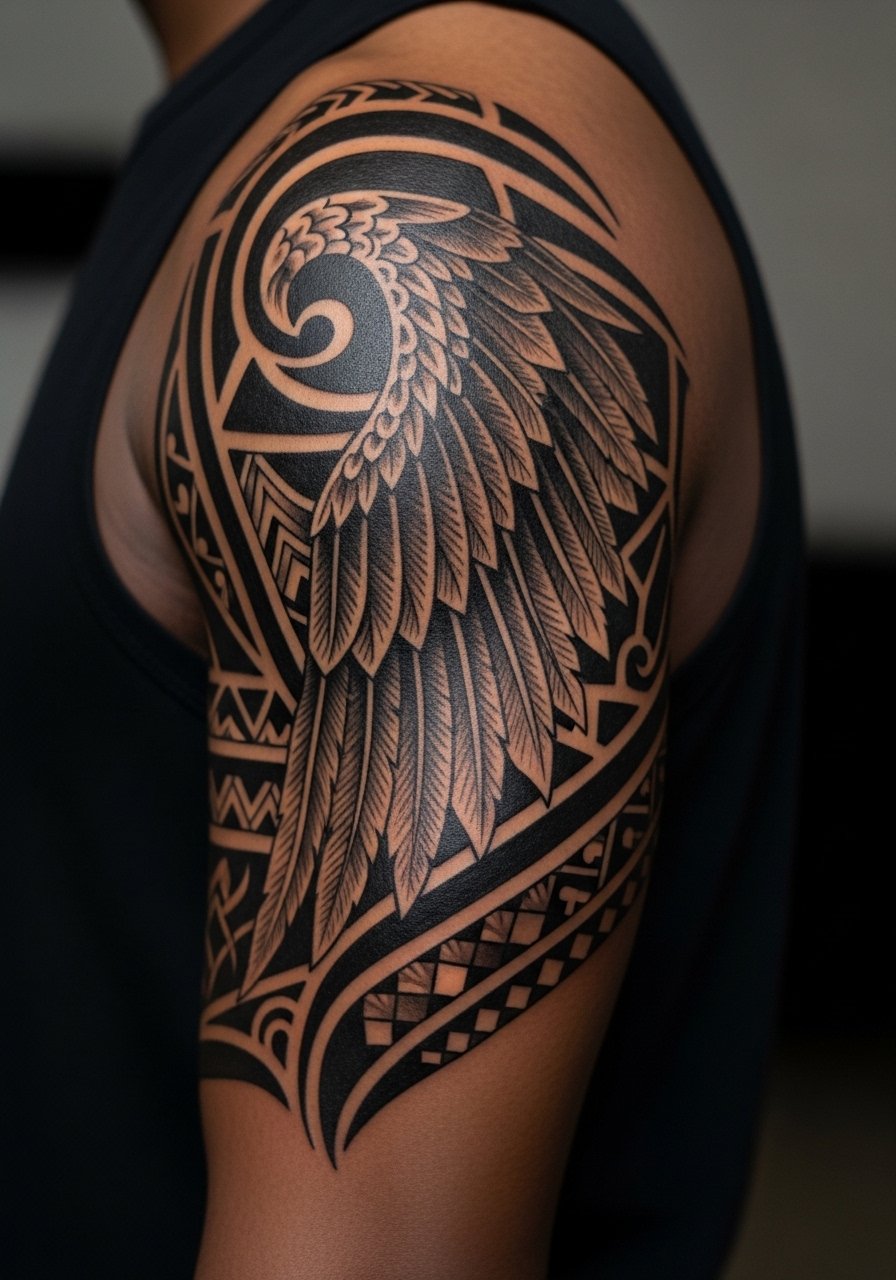
Blackwork packs longevity into small scale when saturation is consistent. Upper arm placement reduces friction and blowout risk compared with hands. Tell the artist you want solid fills instead of patchy blocks so the wing reads from a distance. Pain is low to moderate and sessions are usually one block of time. This style suits someone after a masculine edge or optical effect, and it ages into a strong silhouette that rarely needs early touch-ups. For casual looks roll sleeves or use rolled cuff joggers when showing the lower arm area.
6. Watercolor tiny eagle in flight on the ribcage
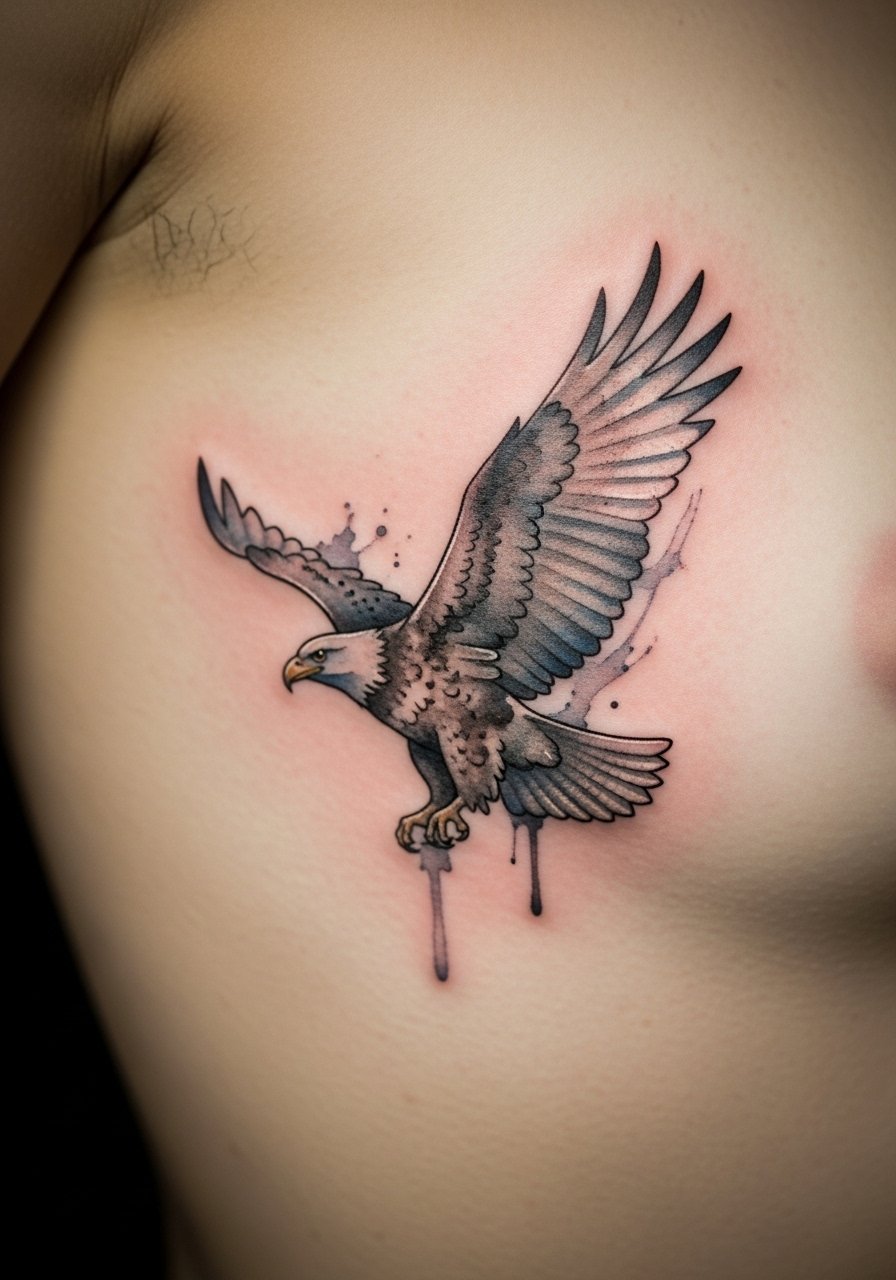
Fair warning, ribs are painful for many people, often higher on a pain chart than forearms. Watercolor here gives motion and looks painterly, but soft washes fade faster than blackwork. During consultation, ask the artist to anchor the piece with a thin black outline or small high-contrast spots so the composition keeps shape as color fades. Wear a cropped top to the session to give the artist clear access. Expect a single session and schedule sunscreen after healing because UV kills watercolor more than black ink.
Before You Book
The wrist, forearm, and ribcage pieces above ask for different prep and first-week care, so a few targeted items smooth session day and early healing.
-
Stencil transfer paper kit. Lets you preview line placement on skin before the needle starts, which matters for tiny outlines on wrists and collars.
-
Topical numbing cream. Apply as directed 45 minutes before to ease rib and sternum sensitivity without interfering with the linework.
-
Thin protective film roll. Protects ankle and finger tattoos from friction while showering and moving in the first days.
-
Fragrance-free body wash. Cleans healing skin gently without stripping oils important to fine line retention.
-
Aquaphor healing ointment. A thin layer in the first two to three days keeps delicate needle channels moist for fine outlines.
7. Ignorant style pixelated eagle on the calf
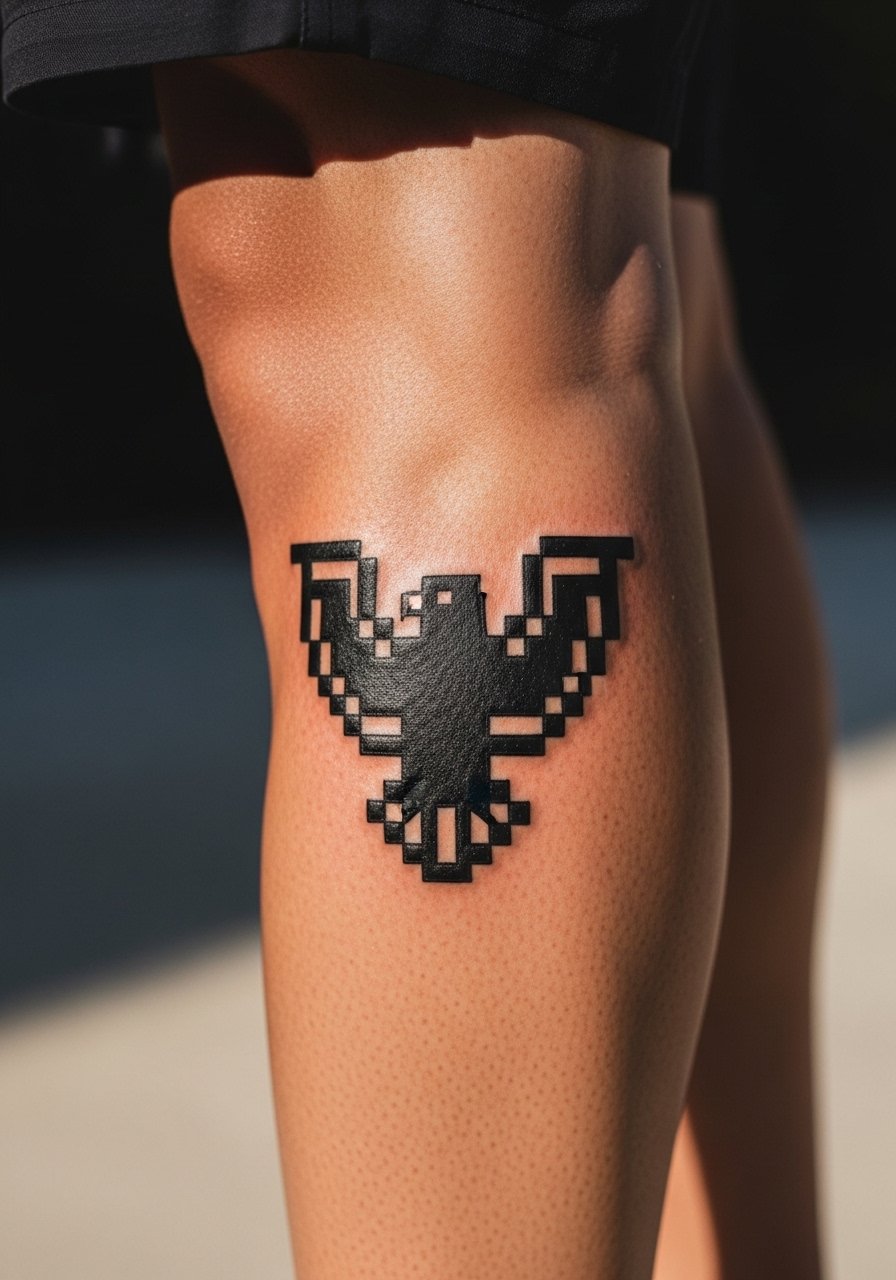
Pixelated ignorant work uses square blocks to read retro and graphic. Calf placement gives room for a two inch blocky eagle and it tolerates saturation well. The common mistake is over-detailing the pixels which defeats the aesthetic at small sizes. Ask for clear, chunky blocks and test the scale on your leg before the artist inks. Pain is mild and sessions are quick. For summer visibility, cuff shorts or wear rolled cuff joggers and simple sneakers.
8. Ornamental mandala eagle head at the nape
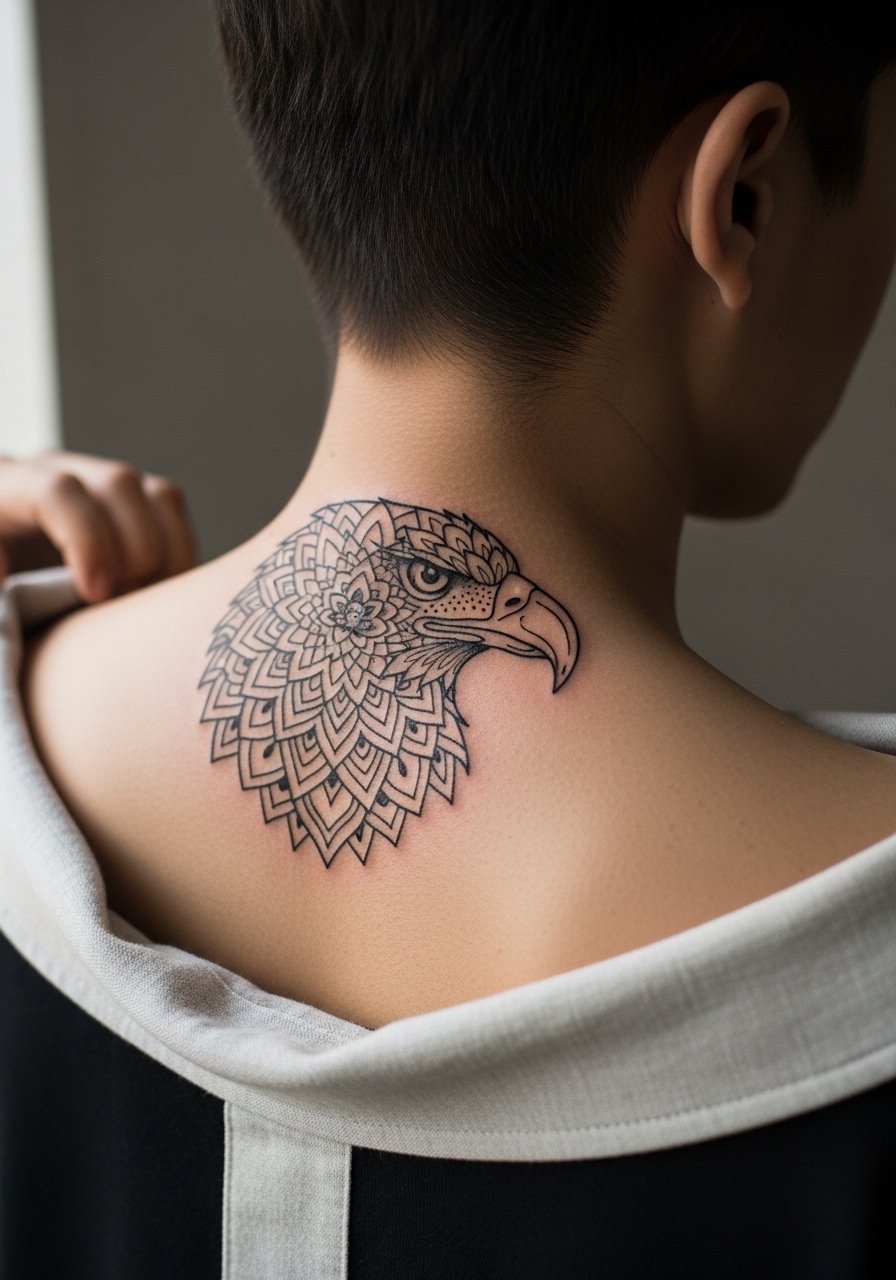
Ornamental mandala work in a 1.5 inch headpiece looks meditative from the back of the neck. Sensitive cultural origins apply, so consider slight pattern variations rather than copying sacred motifs exactly. The back of the neck can be visible with hair up, which is part of the appeal. Ask for fine line spacing and leave negative breathing room in dense areas to avoid future merging. Pain is moderate and sessions are short. A wide-neck shirt pulled aside during the session gives clear access, and a thin chain layered necklace complements photos.
9. Traditional American eagle clutch on the outer forearm

Traditional American flash reads well even when small because of bold lines and saturated color. Outer forearm placement handles motion well, but avoid cramming tiny script into the banner. Ask the artist to keep letter spacing open and to prioritize heavy outlines for longevity. The session is comfortable and usually one visit. For everyday wear, pair it with a fitted graphic tee with sleeves rolled or cut short to feature the piece.
10. Dotwork tiny eagle eye at the ankle
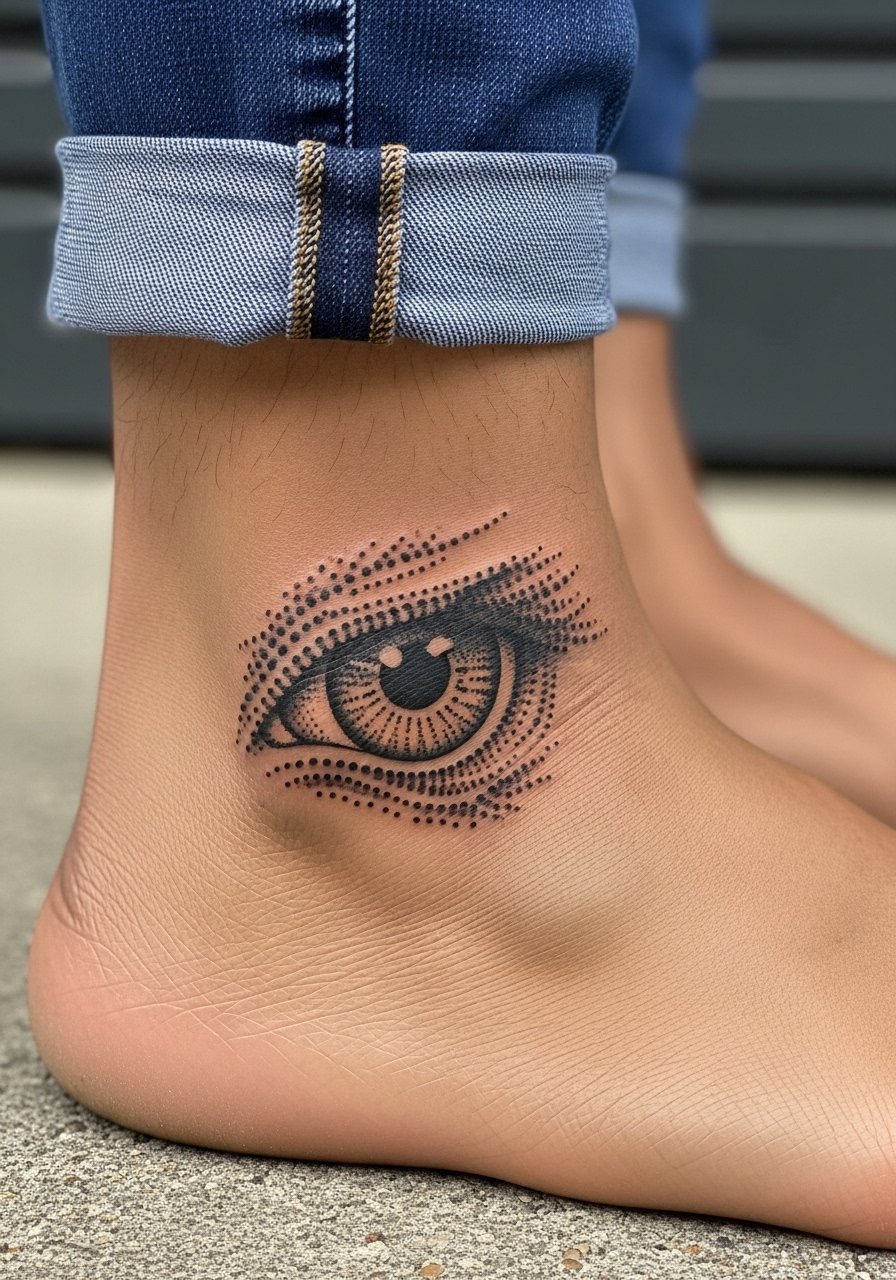
Dotwork rewards patience and time rather than bold lines. An ankle eye at one inch creates hypnotic texture but needs a patient hand to place consistent stippling. The mistake is compressing too many dots too small, which blurs into gray. For the session, wear loose joggers you can pull up easily so the artist has a relaxed leg position. Ankle tattoos face rubbing from socks and shoes, so expect a touch-up window at one year if you wear tight footwear.
11. Fine line eagle with olive branch on the inner bicep

The inner bicep hides well and is a good spot for storytelling pieces like an eagle with an olive branch. That secluded location reduces friction but raises a minor blowout risk if the artist goes too deep. During the consult, ask for gentle lineweight and modest spacing between branch leaves and feathers. Pain is moderate and sessions are approachable. For session comfort, wear a loose tank top so the artist can raise your arm with no fabric pulling.
12. Micro black and gray perched eagle on the wrist
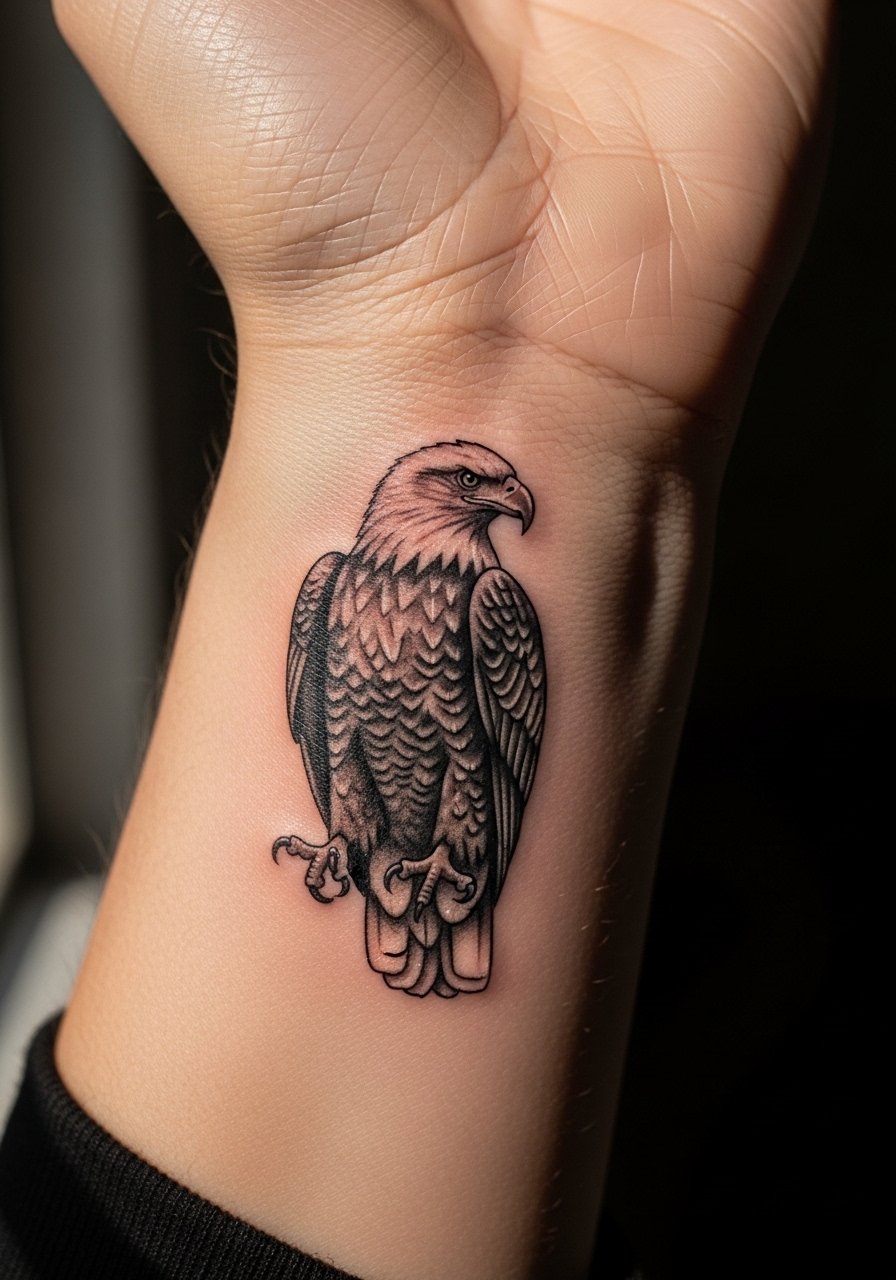
A tiny perched eagle uses shading more than linework to convey form, so it needs slightly more needle time than an outline. The wrist is high friction so ask for a balance of line and shading to keep the eye defined beyond the first year. Many people regret too-light contouring that disappears at two years. Expect mild discomfort and a one to two hour session. For showing the piece, a minimalist cuff bracelet can frame the art without crowding it.
13. Aztec-pattern eagle for cultural fusion on the thigh
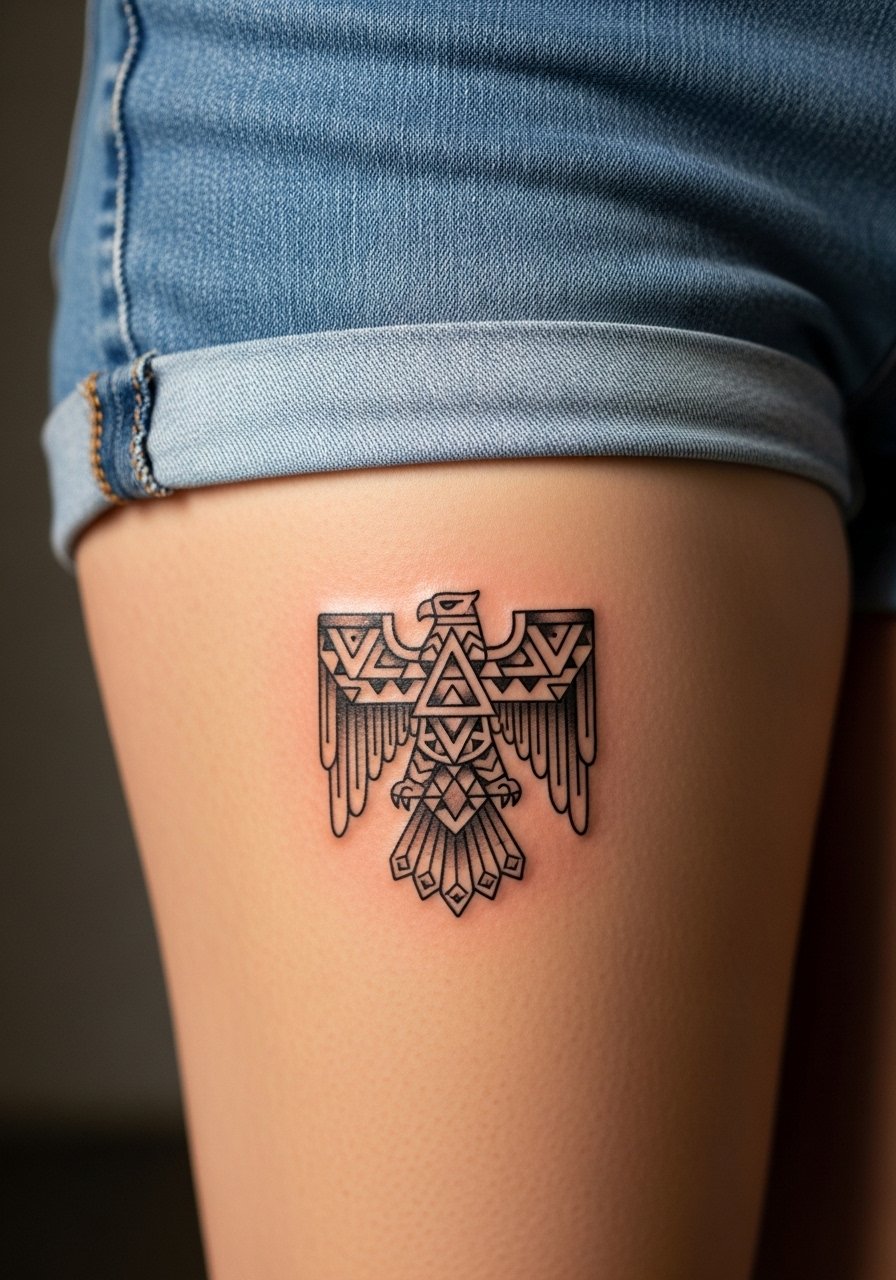
This fusion pulls traditional Aztec patterning into a small eagle motif. Cultural sensitivity matters, so consider subtle reinterpretation rather than exact religious symbols. The upper thigh tolerates detail and expands if you later want a larger piece. During the consult, explain which elements you want to honor and where you want artistic license. Pain is lower on the thigh compared with ribs and sessions are relaxed. Wear high-waisted jeans or shorts that you can adjust for access.
14. Pixel eagle with gaming motifs on the calf
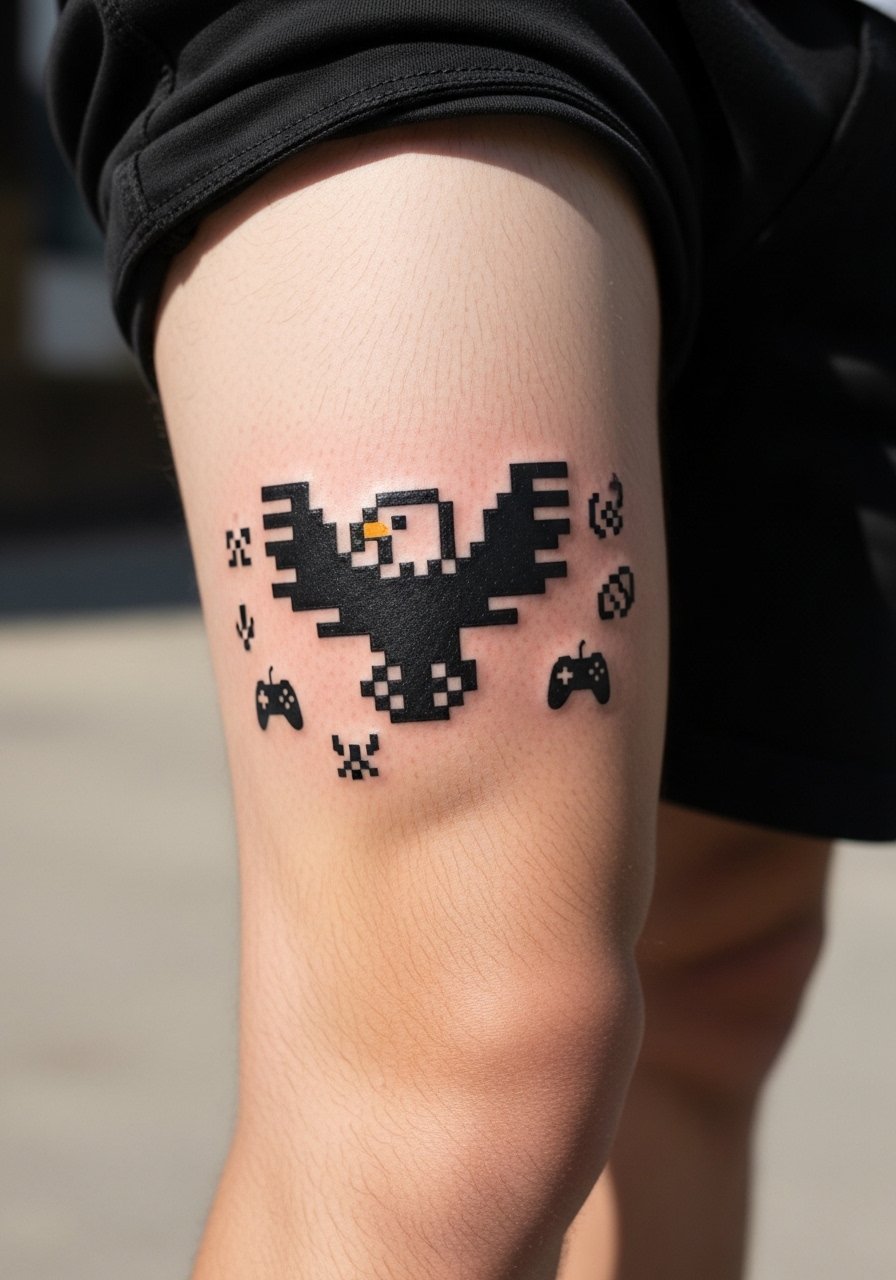
Pairing pixel eagles with gaming motifs creates a personal statement for players and designers. The calf gives two-inch scale room for readable pixels and small icons. The common mistake is adding too many tiny icons that vanish after healing. Tell your artist which motif should remain the focal point and keep surrounding glyphs sparse. Pain is low and sessions are brief. For casual display, cuff shorts and sandals work well and you can try strappy flat sandals for summer photos.
15. Ornamental mandala head with subtle shading on the back of neck
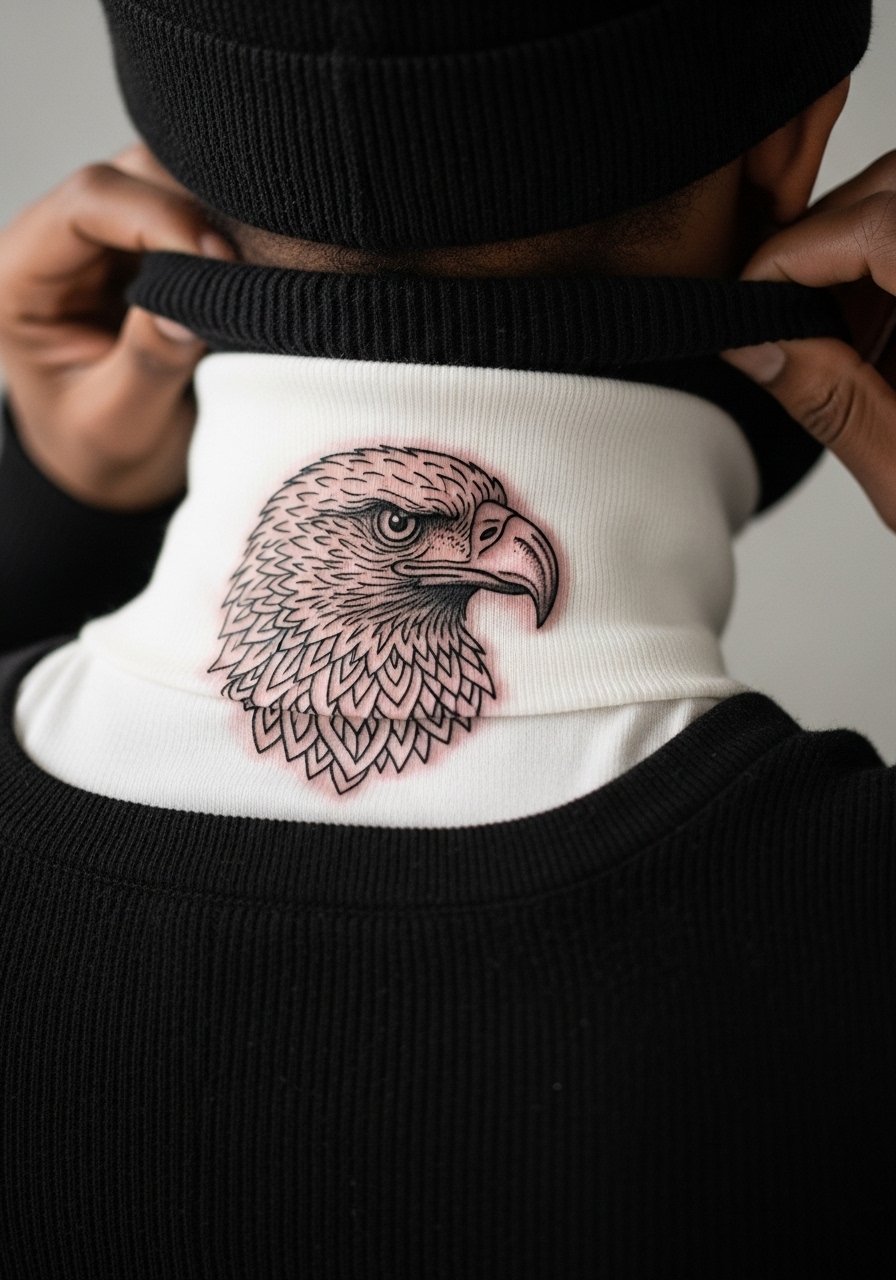
Back of neck ornaments are visible when hair is up and private when hair is down. That makes them a versatile placement. Dense mandala work needs breath between lines to avoid merging. Ask for deliberate negative space in dense petals, and plan touch-ups if you swim or wear tight collars often. Pain is moderate at the nape and sessions are usually short. Consider hair styling that shows the piece on occasion rather than daily exposure.
16. Tiny eagle silhouette on the finger
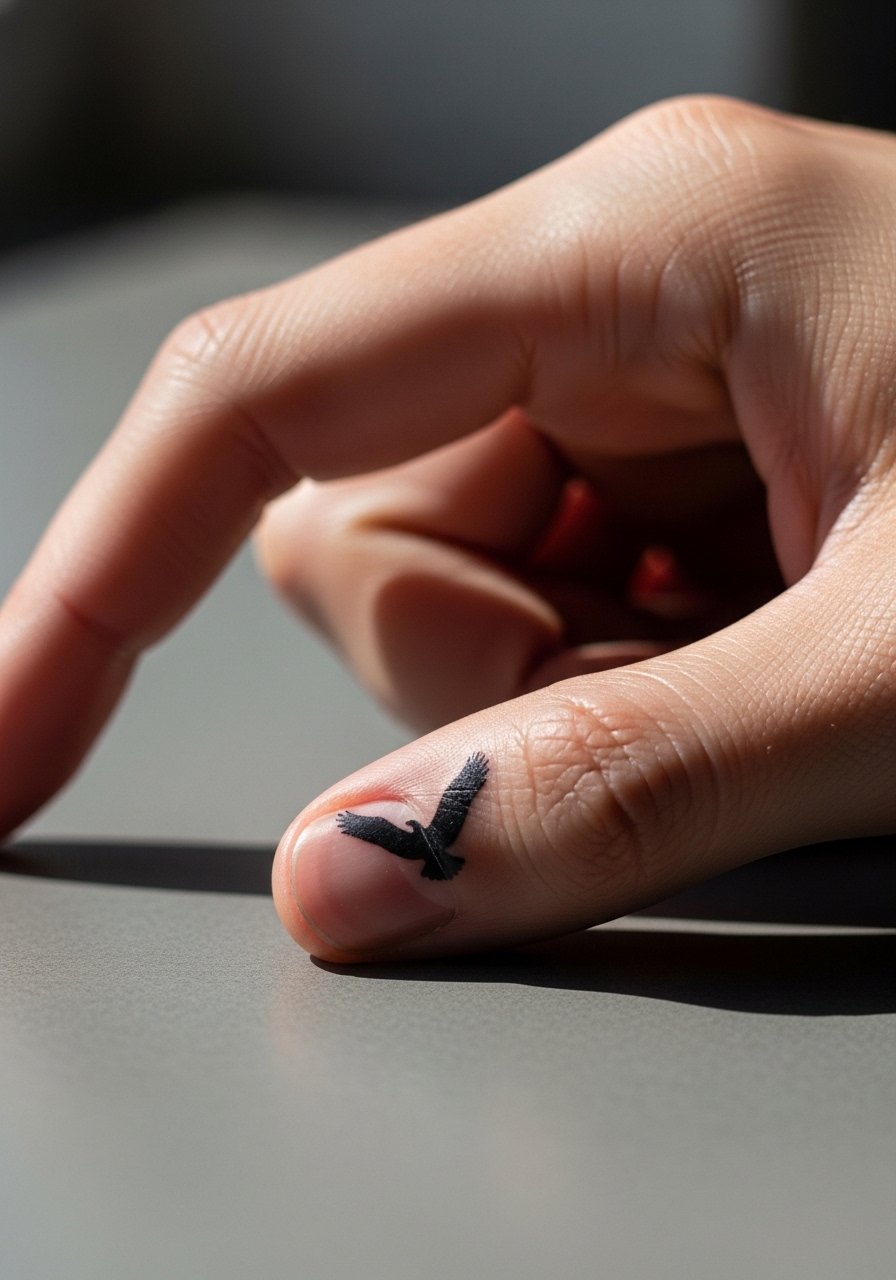
Finger tattoos are fast but they face the highest fade risk because of constant washing and movement. The key is scale and boldness. Ask the artist for a compact, slightly thicker silhouette so the shape reads after a year. Expect faster fading and a likely touch-up in 6 to 12 months. The session is quick and more painful than the forearm. Keep your hands moisturized and avoid heavy scrubbing while healing.
17. Compact stoic perched eagle on the wrist inner edge

Wrist inner edge placement sits between visibility and concealment. A perched pose with shading gives quiet strength without demanding a lot of space. The mistake is overcomplicating the legs and perch which read as noise small. Tell your artist you want the focus on the head and beak contrast. Pain is brief and sessions are short. For showing it off in everyday wear, a minimalist cuff bracelet keeps attention on the art.
18. Tiny eagle talon clutch on the ankle

Ankle talon motifs are small statements that tolerate seasonal hiding. The ankle rubs against socks, so avoid extremely thin lines. Ask for slightly bolder linework and modest spacing between talon and branch. Pain is brief but a bit sharp near bone. For photos, cuff your jeans or wear cuffed ankle jeans to highlight the tattoo and keep it out of messy footwear.
19. Geometric eagle silhouette with negative-space wings on the collarbone
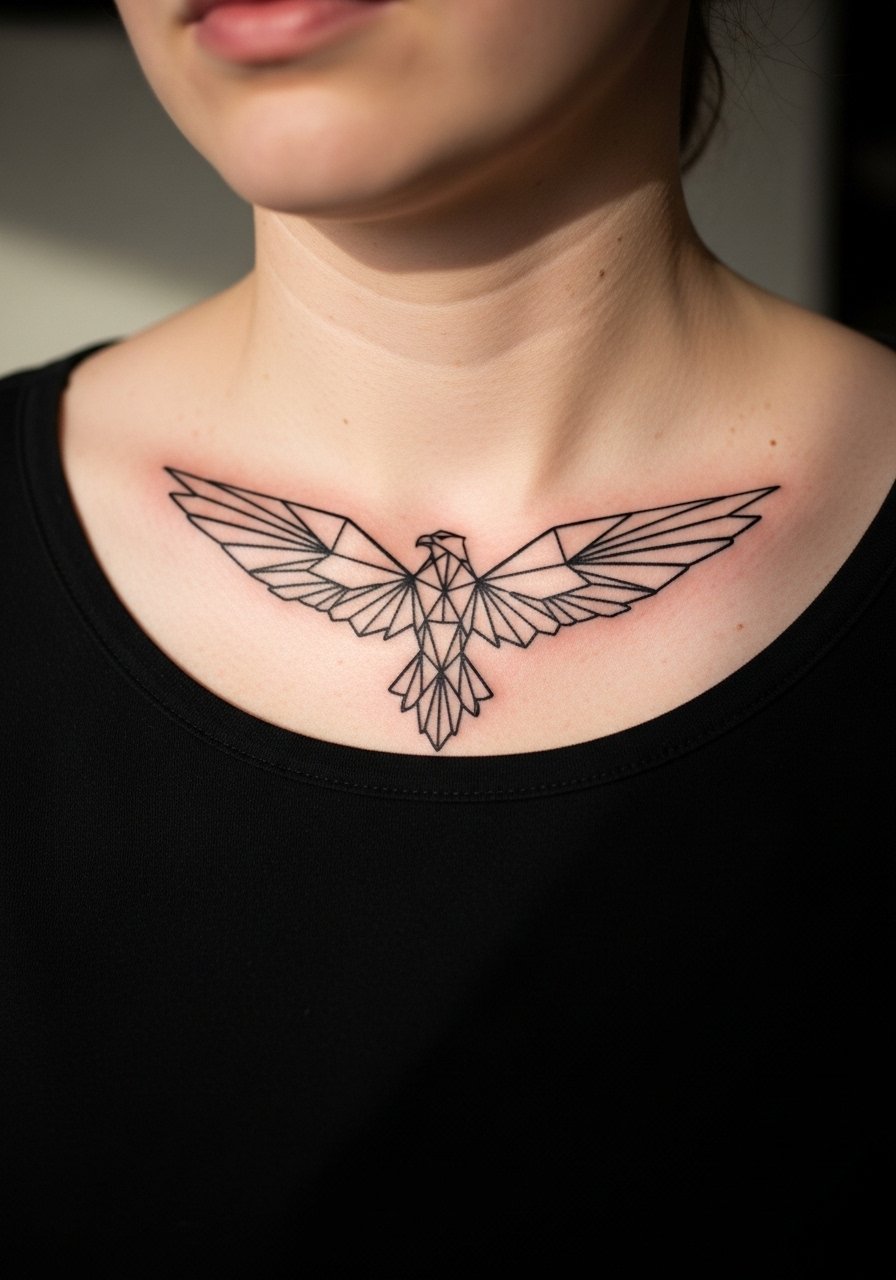
Negative-space geometry needs breathing room to avoid merging lines as it heals. This collarbone placement benefits from slightly increased scale over one inch. Ask for open wing shapes and avoid tiny interior hatching. Pain is moderate and sessions are quick. An off shoulder blouse frames the area for evenings out and keeps the silhouette visible.
20. Tiny memorial eagle with date script on the forearm
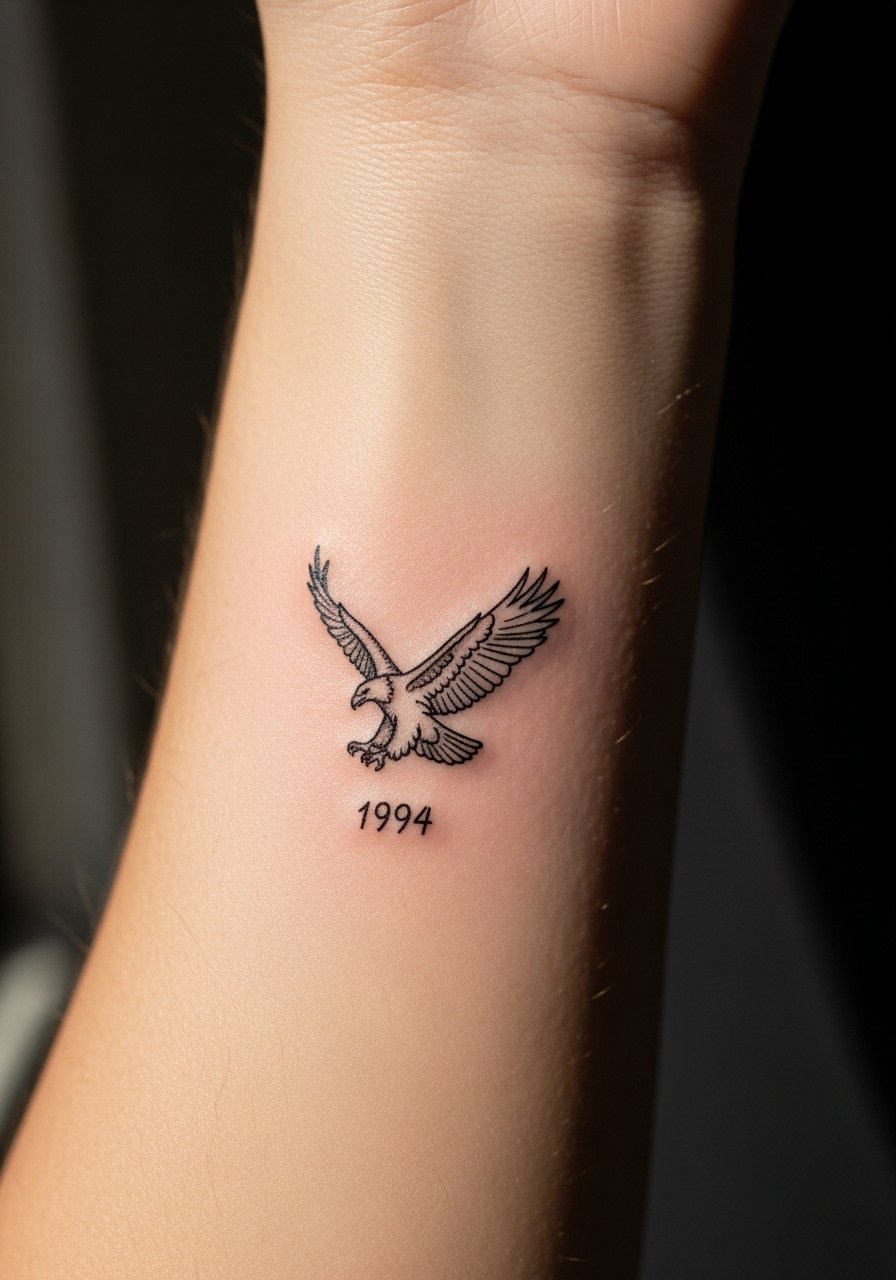
Memorial pieces ask for clarity in both symbol and date. The big mistake is tiny script that becomes illegible after healing. Ask the artist to space numerals and use a sturdy script style that holds at small scale. Forearm placement sees moderate sun, so plan sunscreen after healing. Sessions are comfortable and usually single-visit. For showing it off, roll sleeves of a cotton button up shirt so the memorial sits centerstage.
21. Small black eagle wing fragment on the rib edge
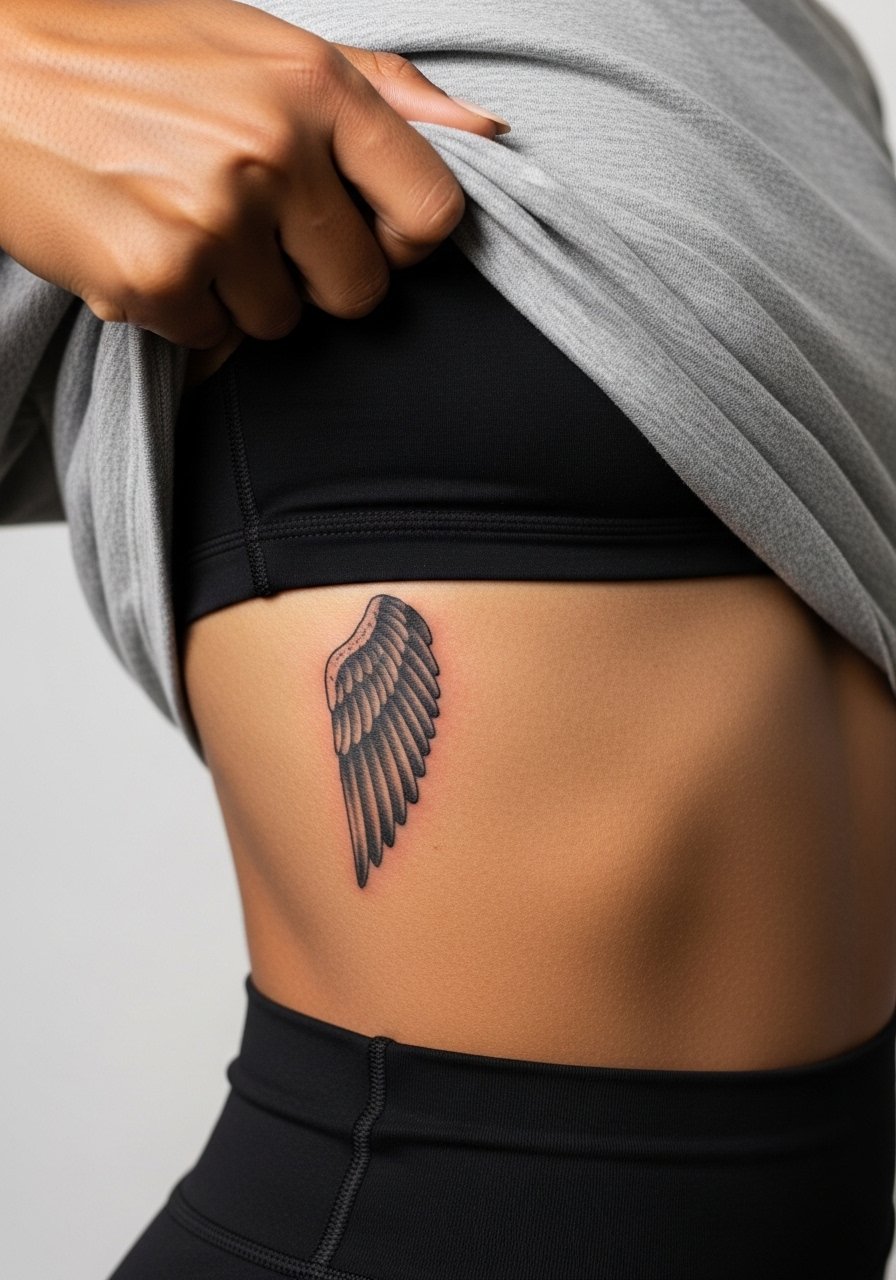
Rib edge placements look dramatic but demand tolerance for pain. A wing fragment can be a single session if scaled to an inch and inked with saturated black. Artists split on fine line on ribs. One camp says skin stretch and motion blur lines within two years. The other camp says careful depth and spacing let fine line settle fine on ribs. Ask your artist where they stand and expect a firmer outline if you want long-term readability. Wear a cropped top to the session for access.
22. Tiny ornamental headpiece behind the ear with hair-up reveal
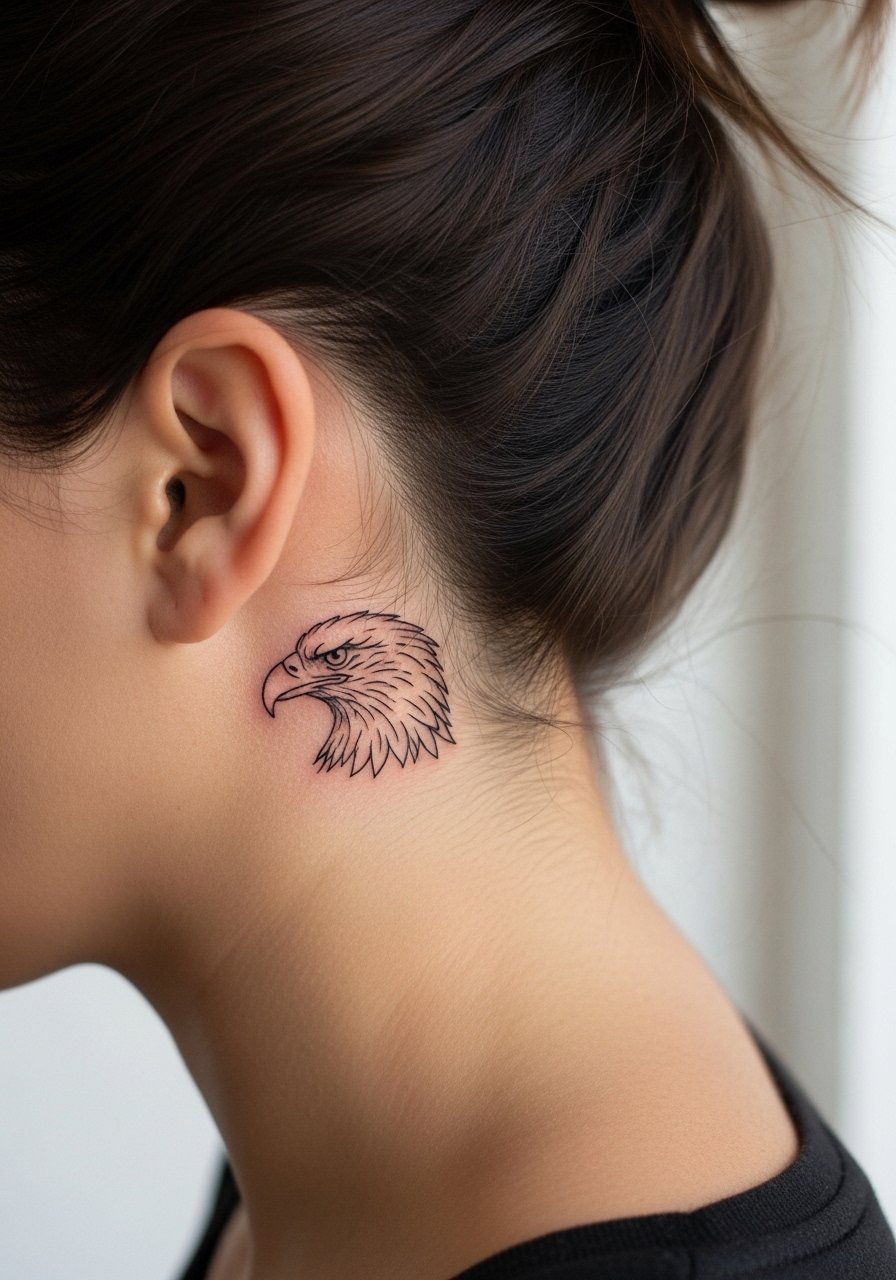
Behind-the-ear placements are intimate and only visible when hair is up. That makes them low commitment visually. The trick is working small but not microscopic, because tiny dots can get lost by year two. Ask for modest lineweight tailored to your hairline and be explicit about visibility. Pain is low but the area can sting. For session wear, pull hair up and plan to show the piece with a simple updo.
23. Tiny eagle clutching an olive branch on the inner bicep with pacifist twist

Pairing an eagle with an olive branch flips the aggressive stereotype into a pacifist statement. That storytelling nuance benefits from careful composition so both elements read. A common mistake is squeezing the branch into tight negative space which loses its meaning after healing. Discuss the narrative priority in consultation so the branch does not become a line tangle. Pain is moderate on the inner bicep and sessions are doable in one visit. For the appointment, a loose tank top gives the artist unimpeded access.
24. Tiny ornamental mandala eagle eye on the ankle

Combining mandala framing around an eagle eye makes a tiny talisman on the ankle. The stencil must be precise so dots and loops stay distinct after movement and shoe friction. Ask the artist to prioritize outer ring spacing and avoid interior micro-loops. Pain is brief and the session is short. For summer wear, try strappy flat sandals to show the piece cleanly.
25. Tiny bald eagle profile with geometric accents on the outer forearm
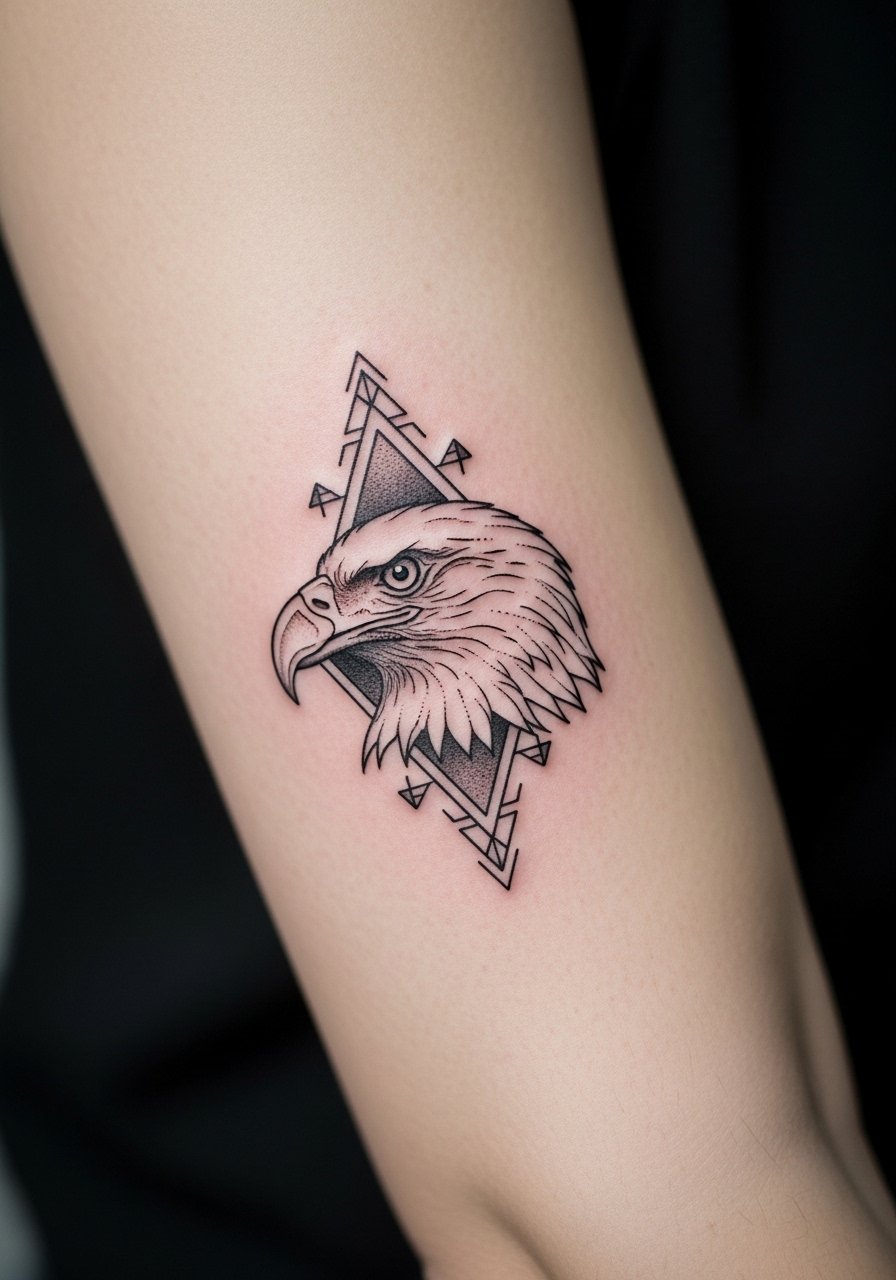
Forearm profiles let you mix micro-realism and geometry into a compact combo. The common mistake is over-layering textures which creates visual noise when small. Ask for a clear focal point, usually the eye or beak, and let geometry act as framing. Sessions are comfortable and usually done in one appointment. Pair the piece with a rolled sleeve muscle tee or a fitted graphic tee to show the profile horizontally along the arm.
26. Tiny sternum eagle with thin script below

Sternum pieces need careful framing because they sit close to clothing lines and experience stretching. A thin script below can become illegible if placed too small. Choose a sturdy script style with clear spacing. The area is sensitive so numbing and short breaks help. For the session wear a fitted sports bra to allow the artist clean access without exposure. Expect a single session and plan for touch-up if you change weight significantly.
27. Tiny blackwork wing fragment behind the ear and neck junction

A small blackwork fragment at the neck junction reads like an accent when hair is up. Keep the fragment compact and heavy enough to resist early blurring. The area can be visible during professional interactions, so consider how often you want it seen. Pain is mild and sessions are short. Pull hair up for the appointment and ask the artist about negative space so the piece keeps its wing-like motion as it heals.
Frequently Asked Questions
Q: Will fine line wrist pieces fade faster than blackwork?
A: From what I have seen, fine line pieces often soften sooner than packed blackwork because the ink sits in fewer needle channels. Placement and sun exposure matter a lot. If longevity is your priority, ask for slightly heavier lineweight or small touches of contrast, and plan a touch-up at around year two.
Q: How should I choose between micro-realism on the forearm and neo-traditional on the shoulder blade?
A: Pick micro-realism if you want photographic detail that reads up close and you accept subtle softening over time. Choose neo-traditional if you prefer bold outlines and color that keep their silhouette longer. Consider how visible you want the piece daily and what pain level you prefer for the session.
Q: Does skin tone affect which tiny eagle techniques will show well?
A: Yes. On medium and dark tones, designs with contrast and modest saturation tend to show better than ultra-fine single-needle lines. Ask to see healed portfolios on skin tones similar to yours and request slightly heavier outlines or contrast where needed. A touch-up plan helps keep visibility consistent.
Q: Are ribs and sternum worth the extra pain for a watercolor eagle?
A: It depends on tolerance and aesthetic priorities. Ribs and sternum give dramatic placement, but watercolor fades faster in those areas because of movement and sun exposure. If you want watercolor there, ask for an anchor of black or darker contrast so the composition keeps shape as pigments soften.
Q: How do I budget for a tiny eagle when prices seem higher than before?
A: Smaller tattoos still require studio time, stencil prep, and hygiene that justify a baseline budget. If cost is an issue, look for guest spots by up-and-coming artists or apprentices who work under senior artists. Expect to plan for touch-ups in the first one to two years as part of the cost of keeping a tiny piece looking crisp.