The boldest back pieces I see now pair oversized blackwork with clean negative space so the knotwork actually reads after a year of gym sessions or weight change, not just the day it goes fresh. Trends push tiny runes on the spine and watercolor trees across the shoulders, but the designs that age best start with line weight choices and placement that respect how your back moves. Below are 17 back-specific Viking designs and what to ask your artist so the piece still looks sharp years from now.
1. Full Back Raven Panel with Knotwork Borders

I recommend this when you want a narrative piece that reads from a distance, not just Instagram close-ups. Tell your artist you want heavy linework for the knot borders and layered stipple shading for depth rather than dense gray fills that can blur after weight changes. Expect multi-session work and fairly high pain across the lumbar and shoulders, but the sessions are largely surface shading and linework rather than deep dot work. Common mistake is packing the knotwork too small. Ask for wider weaves and clear separations so the knot still looks crisp at two and five years healed. For the appointment wear a loose tank top the artist can pull aside without tugging.
2. Yggdrasil World Tree Spanning Shoulders to Waist
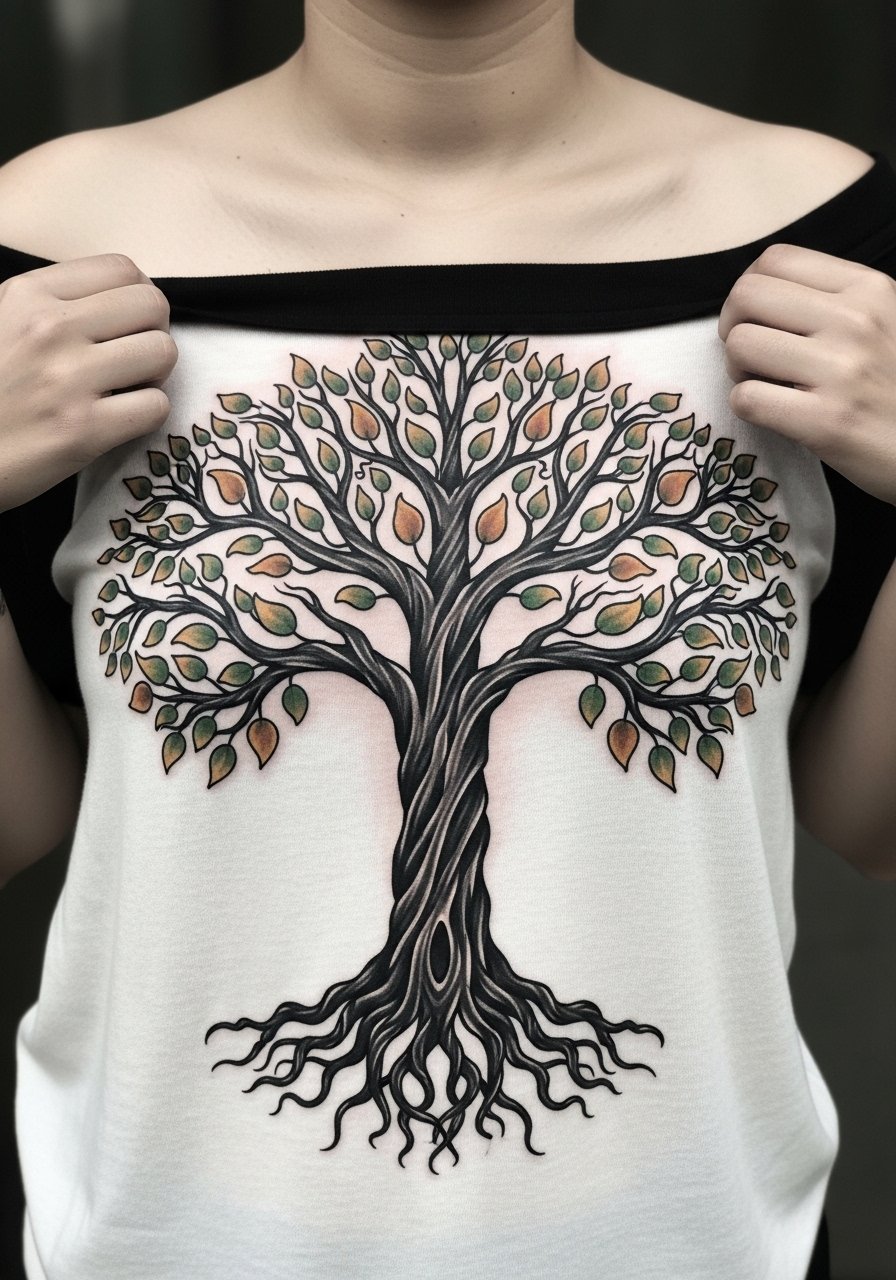
Most people pick this when they want something that grows with them, visually and literally. In consultation mention a centered trunk with root shapes that follow the spine curve so the tree moves with your body's contours. This style ages well if outlines are slightly bolder at trunk junctions and color patches have strong edges. The common failure is watercolor-style leaf patches placed without containment, which feather into indistinct smudges after repetitive sun exposure. Sessions can be long because of vertical coverage but breaks every 45 to 60 minutes make a big difference. To show it off, pair with off-shoulder tees in olive or navy.
3. Mjolnir Across the Upper Back with Runes and Lightning
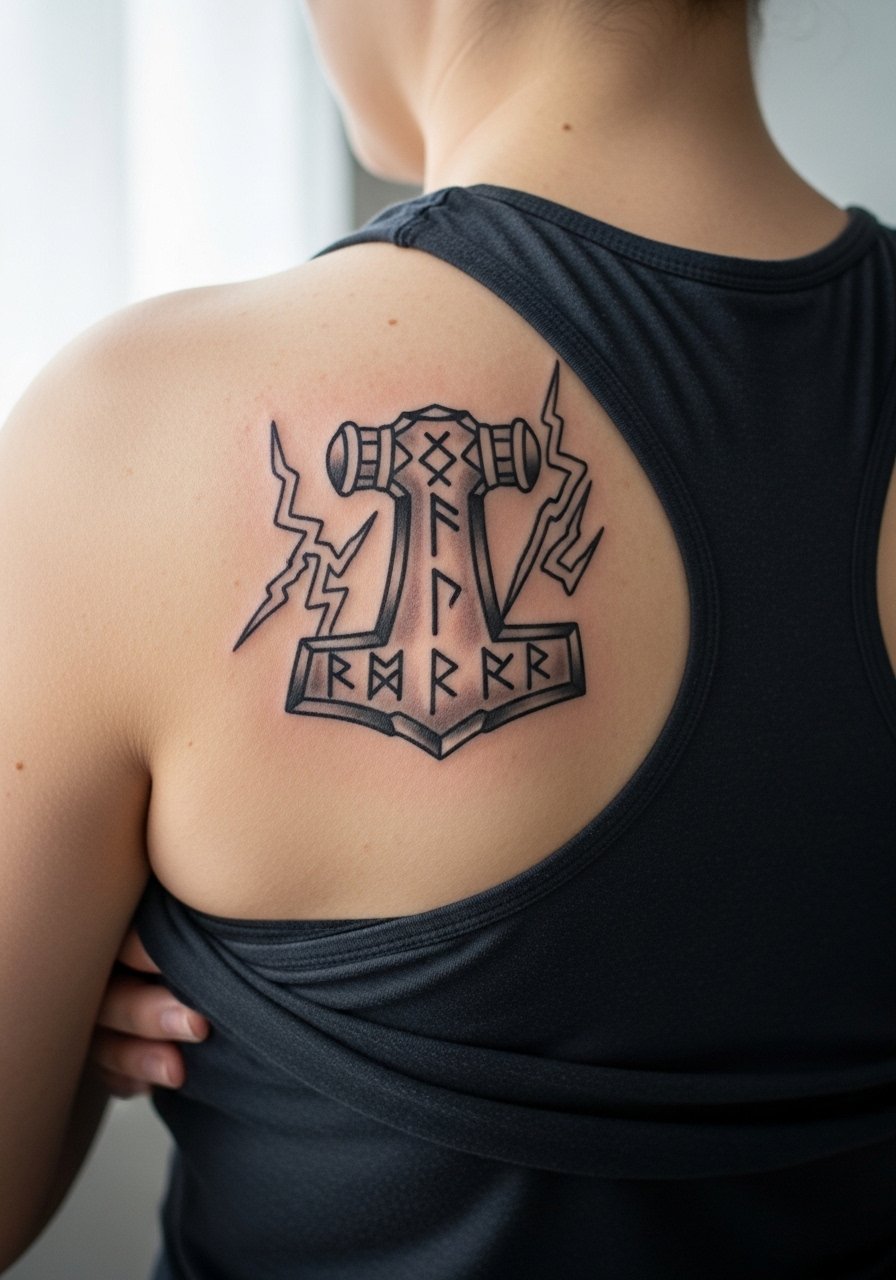
This classic hammer design works when you want a compact, bold emblem rather than a sprawling scene. Tell your artist you want thicker outer linework and internal hatch shading so the hammer keeps its silhouette as body size shifts. The upper back tolerates more fill, but avoid tiny runes within the hammer face if you want them legible after two years. Pain is manageable on the shoulder blades, but expect sore trapezius spots if sessions run long. For session comfort wear a racerback tank or strapless top for clean access.
4. Lower Back Valknut Triangle in Fine Line
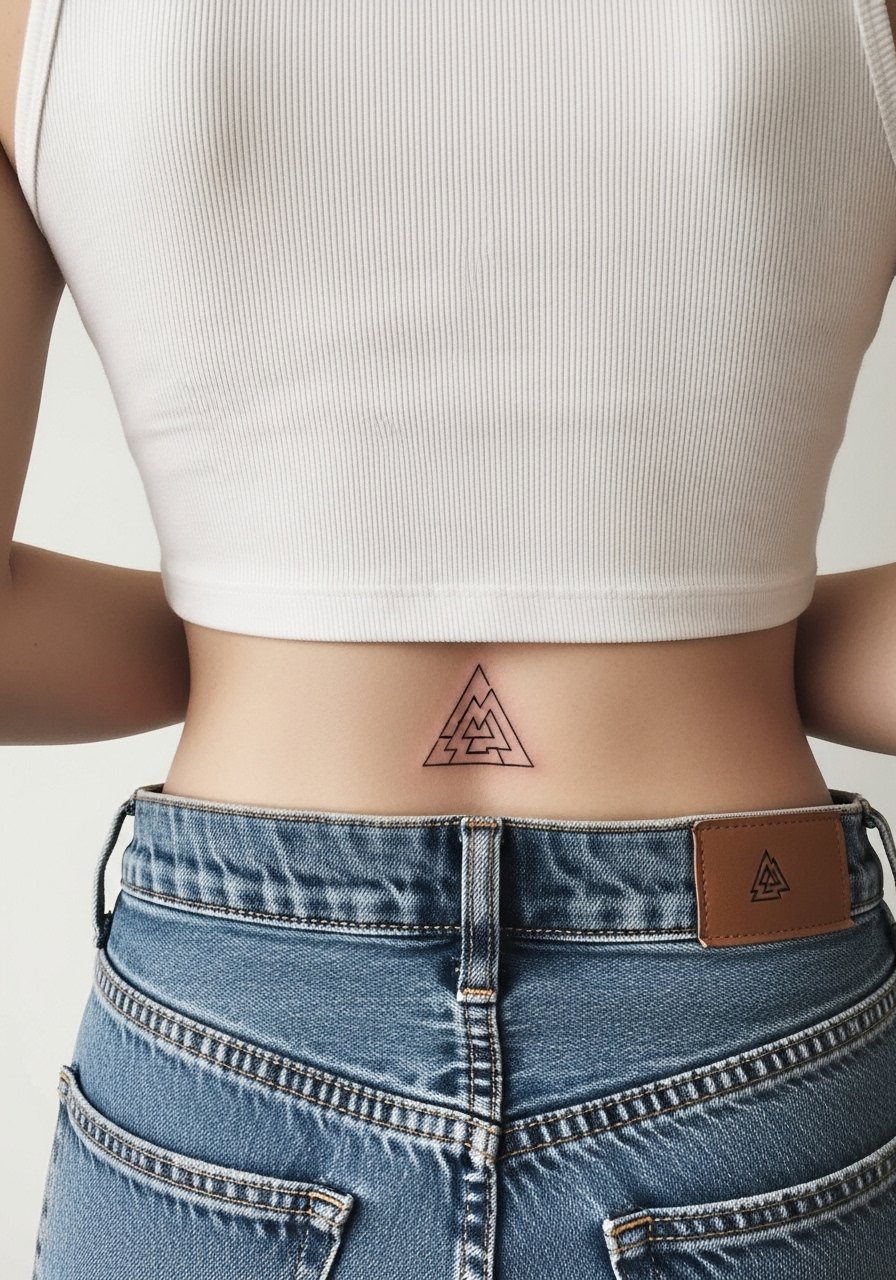
Fine line fans love this subtle placement, but artists split on how it ages. One camp says fine line runes and tight triangles blur on the lower back within a couple of years. The other camp argues that with slightly increased needle depth and spacing the lines can hold for longer. When you bring this up, ask which approach your artist takes and to show healed examples on similar skin texture. Common mistake is making the Valknut too small for lumbar movement. Session is short and the pain is low, but remember lower back skin shifts with weight changes. For nights out consider low back cutout dresses to reveal the symbol without covering it.
5. Viking Longship Silhouette with Rolling Waves
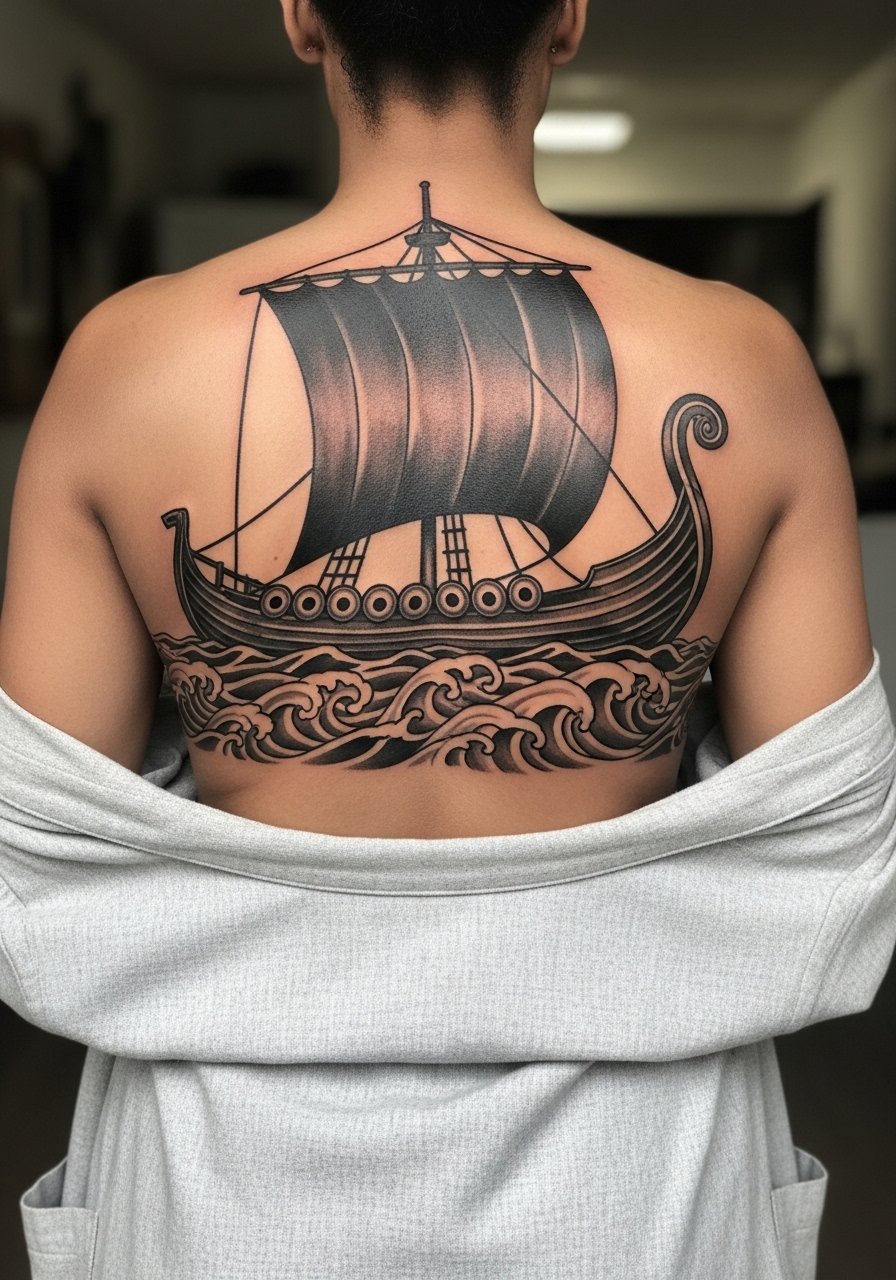
This horizontal wrap is for people who want movement across the entire back. During the consult, map the horizon line to your hip bones so the ship reads as if it is sailing off a natural curve. Big mistake is compressing the ship into too tight a band which loses mast detail after healing. Expect long sessions with alternating linework and block fill. Blowout risk is low when lines are set with consistent depth, but heavy black fills can feel intense on the dermis so schedule shorter blocks if you are sensitive. For session day, a loose button-down shirt that opens fully makes life easier.
6. Fenrir Wolf Biting Chains Across Shoulder Blades
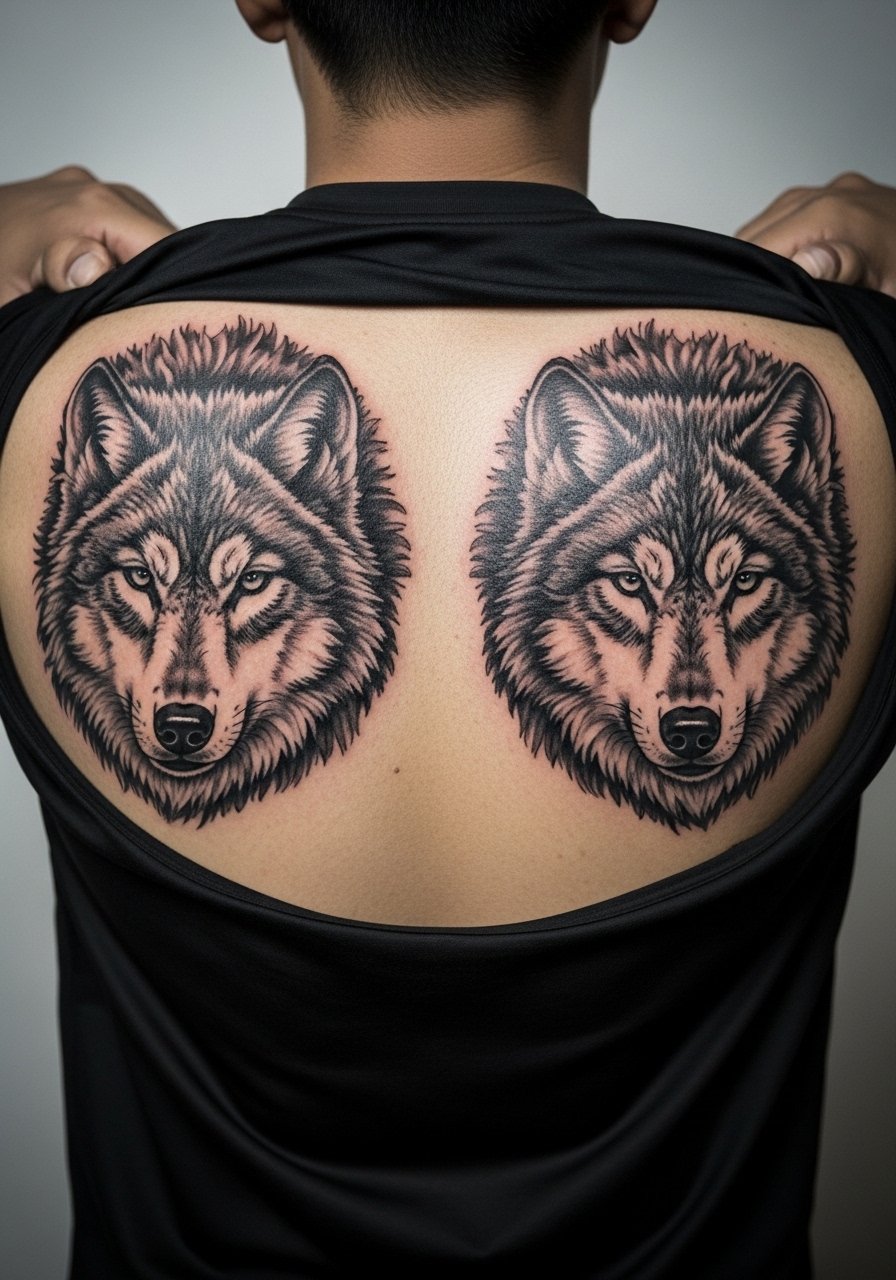
People pick a Fenrir spread when they want raw energy tied into a back narrative without filling the entire canvas. Tell the artist you want micro-realism for the snout and harsher stipple for shadow so the teeth maintain contrast. Common mistakes are over-detailing the fur in tiny strokes that merge with movement. Sessions feel punchy on the scapula ridge and can require 3 to 5 appointments for full fidelity. For after sessions and events, an off-shoulder tee in rust or navy frames the wolf without crowding.
Studio Day Picks
These prep and healing options help with the full-back and shoulder work in ideas 1 through 6, where large fills, long sessions, and sweat-prone zones are the main concerns.
-
Lush Charity Pot lotion. A lighter winter alternative to heavy balms, users say it keeps large back pieces moisturized without leaving a greasy sheen that rubs on clothing.
-
Hada Labo Gokujyun lotion. A thin hyaluronic layer that helps prevent hard crust formation across big back canvases, useful during multi-day sessions when you want even healing.
-
Inked Up matte balm. Favored by athletes for a non-shiny finish that reduces rubbing under gym gear while preserving color.
-
SkinQuil non-occlusive spray. Spray application makes reaching mid-back zones easier and many users report less itching in the first week.
-
Fragrance-free CeraVe healing ointment. Thin enough for sweaty backs during the first 72 hours and less likely to trap buildup compared with heavier petroleum gels.
7. Vegvisir Compass Rune Mandala on Mid-Back
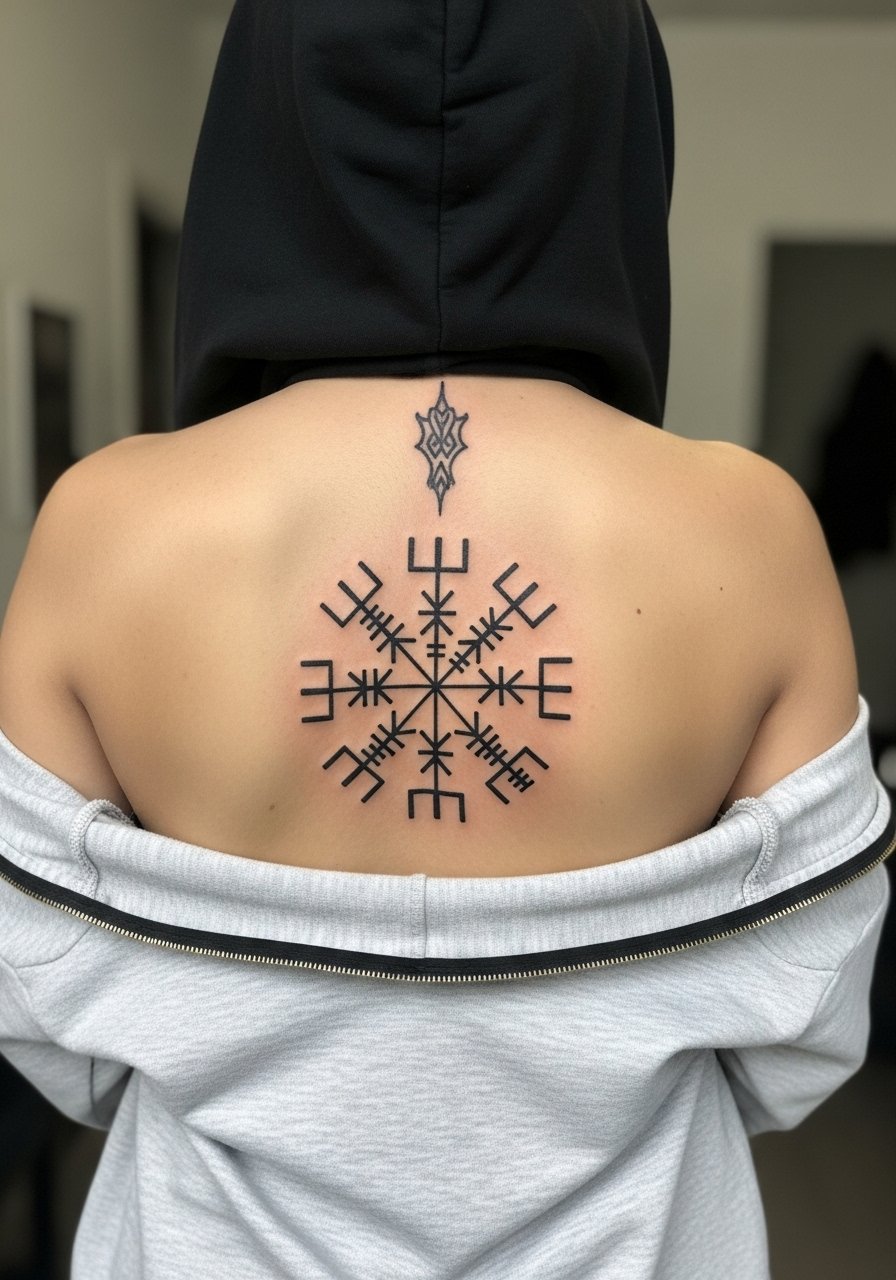
This radial compass is ideal when you want symmetry aligned with the spine. In consultation, emphasize dot work spacing so the mandala keeps circular clarity instead of turning into a gray disk at two years. The mid-back is forgiving for stipple shading, but dot density matters for longevity. Sessions are moderate in length and feel like repeated light taps along the spine. Consider pairing with a sheer mesh long sleeve layered over a tank to showcase the mandala at events without exposing a large area.
8. Odin Portrait with Huginn and Muninn Overlooking the Back
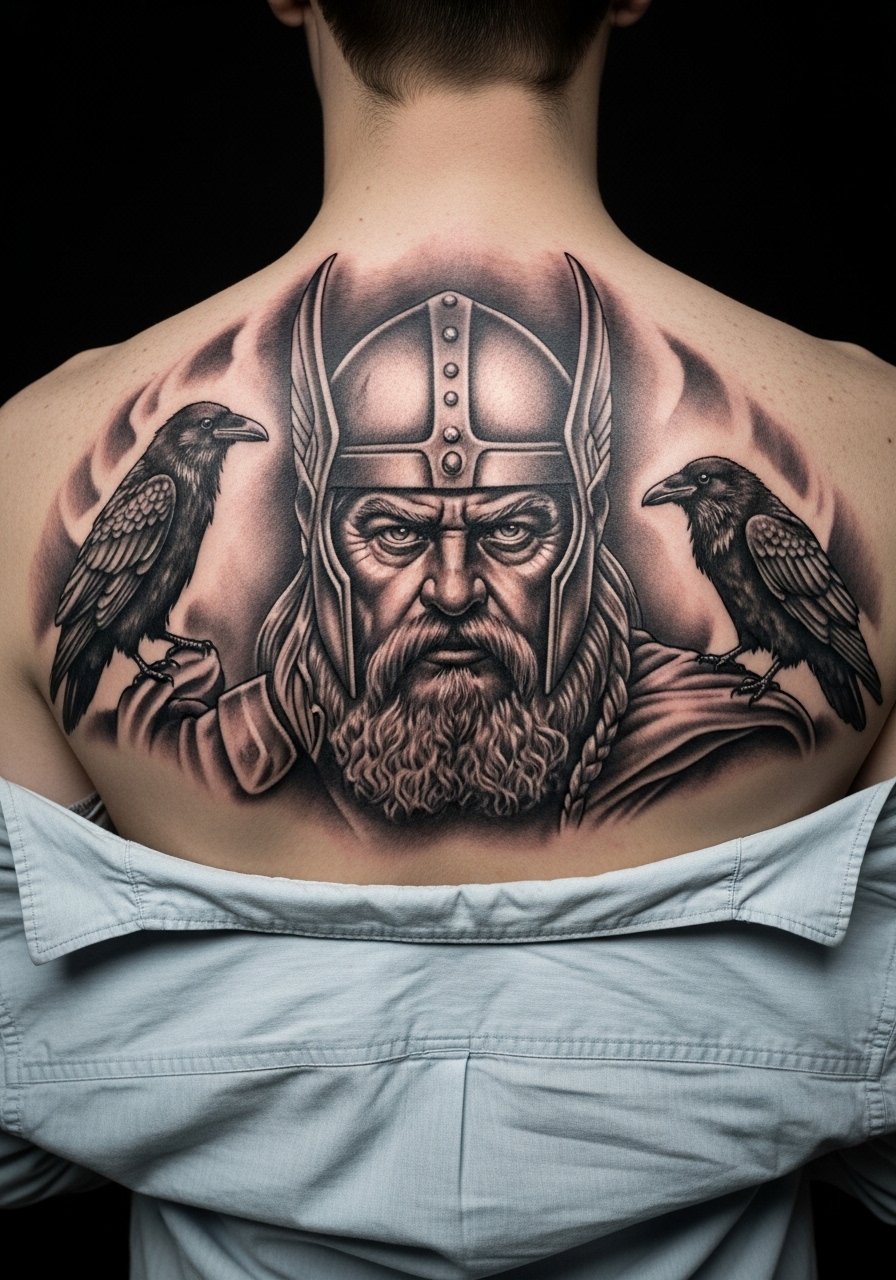
Portrait-style deity work reads strongest when scaled to shoulder width. Tell the artist you want high-contrast focal points such as the eyes and raven beaks so the face still looks defined after two years. A common error is over-blending midtones which softens facial planes over time. Sessions are heavy on shading and can be emotionally intense as the skin tightens during each pass. For the session wear an open button-down shirt that you can move without disturbing the stencil.
9. Jormungandr Coiling Down the Spine to Lower Back
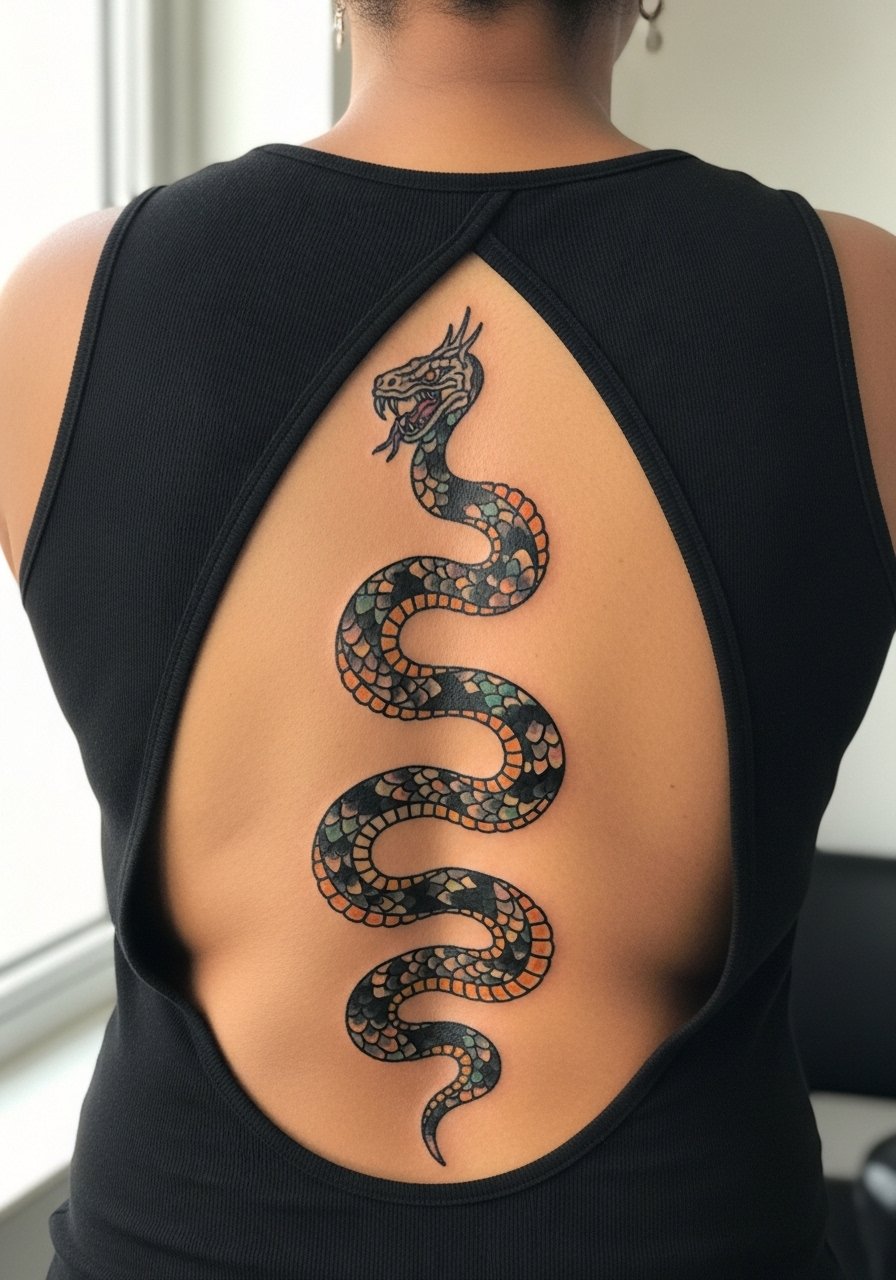
Vertical flow pieces like this work best when the coil follows natural spine curvature. Tell your artist to plan for scale edges that overlap slightly so the coils maintain separation after healing. Pain peaks along the spinous processes, so consider numbing for marathon sessions. A common mistake is compressing the serpent length to fit a smaller canvas which loses motion. For showing off, pair with a spine-slit tank or low-back dresses to let the coil breathe.
10. Helm of Awe (Aegishjalmur) Radiant Upper Back Symbol
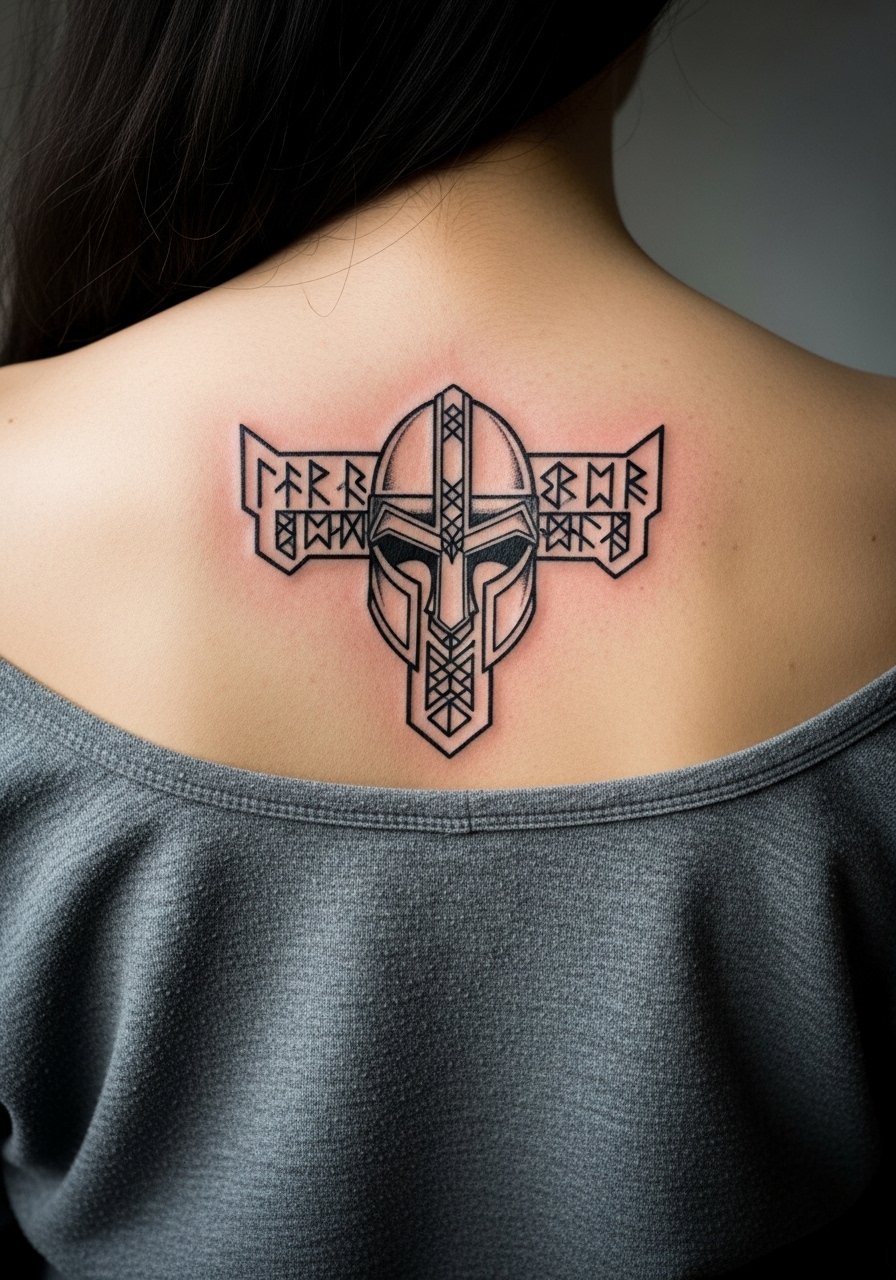
Compact geometric symbols read well when centered between the shoulders. Ask for decisive line weight and filled negative space so the radial arms retain their angle even as skin ages. The trapezius area is moderately sensitive, but sessions are short. The big debate here mirrors the fine line controversy. One camp prefers thin precise lines for elegance. Another camp favors thicker lines to guarantee clarity. Decide which you prefer and ask for healed photos on comparable skin tones.
11. Berserker Bear Warrior Full Back Scene
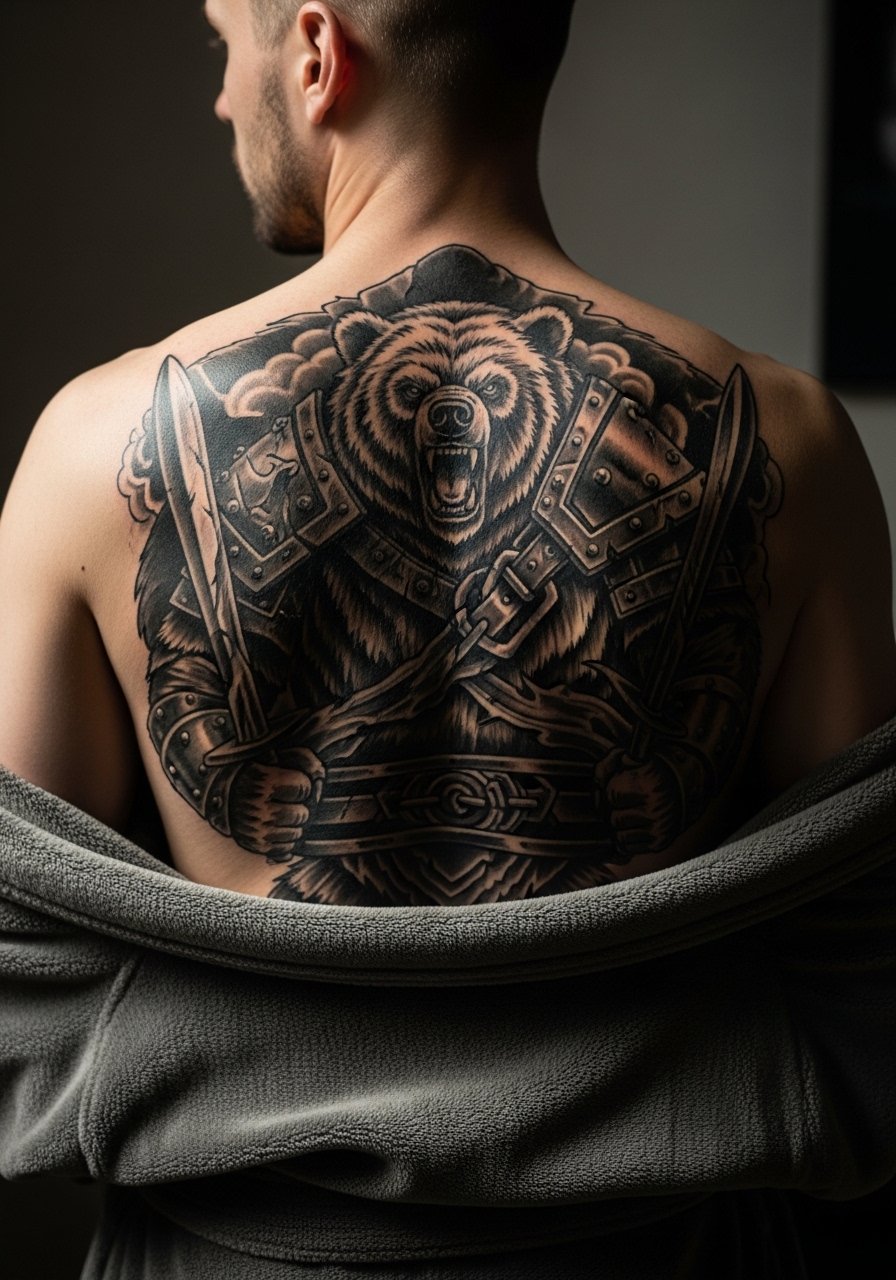
Choose this if you want a cinematic back piece that tells a story. In consultation, plan scene flow so the focal points rest on shoulder blades and the lower back, giving the eye places to land. Common mistake is overcrowding secondary elements which read as noise after healing. This is marathon work with high saturation sessions and higher pain on lower back fills. Expect maintenance touch-ups in years where big black fills can thin on moving areas.
12. Rune Chain Ladder Down the Spine for Life Events
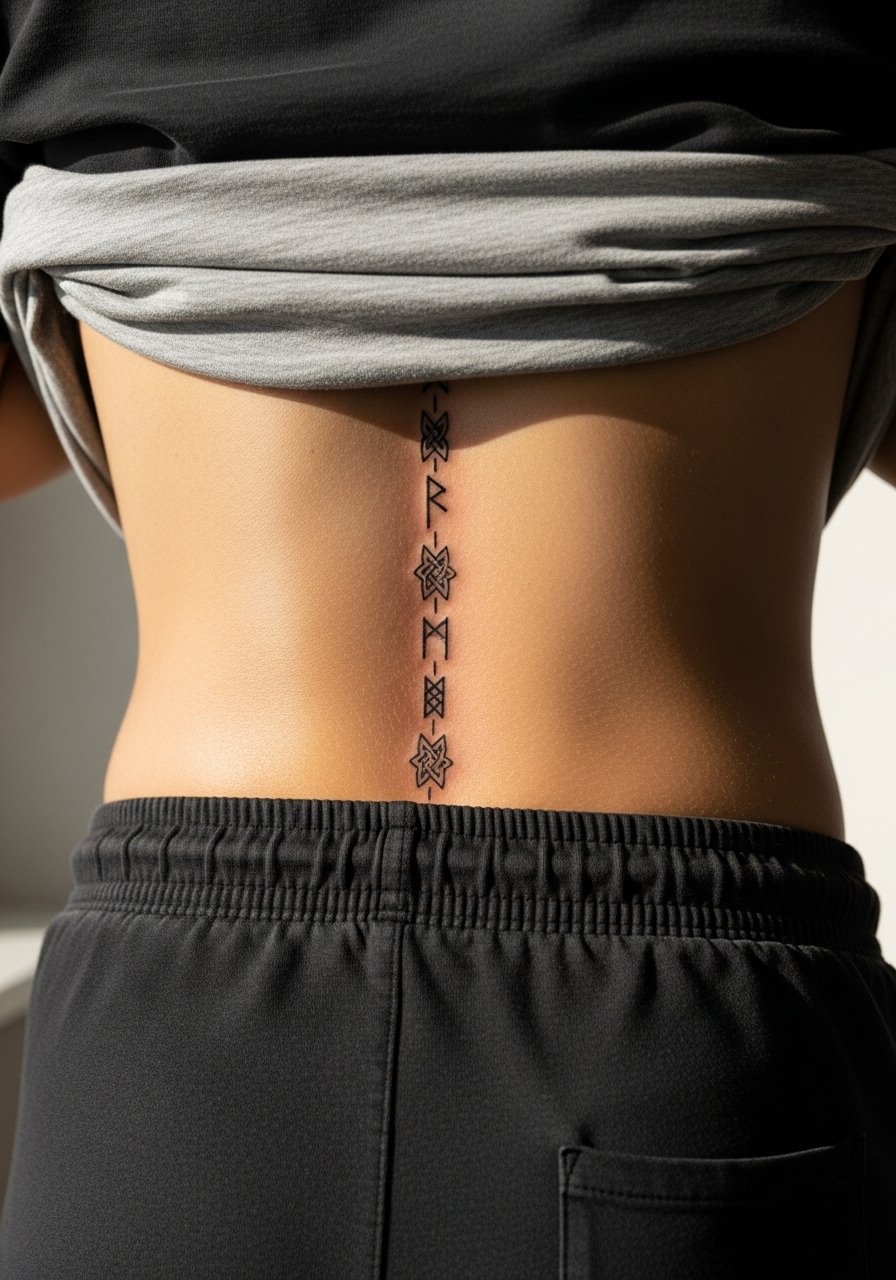
This elongated script-style design is popular for personalized timelines. Tell your artist which runes are for which event and request spacing that allows for future additions. The spine is highly sensitive and pain can be sharp between sessions. The key mistake is making the chain too dense with small runes which can blur into a line. Expect touch-ups at year three for finer elements. For the appointment wear drawstring gym shorts and a loose tee so the artist can access the lower spine without constriction.
13. Freya Falcon Cloak Feathers Across the Back
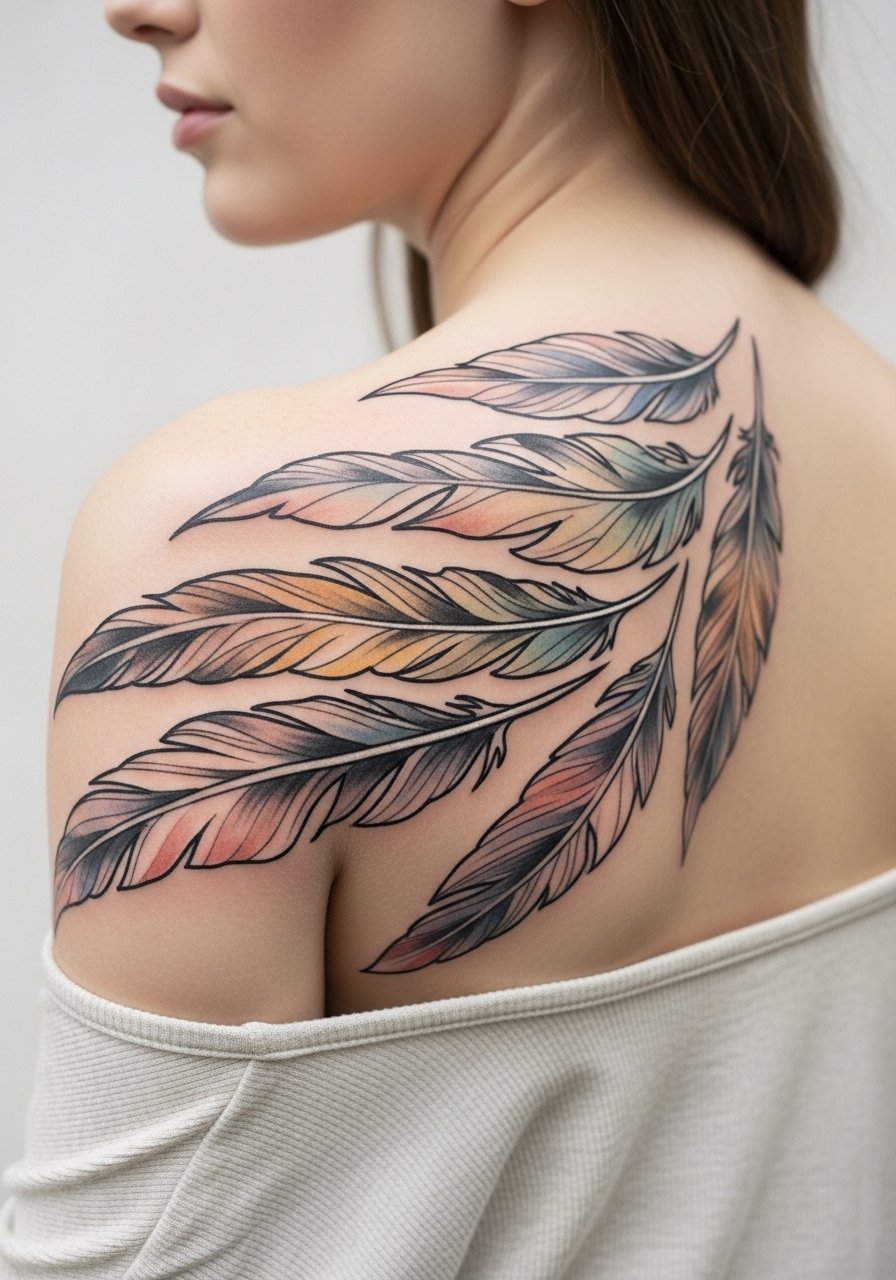
Feather cloak concepts suit people who want feminine motion and wing-like framing. Ask for bold outlines at feather roots to lock in shape and use color only as accent rather than full bleed. Watercolor-style wings can fade faster if applied with low saturation. Sessions are mid-length and shading around the shoulder blades can sting. For events try an off-shoulder top to show the wings without exposing a large torso area.
14. Knotwork That Maps Around Scoliosis Curves
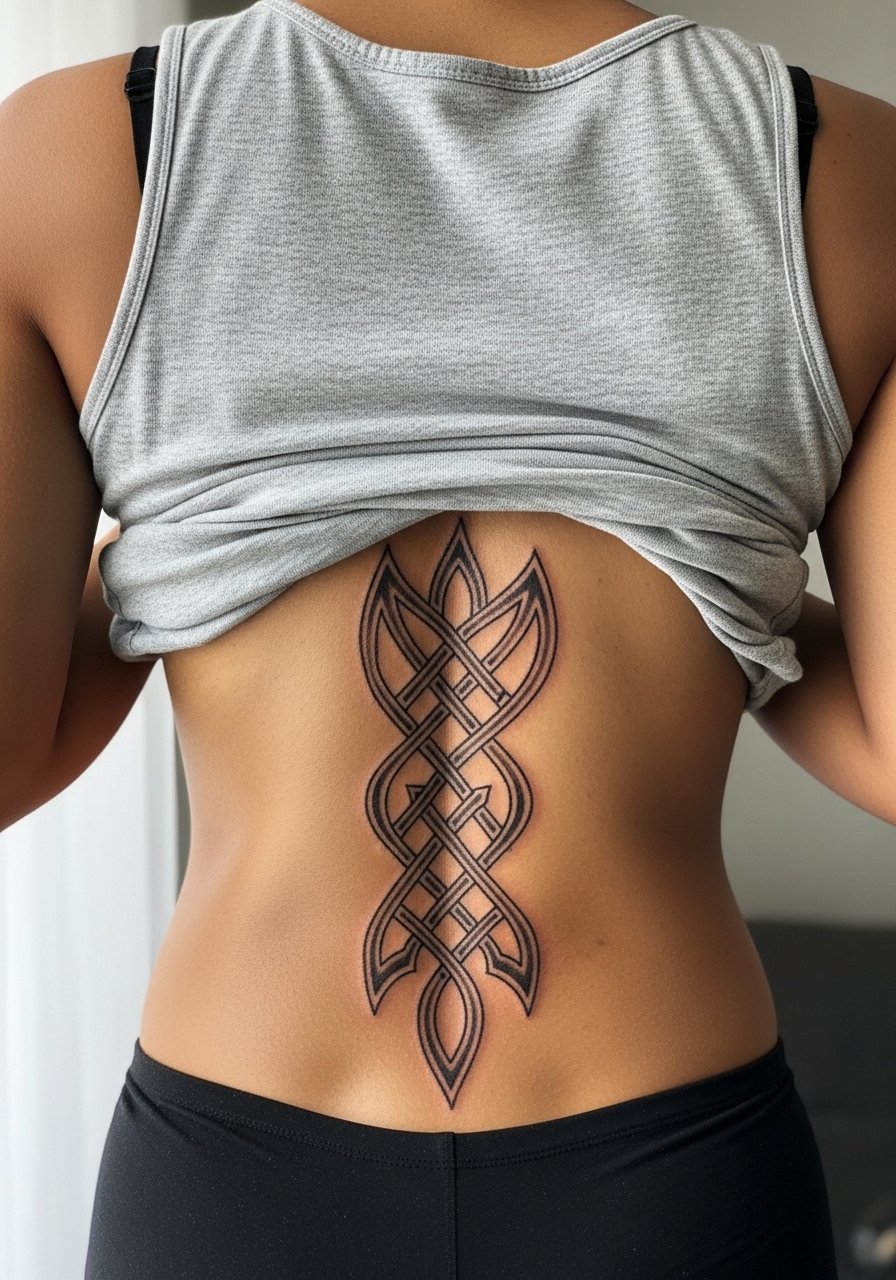
This is one of the under-covered ideas that adapts knotwork to asymmetry. If you have scoliosis, ask the artist to map the design on standing and seated positions so the weave follows the curve rather than fighting it. The mistake is mirroring knot patterns exactly as if the spine is straight. Sessions require careful stencil adjustments and slightly wider knot gaps on the compressed side to avoid future merging. Pain and healing follow the usual back patterns but planning reduces the need for corrective touch-ups.
15. Lower Back Ship Sailing with Hip Bone Horizon Illusion
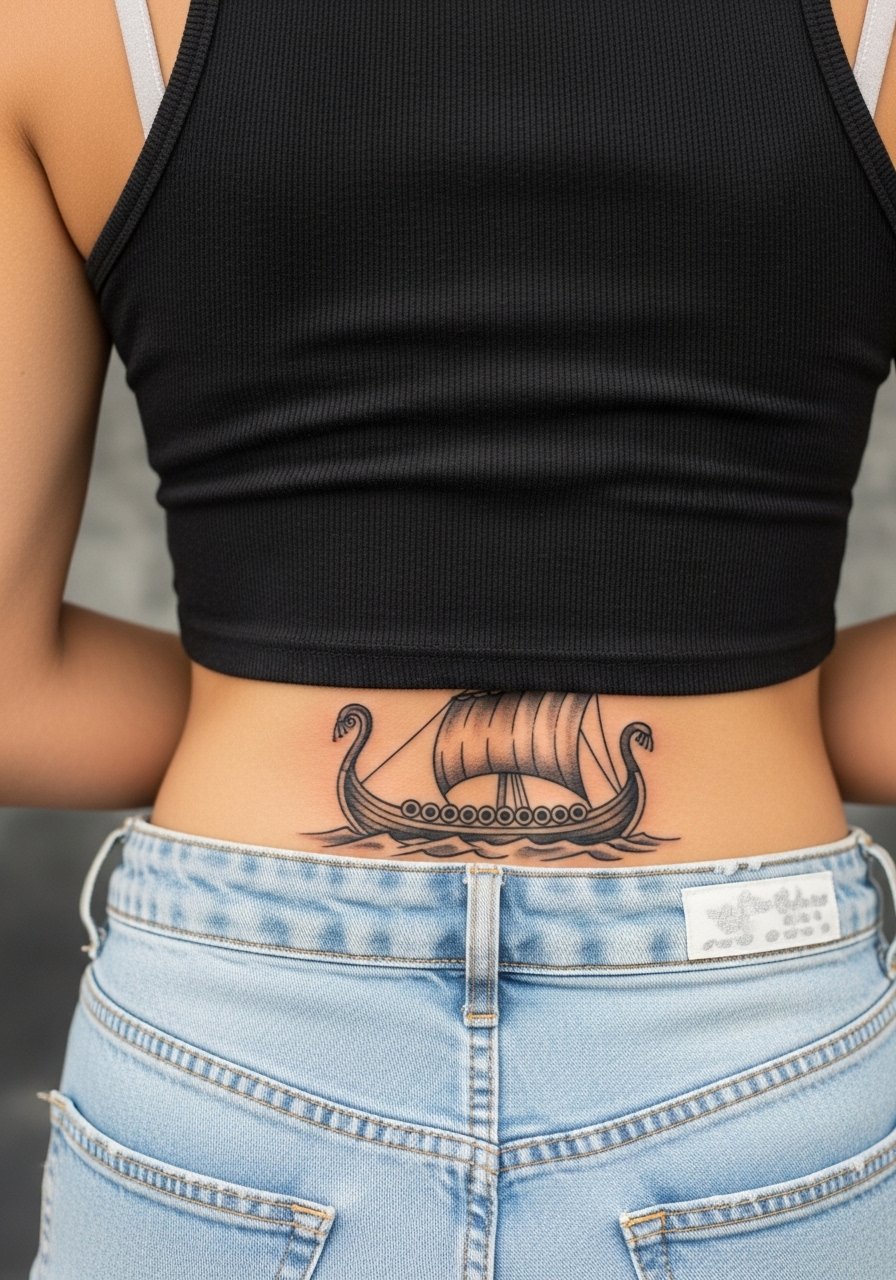
This unique placement uses the hip bones as a visual horizon so the ship appears to sail across the hips. During consults, mark the hip line in standing and supine positions to keep the optical effect consistent. Errors happen when artists sketch the horizon without checking how waistband movement will affect the view. Sessions are local and lower back fills are more painful near the iliac crest. For the session pick high-waisted shorts that you can lower slightly without full undress.
16. Glow-In-The-Dark Rune Accents for Night Visibility
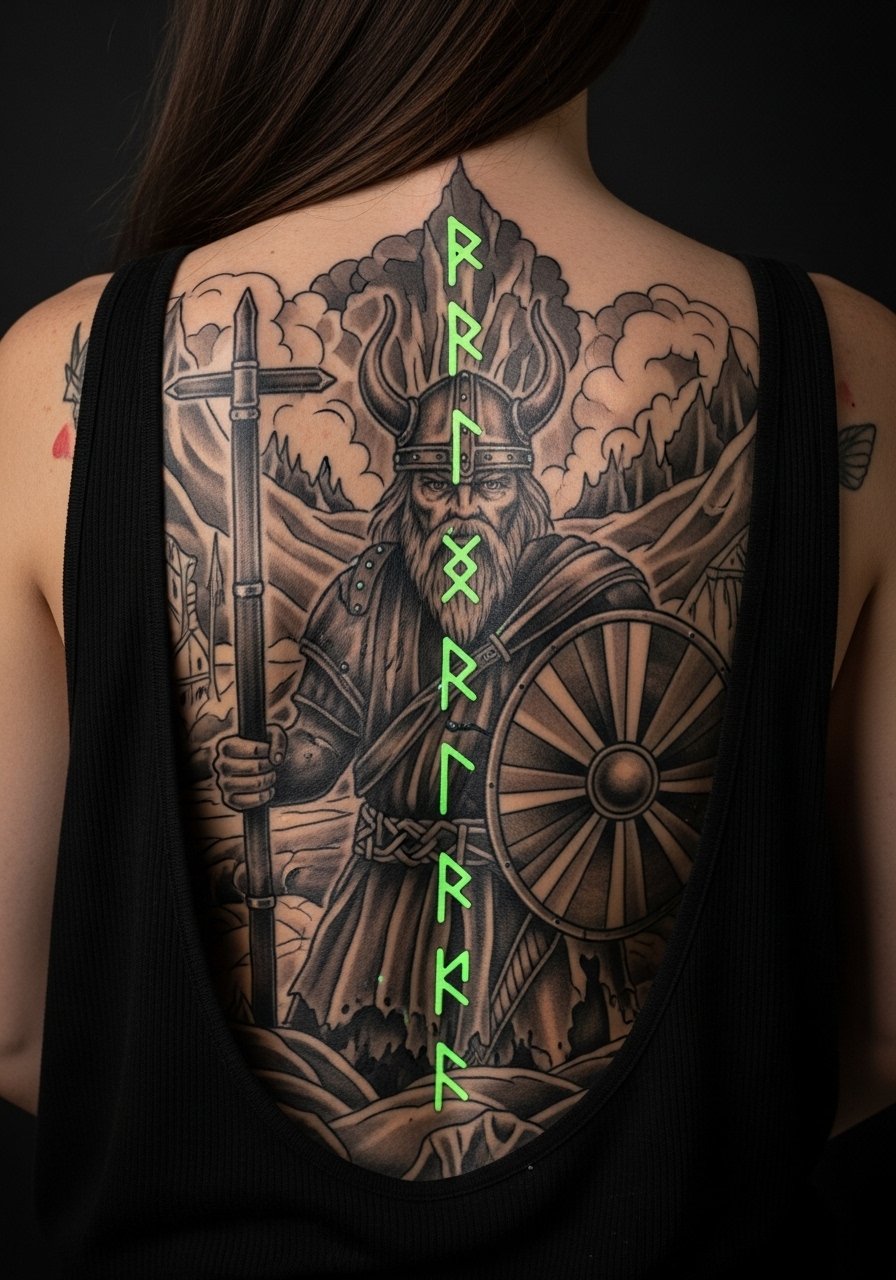
This is a less common idea that adds UV-reactive ink to small rune clusters so your tattoo has a nightlife element. Mention UV accents in the consult and ask about pigment stability and any additional touch-ups needed since UV ink can settle differently. The downside is potential faster fading in the UV elements and limited artist experience with glow pigments. Sessions are similar to colored pieces but include testing patches. Consider this if you frequent night events where the effect matters.
17. Modern Family Crest Integrated into Viking Knot Script
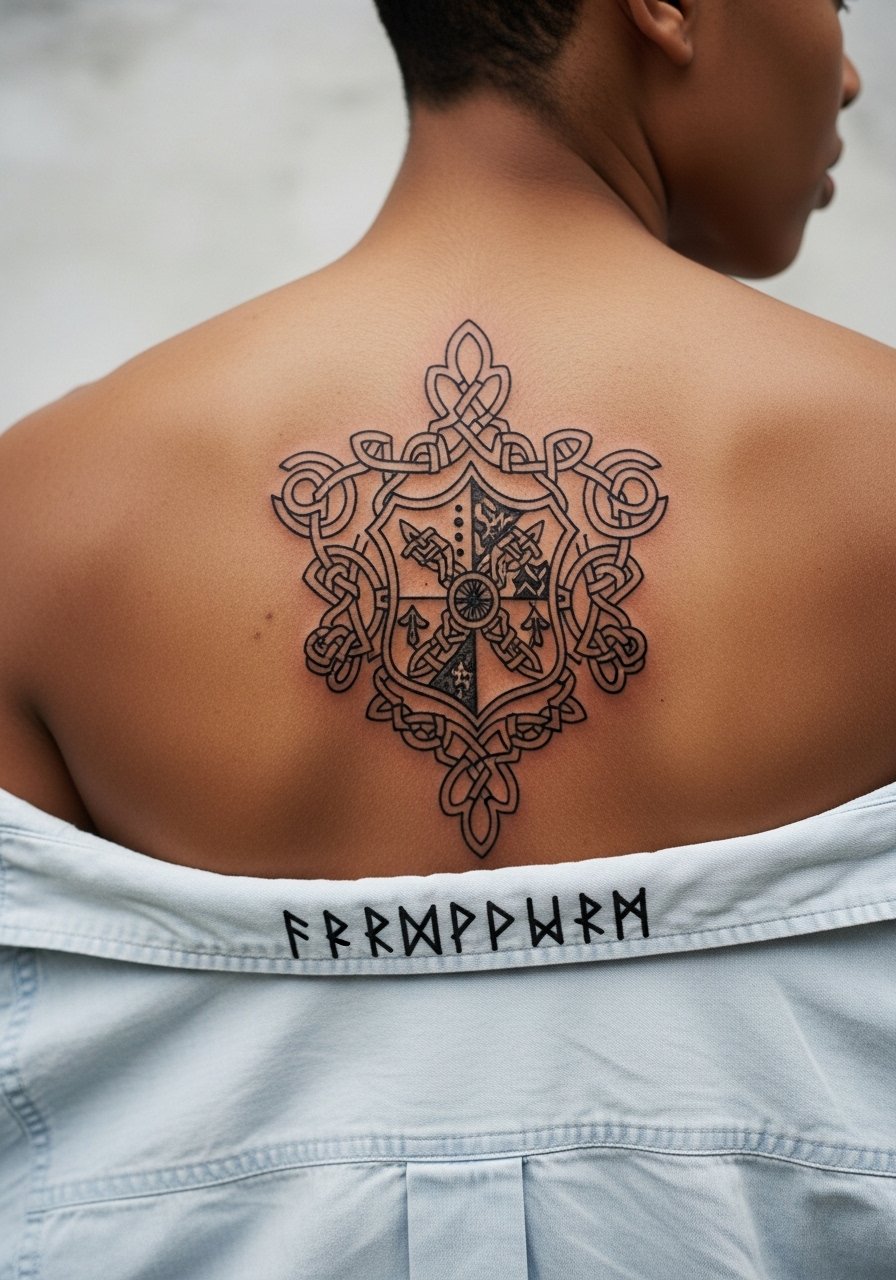
This personalization option takes Viking motifs and encodes family initials or symbols in rune-style markers. In the consult bring family icon references and ask for subtle rune substitutions so the crest reads as both personal and mythic. A common error is overcomplicating the crest with too many small elements which blur on the skin. Sessions are consult-heavy because of customization and then executed in 2 to 4 passes. For showing this off, a minimal silver chain necklace sits above the crest without competing.
Frequently Asked Questions
Q: How does a full back raven panel hold up after weight changes and gym training?
A: It depends on line weight and knot spacing. Larger knotwork and heavier outlines resist stretching better, while dense gray fills can soften. Ask your artist to map the design over common movement zones and to leave breathing room in tightly woven patterns so the raven and borders still read after muscle gain or weight shifts.
Q: Are fine line runes on the spine a bad idea if I lift heavy and sweat a lot?
A: Fine line can blur faster in high-movement, sweat-prone areas. One camp accepts that and prefers slightly thicker linework for longevity. The other camp says precise depth and spacing let fine line work if the artist has healed examples on similar skin. If you lift often, err toward stronger outer lines and request healed photos from the artist.
Q: If an artist offers Saniderm for a large back piece, should I use it or dry heal?
A: Artists and healers split into two camps. Some favor Saniderm for faster enclosed healing and fewer scabs. Others warn it traps sweat on big back areas and prefer an open dry heal routine for ventilation. The right choice depends on your sweat profile, session length, and the studio's aftercare experience. Discuss both options and what the artist has seen work for clients with similar backs.
Q: How much pain should I expect on longship or full-back sessions, and how should I prepare?
A: Full-back saturation sessions are long and can feel grinding in spots like the lower back and spine. Breaks every 45 to 60 minutes help. Bring breathable layers you can remove easily, hydrate ahead of time, and consider a gel positioning pillow for comfort while prone.
Q: Where do I find reliable guest spots or artists who specialize in Viking back work?
A: Use hashtags like #VikingBackTattoo and #BlackworkViking with your city name on Instagram and TikTok to find recent guest spot reels. Booksy or tattoo-specific apps let you filter by style and location. Check Reddit threads that ask for local recs for a direct user perspective and verify guest dates on studio stories before you pay deposits.