
The tattoos that still read sharp after five years are often the ones people scroll past for being simple. Bold outlines, sensible spacing, and ink packed to the right depth buy years of legibility. Vintage flower work benefits from that restraint. Below are 27 vintage floral directions with exact consultation notes, placement warnings, wardrobe tips, and what to expect as the ink settles so you can pick a design that stays readable.
1. Vintage Gerbera Daisy on the Hip
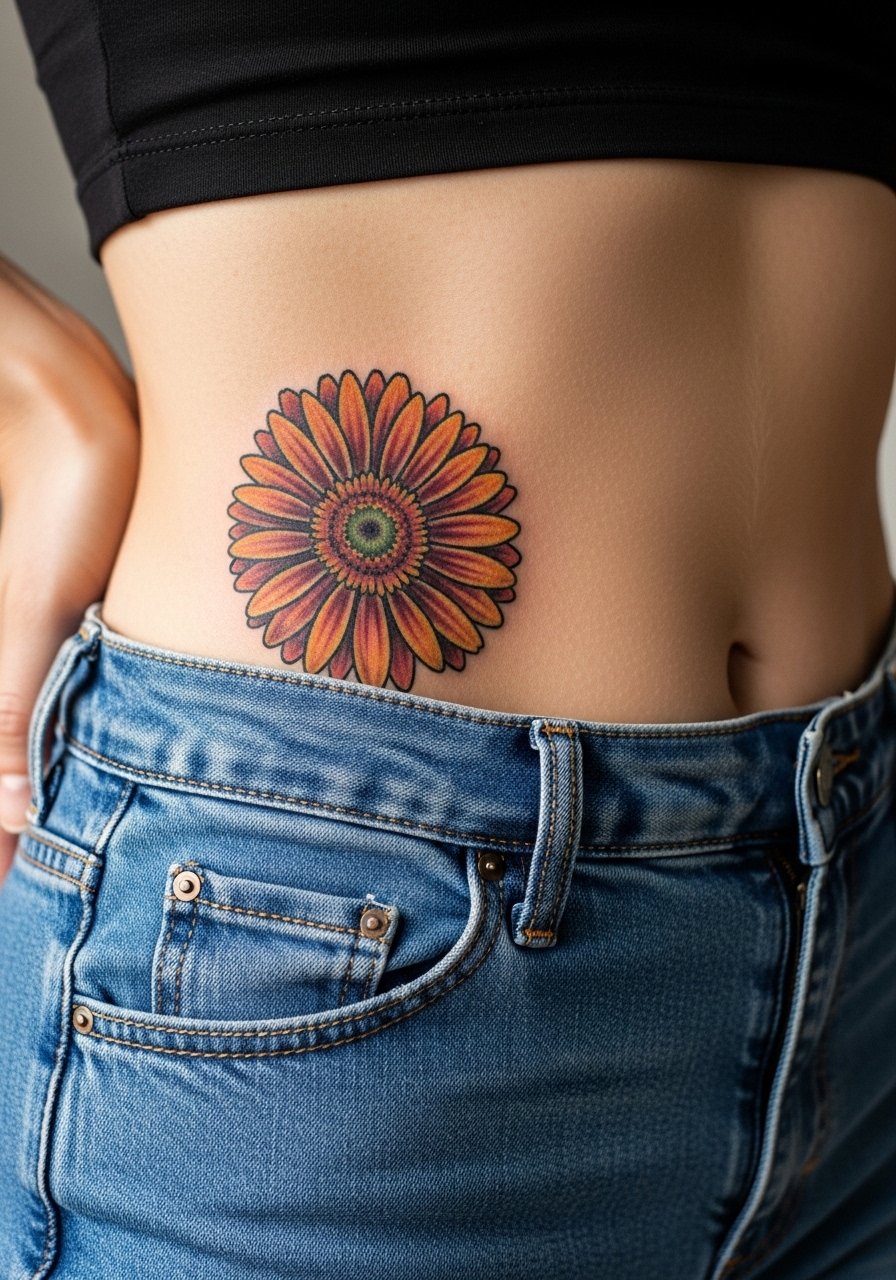
Large, curved hips make great canvases for a Gerbera that reads from across a room. Ask your artist for a slightly larger size and medium linework so the petals keep separation as the skin shifts. The common mistake is packing tiny petal details into a narrow area, which blurs after a few years. For the session wear a loose button-down shirt you can slide aside, and when you want to show it off reach for high-waisted linen pants and a tucked crop top so the flower sits in negative space.
2. Mixed Botanical Sleeve, Vintage Palette
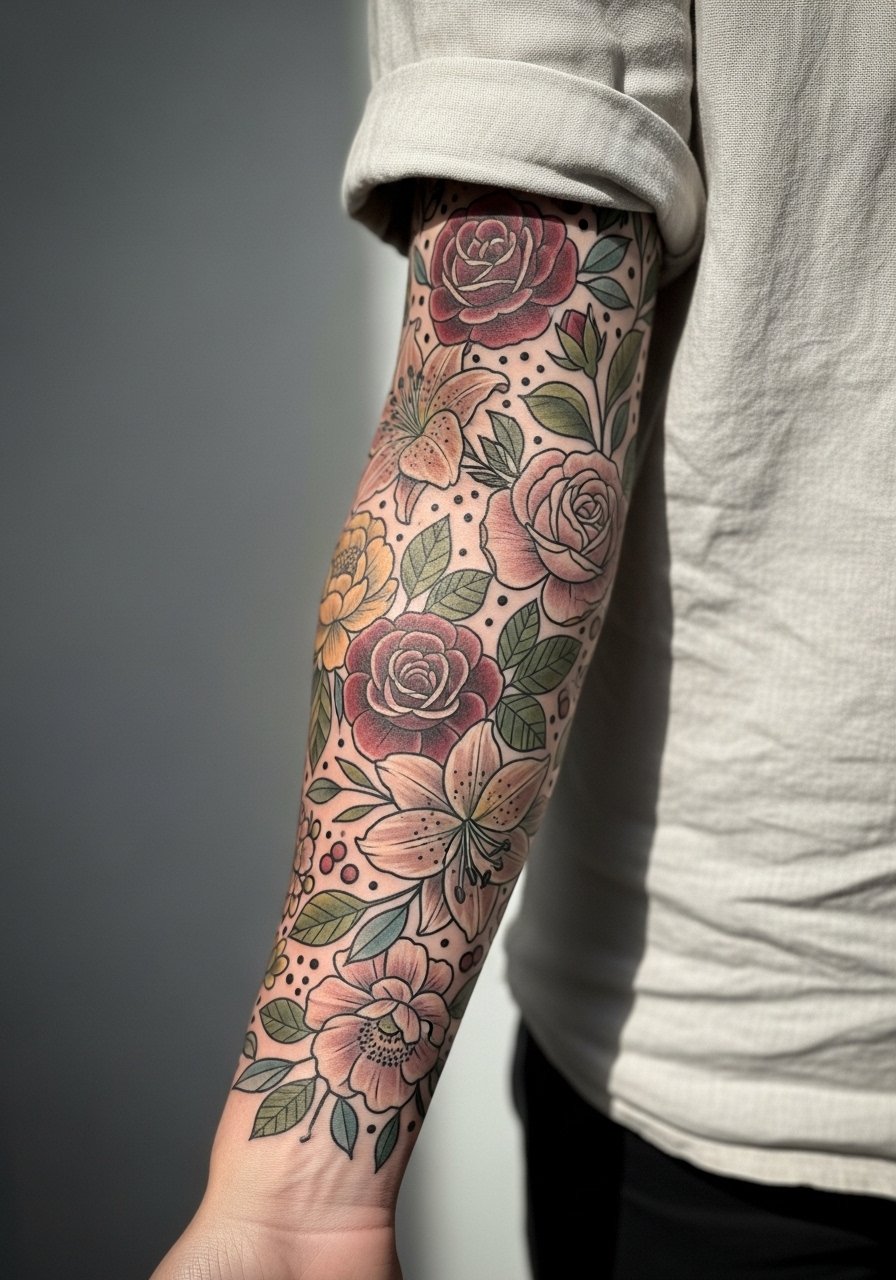
A sleeve made from mixed vintage species works best when each bloom has breathing room. Tell the artist you want a consistent line weight across species and ask for areas of negative space to prevent the piece from reading muddy later on. The session runs multi-visit, and expect sections to be completed in 2 to 4 hour blocks. For everyday wear, loose linen drawstring pants and rolled sleeves keep attention on the arm. Avoid a dense composition that tries to cram small fillers between petals. That is the version that needs touch-ups sooner.
3. Chamomile Sprig, Fine Line Wrist Accent
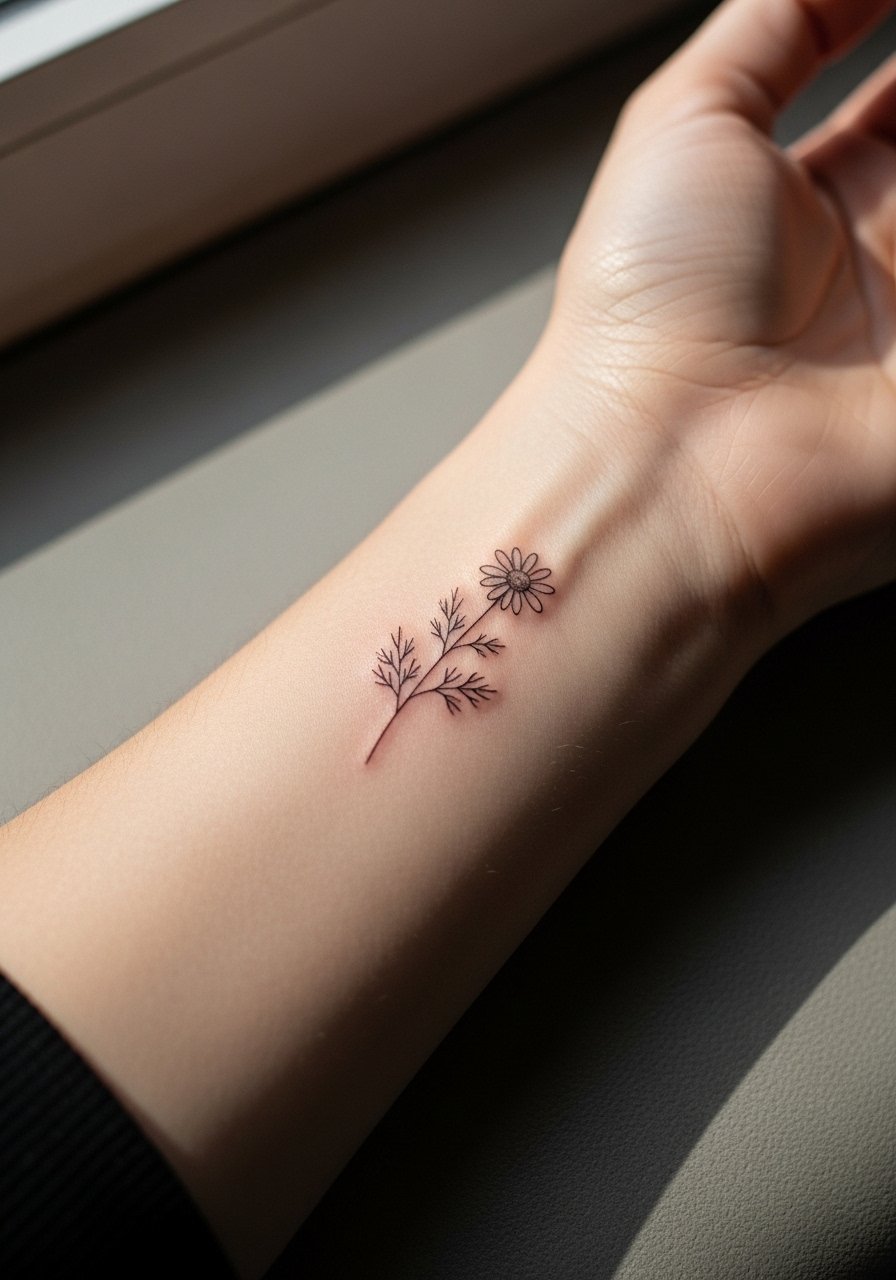
A tiny chamomile sprig works well as a delicate wrist accent. Ask for slightly thicker key lines rather than ultra-thin single-needle strokes so the petals stay defined over time. The wrist is a high-motion area and the worst mistake is requesting microscopic detail there. If you wear bracelets, choose thin pieces that do not rub the healing skin. For showing off pair it with a thin chain pendant necklace or simple stacked bracelets. Expect a touch-up sooner than on the forearm, but the design will still read nicely if you space the petals.
4. Traditional Rose on the Shoulder Cap
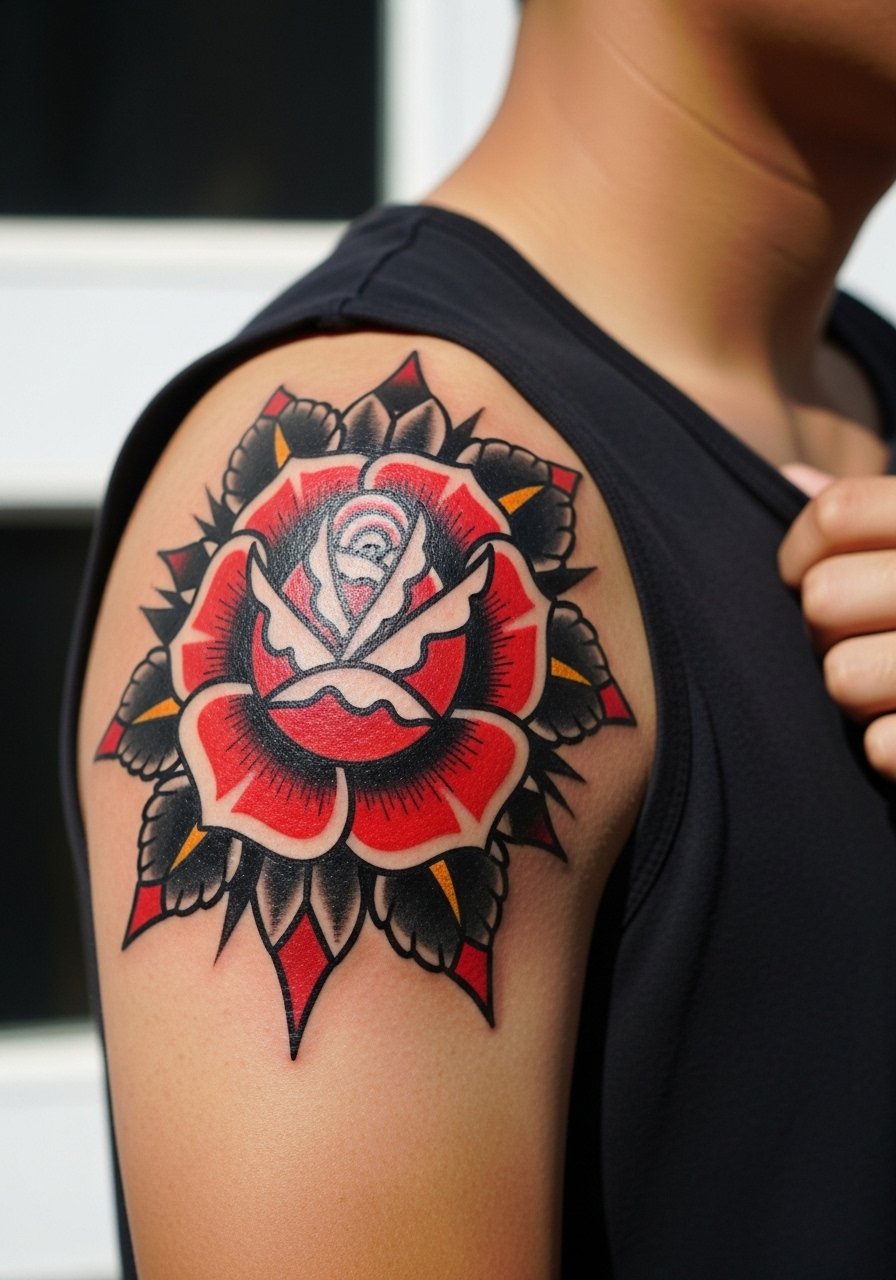
A traditional rose benefits from bold linework and solid saturation. Tell your artist you want classic weight in the outlines and even color packing so the rose reads as a clear silhouette as it ages. The common aging issue is softening of thin outlines, so avoid asking for pin-thin borders. For showing the piece off, a loose button-down shirt pulled to one side or a tank top works well. Shoulder placements are forgiving, but heavy sun exposure will fade color faster.
5. Anemone Cluster Across the Collarbone
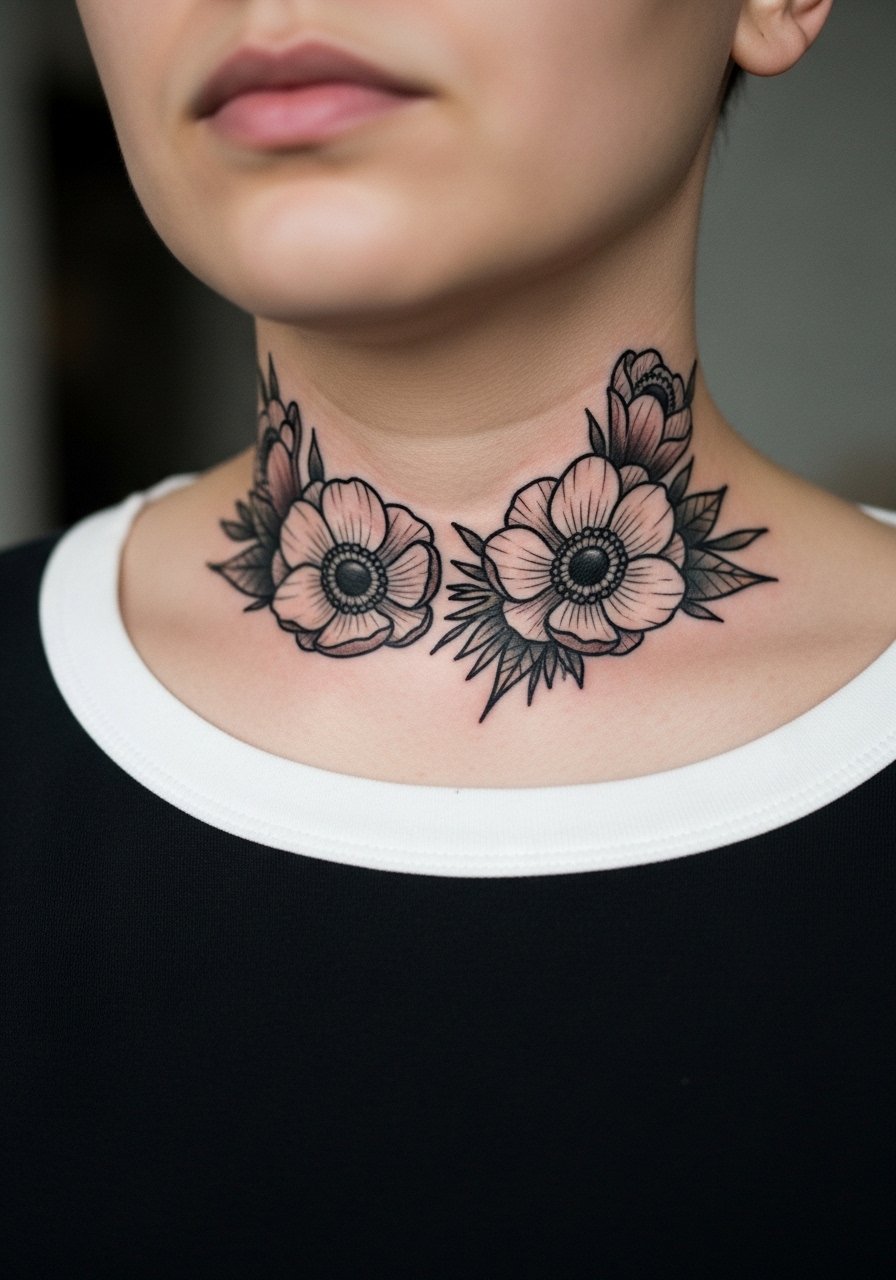
Anemones with negative space between blooms look organized across the collarbone. During consultation specify scale that lets each center and petal be legible at arm's length. The mistake is squeezing too many small blooms into a narrow collarbone strip. For evening wear an open-back midi dress or a wide-neck top frames the piece without competing. Collarbone skin moves with breathing so ask about slight shading buffers around the heaviest lines to avoid early blur.
6. Carnation Sprig on the Inner Bicep
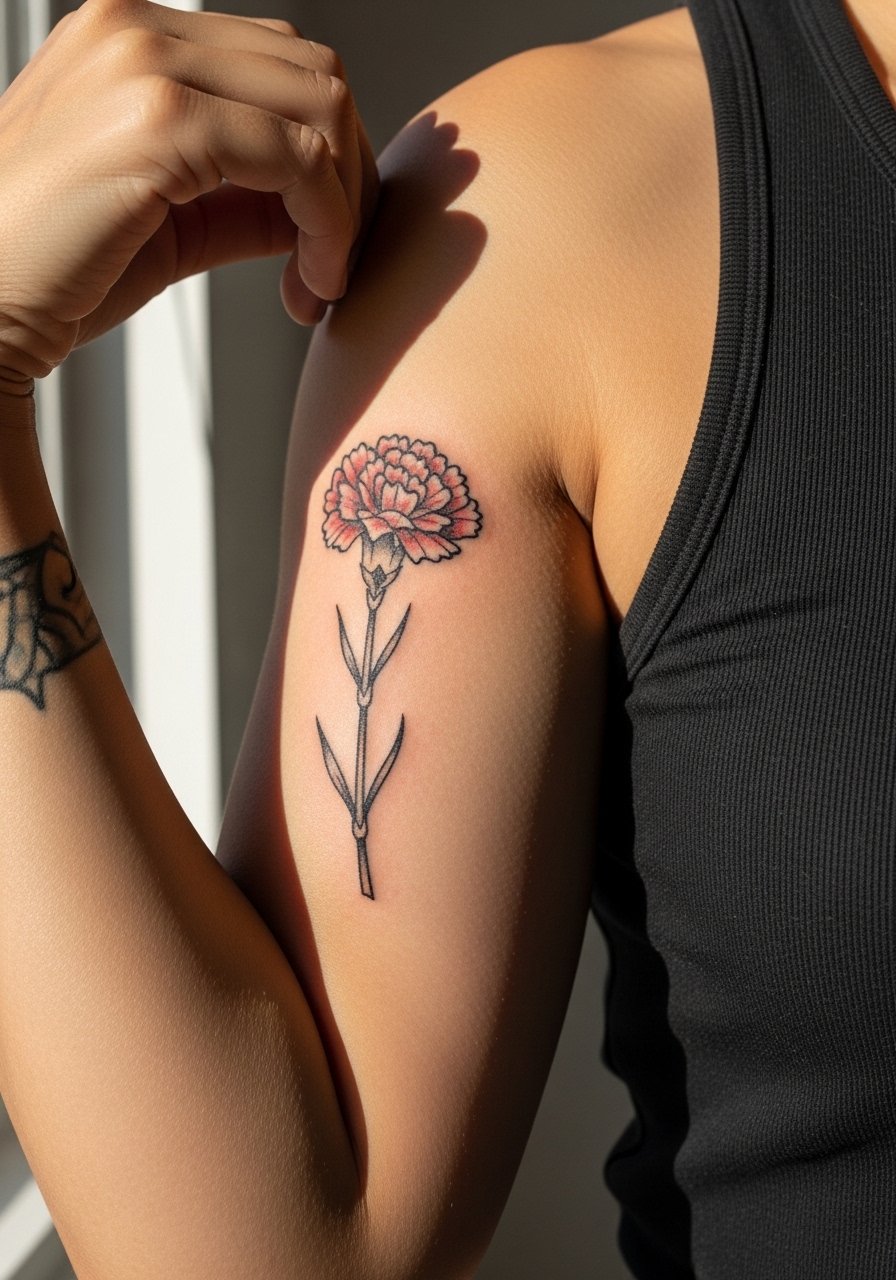
The inner bicep gives a private spot for a carnation that still shows when you want. Expect a medium pain level and sessions that can be short if you keep the piece modest in size. A common error is asking for extreme fine line there without spacing. For the appointment wear a racerback tank so the artist has clear access. The inner arm can soothe faster than the wrist, but touch-ups are common if the linework was too delicate.
Studio Day Picks
The wrist and inner-arm pieces above heal differently from larger hip and shoulder work, so a few practical items smooth the session and the first week.
-
Stencil transfer paper kit. Lets you preview how the line placement wraps the body, handy for collarbone and hip layouts.
-
Topical numbing cream. Applied per instructions reduces the sting for sensitive spots like ribs or inner bicep without changing linework when used correctly.
-
Thin protective film roll. Useful for finger and wrist pieces that face constant washing and friction in the first days.
-
Fragrance-free body wash. Gentle cleansing keeps tiny petals and fine line pieces clean while they form scabs.
-
Aquaphor healing ointment. A thin layer for the first couple days helps keep lines from drying out in contact-prone zones.
7. Raspberry and Botanical Sprig on the Forearm
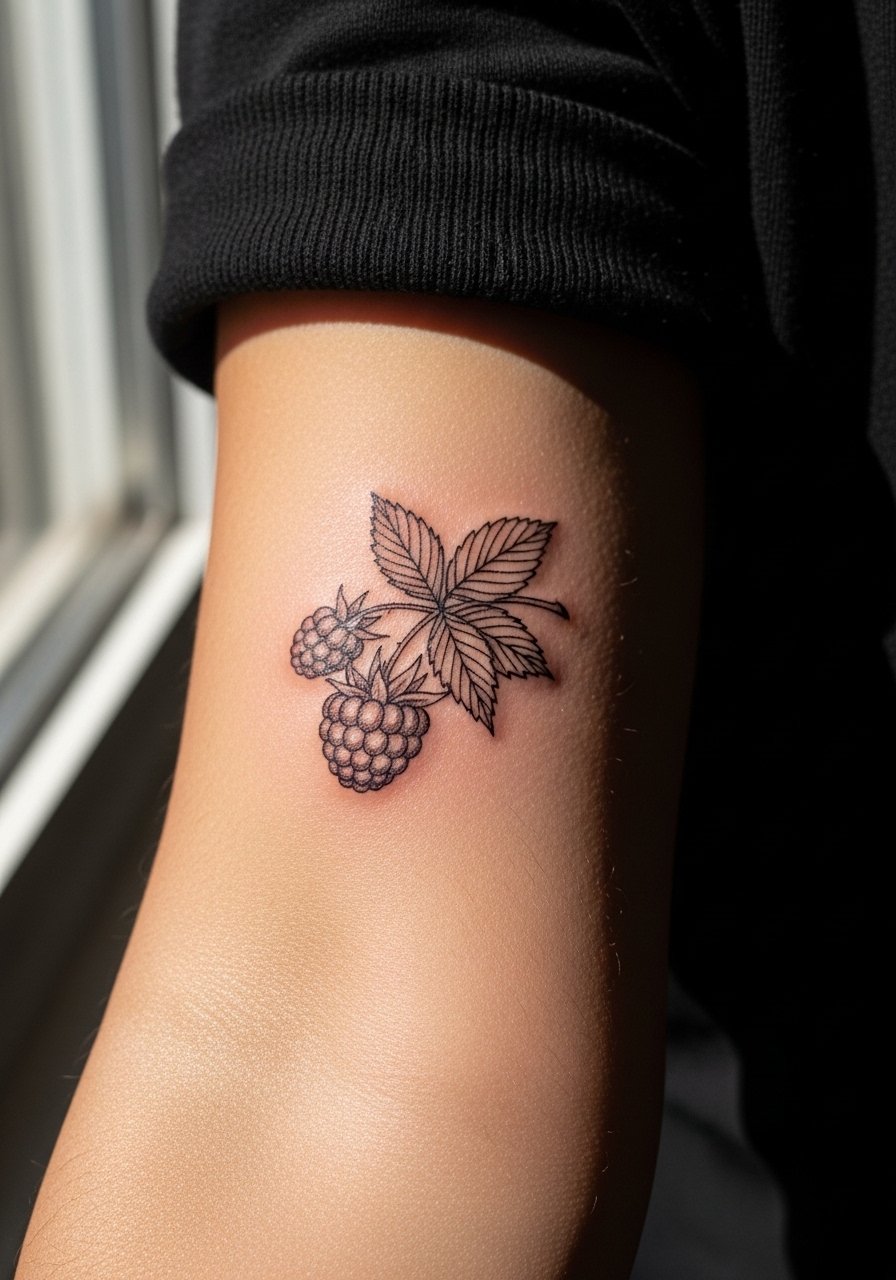
Fruit motifs like raspberries add a vintage twist by mixing petals with tiny seeds and leaves. For forearm placement ask for slightly bolder seeds and a clearer leaf outline than you might in a flat sketch. The frequent mistake is using too many micro-textures that merge after a year. Forearms are visible and tolerate medium saturation. Pair it with a casual racerback tank and rolled sleeves for an everyday look. Expect the piece to soften a bit at two years if you spend lots of time in the sun.
8. Tiny Posy Behind the Ear
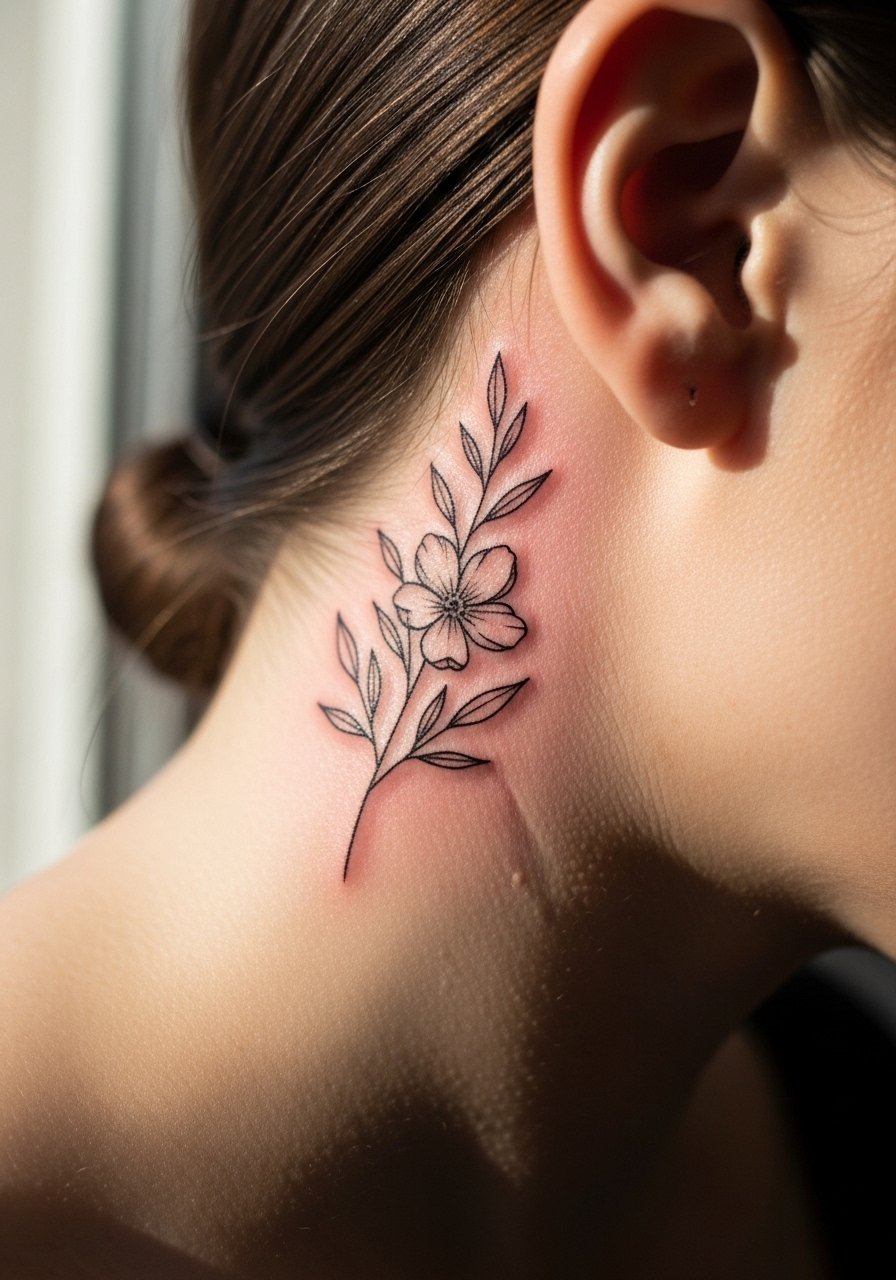
A behind-the-ear posy reads as a whispered detail and cooks into a subtle silhouette. Because the placement is small, request slightly thicker anchors in the linework to avoid the "gone" look at year two. The area needs precise needle control. For styling, tuck your hair up or wear delicate stud earrings so the posy sits in view. Behind-the-ear tattoos require a steady hand from the artist and a conservative scale. This spot is discreet and ages differently than flat skin on limbs.
9. Mini Bouquet for the Finger
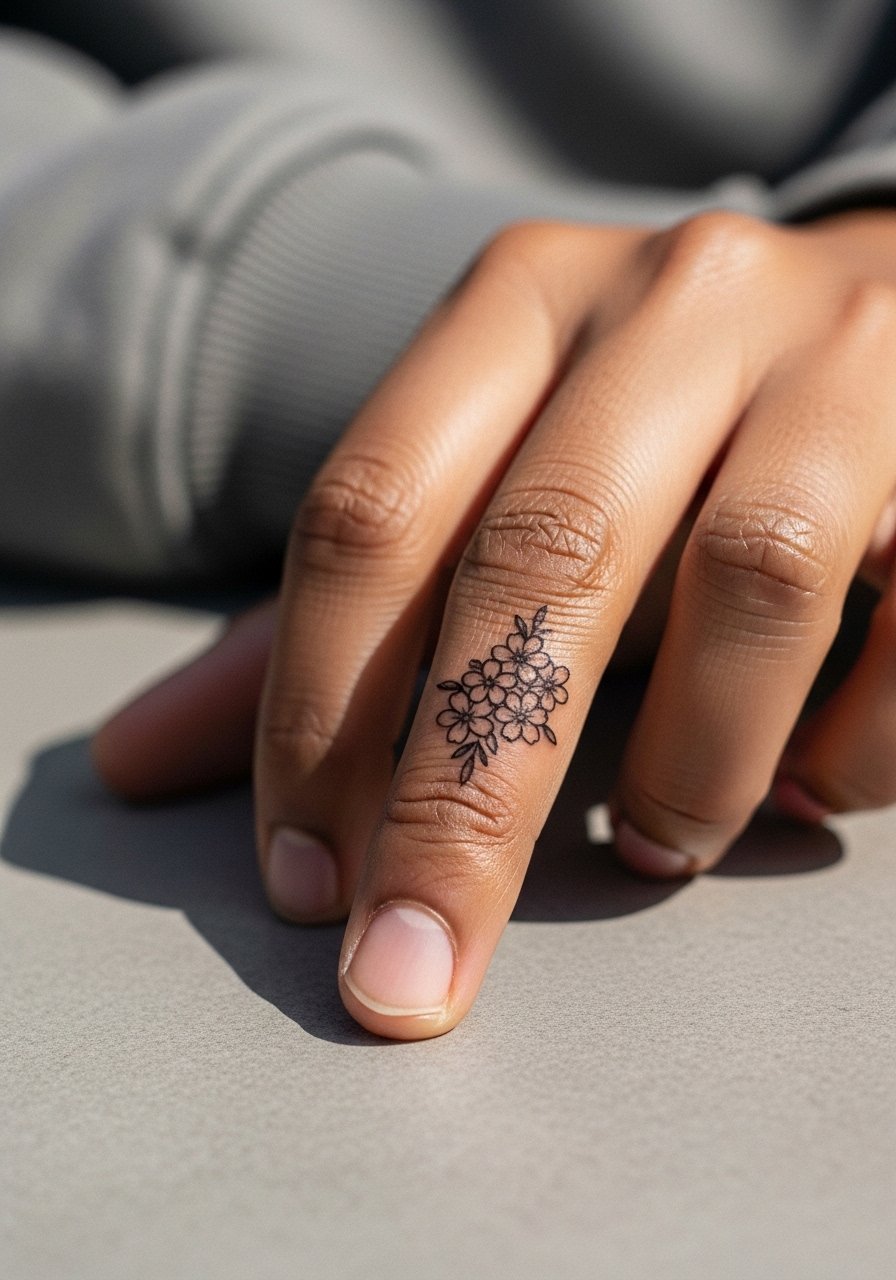
Finger tattoos are high-friction and will fade faster than arm work. For a mini bouquet keep the design airy and avoid dense shading that will disappear with hand use. The common mistake is asking for detailed petals on a single phalanx. If you want longevity, ask for stronger outlines and larger negative spaces. Pair with minimalist rings that do not rub the tattoo while it heals. Expect touch-ups earlier, and plan for that when booking. Fingers are a commitment because of daily wash cycles.
10. Sunflower Thigh Band, Vintage Edge
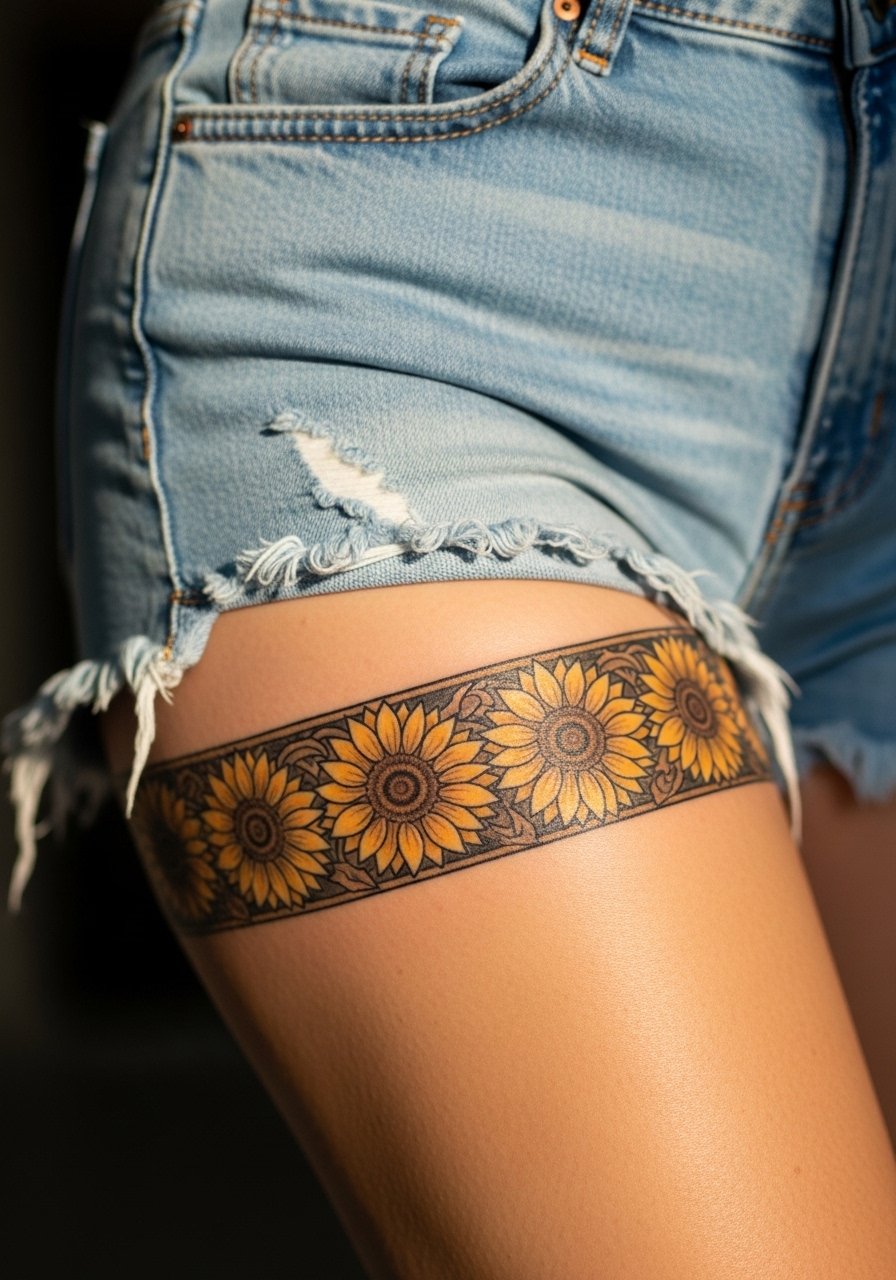
A sunflower band across the thigh sits well when spaced for natural body curves. During consultation ask that petals not overlap across the band, which preserves shape as the leg moves. The common error is a too-tight wrap that loses petal separation. For session wear choose high-waisted bottoms that can slide without pressure, like high-waisted linen pants or drawstring shorts. Thigh pieces tolerate larger scale so detail can be richer than on wrists or fingers.
11. Peony Cluster on the Calf
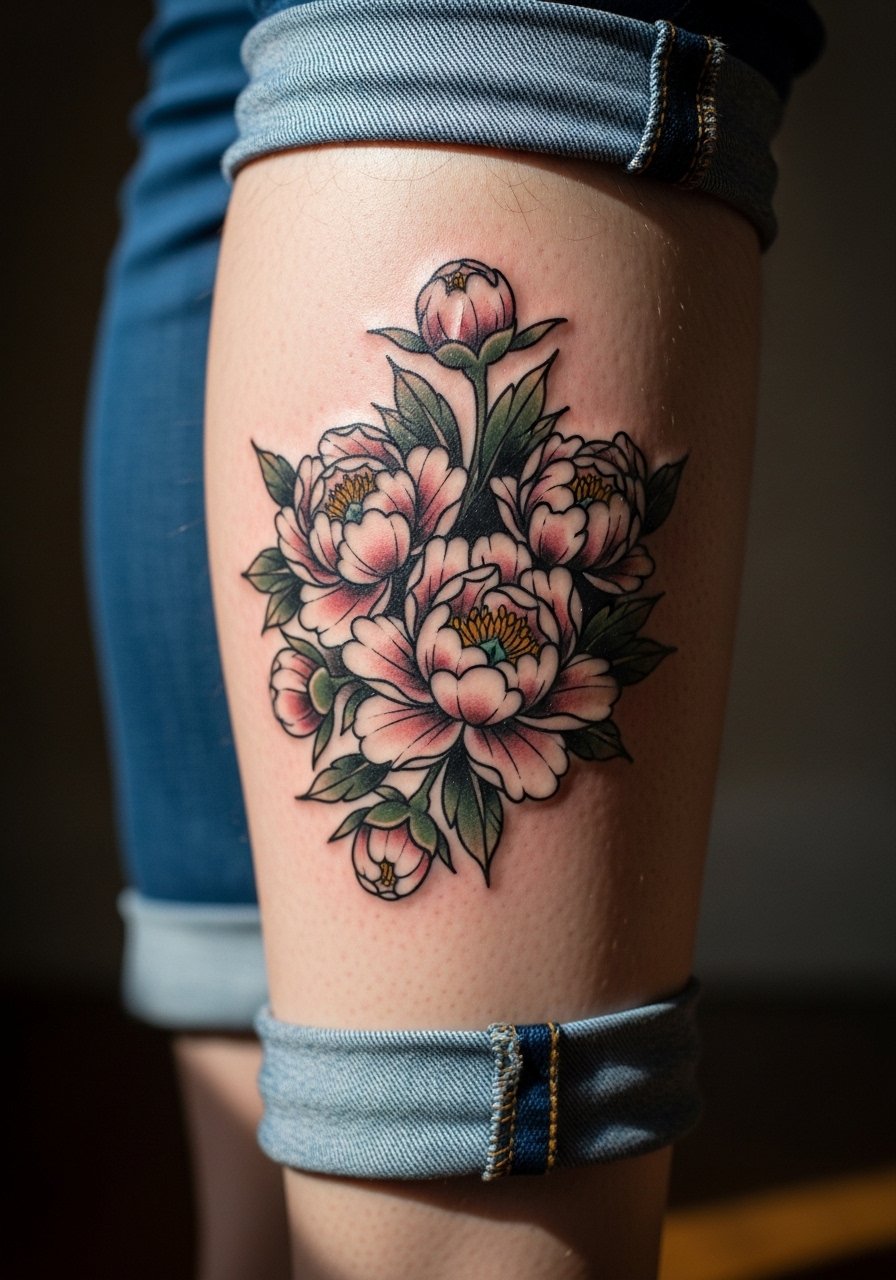
The calf is forgiving for larger peony clusters and stands up to saturation. Ask for layered petals with deliberate spacing so the depth reads from a distance. A mistake is using ultra-fine internal detailing that loses contrast against skin texture. For casual show-off wear rolled pants or midi skirts. Calf pieces usually need fewer touch-ups than hands or feet because they avoid constant abrasion.
12. Watercolor-Influenced Vintage Bloom on the Ribcage
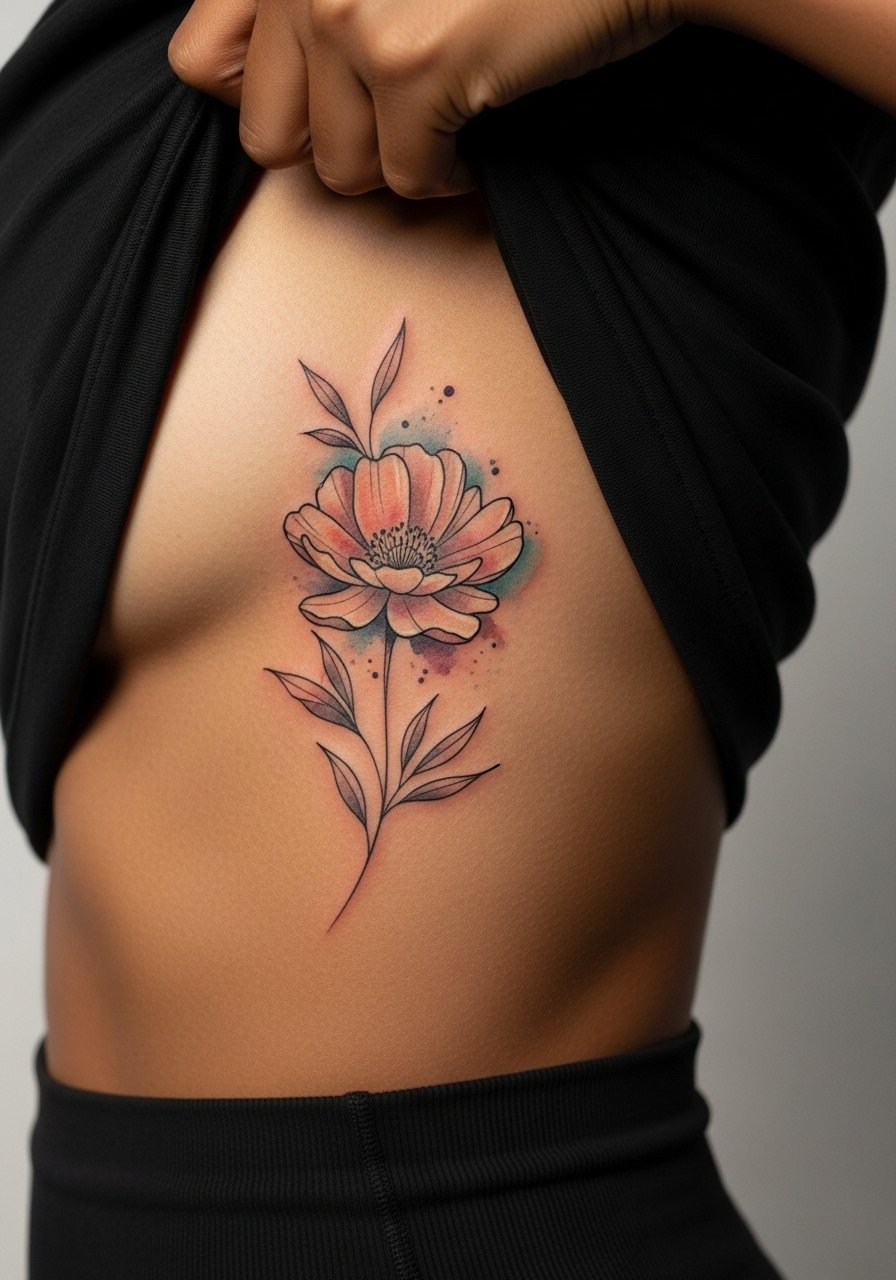
Watercolor aesthetics look poetic on the ribcage but they spark debate among artists. One camp warns that soft washes on ribs fade into blotches as the skin stretches and moves. The other camp says with controlled outlines and careful saturation you can get a lasting watercolor effect. Ask your artist where they stand, and request a mix of defined edges with contained washes if you want longevity. For the session wear a zip-up or cropped top for comfort. Ribs are painful for many, but the payoff can be worth it if you plan for touch-ups.
13. Blackwork Vintage Lily on the Sternum
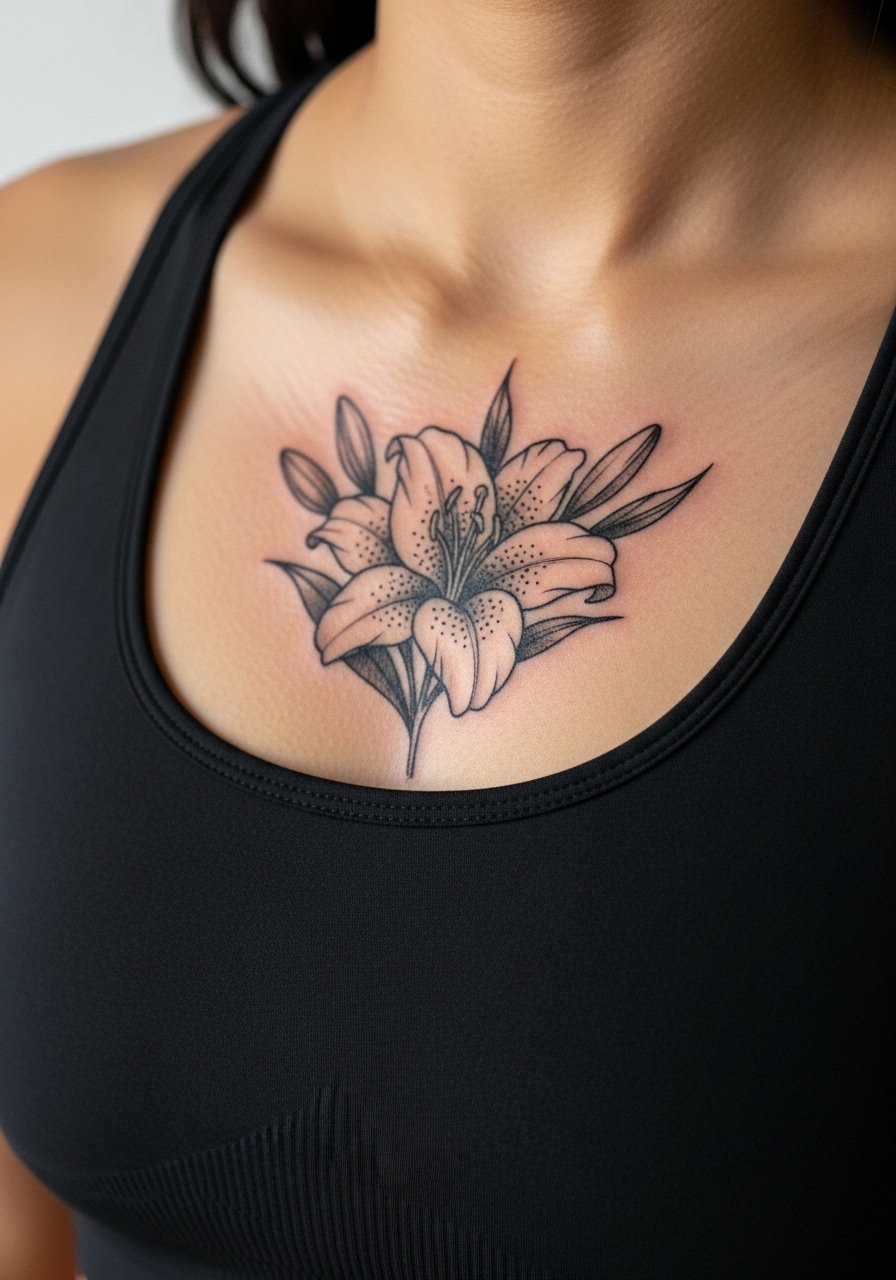
Sternum pieces are striking but sensitive. For a lily there pick bold linework and selective black fills so the form reads cleanly as the skin settles. A usual mistake is overloading the center with tiny stippling. During the session wear a fitted sports bra or bandeau to maintain modesty and allow the artist clear access. Sternum work calls for an artist experienced with chest placements. Expect some discomfort and book your session accordingly.
14. Dot-Work Posy on the Inner Wrist
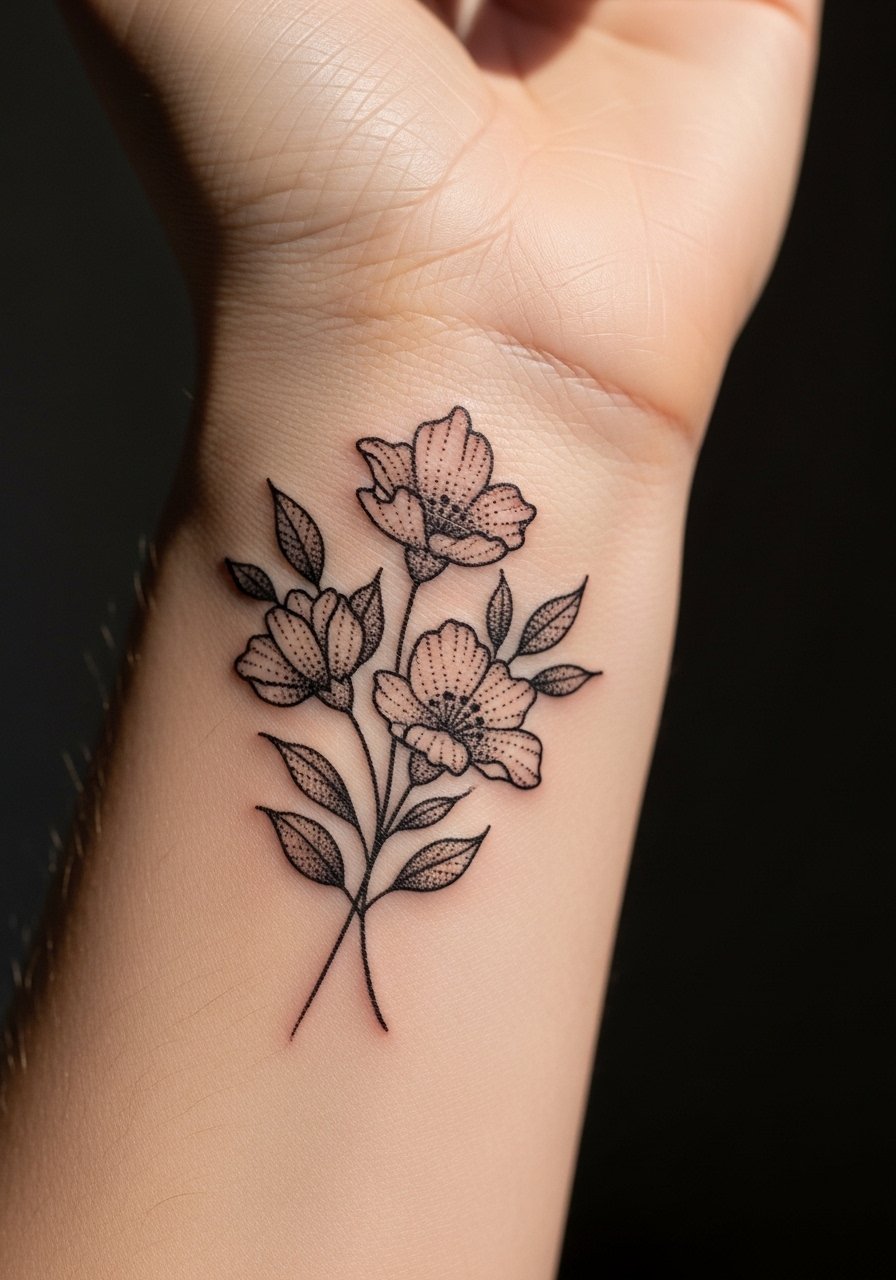
Dot-work gives an antique illustration vibe that pairs well with small posies. Specify dot density and ask for slightly more spacing than you think you need so the stippling does not merge. The failure mode is overpacked dots that smooth into a gray patch. For showing off, layer dainty bracelets carefully so they do not disturb the healed texture. The inner wrist needs gentle care for the first week and often benefits from a touch-up in the first two years if you want the stippling crisp.
15. Botanical Chain across the Spine
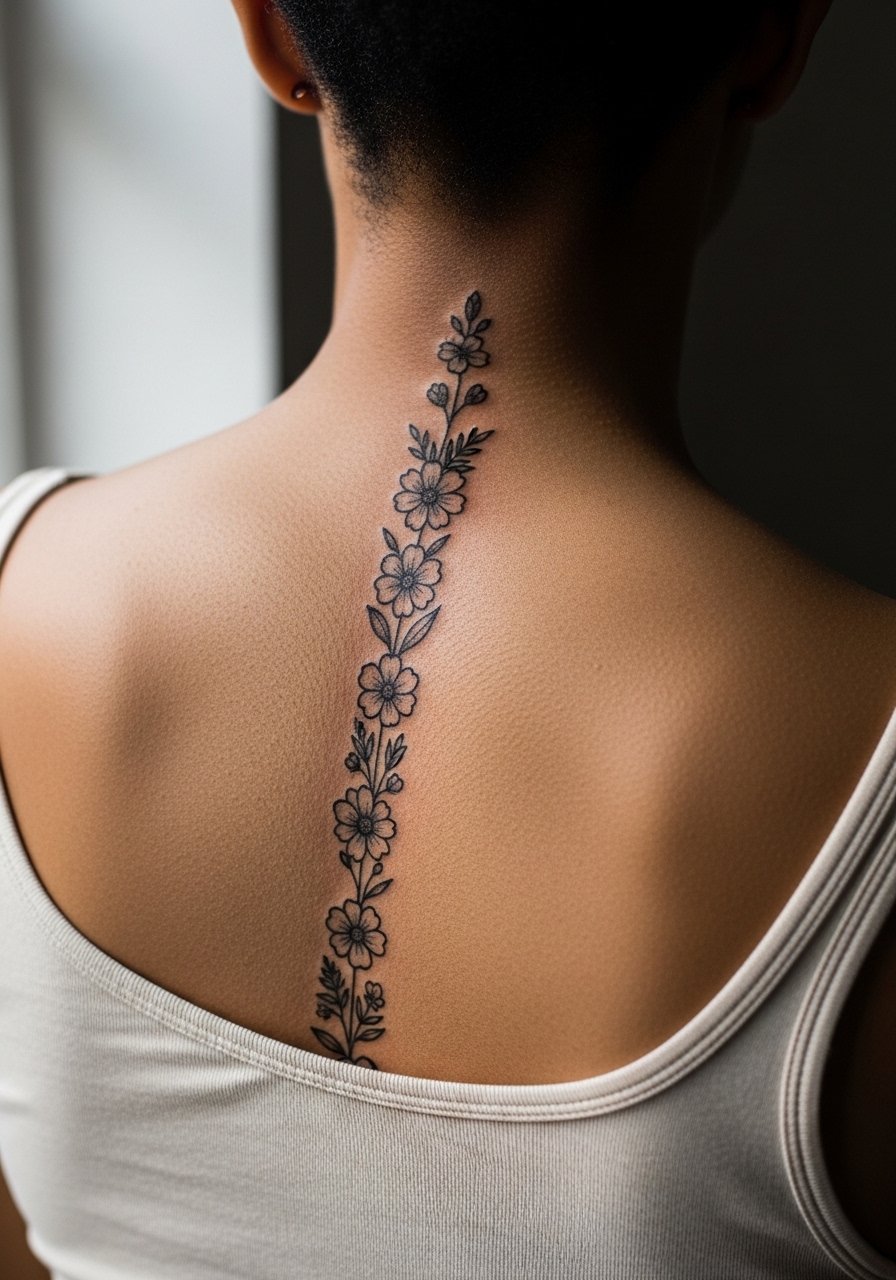
A spine chain reads best with vertical negative space between blooms. Ask for clear nodal flowers and consistent spacing. The typical mistake is clustering too many tiny elements which blur with time. For evening wear pair with open-back styles or a strapless top so the spine shows. Spine work can be uncomfortable in long sessions but it ages well when the spacing is planned for long-term legibility.
16. Small Wildflower Sprig on the Ankle
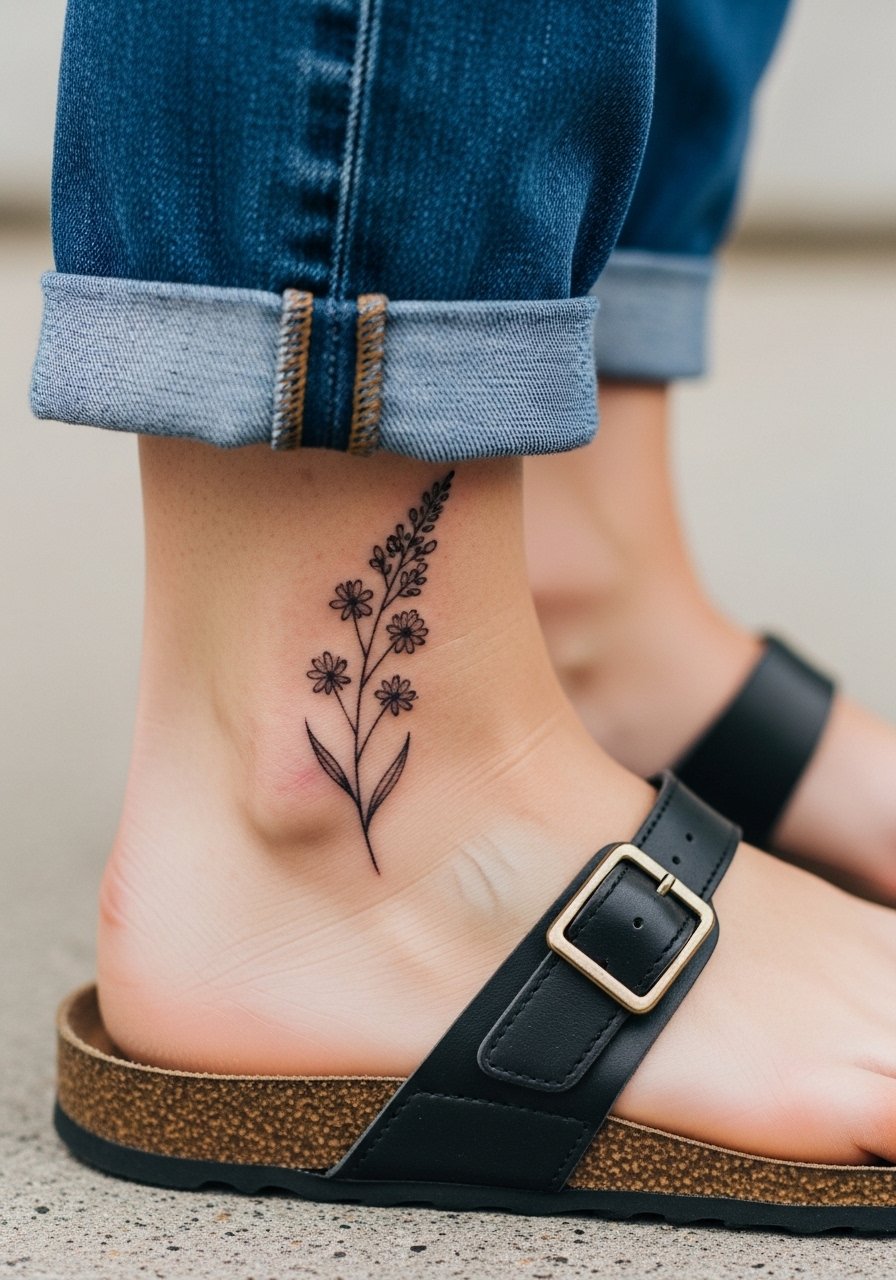
Ankle placements face constant shoe friction and shoe straps. For a small wildflower request slightly stronger outlines and avoid heavy internal shading. The mistake is dense texture that fades into a soft smudge. For showing off, summer sandals and cropped trousers work. During the session wear pants that can roll up without tight waist pressure. Plan touch-ups sooner than for thigh or shoulder work.
17. Vintage Violet on the Collarbone with Script
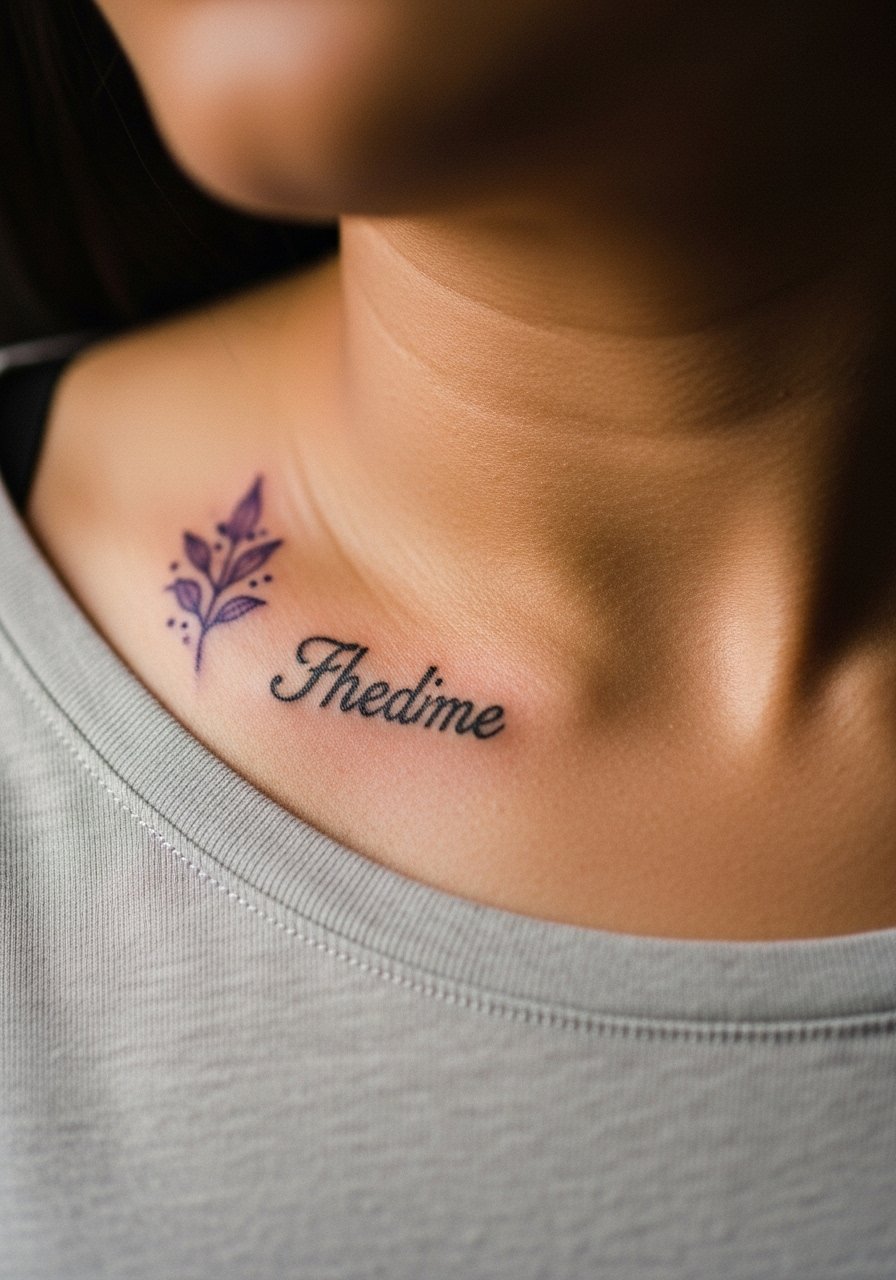
Pairing a violet with a tiny script needs clear spacing between lettering and petals. Specify exact script size and where the word sits relative to the bloom. For jewelry, a thin chain pendant necklace complements the collarbone without crowding the art. Mistakes occur when text overlaps petals or sits too close to a shadowed area. This placement shows well in wide-neck shirts and blouses.
18. Neo-Traditional Floral on the Upper Thigh
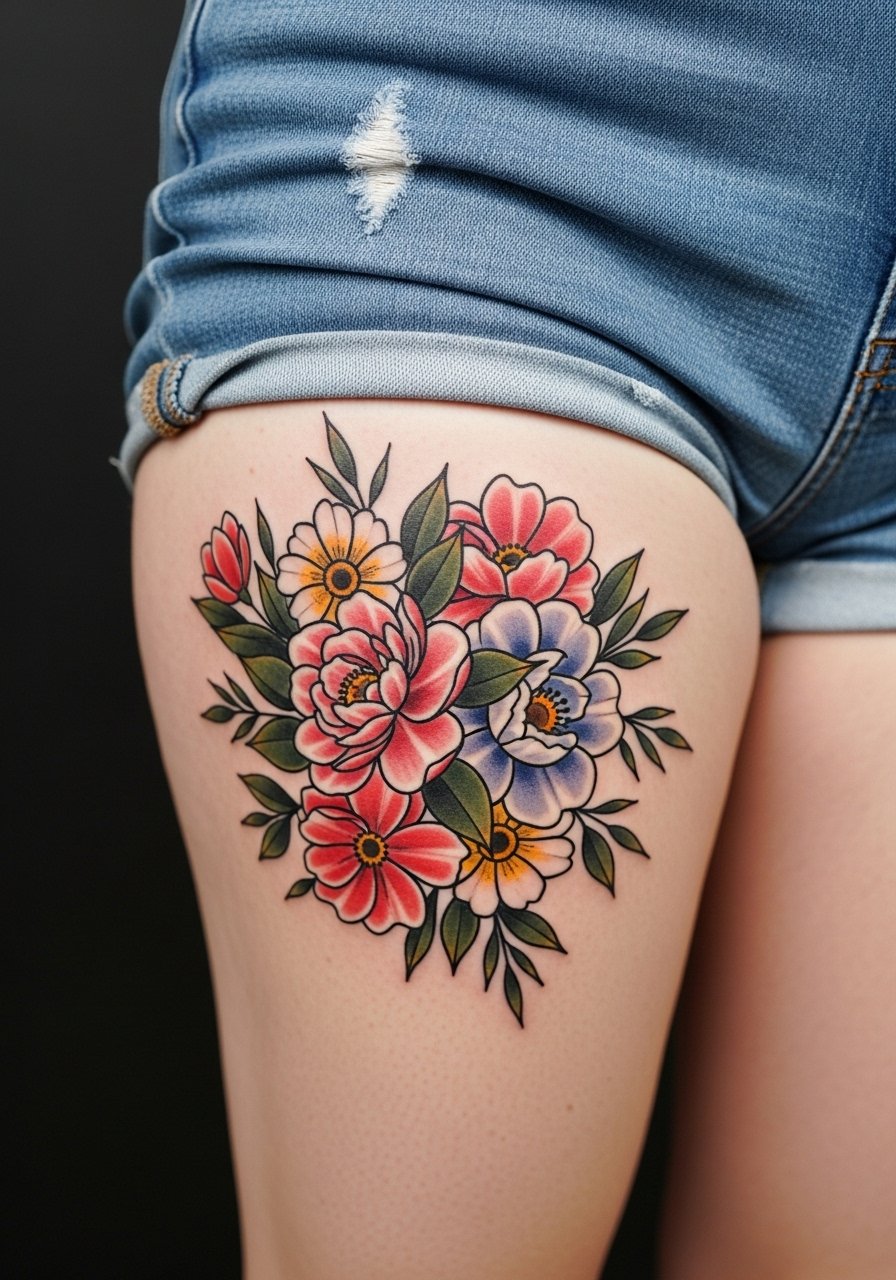
Upper-thigh work accepts more color and richer detail. For a neo-traditional look ask for saturated fills and clean outlines with breathing room between blooms. The common error is cramming fineline fillers into the negative spaces. Session wear should be loose shorts for easy access. Thigh pieces age well if you avoid tiny detail trapped in folds or creases. They tolerate higher saturation and can look great years later.
19. Vintage Marigold Wreath on the Lower Back
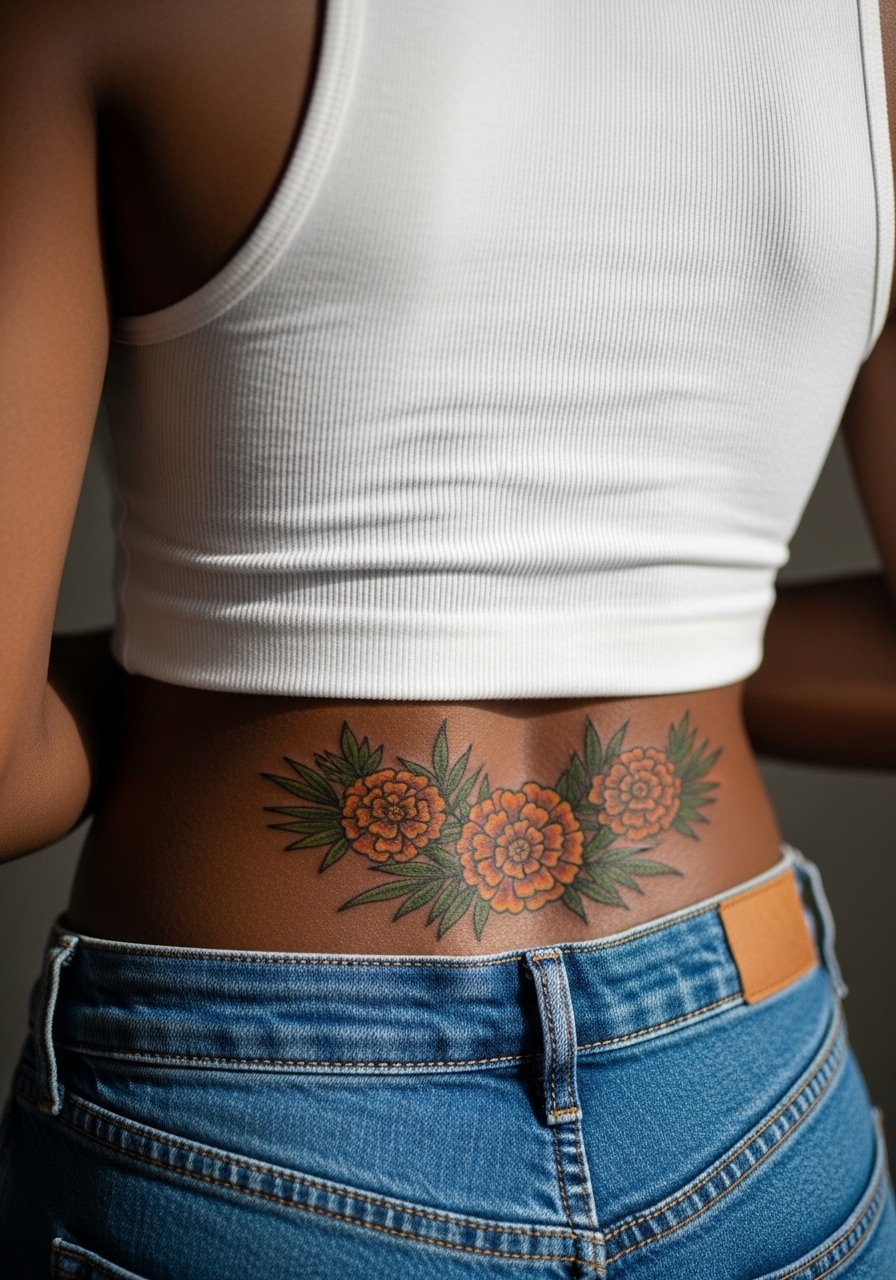
Lower-back wreaths need a composition that curves with the waistline. Tell your artist you want the wreath centered and balanced when you stand naturally. The mistake is making the wreath too narrow which makes it disappear when clothing sits at the waist. For wardrobe pairing, low-rise or high-waisted combinations frame the piece. Avoid tight belts that compress the skin during early healing.
20. Tiny Botanical Above the Ear Lobe
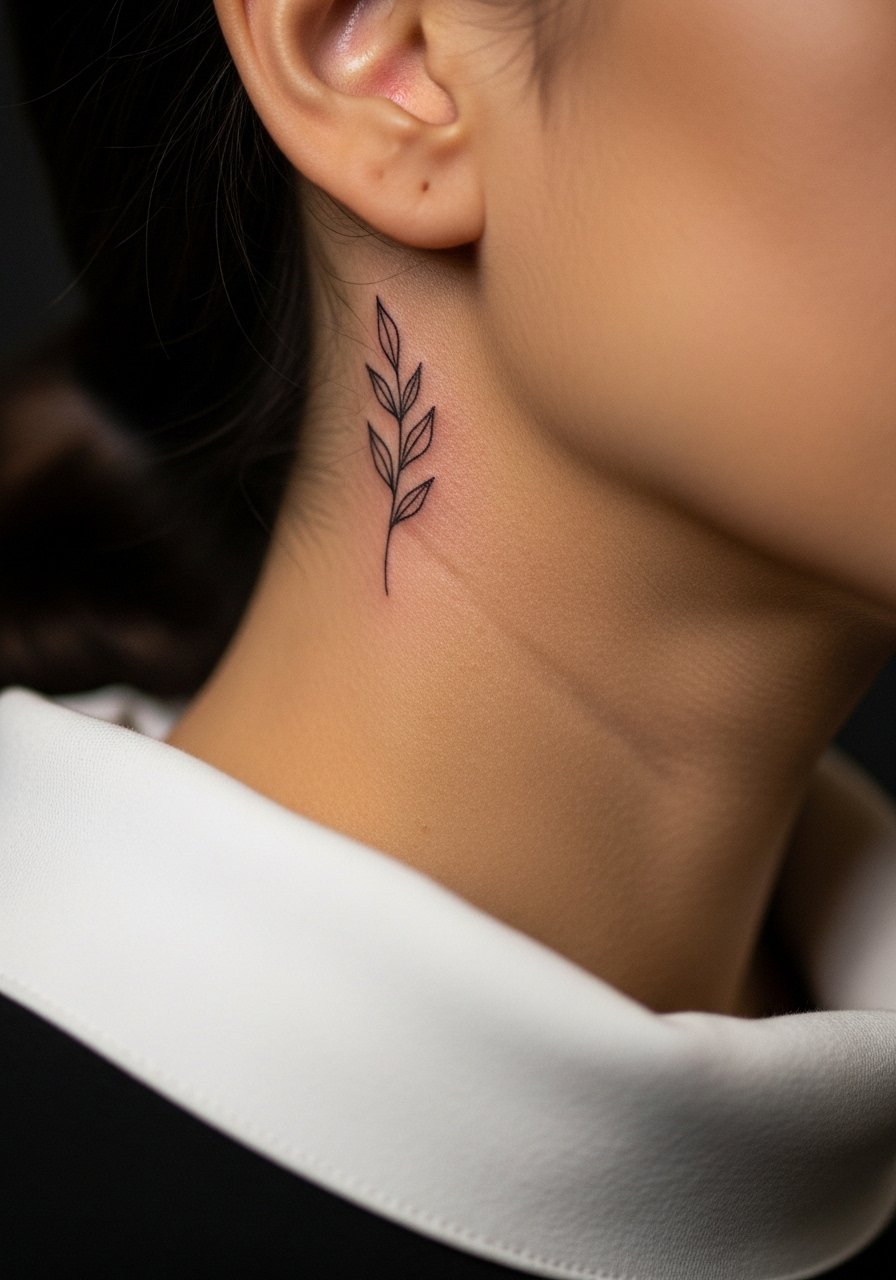
A tiny botanical above the ear lobe is delicate and needs a confident hand. Ask for slightly bolder anchors in the main stem so the design does not disappear into skin texture. This is a visible spot when hair is up. For apparel choose wide-neck tops that can be styled to frame the area. The main error is requesting micro-detail that the small canvas cannot retain.
21. Botanical Anklet Wrap
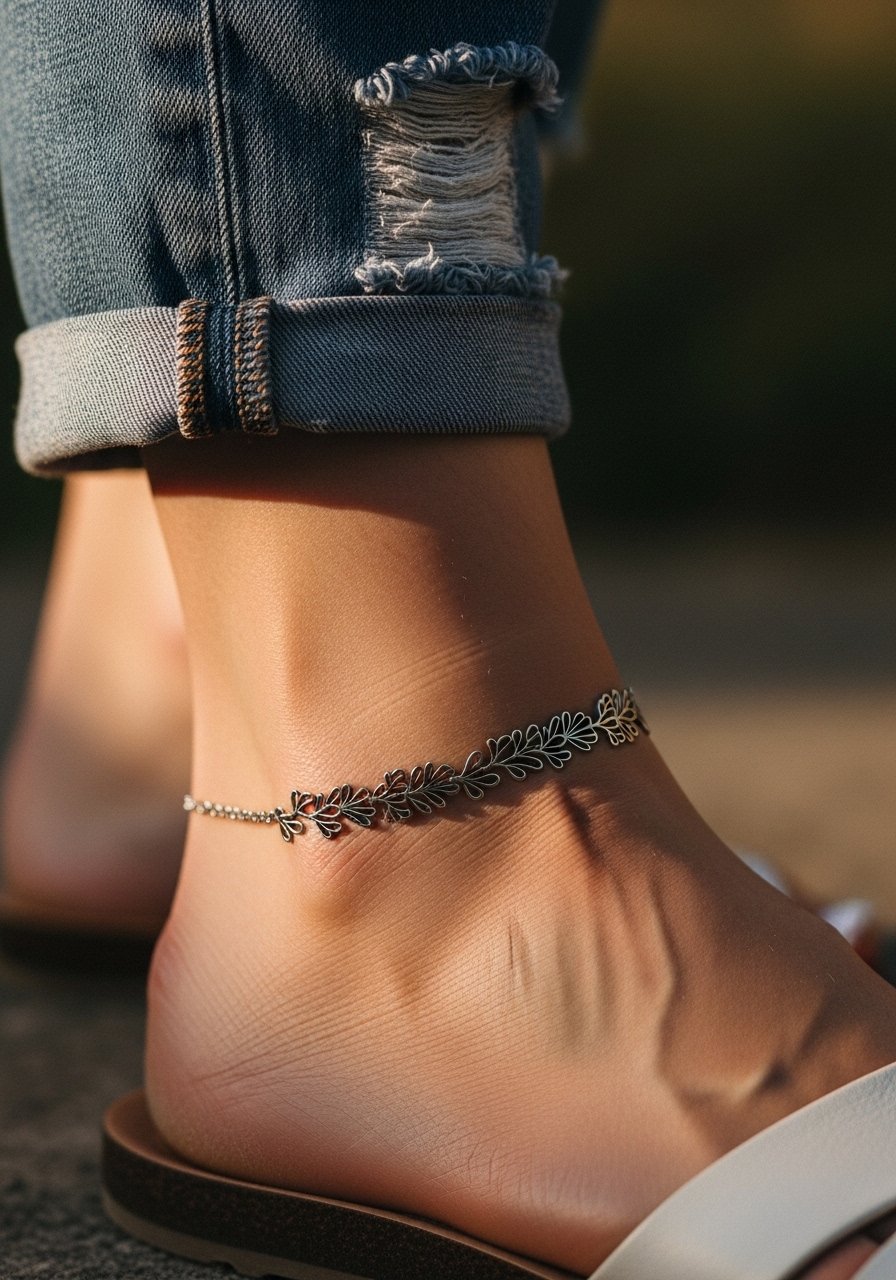
An anklet wrap looks lovely but faces constant friction from socks and shoes. Insist on clean outlines and avoid small hatch shading that will break up. For summer display choose sandals and rolled trousers. The common mistake is expecting tattoo-level detail that a moving ankle cannot keep. Schedule a consultation that includes aftercare discussion for footwear choices in the first week.
22. Floral Ring on the Thumb
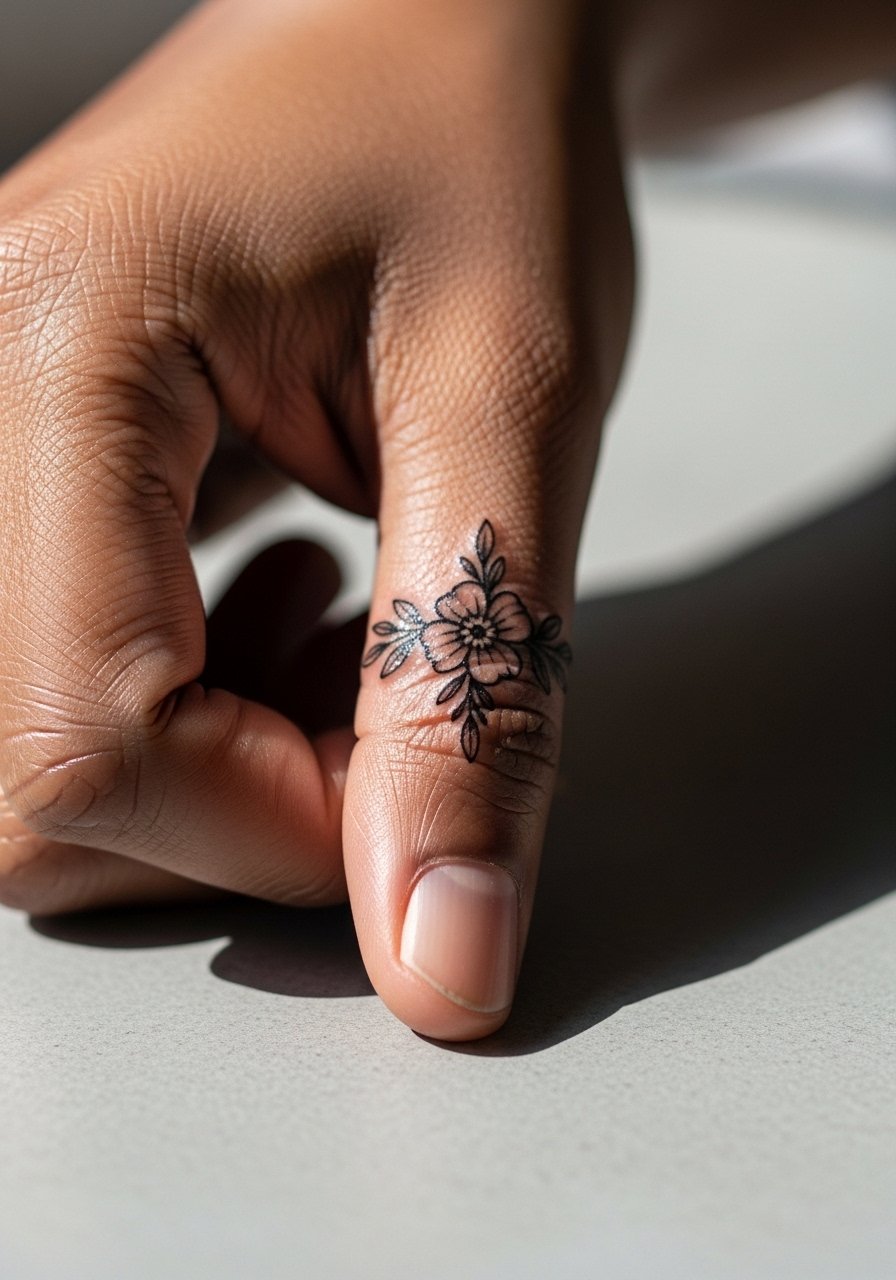
Thumb rings see a lot of wear. For a floral ring ask the artist to keep the design bold and open. Tiny filled areas will disappear quickly. Avoid expecting the same longevity as finger pads or the forearm. For minimal jewelry that won’t rub, pick slender rings or skip rings during the healing window. Expect touch-ups as a regular part of keeping this piece crisp.
23. Stylized Botanical Knee Cap Accent
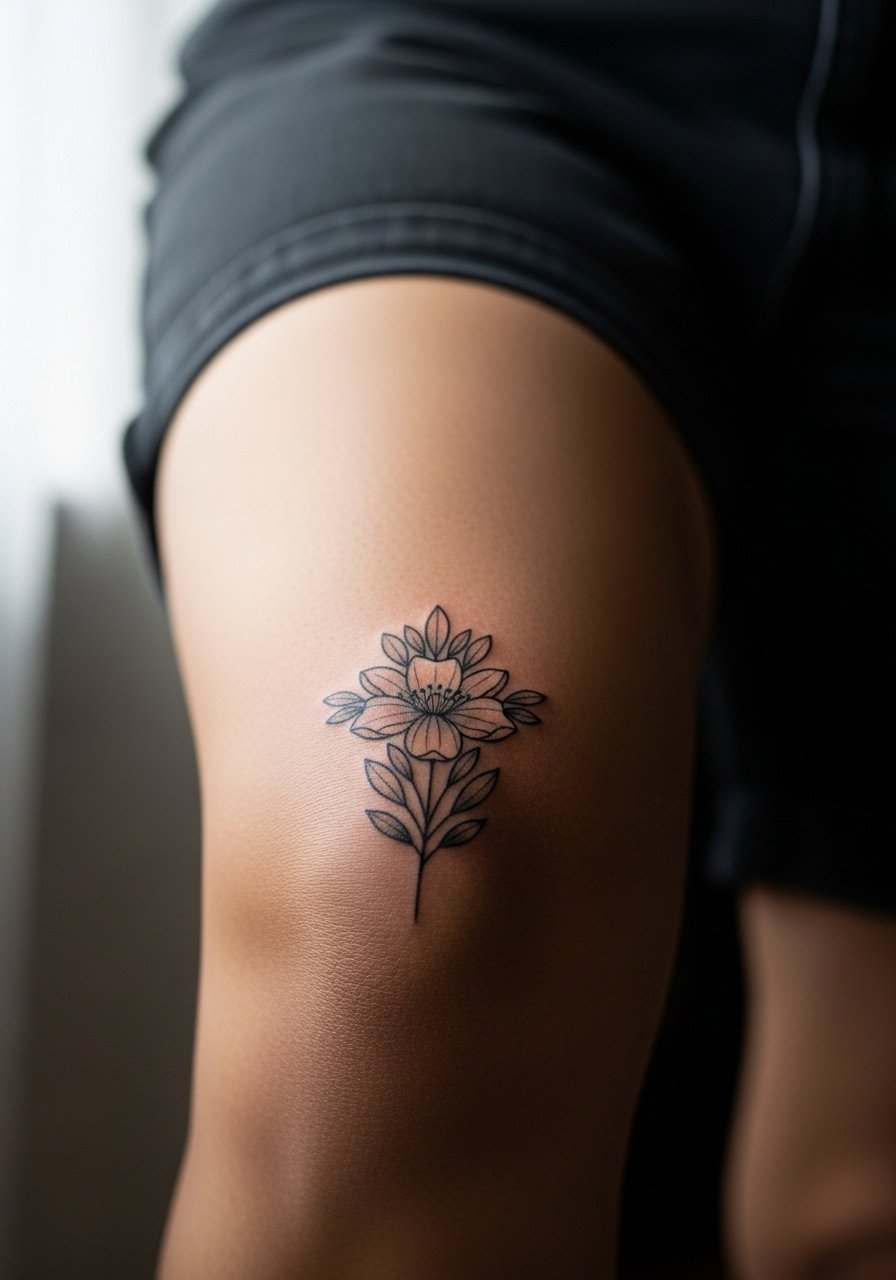
Knee tattoos sit on a flexible, cartilaginous surface that moves constantly. Choose a stylized bloom with larger elements instead of fine filigree. The mistake is packing too much small detail which breaks with repetitive bending. For session wear bring loose shorts that do not bind the knee. Knee pieces can be rewarding visually but require realistic expectations about touch-ups.
24. Vintage Blackwork Blossom on the Back of the Hand
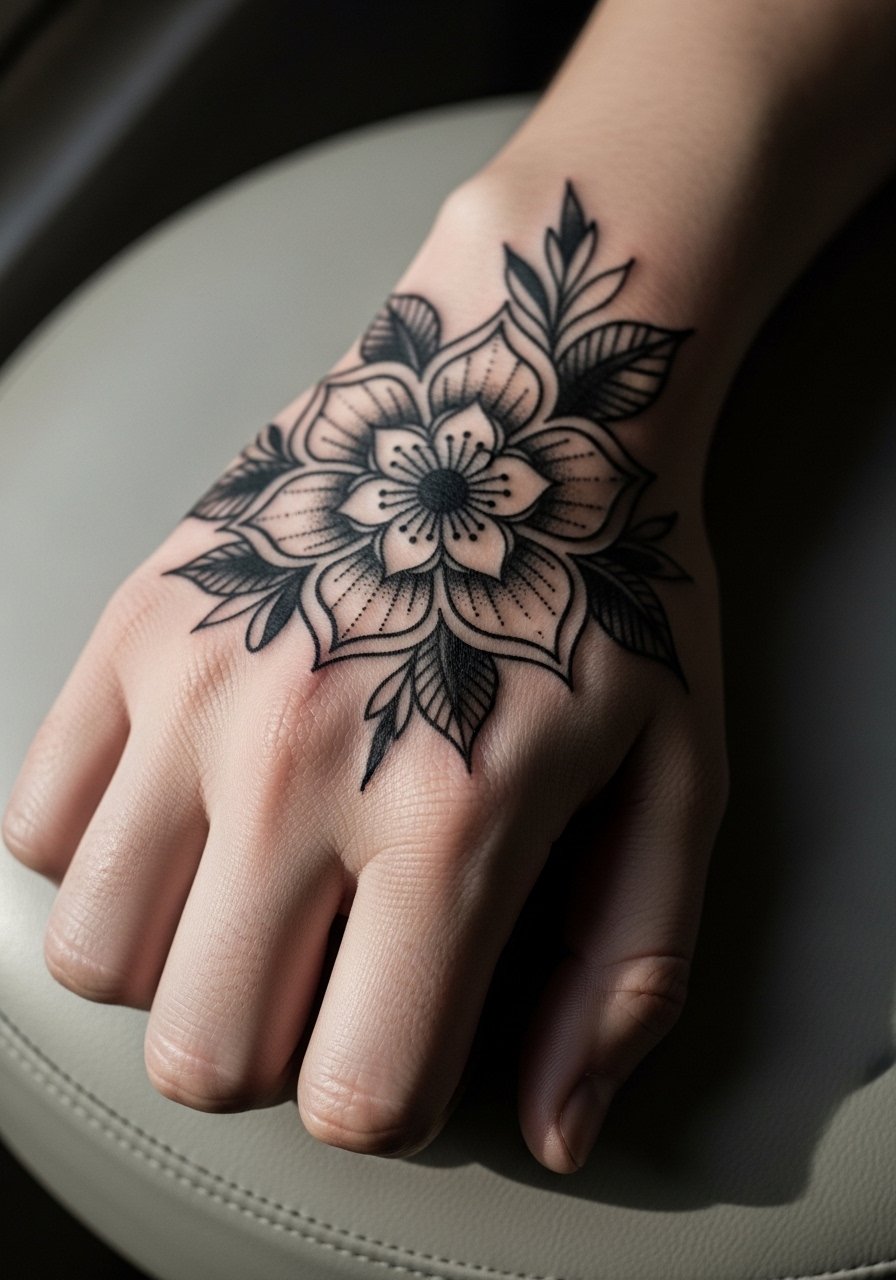
Hand placements age fast because of washing and sun. If you want a hand blossom opt for bold blackwork that accepts friction better than delicate color fills. The typical error is asking for subtle shading that disappears. Keep in mind some workplaces view visible hand tattoos differently. Pair with minimalist rings during show-off moments and accept that periodic refreshes are part of the plan.
25. Geometric Floral Wreath on the Thigh
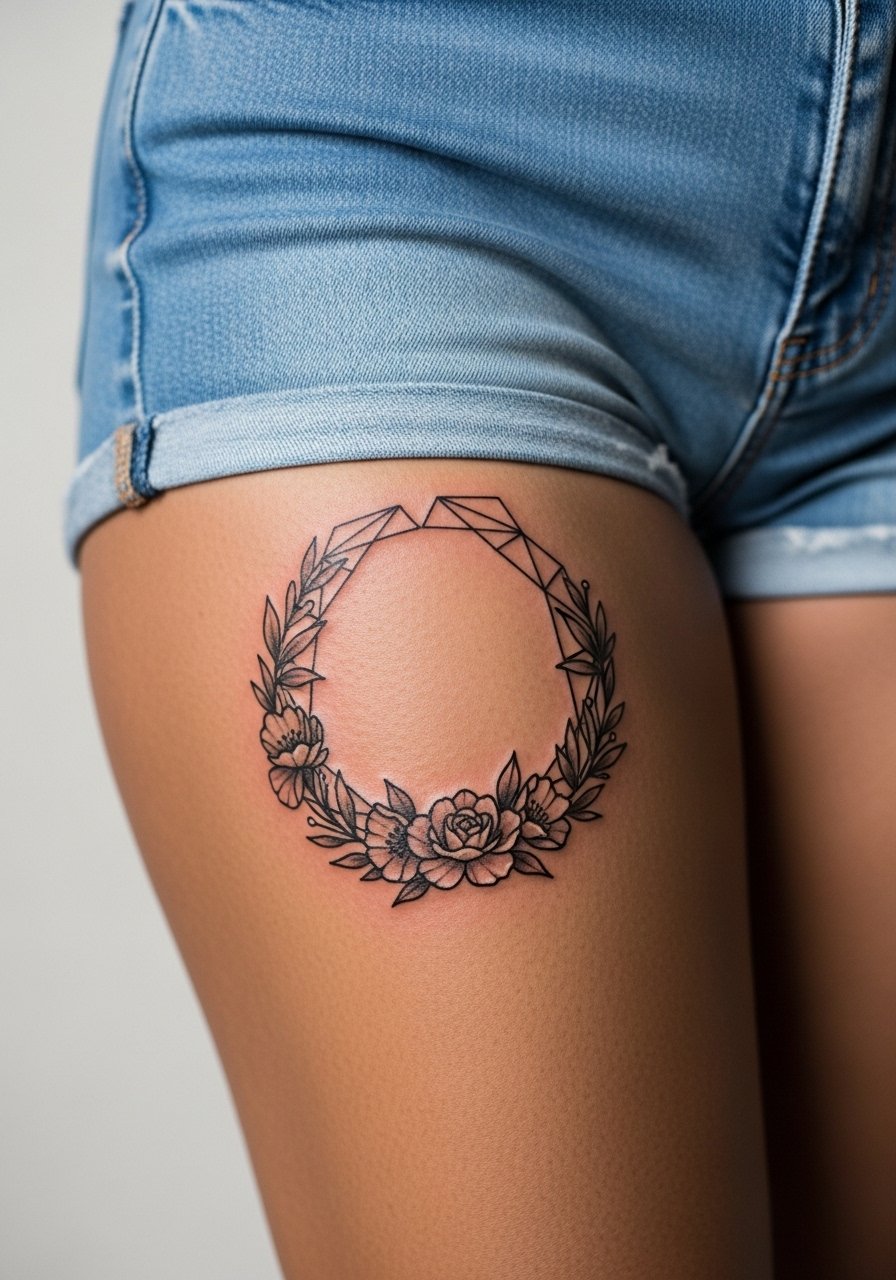
Combining geometry with florals can anchor the bloom and help it age more legibly. Request clear spacing so the shapes do not merge into the petals. The mistake is overcomplicating the geometry with tiny elements that compress. Thigh placements handle scale well and can show both detail and negative space. For wardrobe, high-waisted skirts or shorts make the wreath a focal point.
26. Fine Line Rose Ribcage
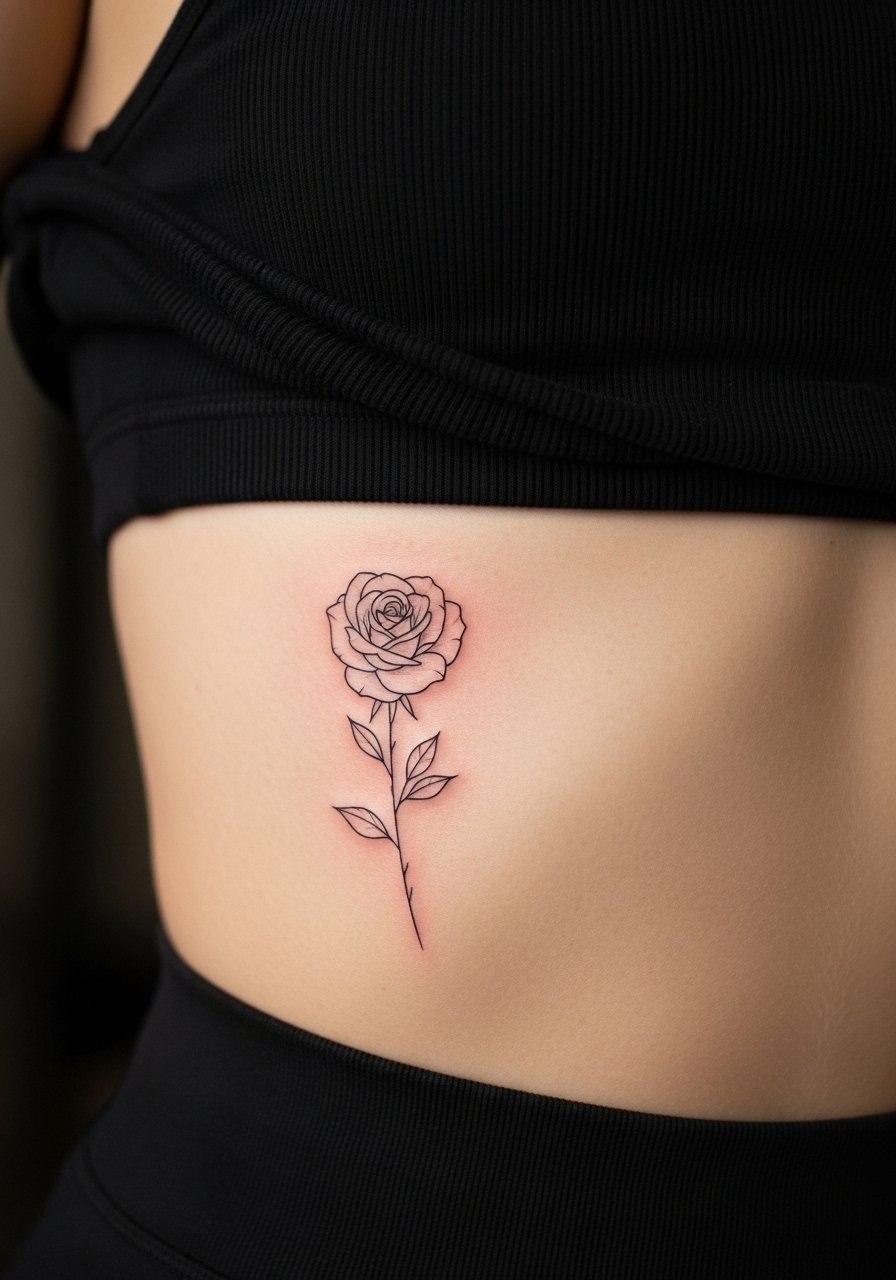
Fine line roses on the ribs are beautiful but controversial. One group of artists warns that the stretch and skin movement on the ribcage blurs ultra-fine lines in two to three years. The opposing group argues that careful depth and slightly increased spacing makes fine line settle just fine. Before booking discuss depth and spacing with the artist and decide which camp their technique aligns with. Ribs are among the more painful spots, so plan breaks and wear a zip-up top for comfort.
27. Wreath of Tiny Wildflowers Around the Collar
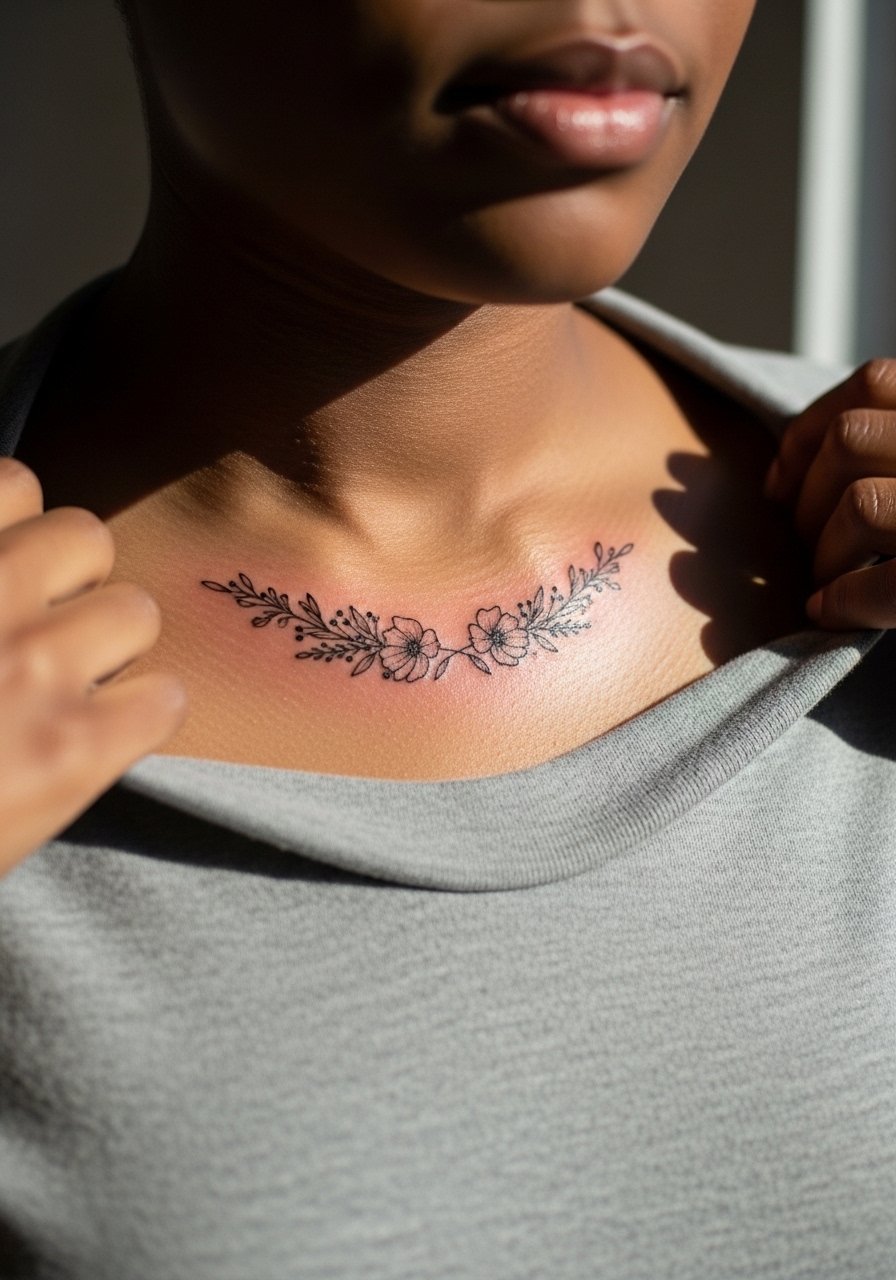
A narrow wreath above the collar frames the neckline elegantly when scaled for visibility. Ask for slightly bolder outer lines to protect the design against early softening. The frequent mistake is expecting micro-detail to stay crisp against chest motion. For evening attire, choose wide-neck or scoop-neck tops that place the wreath in the open. This placement is visible and photographs well without needing heavy color.
Frequently Asked Questions
Q: Will fine line vintage florals blur faster than bold traditional ones?
A: Fine line pieces can soften sooner than bold traditional work because thinner lines have less margin for skin movement. That does not mean avoid fine line. If you prefer it ask your artist to increase spacing and use slightly heavier anchor lines so the composition reads longer before a touch-up is needed.
Q: How should I dress for a ribcage or sternum session to stay comfortable and give the artist access?
A: For ribs wear a zip-up hoodie or a cropped athletic top you can lift easily. For sternum choose a fitted sports bra or bandeau that keeps coverage while exposing the working area. Bring a loose shirt to change into after the session so the tattoo is not pressed by tight collars.
Q: Do watercolor vintage flowers heal differently than blackwork florals?
A: Watercolor-style washes often need more hands-on touch-ups because their softer edges and lower contrast can fade into uneven patches. Blackwork and saturated traditional fills hold up better against sun and abrasion. If you love watercolor ask for hybrid work that pairs defined outlines with contained washes.
Q: How much should I expect to plan for touch-ups on fingers, hands, and ankles?
A: Expect these zones to require more frequent touch-ups because of constant friction and washing. Fingers and hands are top of the list, ankles next. Factor that into your long-term plan rather than treating it as a surprise.
Q: Where can I look for vintage floral references and independent flash when I want a custom that is still affordable?
A: Browse marketplace portfolios and small shops on Etsy along with dedicated hashtag searches on Instagram and Pinterest. Those discovery pathways help you find flash with vintage aesthetics and artists who offer pocket-sized custom work without demanding large sleeves as a minimum.
Q: Should I worry about career impact for visible floral placements like hands or neck?
A: Some industries still have restrictions on visible tattoos. Hands and neck are most likely to be noticed. Think about your career stage and whether you want a placement that can be covered by clothing or jewelry when necessary.