
Fine line and heavy black portraits both show up in saved boards, and the surprise comes later when placement, skin type, or sun exposure starts shrinking the reference into a softer version of the idea you loved. Fading, placement that reads larger on skin, and unexpected touch-up needs are the three things I hear most in shops. Read through these 27 directions and you will find clear tradeoffs, what to ask in consultation, and the one approach that best fits your everyday wardrobe.
1. Black and Grey Realism Portrait with Halo and Roses
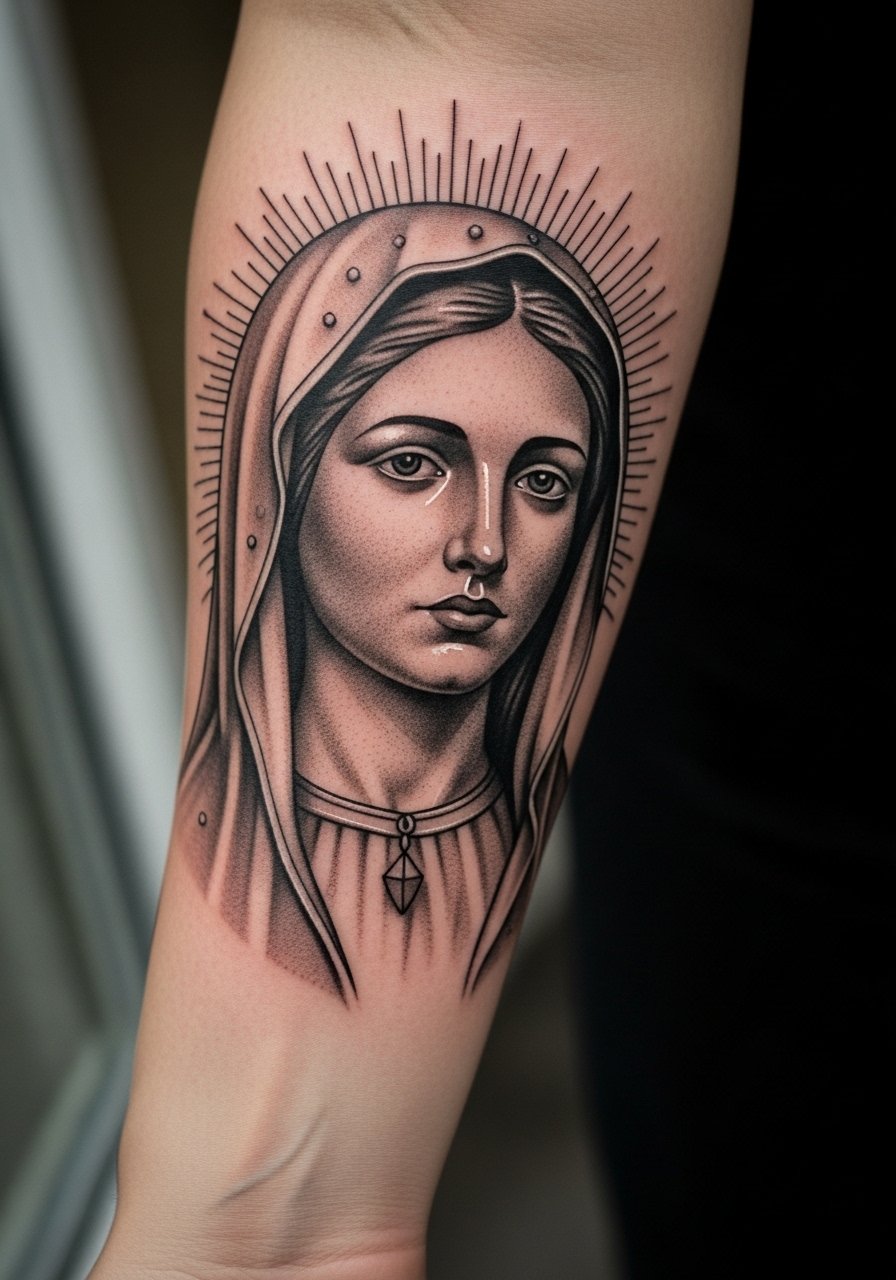
I've seen this version hold up best on the forearm because the area gets regular sun care and is easy to cover when needed. Tell your artist you want slightly heavier linework around the eyes and a soft stipple shading for the cheeks to prevent early blur. Common mistake is asking for ultra-micro detail in a 2-inch piece, which often reads muddy at year two. Expect moderate pain for the inner forearm and a two to three hour session for a 4×6 inch portrait. Pair with rolled sleeve cotton tees to show the piece without glare and wear a loose cotton button up shirt to the session so the artist can access the area easily.
2. Traditional Sacred Heart Virgin Mary with Rosary Draping
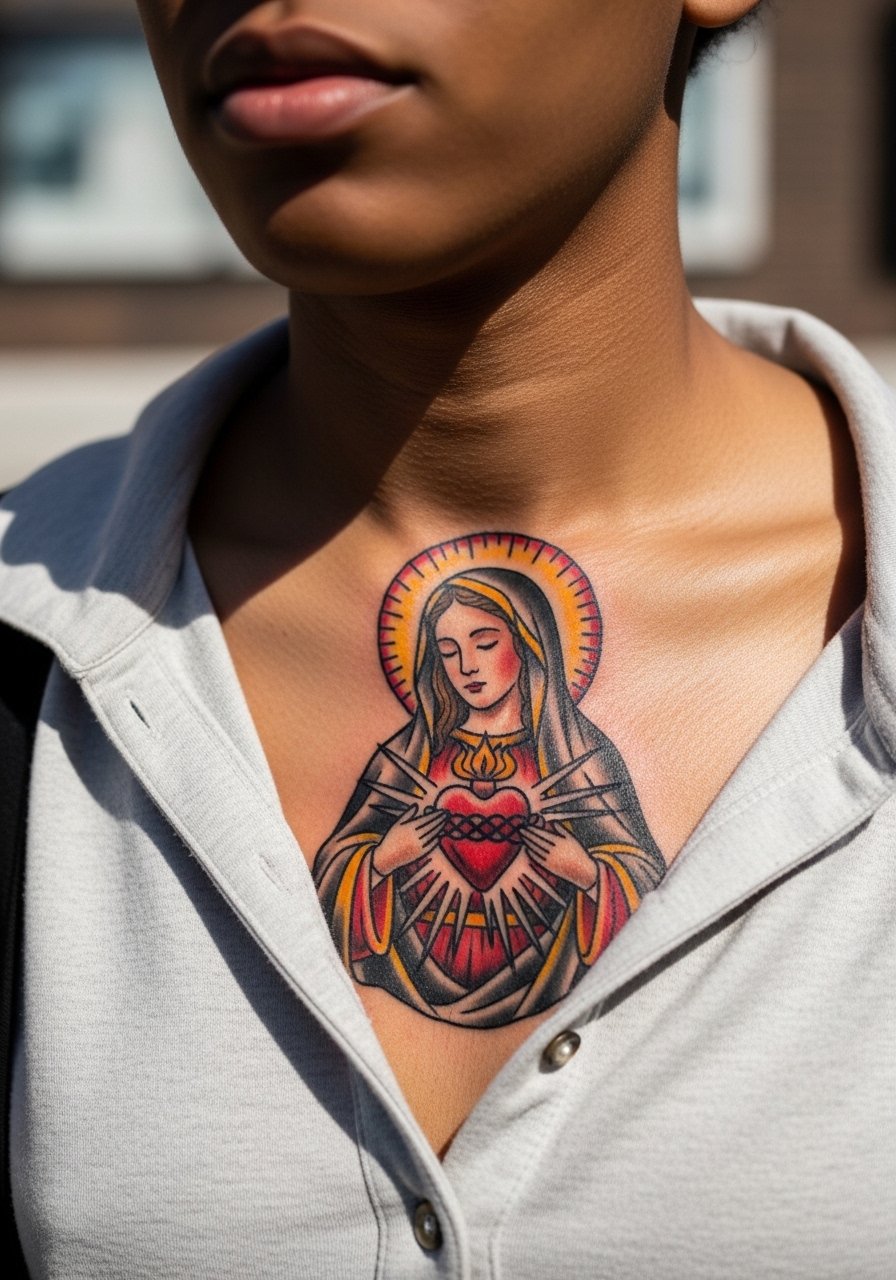
Fair warning, chest pieces read large on the body. The traditional approach with thick outlines and saturated color ages into bold shapes rather than soft smudges. In consultation, specify that you want clean black outlines and color saturation only in the heart and rosary beads. The ribcage or upper chest can be a 6 to 8 out of 10 pain experience, but the session time is shorter for a small-to-medium chest piece. For showing it off, reach for a v neck henley shirt in solid black that frames the color while keeping the look wearable. Note on culture and use: if you lean Guadalupe-specific, acknowledge origin in your brief to the artist rather than asking for exact cultural replicas.
3. Watercolor Virgin Mary with Ethereal Robes and Florals
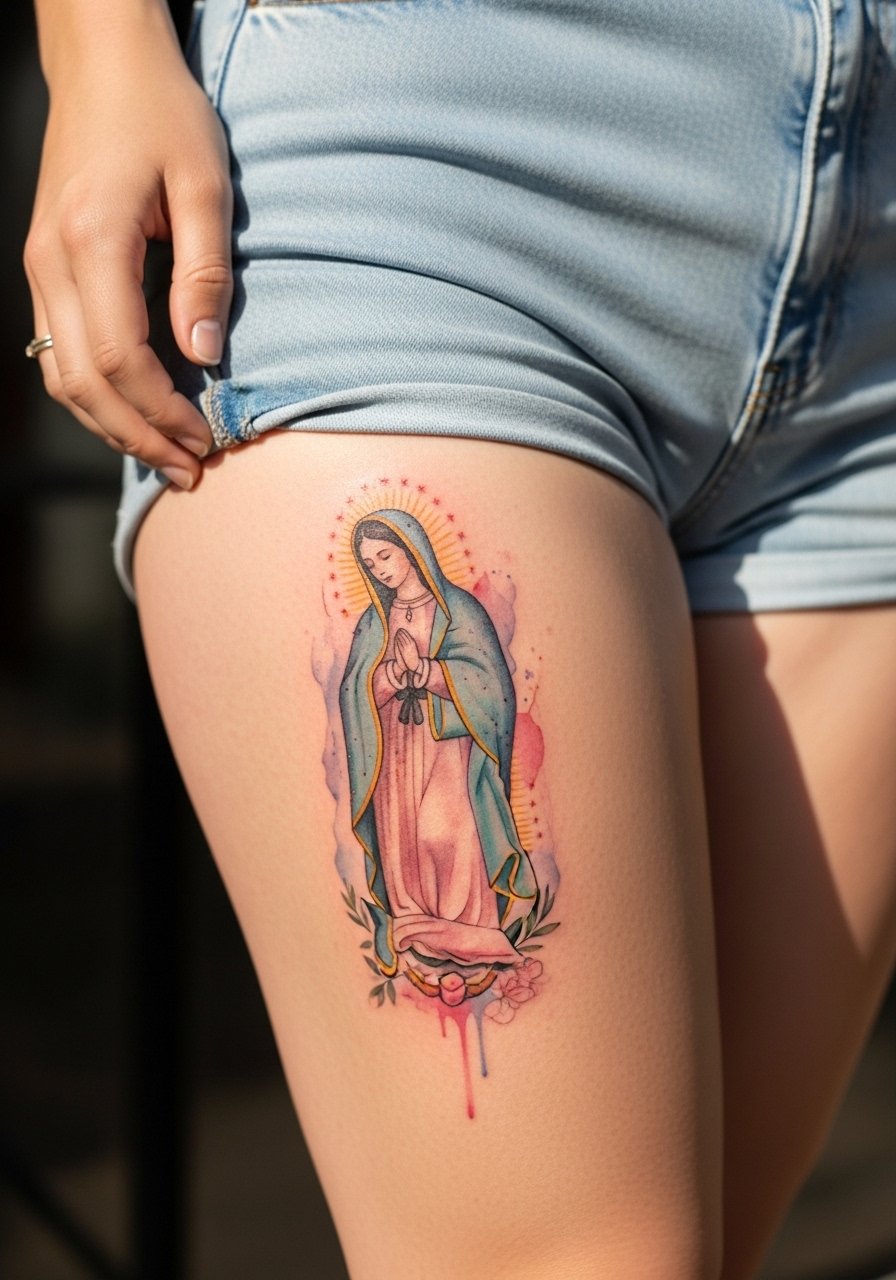
Most watercolor pieces need room to breathe, which is why the thigh is a natural home for them. The key instruction at consultation is to ask for intentional negative space around the robes so the pigments can age without looking like a bruise. A common mistake is compressing a watercolor composition into a small size. Sessions typically run two to three hours and may require a touch-up at year two for pastel areas. For the appointment wear, pull on high waisted athletic shorts so the artist has full access while you stay comfortable.
4. Fine Line Our Lady of Guadalupe with Geometric Frame
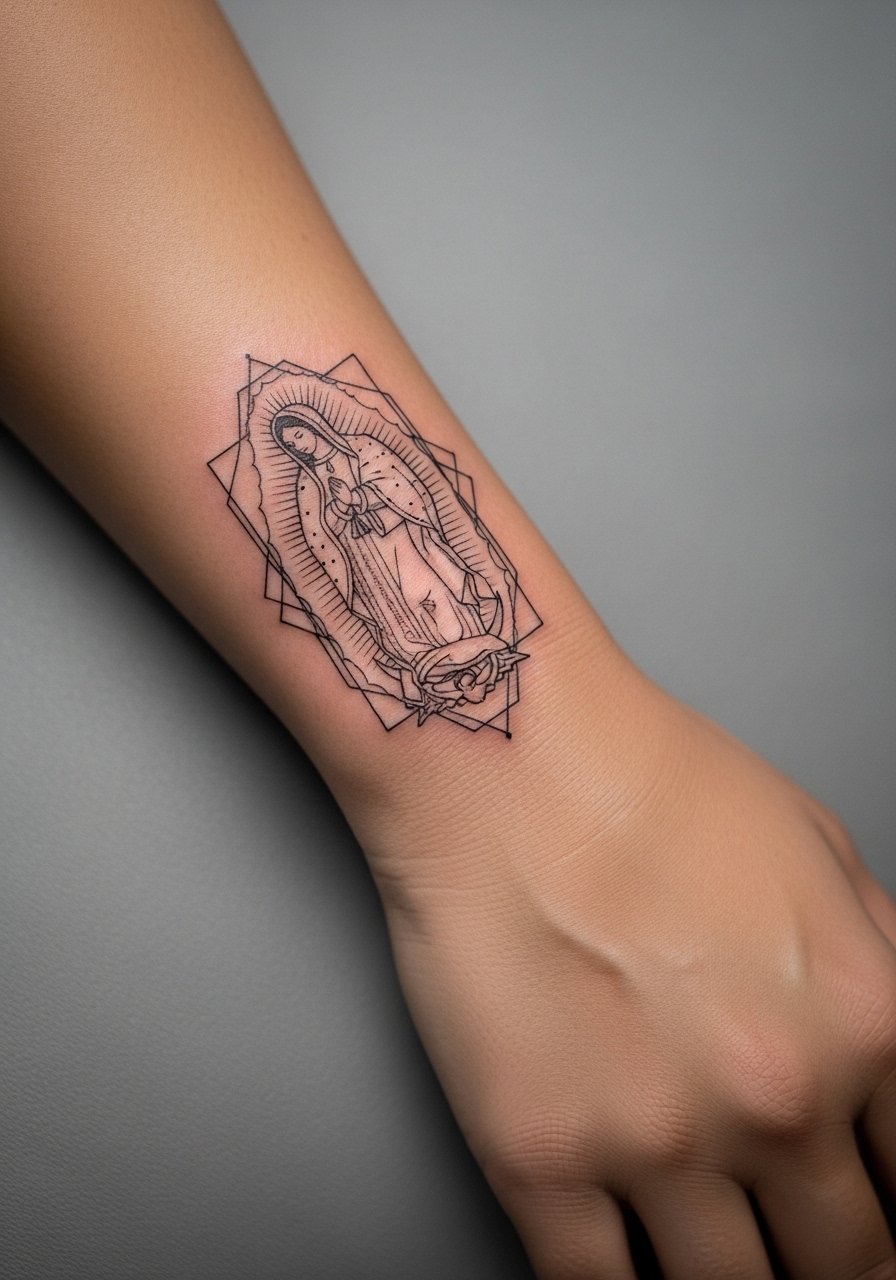
When you want a discreet, modern take, fine line on the wrist reads delicate and editorial. Artists split on whether fine line holds up better than bold line on small wrist pieces. One camp argues that subtlety suits a small wrist and can be maintained with touch-ups. The opposing camp says wrists move too much and need stronger line weight to avoid early merging. Ask your artist which approach they prefer and why. Expect a quick one-hour session and light wrist sensitivity. To show it off, layer a dainty cuff bracelet on the opposite wrist so the tattoo reads as part of your everyday accessories.
5. Neo-Traditional Mary with Cherubs and Rays of Light
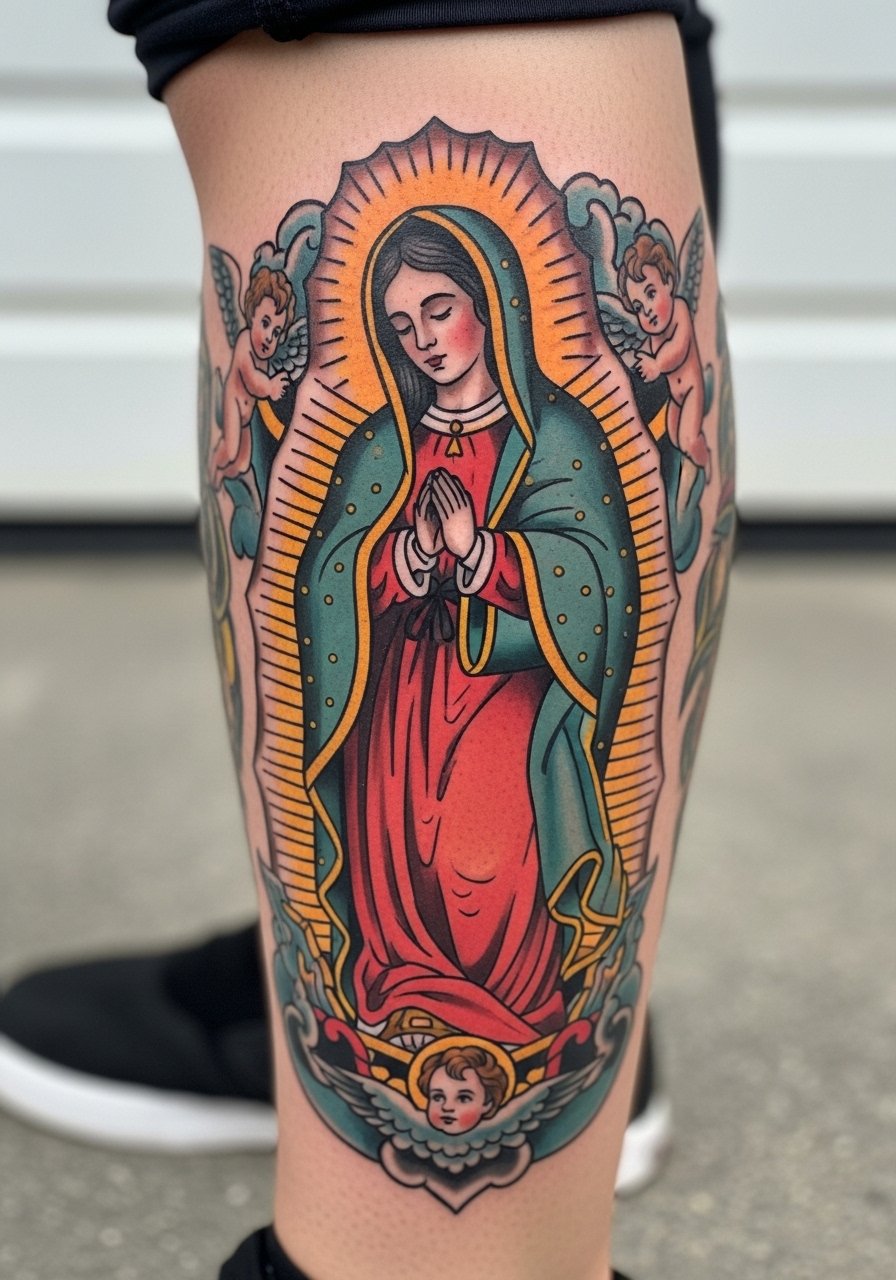
There is something about bold illustrative work on the calf that reads from across a room. The neo-traditional mix of flat color and illustrative shading translates well to narrative pieces that include cherubs or family motifs. In consultation, bring reference showing the cherubs at a scale that does not crowd Mary's face. A common mistake is adding too many small filler elements, which age into visual noise. Session time is three hours for a medium calf composition and pain levels are moderate. For casual reveal, roll slim chinos or wear shorts with canvas boat shoes so the calf sits naturally on show.
6. Blackwork Virgin Mary Silhouette with Ornamental Mandala
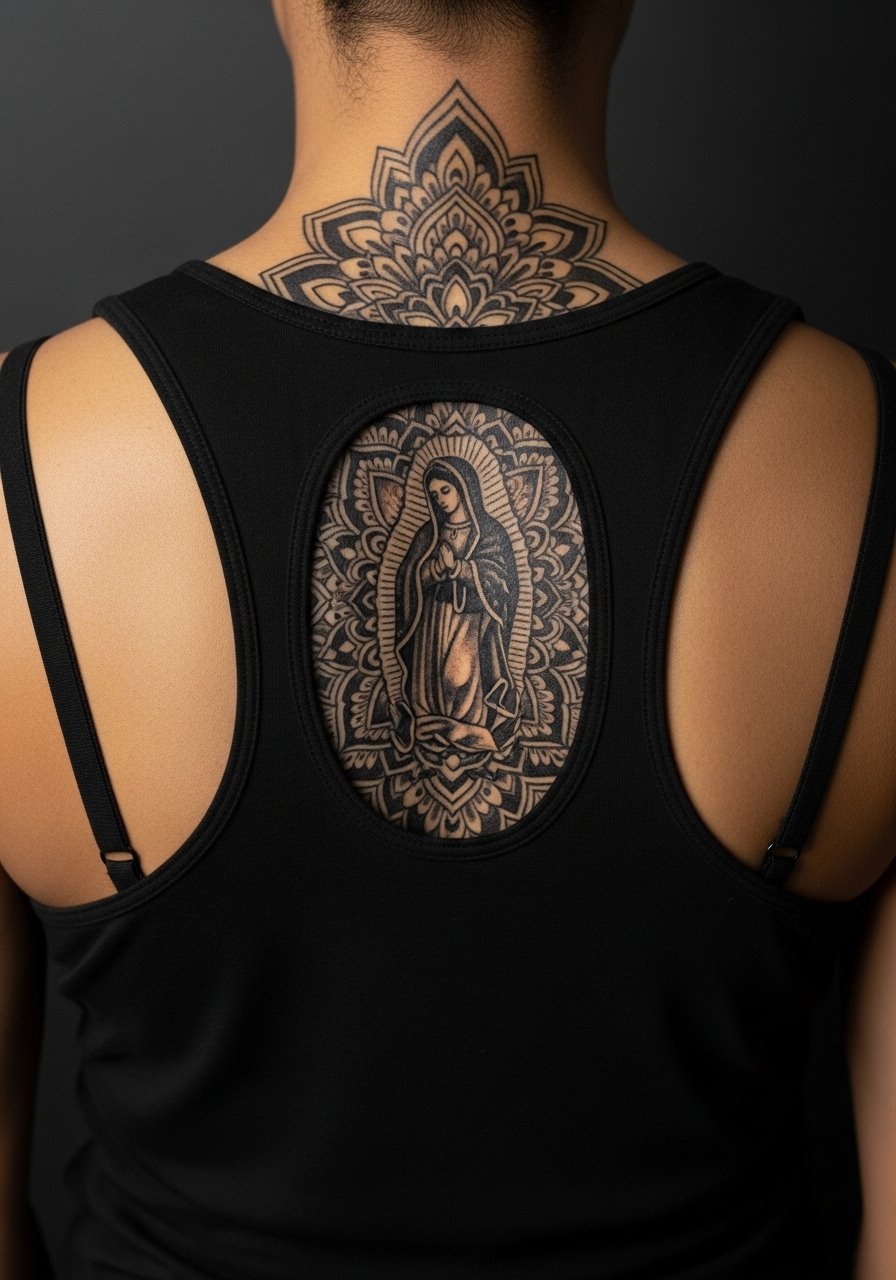
Most people choose blackwork for longevity because solid black ages into clear shapes rather than faded color patches. Tell your artist you want dense black saturation in the silhouette and spacing in the mandala to avoid early bleed. The spine placement is high pain but visually striking. One real mistake is cramming a dense mandala into a narrow vertical area, which produces line merging after a few years. For session comfort, bring a loose racerback tank so you can lie or sit without fabric tugging at the tattooed strip. For cultural sensitivity, treat mandala elements as inspired motifs rather than claimed sacred replicas.
Before You Book
The chest and calf pieces above ask for different prep than the wrist and forearm pieces, so these five small items smooth the session and the first week.
- Stencil transfer paper kit. Lets you preview line placement on skin before committing, especially useful for the wrist and collarbone ideas above.
- Topical numbing cream. Apply about 45 minutes before the session to take the edge off sensitive chest or ribcage work.
- Thin protective film roll. Useful for finger and wrist tattoos that see constant washing and friction.
- Fragrance-free gentle body wash. Cleans healing skin without introducing irritants that can dull fine line work.
- Aquaphor healing ointment. Thin layer application in the first few days helps retain moisture for tight linework without clogging.
7. Ignorant Style Mary Praying Hands with Dripping Ink Effect
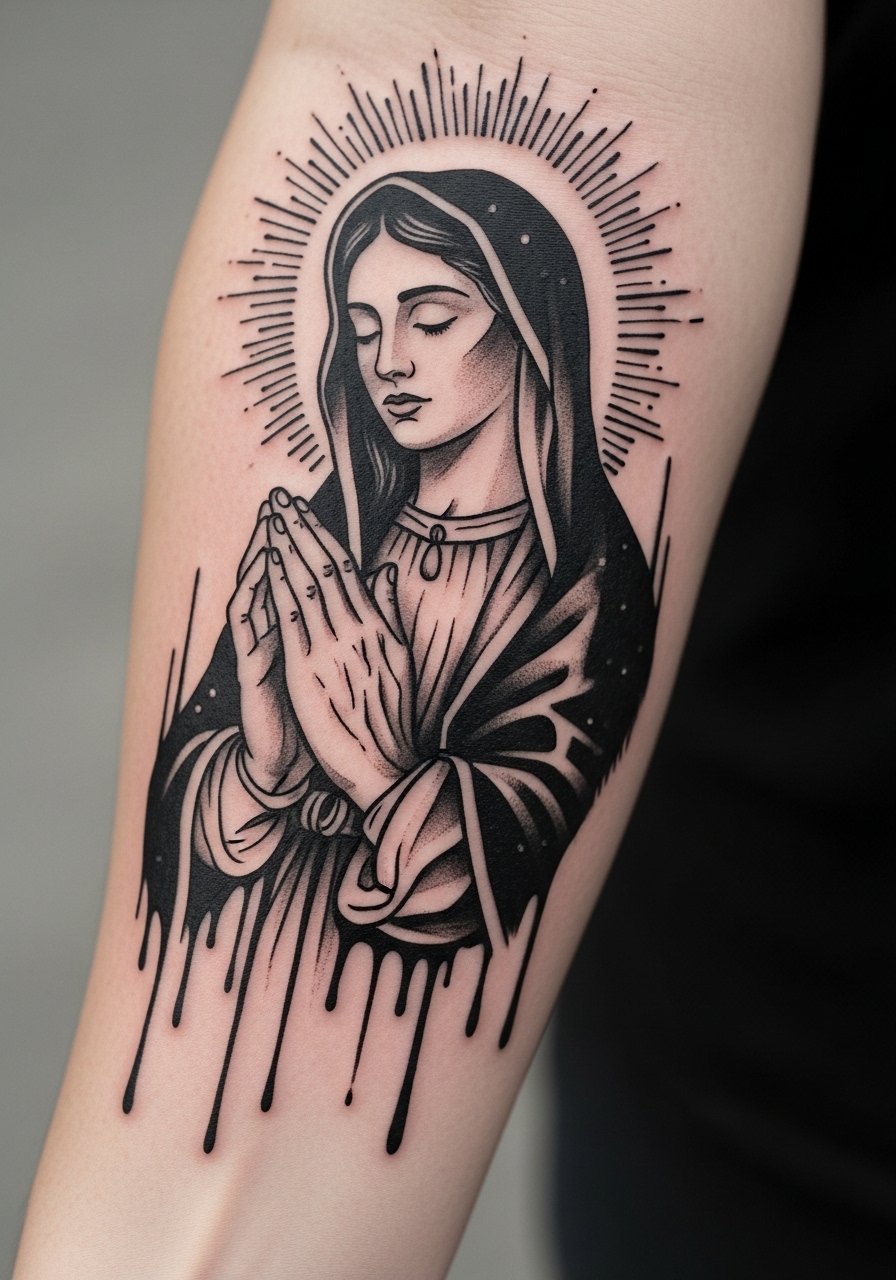
This street-art approach feels raw and immediate, and it ages like graphic ink rather than soft portraits. In consultation ask the artist for controlled drips rather than random smudges so the dripping reads intentional on healed skin. A common error is asking for too many micro drips in a small forearm piece, which can look messy after washing and healing. Sessions are typically one to two hours with low to moderate pain. For showing it off, roll sleeves on a rolled sleeve tee men to frame the forearm without competing patterns.
8. Micro-Realism Mary with Tiny Halo on the Wrist
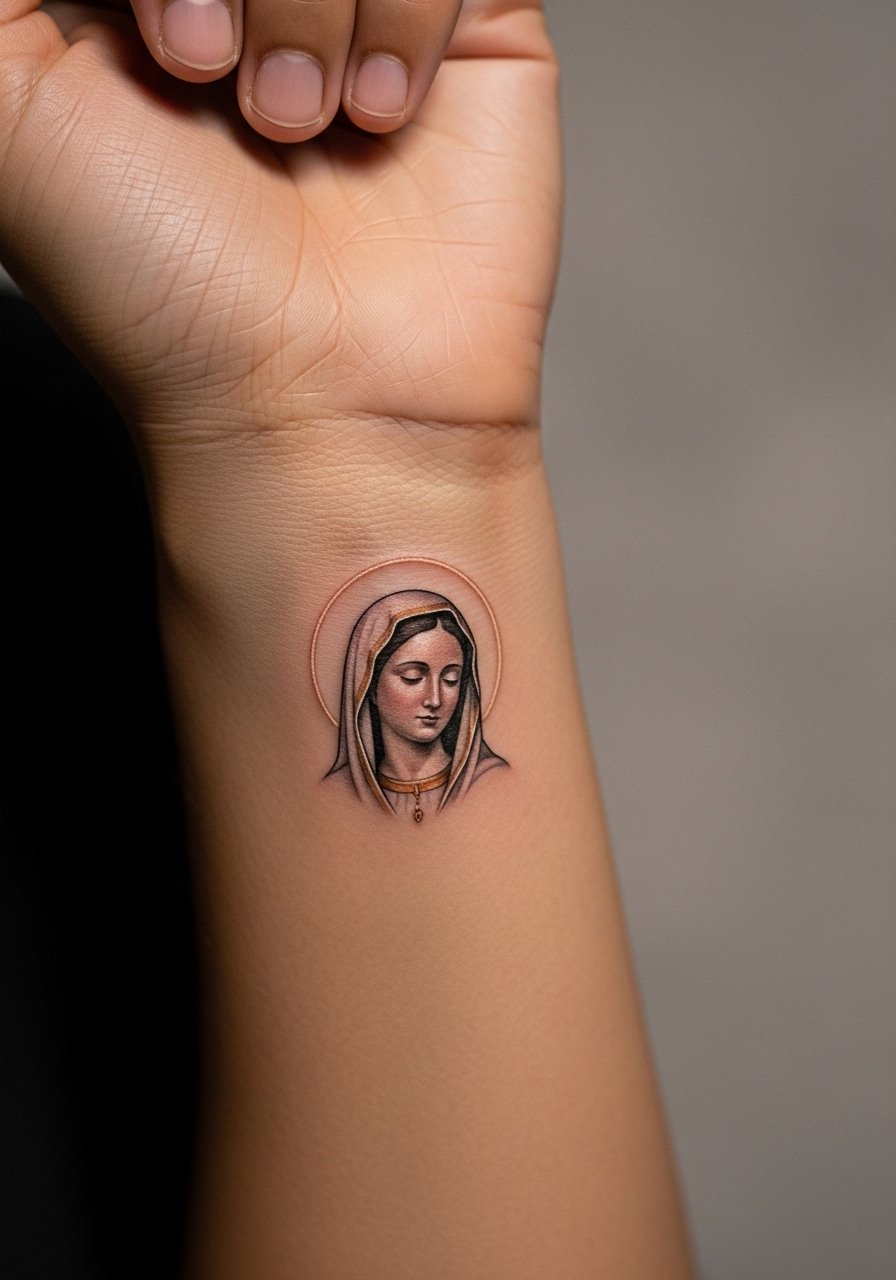
Most micro-realism pieces are a test of scale. The biggest mistake is insisting on photo-level detail in a two-inch area without accepting the trade-off of touch-ups. Ask your artist for slightly heavier contour lines around the face so small features hold. Fine line supporters say wrists can maintain subtle work if the depth and spacing are right. Critics point to skin movement and friction as reasons to choose heavier lines. Expect a short session and the possibility of a one to two year touch-up. Keep the wrist free of rings during healing and pair the piece with a simple thin leather cuff bracelet on the opposite arm for balance.
9. Collarbone Guadalupe with Thin Rays
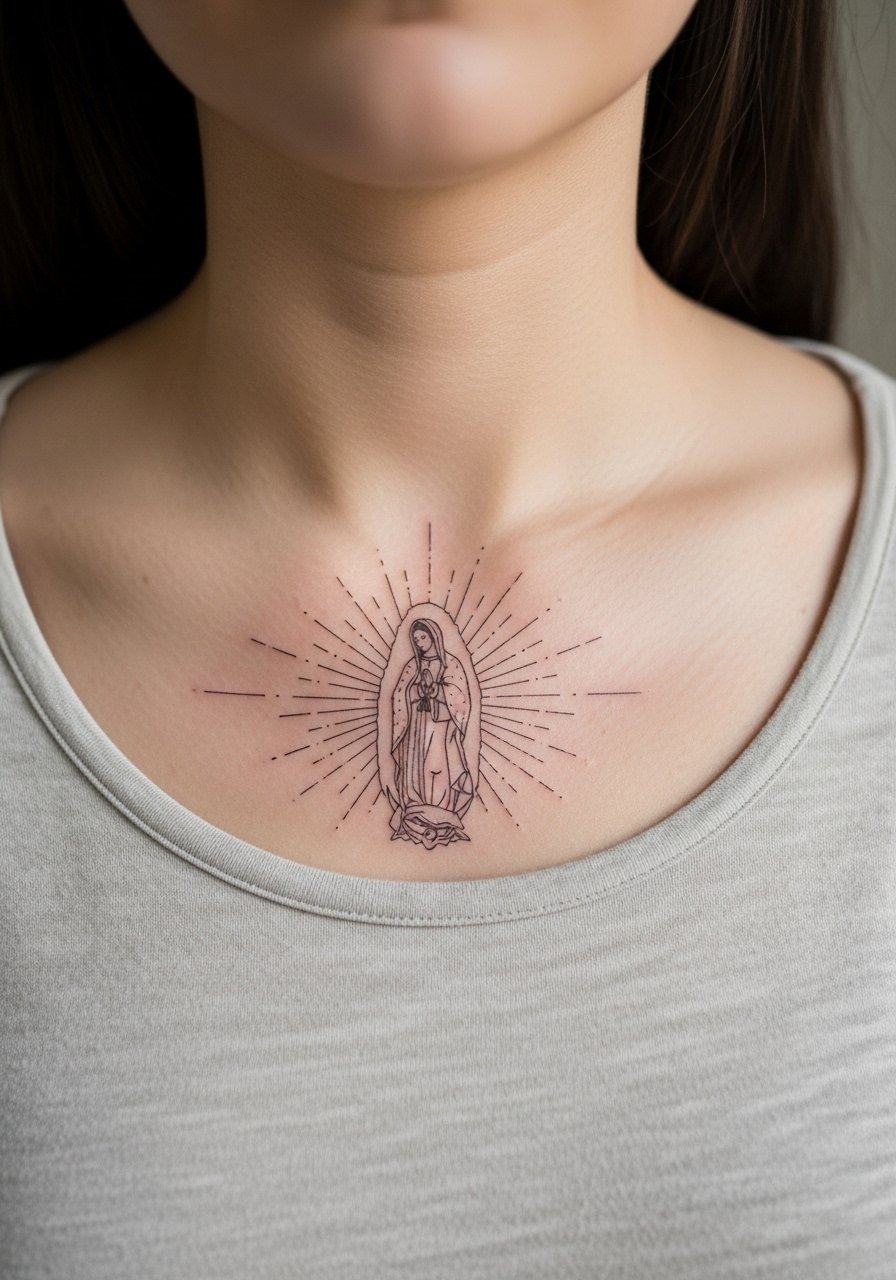
The collarbone is deceptively visible and the rays need breathing room. My advice is to ask for fewer, slightly thicker rays instead of many hairline rays that can blur into a halo haze. A common mistake is centering the piece too near the neck where clothing rubs daily. Session time is short but expect moderate tenderness from proximity to bone. For show-off styling, pair with a thin chain pendant necklace that sits just above the piece so both elements complement each other without crowding.
10. Guadalupe Geometric Frame on the Ribcage
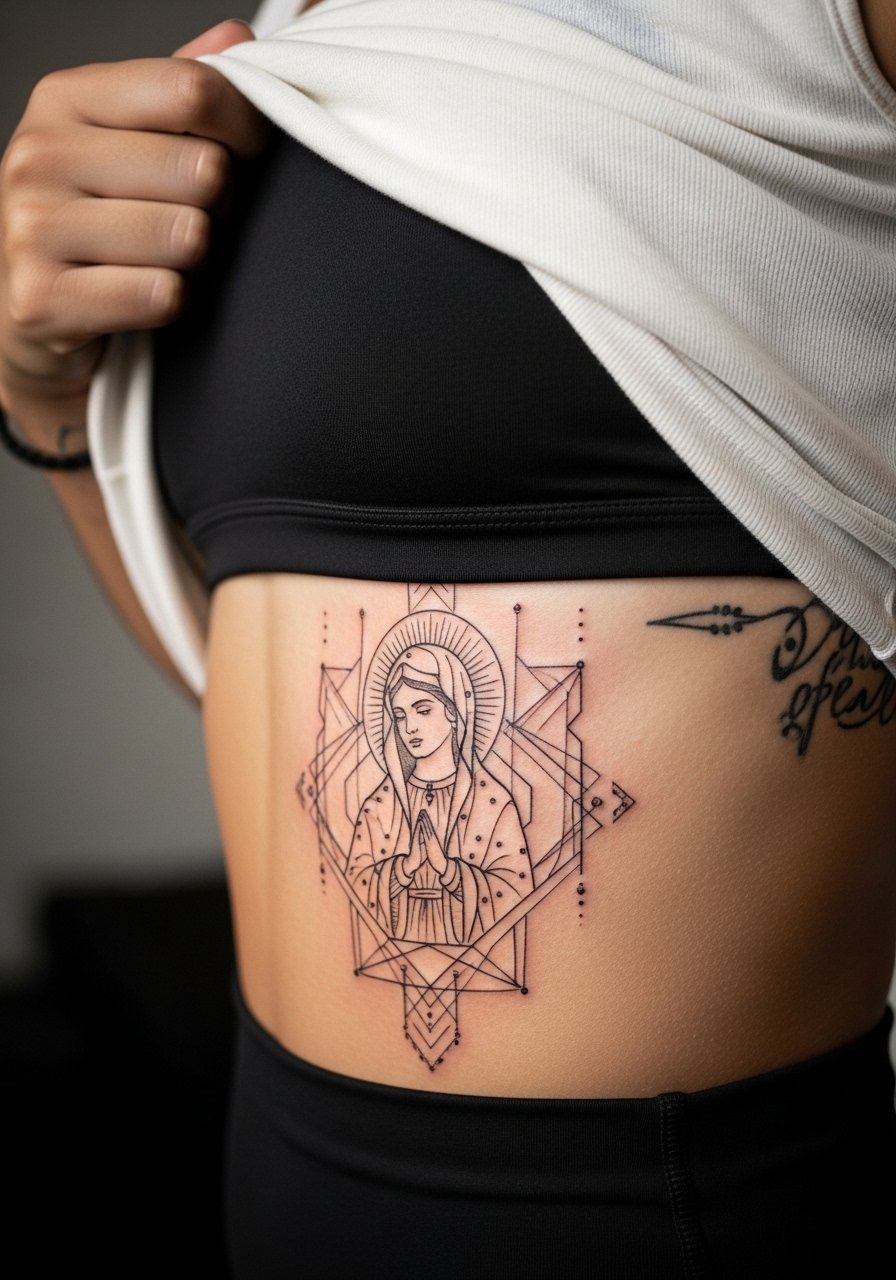
Fair warning, ribs are a high-pain area that also challenge fine detail over time. Artists split on whether fine line holds up on ribs. One side says the skin movement there blurs lines within two years. The other side points out that with proper needle depth and spacing, fine line can settle fine on rib skin. Name the debate when you book and ask artists how they handle spacing and depth on the rib. Expect a longer session and a realistic touch-up timeline at year two or three. For the appointment, wear a cropped athletic top you can lift slightly to reveal the area without exposing more than necessary.
11. Thigh Panel Mary with Floral Border
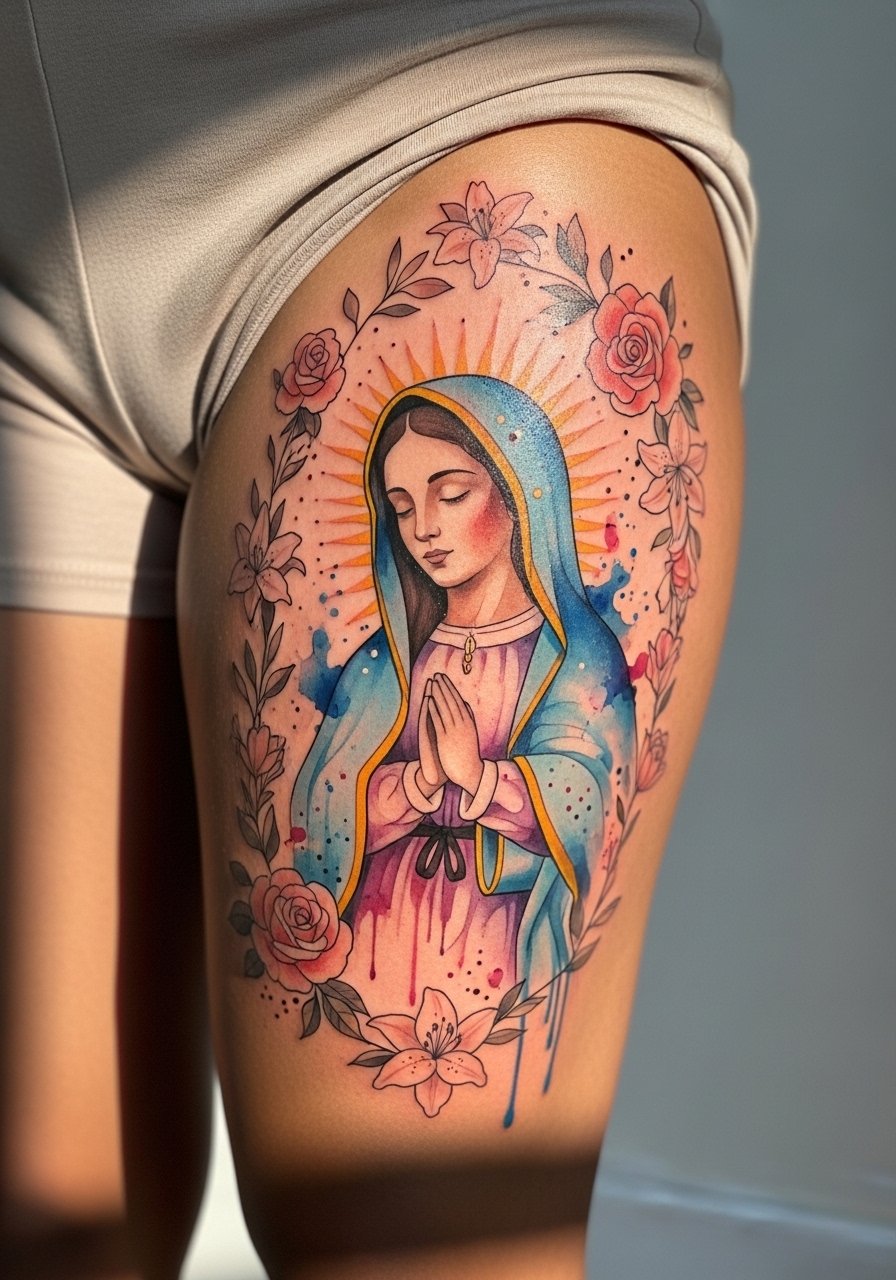
Most memorial or family pieces do well on the thigh because the canvas is large and private. Tell your artist that the florals should sit outside the robe edges to keep facial features crisp as the watercolor settles. A common mistake is overloading the panel with tiny script and small flowers that lose definition with time. Sessions are comfortable for most people and can last two to three hours. Show off the finished piece in summer with neutral swim trunks or high-waisted shorts when the weather allows.
12. Small Virgin Mary on the Ankle with Minimalist Halo
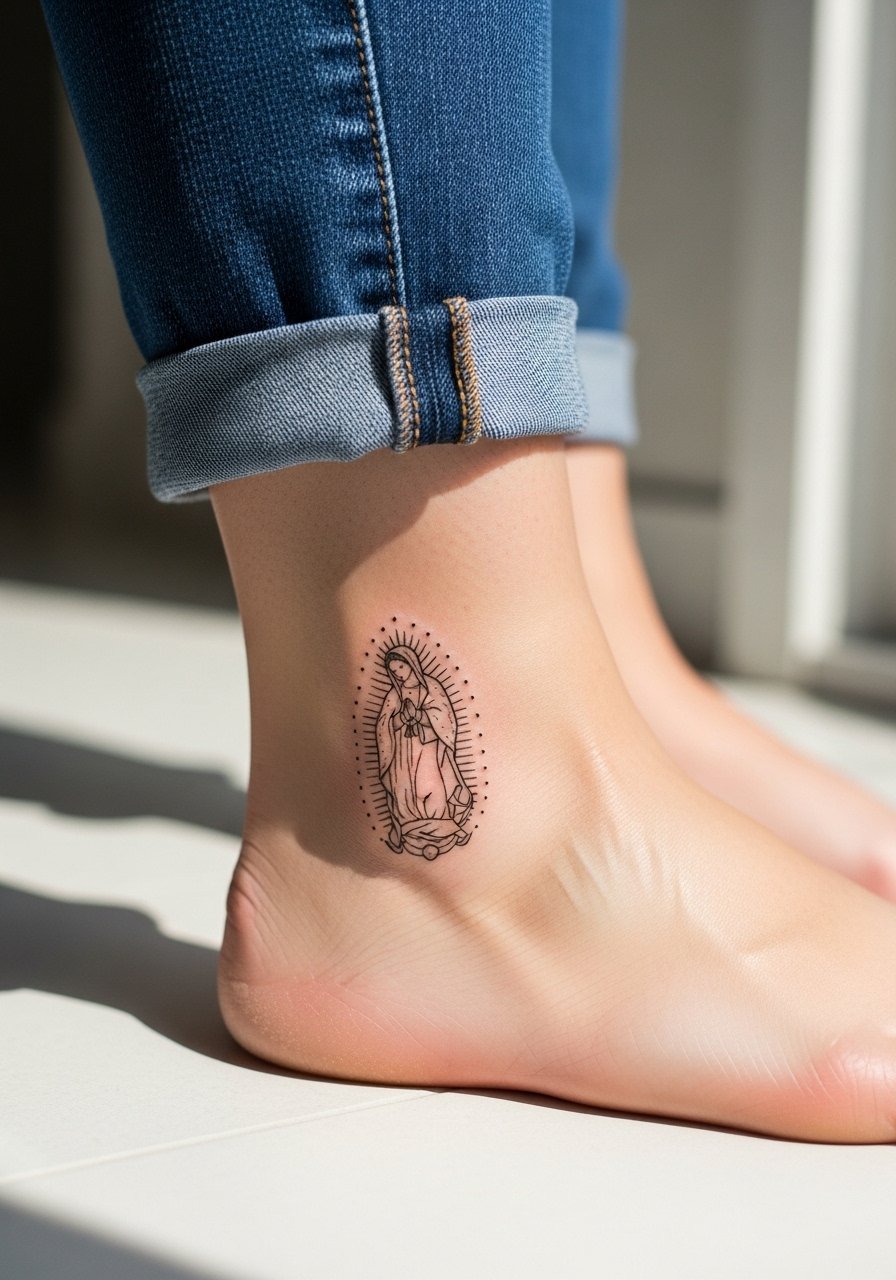
Ankle tattoos face constant friction and abrasion from shoes and socks, which speeds fading. The safe route is a slightly bolder outline and minimal interior shading so the piece reads clearly as it ages. A common mistake is requesting very thin interior detail at the ankle. Sessions are short and sensitivity is moderate. For sessions, roll pants up and wear a long skirt lifted slightly or sandals so the artist can reach the area without fabric rubbing.
13. Upper Arm Mary with Script Banner
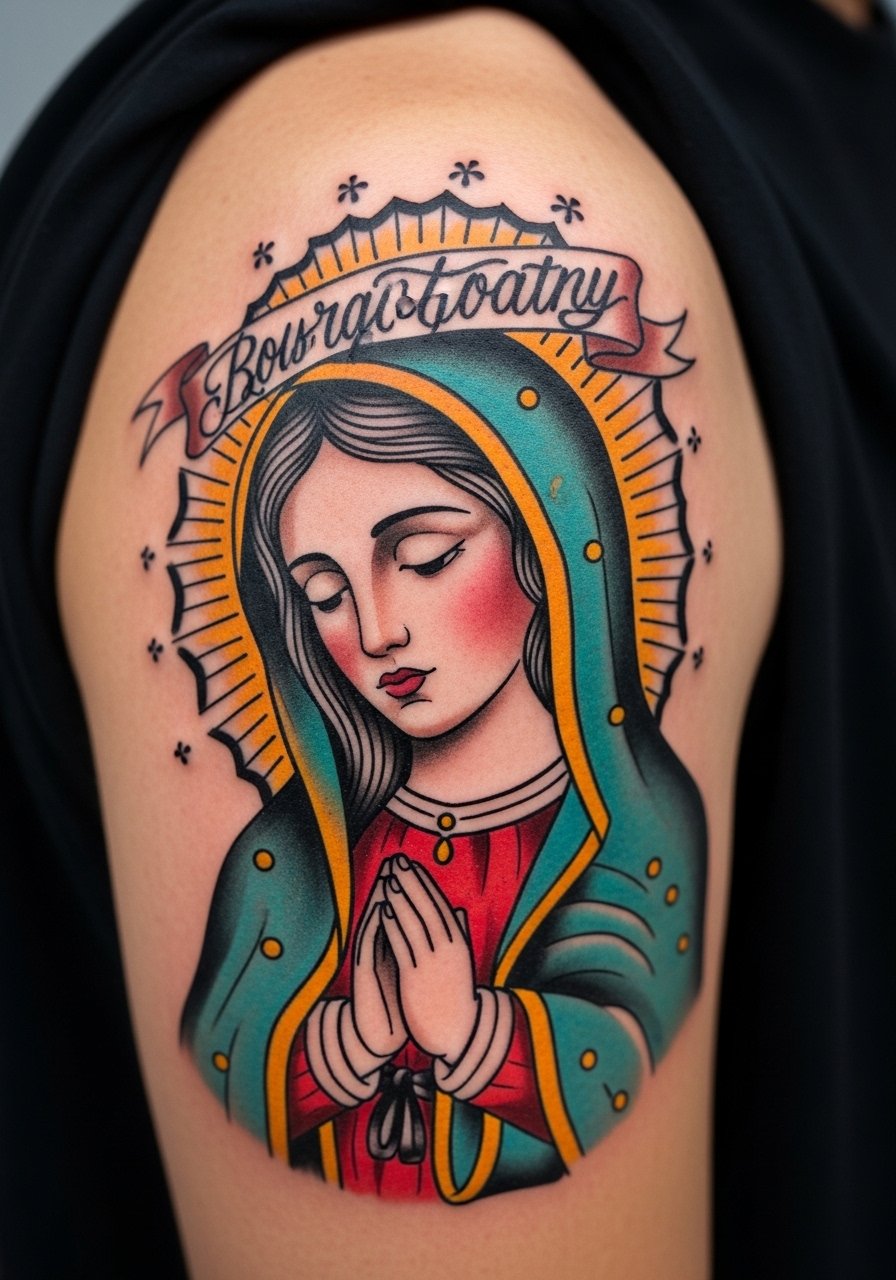
There is low blowout risk on the fleshy upper arm and this placement suits narrative pieces that pair Mary's image with family names or dates. The most common mistake is crowding the banner text into tight space. Ask for larger kerning and a slightly bolder script so the letters remain legible at year five. Expect a relaxed one to two hour session and mild pain. Pair this piece with a loose short-sleeve button-up for casual reveals.
14. Back-of-Neck Guadalupe Medallion
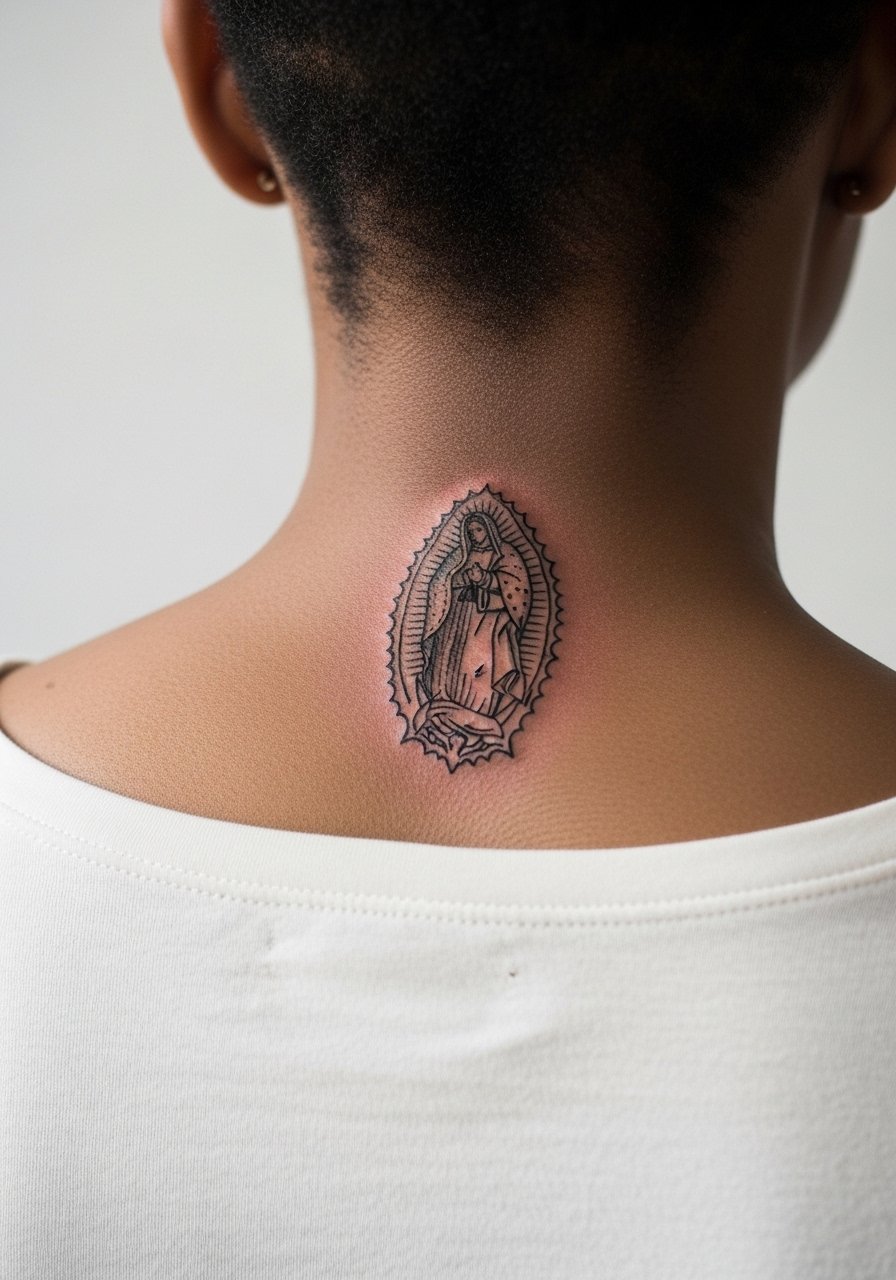
Neck placements need a clear discussion about visibility and career considerations. The back of neck can be easy to conceal with hair or collars but is also exposed in warm months. A common mistake is choosing ultra-fine detail that fades quickly from constant sweat and sun. Session time is short and the area can sting briefly. Wear a wide-neck shirt you can shift for access and comfort during the appointment.
15. Sternum Virgin Mary with Fine Filigree
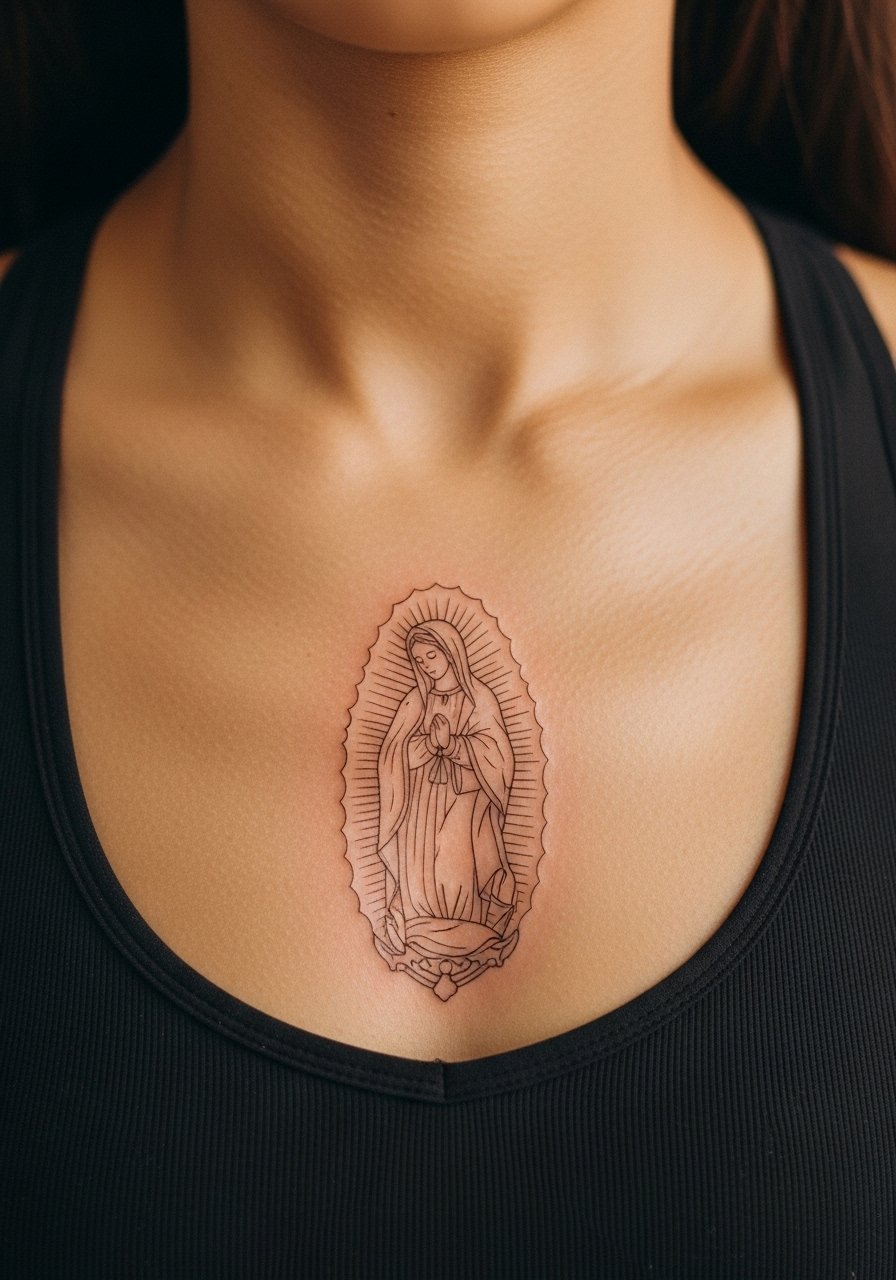
Sternum tattoos are sensitive both in pain and cultural framing. The fitted center area demands careful spacing in filigree so lines do not merge as the skin flexes. A frequent error is compressing ornamental work too close to the centerline. Expect high pain and a multi-hour session if you want a larger piece. For comfort, wear a fitted sports bra that keeps you supported while providing the artist access.
16. Minimalist Line Mary on the Finger
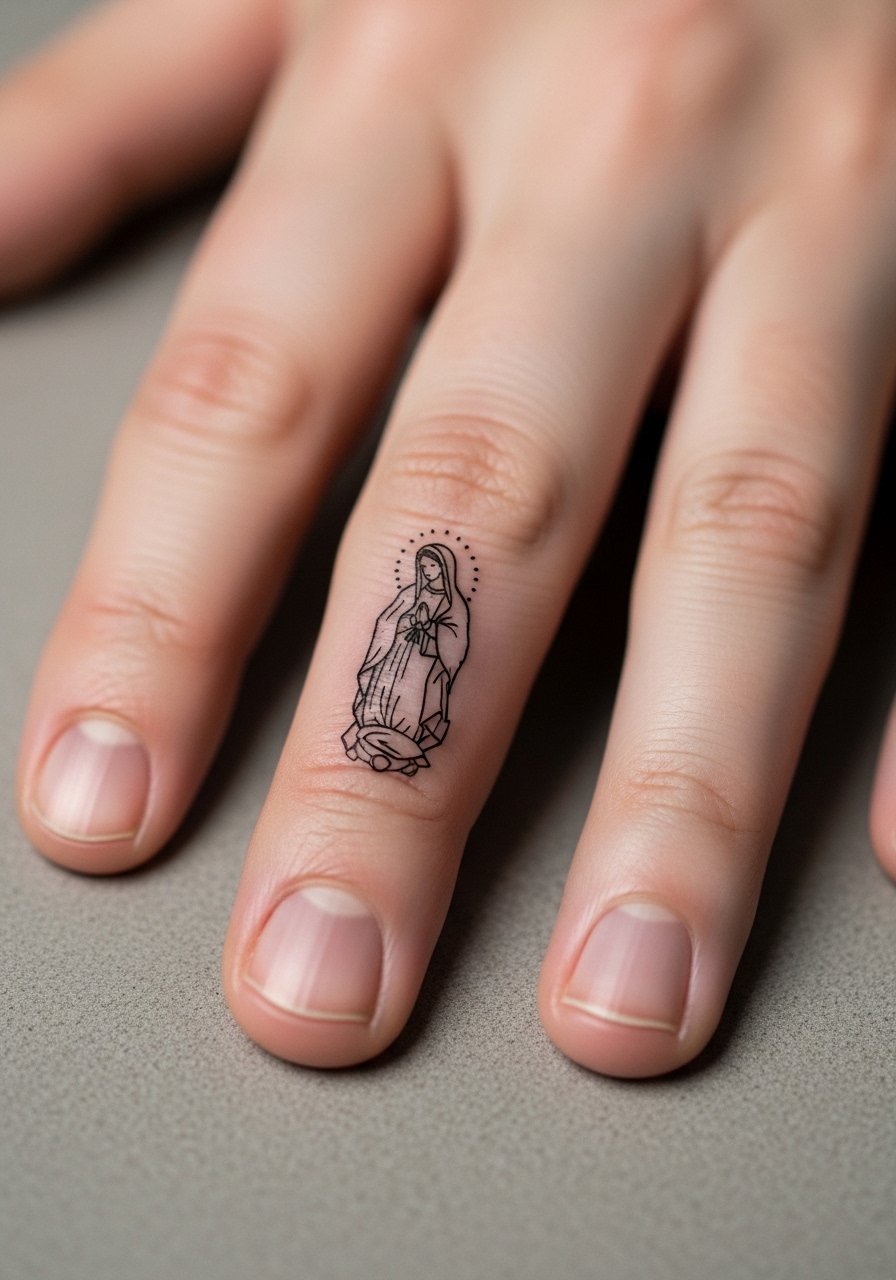
Finger tattoos face harsh friction from daily tasks and almost always require touch-ups. The usual mistake is expecting a finger piece to last as long as forearm work without maintenance. Discuss in consultation a bolder outline for the primary contour and accept yearly touch-ups are common. The session is very quick but the healing window is delicate. Keep rings off the area while it heals and consider wearing a dainty cuff bracelet on the opposite wrist while it settles.
17. Calf Neo-Traditional Mary with Bold Color Accents
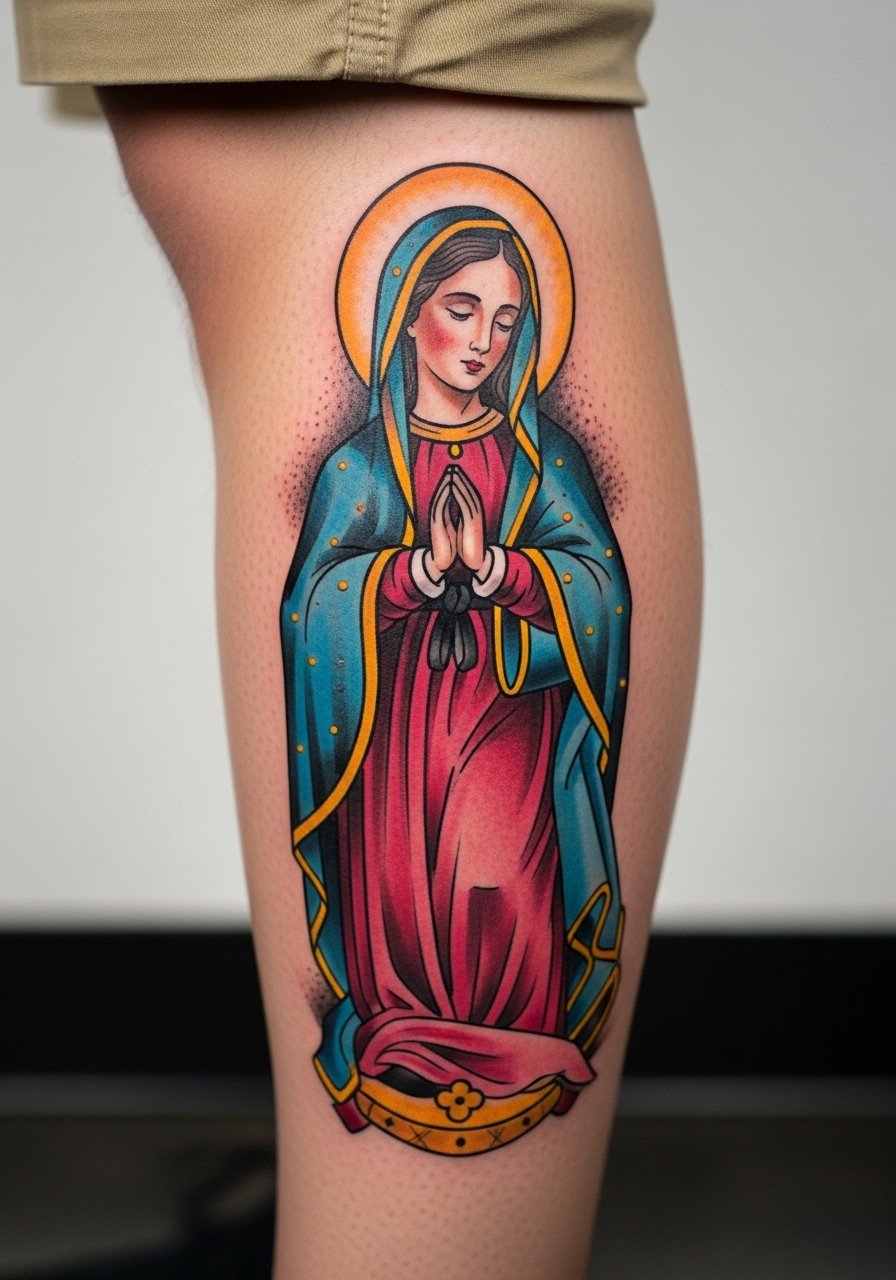
Calf placements age well because they get moderate sun exposure and can be covered when needed. The neo-traditional color blocks will hold if saturation is strong and outlines remain clean. A common mistake is relying on thin color washes that fade unevenly. Sessions are medium length and pain is manageable. Show it off with rolled slim chinos or shorts and comfortable slim fit chino pants for casual summer looks.
18. Back Panel Mary Surrounded by Roses
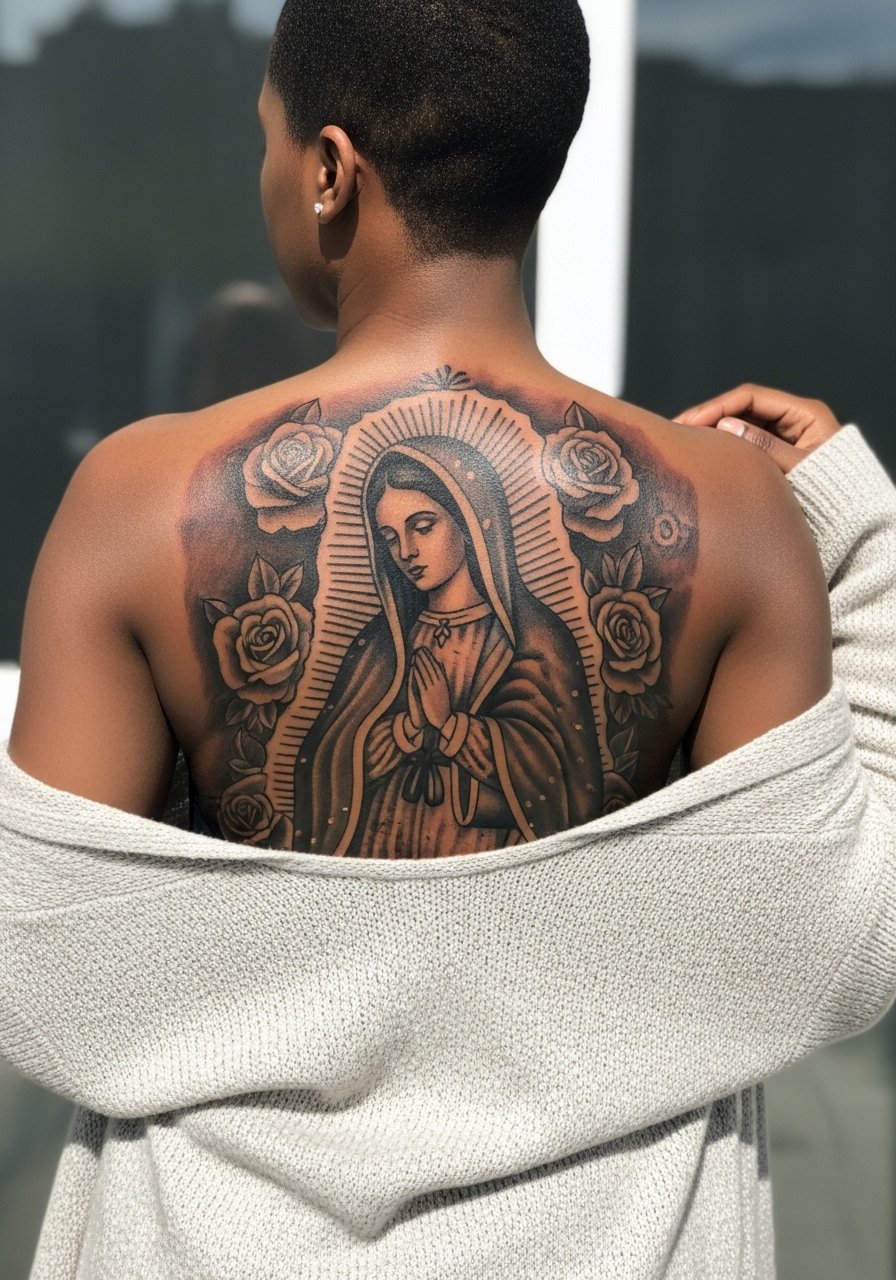
Back panels let you tell a longer story and provide the spacing needed for realism or illustrative elements. The mistake many make is cramming a portrait into a small back spot where shoulders and movement create distortion. Consult about vertical composition and negative space around the face. Sessions are long and often split into multiple days. For the appointment wear a loose open front cardigan you can remove or shift without tugging.
19. Sacred Heart Chest Piece with Rosary Overlap
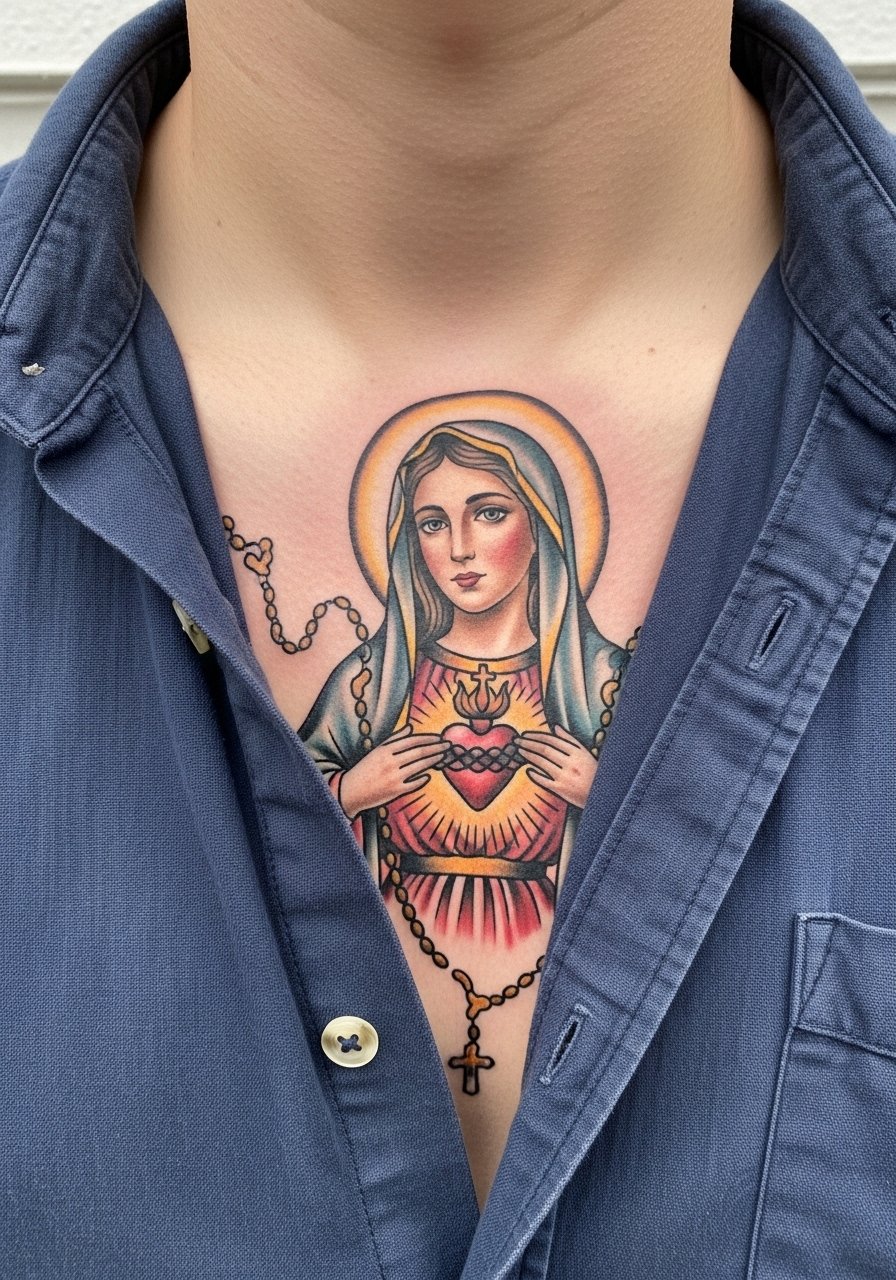
Chest placements expose the piece frequently and must account for clothing friction. The rosary line should have clear spacing so beads read individually after healing. A typical mistake is having the rosary too tight against the heart which can blur at edges. Expect moderate to high pain and a single long session for medium size pieces. Wear a button front tank top to the appointment so the artist can access the area easily.
20. Ornamental Halo with Dot Work Background
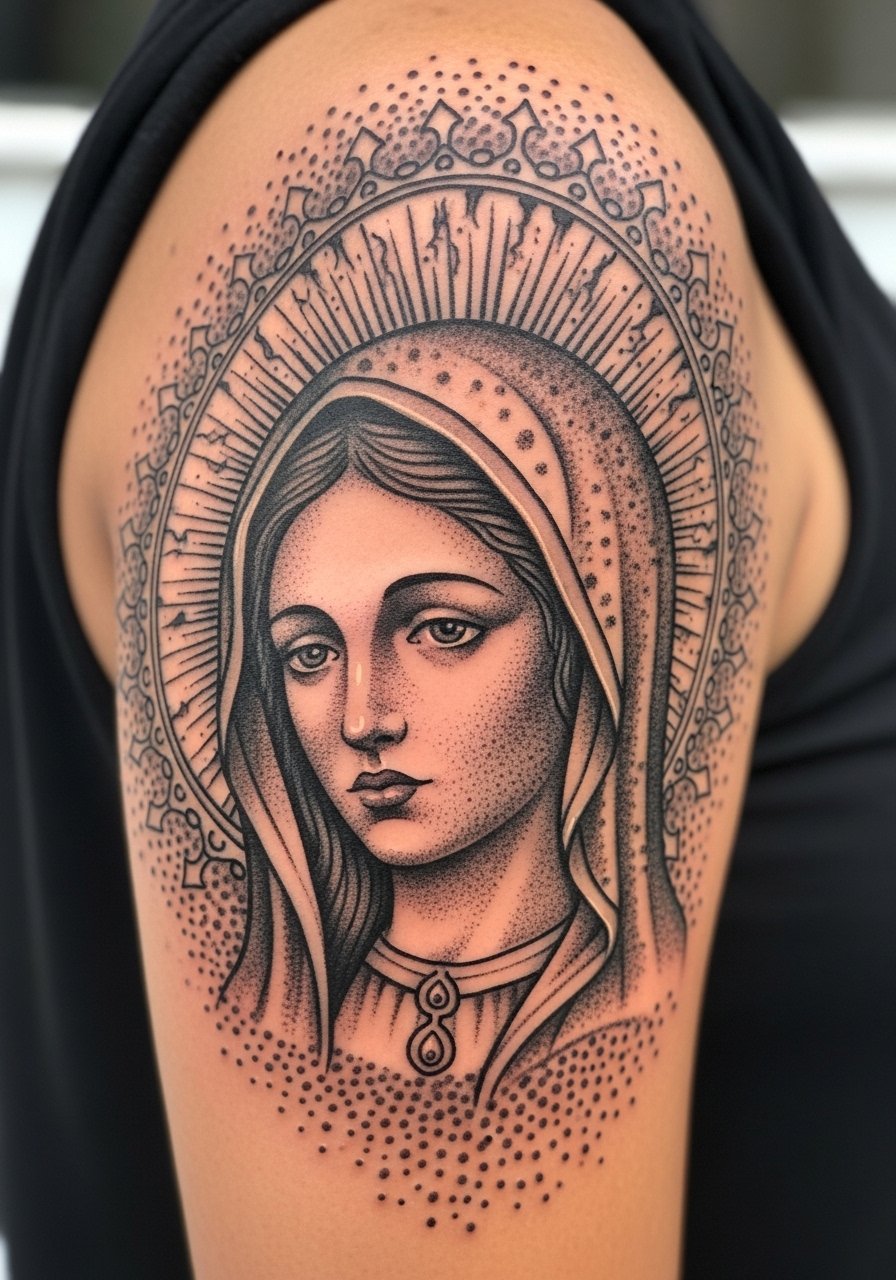
Dot work and stipple shading read beautifully when spaced and planned. The common error is compressing dots too close, which creates a muddied texture over time. In consultation ask for clear spacing grids around denser motifs so the halo retains its presence at six months and two years. Sessions can be longer because of repetitive dot application and pain is moderate. For show-off styling, roll sleeves on a rolled sleeve tee men to frame the upper arm art.
21. Ornamental Mandala Frame with Silhouette on the Rib
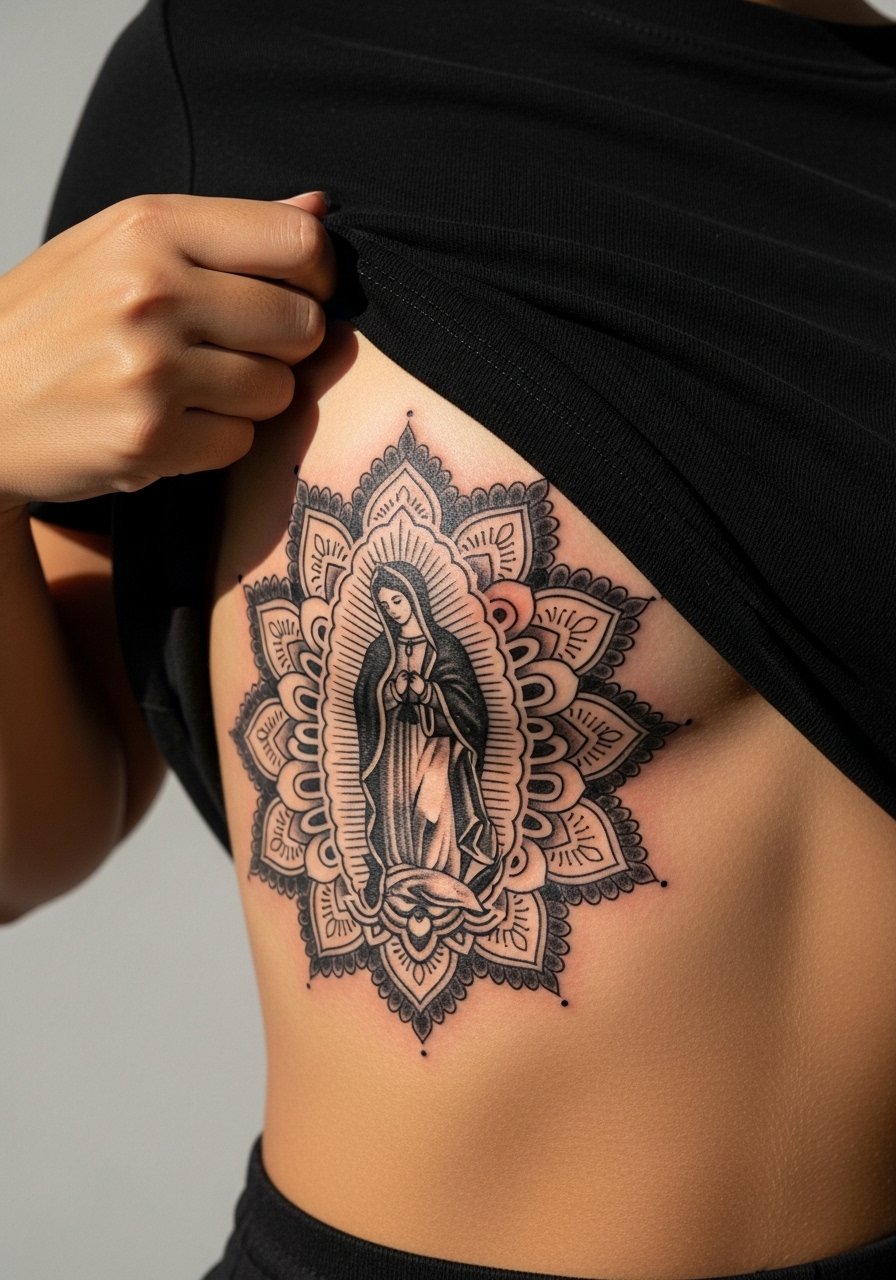
Ribcage blackwork needs careful staging because dense black near the centerline can feel heavy as it heals. The mistake is not considering skin stretch and breathing patterns, which change how the mandala reads. Discuss contour and breathing with your artist before booking. Expect high pain and likely two sessions for larger blackwork. For the session, wear a cropped top you can lift slightly so the artist can access the area while you remain covered.
22. Micro-Guadalupe Behind the Ear with Tiny Stars
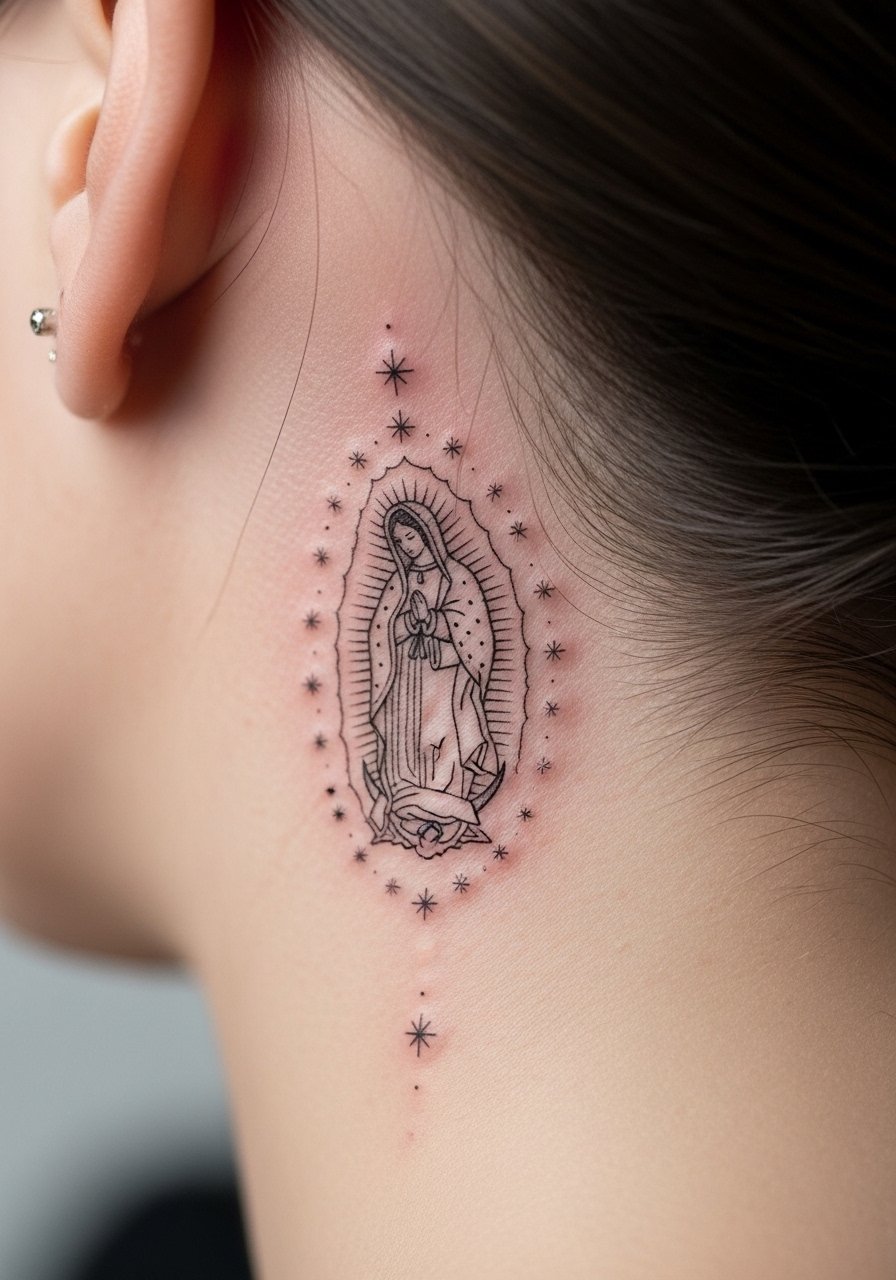
Behind-the-ear placements are very discrete but need creative framing because hair and collars affect visibility. One mistake is asking for too much facial micro-detail in a very tiny piece. Sessions are very short and sensitivity is low. For a session, keep hair tied up and wear a simple top. This placement sometimes triggers conversations about appropriateness in certain workplaces so factor that into your decision.
23. Vertical Spine Mary with Linear Rays
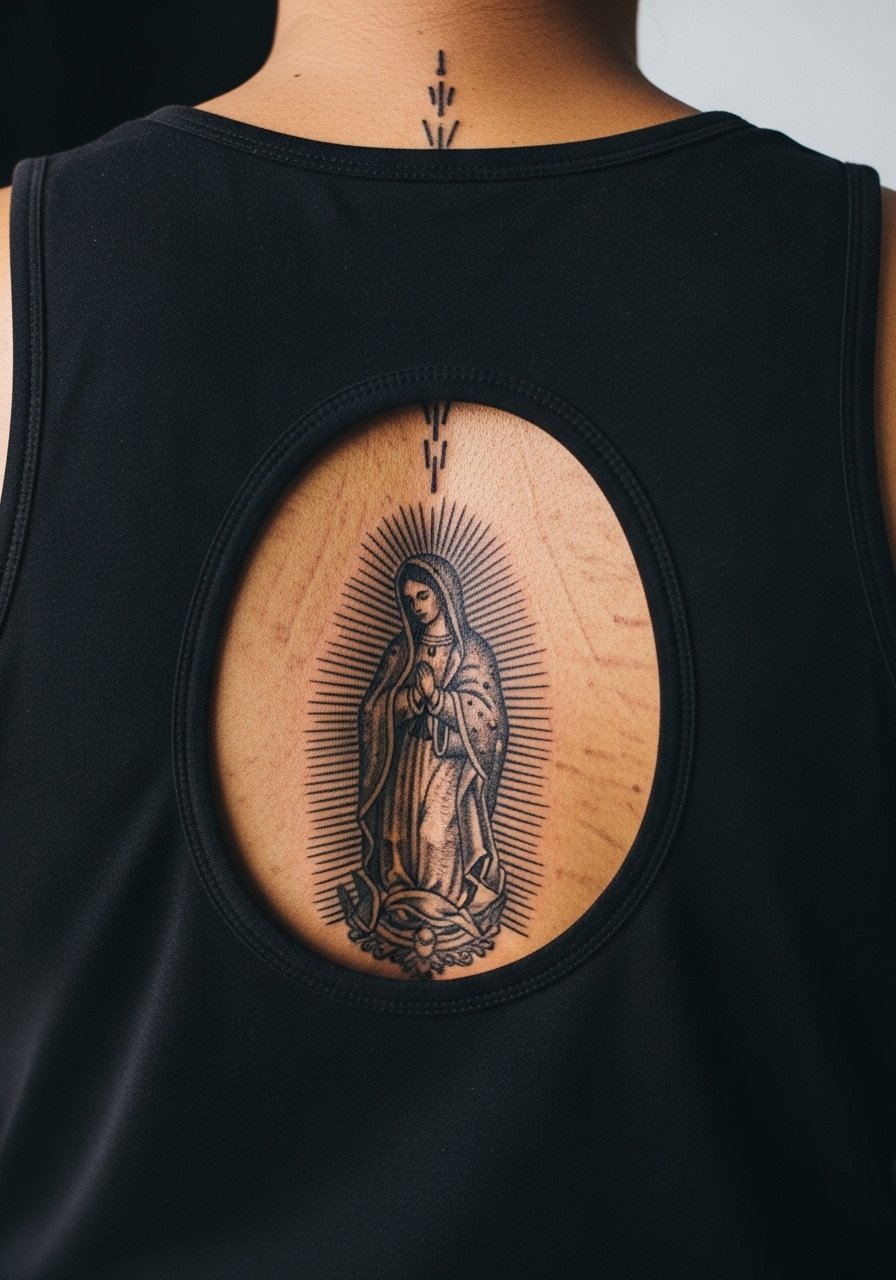
Spine work reads dramatic and vertical lines can either hold or blur depending on spacing and needle depth. The common error is packing too many thin rays into a narrow vertical column. Discuss spacing and the artist's experience tattooing the spine. Sessions can be lengthy and the pain high. For appointment comfort, wear a racerback tank so the artist has easy access without full exposure.
24. Small Collarbone Medal with Date Banner
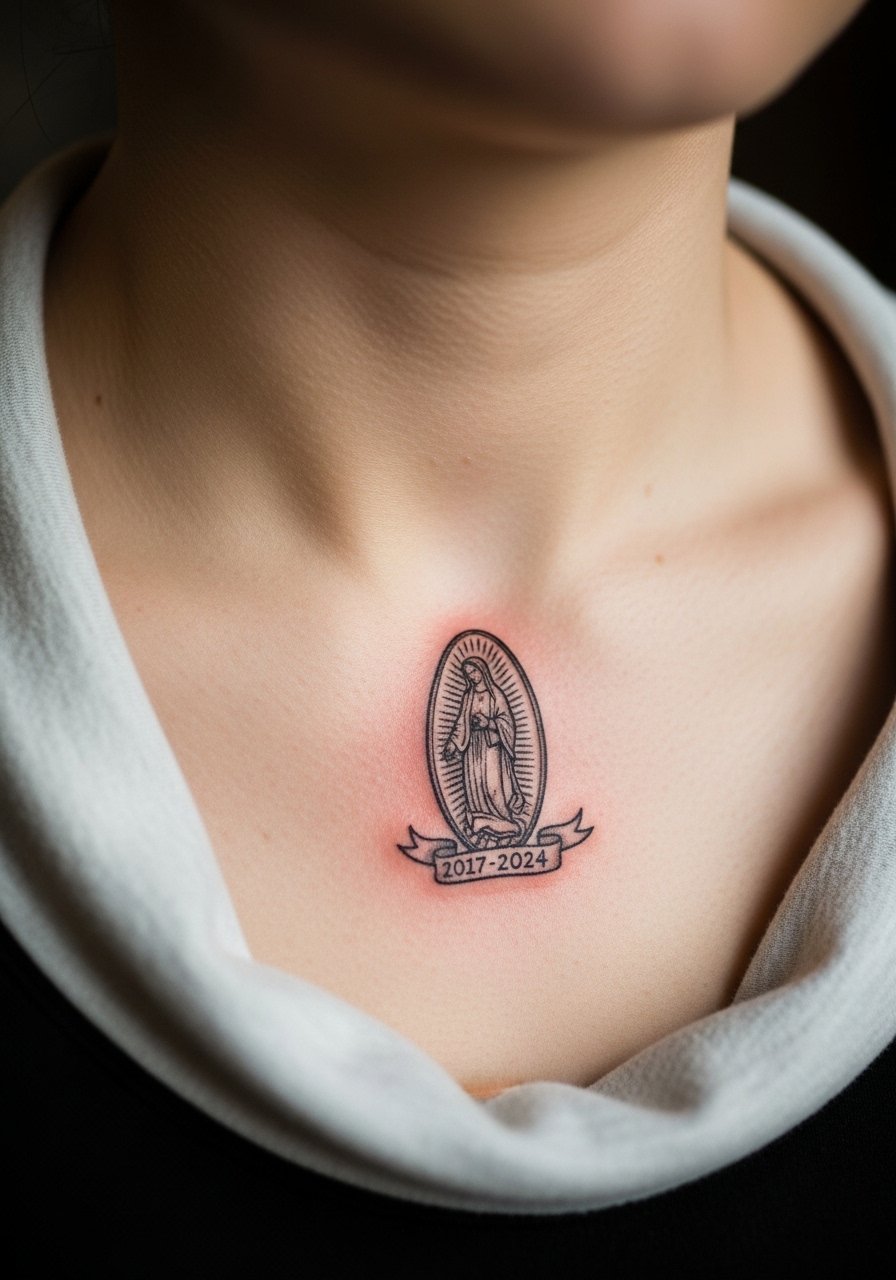
Tiny medals with dates look clean when the banner script has open letter spacing. A frequent mistake is choosing crowded typography that fades into a blur. Ask for larger letterforms and simple numerals in consultation. Sessions are quick and discomfort is moderate near the bone. Pair the look with a thin chain pendant necklace that sits above the medal for a polished reveal.
25. Hip Mary with Decorative Lace Border
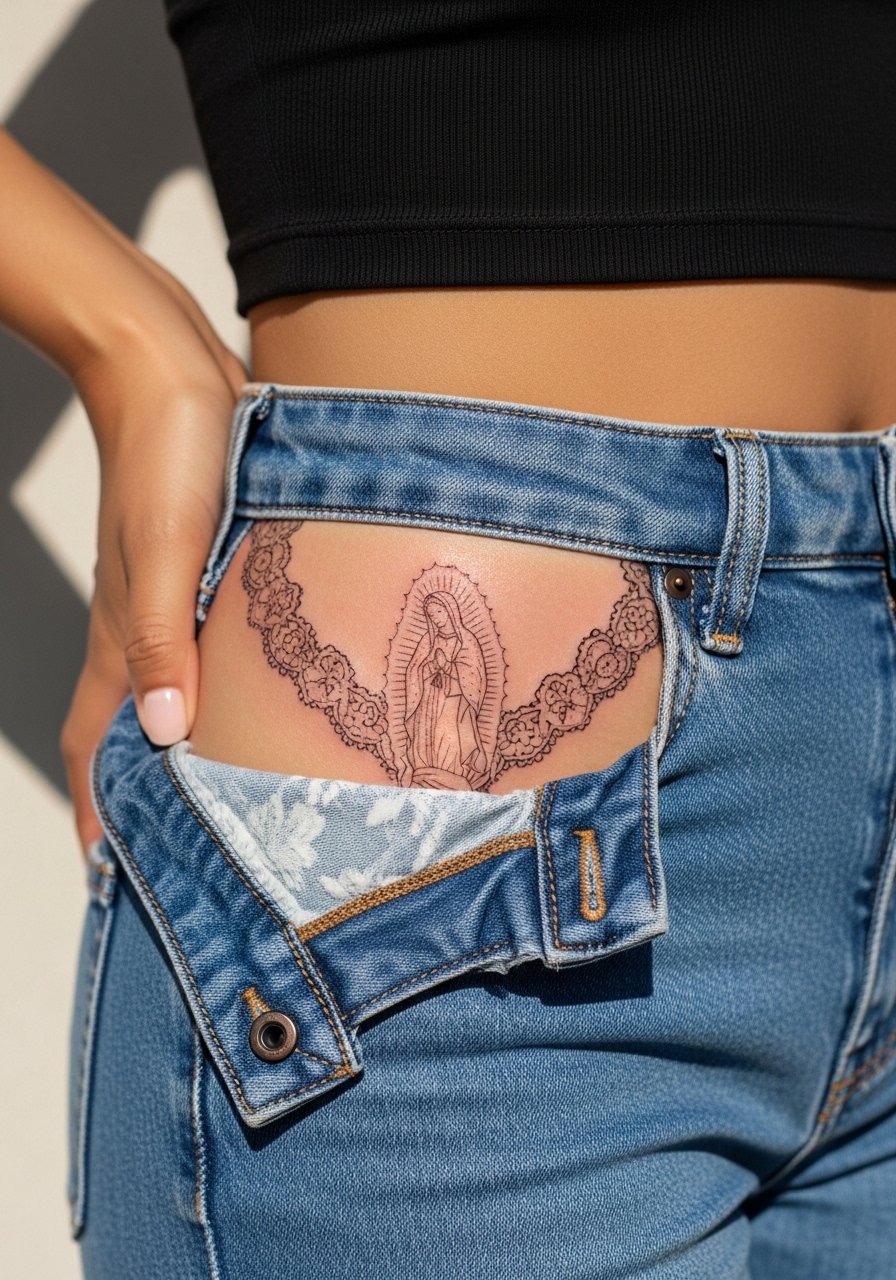
Hip tattoos look intimate and translate well when the design has breathing space. The mistake many make is asking for lace detail that is too fine for the area, which loses clarity after healing. Sessions are moderate in pain and easy to conceal during recovery. Wear high waisted athletic shorts to the session so the artist can access the hip without exposing more than necessary.
26. Full Back Mary with Sky and Rays Composition
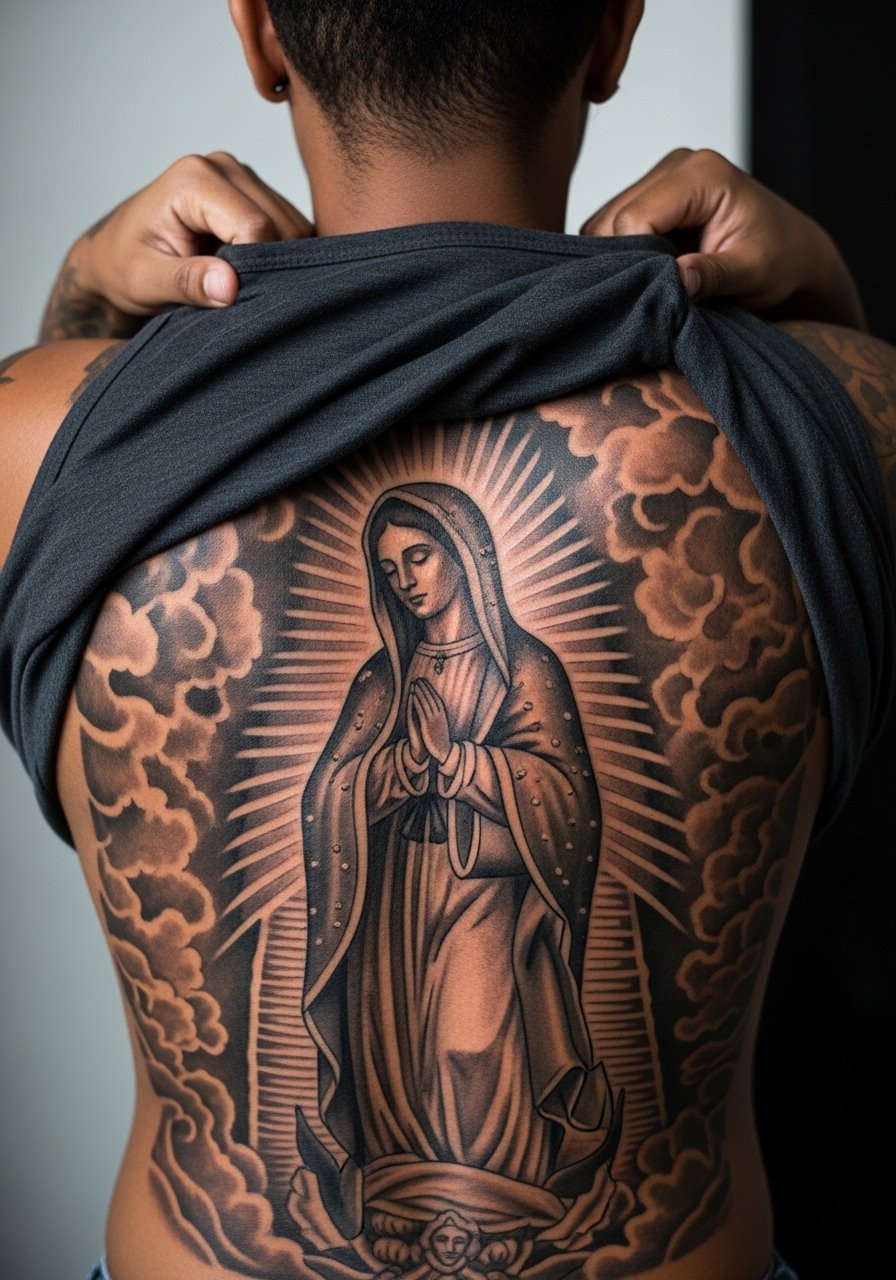
Full back compositions allow for narrative depth and breathe over time if you plan negative space carefully. The typical error is overfilling the background which can blur into a single tone after a few years. Discuss multi-session planning and how each session will layer saturation. Expect multiple long sessions and a touch-up schedule that may be planned a year out. For comfort, bring a loose open front cardigan that you can remove without pulling at the tattooed area.
27. Petite Mary with Single Rose at the Nape
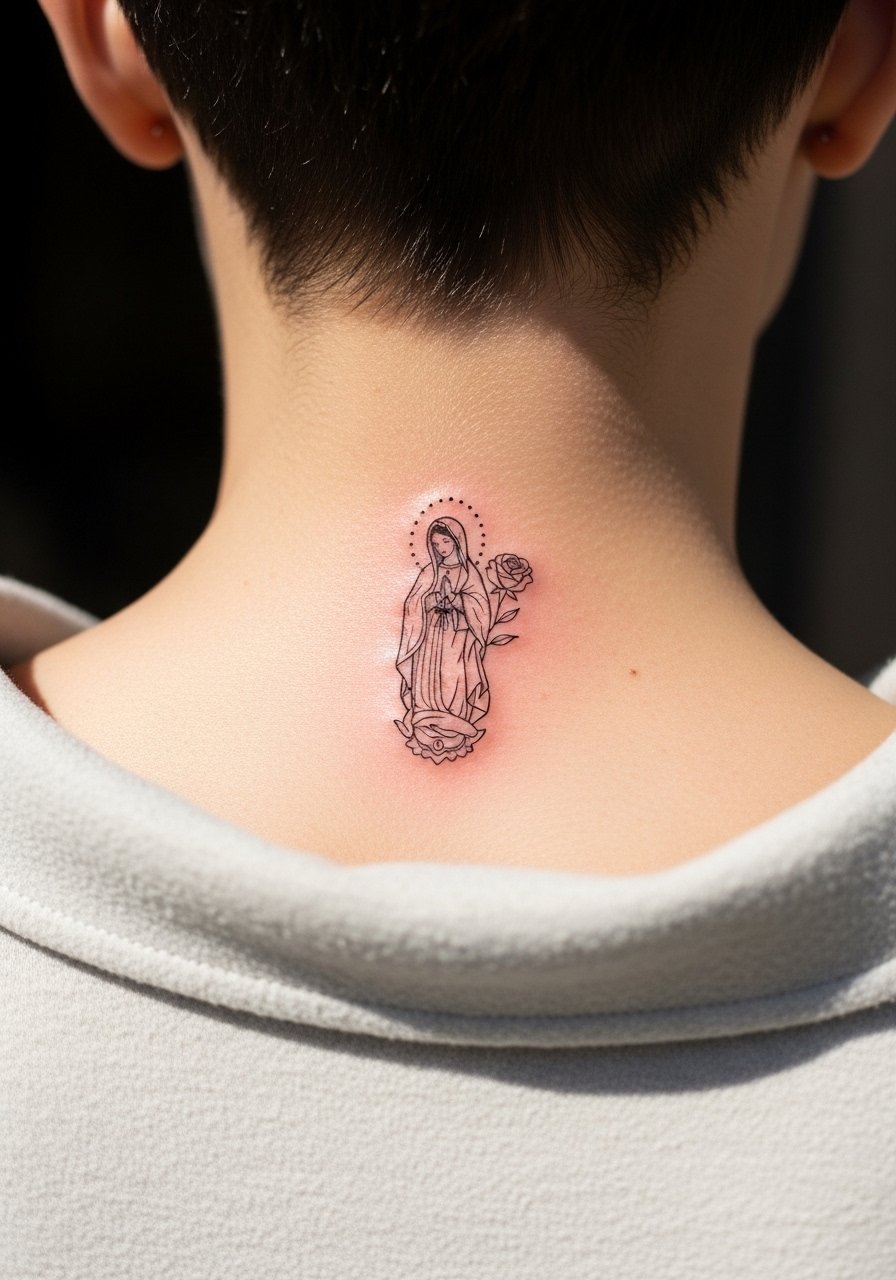
The nape is a quiet place for a small, sentimental piece and reads best when contours are slightly bolder than ultra-micro script. A mistake is asking for tiny script or micrograms of detail that disappear under short haircuts. Sessions are quick and sensitivity moderate. For appointment access, wear a wide-neck shirt that you can shift slightly to reveal the nape without removing clothing entirely.
Frequently Asked Questions
Q: Will fine line Mary portraits on the wrist need touch-ups more often than a forearm portrait?
A: It depends on depth, spacing, and daily friction. Wrists get constant washing and rubbing from clothing and accessories, so fine line pieces there commonly need touch-ups at year two to keep facial detail readable. If longevity matters more than delicacy, ask your artist for slightly stronger contour lines on the wrist.
Q: How should I choose between watercolor and black and grey for a thigh Virgin Mary?
A: Think about maintenance and exposure. Watercolor reads soft and painterly but pastel pigments can need refresh work in two to three years. Black and grey offers clearer longevity and ages into defined shapes. If you love the watercolor look, plan for a scheduled touch-up and choose a thigh placement large enough to give the pigments room.
Q: Are there wardrobe tips for showing a chest Sacred Heart while still keeping it workplace appropriate?
A: Yes. A deep V or henley in solid dark colors frames the chest without making it the only focal point. Pair the tattoo with a solid black vneck tee on days you want a discreet reveal, and keep a button-front shirt handy to cover as needed.
Q: Does blackwork on the spine require different aftercare than a small wrist fine line?
A: The basic care steps are similar but blackwork areas often involve larger sealed surfaces and can feel heavier in the first 48 hours. Use breathable protection for the first day and follow the studio's guidance. The main difference is that dense black needs attention to drying evenly to avoid crusting that can pull on dots or stipple shading.
Q: How do I find artists who specialize in religious realism without naming specific shops?
A: Use discovery pathways like #VirginMaryTattoo and #ReligiousRealism on Instagram, search "virgin mary tattoo [city]" on the Tattoodo app, or check Pinterest boards and forum threads on r/tattoos for portfolios. Also watch TikTok duets tagged #GuadalupeTattoo to see placements in motion.
Q: If I want a Guadalupe medallion near the collarbone, should I worry about skin tone contrast?
A: Yes. Darker skin tones sometimes benefit from slightly thicker outlines or higher contrast in halo elements so they remain visible over time. Bring reference photos that feature models with similar skin tone and ask the artist how they adapt line weight and saturation for contrast.
Q: What is the realistic touch-up timeline for a mid-sized neo-traditional calf Mary?
A: For solid neo-traditional color and linework on the calf, expect the first touch-up between year two and year five depending on sun exposure and activity. The calf tolerates saturation well so touch-ups are often color refreshes rather than fixes for blowout.