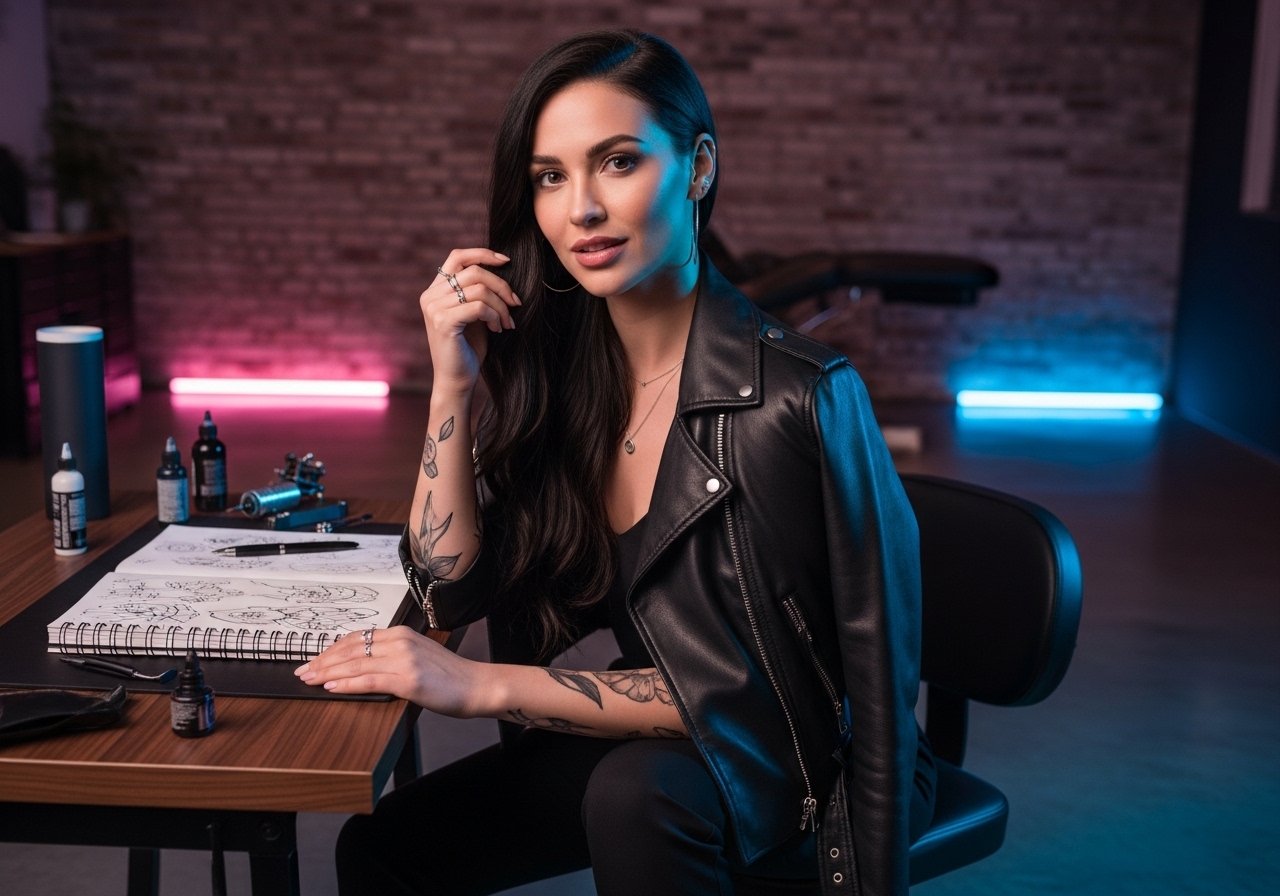
Sitting in the chair with the stencil pressed to the inner wrist is the moment most people realize how small changes shift the whole design. The wrist sits between constant motion and thin skin, so line weight, spacing, and wrap direction decide what lasts. Below are focused snake ideas that account for movement, touch-up timelines, and the exact wardrobe choices that show them off without competing with your daily wear.
1. Minimalist Line Snake Wrapping the Inner Wrist
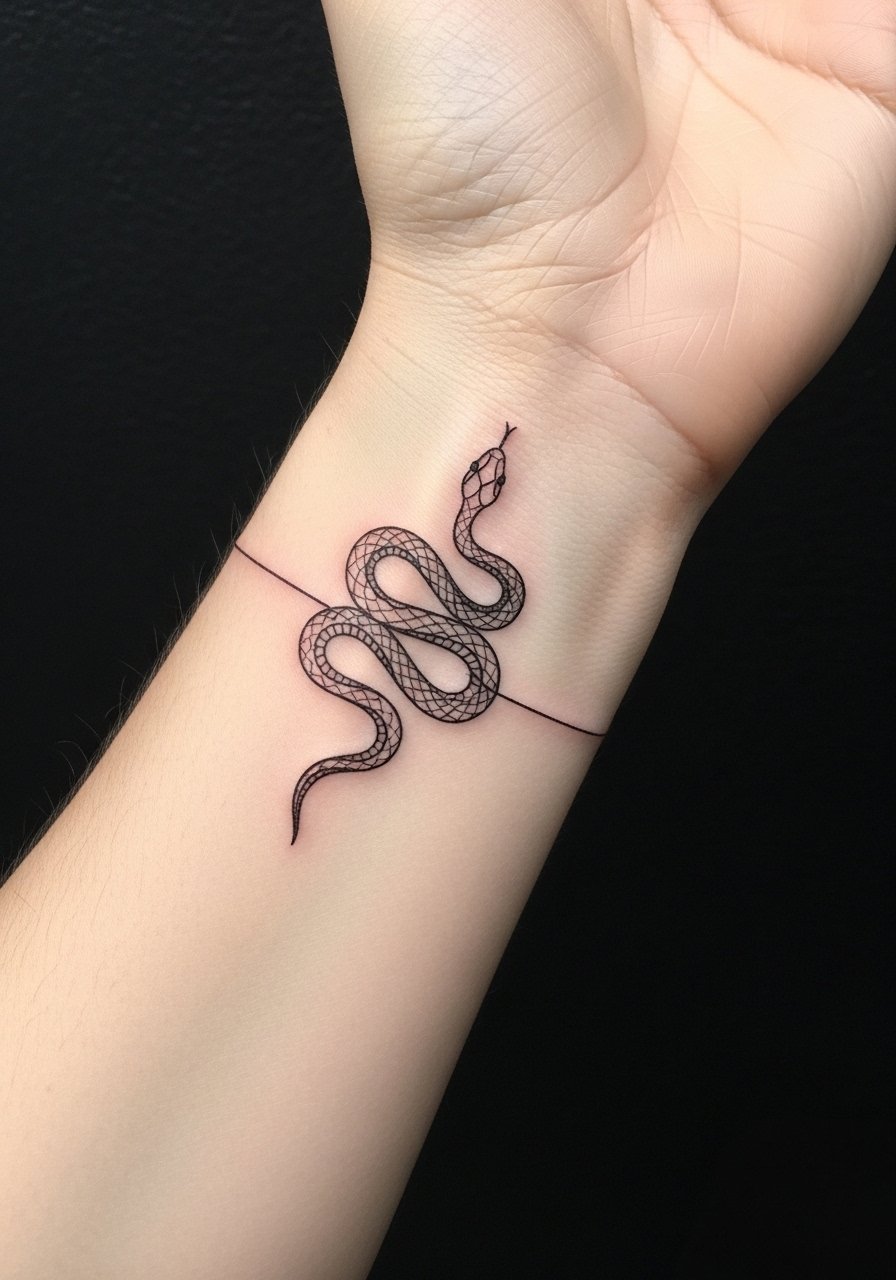
I often point clients to this when they want a subtle wrist piece that reads delicate but lasts. Pain is low to moderate for the inner wrist and the session often takes 30 to 60 minutes. Tell the artist you want slightly bolder lineweight than a hairline so the coils do not merge after a year. A common mistake is asking for ultra-thin lines that blur under friction. At six months the snake should still be distinct. Expect a touch-up around year two for edge sharpening. For showing it off, rolled sleeves and a thin chain bracelet frame the wrist without crowding the linework.
2. Micro-Realism Snake Head on the Radial Wrist
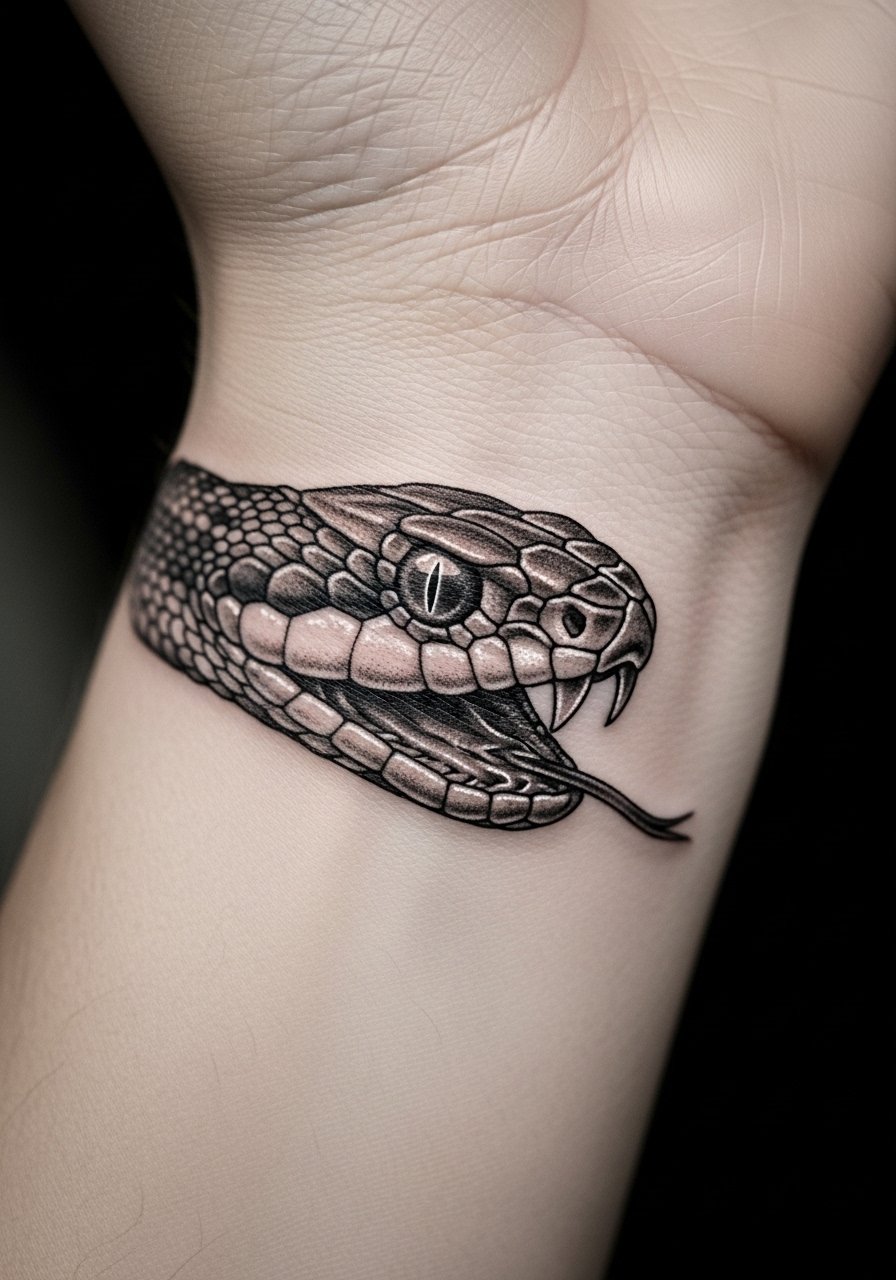
Visual impact is compact here. This style uses micro-shading and stipple work to suggest scales without full color. Expect a 60 to 90 minute session and moderate pain where the bone sits just beneath the skin. During consultation, bring macro reference photos of the eye and mouth so the artist captures the expression at small scale. The aging risk is loss of tiny shadow dots, which means touch-ups are common at year two. A frequent mistake is packing the design too tightly against veins. Wear a loose cuff sweater to reveal the piece without rubbing it.
3. Coiling Blackwork Band Around the Wrist
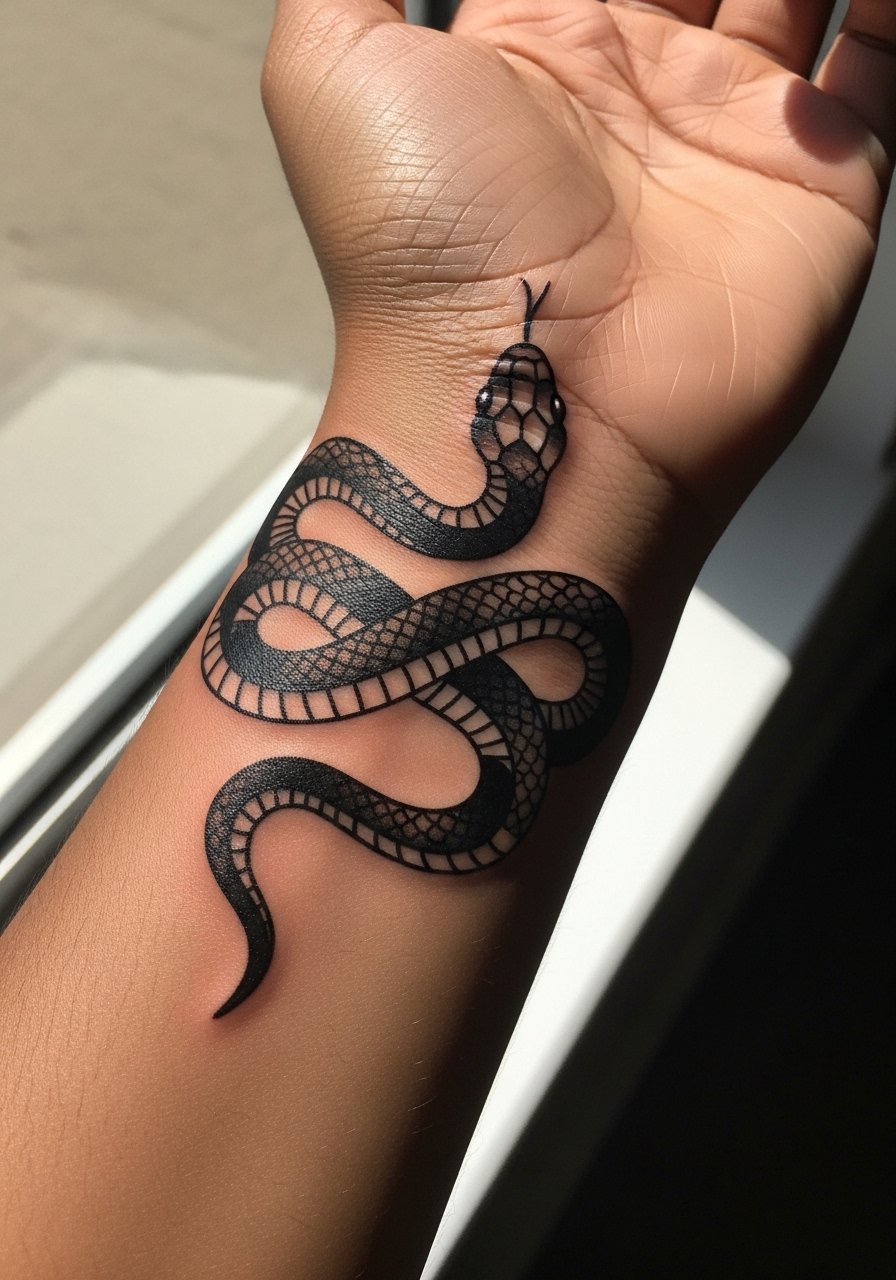
There is something about bold blackwork that reads strong from across a room. This is the choice for people who want longevity without frequent touch-ups. Pain ranges from moderate to high where thick black shading meets tight skin. Sessions usually run 90 to 150 minutes. One camp prefers heavy saturation for durability. The other camp argues heavy black on the wrist can feel heavy visually and can age unevenly near joints. Ask your artist which approach they favor. Avoid scalloped edges that collect ink and soften into blurring over time. Pair with a minimalist leather cuff for evenings.
4. Geometric Snake with Negative Space Scales
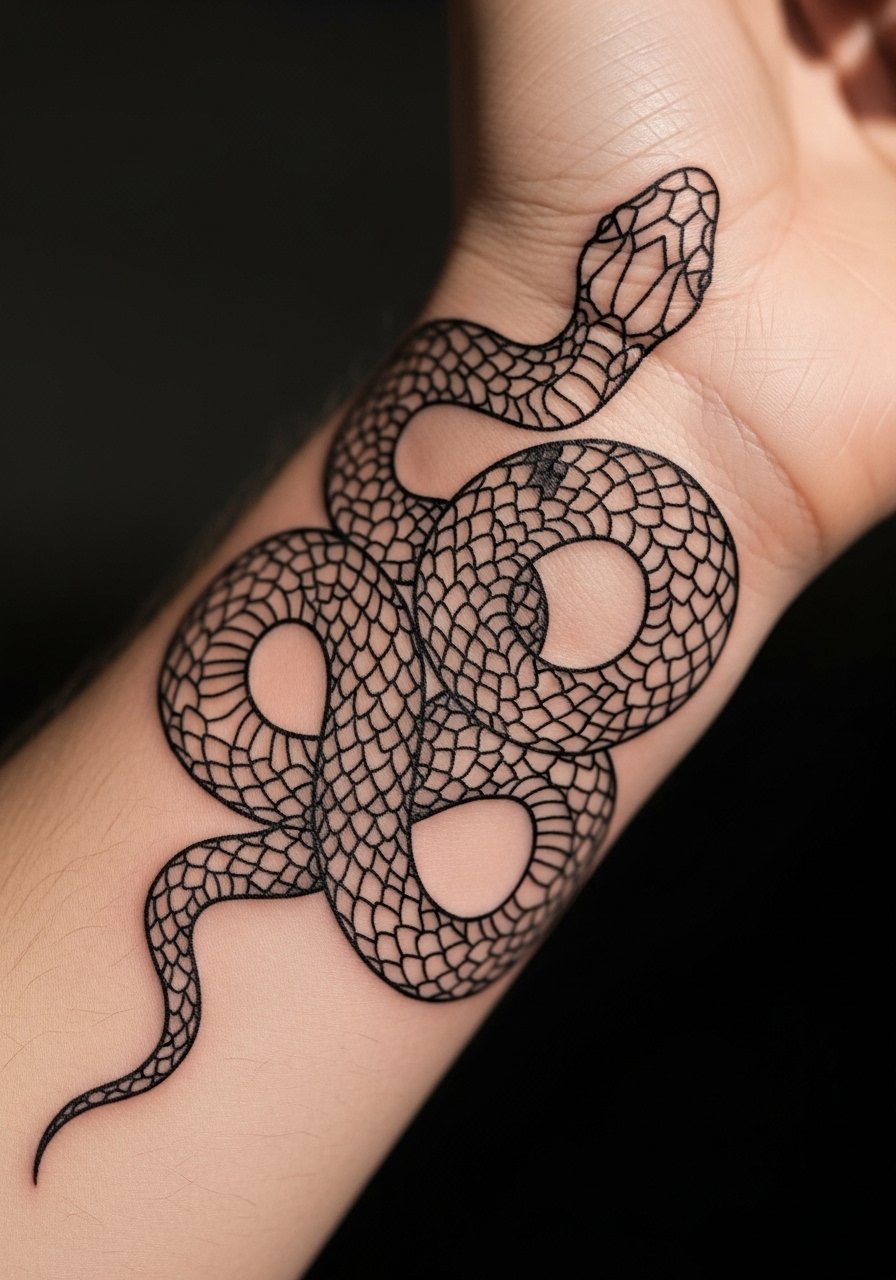
The visual trick here is spacing. I tell clients that negative space acts like breathing room for geometric patterns. Pain is moderate and a session can be 60 to 120 minutes depending on coverage. Most problems come from compressing scales too small. At two years the negative space keeps the pattern readable if the artist left room between elements. During consultation ask for scale maps that show how much blank skin remains. For showing it off, a rolled linen shirt sleeve highlights the geometry without overwhelming the wrist.
5. Tiny Single-Loop Snake Near the Ulnar Styloid
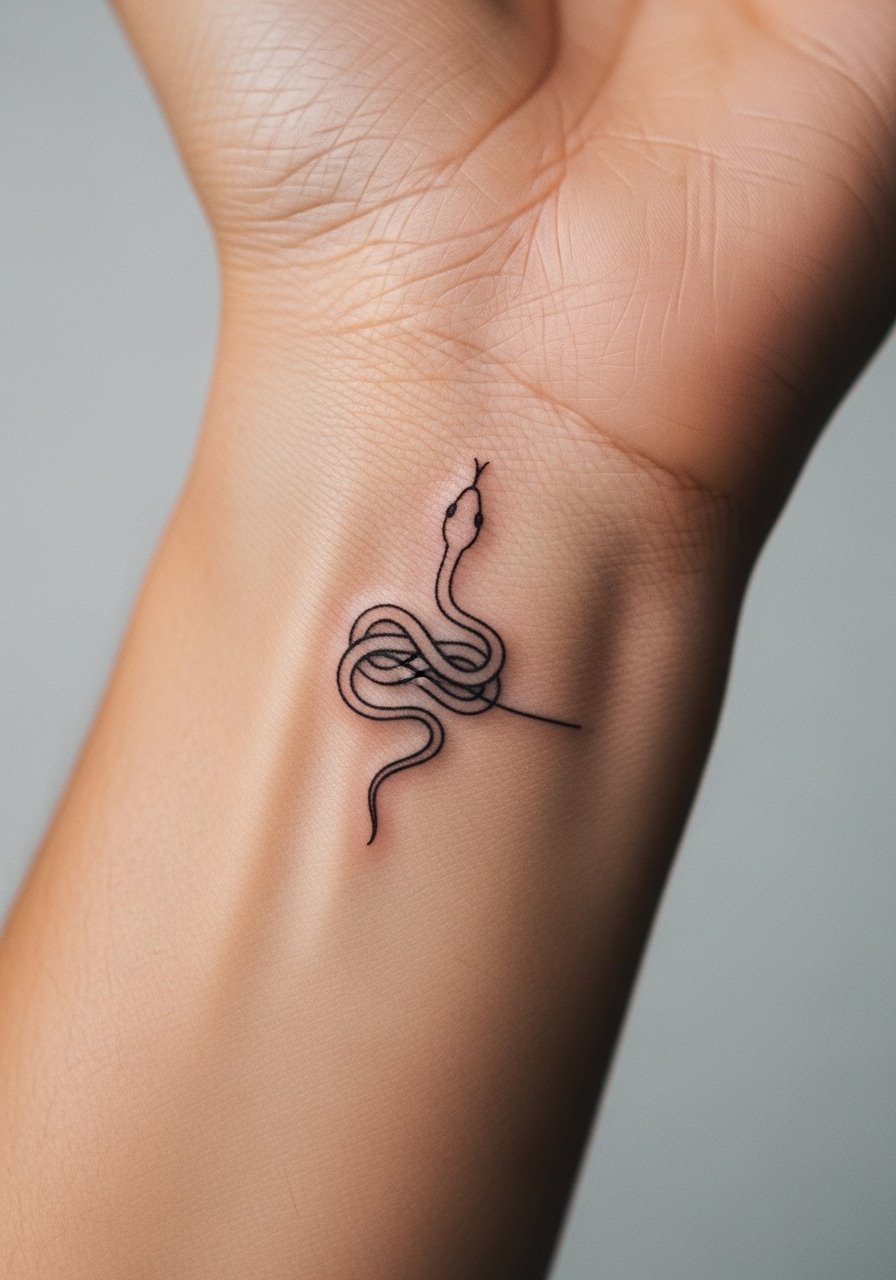
Fair warning: the ulnar side sits over thinner tissue and can feel sharp during the session. This tiny piece is best for a quick appointment under 45 minutes. People who choose this want an intimate accent rather than a band. A mistake I see is wanting dense shading in such a small area. That adds blowout risk and reduces clarity after healing. Expect clear definition at six months, with subtle softening by year three. For the appointment, wear a short-sleeve button shirt you can roll up easily so the artist has unobstructed access.
6. Wraparound Snake That Continues Onto the Hand
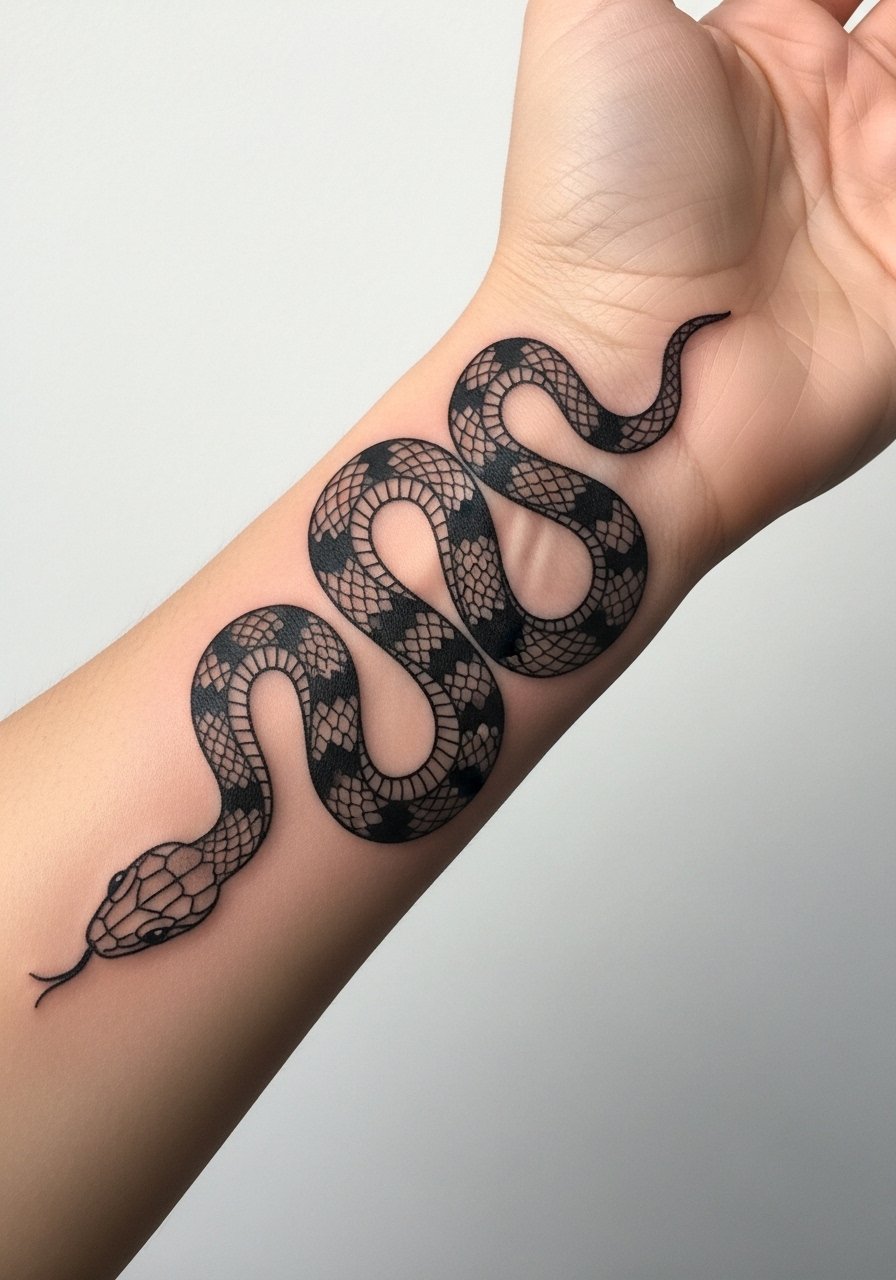
When you want the design to travel, expect a longer session and varied pain. The area over the knuckles will be more sensitive than the mid-wrist. Tell the artist during consultation where the wrap should anchor so movement does not pull the head into awkward places. Controversy exists here. One camp says hand extensions age poorly because hands are washed and rubbed so often and linework blurs within a year. The other camp says careful spacing and heavier linework hold up if you accept touch-ups. Think about how often you wash your hands and plan accordingly. Pair with a slim ring so the hand feels balanced.
Studio Day Picks
The wrist-focused pieces above benefit from light prep and protection during the first week. These picks make the session and the first days of healing easier for small, high-motion placements.
-
Stencil transfer paper kit. Lets you preview exactly how the snake will sit on the wrist before the needle touches skin, which is crucial for wrap and placement decisions.
-
Topical numbing cream. Applying per package instructions before a wrist session helps with the bony areas near the ulnar side where sensitivity spikes.
-
Thin protective film roll. Useful for thumb-side and palm-side wrist tattoos that face constant friction from clothing and devices.
-
Fragrance-free gentle body wash. Gentle cleansing keeps fine linework on wrists from crusting and losing crispness in the first week.
-
Aquaphor healing ointment. A thin layer in the initial days keeps delicate line channels moist without clogging them, which helps minute scales preserve definition.
7. Neo-Traditional Snake with Tiny Florals at the Wrist
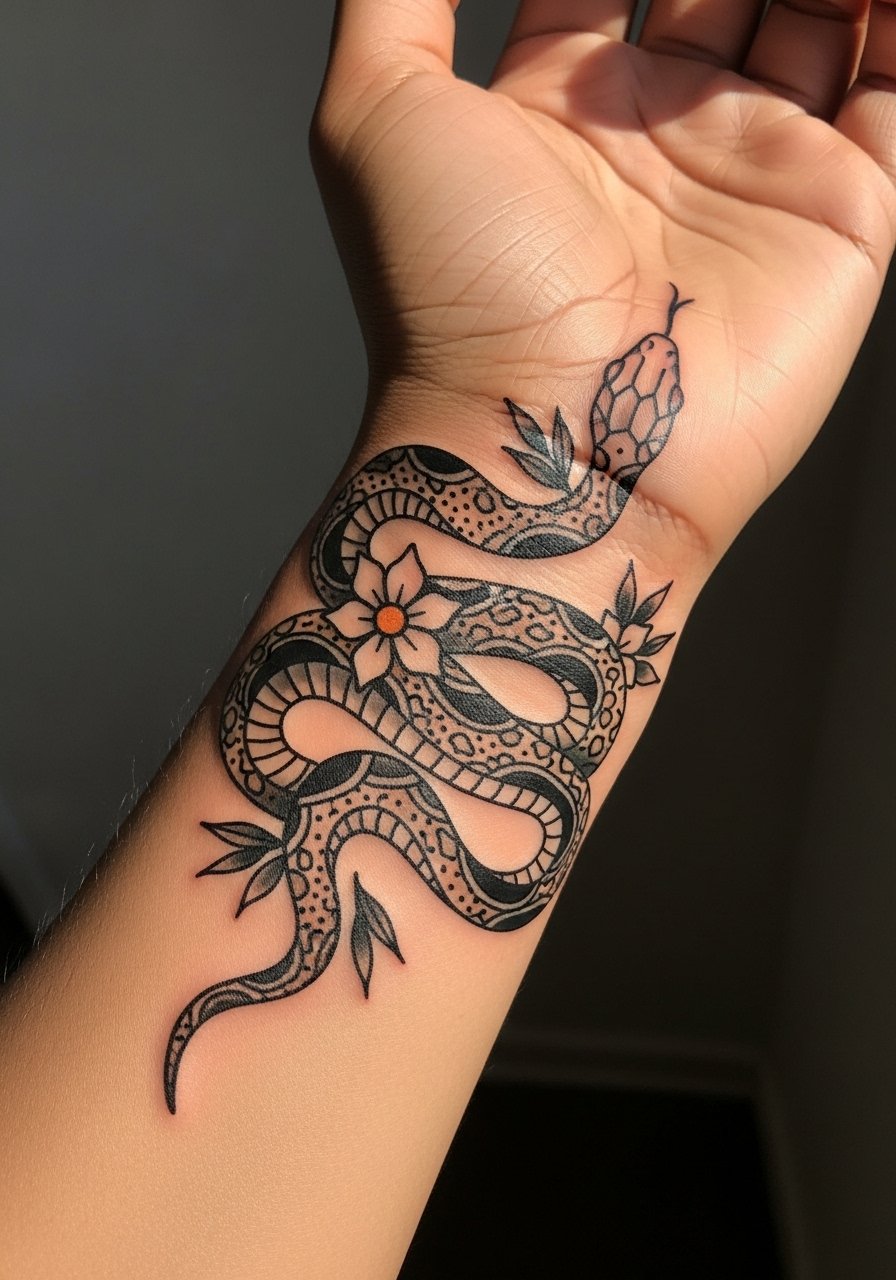
This is for people who like illustrative shapes and a hint of color. Sessions run two hours or more and pain is moderate. Tell your artist you want the flowers spaced so the snake's form remains the focal point. A common mistake is crowding florals against the head or tail which blurs the silhouette after healing. At two years the saturated outlines usually hold better than delicate color fills. Pair with a floral print midi dress when you want to match the tattoo for an outing.
8. Fine Line Script Snake with Lettering Tail
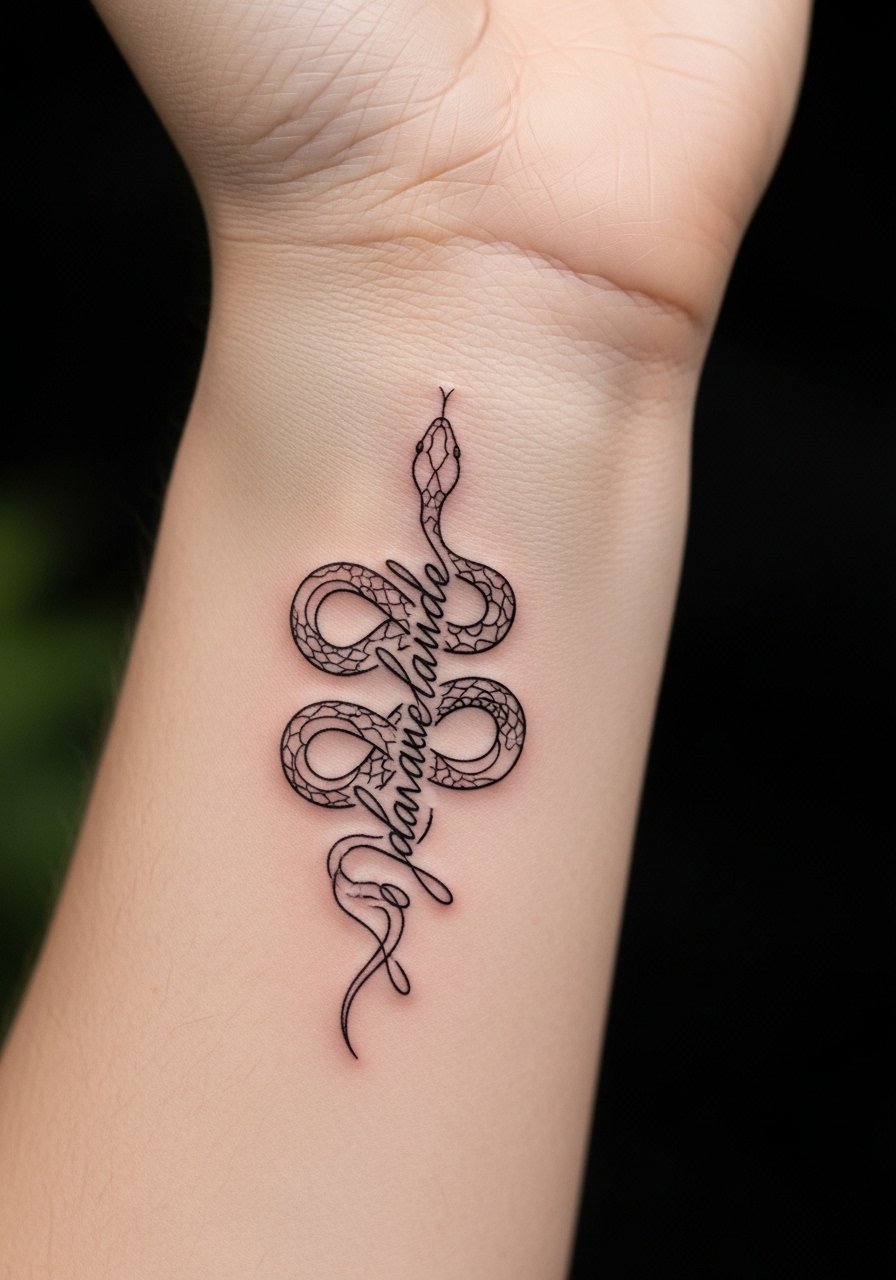
The session for combined script and serpent runs about 60 to 90 minutes. Pain is low to moderate. During consultation specify the exact script size and ask to preview the lettering placed with the snake to avoid collisions. Lettering in small sizes can blur faster than linework, so keep the script slightly larger than you would for a standalone wrist word. Expect touch-ups to keep the text crisp. For showing it off, a thin chain pendant necklace sits above the script without competing.
9. Dot Work Snake Tailing Around the Wrist
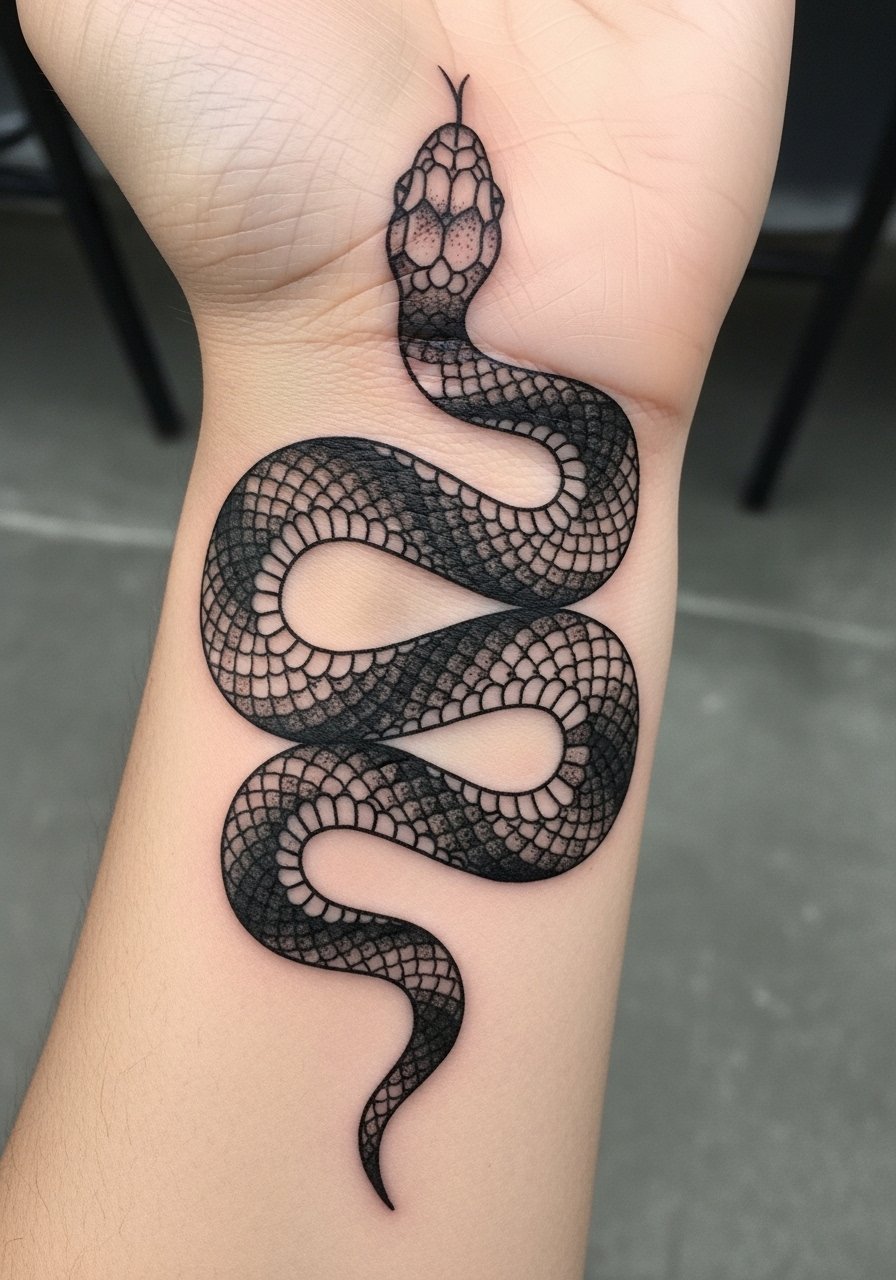
Stipple shading takes patience and a steady hand. Sessions can be split across two shorter sittings to manage discomfort and wrist movement. The dot texture can look soft at six months but may require a touch-up at year three to restore contrast. The mistake is asking for dots too densely packed in a small band which then merge. During consultation, ask the artist to show a healed dot study so you see how spacing affects longevity. For the session, wear a button-down shirt with sleeves you can roll to allow access without friction.
10. Minimal Color Accent Snake with Tiny Red Eye
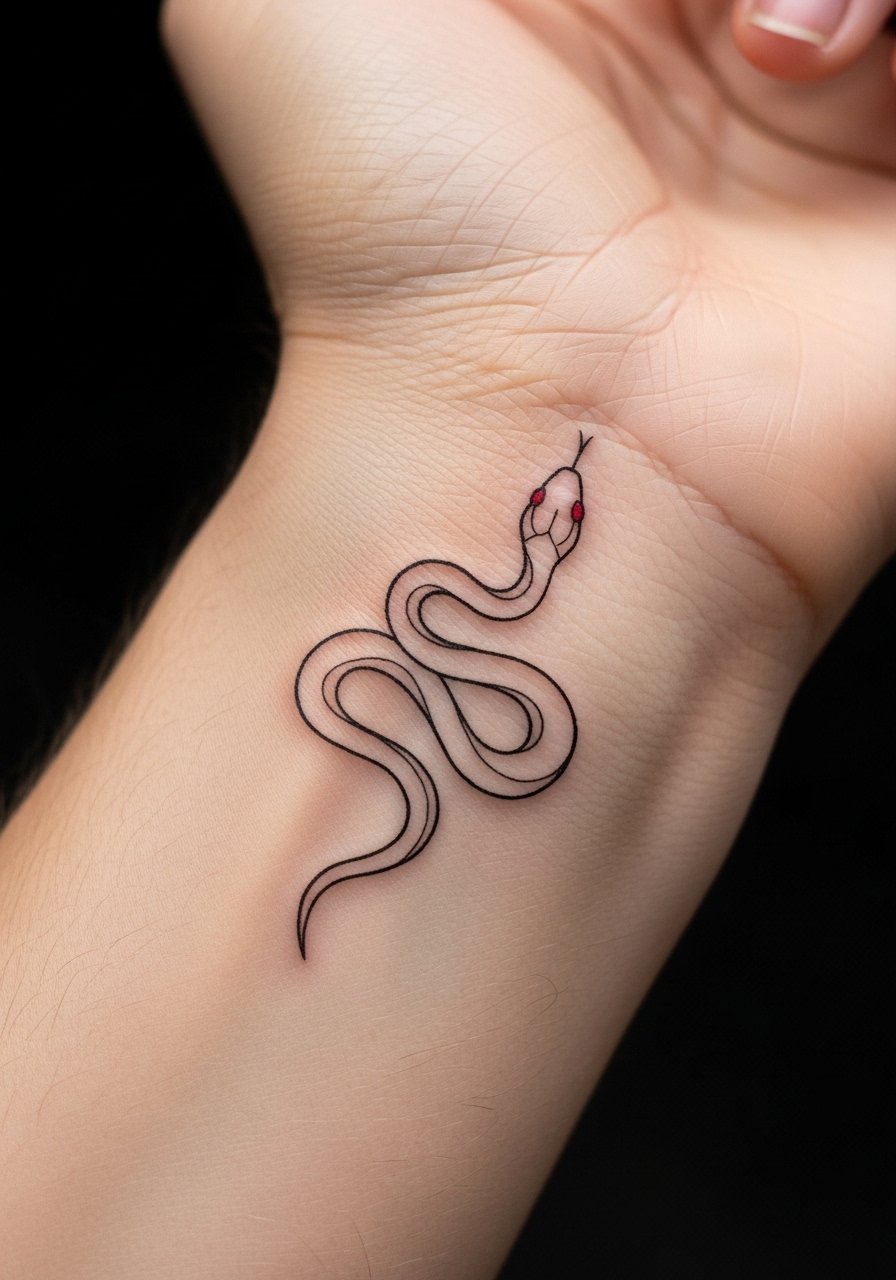
A small color pop can make a minimalist snake read like jewelry. Expect a 45 to 90 minute session and moderate pain where the pigment sits. Color in tiny areas can fade faster than black, especially on wrists exposed to sunlight. Ask the artist for a dense dot of color to slow fade rather than a wash. A regular quick touch-up at year two keeps that red bright. Avoid asking for multiple colors in a very small area. Pair with a minimalist watch that sits opposite the tattoo so both elements breathe.
11. Sinuous Linework That Follows Wrist Veins
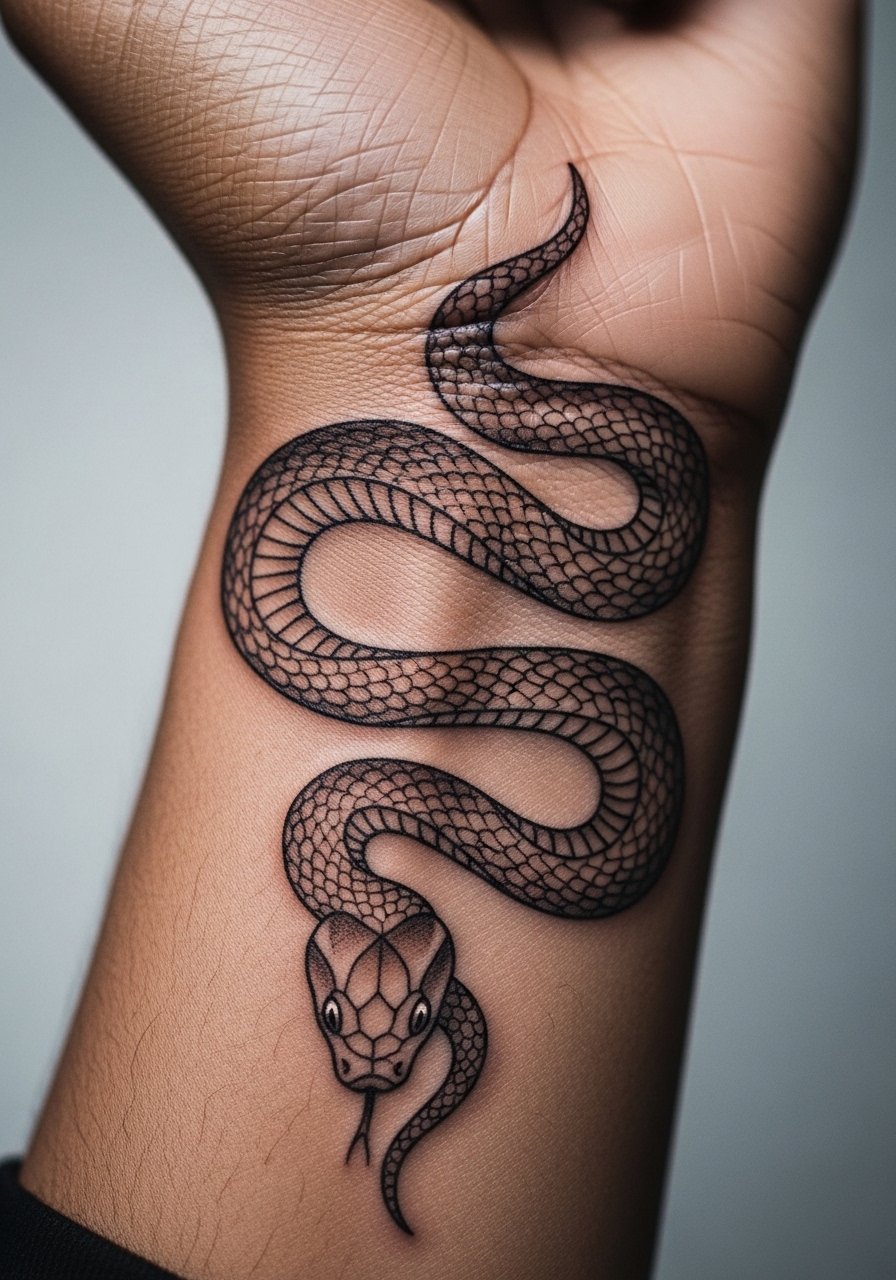
Consultation matters here. I tell people to have the artist trace the body's natural contours so the snake moves with veins and tendons. Pain varies with depth and proximity to bones. Sessions are typically 60 minutes. The common error is forcing a straight snake across a curved wrist which reads awkward in motion. Expect the piece to soften around mobility points within 18 months. During the session wear a short-sleeve tee you can easily push up without making the wrist sore.
12. Two-Headed Mirror Snake Around the Wrist
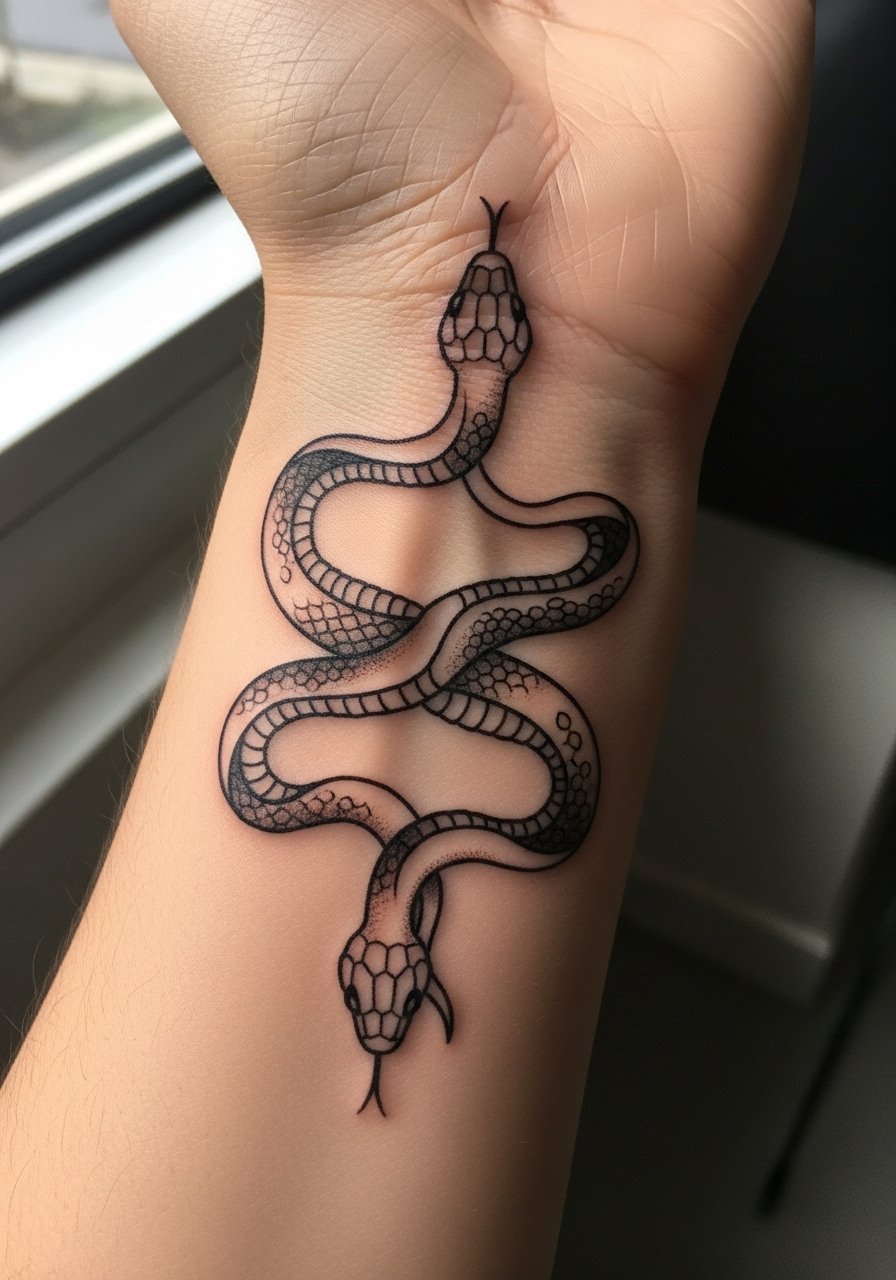
There is visual drama when symmetry meets the wrist joint. Sessions run 90 to 120 minutes and pain is moderate. Tell your artist you want mirror heads to line up when the palms face each other so the design reads properly in daily gestures. A typical mistake is misaligning the heads across the joint which makes the symmetry look off at rest. The piece ages well if spacing is generous. For show-off styling, cuff bracelets that stop short of the design keep attention on the mirror heads.
13. Tiny Ouroboros at the Center of the Wrist
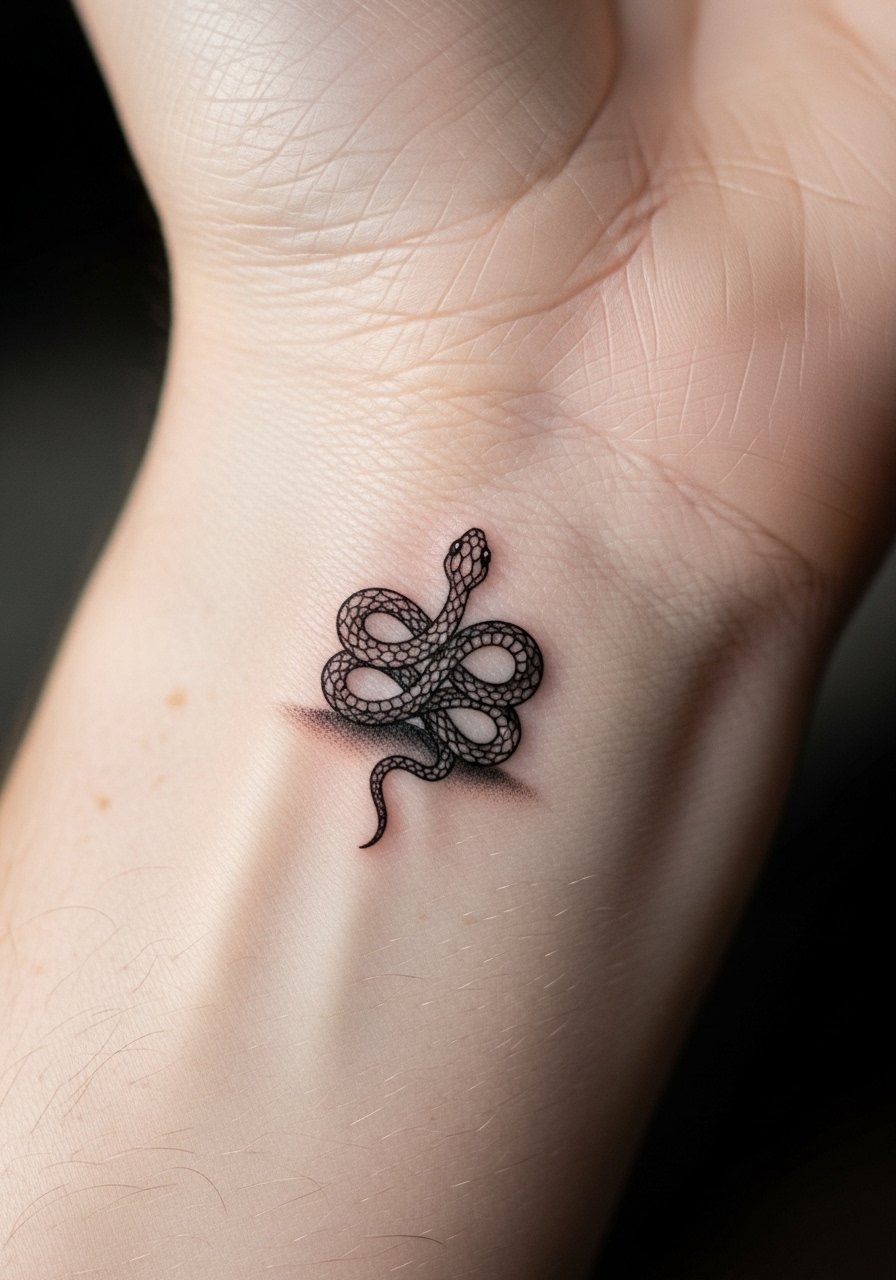
An ouroboros feels symbolic and compact. The session is usually under an hour and the pain level is low to moderate. Keep the ring diameter big enough so the interior space does not collapse after healing. The common mistake is requesting an extremely small circle which loses the mouth detail within a year. Expect slight softening at the inner curve by year two that a touch-up can correct. For the appointment, a long-sleeve shirt with a wide cuff makes rolling up easy and comfortable.
14. Brush-Stroke Snake in Watercolor Washs
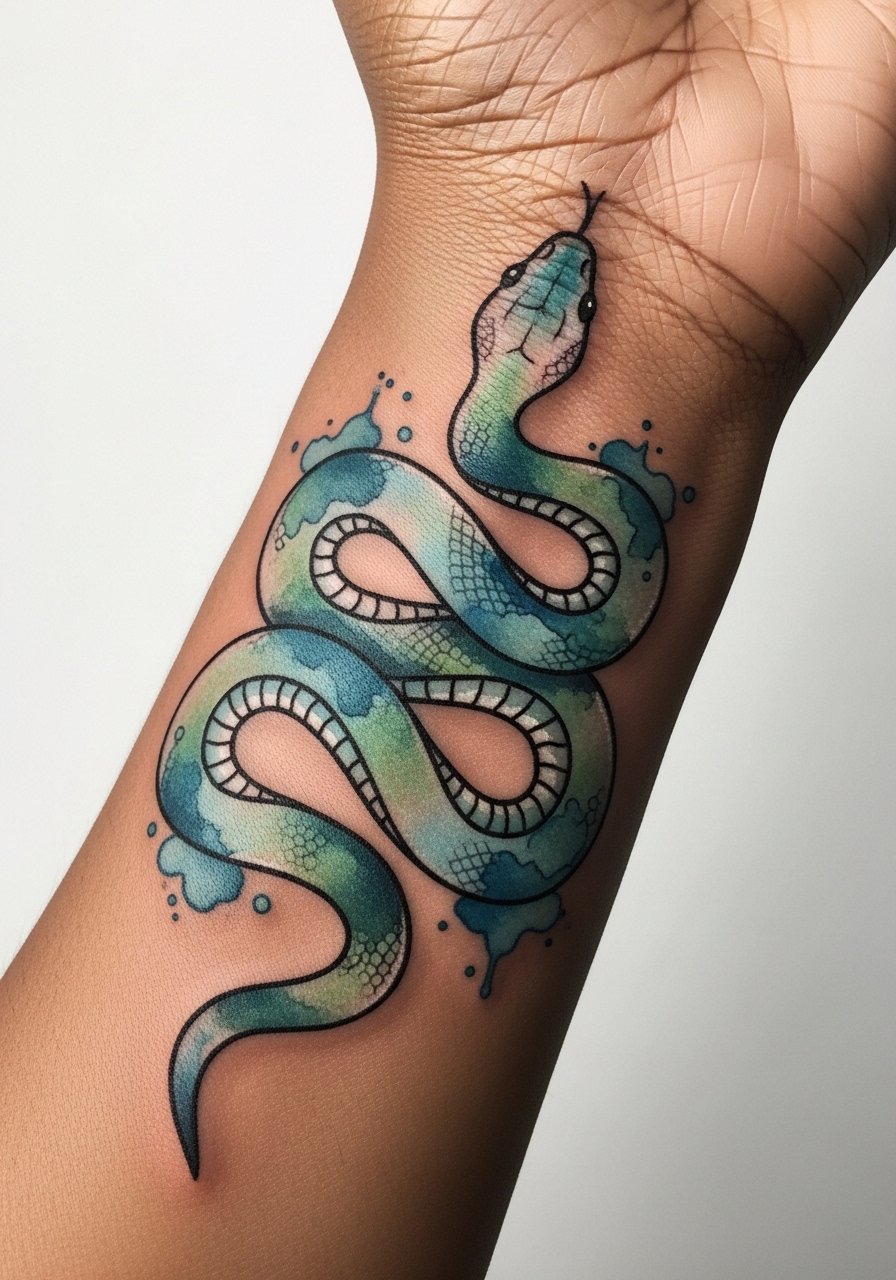
Most watercolor effects use softer shading with black anchors to keep form. Expect longer sessions and moderate pain where color sits near bone. Longevity is the trade-off. One group says watercolor on wrists fades too quickly and needs frequent touch-ups. The other group argues that careful pigment layering and placement away from high-friction zones makes the look last. Be explicit in consultation about which colors and how saturated you want them. For showing it off, a lightweight open-front cardigan reveals the color without rubbing.
15. Black Outline Snake with Negative-Space Scales
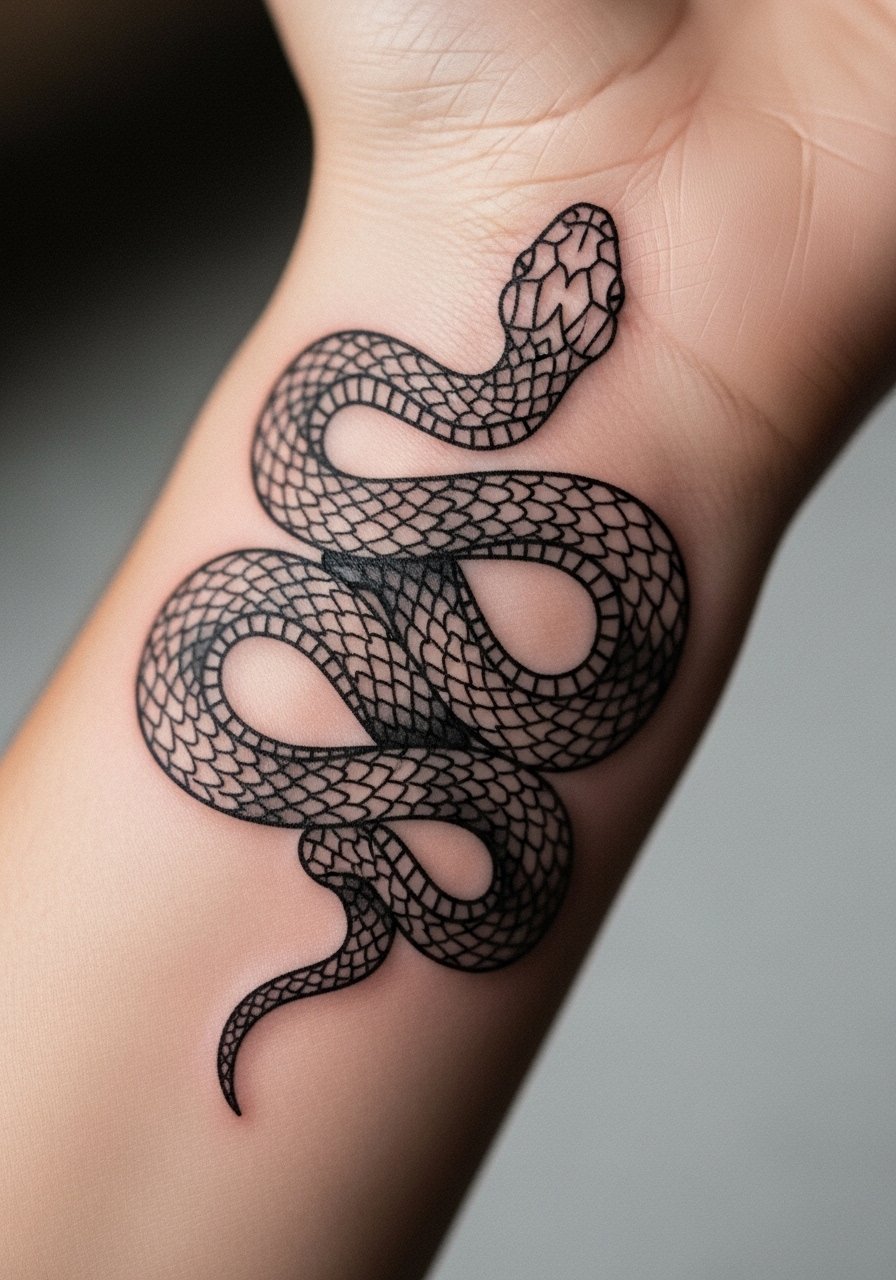
This style combines bold outlines and empty space to suggest texture. Sessions are often 60 to 90 minutes. A mistake is carving too many tiny empty shapes which can collapse visually as healing progresses. Ask for the scale map during consultation to ensure each void holds at least a few millimeters of skin between lines. Expect clear definition at six months and softer edges by year three. A simple delicate bracelet nearby complements the negative space without overpowering the design.
16. Scripted Phrase Woven Through a Snake on the Wrist
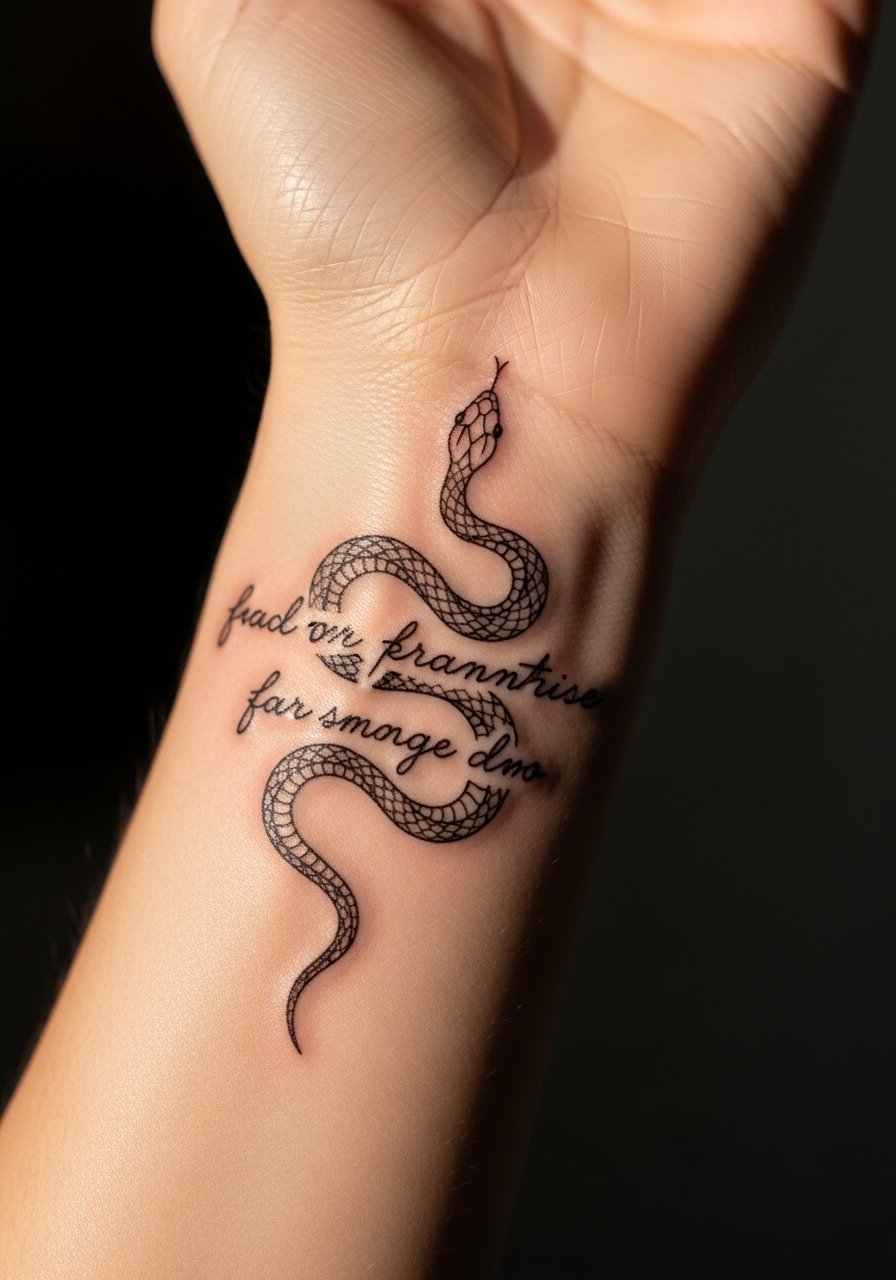
Combining script and snake needs a firm plan for placement. Sessions usually last 60 to 120 minutes depending on length and detail. Tell the artist exactly how the letters should curve around the snake so nothing overlaps awkwardly. Small typefaces on wrists tend to blur sooner than plain linework, so choose a slightly larger script. The common error is selecting ornate lettering at tiny scale which becomes unreadable. For showing it off, a thin chain necklace sits just above the woven phrase and keeps attention on the wrist.
17. Herringbone-Patterned Snake Wrapping a Watch
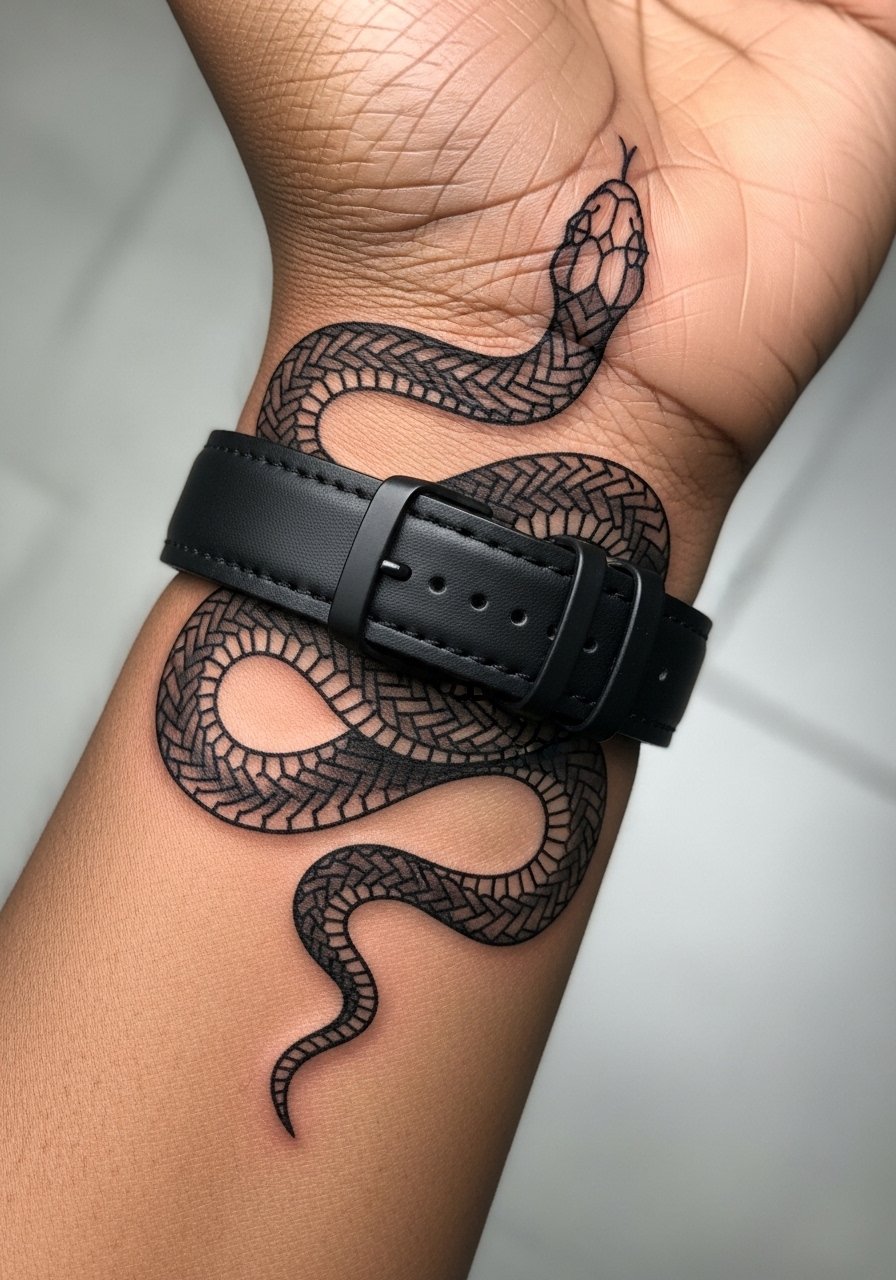
This design plays with negative space to sit alongside accessories. Expect a 90-minute session and moderate pain. A common mistake is placing heavy patterns where a watch would sit and then layering metal against fresh ink. I recommend spacing the pattern so the watch does not rest directly on dense shading. If you plan to wear a watch daily, bring it to the consultation to map the safe zones. For wearing, a slim mesh watch band offsets the patterned snake without pressing into it.
18. Single-Needle Scripted Snake Tailing Over the Wrist Bone
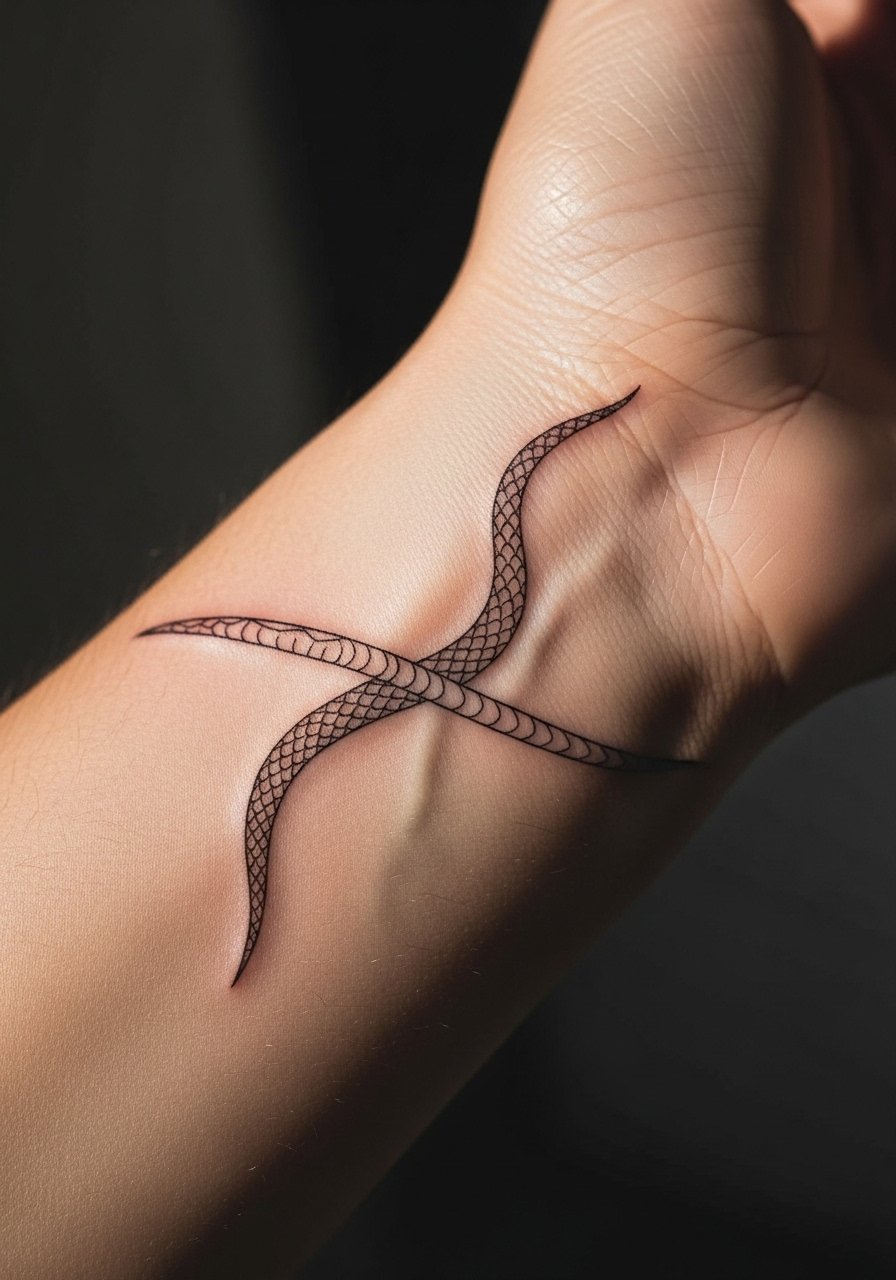
Single-needle achieves a jewelry-like effect but requires more maintenance. Pain can be sharper over the wrist bone and sessions are around 45 to 75 minutes. Expect more touch-ups than bolder work because ultra-thin lines fade and soften faster. A frequent error is demanding single-needle thickness without accepting a scheduled touch-up. If you choose this, plan for a refresh around year two. For the session, a soft cotton tee keeps friction low when rolling sleeves.
19. Interlocking Snake and Bracelet Illusion
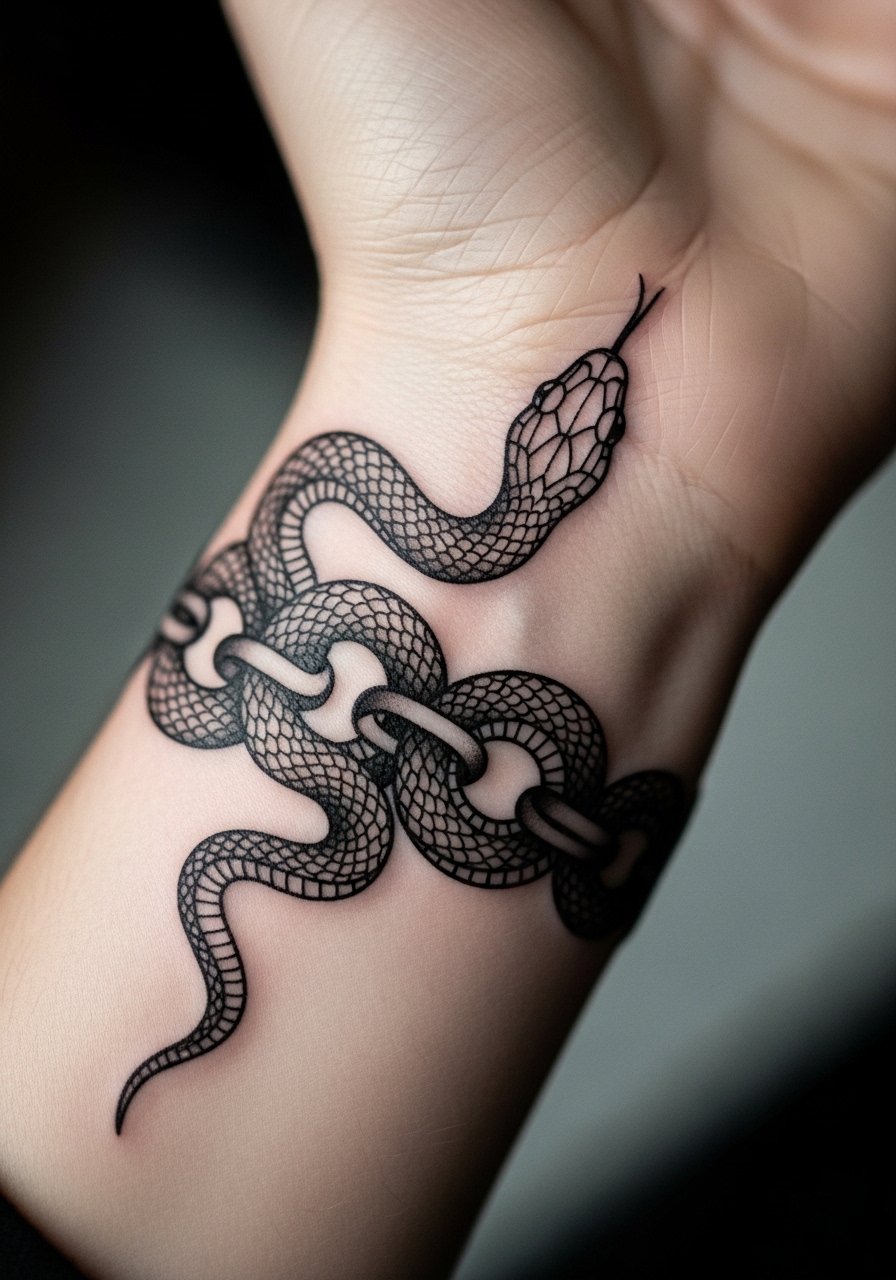
When a tattoo doubles as illusion jewelry, composition is everything. Sessions run 60 to 120 minutes depending on the links. The mistake I see is misaligned link perspective that reads flat. Tell the artist you want three-dimensional overlap cues so the design reads like metal. Longevity is good if shading cues are bold enough to survive mild blur. Pair with a real bracelet on the opposite wrist so the tattooed illusion feels intentional.
20. Crescent Moon-Tail Snake on the Inner Wrist
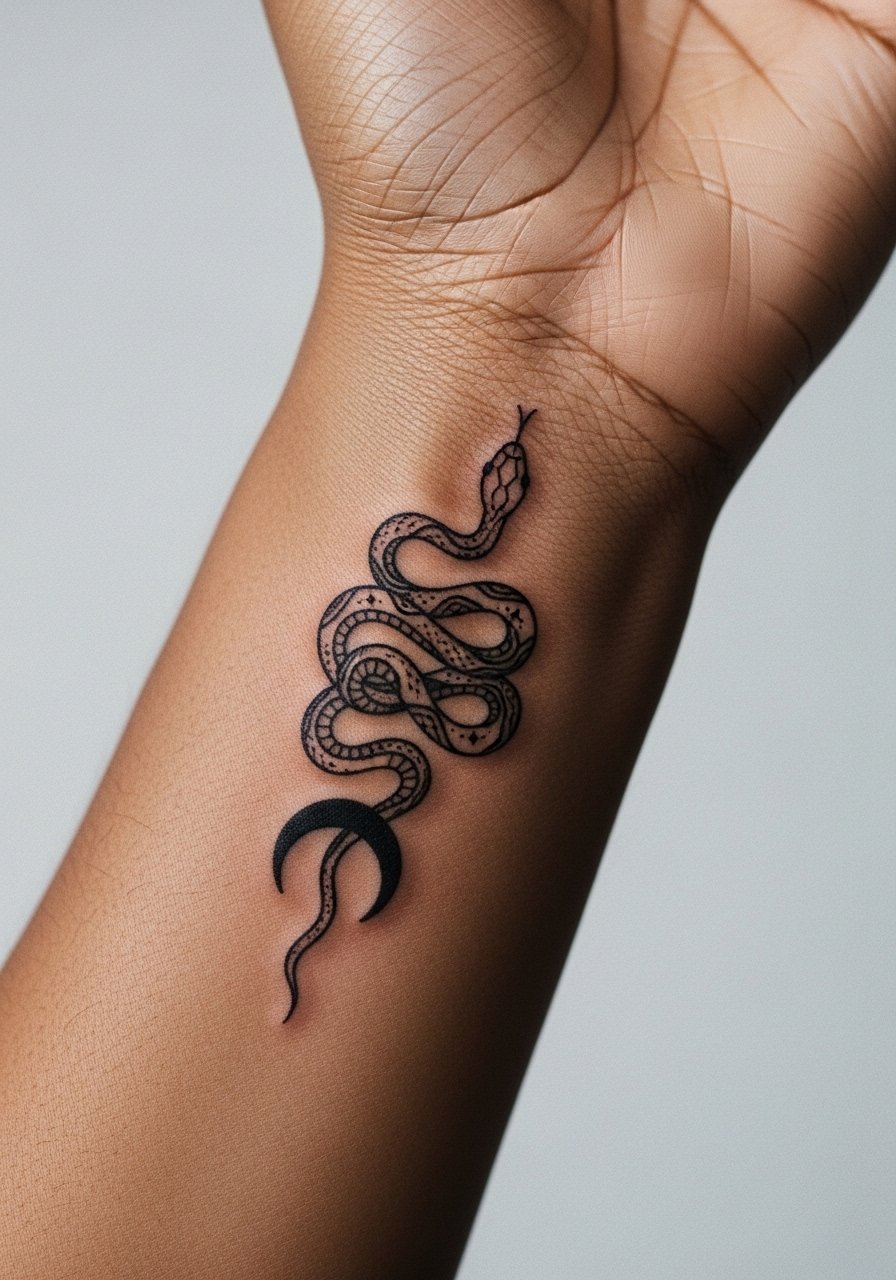
This is an artistic choice for those who like iconography paired with serpent form. Expect a 60-minute session and low to moderate pain. The key is spacing the moon detail so it keeps definition as the snake softens with time. A common mistake is over-detailing the moon at tiny scale. At two years the crescent should still read if the area was left with minimal competing texture. For showing it off, a delicate pendant necklace complements the moon theme.
21. Chain-Link Scale Snake That Mimics Jewelry
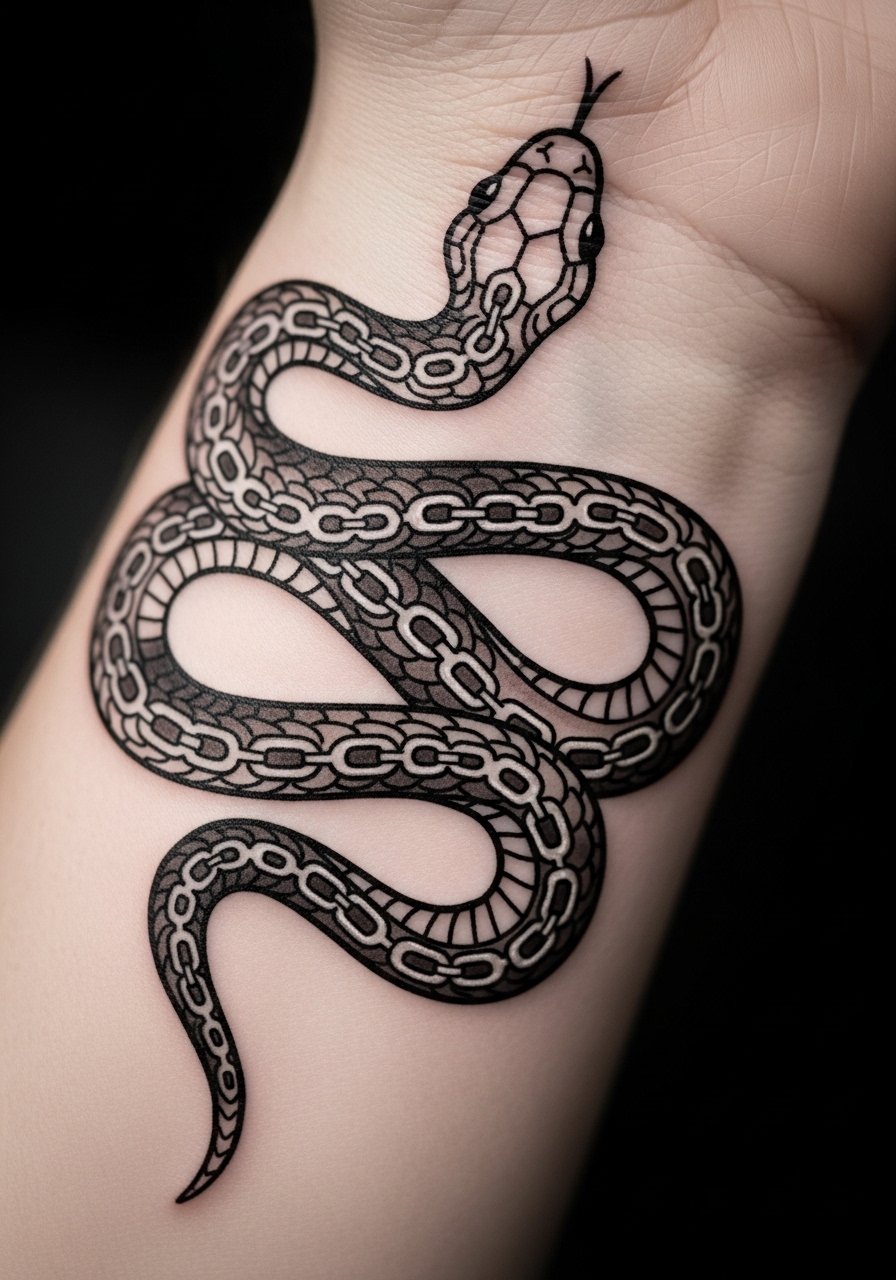
This approach mimics metalwork and reads strong when saturated. Sessions are longer and the wrist area will be more sensitive closer to bones. Ask for slightly larger negative gaps between links so the pattern does not merge during healing. The usual error is choosing chain-link at tiny scale which becomes a blur. For an outfit pairing, cuff sleeves that stop above the tattoo let the chain-link motif act like an accessory.
22. Two-Tone Snake with Greywash Belly and Dark Back
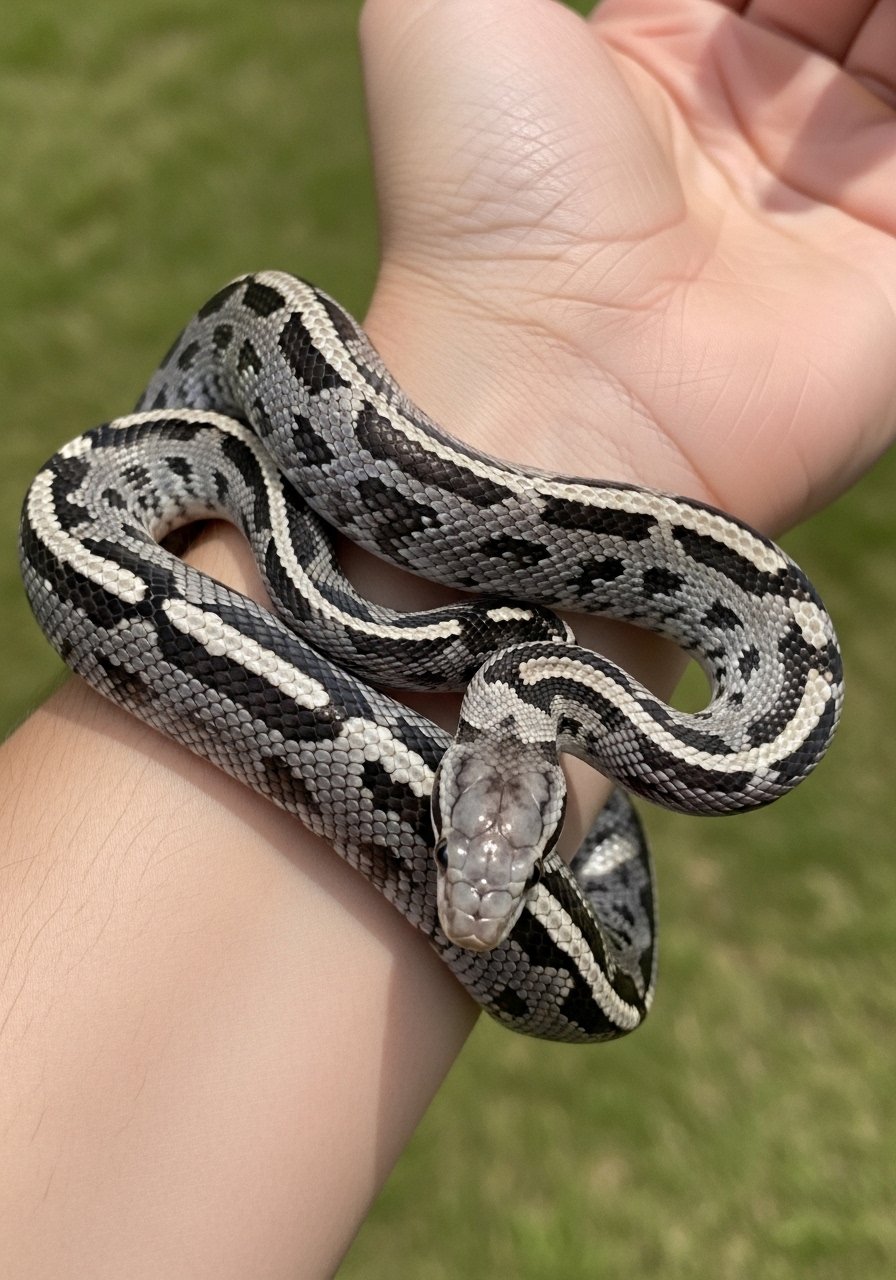
Two-tone shading creates depth but requires careful pigment placement. Sessions are typically 90 minutes and pain ranges with shading density. A common mistake is too-gradual contrast so the belly and back lose separation after healing. Ask your artist for stronger contrast initially because subtle midtones can disappear. Expect a touch-up at year two to restore gradients. For showing it off, a lightweight rolled cuff sweater keeps the wrist visible without rubbing the ink.
23. Finger-Adjacent Snake That Peeks from the Wrist
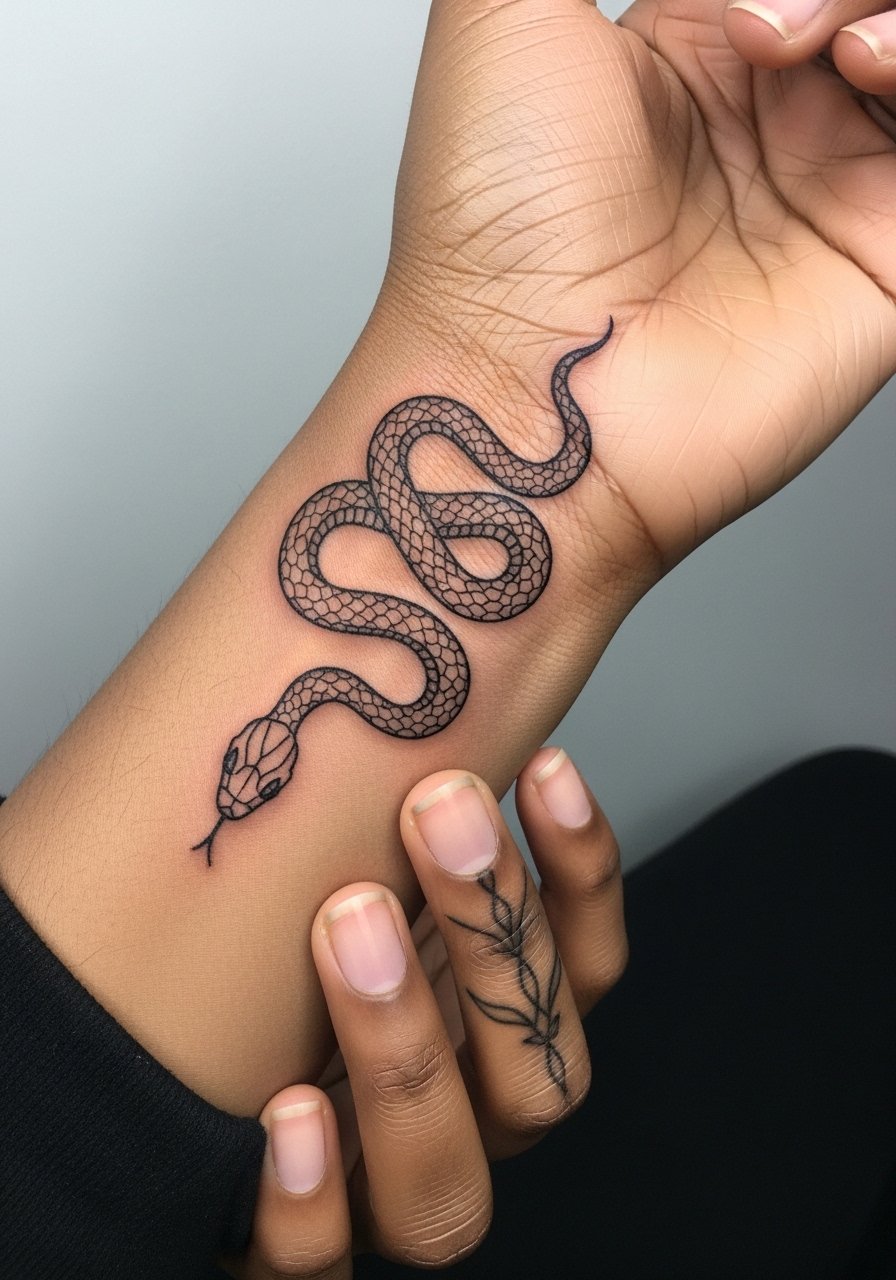
This placement increases friction and exposure. Sessions are 60 to 120 minutes and pain rises near the transitional zone toward fingers. The mistake people make is extending too far into the hand where wash and sun exposure kill fine detail. If you want a peek toward the fingers, keep the extension short and accept a potential touch-up within a year. For comfort during the session wear a short-sleeve shirt that you can roll up without pressing the area.
24. Scale Gradient That Fades Toward the Wrist Crease
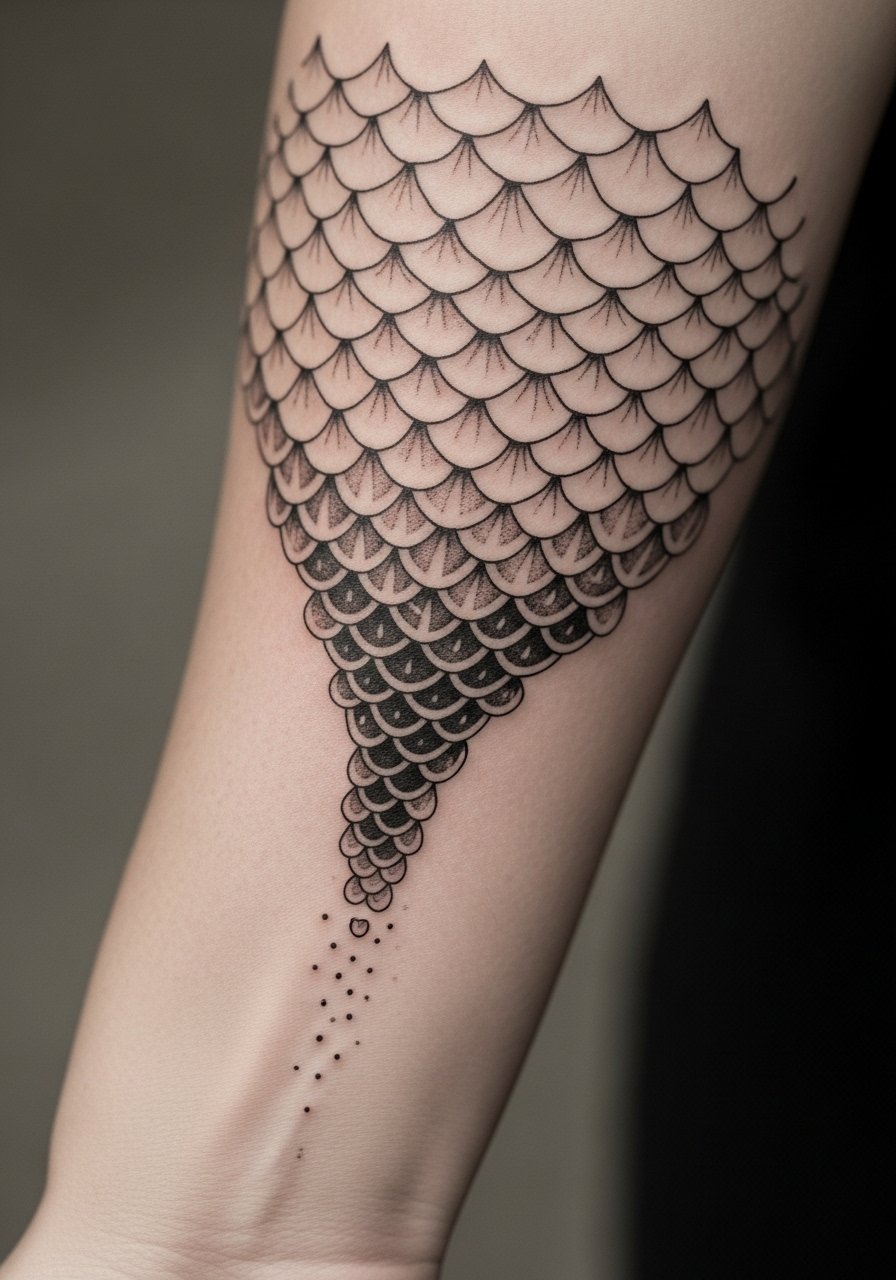
A graduated scale design needs planning so the fade aligns with movement. Sessions can be two hours and discomfort is moderate near creases. The common error is placing the densest scales at the crease where motion causes disproportionate blurring. Ask the artist to step the densities away from the crease so the pattern keeps a readable edge. Expect softening at year three that a targeted touch-up will fix. For reveal, cuffed sleeves work well.
25. Tiny Symbolic Snake with Roman Numeral Tail
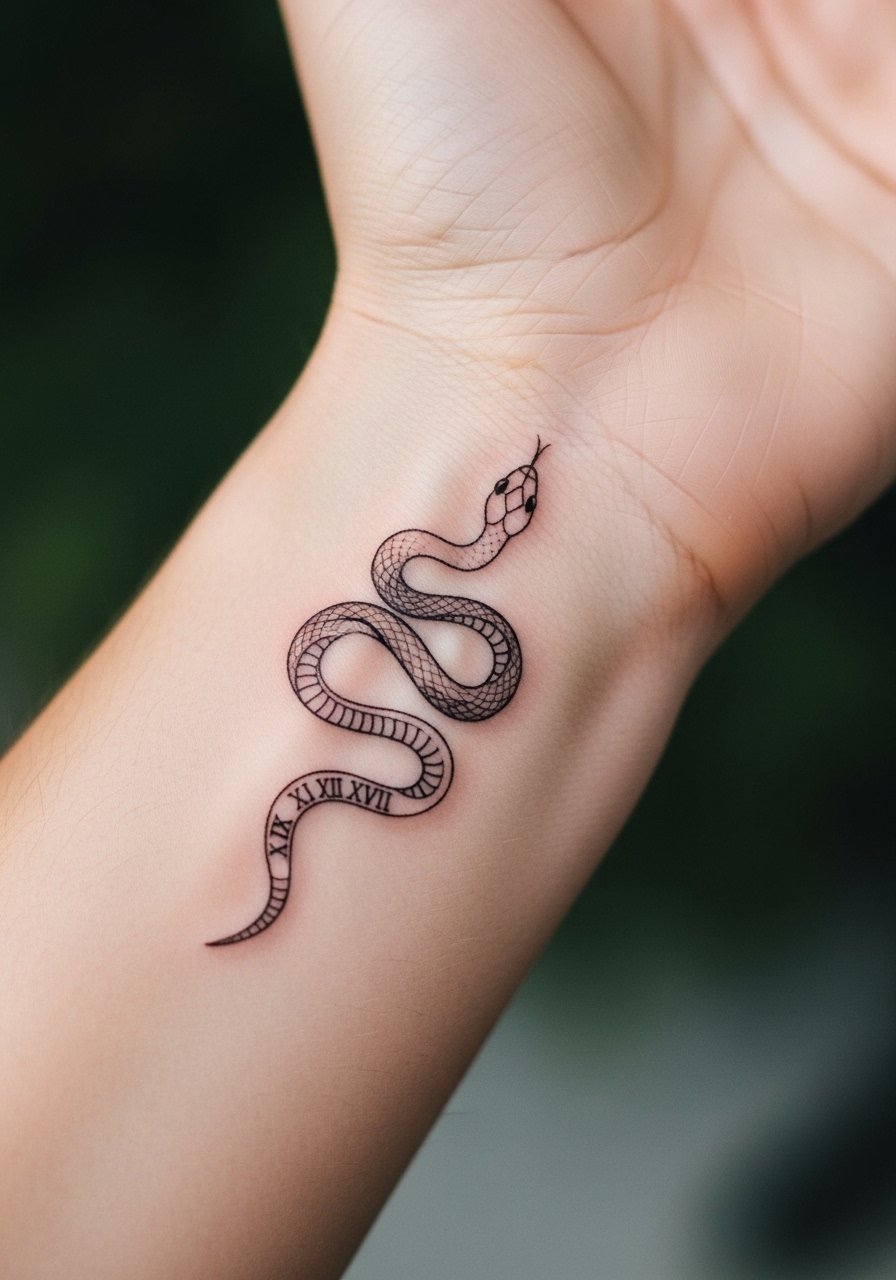
Combining symbols and numerals makes for meaningful micro pieces. Sessions are brief and pain low. Keep numerals large enough to avoid muddying. The mistake is cramming complex numerals into a tiny tail which blurs into an indistinct mark. Plan on a touch-up to keep the numerals legible after the first year. For showing it off, a thin leather bracelet sits opposite the numerals for balance.
26. Reverse Negative-Space Snake with Bold Highlights
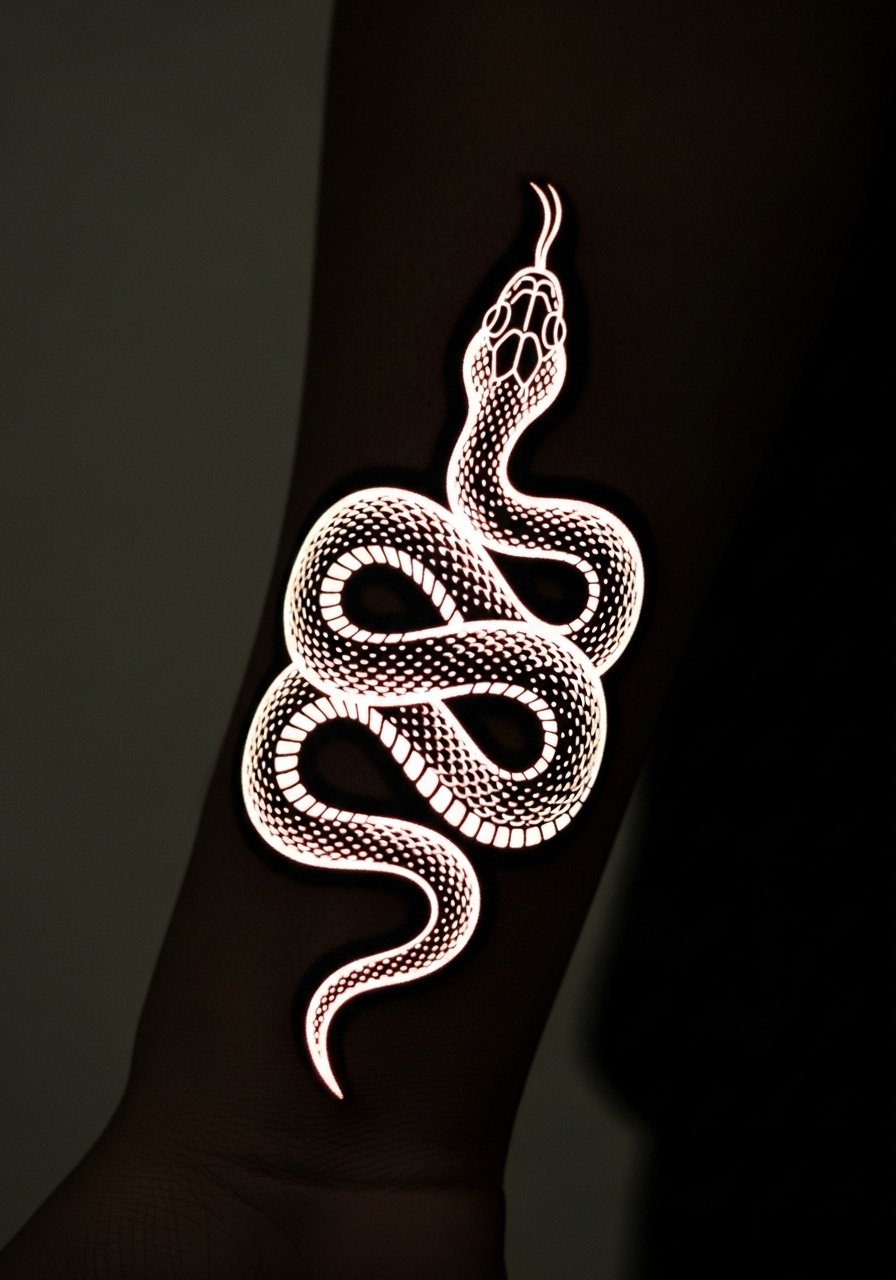
This dramatic look uses darker fills to let the skin form the scales. Sessions are lengthy and pain can be higher because of larger saturated areas. The risk is uneven aging if the fill loses saturation in spots. One common mistake is not planning for areas that will rub against watchbands. Ask your artist how they handle refill sessions and schedule a check at six months. For wearing, choose bands and bracelets that do not press directly over the darkest areas.
27. Single-Loop Hidden Snake on the Inside of the Wrist
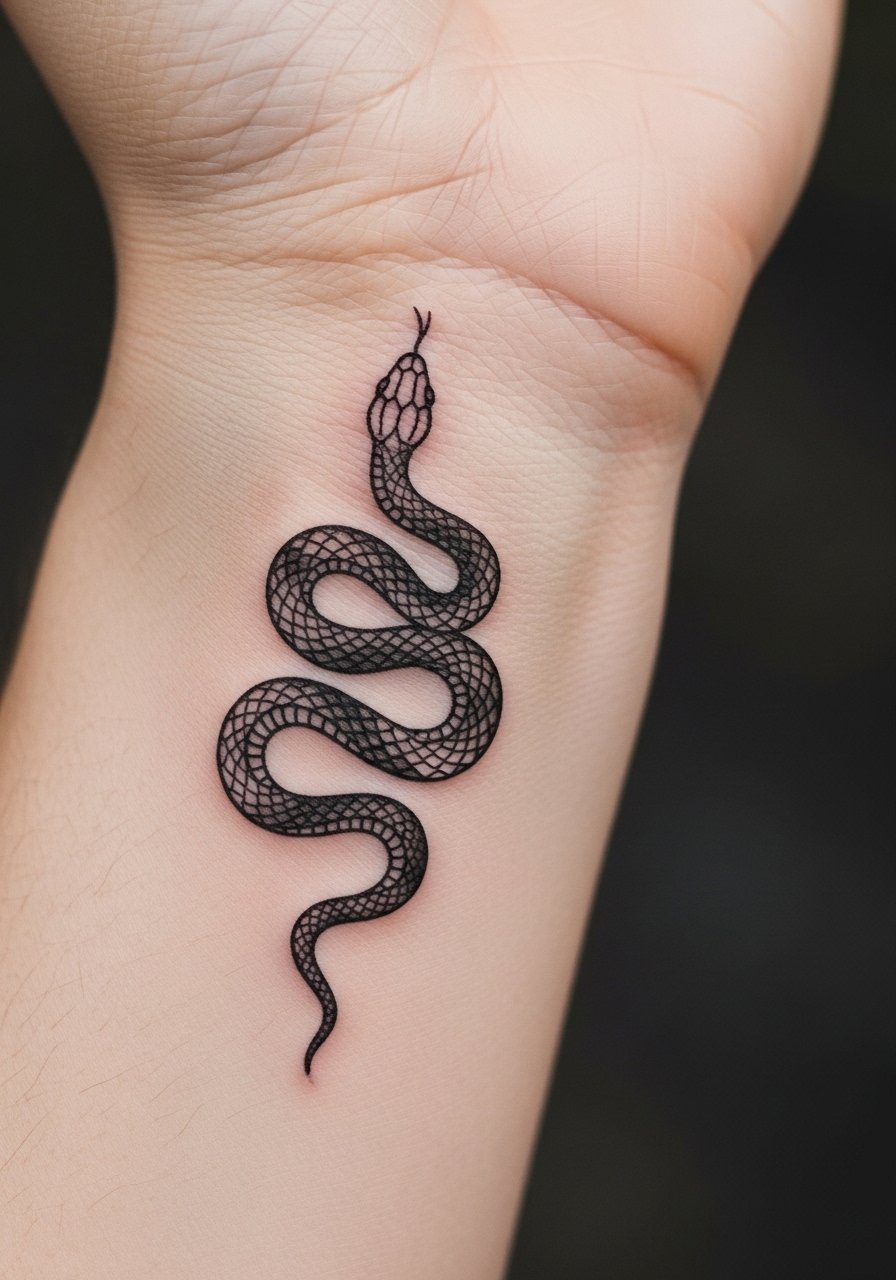
This is a quieter placement for someone who wants a personal symbol more than a display piece. Sessions are short and pain mild. The main mistake is placing the head too close to the crease where daily bending blurs features. During consultation, ask the artist to map a position that reads when your hand relaxes. This spot ages gently if you avoid constant rubbing from bracelets. For the session wear a soft cotton long-sleeve that you can push up easily.
Frequently Asked Questions
Q: Will a fine line snake on the wrist blur faster than a bold blackwork coil?
A: From what I've seen, fine line tattoos on wrists tend to soften earlier because the skin and constant motion cause tiny lines to merge. Bold blackwork holds contrast longer but can look heavy if placed poorly. If longevity is your priority, ask an artist to slightly increase line weight for a fine line piece. Expect a touch-up at year two for delicate work.
Q: How should I prepare clothing-wise for a wrist session that wraps onto the hand?
A: Wear a top with short sleeves or sleeves you can roll without friction. A loose button-down or a soft tee works well. If the design reaches the hand, bring slip-on shoes and avoid jewelry so nothing needs to be removed awkwardly during the session. A button-down shirt that you can pull aside is often the easiest option.
Q: Do colored accents like a red eye need special aftercare compared with black lines?
A: Color in tiny accents can fade quicker on wrists because pigment sits closer to the surface. The aftercare step that preserves color is avoiding sun exposure once healed and scheduling a color touch-up if it softens. Discuss pigment choices with your artist since some reds are formulated for more longevity in small doses.
Q: Are wrist tattoos likely to cause workplace issues?
A: Some workplaces remain conservative about visible hand and wrist tattoos. If your job has strict appearance policies think about placement on the inner wrist or a position that a watch or bracelet can cover. If cover is needed, choose a size and placement that fits under accessories comfortably.
Q: How often should I expect touch-ups for different snake styles on the wrist?
A: Expect checkups sooner for fine line, single-needle, and watercolor styles. I usually tell people to budget for a touch-up around year two for those. Bold blackwork and larger negative-space pieces often go longer between touch-ups, but anything near joints or hands will likely need attention sooner.
Q: Can I combine script or numerals with a snake on my wrist without sacrificing clarity?
A: Yes, but keep script and numerals slightly larger than you might elsewhere on the body. On the wrist the skin moves and small details can blur. Ask your artist to show a placed mock-up at scale so you see how letters and numbers interact with the snake before you commit.