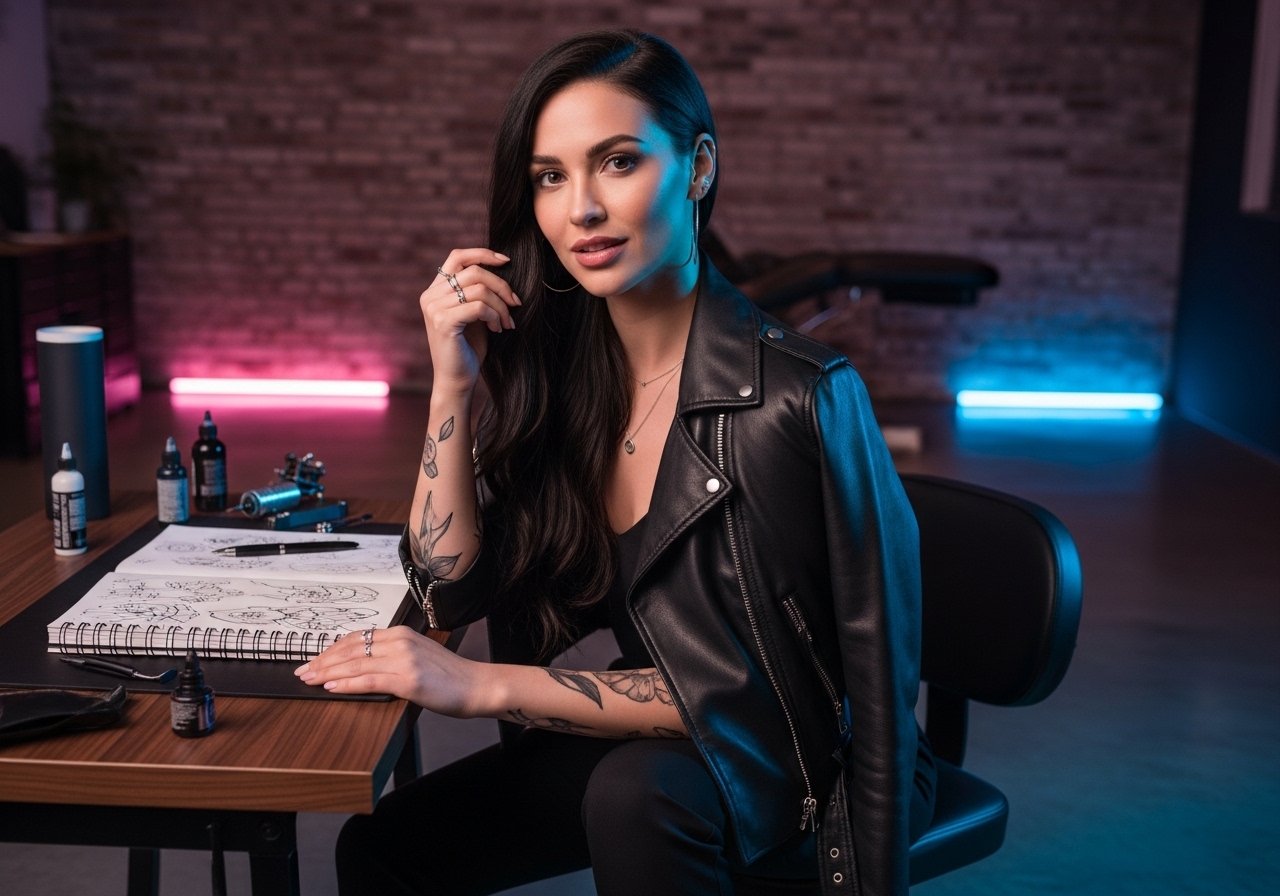
Sitting in the chair with the stencil on your inner forearm is when the design either feels like it belongs to you or like a rushed decision. Forearm placements read bigger in real life than on a phone screen, and line weight that looks delicate under salon lights can thin out once healed. Start with the right placement talk and wardrobe for the session and the tattoo will age the way you expect.
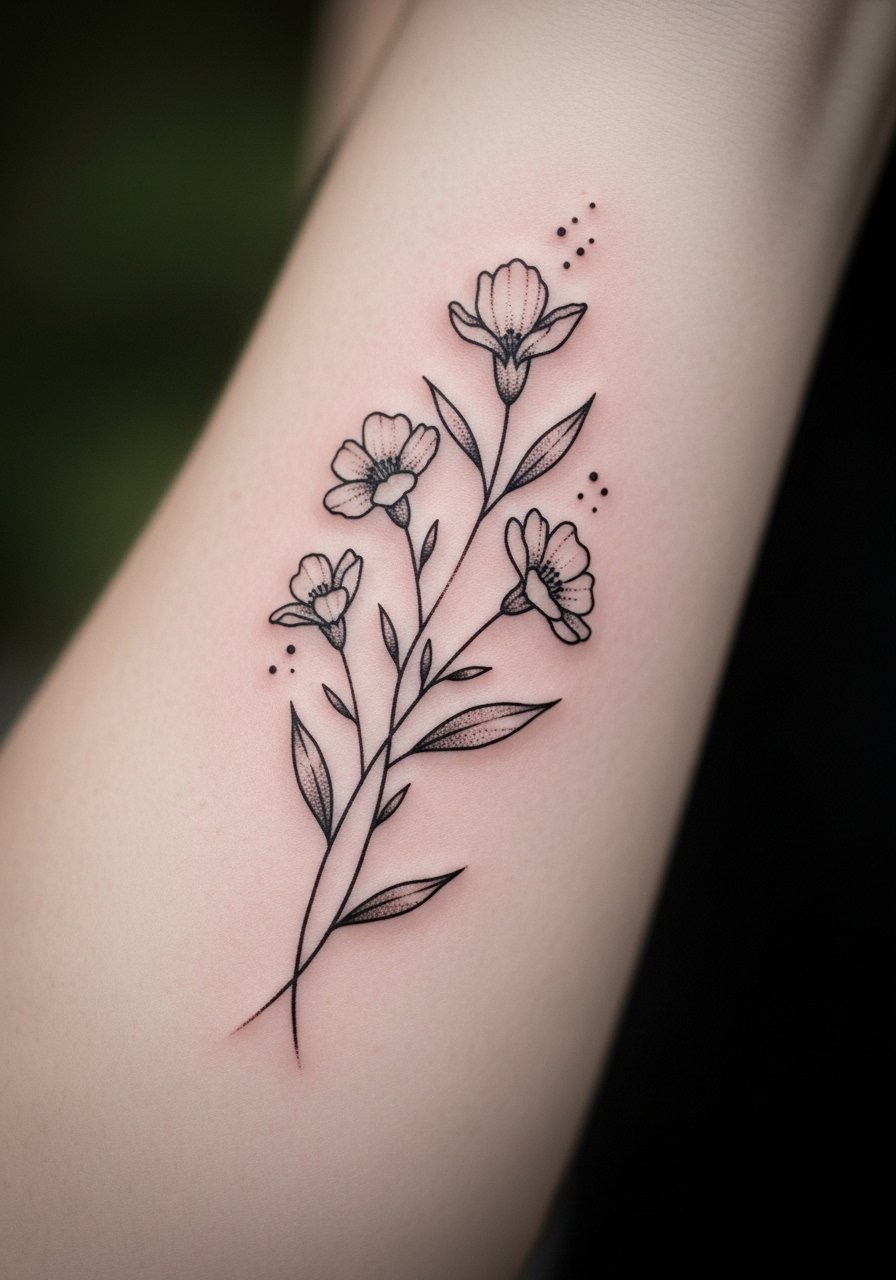
1. Fine Line Wildflower Spray on Inner Forearm
This delicate cluster of tiny blooms runs along the inner forearm with fine line stems and light stipple shading. I recommend this if you want an organic look that peeks out with rolled sleeves but still reads minimal up close. Tell your artist you want slightly heavier linework around the stems so they hold up during the first few years. Expect moderate pain for the inner forearm and a one to two hour session depending on length. Common mistake is asking for ultra-micro dots in dense areas, which can merge over time. For the appointment wear a loose button-down shirt so the artist can pull the sleeve up without tugging.
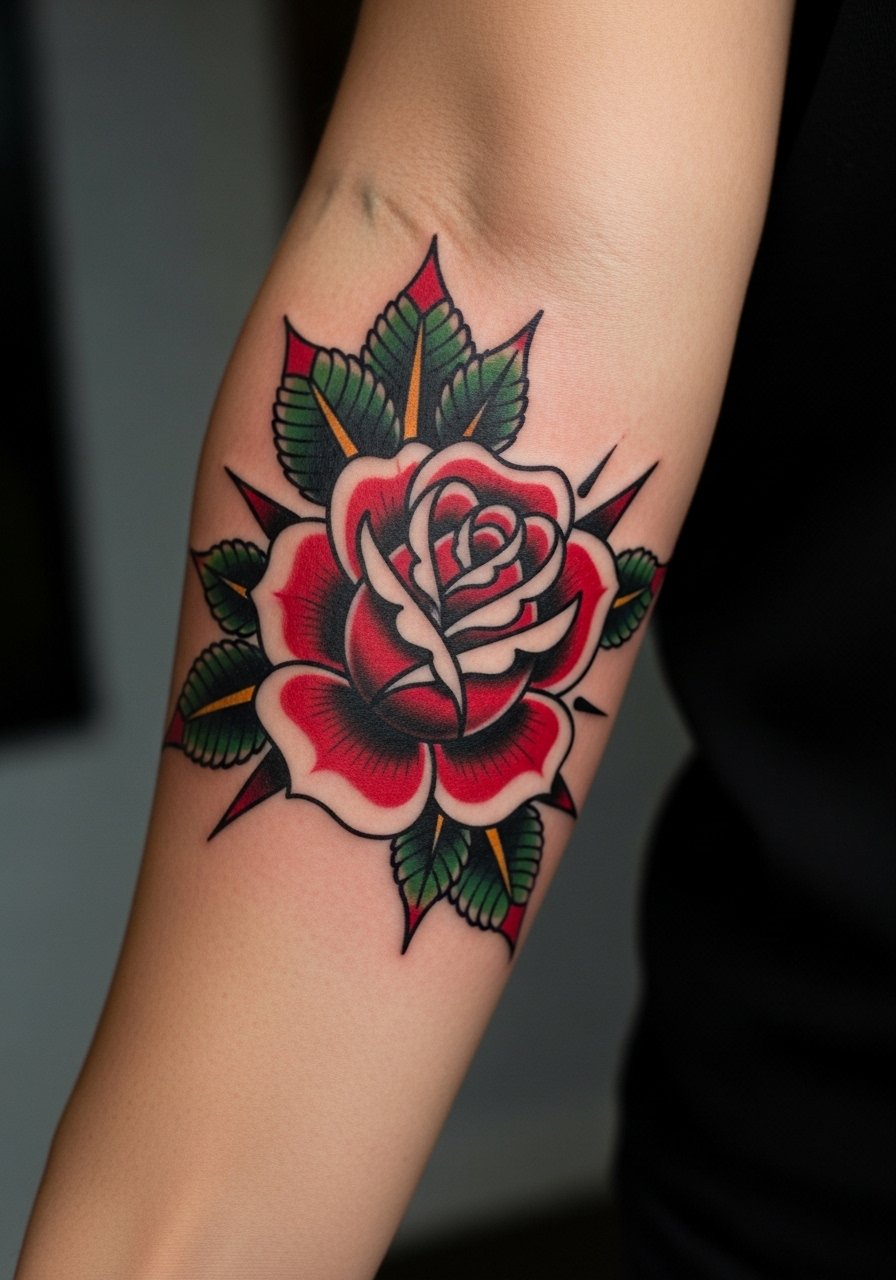
2. Bold Traditional Rose on Outer Forearm
A single bold rose with thick outlines and saturated color reads from across a room and ages predictably. I suggest this style when you want longevity with low maintenance. Ask for solid saturation and slightly larger petals than your reference to prevent early softening. Expect the session to be more about saturation than precision, and plan for a touch-up at two to four years if you wear sun-exposed sleeves. The biggest error is shrinking the design to fit a narrow spot, which risks losing the petal separation. Visual impact is high and pain is moderate on the outer forearm.
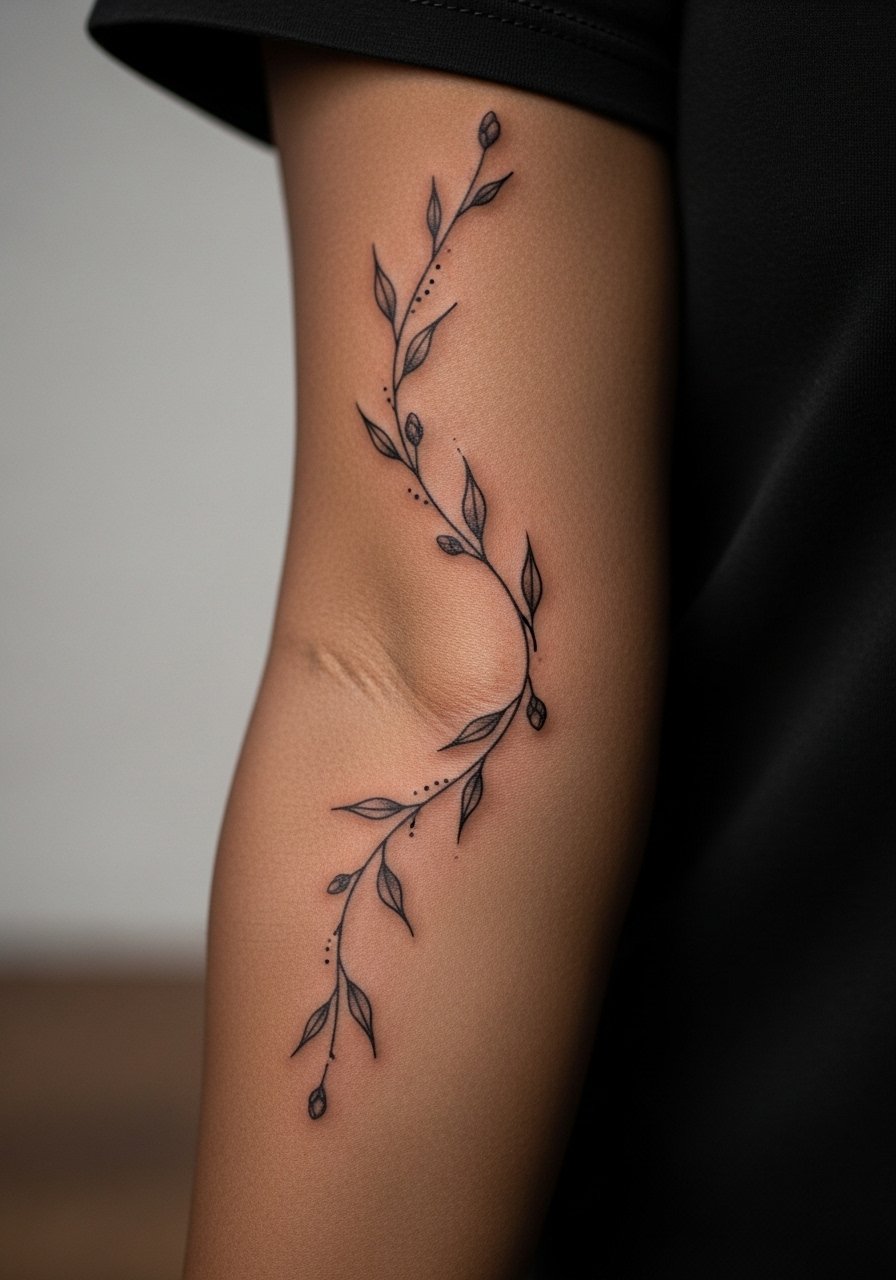
3. Trailing Vine Wrap Around Forearm
This vine wraps mid-forearm to wrist with alternating leaves and tiny buds, flowing with the arm's natural curvature. It works well when you want a piece that reads differently in movement. During consultation request that the vine follows muscle lines and avoid symmetrical mirroring which looks staged. The inner curve near the wrist is prone to more movement and friction, so ask for reinforced linework there. Session time is often split into two sittings for longer wraps. For showing it off pair the piece with rolled sleeves or a ruffled sleeve blouse to reveal the wrap naturally.
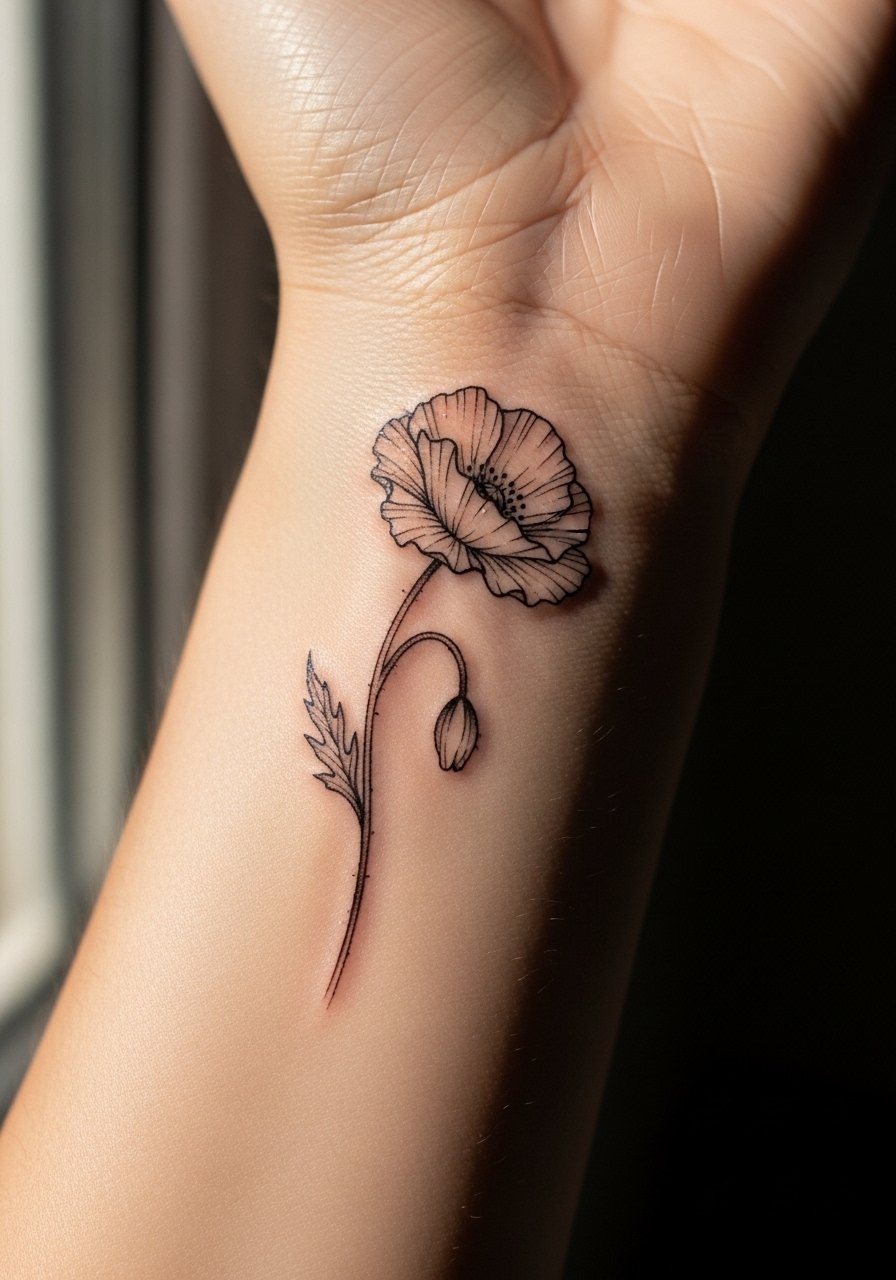
4. Single Stem Poppy Near Wrist
A solitary poppy with thin stem landing just above the wrist makes for a quiet statement. Recommend this to someone who wants a visible but compact floral. Tell the artist you want the bloom slightly larger than reference so the petal edges do not blur at year three. The wrist sees constant washing and friction, so thin stems can fade faster. Expect a short session under an hour for simple line and spot shading. For the appointment wear a minimalist watch you can remove easily so jewelry does not press on the fresh ink.
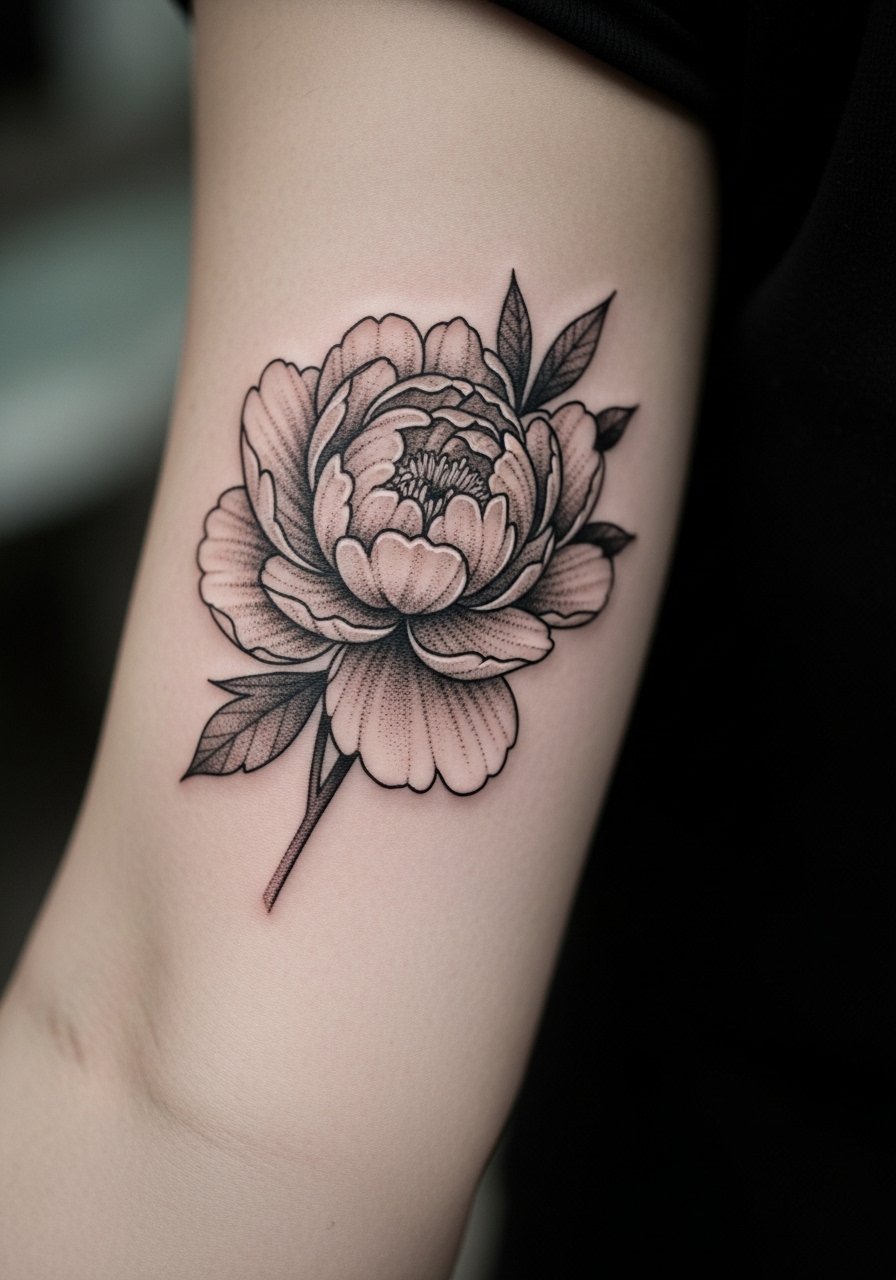
5. Micro-Realism Peony on Upper Forearm
Micro-realism peonies use tight shading and tiny needle groupings to mimic a photograph in small scale. Choose this if you want an intricate bloom without a full sleeve. Be explicit in consultation about how much contrast you want between petals so the design does not flatten once healed. This approach risks losing delicate mid-tones over time, so expect a touch-up sooner than with bold work. Session time varies by detail but plan two to three hours for a medium-sized bloom. A common mistake is requesting photo-level detail at too small a scale.
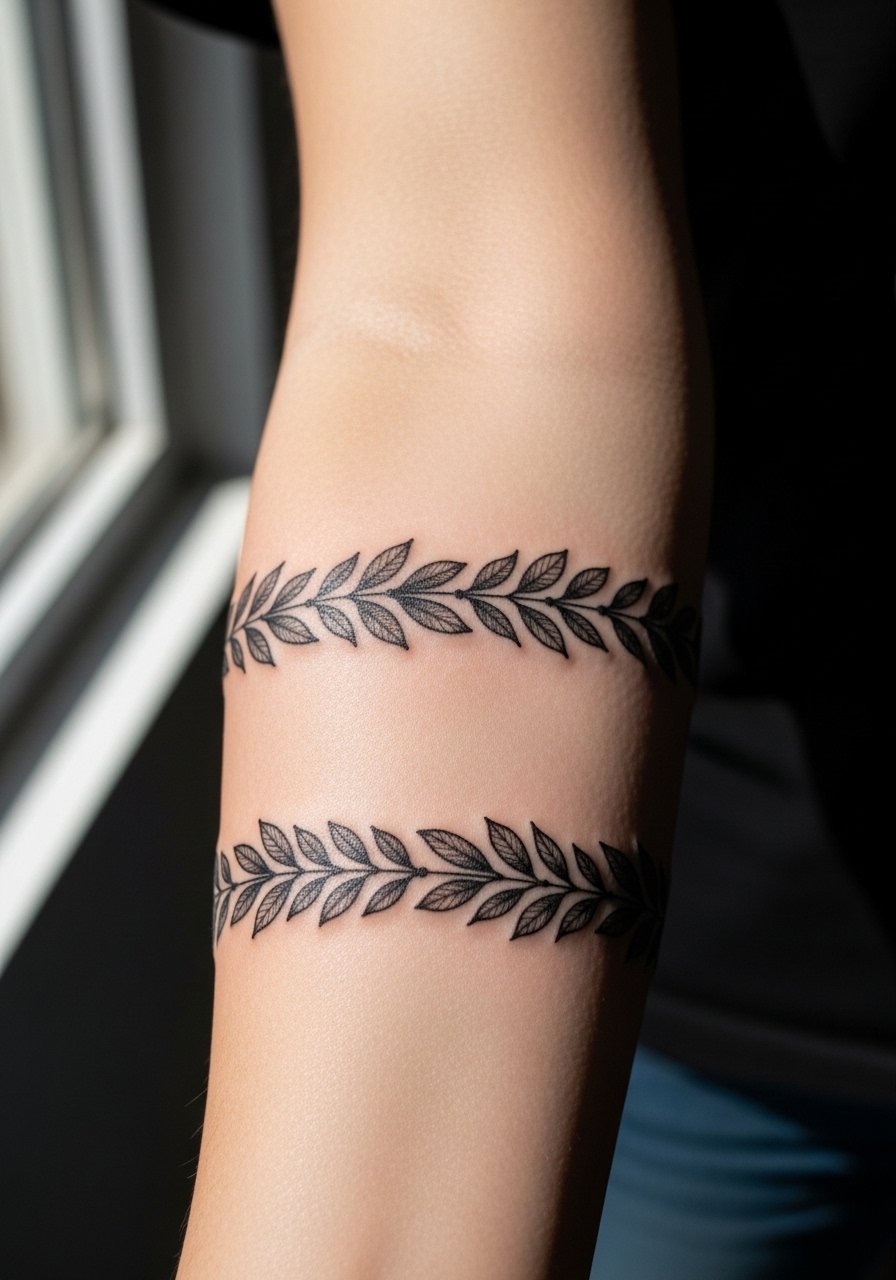
6. Botanical Band Encircling the Forearm
A thin botanical band with repeating leaves and small blossoms encircles the forearm like a bracelet. This reads well across skin tones and makes for a modular design if you later add pieces above or below. Ask your artist to space repeating elements slightly more than you think necessary. Tight repetition is a common reason bands blur after a few years. Expect light discomfort where the band crosses tendons. For showing it off pair with stacked dainty bracelets or a thin chain bracelet so metal frames the band without crowding the ink.
Pre-Session Essentials
The wrist and inner forearm pieces above heal differently from larger filled work, so a few targeted items smooth out the session and the first week.
-
Stencil transfer paper kit. Lets you preview line placement on skin while you test sleeve position and natural movement.
-
Topical numbing cream. Applied per instructions 45 minutes before can ease sensitive spots near the wrist without changing how ink sits.
-
Thin protective film roll. Useful for small wrist pieces that face extra rubbing during the first few days.
-
Fragrance-free body wash. Gentle cleansing prevents irritation while the lines settle.
-
Aquaphor healing ointment. A thin application in the initial days helps retain moisture without clogging the needle channels.
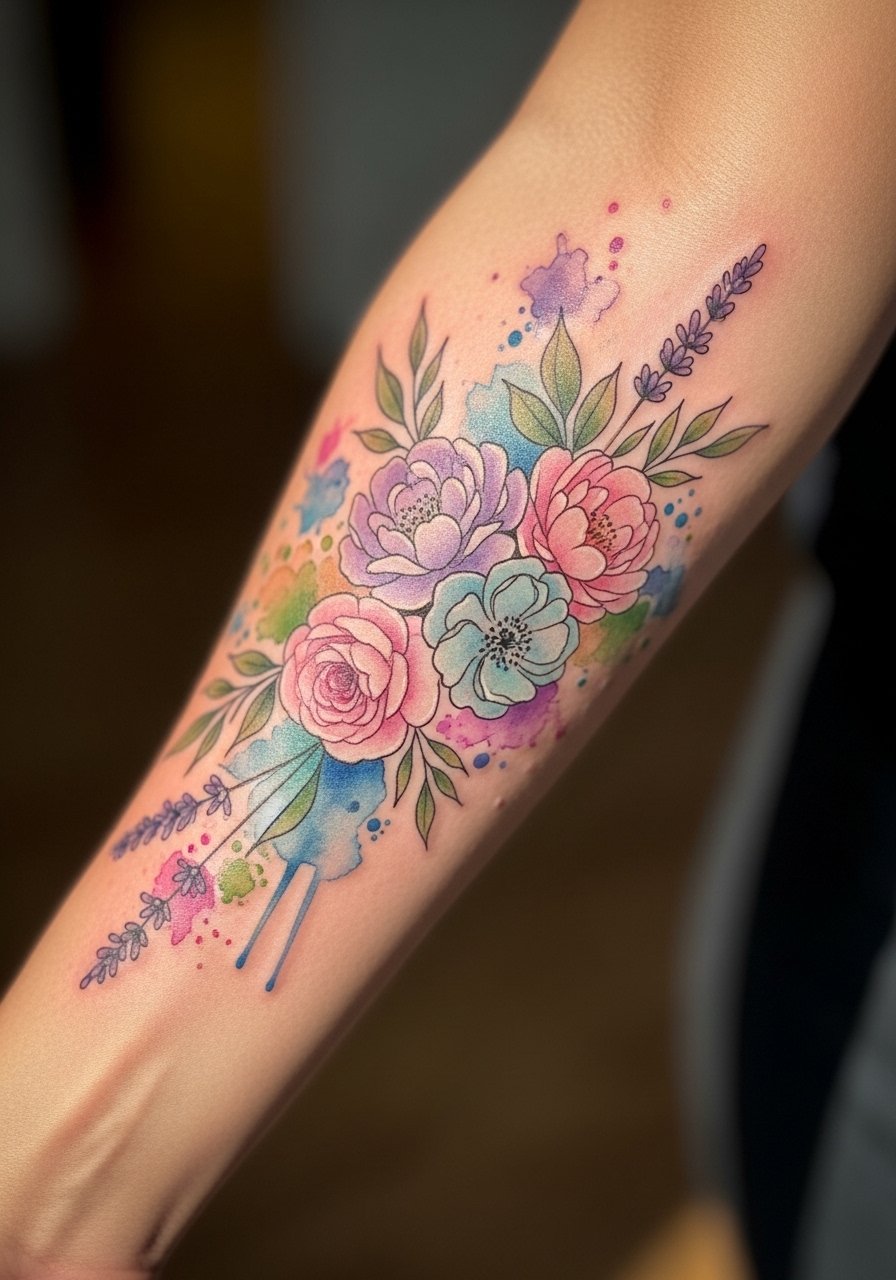
7. Watercolor Blossom Wash Along Forearm
Watercolor florals use soft color gradients with minimal outlines, giving a painterly look that blends with skin. The controversy here is clear. One camp says watercolor fades into patchy color with sun exposure and needs frequent refreshes. The other camp argues that careful layering and a small amount of linework keeps the wash legible. My advice is to add a slim outline or stippled edges to anchor the color. Expect lighter longevity than solid color pieces and plan touch-ups at year three. Wear a lightweight long sleeve you can roll to protect it from sun while healing.
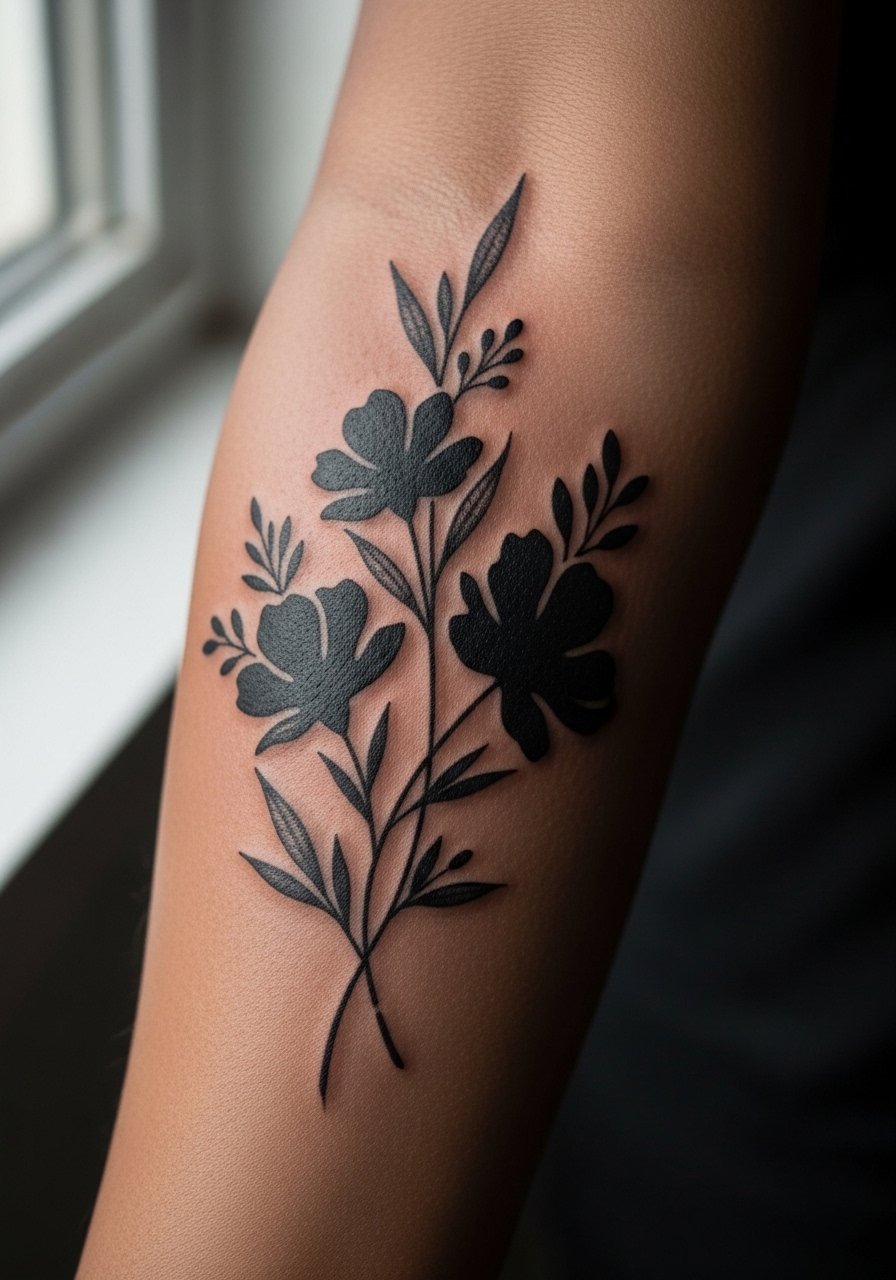
8. Blackwork Floral Silhouette on Inner Forearm
A row of silhouetted blooms in solid black makes a striking, low-maintenance option. Blackwork ages predictably because saturation is the main driver of longevity. When consulting ask for crisp edges and slightly larger negative spaces between petals so the silhouette does not become blocky. Pain is moderate on the inner forearm and session time is shorter for silhouette pieces. This style pairs well with minimalist clothing and a black linen shirt with sleeves rolled to emphasize the contrast.
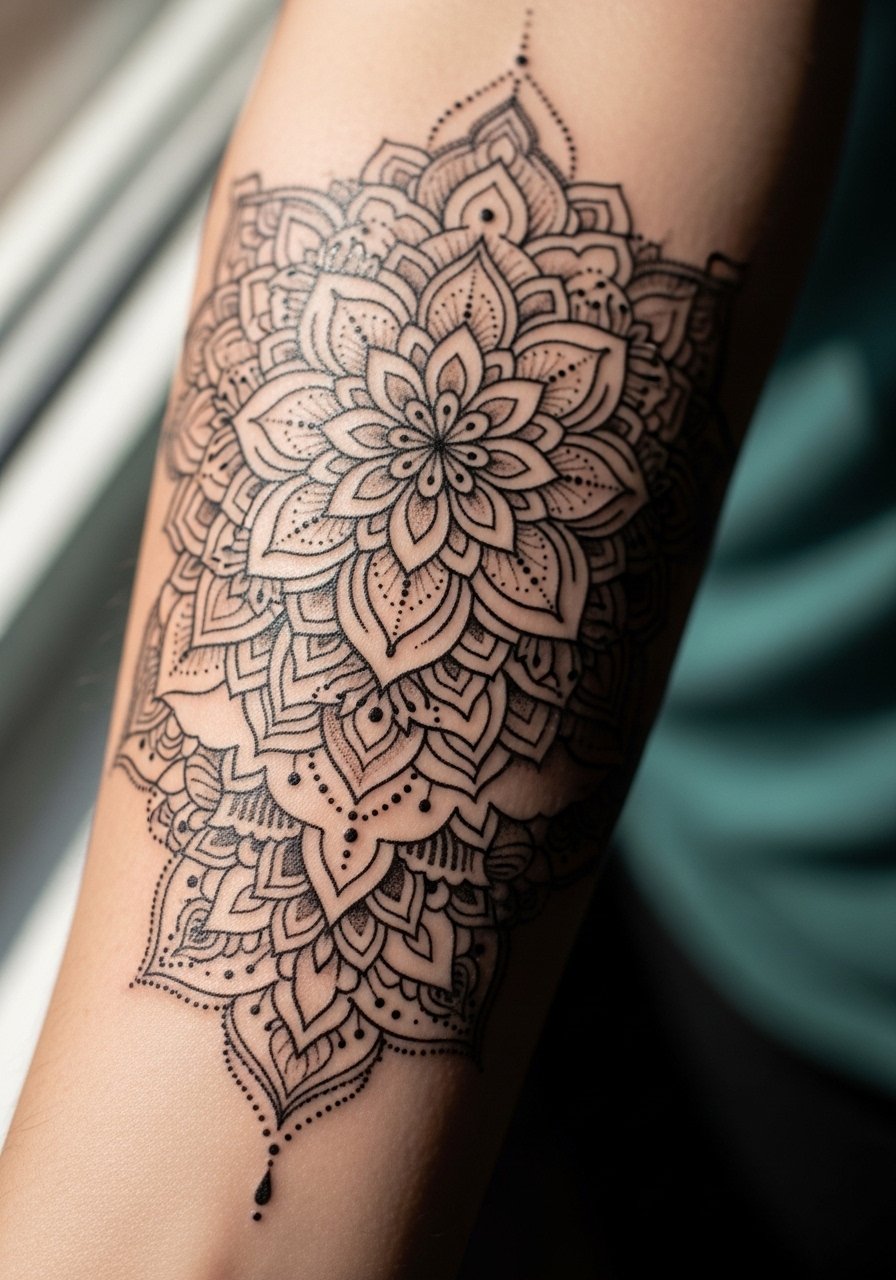
9. Geometric Floral Mandala Stacked on Forearm
Geometric mandala blooms stack vertically along the forearm, mixing linework and dot work for structure. This is a good pick if you like symmetry and want a piece that can expand into a sleeve. Tell your artist to leave slightly wider gaps in dense sections so lines remain readable at year five. The mistake people make is forcing mandala scale too small which leads to merging lines. Expect focused sessions that prioritize clean linework and steady hand speed. For the appointment consider a stretchy cuff sleeve top that you can pull aside easily.
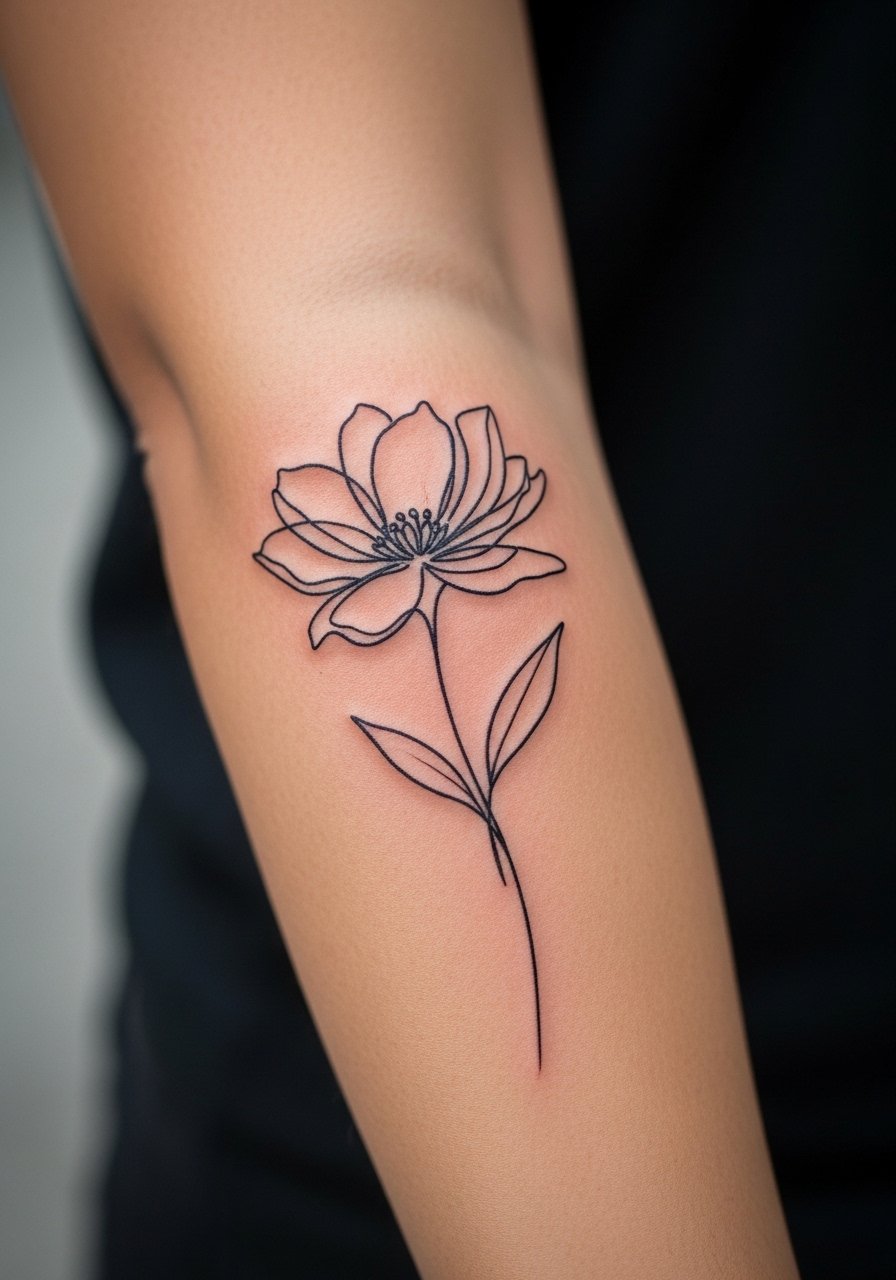
10. Continuous Line Single-Flower on Outer Forearm
A single-flower rendered in one unbroken line reads modern and translates well to the forearm. It is forgiving in terms of aging when the line is given a little thickness. In the consult ask for a slightly bolder single stroke rather than hairline tracing to reduce the risk of blur. This piece is low pain and often quick, making it ideal if you want minimal downtime. A real mistake is asking for ultra-thin hairlines that vanish under regular sun. Pair the design with a casual rolled-sleeve tee which frames the continuous flow.
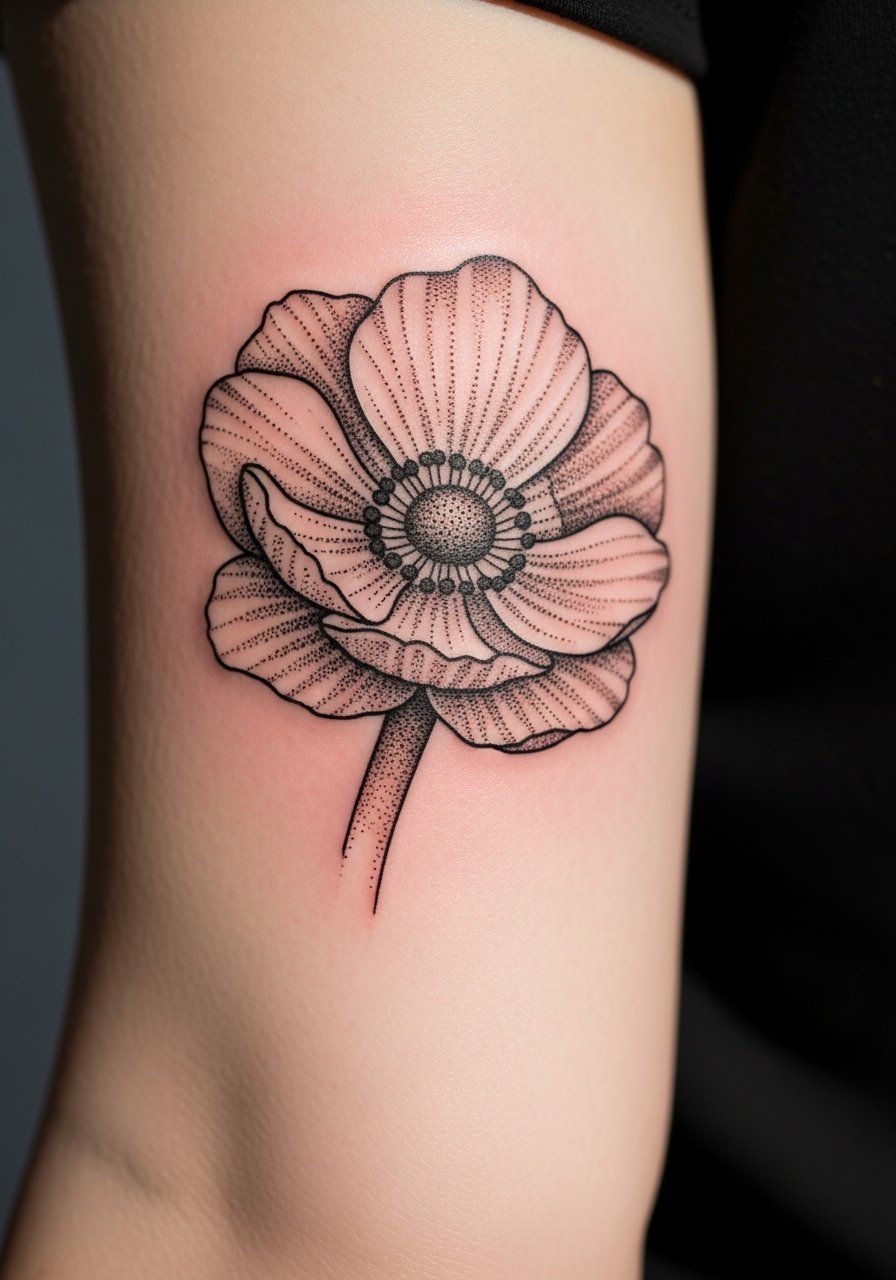
11. Stipple Shaded Anemone Near Elbow
Placed just below the elbow crease, a stipple-shaded anemone uses dot work for soft gradation. The spot sits where the skin moves a lot, so expect longer healing near the crease and some extra touch-up probability. Tell your artist to build dots with gradual density rather than solid fills that can look muddy later. Pain increases near the elbow bone, so bring patience and schedule accordingly. A common error is underestimating session time. This placement benefits from a sleeve you can roll without tight elastic the day of the appointment.
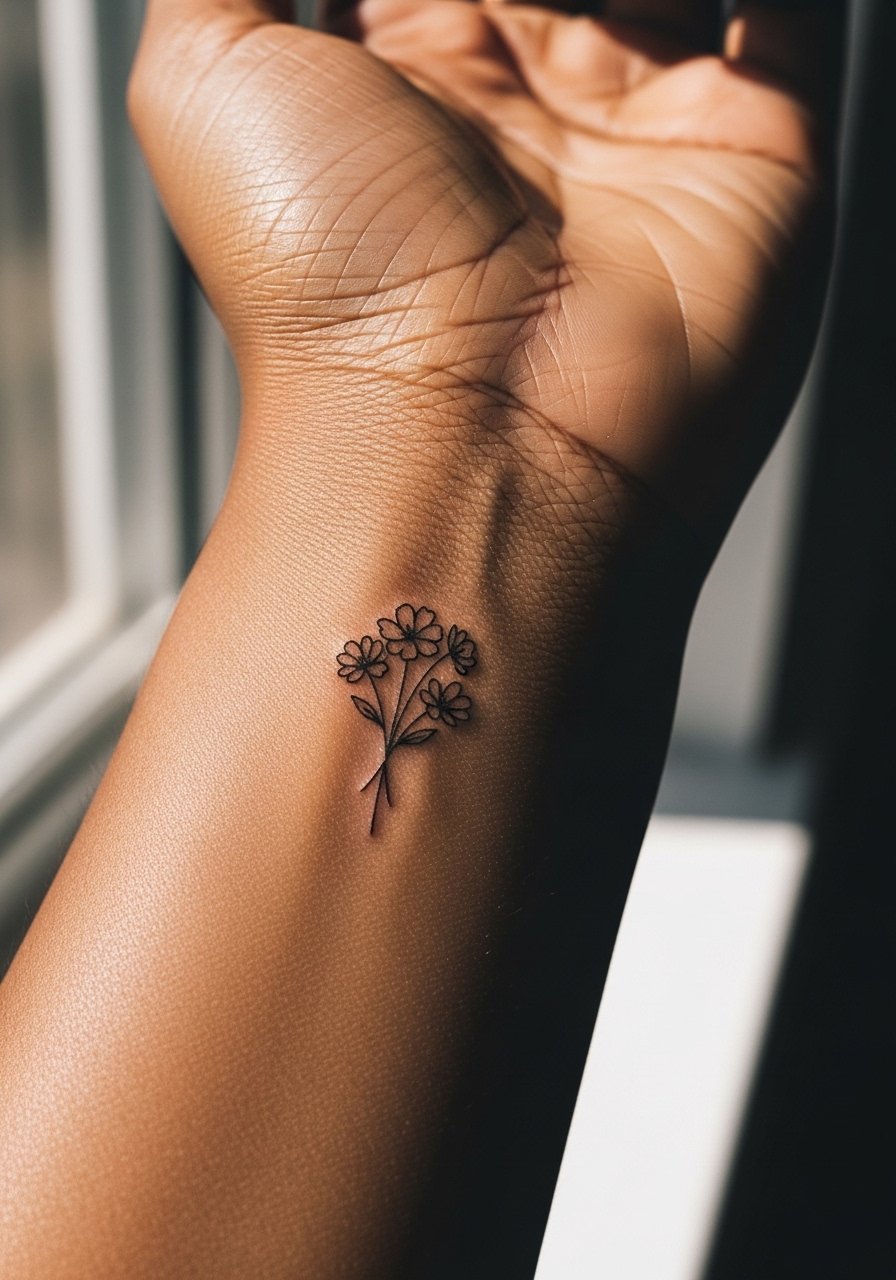
12. Tiny Posy Cluster on Outer Wrist
A compact posy cluster sitting on the outer wrist reads delicate but is exposed to constant friction. Ask for slightly larger spaces between tiny elements and for the stems to be a touch thicker than photo references. Expect this spot to need a touch-up earlier than forearm middles because of soap and rubbing. Session time is short but sensitive. For showing it off pair with stacked dainty bracelets or a thin bangle set that does not press on the fresh ink.
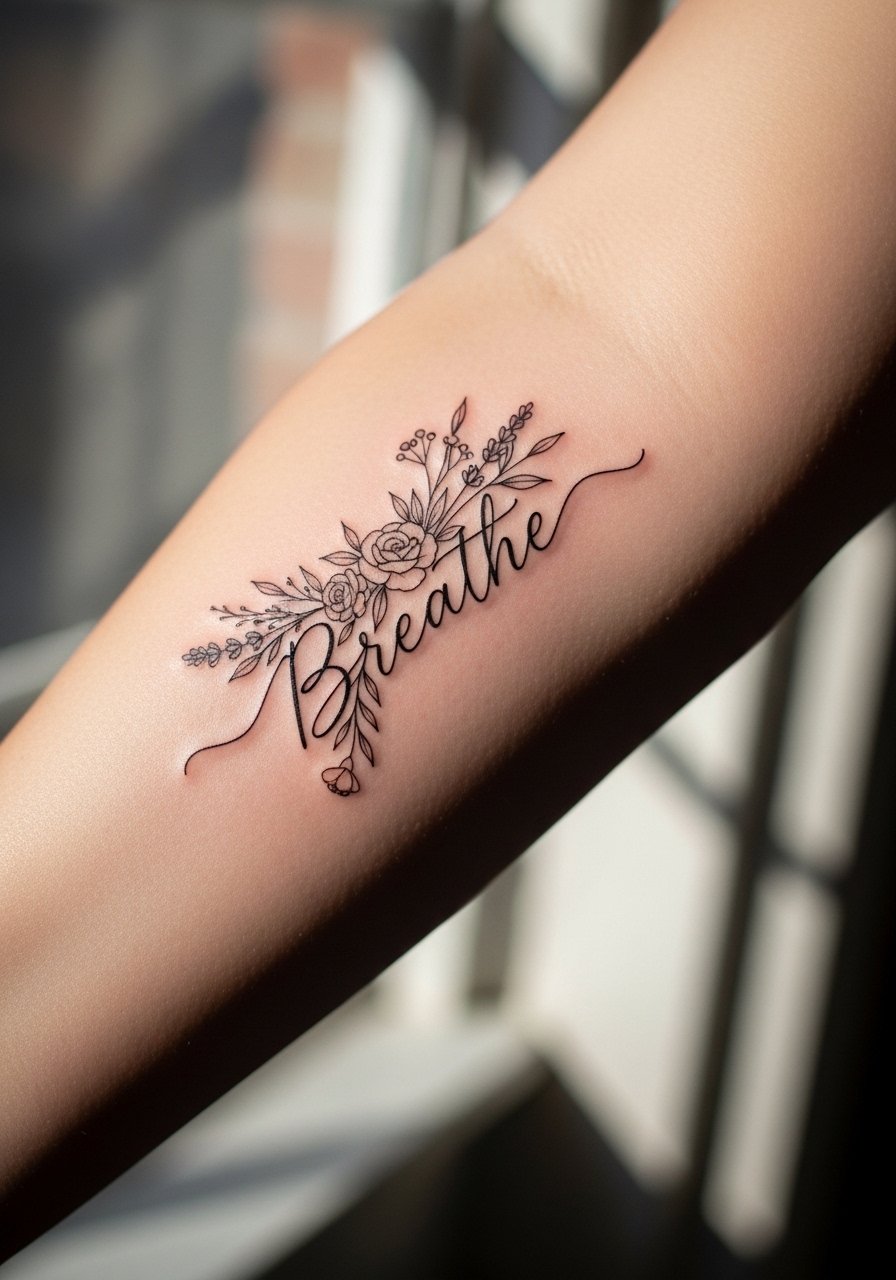
13. Floral Script Combo Along Forearm
A small phrase threaded through a vine of tiny flowers personalizes the forearm while keeping the text integrated. When requesting this, give the exact wording and font weight you want and confirm how the letters will interact with petals. Lettering in close proximity to dense florals risks legibility loss, so ask to increase letter spacing slightly. Healing will vary depending on lineweight. This setup looks great when paired with a thin pendant necklace that sits above your forearm for balance.
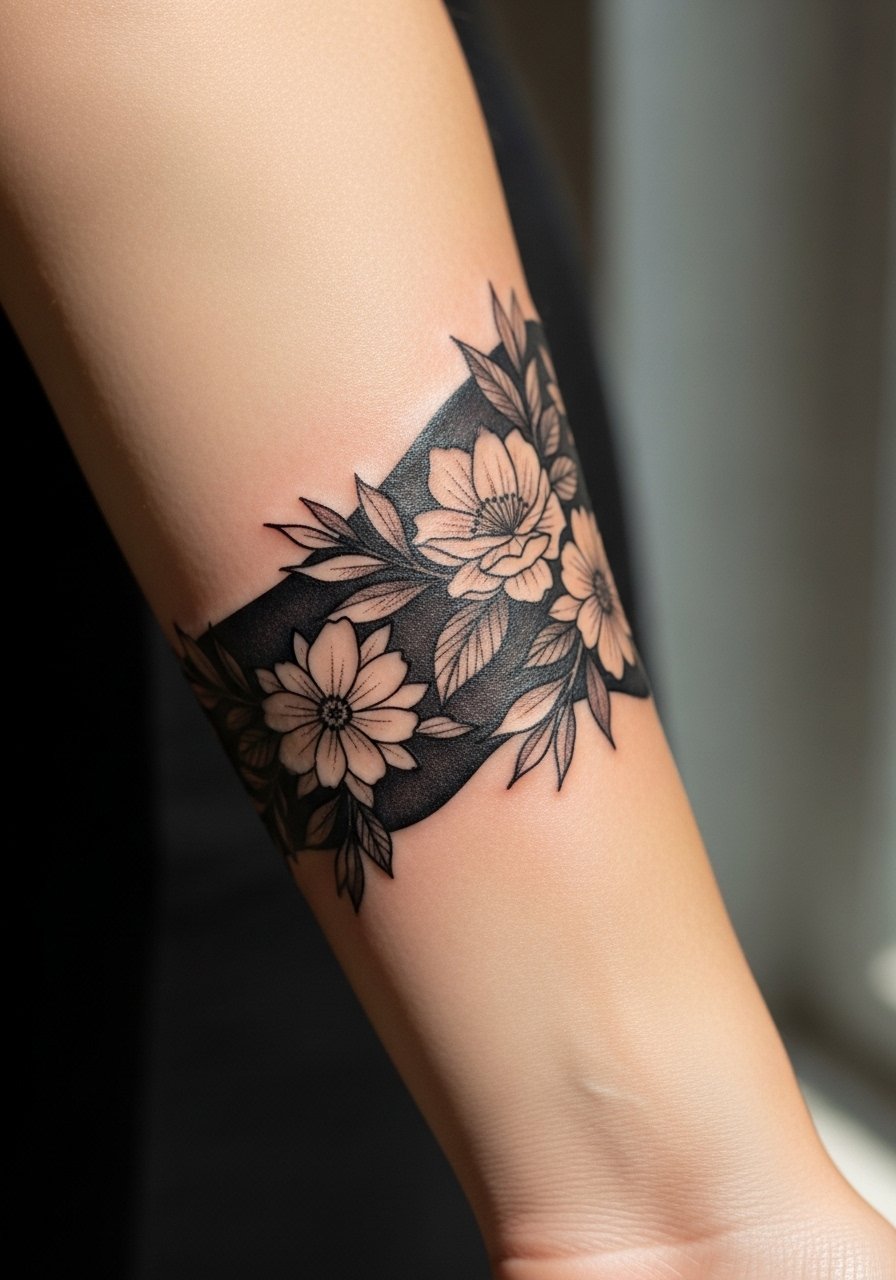
14. Botanical Negative Space Band
Negative space florals are created by leaving skin uninked within a filled background. This technique reads modern and keeps contrast without fine outlines. The key is to tell your artist how much background saturation you want because too much can make the negative space look like a blur later. Expect moderate session time for solid background filling and some tenderness during healing. This style pairs with rolled-up sleeves or a cropped sweater with cuffed sleeves to let the negative shapes peek out.
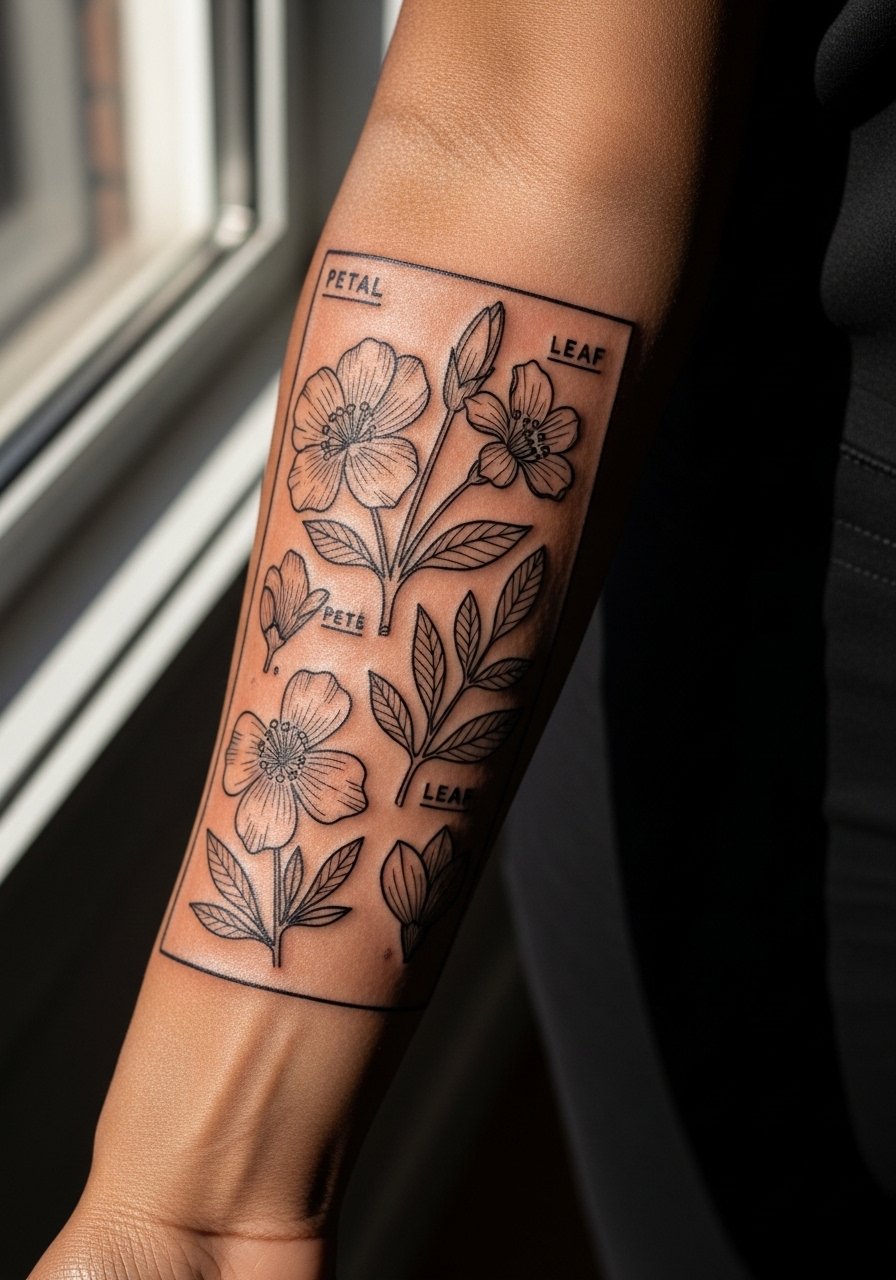
15. Vintage Botanical Illustration Panel
A forearm panel inspired by vintage botanical plates uses thin contour linework and labeled elements for an archival feel. It works well when you want a study-like tattoo rather than a decorative splash. Request clean labeling and avoid overly tiny text which will blur. Aging is predictable if lines have slight weight and shading is stippled. The session is more about steady hand than saturation. For the session wear a breathable cotton tee you can slide up easily so the panel sits flat during the work.
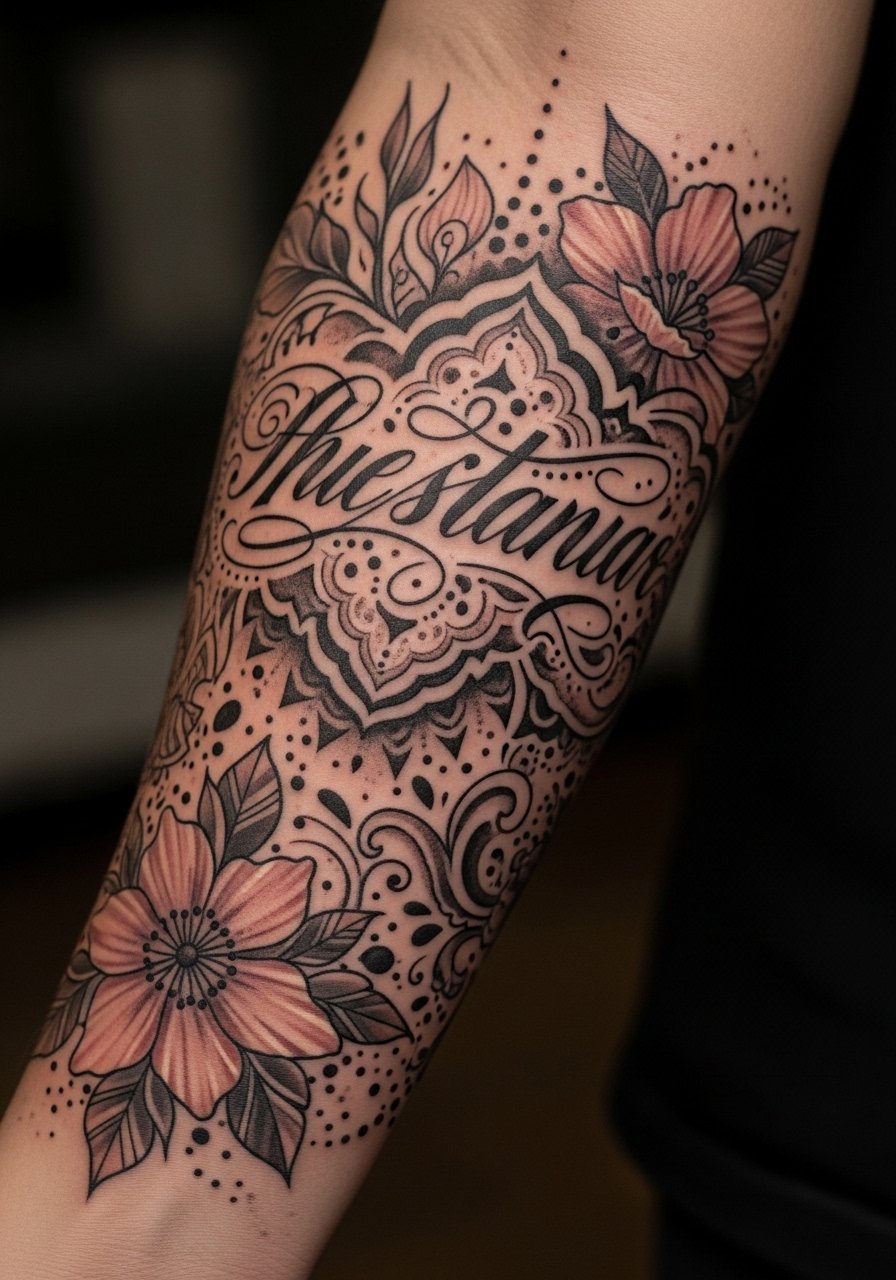
16. Mixed-Media Floral with Script and Dots
This combines linework blooms, small script, and dot work accents across the forearm for a layered look. It is a smart choice if you want texture without full color. Be clear in the consult about hierarchy so the script does not get lost under dot work. Different techniques age differently so expect touch-ups in different zones, with dot work often needing the most attention. Pain is variable since dot work can feel sharper. Pair with a delicate chain pendant to echo the fine details on the arm.
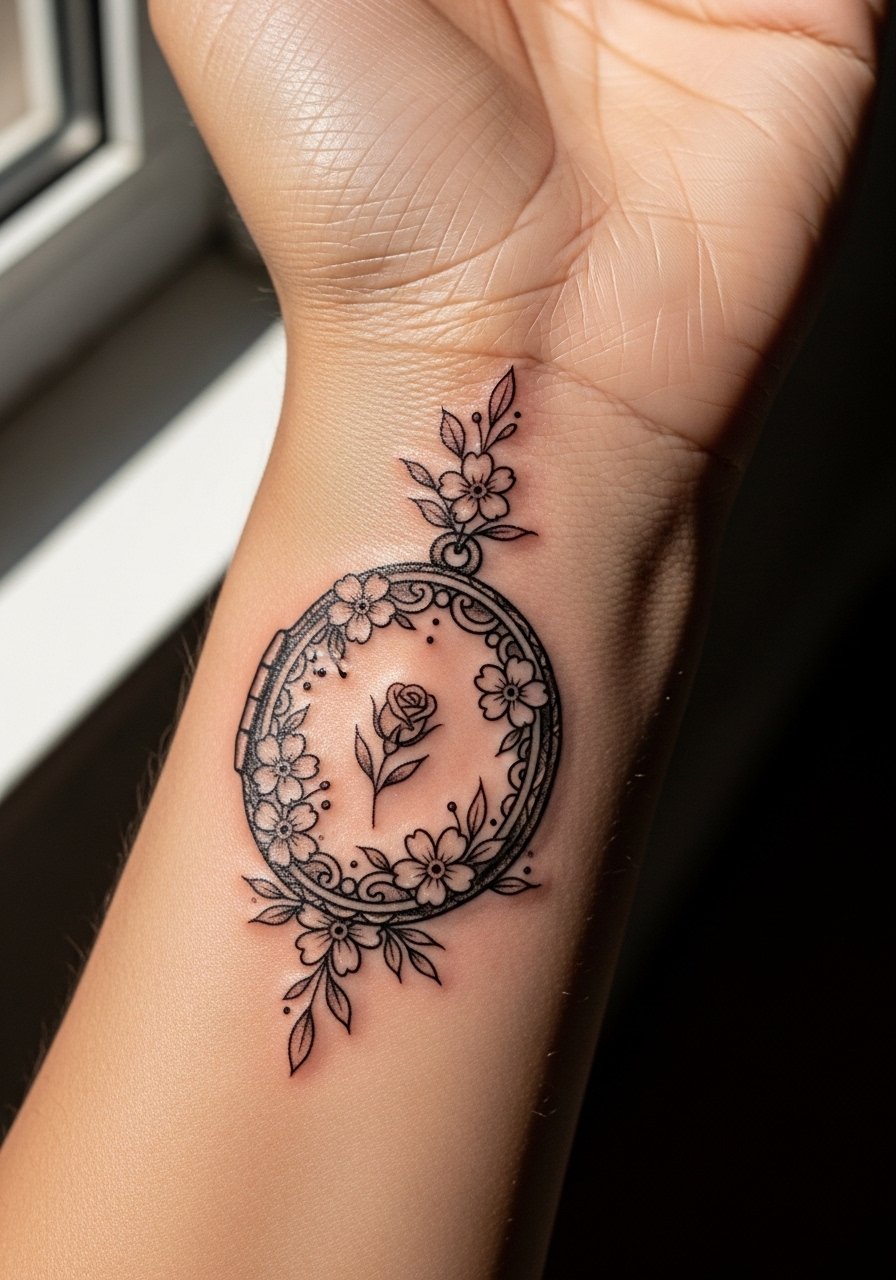
17. Heirloom Locket Flower Motif Near Wrist
A small floral locket motif sits near the wrist and can hide a tiny personal symbol inside the design. This is a good choice if you want sentimental detail that still reads like jewelry. Ask your artist to keep the interior simple to avoid tiny unreadable elements. The wrist placement makes it more likely to need touch-ups due to frequent washing. Session length is short but sensitive. Think about career contexts before placing anything that visible and choose clothing that can conceal it when necessary.
Frequently Asked Questions
Q: Will a fine line floral on the inner forearm blur faster than a bold traditional rose on the outer forearm?
A: From what I've seen fine line work tends to show softening sooner because the needles deposit less pigment per pass. Bold traditional pieces rely on saturation which resists early blur. If you prefer fine line ask for slightly heavier lineweight and plan for a touch-up around year three.
Q: How should I dress for a forearm session that crosses the elbow crease?
A: Wear clothing that gives the artist full access without tight elastic at the sleeve. A loose button-down shirt or a tank you can slide up works well. Avoid fabrics that will press on the area right after the session.
Q: Are watercolor floral forearm tattoos worth it given the maintenance?
A: They are worth it if you accept the trade-off. Watercolor looks unique but needs sun protection and periodic refreshes. Anchoring the wash with small outlines helps longevity while preserving the painterly aesthetic.
Q: How often should I expect touch-ups for wrist and outer forearm florals?
A: Wrist pieces often need attention sooner because of friction and washing. Outer forearm pieces usually hold longer. Realistic planning is touch-ups every two to five years depending on lifestyle and sun exposure.
Q: Does dot work heal differently from stipple shading on forearm florals?
A: Yes. Dot work places individual points that can appear lighter over time and sometimes require denser initial packing. Stipple shading uses gradients that often retain a softer look. Discuss density preferences with your artist so you know which zones may need touch-ups.