Fine line Hello Kitty pieces have flooded feeds, but what looks flawless on a phone screen does not always translate to ten-year wear. The difference comes down to tiny choices about placement, line weight, and how much movement the skin here gets. Read on for designs that keep their charm after months and years, plus what to mention in your consultation before the stencil goes on.
1. Tiny Hello Kitty Charm on the Inner Wrist
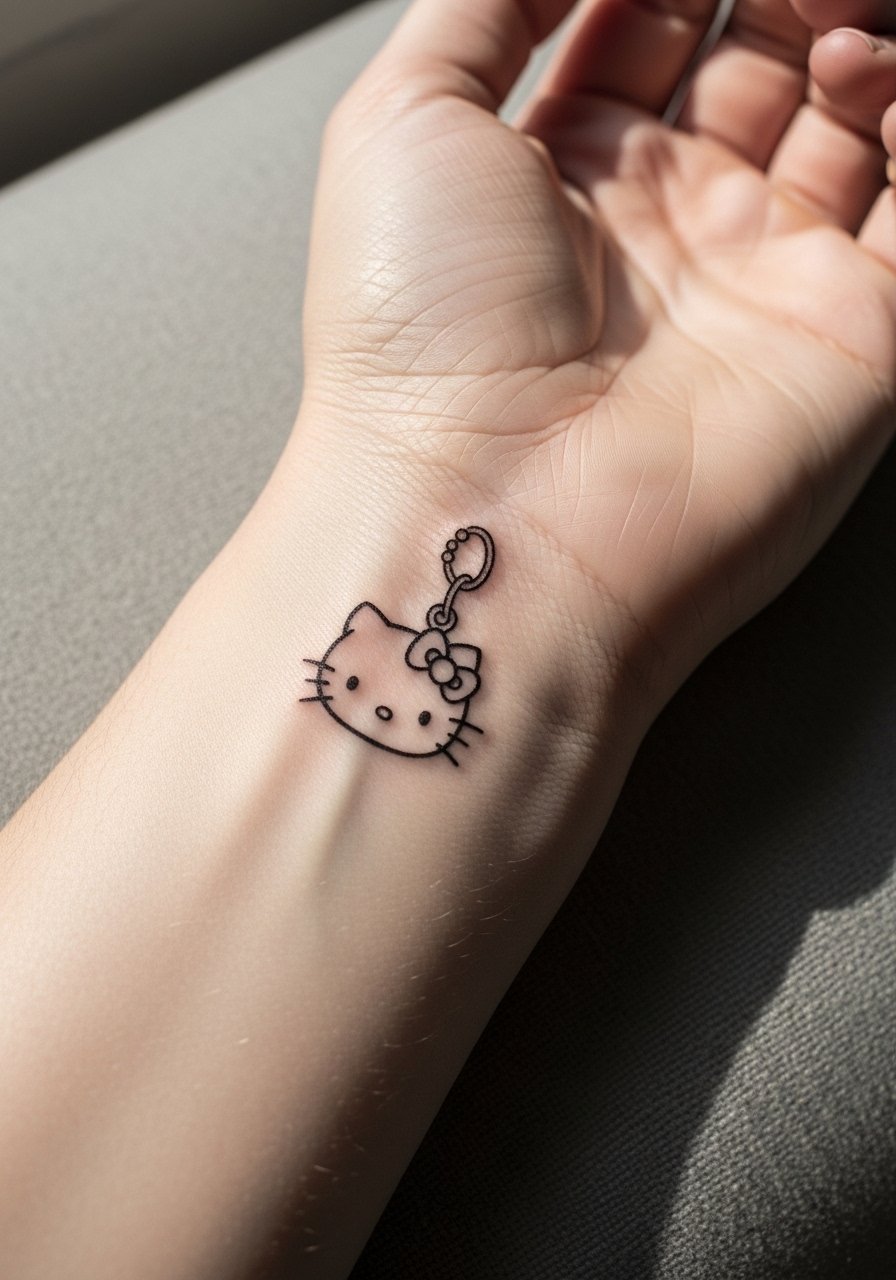
I've seen this placement hold up when the linework gets room to breathe. Ask your artist for slightly bolder outline points around facial features and lighter internal detail so the eyes and bow don't blur into one mass after two years. Pain is low to moderate, session time usually under 30 minutes, and touch-up needs tend to show around year two for thin lines. A common mistake is asking for micro detail too tightly packed, which increases blowout risk. For showing it off, stacked dainty bracelets frame the wrist without crowding the tattoo. Try stacked dainty bracelets that sit above the piece so the charm remains the focal point.
2. Minimal Hello Kitty Ankle Outline
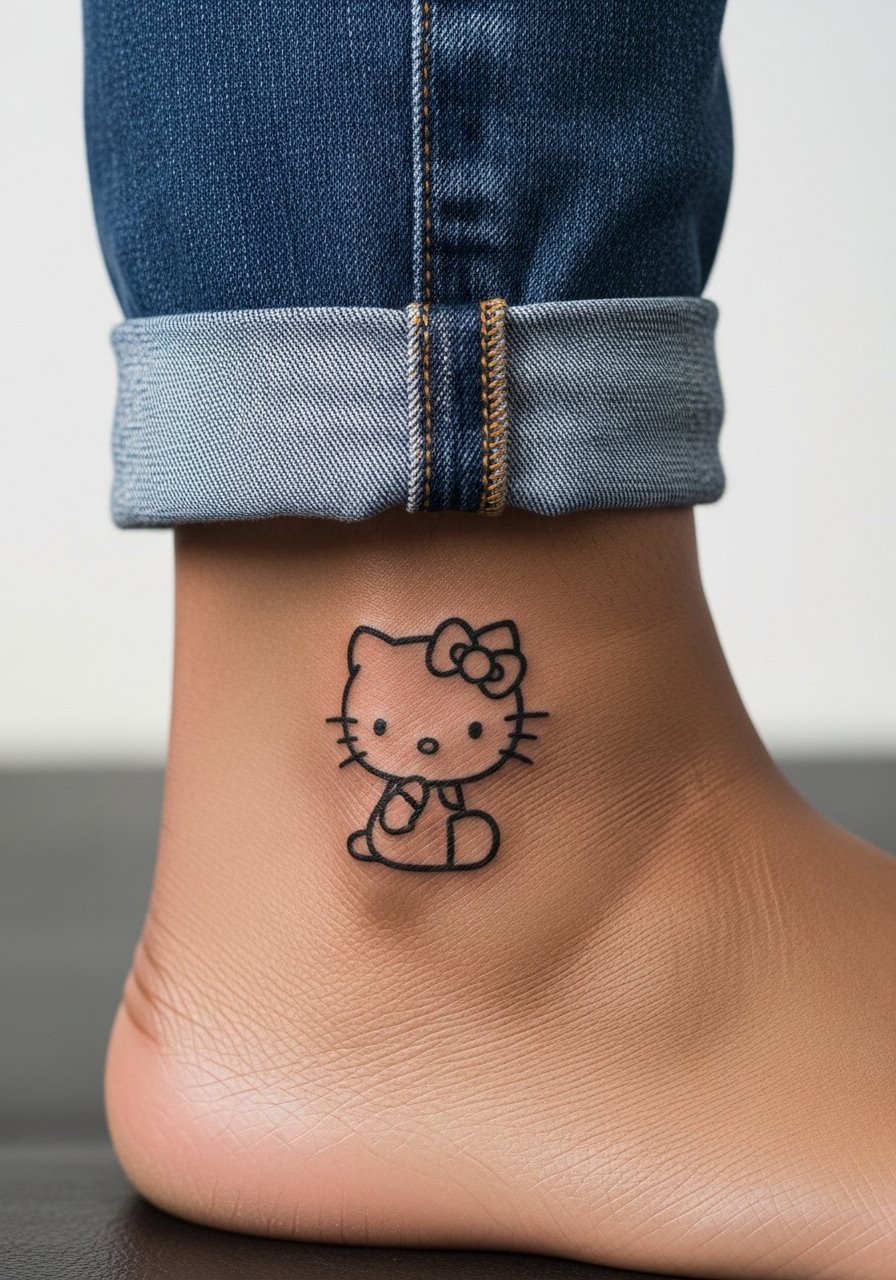
Fair warning: the ankle takes more friction from shoes and socks than people expect, so ask for a slightly thicker outline to protect the design from early wear. The session is short and the pain is sharper near bone, but saturation handled carefully keeps color from looking patchy at six months. Tell your artist you plan for a small outline with minimal fill to cut down on touch-up frequency. During the first two weeks avoid tight socks and wear open sandals or slide-on shoes. A pair of strappy sandals frames the ankle when showing the tattoo and reduces rubbing against fresh ink.
3. Collarbone Hello Kitty Sketch
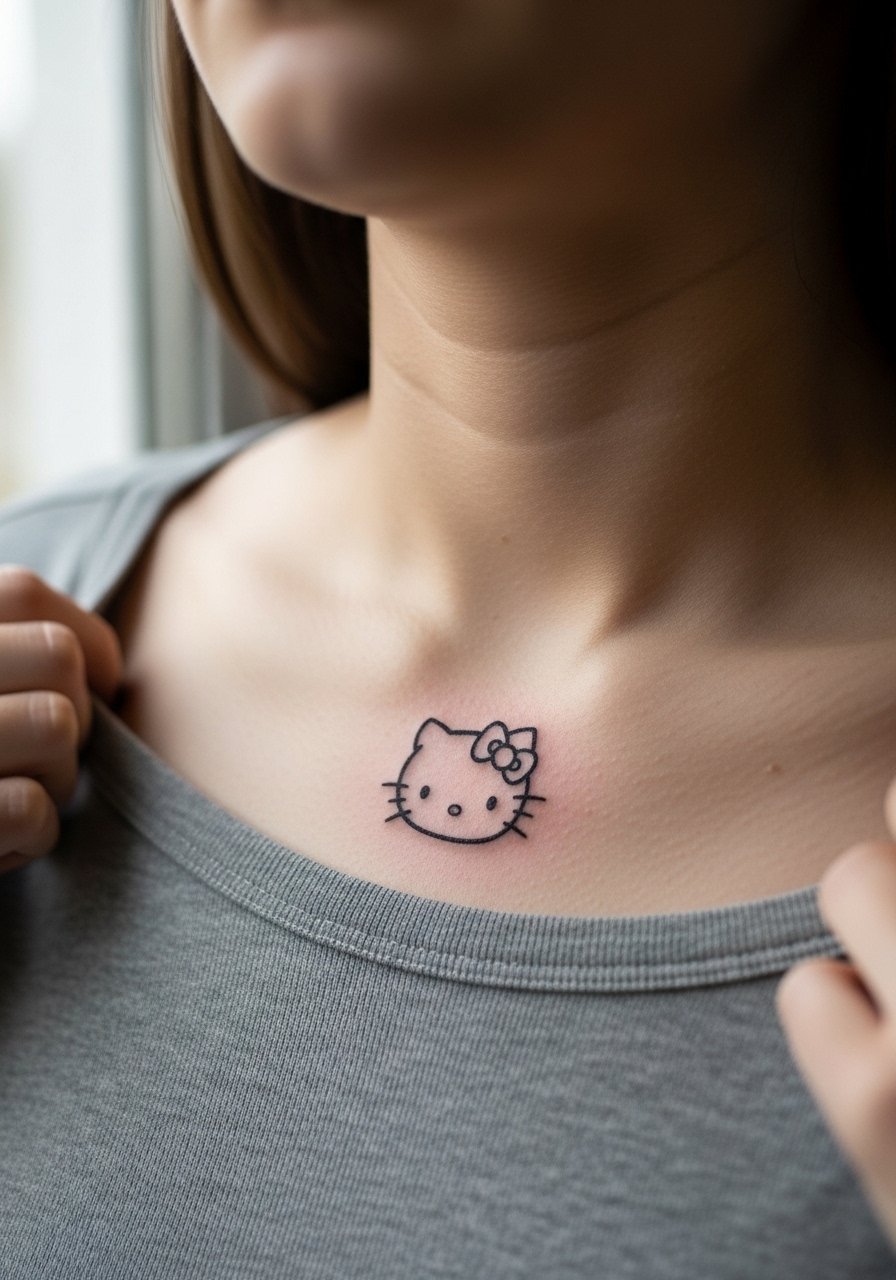
The collarbone makes the face and bow read larger than they do on paper. When you consult, bring references that show scale, not just style, and ask the artist to map the placement along the bone so the curve complements the shoulder. Pain sits in the middle range and sessions run 30 to 60 minutes depending on shading. A frequent mistake is centering the design too low, where fabric and bra straps cause more abrasion. The tattoo tends to soften over three to five years if lines are too fine, so plan for a touch-up at year three. If you want to reveal it on nights out, a wide-neck shirt or a delicate scoop tank keeps attention on the design without competing.
4. Tiny Hello Kitty on the Back of the Arm
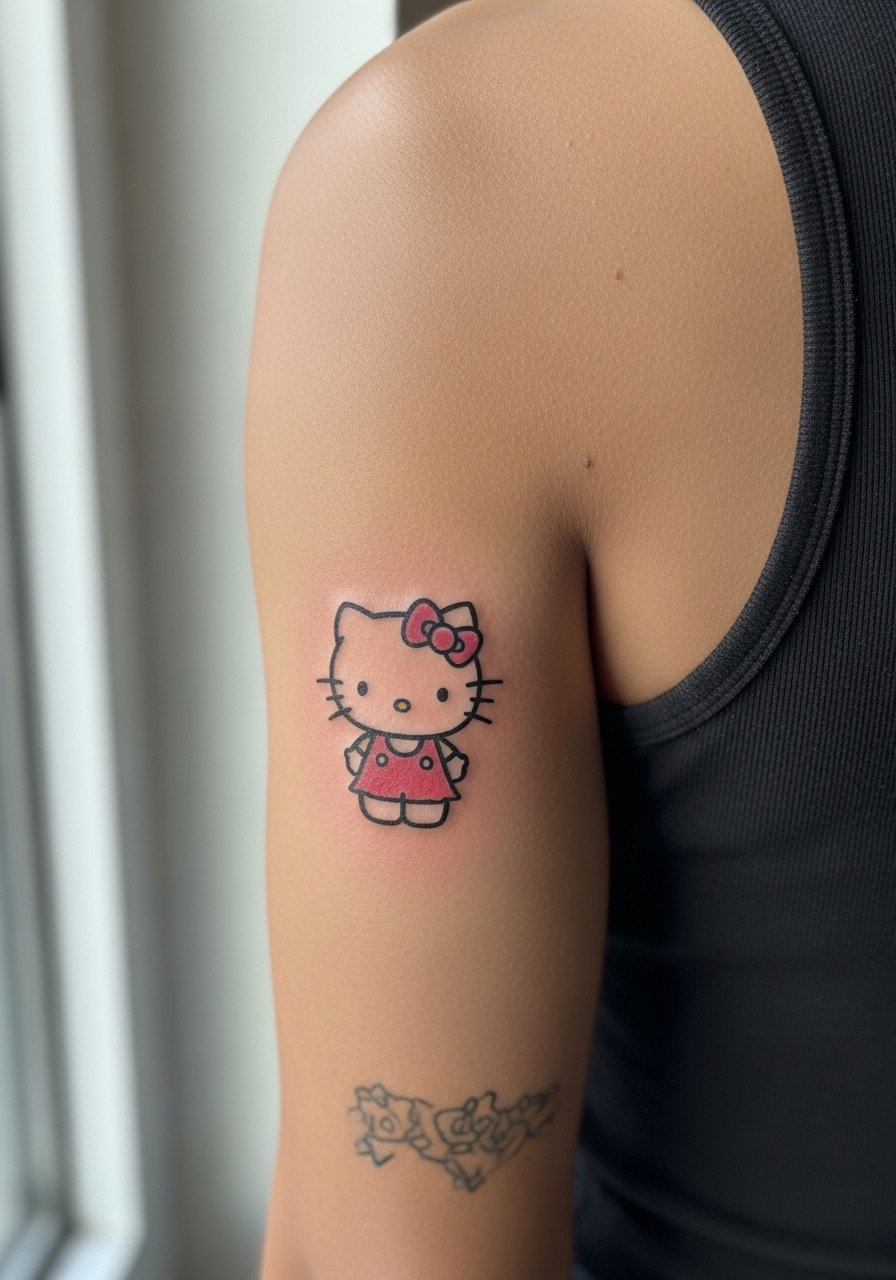
There is something about a little character tucked on the back of the arm that works with casual sleeves. The skin here moves a lot, so ask your artist for slightly heavier anchoring lines around the silhouette and lighter internal dots for texture. Expect medium pain if the arm is pressed against the table during the session and session time near 45 minutes if you want tiny color pops. One mistake is placing the design too close to the underarm crease where stretching and sweat speed fading. For the appointment wear a tank top you can pull aside so the artist has clean access while you stay covered.
5. Hello Kitty Micro Finger Outline
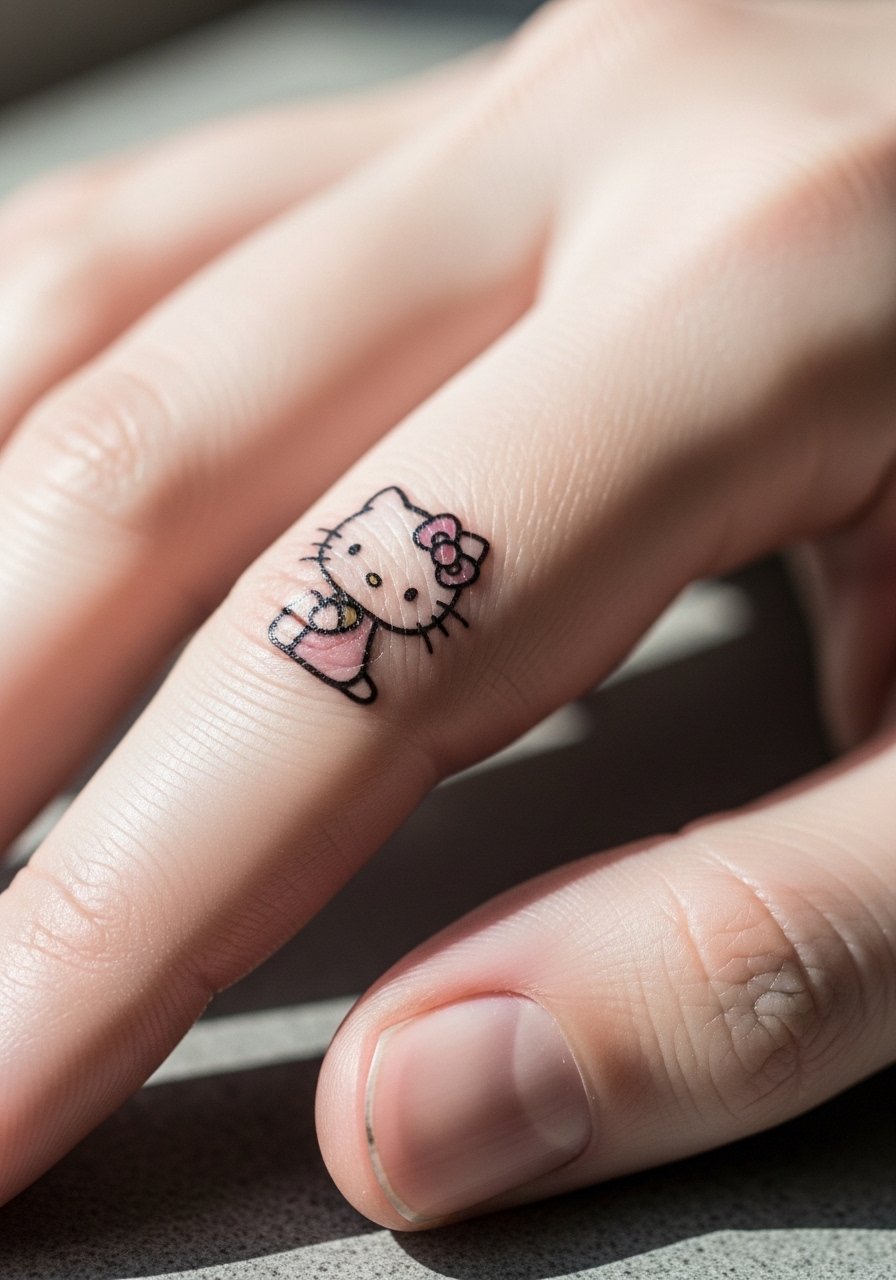
Finger tattoos read great in photos but are the most touch-up hungry of small placements. The biggest mistake is expecting long-term crispness with single-needle work. If you want the face to maintain its form, ask for slightly bolder outline points and minimal interior detail. Pain is high for a small area and sessions are brief but intense. Most people need a touch-up within 12 to 24 months because of constant hand washing and friction. Keep in mind that workplace policies can still affect hand tattoos, so weigh the career angle before committing. For styling, thin stacking rings draw the eye without covering the tattoo. Consider thin stacking rings that sit above the knuckle so the design remains visible.
6. Ribcage Hello Kitty Line Art
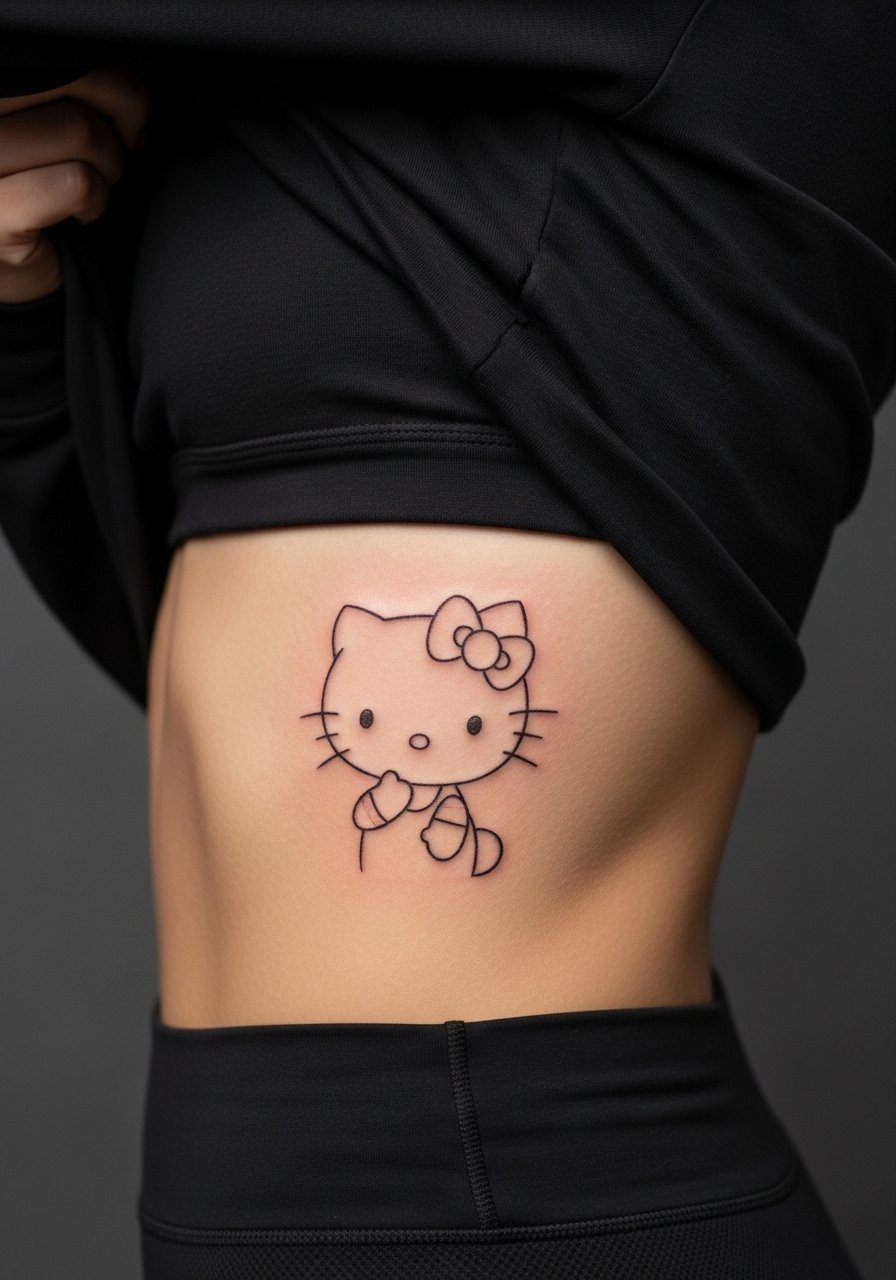
Artists split on fine line on ribs. One camp argues the skin there stretches and moves too much, causing lines to blur by year three. The other camp says with proper depth and spacing, fine line settles fine on that canvas. My advice is to ask where your artist stands and to request slightly more spacing between the bow and facial features. The ribcage is one of the more painful spots and sessions can run longer if you want shading or small color fills. A common error is asking for extremely dense detail in a small area, which increases blowout risk. For this placement pick a day when you can rest afterward and wear a cropped top that is easy to lift for the session.
Studio Day Picks
The wrist, ankle, collarbone, forearm, finger, and rib pieces above each have different prep and healing needs, so a small kit tailored to those spots makes studio days smoother.
-
Stencil transfer paper kit. Lets you preview alignment on curved spots like the wrist and collarbone before the needle hits skin.
-
Topical numbing cream. Applied before the session eases the sharper sensations on ankles and ribs without obscuring the stencil.
-
Thin protective film roll. Useful for finger and wrist pieces that endure a lot of washing and contact during the first week.
-
Fragrance-free gentle body wash. Cleanses sensitive zones like the forearm and ribcage during healing without irritating delicate linework.
-
Aquaphor healing ointment. Thin layers in the first days lock in moisture for fine line areas without clogging the channels that need to scab correctly.
7. Shoulder Blade Hello Kitty Color Pop
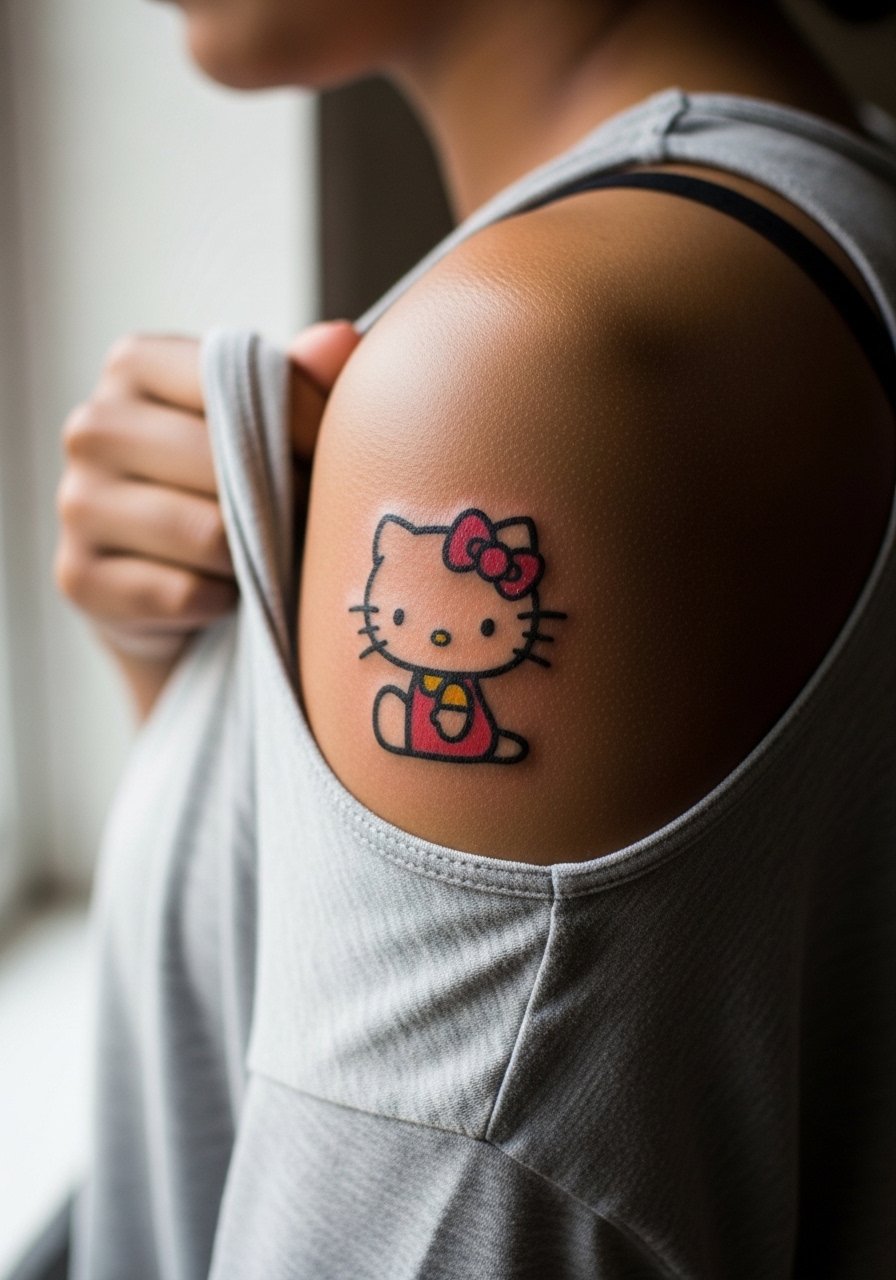
There's a visual payoff when you add a hint of saturated color to a character on the shoulder blade. The skin here is forgiving and holds saturation well, so a short burst of color around the bow looks alive after healing. Tell your artist you want color as accents only, not full saturation, so the piece ages like a flash tattoo rather than a block of color. Pain is low to medium and session time depends on how much shading you want. For showing it off, open-back dresses and tops give you an easy reveal. Try pairing the piece with an open-back midi dress for evenings when you want the shoulder blade to be the focal point.
8. Retro Hello Kitty Calf Flash
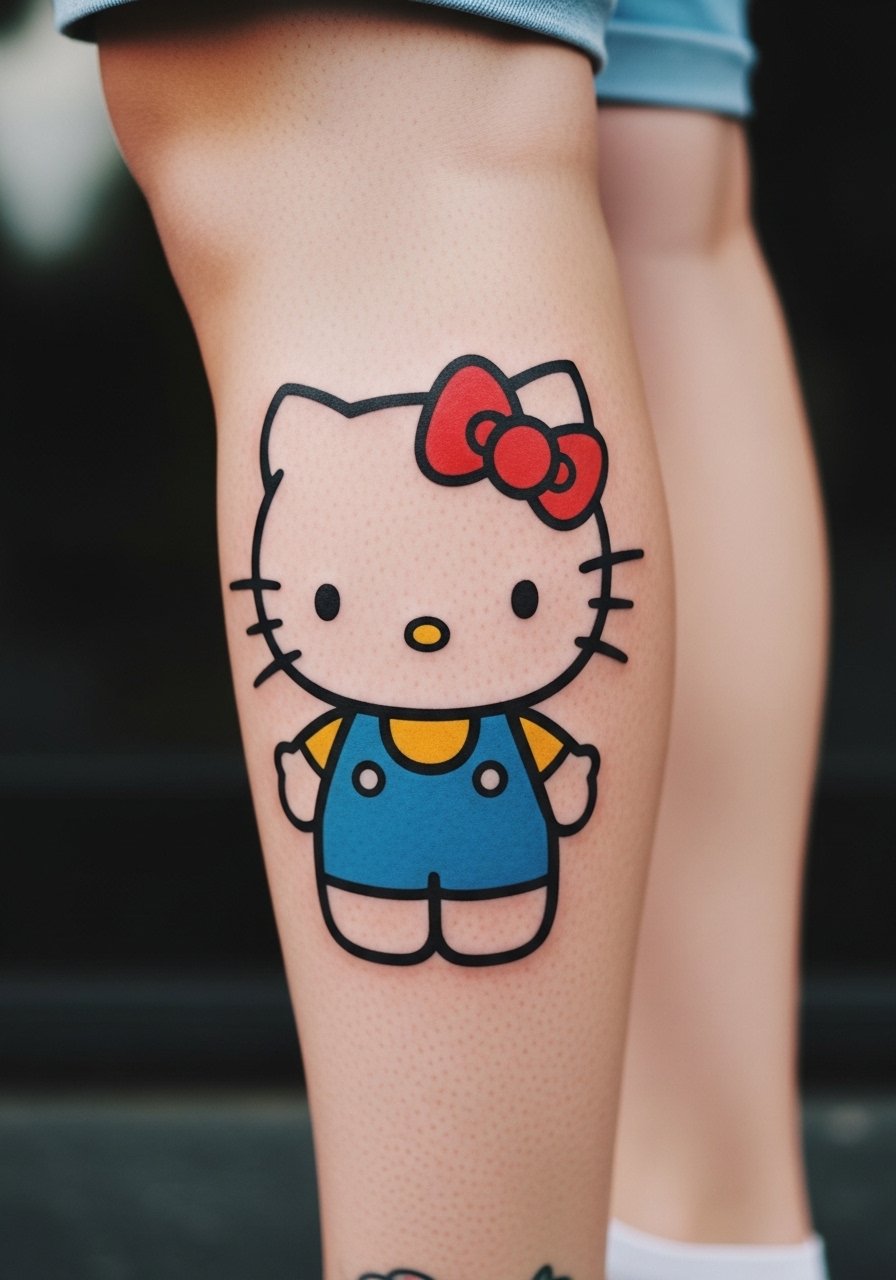
Bold outlines and solid color saturation on the calf read from across a room. The advantage here is longevity, because thicker lines and heavier saturation age into an intentionally graphic look. Sessions are comfortable and the area tolerates longer sessions so you can get a crisp flash piece in one visit. A common mistake is overcomplicating the flash with tiny interior details that will soften into a muddle as the skin moves. Expect touch-ups further apart than hand or ankle pieces, often after several years. If you plan a small calf cluster later, mention expansion ideas during the consultation so the composition scales well.
9. Tiny Hello Kitty Behind the Ear
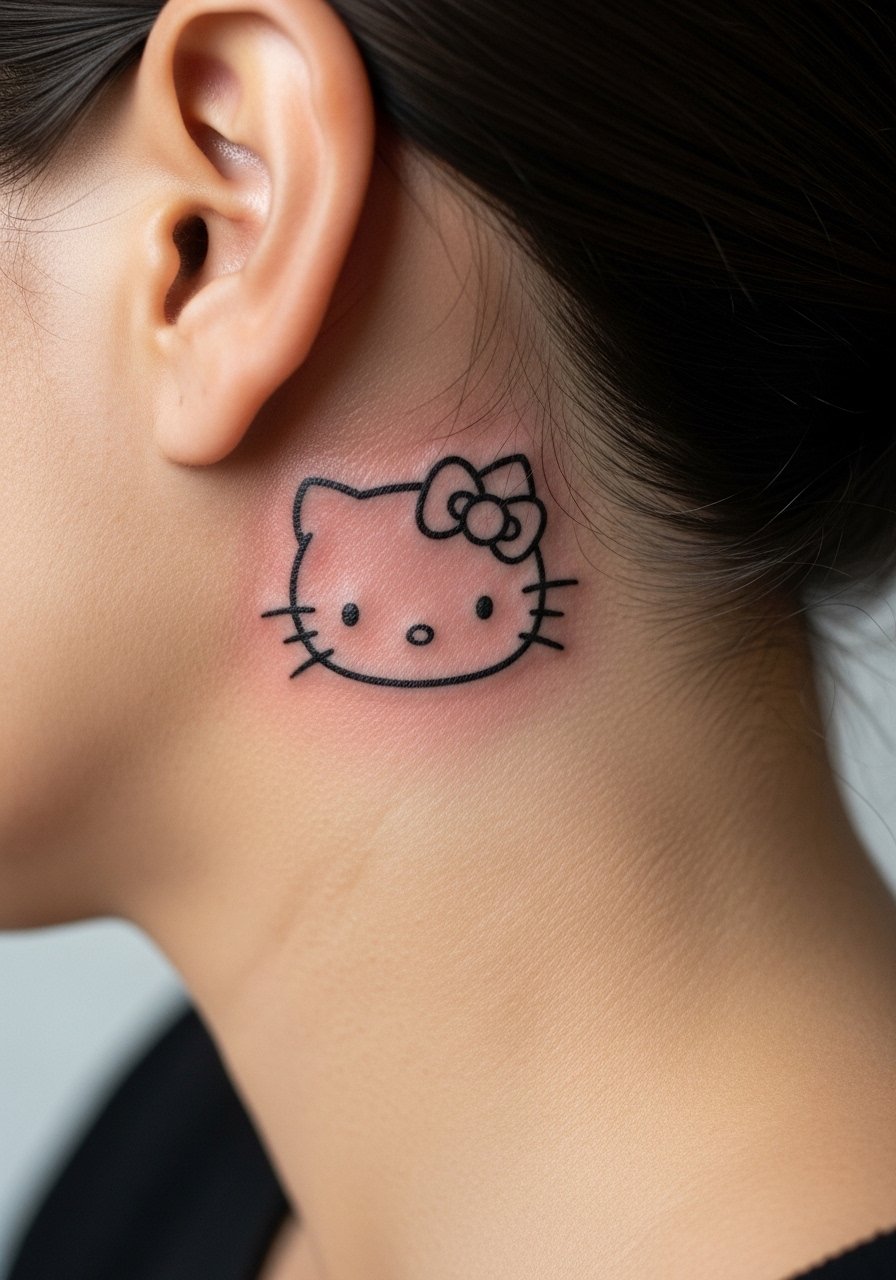
This placement is discreet and reads charming when tucked just below the hairline. The artist needs to work in a small, awkward pocket, so session time is short but precision matters. Pain is mild and recovery is straightforward, though hair products can irritate the area if they contact fresh ink. A common mistake is placing the design too high where hair hides it entirely or too low where friction from collars becomes an issue. Because the spot is so small, ask for simplified facial features that read at a glance. If you want to keep it discreet for work reasons, this location does that well.
10. Thigh Hello Kitty Floral Frame
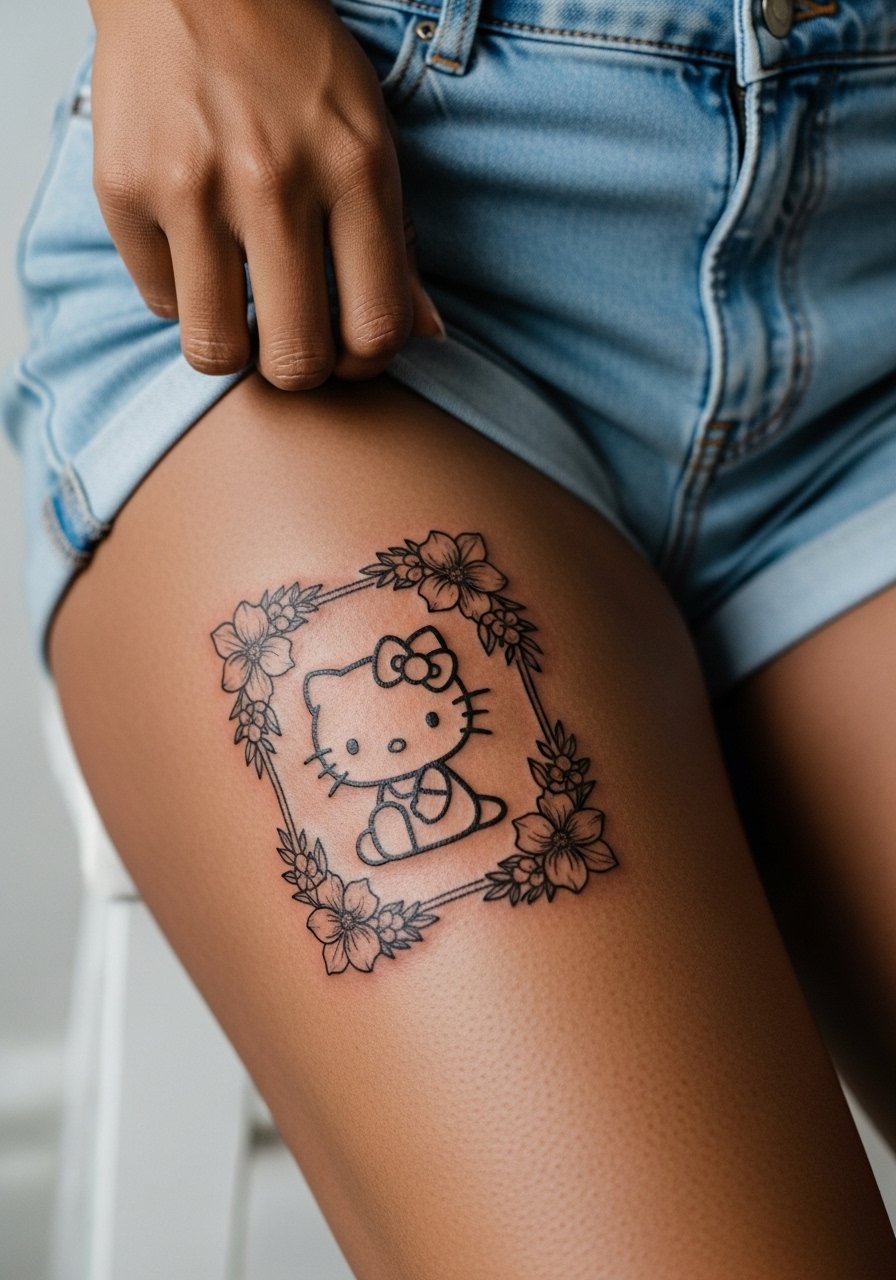
Upper-thigh tattoos are forgiving for delicate line work and allow slightly more scale than wrists or fingers. The area handles stipple shading and dot work well, which lets you add soft texture without risking dense blocks that smudge. Expect moderate pain during shading closer to the bone and session times of 45 to 90 minutes if you want a floral frame. A common error is choosing a piece that requires constant exposure to sunlight for showing off, which can accelerate fading. For the appointment wear loose shorts you can shift easily so the artist has access and you stay comfortable during longer sessions.
11. Stacked Hello Kitty Cartoons on the Forearm
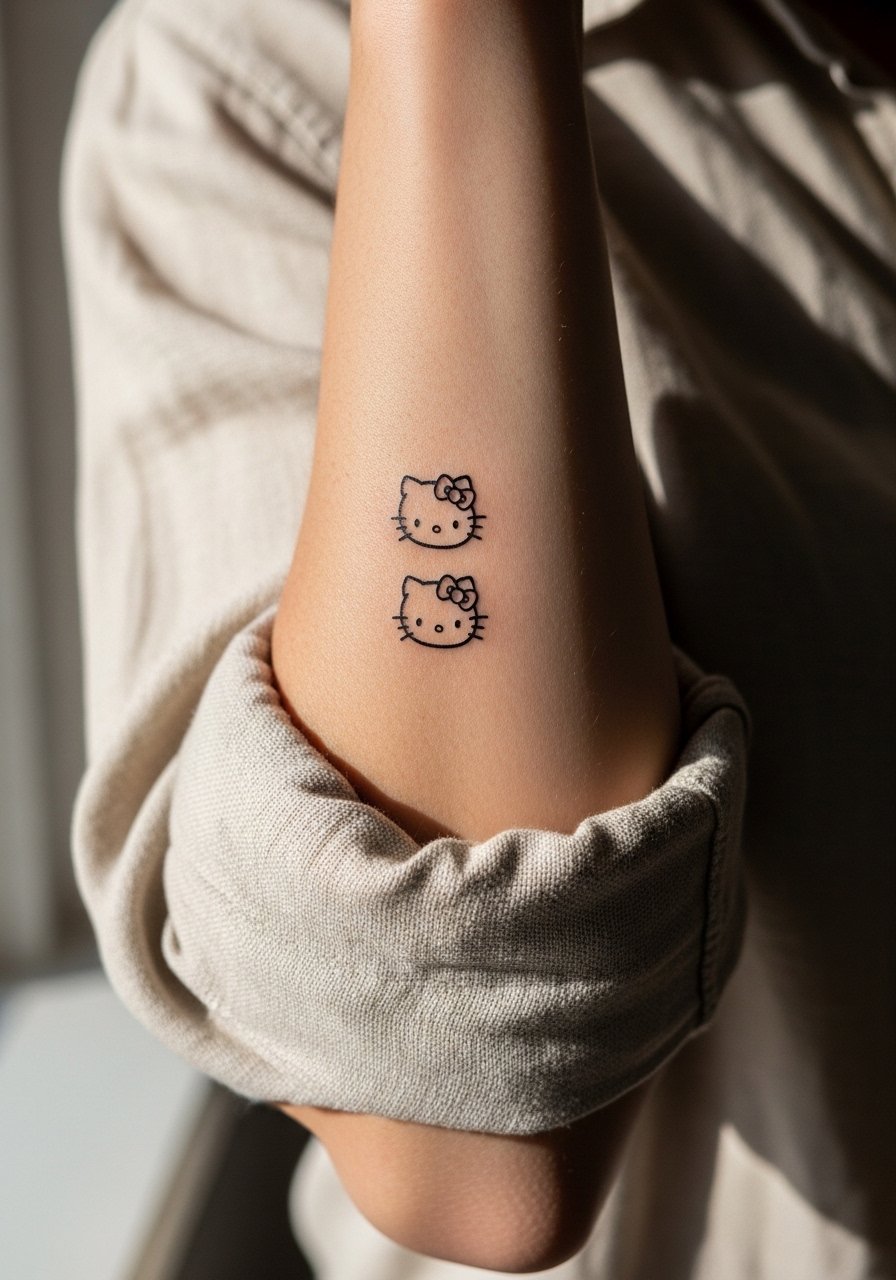
There is a smart way to stack small characters so each reads separately as the arm moves. When you consult, ask for spacing that follows the arm's natural line so the set reads like a strip rather than one blurred patch after years of wear. Forearm work is comfortable and shows off well, but it sees frequent sun exposure. Plan for yearly sunscreen on the healed piece to maintain saturation. A real mistake is squeezing three designs into a space meant for one. For showing these, rolled-up linen shirts highlight the forearm and keep attention on each small character. Consider a rolled-up linen shirt that frames the stack without covering it.
12. Nape Hello Kitty Tiny Script
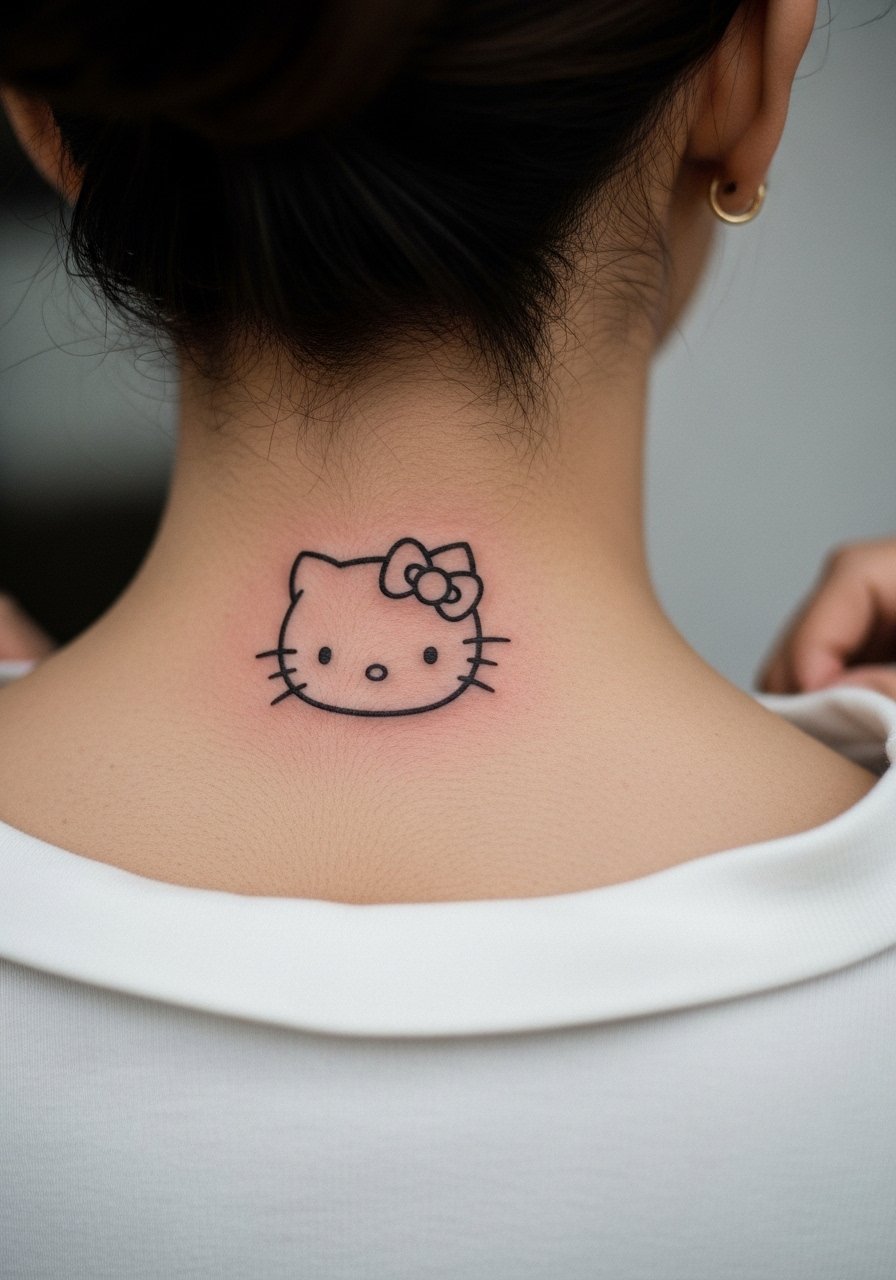
Nape tattoos read as private but peekaboo when hair is up. The skin can be thin and the area responds differently to depth, so tell your artist you prefer slightly simplified features to reduce blowout risk. Sessions are short and pain tends to be low to moderate. One common mistake is choosing ultra-fine script or tiny dots here without building in margin for migration. For the appointment wear a wide-neck top you can shift so the artist has clear access. To display it casually, a slightly off-the-shoulder sweater or a wide-neck shirt keeps the area visible without adjusting hair constantly.
13. Tiny Back-of-Finger Constellation Hello Kitty
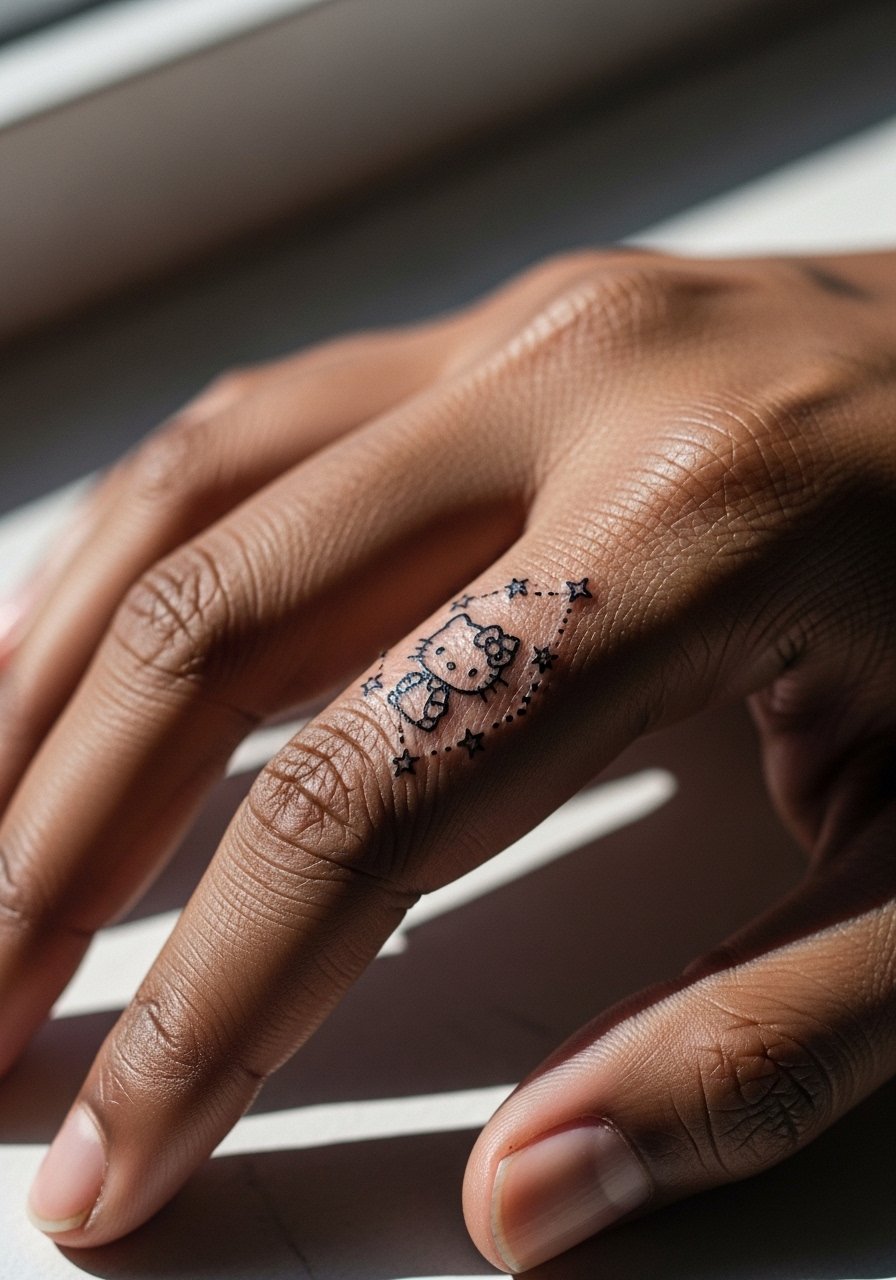
Back-of-finger placements are subtle but high touch. These spots face heavy abrasion from daily tasks so expect touch-ups sooner than for forearm or calf work. Ask for slightly bolder dots in the constellation so stars remain distinct after a year of wear. The biggest mistake is assuming a single session will be permanent. Pain is sharp and brief. If you like the idea of stacking with rings, choose thin bands that sit below the tattoo line so they do not rub directly against the fresh ink. A minimalist thin band ring set complements the constellation without accelerating fade.
14. Sternum Hello Kitty Petal Sketch
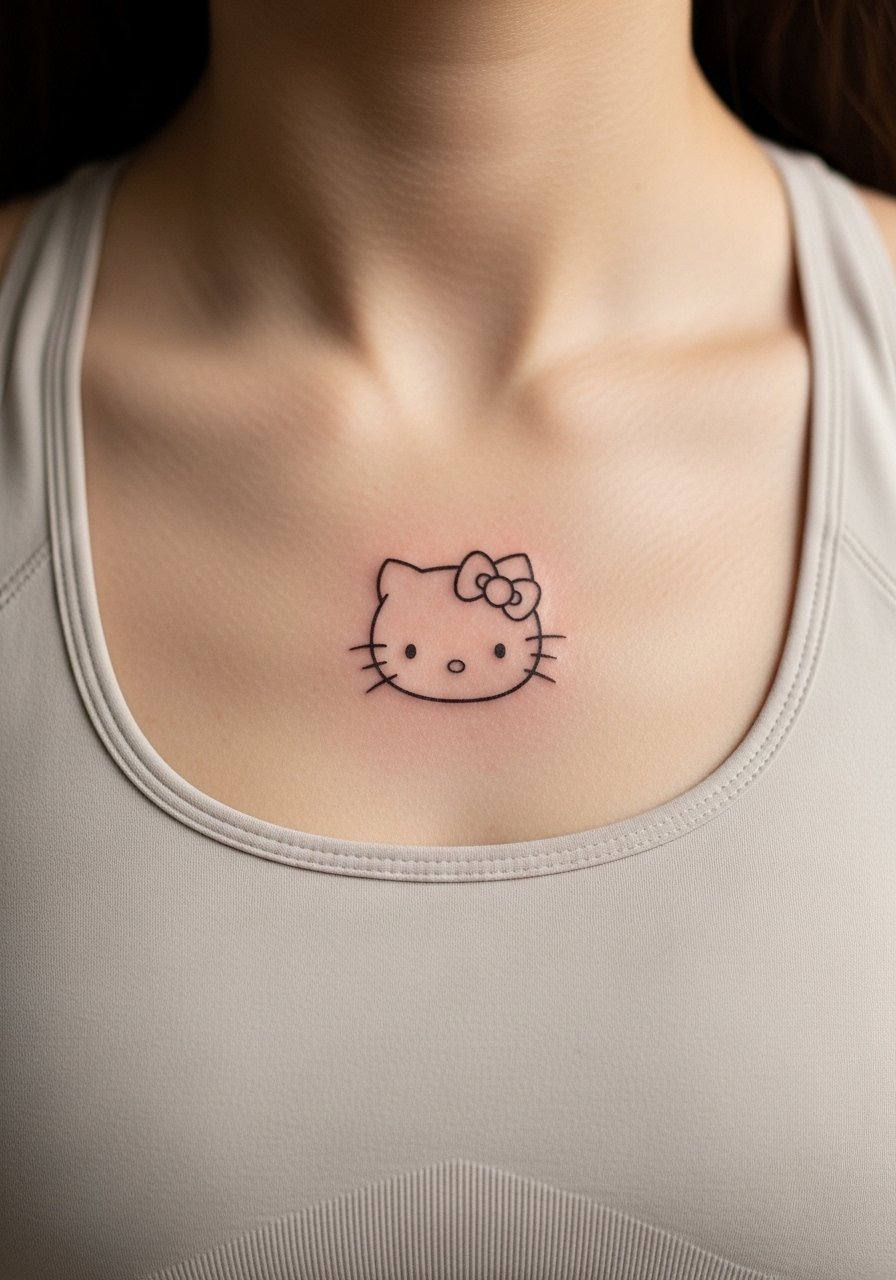
Sternum pieces require careful placement because the skin stretches with breathing and movement. The truth is that dense detail here can blur faster than on the arm, so request spacing and softer stipple shading rather than tight crosshatching. Pain ranges from moderate to high and sessions often come in shorter bursts with breaks. One mistake is wanting too much tiny text or busy patterns near the center where natural motion exaggerates migration. This zone is best done by artists experienced with chest anatomy. Wearing a strap-friendly top to the session makes access easier and keeps everything sanitary.
15. Ankle Ribbon Hello Kitty Accent
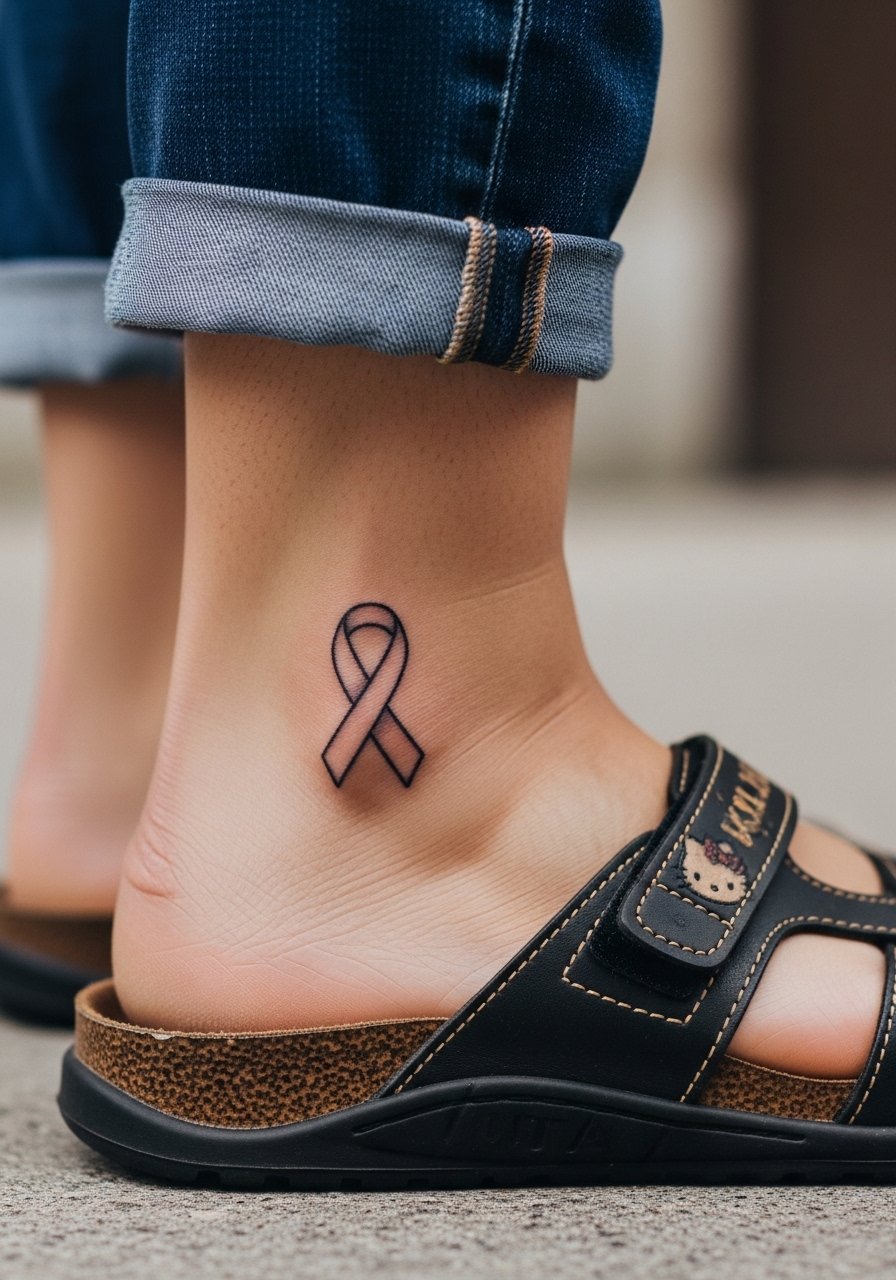
The lateral ankle tolerates small accents but sees a lot of contact with footwear. Ask for a slightly reinforced outline around the ribbon so the knot and bow keep their shape under friction. Sessions are quick but pain can be sharp on the bone. A real mistake is placing the design too low where shoes press directly on it. For showing off with minimal rubbing, sandals and cropped pants work best. Try a pair of jeans rolled up or open sandals to reduce friction and highlight the ribbon when healed.
16. Behind-the-Knee Dot Work Hello Kitty Accent
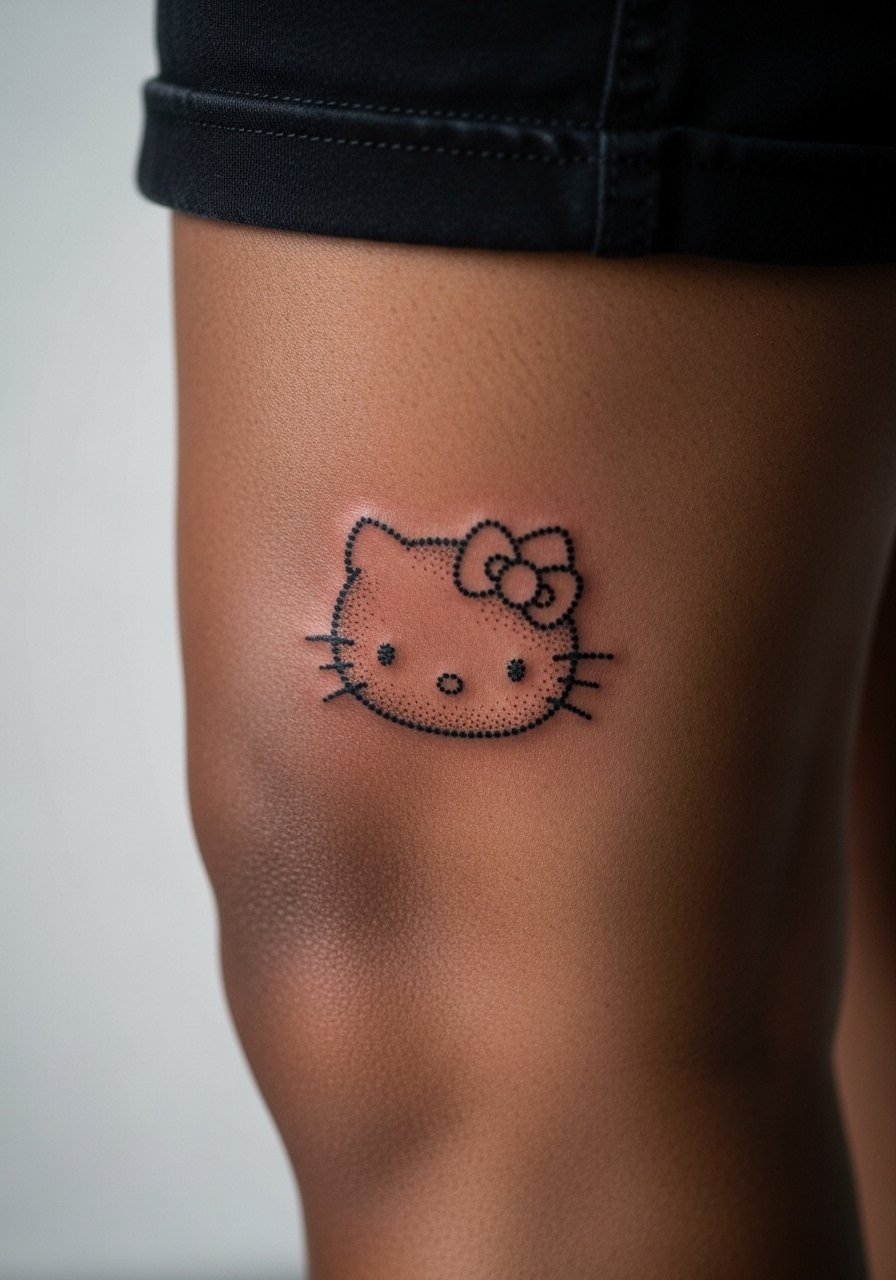
Behind-the-knee placements sit on a flex point and bleed into movement zones, which can soften dot work faster than on flatter areas. For a piece that holds, ask for larger dot spacing and avoid dense clusters near creases. Pain is moderate and sessions may require repositioning to keep the joint comfortable. One mistake is expecting the same crispness as a forearm piece. The healed look at six months can be softer, so plan touch-ups in two to three years if you want the dots to remain distinct. For sessions choose loose shorts so the artist can access the area without pinching skin.
17. Shoulder Hello Kitty Cluster Accent
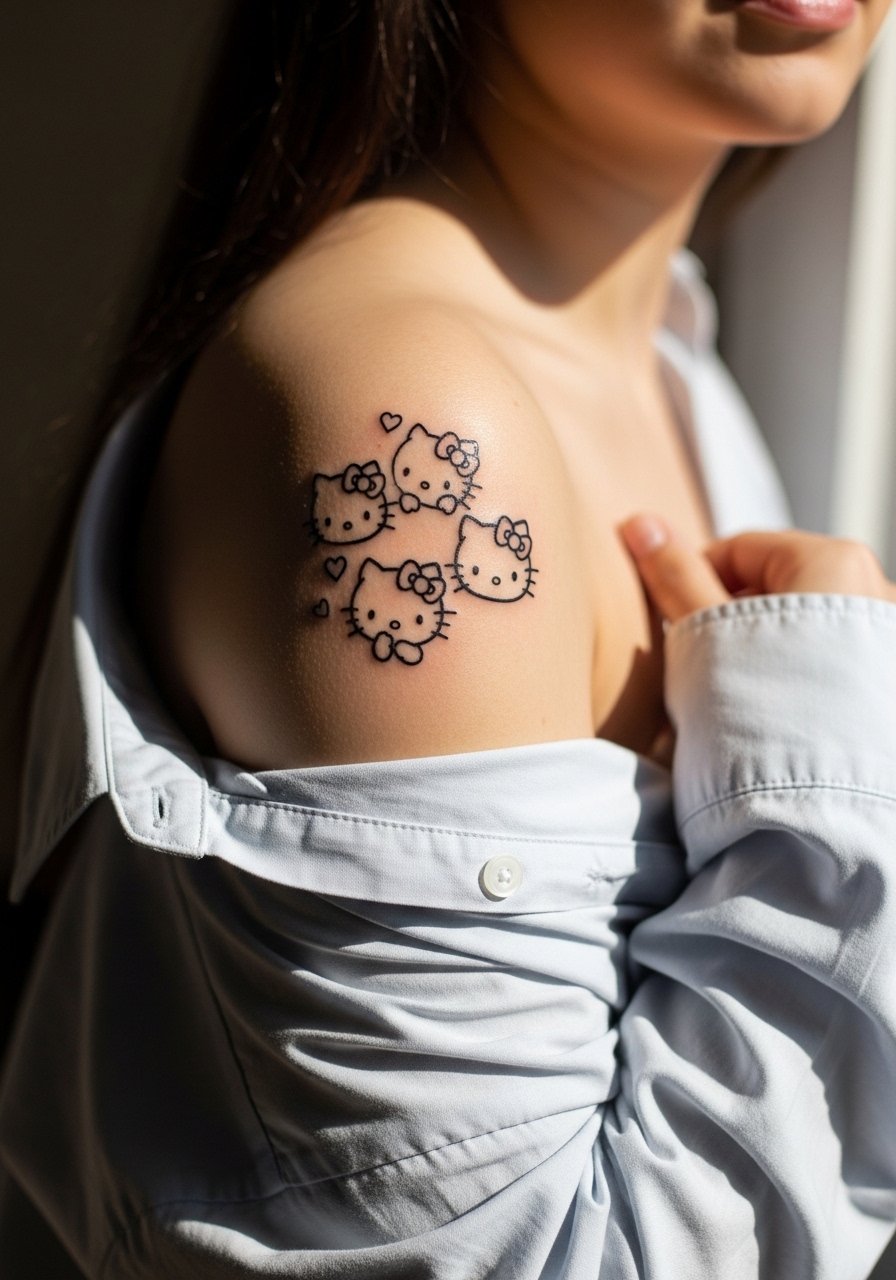
A small cluster on the outer shoulder ages well because the area sees less constant abrasion than hands or ankles. If you want multiple tiny designs to read as a set, ask for slight variations in line weight between pieces so each holds its own over time. Sessions are comfortable and allow for short color fills if you want that pop. A common error is placing everything too close to the sleeve line where rubbing shortens saturation life. For the session wear a loose button-down you can pull aside so the artist has full access without being exposed.
Frequently Asked Questions
Q: Will a fine line Hello Kitty tattoo on my ribs blur faster than one on my forearm?
A: It depends on depth and spacing. Ribs move more and the skin stretches with breathing, so artists who favor ultra-fine single-needle work often recommend slightly more spacing or heavier anchors there. If your artist prefers shallow, single passes on ribs, ask about their touch-up rate so you know what to expect.
Q: How often should I expect touch-ups for finger and wrist Hello Kitty tattoos?
A: Fingers and wrists face constant washing and friction, so expect a touch-up within 12 to 36 months depending on line weight and placement. Thicker anchor points and minimal interior detail extend the time between sessions, but plan for some maintenance sooner than you would for calf or shoulder work.
Q: Are small color accents worth it on darker skin tones for Hello Kitty designs?
A: Color can read beautifully on darker skin when saturation is planned and contrast is considered. Ask for tests of pigment and placement on skin that matches yours, and expect color to appear differently in photos than in person. Artists who work with a range of skin tones can advise which pigments hold best.
Q: What should I wear to a sternum or ribcage Hello Kitty session?
A: Wear a fitted sports bra or a cropped top that you can lift slightly so the artist accesses only the tattoo zone. That keeps you covered while giving the artist clean access and reduces shifting during the session. If you want suggestions for show-off outfits after healing, a wide-neck shirt helps display collarbone or upper chest pieces without fuss.
Q: How do I find an artist who understands micro Hello Kitty work without naming anyone?
A: Use discovery pathways like local shop directories, hashtag searches for micro tattoos in your city, and genre-specific threads on forums. Look for portfolios that show healed photos, not only fresh work, and ask about their touch-up policy during the consultation.