Fine line palm tattoos are trending on boards right now, and the ones that still look crisp after a few years share a surprising trait. They were given breathing room from the start, kept slightly larger than the viral snaps, and placed where the skin moves less. If you want palm tree designs that feel calm on your skin and in your wardrobe, these 21 ideas show how size, spacing, and placement change everything.
1. Fine Line Palm on the Inner Forearm
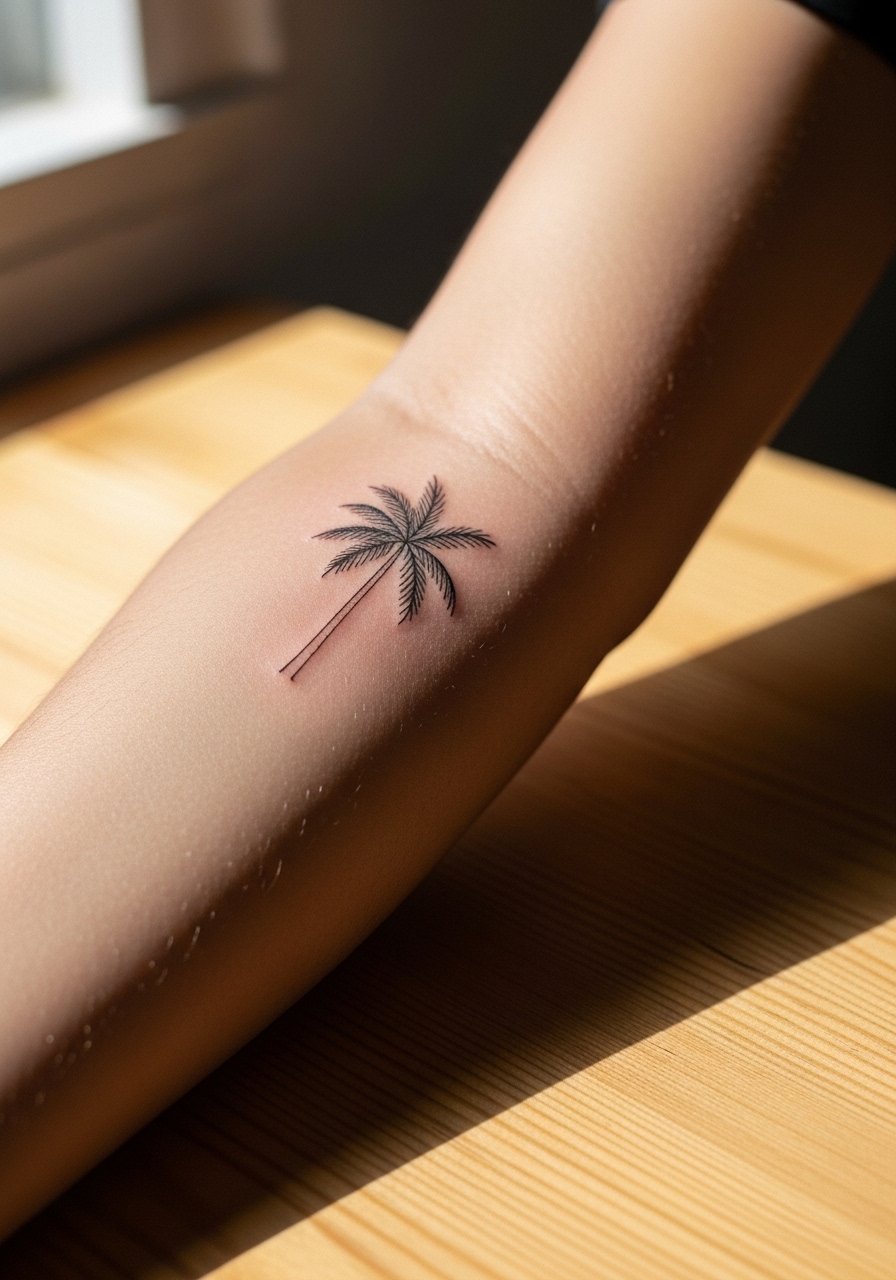
I recommend slightly increasing scale for inner forearm fine line palms because the skin there moves when you bend the wrist. The consultation note to give your artist is simple, ask for spacing between fronds and for the trunk to have subtle stipple shading so the silhouette reads at distance. Fair warning, small dense fronds tend to merge after a couple of years. Expect a light touch-up at year two or three rather than a full redo. Session time is usually short, under an hour, and pain sits at a 3 out of 10 for most people. For showing it off, roll up sleeves and pair with a rolled linen shirt that keeps the forearm visible without glare.
2. Tiny Palm on the Ankle
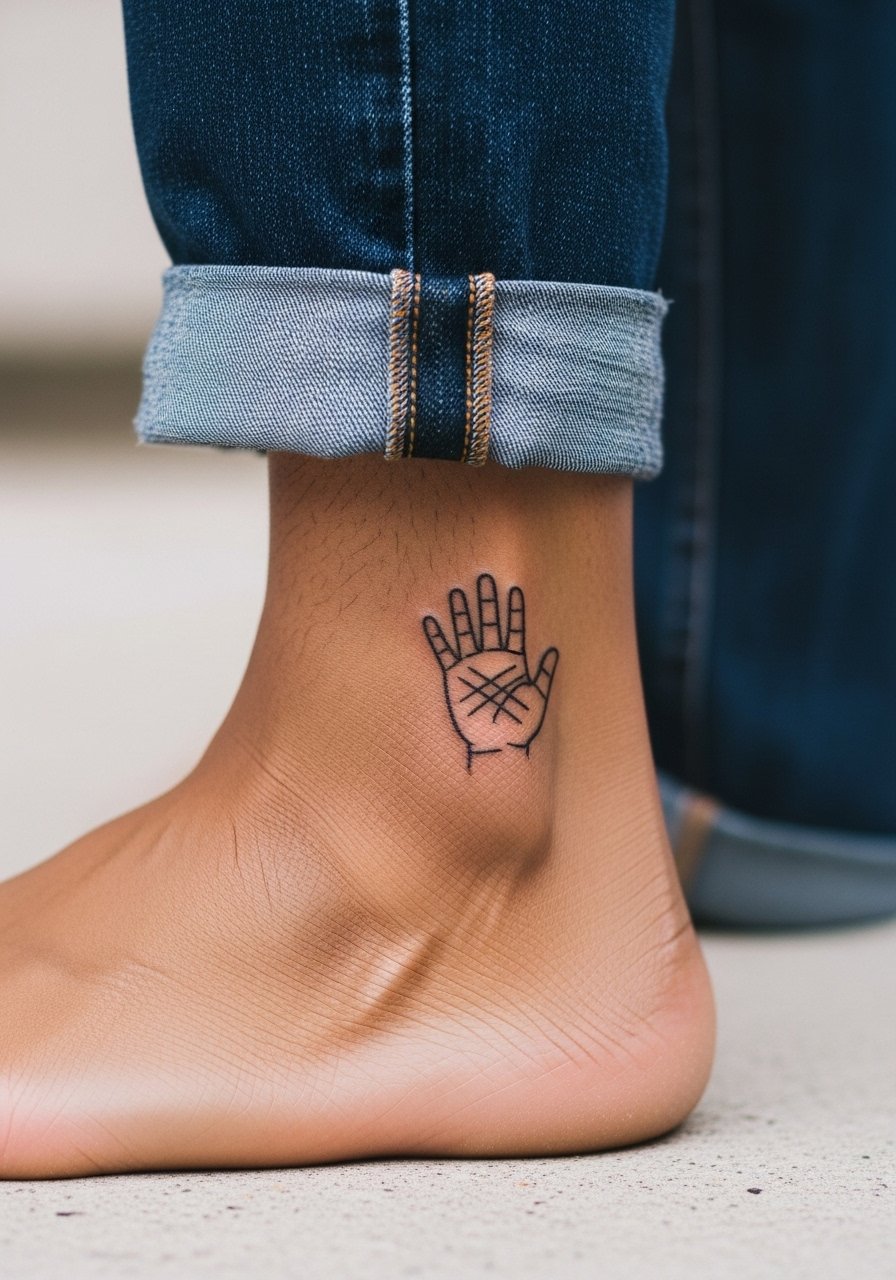
Ankle placements are great if you want something discreet that works with sandals. The skin on the ankle gets a lot of friction from socks and shoes, so tell your artist to keep the trunk short and the base slightly elevated from the ankle bone. Small palms here look sharp at six months but may need touch-ups sooner because of footwear abrasion. The session is quick and the pain sits around a 4 out of 10. For the appointment wear, choose slip-on shoes and jeans you can roll easily so the artist can access the area without you having to take off shoes.
3. Tiny Palm Ringing the Wrist
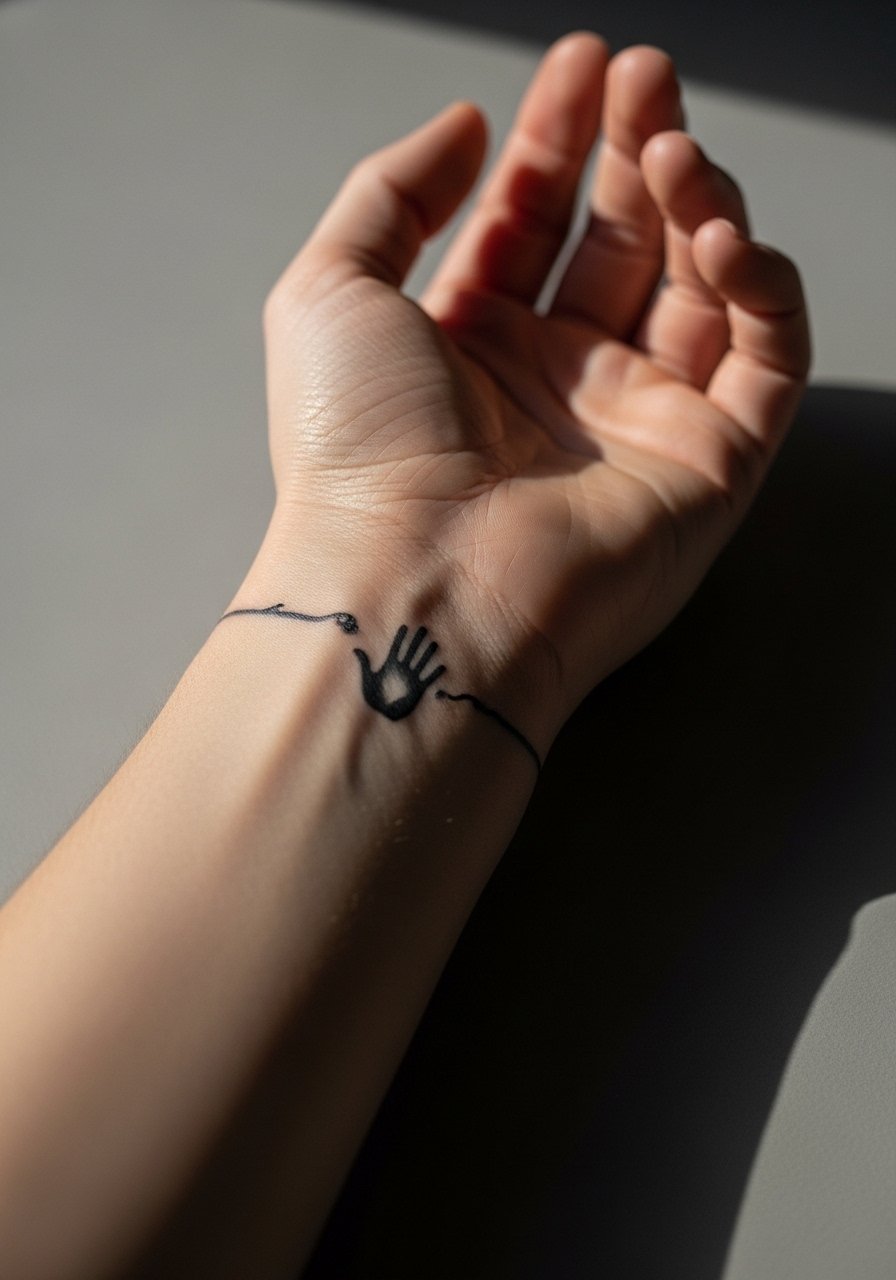
Wrist tattoos live close to daily friction and constant washing, so scale matters more than style. A common mistake is asking for a full frond detail in a one-inch space. Ask for bold trunk linework with simplified frond shapes. Healed at six months it reads delicate, by year two the fine fronds usually soften but the trunk keeps the design readable. Expect a short session and a touch-up window around year two. For outfits that highlight the wrist, stack a few dainty bracelets and slip on a minimalist watch to frame the palm without competing.
4. Micro-Realism Palm on the Outer Bicep
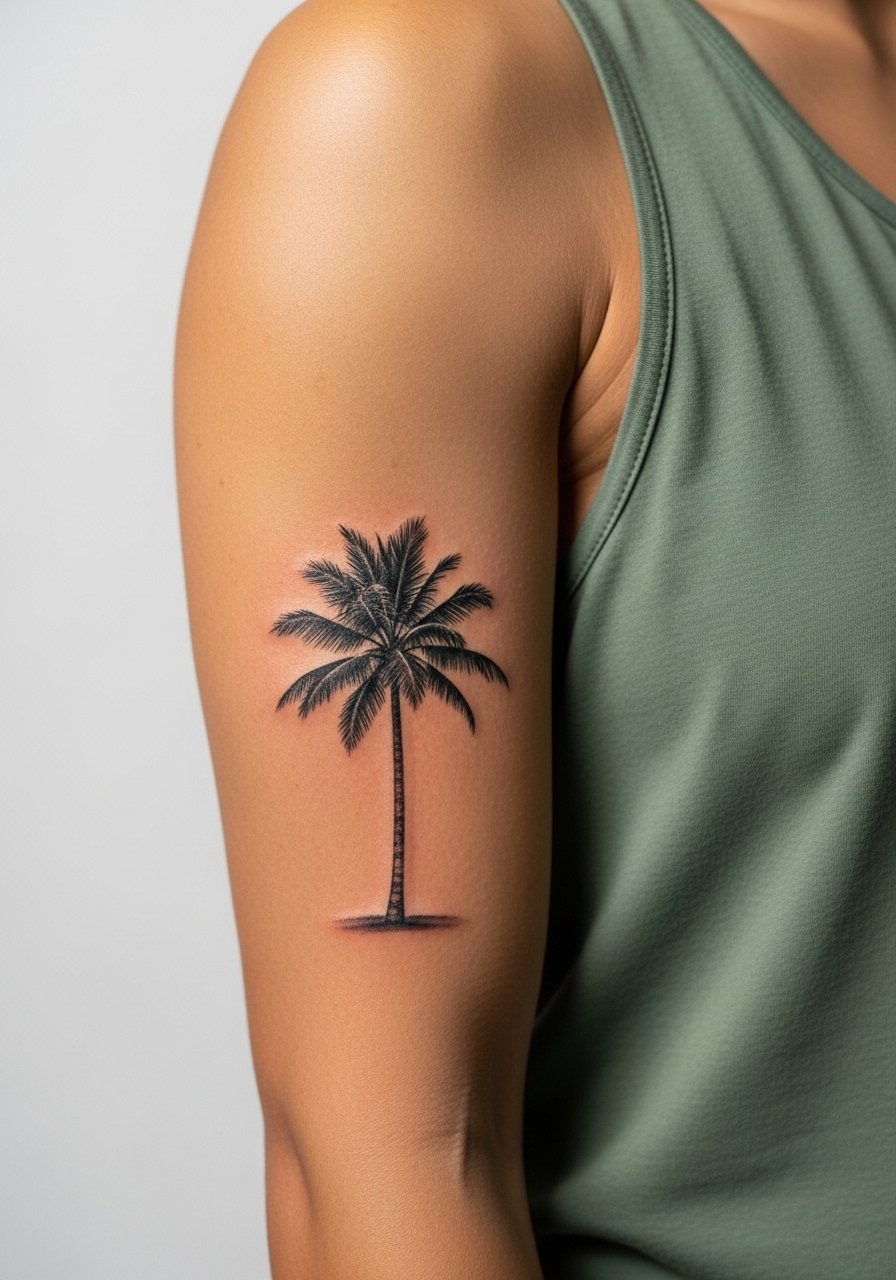
Outer bicep is forgiving on blowout and healing, which makes it ideal for micro-realism. Tell your artist you want subtle saturation and stipple shading for texture rather than dense color. The session can run 1.5 to 2 hours depending on detail. Pain is moderate, around 4 out of 10. Over time, micro-shading holds better here than on the wrist because the skin is thicker. Avoid asking for too many tiny frond lines close together. If you plan to show it off, wear a loose tank top to reveal the silhouette without tugging at the area during the session.
5. Watercolor Palm on the Ribcage
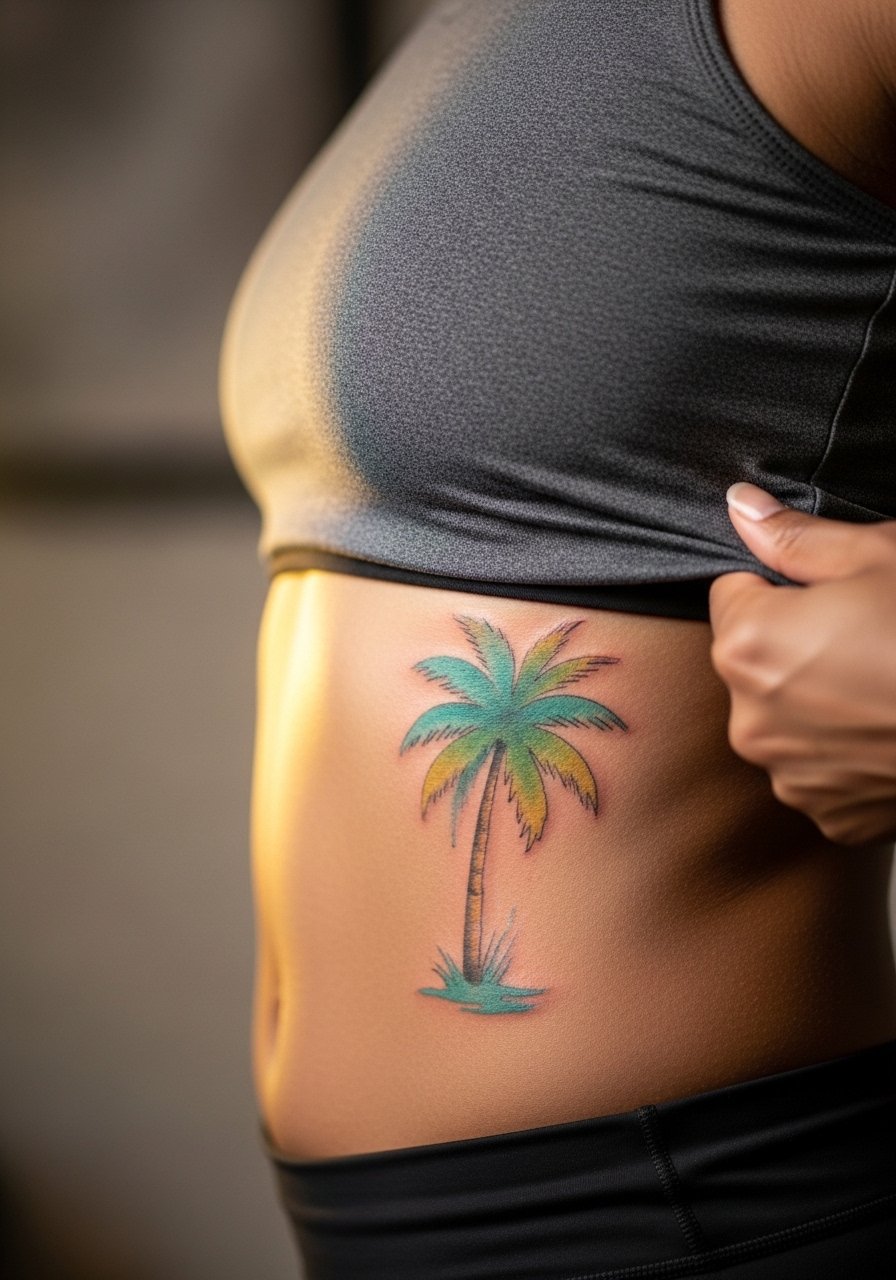
Artists split on watercolor on ribs. One camp says the constant expansion and contraction there makes soft washes blur in two to three years. The other camp believes careful spacing and light needle depth make watercolor settle fine on ribs. I tell clients the truth. If you love the painterly look, size it up and keep the color washes airy so they have room to age. Pain is high, often a 7 out of 10, and sessions can be longer because of layering. Pack a loose top for the appointment and use breathing techniques during the chair time. Expect touch-ups if color migration appears after heavy sun exposure.
6. Minimal Palm Above the Collarbone
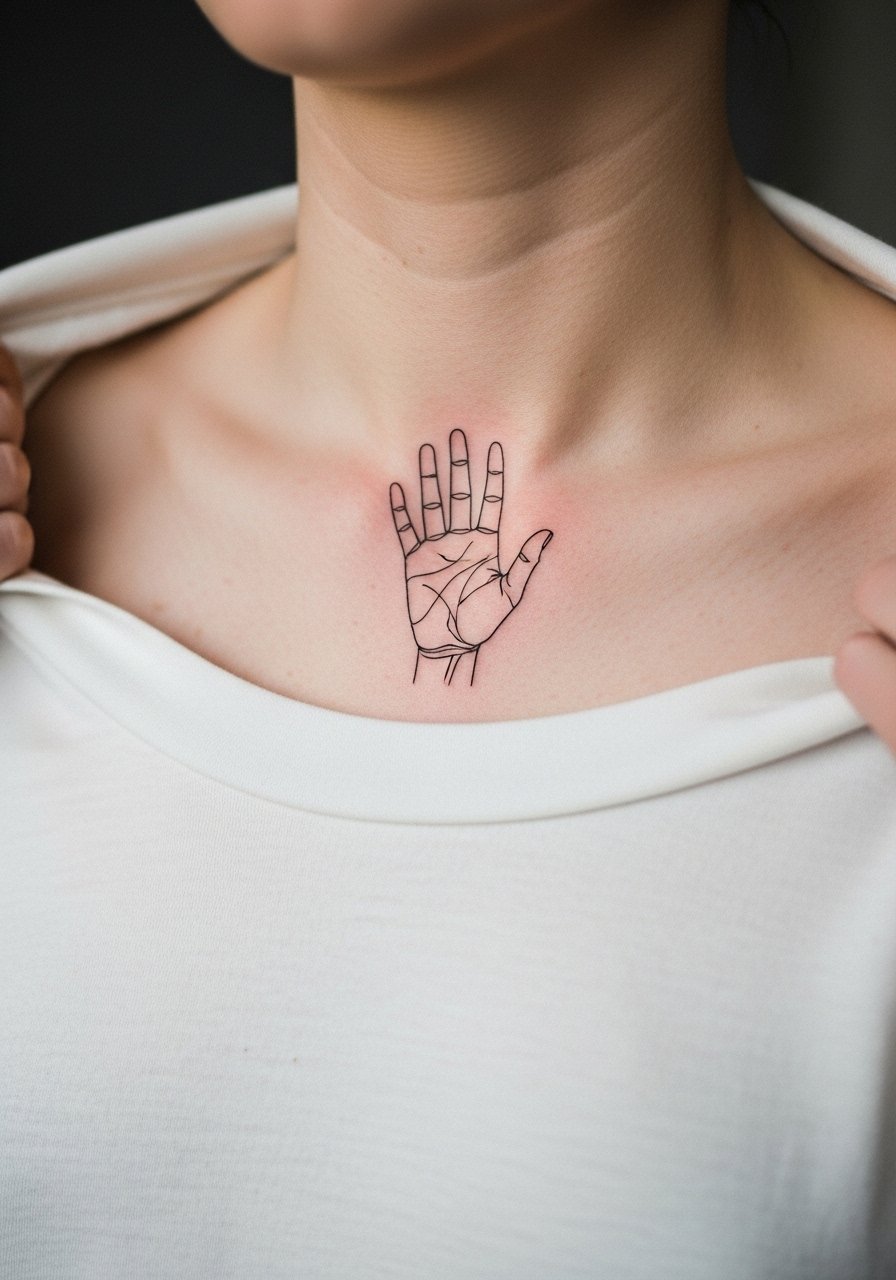
A tiny palm above the collarbone reads delicate but needs confident linework. The mistake is going too faint. Ask your artist to use slightly stronger line weight on the trunk and keep fronds airy. The area moves when you reach and twist, so allow a little extra space around the design to avoid future blurring. Sessions are brief and pain lands around a 5 out of 10. For session wear, pull a wide-neck shirt slightly aside so the artist has unobstructed access without you undressing.
Studio Day Picks
Those wrist, forearm, and rib designs above benefit from a small set of pre- and post-session items that smooth the appointment and first week.
-
Stencil transfer paper kit. Makes it easier to preview line placement on curved areas like the forearm and ankle before the needle hits skin.
-
Topical numbing cream. Applied an hour before helps manage sharp rib and collarbone sensitivity for those watercolor and collarbone pieces.
-
Thin protective film roll. Useful for finger and wrist palms that face constant hand washing and friction the first few days.
-
Fragrance-free gentle body wash. Helpful during showers for collarbone and forearm work without irritating fresh linework.
-
Aquaphor healing ointment. Thin layers in the first 48 hours lock in moisture while the skin starts forming its protective layer, especially on delicate fine line palms.
7. Shoulder Blade Palm Scene
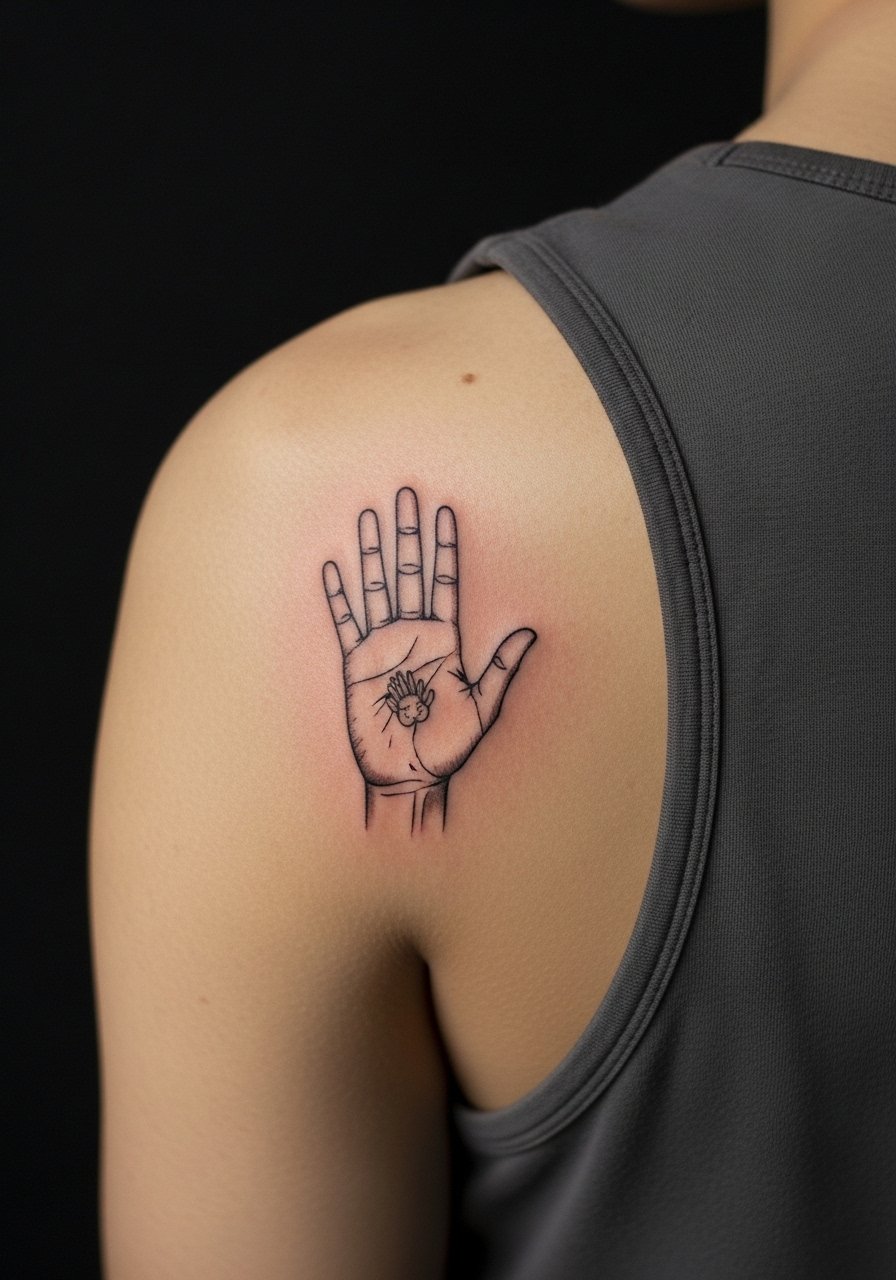
The shoulder blade is a classic spot for a calm, slightly larger composition. It tolerates shading and separation of elements well. Tell your artist you want negative space between fronds and the background so the silhouette stays readable across years. Sessions can stretch if you layer dot work or stipple shading for depth. Pain is lower there, around a 3 out of 10. For show-off outfits, an open-back dress frames the area beautifully without forcing constant sun exposure.
8. Palm and Crescent Moon on the Calf
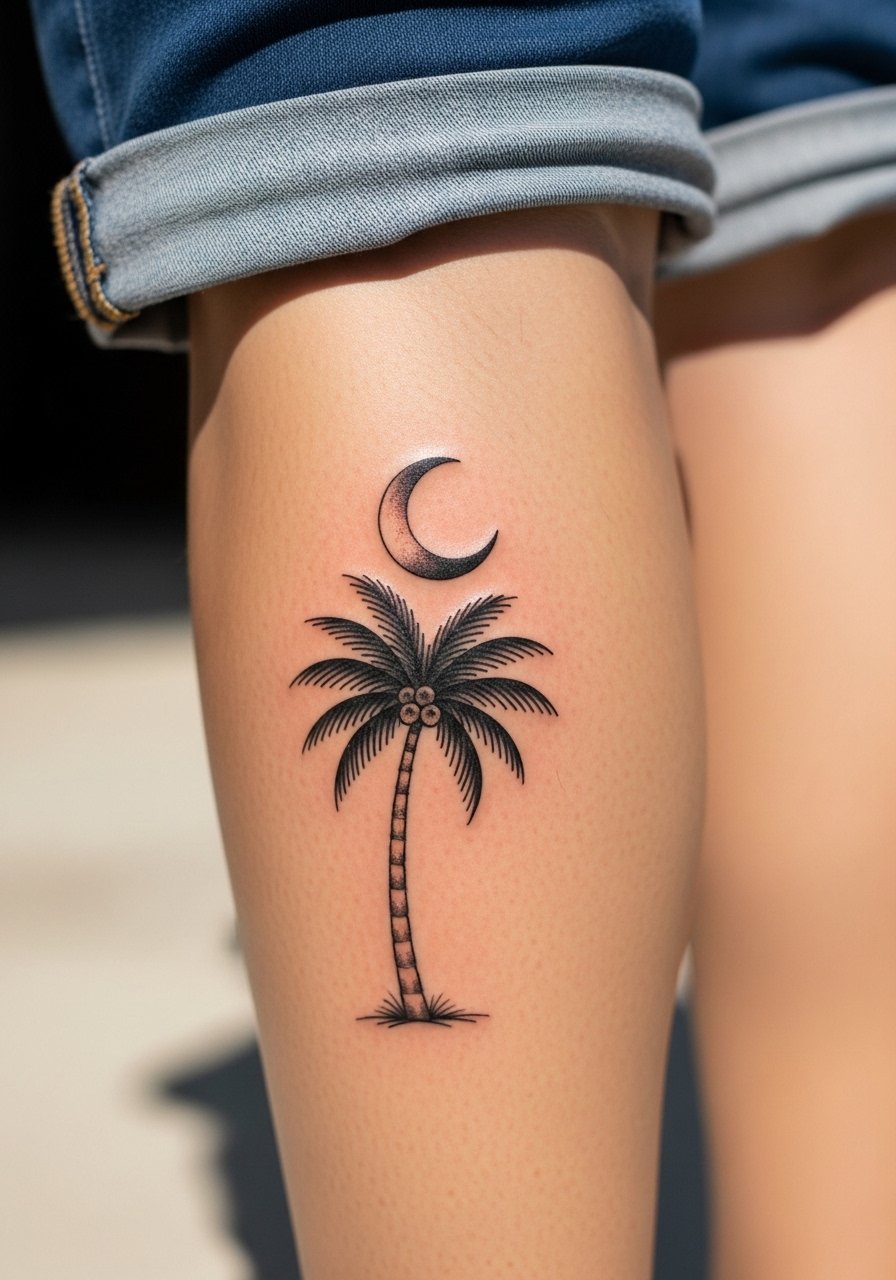
Calf placements handle saturation and small scene work well because of thicker skin. If you want contrast, pair a dark trunk with stipple shading on the fronds. A common aging error is too many tiny stars around the moon, which softens into blur. Sessions here are comfortable and can go longer, often 1.5 hours. For the appointment, wear loose drawstring shorts so the artist can roll fabric without creating pressure on the area.
9. Palm Band Around the Finger
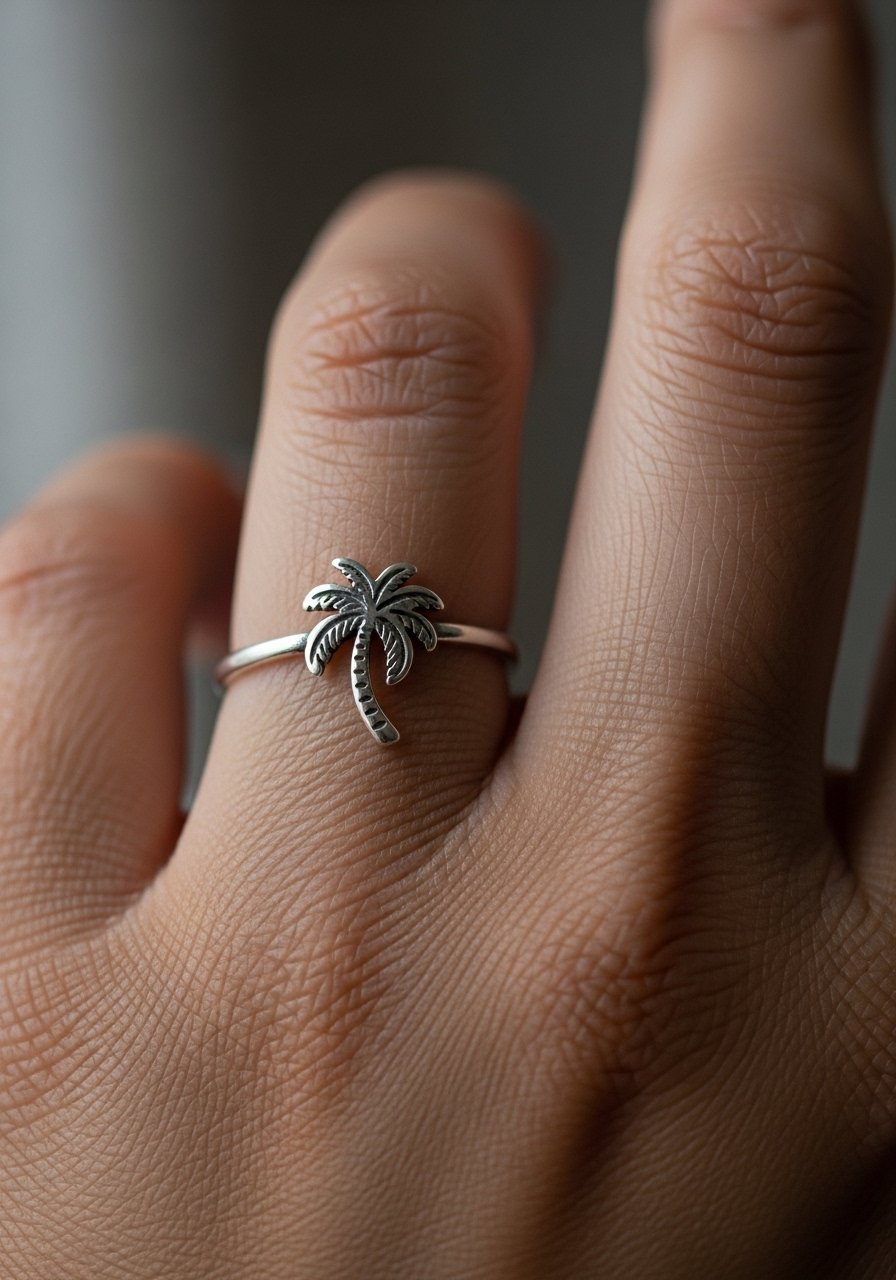
Finger tattoos are charming but high maintenance because of constant hand use and thinner skin. The biggest mistake is expecting a one-session permanent result. Tell your artist you accept a touch-up plan and ask for bolder trunk lines rather than ultra-fine detail. Healed at six months the band looks crisp, but expect a fade or softening by year one. Sessions are short but may sting more, around a 5 out of 10. For styling, a narrow stackable ring set complements the palm band without competing for attention.
10. Palm and Ocean Wave on the Foot
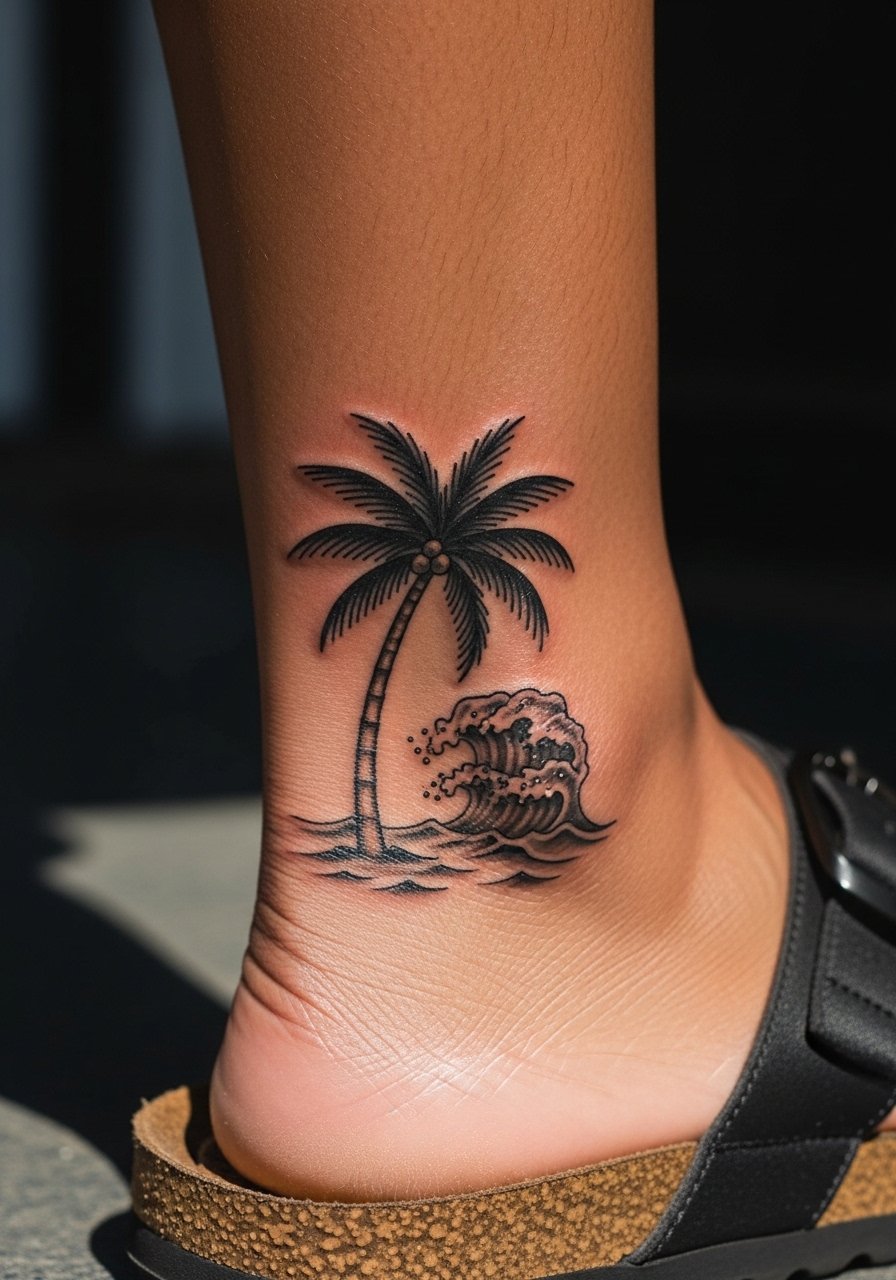
Foot tattoos sit in a high-friction zone that copes poorly with heavy saturation. For lasting results, ask for simplified fronds and a clear base line off the shoe seam. Sessions hurt more near bony areas and can reach a 6 out of 10. The foot needs time to rest after inking so choose footwear that avoids rubbing. Pair the design with open sandals or a comfortable slide sandal during the initial healing window to reduce pressure on the tattoo.
11. Half-Sleeve Palm with Sunset Band
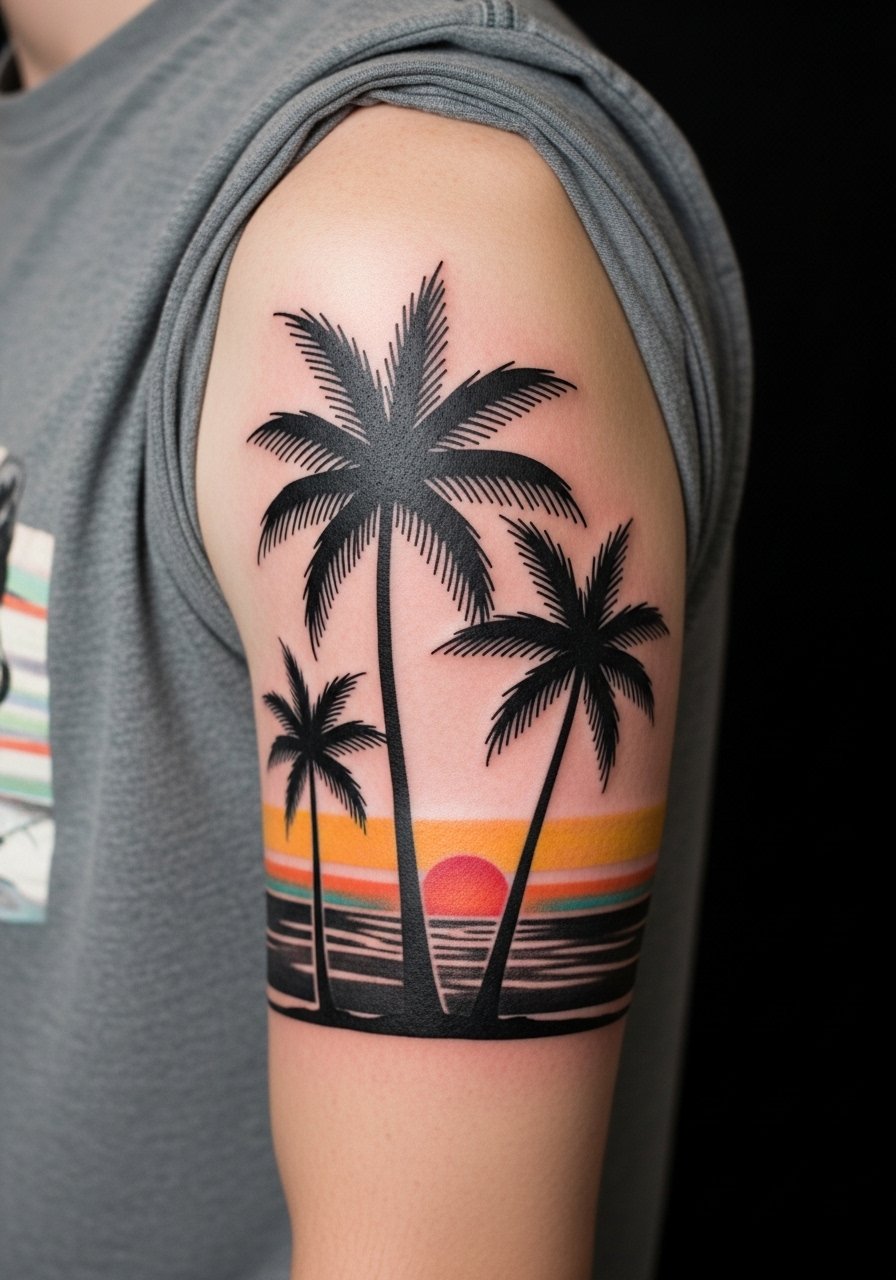
Half-sleeves allow a narrative approach, combining palms with horizon lines and color bands. Plan your composition with breathing room between fronds and color fields so the sunset band does not turn into a single blur with time. Sessions will be multiple hours across visits and pain varies by area. For consultations, bring reference shots that show exact color intensity rather than vague descriptions. When you wear short sleeves the half-sleeve reads as part of your daily outfit, and a rolled short-sleeve linen shirt keeps it visible without overexposure.
12. Geometric Palm at the Sternum
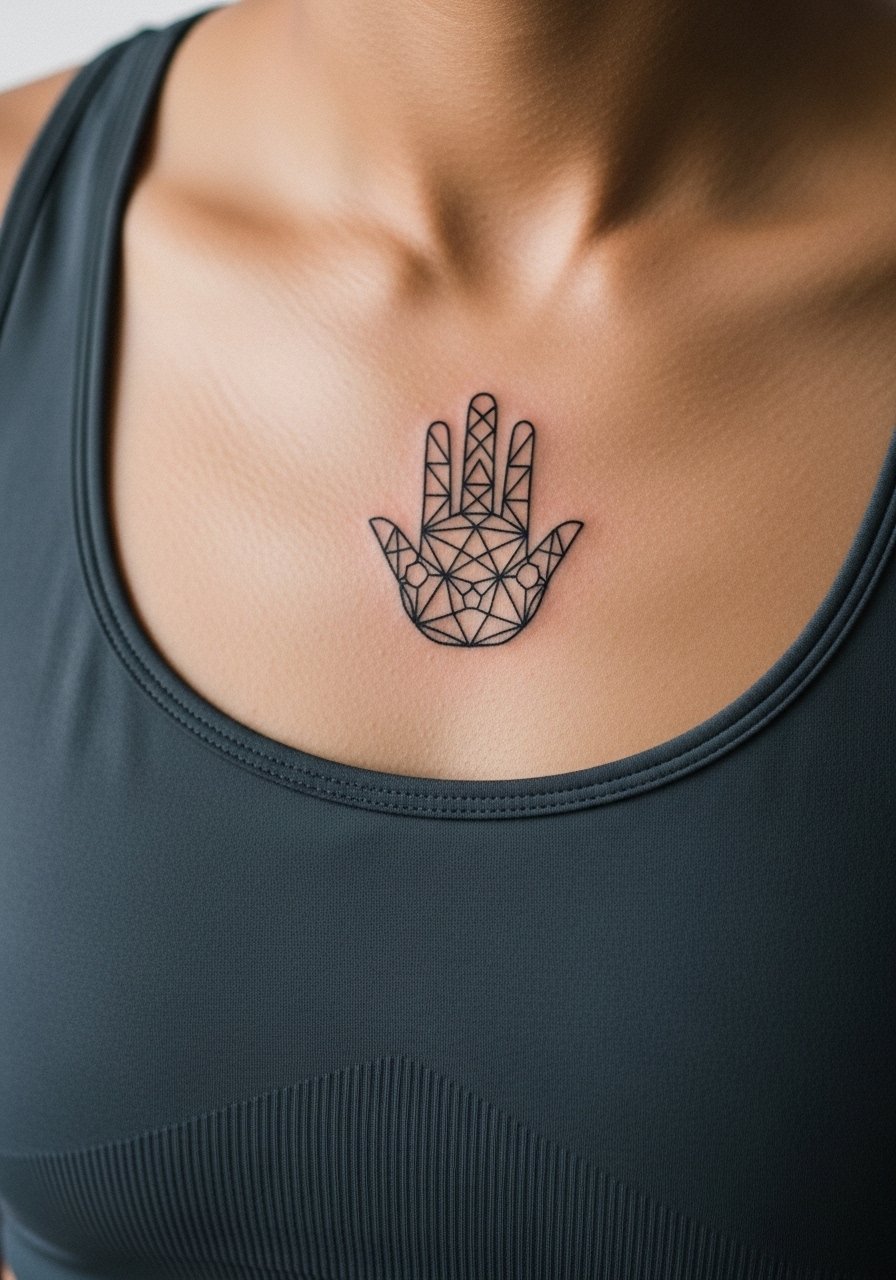
Sternum placements cause debate among artists. One camp warns that movement and thin skin over the sternum distort tight geometry quickly. The other camp says carefully balanced spacing and a slightly larger scale make geometric work settle well. If you choose sternum geometry, insist on spacing between intersecting lines and expect a higher pain score, often a 7 out of 10. Sessions may be split into shorter passes. For the appointment, a fitted sports bra is the easiest option so the artist can work without you being uncomfortable.
13. Two Tiny Palms Behind the Ear
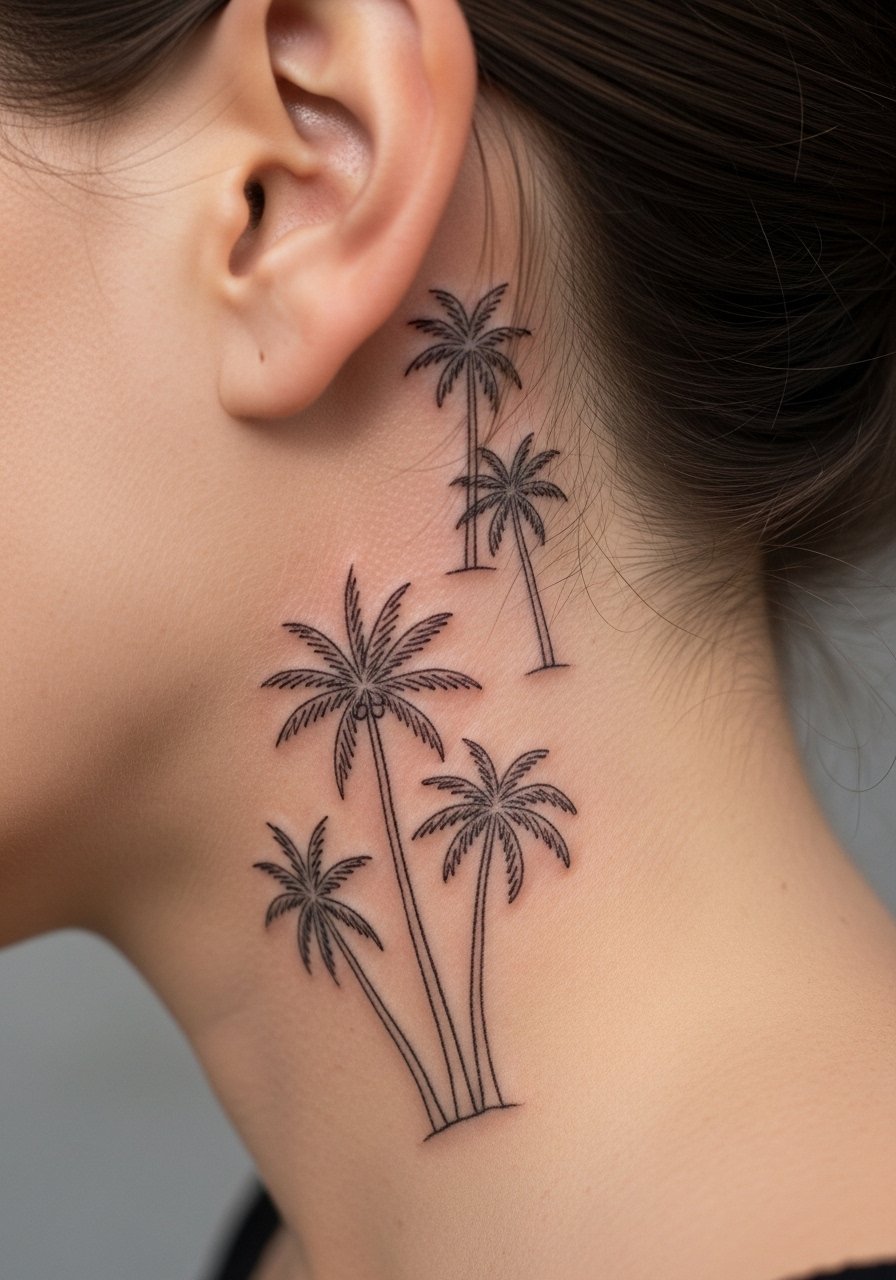
Behind-the-ear placements read intimate and subtle, but they can be tricky to photograph. Ask your artist for simplified silhouettes rather than detailed fronds. The pain is usually mild and the session is quick. Keep in mind that hair oils and shampooing can affect early healing, so schedule a lighter hair-wash routine the first week. For showing it off in cooler months, sweep hair into a low bun or use a slim hair claw clip to reveal the tiny palms without harsh styling.
14. Palm and Hibiscus Hip Accent
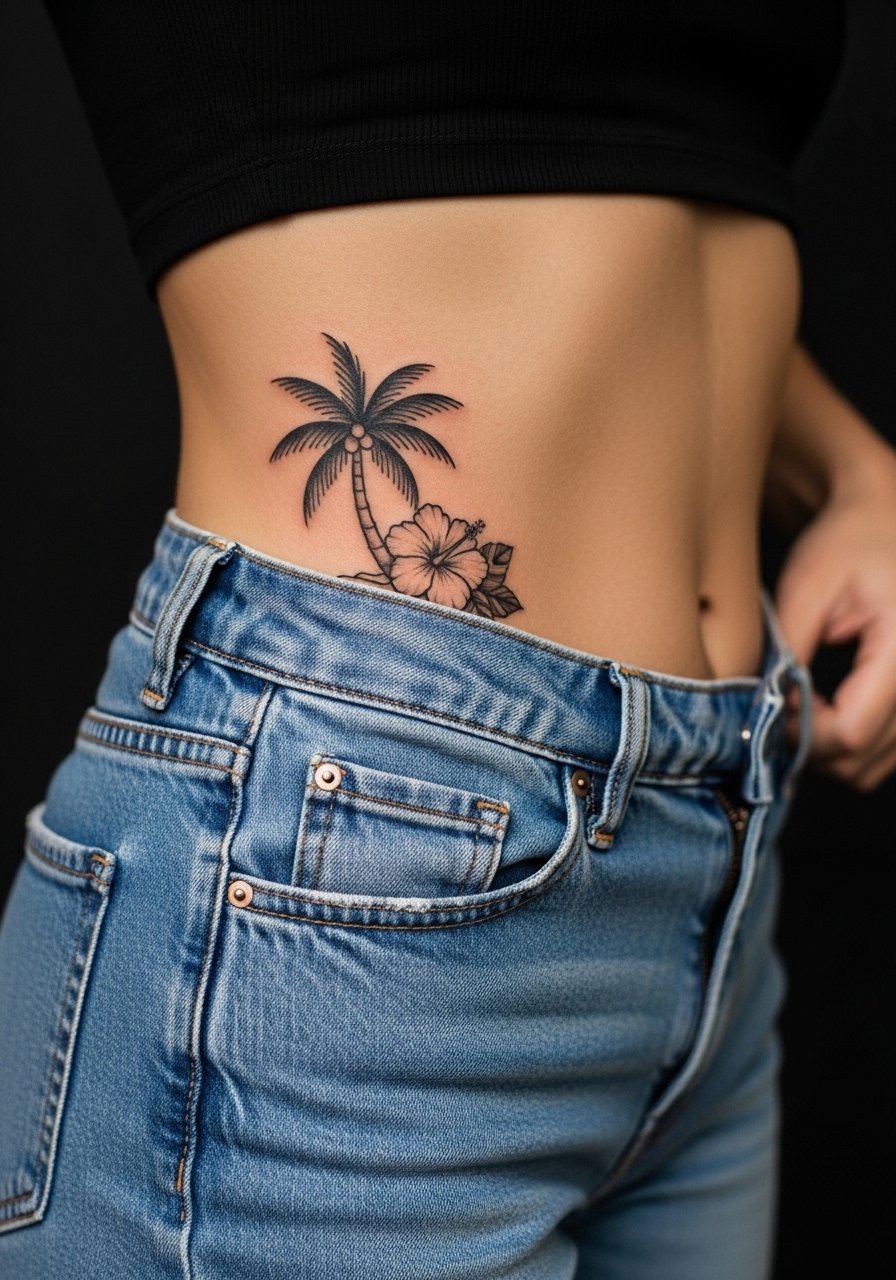
Hip tattoos age well if given space and moderate saturation. The common error is packing too many tiny details into a small hip piece. Ask for clear separation between the palm and floral element so each reads independently. Pain varies by person and often rates a 5 out of 10 for the hip. For the session, high-waisted bottoms that you can lower slightly are ideal. A high-waisted denim skirt lets the artist access the area without you feeling exposed.
15. Palm Mandala Shoulder Cap
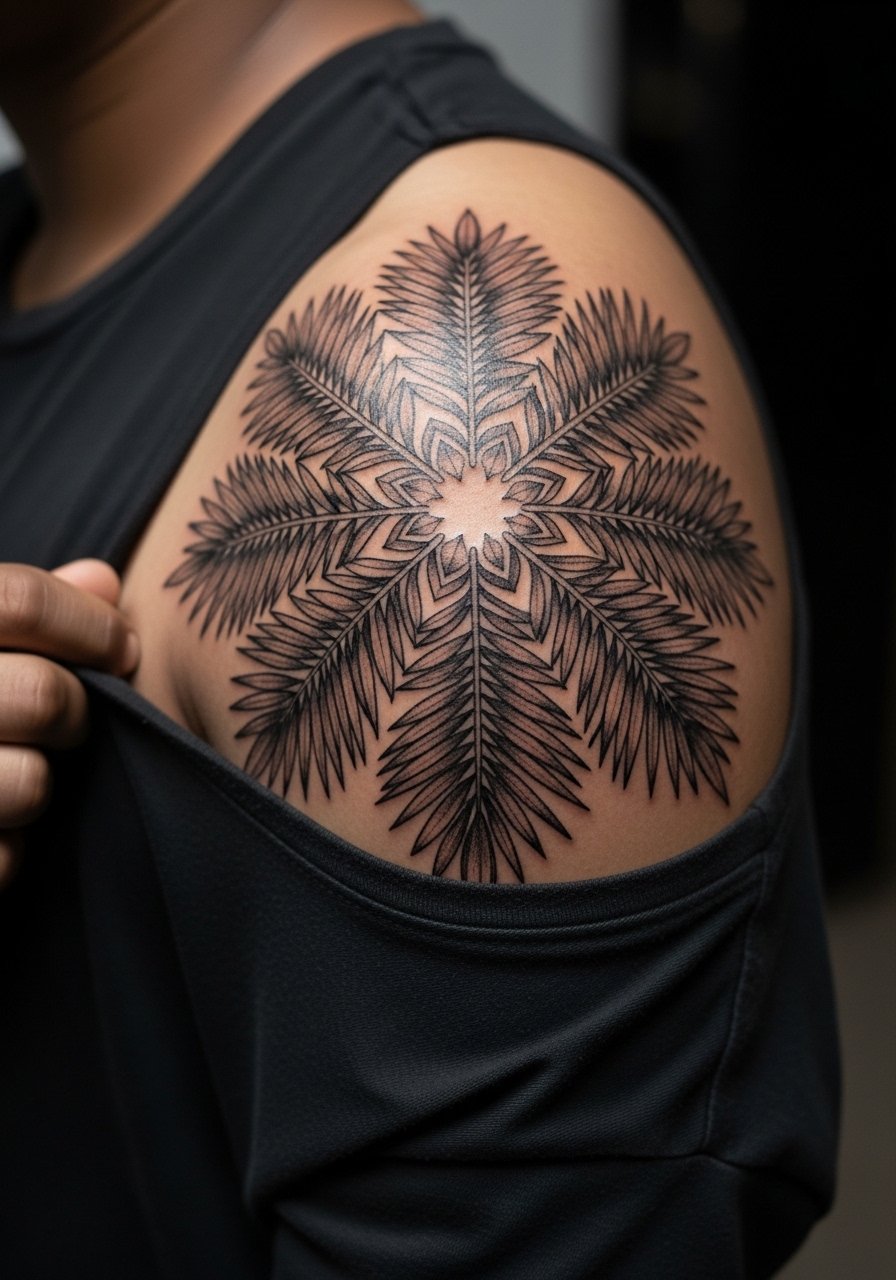
Combining palm motifs into a mandala gives a decorative effect that holds up because of the radial spacing. The mistake is packing fronds too tightly into the center. In consultation, ask for negative space and stipple shading to give depth without dense saturation. Sessions can be longer depending on dot work, and pain is generally low to moderate. For showing it off, an off-the-shoulder top or a slip dress with thin straps highlights the cap without forcing constant sun exposure.
16. Palm Outline Across the Lower Back
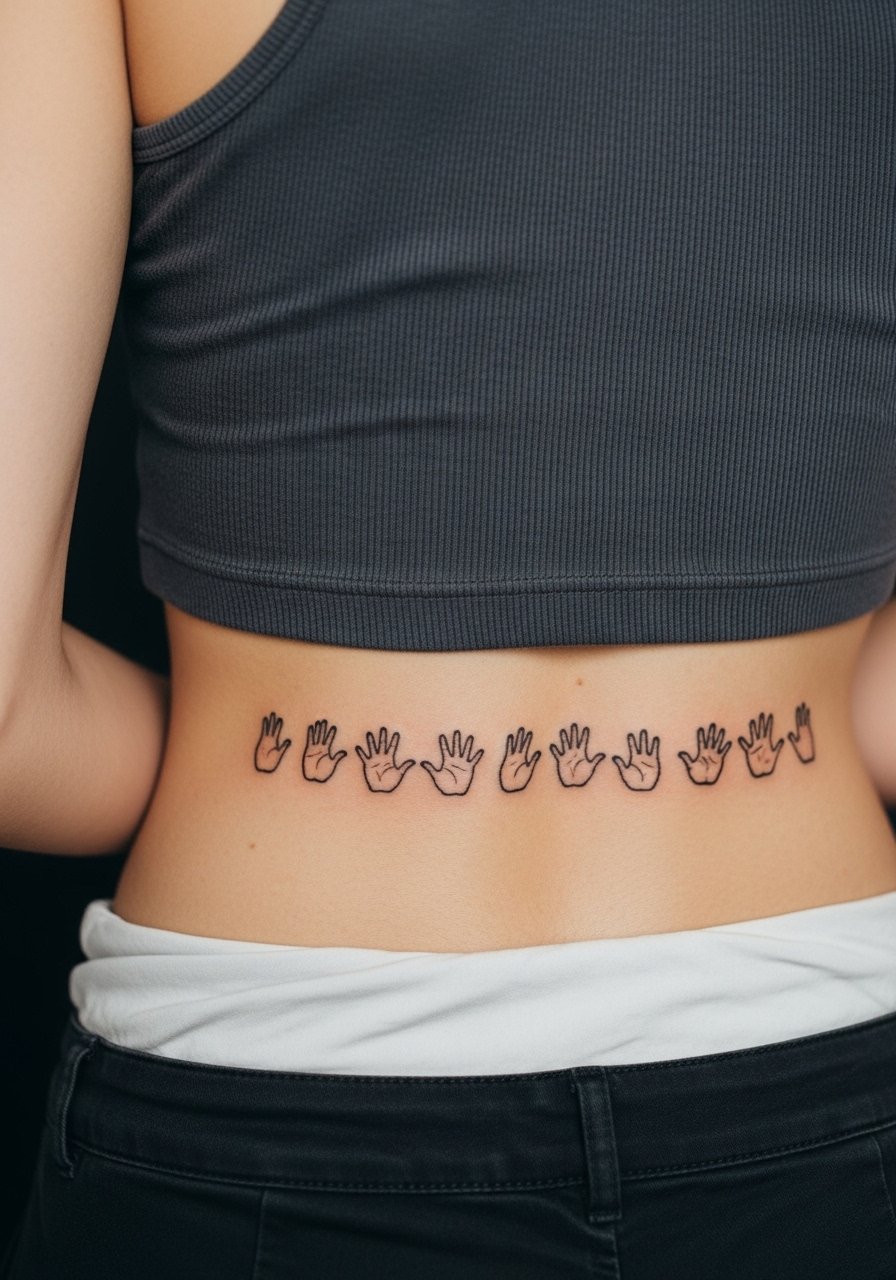
Lower back pieces are subtle and sit where clothing creates friction. Keep outlines slightly bolder so they do not fade into a thin line after months of movement. A common complaint is blurring from waistbands, so plan placement just above most pants. Sessions are comfortable and healing is straightforward. For outfits that reveal the design without constant irritation, try a cropped top with high-waisted bottoms so the tattoo stays visible but protected.
17. Palm and Compass on the Upper Arm
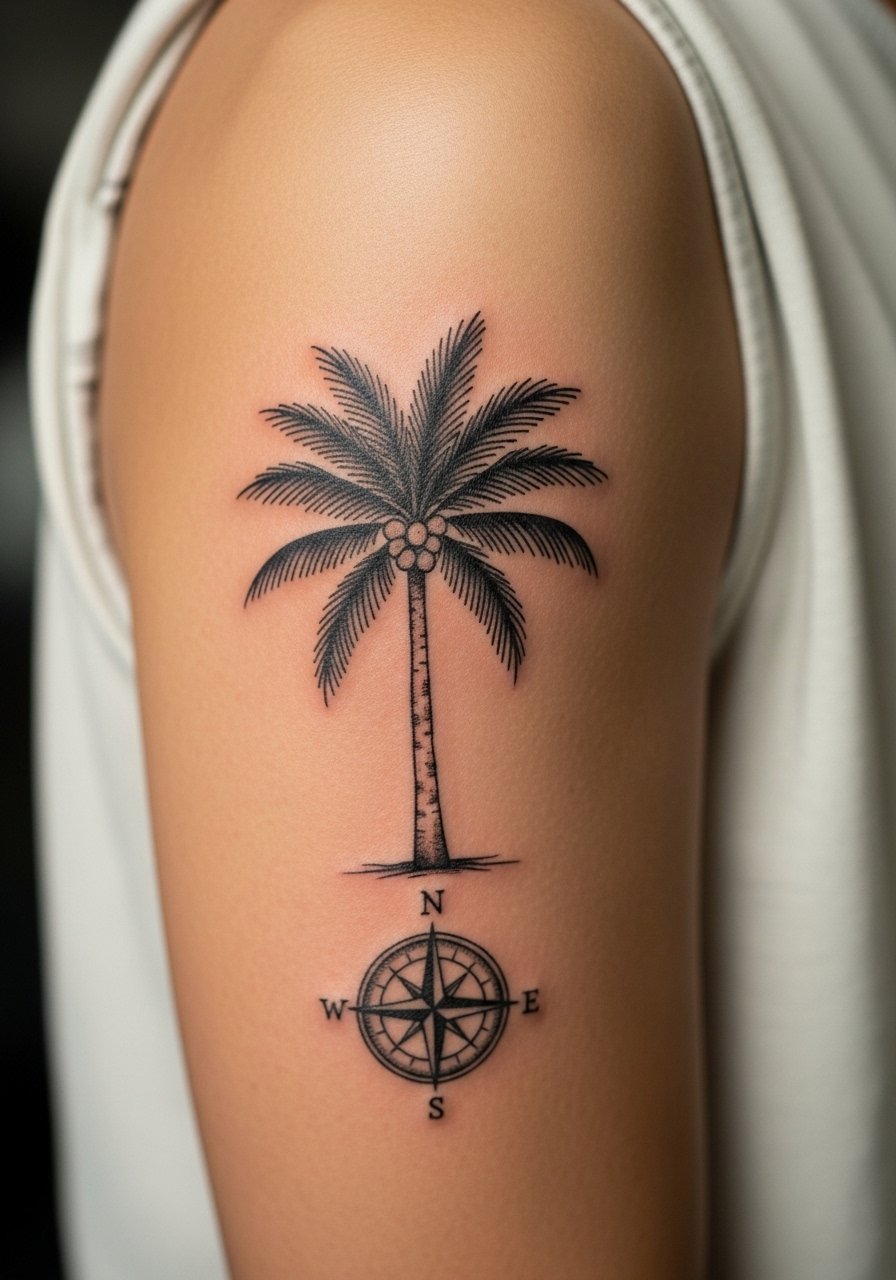
Upper arm compositions tolerate detail well and age gracefully because of thicker skin. Tell your artist you want the compass slightly separated from the palm so both elements age independently. Session time is moderate and pain is low. Over time the compass lines hold longer than ultra-fine frond tips. When dressing, short-sleeve shirts or a classic tee keep the design visible and part of everyday wear.
18. Palm Silhouette with Stars on the Shoulder
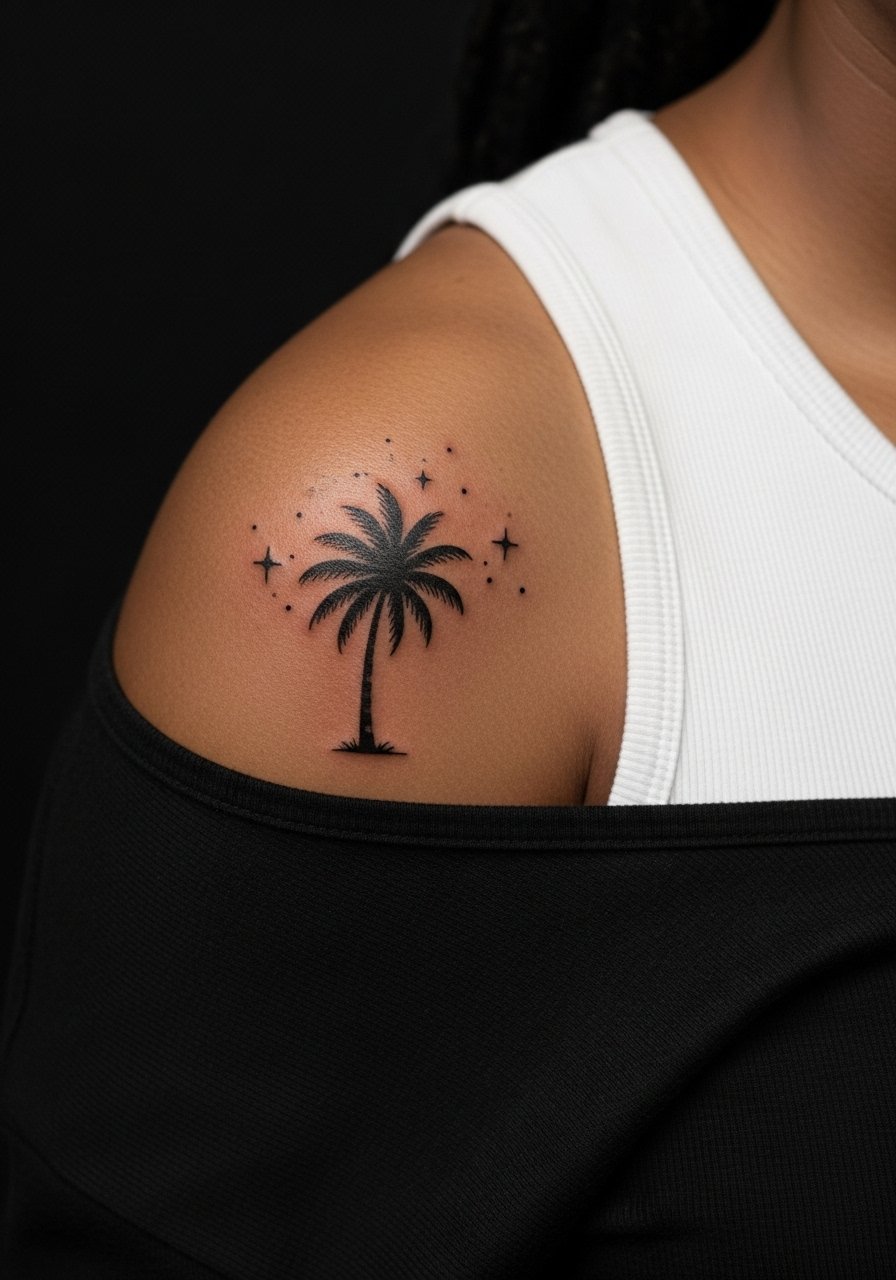
Silhouettes are forgiving because they rely on solid negative space. The real mistake is adding micro stars that look meaningful up close but blur into dust at a distance. Keep the stars minimal and slightly spaced. Sessions are quick and pain is low. For nighttime looks wear an off-the-shoulder top that frames the silhouette without bright lights that can wash out photos.
19. Palm Flash Sleeve Element
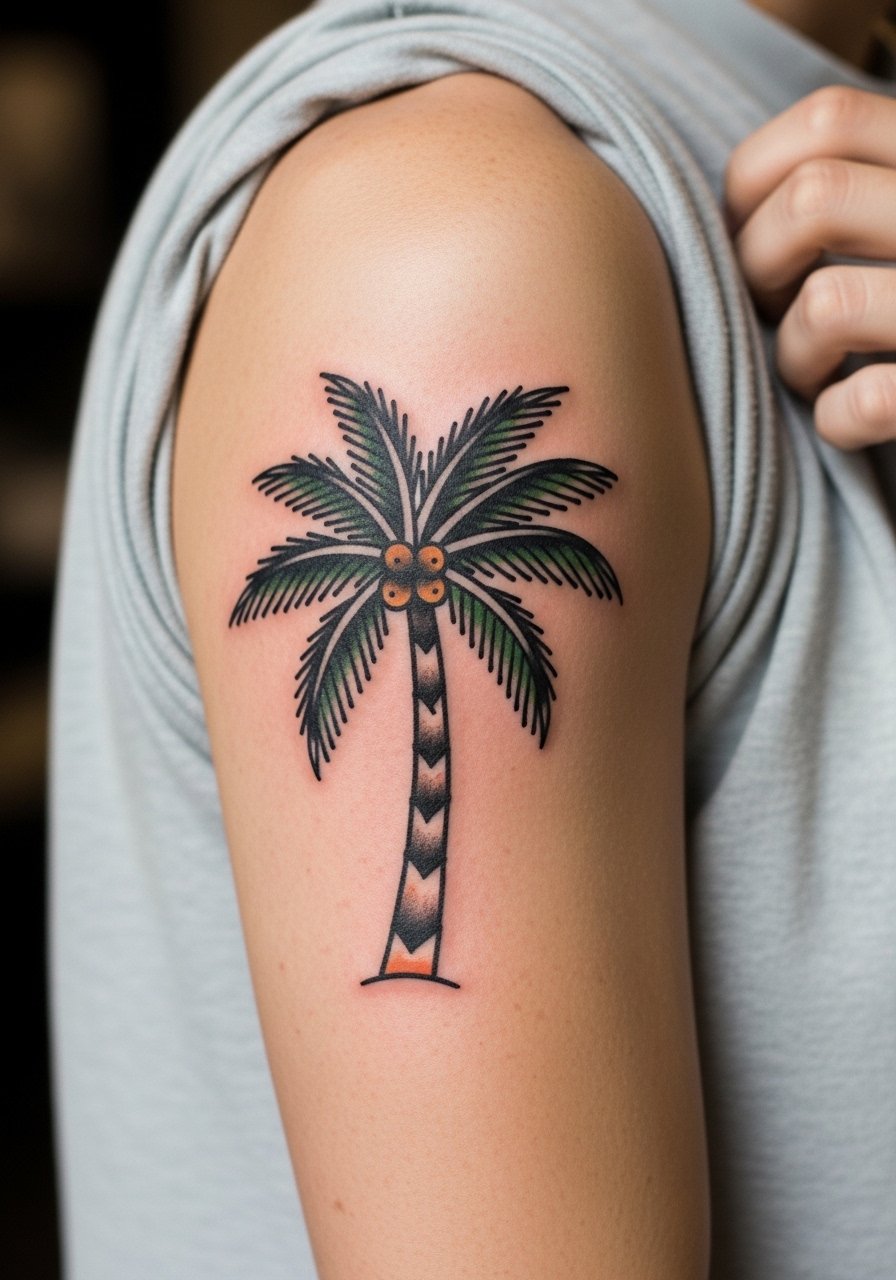
Flash elements work well when planned for integration into a future sleeve. Ask for bolder outlines now so the piece can be shaded or expanded later without losing its identity. A common planning error is starting with faint lines that disappear when adjacent work is added. Sessions vary by size but flash pieces are usually one-visit jobs. To preview how a sleeve might look, wear a short-sleeve shirt with a rolled cuff so you can assess flow and coverage in everyday wear.
20. Vertical Palm and Moon Phases Along the Spine
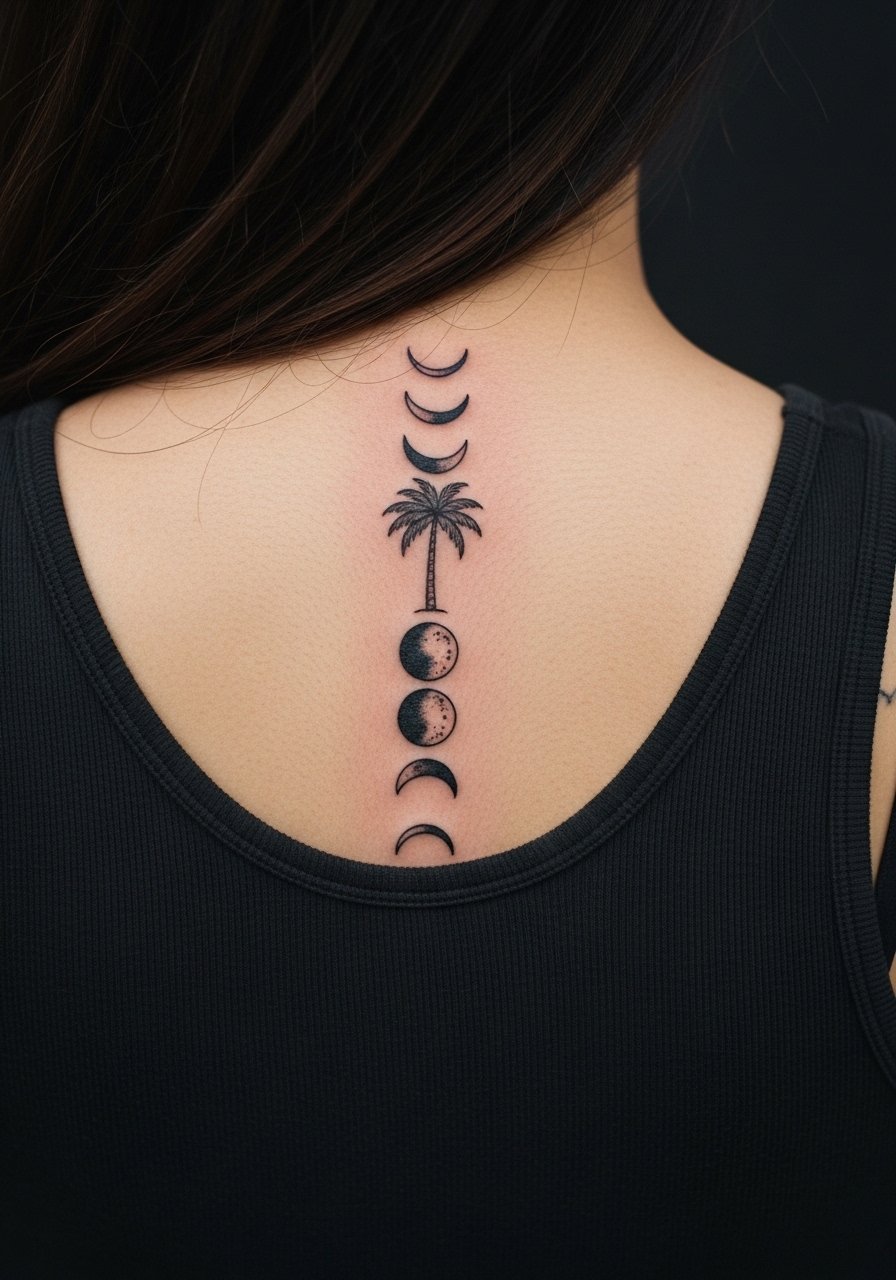
Spine work needs mindful spacing because it moves with posture. The design reads calmer when the phases are spaced and the palm trunk is slightly offset from the center line. Pain is higher near the spine and sessions may be split. For consultations, ask your artist about session pacing and realistic touch-up timelines. For show-off moments, an open-back dress reveals the vertical rhythm cleanly and avoids pressure on the area.
21. Tiny Palm and Hibiscus Thigh Cluster
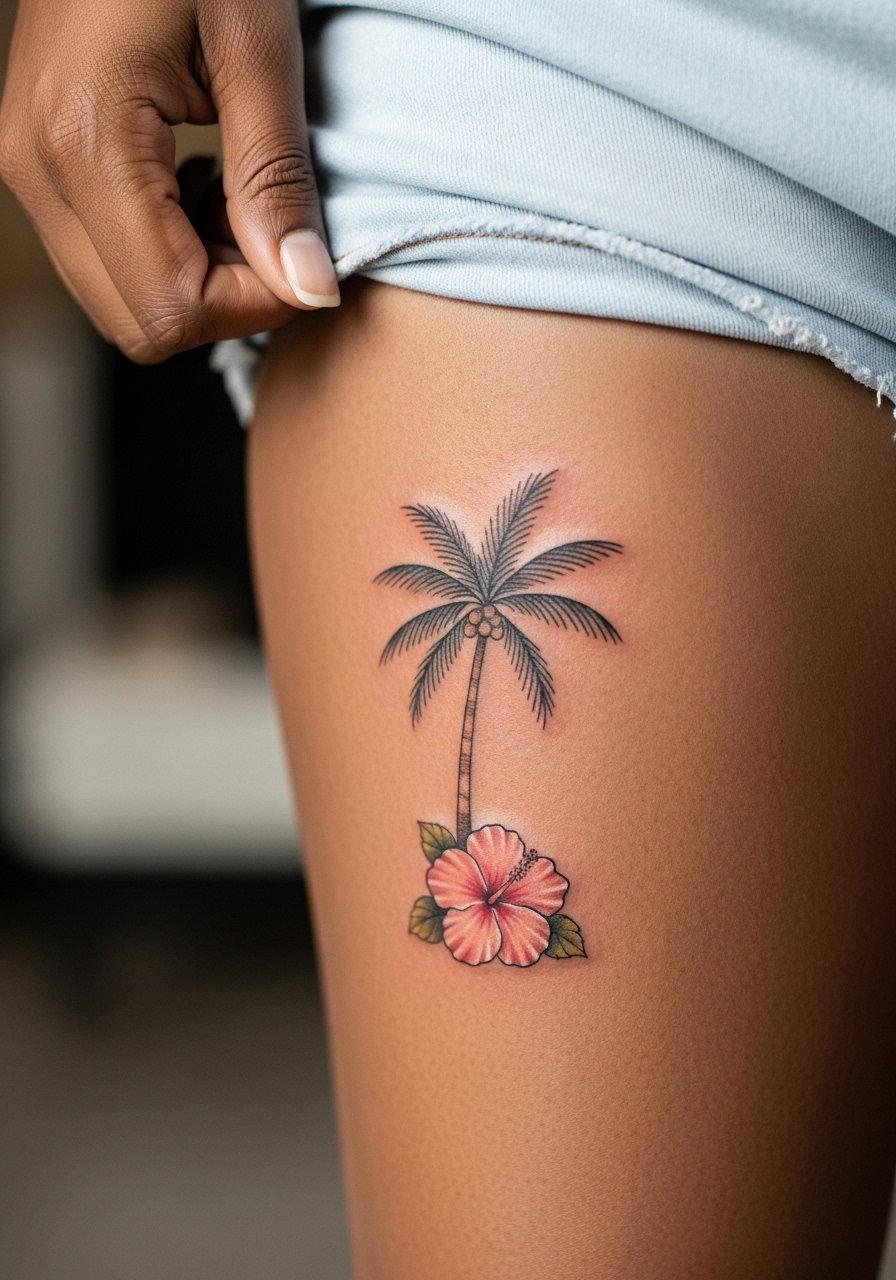
Upper-thigh placements are forgiving and private, so you can choose bolder saturation without constant sun exposure. Consult your artist about how the design sits when you stand versus sit, and avoid tiny details that fold with skin movement. Sessions are comfortable and healing is straightforward. For the appointment, loose shorts or a wrap skirt are ideal. Try a loose drawstring linen pant or shorts that you can shift easily so the artist has clean access.
Frequently Asked Questions
Q: Will a fine line palm blur faster on the forearm than on the shoulder blade?
A: In my experience fine line palms on the forearm do tend to need touch-ups sooner than those on the shoulder blade. The forearm sees more friction and sun exposure, so ask for slightly bolder trunk lines and more spacing when you talk to your artist.
Q: Is a watercolor palm a bad idea for the ribcage?
A: Artists split into two camps on this. One side says ribs make soft washes blur faster because of movement. The other side says careful spacing and light needle depth let watercolor settle. If you pick ribs, size the piece up and plan for a possible touch-up down the line.
Q: How should I prepare clothing-wise for a sternum or collarbone session?
A: Wear a fitted sports bra for sternum work or a wide-neck shirt for collarbone pieces so the artist can access the area without you undressing. A wide-neck shirt is usually the easiest option and keeps you comfortable during longer passes.
Q: Are finger and ankle palms high maintenance?
A: Yes. Fingers and ankles face constant wear. Expect touch-ups within a year in many cases. Choosing simplified silhouettes and bolder lines helps longevity, but plan for maintenance if you want crisp edges long-term.
Q: How do I find an artist who understands palm-themed compositions without naming anyone?
A: Use discovery routes such as local studio directories, tattoo convention listings, and community subreddits to see healed photos. Look for healed work on similar placements and ask to see aftercare and touch-up examples during consultation.